Custom name stamp in Korea: The ultimate 2026 dojang guide
Get your own custom name stamp in Seoul for just ₩30,000 in 2026. Discover why nearly 100 percent of Korean adults use these unique stone souvenirs today.
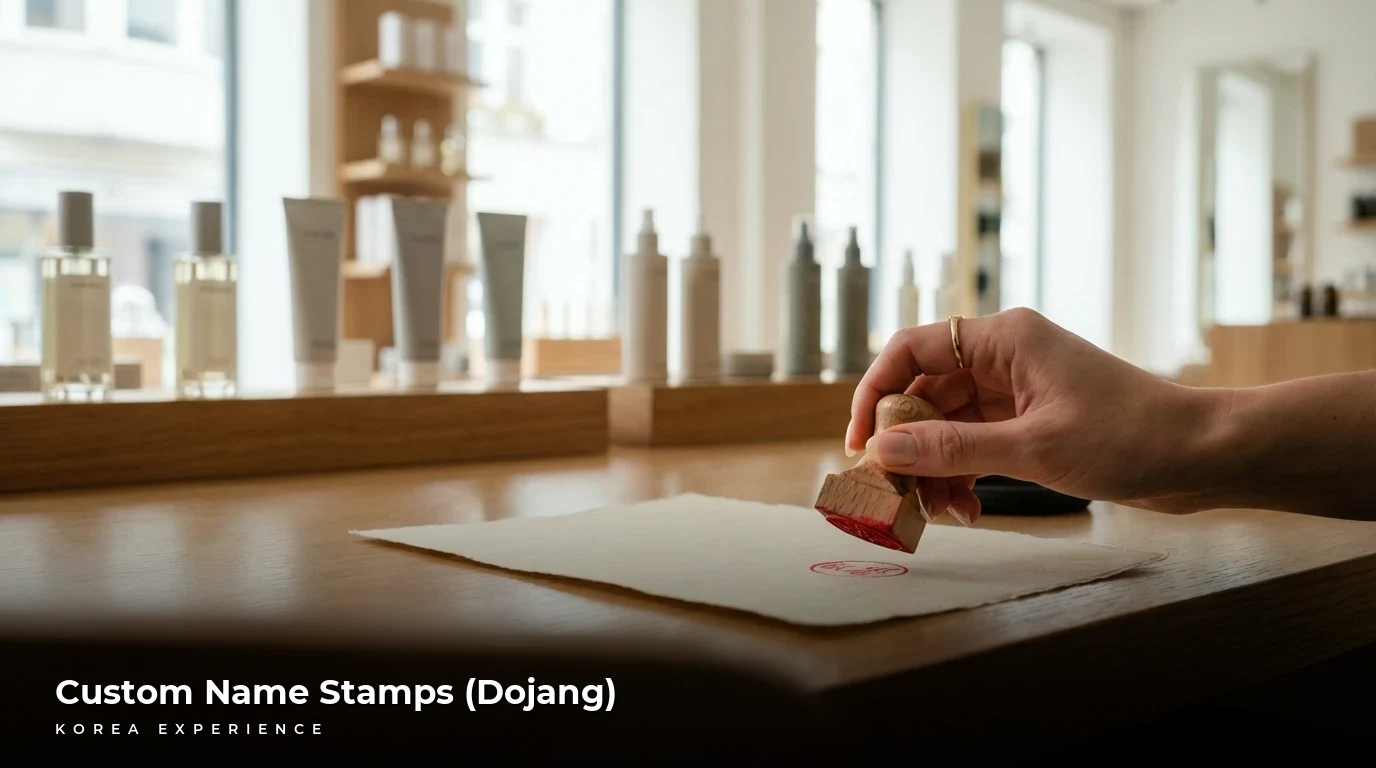
So, you are planning a trip to South Korea, you are scrolling through travel blogs, and you keep seeing people coming home with these adorable little stone stamps. Or maybe you are an expat who just signed your first housing contract in Seoul, and you noticed your landlord did not use a pen to sign the paper—they pulled out a tiny wooden stick and stamped it with bright red ink. You are probably wondering what that thing is, and whether you need one for yourself.
The short answer is that it is called a dojang, and while you do not strictly need one as a tourist, you absolutely should get one. Trust us on this one. It is, without a doubt, one of the most unique, personalized, and culturally rich souvenirs you can ever bring back from Korea. In a world where you can only buy so many Sheet Masks vs. Serums: The Ultimate K-Beauty Souvenir Guide 2026, a custom name stamp stands out as a timeless piece of art.
Key Takeaways
- 1The short answer is YES, you can easily get your own traditional Korean name stamp (dojang) in Seoul, and honestly, it is one of the absolute best souvenirs you can take home.
- 2A beautiful, hand-carved stone stamp usually costs around ₩30,000 ($22) to start, making it an incredibly affordable, lifelong keepsake.
- 3Head straight to the Insadong neighborhood in Seoul. You can either commission a master carver to design your stamp perfectly, or you can book a one-hour DIY class to carve it yourself.
In the West, we use handwritten signatures to authorize everything from buying a coffee to purchasing a house. But in South Korea, and broadly across East Asia, the culture revolves around the personal seal. A dojang is essentially your signature carved into stone, wood, or plastic. It is a physical representation of your identity, and Koreans use them to sign official documents, bank forms, real estate contracts, and even personal artwork.
📋 Quick Facts
The Background Story of the Korean Seal
How did we get here? Why does a hyper-modern, tech-obsessed country like South Korea—a place where you can pay for groceries with your smartwatch and have a robot serve you coffee—still rely on carved stones and red ink? To understand that, we have to go way back into the annals of East Asian history.
The history of the dojang is not just about bureaucracy; it is literally woven into the mythological founding of the Korean nation. According to ancient Korean legend, there was a heavenly prince named Hwanung. He was the son of the King of Heaven, and he basically looked down at Earth and decided he wanted to live among the mortals. His father agreed, but to ensure that the people of Earth would recognize Hwanung's divine authority, the King of Heaven gave him three heavenly seals, or dojangs.
When Hwanung descended to the Korean peninsula, the people saw these seals and immediately accepted him as their leader. Hwanung eventually had a son named Dangun, who went on to found Gojoseon in 2333 BC—the very first Korean kingdom. So, when you buy a dojang in Insadong, you are not just buying a tourist trap trinket. You are participating in a tradition that links directly back to the very mythological foundation of Korea.
The Mythological Founding
According to legend, Hwanung descended from heaven with three heavenly dojangs, leading to the founding of Gojoseon.
The Three Kingdoms Period
Dojangs first began appearing in official use to authenticate royal documents and important state items.
Joseon Dynasty Begins
The use of the dojang expanded; while the government used large, ornate seals, everyday families started using simpler stamps for personal correspondence.
Republic of Korea Established
A brand new type of state seal called the guksae was introduced specifically for modern diplomatic and national use.
Act on Confirmation Passed
South Korea passed a law allowing registered digital signatures to hold the same legal weight as an official ingam stamp.
Modern Souvenir Boom
DIY dojang carving classes in Insadong have become one of the most booked cultural experiences for foreign tourists visiting Seoul.
Historically, the actual physical use of seals in Korea dates back to the Three Kingdoms period. Back then, they were primarily used by royalty and high-ranking state officials to authenticate massive state documents. The Emperor of China would actually gift special state seals to the Korean kings as a sign of diplomatic relations.
Fast forward to the Joseon Dynasty. This was an era of massive cultural shifts, the invention of the Korean alphabet, and a rigid class system. During this time, the use of the dojang started to trickle down from the absolute upper echelons of the government to everyday families. While the government agencies used massive, incredibly ornate seals, regular folks started keeping simpler stamps to sign their personal correspondence and family records.
When the modern Republic of Korea was established in 1945, the country fully integrated the dojang into its modern legal framework. They created a new official state seal called the guksae, which is currently a pure gold pair of phoenixes adorned with the national flower. For citizens, the government mandated the ingam system. If you wanted to do serious business, you had to register your stamp with the state.
Interestingly, we are seeing a slight shift in 2026. Back in 2012, the Korean government passed the Act on Confirmation of Personal Signature, which allowed registered written signatures to hold the same legal weight as an ingam. Furthermore, with the rise of digital banking, electronic signatures are becoming more common. But old habits die hard. The tactile, satisfying thud of a stone stamp on paper is so deeply ingrained in Korean business culture that the dojang is not going anywhere anytime soon.
Breaking Down Your Options
So you have decided you want one. Awesome. But the second you step into a stamp shop in Seoul, you are going to realize you have a lot of choices to make. It can honestly be a little overwhelming. Let us break down your options so you know exactly what to ask for.
First, you have to decide on the material, and this is where things get fascinating. The absolute cheapest option is a machine-carved wooden stamp. If you just need a stamp purely for bureaucratic reasons and do not care about aesthetics, you can go to a local neighborhood shop, pay ₩10,000 to ₩15,000, and a computer will laser-etch your name into a basic wooden peg in about five minutes. It is functional, but it is not exactly a cherished heirloom.
| Feature | Souvenir Dojang | Official Ingam | Digital Signature |
|---|---|---|---|
| Cost | ₩30,000 - ₩100,000+ | ₩30,000+ (plus fees) | Free |
| Processing Time | 30-60 minutes | 1-2 hours (shop + office) | Instant |
| Duration | Lifetime | Lifetime (unless lost) | Valid per document |
| Requirements | None (Just your name!) | Korean ID/ARC, Office visit | Physical presence |
| Best For | Tourists, artists, souvenirs | Real estate, cars, business | Everyday receipts, banking |
| 2026 Changes | Surging via Klook/Airbnb | Slightly declining | Rising via apps |
If you want the real deal—the beautiful souvenir—you want stone. Shops in Insadong offer a massive variety of soft stones in different colors: jet black, marbled white, deep reds, and soft greens. Stone is the sweet spot for most tourists and expats. It feels heavy and significant in your hand, it looks gorgeous sitting on a desk, and it usually costs between ₩30,000 and ₩50,000.
But let us say you have some cash to burn and you want something incredibly unique. You can opt for premium materials like jade, which is stunning but pricey, often starting at ₩100,000 and going well beyond. Or, you can go for a massive Korean cultural favorite: lightning-struck jujube wood. Koreans have a deep affinity for this specific type of wood because it is believed to ward off evil spirits and bring incredible good luck to the owner. Interestingly, unlike normal wood, jujube wood that has been struck by lightning becomes so dense that it actually sinks in water like a stone. Often, the craftsmen will leave the burn scar from the lightning strike visible on the side of the stamp. It is incredibly cool, but expect to pay a premium for it!
Pros
- ✓It is the ultimate personalized souvenir that is completely unique to you.
- ✓It makes you feel like a local, especially if you are an expat living in Korea.
- ✓It doubles as beautiful art for creatives, writers, or artists to stamp their work.
Cons
- ✗The legal registration for an official ingam is a hassle involving Korean bureaucracy.
- ✗If you lose an official registered ingam, it is a legal nightmare.
- ✗Translating long English names onto a tiny 1.5cm stone can sometimes look crowded.
Next, you need to decide on the engraving style. Are you going to buy a pre-made stamp from a master, or are you going to carve it yourself? If you are only staying in Seoul for a few days and your itinerary is packed with activities like getting an English personal color analysis in Gangnam: 2026 guide, just commission a master. You pick the stone, tell them your name, and they carve it perfectly in about 30 to 40 minutes. You can grab lunch and come back.
But if you have an hour to spare, we highly recommend booking a DIY carving class. Places like the Insadong K-Art Center or Yhlayuen Jeongak Academy offer workshops where they hand you the tools and teach you how to carve the stone yourself. It makes the souvenir infinitely more meaningful because you made it with your own hands.
Finally, you need to decide what actually goes on the bottom of the stamp. You can use your English name, but let us be honest, getting it translated into the Korean alphabet looks much more authentic. You have two options here: phonetic translation or meaning translation. If your name is Sarah, a phonetic translation is Se-ra. But if you want to be extra traditional, you can ask the master to find Chinese characters that match the meaning of your name, like Princess or Noble. They will even let you choose the font style—from rigid, traditional block letters to flowing, modern calligraphy.
The Complete How-To Guide
Alright, you know what you want. Now, how do you actually get it? Let us walk through the exact, step-by-step process of getting your dojang in Seoul. We learned this the hard way by wandering around aimlessly, so we are going to make this as practical as possible for you.
📖 How to Get Your Custom Dojang in Insadong
Step 1: Step 1: Head to the Insadong Cultural Street
Hop on the Seoul Subway and get off at Anguk Station (Line 3, Exit 6) or Jongno 3-ga Station. Walk down the main Insadong-gil street. This area is the absolute beating heart of traditional Korean crafts, and you will see dozens of small, unassuming shops with beautiful stones displayed in the windows.
Step 2: Step 2: Choose Your Material
When you walk into a shop, you will be greeted by walls of blank stamps. You need to pick your base. You can choose from simple light wood, gorgeous dark stones, or even high-end jade. If you are superstitious, ask for the lightning-struck jujube wood for good luck.
Step 3: Step 3: Design Your Name
Tell the shop owner or your class instructor what you want on the bottom of the stamp. Do you want your English name? Do you want it translated phonetically into the Korean alphabet? Or do you want to find Chinese characters that match the meaning of your name?
Step 4: Step 4: Carving and Testing
If you are buying it from a master, go grab a matcha latte and come back in 40 minutes. If you are taking a DIY class, the instructor will give you carbon transfer paper and a sharp carving tool. You will carefully trace your name and carve out the negative space on the soft stone.
When you are exploring Insadong, there are three main locations you should keep on your radar. The first is Saegimsori, located at 33 Insadong-gil. This shop is famous for originating handmade dojangs and offers a vast variety of stones. They even offer face shadow dojangs where they can carve your actual facial profile into the side of the stamp! It is a fantastic mid-range option with prices starting around ₩30,000.
The second spot is the Insadong K-Art Center at 34 Insadong-gil. This is a brilliant venue if you want an English-friendly DIY class. They specialize in soft stone carving and are located right in the center of the action. If you book their premium package, you get extra time to engrave intricate patterns on the side of your stamp, not just the bottom.
The third highly recommended location is the Yhlayuen Jeongak Academy, located inside the famous Ssamzigil shopping complex. This is arguably the best spot for couples or solo travelers wanting highly personalized instruction. The instructors here are incredibly patient, and you should not be afraid to ask them to redesign your translated name multiple times until you absolutely love the font.
When I first moved to Seoul, I kept using my messy English signature for my bank accounts and phone plans, and the tellers always looked so stressed trying to verify it. The day I finally went to Insadong, bought a ₩35,000 stone dojang, and registered it at my local Gu office, everything changed. Suddenly, I was treated like a true local resident. Plus, stamping a contract with thick red ink is honestly the most satisfying feeling in the world.
The Stuff Nobody Tells You
Now we are getting into the nitty-gritty details. This is the stuff that tourists usually mess up, and the hacks that expats only learn after living in Korea for a few years. Let us talk about the legalities, the ink, and the dreaded ARC issue.
No Korean Phone or ARC? Here is What To Do
If you are a tourist without an ARC or a Korean phone number, do not panic. You simply cannot register a stamp as an official ingam—and frankly, you do not need to! You can still walk into any shop in Insadong, buy a beautiful custom dojang, and use it as a stunning personal souvenir. You can use it to sign your travel journal, stamp letters to friends back home, or use it as an artist's mark. You do not need any ID, phone number, or visa to buy a dojang. The registration is purely for residents buying houses, cars, or opening major bank accounts. So go ahead, book that carving class, and enjoy the experience stress-free!
First, let us address the elephant in the room: the difference between a dojang and an ingam. These terms confuse expats all the time. Dojang is just the general word for any personal stamp. An ingam, however, is a dojang that has been officially registered with the South Korean government.
If you are just visiting Korea for a few weeks, you are getting a regular dojang. If you are moving to Korea long-term to teach English or work in tech, you might eventually take your dojang to the local district office and register it. Once registered, it transforms into an ingam—a legally binding tool that you will use to buy cars, open investment accounts, and sign leases.
Protect Your Registered Stamp
Do not, under any circumstances, lose your ingam if you are living in Korea and have officially registered it. Under Korean law, anyone holding your registered ingam has apparent authority to create binding legal documents in your name. If a bad actor gets their hands on it, they could technically sign away your apartment or buy a car in your name. If you lose it, run—do not walk—to your local district office to report it missing and register a new one.
Second, let us talk about the ink. Do not use Western ink pads! Western stamp pads use liquid dye. Traditional Korean ink, known as inju, is a thick paste. It is historically made from finely pulverized cinnabar, mixed with castor oil and mugwort fibers. It has a thick, almost clay-like consistency. This is what gives the stamp that incredibly rich, opaque, raised texture on the paper.
Buy the Good Ink
When you purchase your dojang, the shop will usually give you a tiny, cheap ink pad for free. But do yourself a favor and buy a small ceramic container of traditional inju from the shop. It is thick, almost like clay, and it gives that perfectly opaque, vibrant crimson red stamp that you see on official documents. Standard red ink pads from a stationery store look watery and cheap in comparison.
Lastly, cleaning. Over time, the thick red paste will get gunked up inside the tiny carved crevices of your name. Do not wash your stone stamp under the sink! The water can damage certain types of porous stone or wood. Instead, take an old, dry toothbrush and gently brush out the dried ink. It keeps the lines sharp and crisp for decades.
Planning Your Afternoon in Insadong
If you want to make a whole afternoon out of this experience, here is a fantastic route you can take through the Insadong Cultural Street. It perfectly balances budget-friendly activities with a touch of luxury.
Start your afternoon at the Ssamzigil Shopping Complex. Browse the high-end artisan boutiques for handcrafted traditional tassels and celadon pottery. It is a great place to pick up some premium gifts, similar to the exclusive items you might find in a Seoul K-Pop Shopping Guide 2026: Exclusive Goods Without Membership.
Next, head over to the Yhlayuen Jeongak Academy located right inside the complex. Instead of paying a premium for a master to carve your stamp, take their 40-minute DIY class to carve your own soft-stone dojang for around $25. It is incredibly rewarding and saves you money.
After you have finished carving and testing your new stamp, take your savings and walk down the street to a traditional teahouse. Relax in a beautifully restored Hanok courtyard while sipping on premium Omija tea and eating traditional rice cakes. Finally, end your day by grabbing a hot, sweet stuffed pancake and spicy rice cakes right off a street cart for just a few dollars.
If you are planning to do a lot of shopping in the area, do not forget to read up on the South Korea Tourist Tax Refund 2026: Instant vs. Airport process so you can get some money back on your larger purchases!
Frequently Asked Questions
❓ Frequently Asked Questions
Have more questions?Contact us →
Conclusion: Your Action Plan
So, what should you do with all this information? If you are traveling to Seoul, we want you to carve out one afternoon in your itinerary specifically for Insadong.
In your first 24 to 48 hours in the city, take the subway to Anguk Station. Walk down the bustling, vibrant Insadong-gil. If you are short on time, pop into Saegimsori and have a master carve your name into a beautiful piece of stone while you grab a sweet pancake from a street vendor. If you have an hour, book a DIY carving class at the Insadong K-Art Center or Yhlayuen Jeongak Academy. Get your hands dirty. Breathe in the stone dust. Carve your identity into a piece of Korean history.
It is affordable, it is deeply rooted in thousands of years of tradition, and it is infinitely cooler than a fridge magnet. Buy the good red ink paste, stamp a beautiful bookmark to keep in your travel journal, and take home a souvenir that will literally last you a lifetime. Trust us, every time you press that stone onto paper back home, you will be transported right back to the vibrant streets of Seoul. Happy carving!
Sources:
- Best of Korea: Historical origins of the dojang, the Three Kingdoms period, and the mythology of Hwanung.
- The Soul of Seoul: Differences between a dojang and an ingam, registration processes, and pricing details.
- Creatrip: Insadong K-Art Center class details, age restrictions, and reservation policies.
- Korea Local Pages: Legal guidelines for foreigners registering an ingam at the district office.
- The Kraze Magazine: Details on the 2012 Signature Act and the modern evolution of personal seals.
About the Author
Korea Experience Team
Written by the Korea Experience editorial team - experts in Korean medical tourism, travel, and culture with years of research and firsthand experience.
Explore more in Shopping & K-Beauty
From Olive Young hauls to Myeongdong shopping tips — discover the best K-Beauty products, fashion trends, and shopping destinations in Korea.
Browse All Shopping & K-Beauty ArticlesContinue Reading
Explore more articles you might find interesting

Discover how to style modern hanbok in 2026. Learn where to buy stunning pieces for under $150 and get 100 percent free entry to Seoul palaces.
With 36.1 percent of households living alone in 2026 Seoul solo dining is booming. Discover the best spots and apps to enjoy Korean BBQ without a local ID.

Discover if the 1 to 2 hour wait for Seoul Ader Error flagship stores is worth it. Learn how to save up to 8 percent on 2026 prices ranging from $110 to $260.

Discover why Seoul shoppers flock to Musinsa in 2026. Learn to navigate Standard basics and score 70 percent cheaper indie brands like Matin Kim under $100.

Discover Seoul's underground malls where trendy fashion costs just 10,000 KRW. Our 2026 guide covers 5 top locations, shopping hacks, and essential locker tips.

Get high-quality prescription glasses in Seoul for $50 in just 30 minutes. Discover how to save 70% on eyewear with this 2026 guide to Korean optical shops.