Best Korean sunscreen guide 2026: Top picks for every skin type
Discover the ultimate guide to Korean sun protection in 2026. From SPF 50+ PA++++ ratings to the best 1+1 deals at Olive Young, here is what you need to buy.
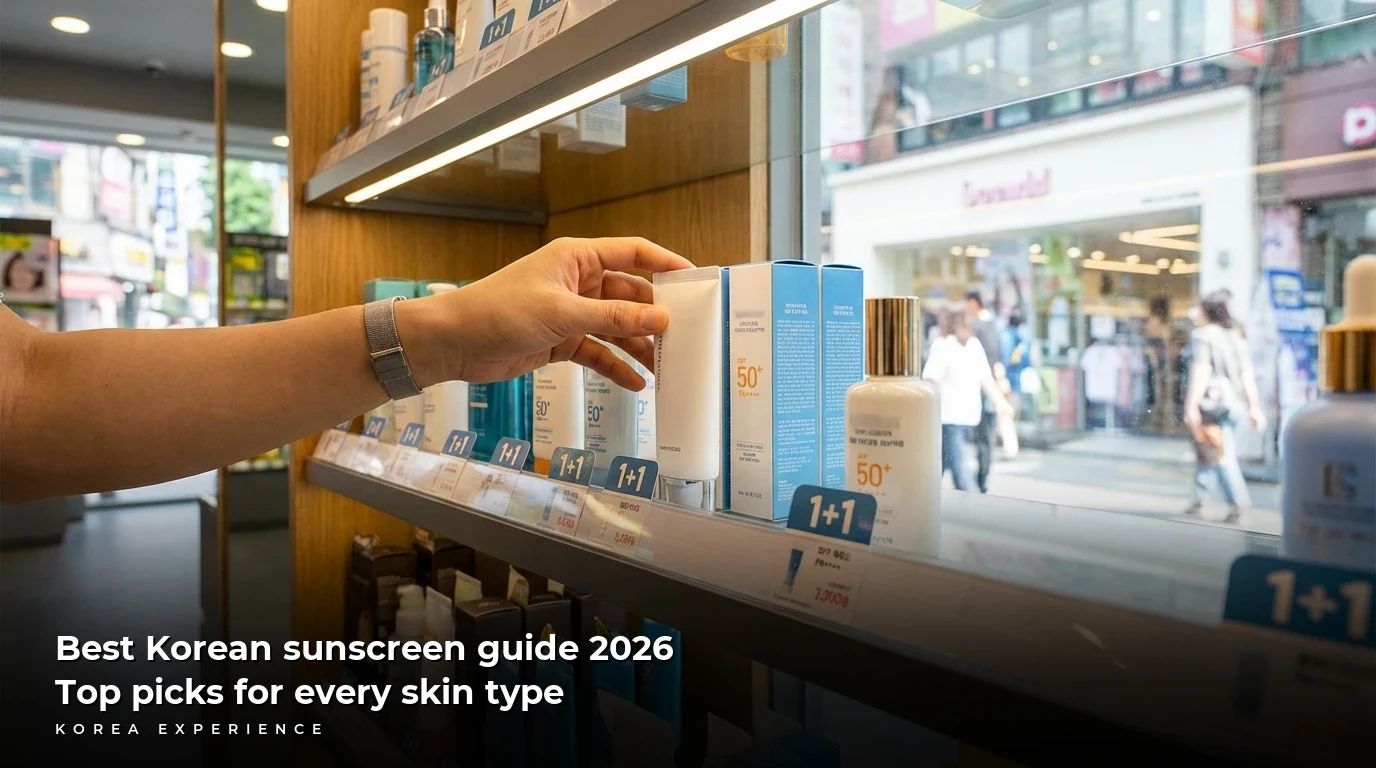
Finding the perfect sunscreen is often a lifelong struggle for many, but in South Korea, it is simply a daily standard of living. In 2026, the gap between Korean sunscreens and their Western counterparts has widened significantly, with Korean formulations focusing on "skincare-first" technology that feels like a light serum rather than a thick, chalky paste. If you are traveling to Korea or looking to upgrade your skincare routine, understanding the nuances of SPF (Sun Protection Factor) and PA (Protection Grade of UVA) ratings is essential.
The short answer: The best Korean sunscreens in 2026 prioritize "hybrid" filters that offer SPF 50+ PA++++ protection with zero white cast, featuring star ingredients like Centella Asiatica and Heartleaf. Top brands to watch include Round Lab, Beauty of Joseon, and d'Alba.
Key Takeaways
- 1Korean sunscreens use advanced filters like Mexoryl and Tinosorb usually not found in US products
- 2The standard protection level in Korea is SPF 50+ and PA++++ (extremely high UVA protection)
- 3You can find high-quality sunscreens at Olive Young for approximately 15,000 to ₩25,000
- 4Sunsticks are the dominant trend for 2026 for hygienic reapplication over makeup
Why Korean sunscreen technology leads the global market
The global obsession with K-Beauty often centers on the "glass skin" aesthetic, and the foundation of that look is rigorous sun protection. Unlike in many Western countries where sunscreen is viewed as a beach-day necessity, in Korea, it is the final step of the daily skincare routine, regardless of the weather.
In 2026, the technology has evolved to address the primary complaints people have about sun protection: texture and irritation. Korean labs have mastered the art of encapsulating UV filters in moisturizing bases. This means products often contain up to 70% skincare ingredients—such as hyaluronic acid, niacinamide, and birch sap—turning a protective measure into a nourishing treatment.
Furthermore, the competition is fierce. With over 2,500 cosmetic brands registered in Korea, a sunscreen that leaves a white cast, pills under makeup, or stings the eyes will not survive on the shelves of Olive Young for more than a few months. This "survival of the fittest" market dynamic ensures that only the most cosmetically elegant formulas rise to the top.
📊 Sunscreen Market Growth
Decoding the label: What SPF 50+ and PA++++ really mean
When shopping for Korean sunscreen, you will almost exclusively see "SPF 50+ PA++++" on the packaging. While SPF (Sun Protection Factor) measures protection against UVB rays (which cause burning), the PA system is specific to Asian markets and measures protection against UVA rays (which cause aging and long-term DNA damage).
The PA system is based on the PPD (Persistent Pigment Darkening) method.
- PA+: Some UVA protection.
- PA++: Moderate UVA protection.
- PA+++: High UVA protection.
- PA++++: Extremely High UVA protection (PPD of 16 or higher).
In 2026, anything less than PA++++ is considered outdated in the Korean market. Because UVA rays penetrate glass and clouds, this high level of protection is crucial for daily wear, even when working indoors near a window.
Pro Tip
If you see "Broad Spectrum" on a Western sunscreen, it equates roughly to PA+++. Korean sunscreens explicitly state the level of UVA protection, giving you more assurance against premature aging.
Top picks by skin type for 2026
Choosing the right sunscreen depends entirely on your skin physiology. Korean brands are excellent at segmenting their products. Here is a breakdown of the best formulations available in 2026.
For dry and dehydrated skin
If your skin feels tight or looks dull, look for "organic" (chemical) sunscreens. These formulas absorb UV rays and convert them into heat, which is then released from the skin. They tend to be thinner and more hydrating.
Top Recommendation: Round Lab Birch Juice Moisturizing Sun Cream remains a bestseller in 2026. It utilizes birch sap from Inje, a mountainous region in Gangwon province, to reduce inflammation while hydrating.
- Texture: Like a light lotion.
- Finish: Dewy, natural glow.
- Price: Approximately ₩25,000 (often 1+1).
For oily and acne-prone skin
People with oily skin often skip sunscreen because of the greasy residue. However, Korean "Air Fit" or "Watery Essence" formulas are designed specifically to combat sebum.
Top Recommendation: Skin1004 Madagascar Centella Hyalu-Cica Water-Fit Sun Serum. This product has gained massive popularity for its ability to calm acne while protecting the skin. It absorbs in under 30 seconds and leaves zero stickiness.
- Texture: Watery serum.
- Finish: Satin/Matte.
- Price: Approximately ₩19,000.
For those struggling with breakouts, combining these sunscreens with a proper cleansing routine is vital. You can read more about building a routine in our complete guide to Korean skincare routine.
For sensitive skin
If chemical filters cause stinging or redness, you need a "physical" (mineral) sunscreen containing Zinc Oxide or Titanium Dioxide. In the past, these left a terrible white cast. In 2026, "nano-zinc" technology minimizes the white cast significantly, though a slight tone-up effect may remain.
Top Recommendation: Dr.G Green Mild Up Sun+. This is a staple in Korean households. It forms a physical barrier that reflects UV rays and includes Pycnogenol to protect the skin from oxidative stress.
Sunscreen Type Comparison 2026
| Feature | Chemical (Organic) | Physical (Mineral) | Hybrid |
|---|---|---|---|
| Primary Filters | New gen (Tinosorb) | Zinc/Titanium | Mix of both |
| White Cast | None | Slight to Medium | Minimal |
| Irritation Risk | Low-Medium | Very Low | Low |
| Best For | Dry/Normal Skin | Sensitive/Baby | Combo Skin |
The rise of sunsticks: A 2026 travel essential
One of the most significant shifts in the last two years has been the normalization of sunsticks for reapplication. Dermatologists recommend reapplying SPF every 2 to 3 hours, but doing so with a cream over foundation is messy.
Sunsticks in 2026 are shaped to fit the contours of the face (under the eyes, around the nose) and come in matte formulas that blot excess oil. They are particularly popular among golfers and hikers in Korea.
Top Pick: Tocobo Cotton Soft Sun Stick. It contains cotton extract and herb complexes that leave a powdery, soft finish. It is essentially like applying a blotting paper that also provides SPF 50+.
Sunsticks vs. Sun Creams
- ✓Hygienic (no hands needed)
- ✓Travel-friendly (solid)
- ✓Great for reapplication over makeup
- ✗Hard to measure dosage
- ✗Waxy texture for some
- ✗Requires multiple passes for full coverage
Where to buy sunscreen in Seoul
While you can find sunscreen at convenience stores like CU and GS25, the selection there is limited and prices are usually full retail (around ₩20,000 to ₩30,000 per tube). For the best variety and deals, you need to visit dedicated beauty retailers.
Olive Young: The Mecca of Sunscreen
Olive Young is the Sephora of Korea, but more accessible. There are over 1,300 stores across the country. The flagship store in Myeongdong is a must-visit, but it is often crowded with tourists. For a quieter experience, try the Gangnam or Hongdae locations.
Olive Young Myeongdong Flagship(올리브영 명동 플래그십)
Duty-Free Shops
If you are planning to buy in bulk (sets of 4 or 6), Lotte Duty-Free or Shilla Duty-Free (often located in department stores or at Incheon Airport) offer significant savings. You can purchase online via their apps and pick up the goods at the airport gate upon departure.
Always look for the '1+1' or 'Special Set' stickers at Olive Young. Korean brands rarely discount single items heavily; instead, they bundle a full-sized product with a refill or a matching cleanser for the same price as the single item.
Price guide: Budget vs. Luxury
Is an ₩80,000 sunscreen worth it? In 2026, the gap in protection between budget and luxury is minimal because the regulations are strict. The difference lies in the packaging, brand heritage, and anti-aging ingredients (like ginseng or high-grade peptides).
💵 Sunscreen Price Tiers 2026
Hanbang (herbal) ingredients, premium scent
Basic, effective, great for body
For those who are budget-conscious, brands like Scinic and Illiyoon offer massive tubes (sometimes 100ml or 150ml) for under ₩20,000. These are excellent for neck, arms, and legs. If you are looking for other budget-friendly beauty items, check out our list of 10 beauty empties I keep re-buying.
Tone-Up Sunscreens: The "No-Makeup" Makeup Look
A unique category in Korea is the "Tone-Up" sunscreen. These are usually peach or pink-tinted formulas designed to brighten the complexion and correct sallowness. In 2026, many Korean women (and men) use a tone-up sunscreen instead of foundation for a natural look.
Brands like d'Alba and Espoir lead this category. The d'Alba Waterfull Tone-Up Sun Cream is particularly famous for giving that "rich hydration" look often associated with luxury spa treatments. It corrects uneven skin tone instantly while providing PA++++ protection.
However, be careful with shade matching. Tone-up creams are designed for East Asian skin tones and can sometimes look ashy on deeper skin tones. We discuss finding complexion products for different skin tones in our guide to best Korean foundations for darker skin tones.
The application technique: How to apply like a local
Having the best product means nothing if applied incorrectly. The "two-finger rule" is the gold standard taught by Korean dermatologists.
📖 The Two-Finger Application Method
Step 1: Measure
Squeeze two full strips of sunscreen along your index and middle fingers.
Step 2: Dotting
Dot the product evenly across your forehead, cheeks, nose, and chin.
Step 3: Layering
Rub in the first layer. If it feels like too much, apply one finger's worth, wait 60 seconds, and apply the second layer.
Step 4: Don't Forget
Apply any excess to your ears and the back of your neck.
Ingredients to look for (and avoid)
In 2026, savvy consumers read the ingredient list before the marketing copy.
Star Ingredients:
- Centella Asiatica (Cica): Calms redness caused by heat and sun exposure.
- Houttuynia Cordata (Heartleaf): excellent for controlling acne and soothing irritation.
- Bamboo Water: Provides deep hydration without oiliness.
- Niacinamide: Brightens skin and controls oil production while protecting the barrier.
Ingredients of Concern:
- Oxybenzone & Octinoxate: These chemical filters are banned in several regions (like Hawaii and Palau) due to reef damage. While effective, many Korean brands labeled "Reef Safe" or "Ocean Friendly" are phasing these out in favor of newer filters like Uvinul A Plus and Tinosorb S.
- Fragrance: While pleasant, high concentrations of artificial fragrance can react with UV light and cause photosensitivity in some individuals.
Sunscreen for medical tourism and after-care
Korea is a hub for medical tourism, specifically laser treatments and plastic surgery. After a procedure like Fraxel or Pico laser, your skin is incredibly sensitive to UV light. Post-inflammatory hyperpigmentation (PIH) is a real risk if you skip SPF.
Dermatologists will usually prescribe or recommend "clinic-grade" sunscreens available at the clinic's front desk. Brands like Cell Fusion C and Histolab are frequently used. These are specifically formulated to cover redness and protect compromised skin barriers.
If you are planning a skin treatment trip, ensure you have a physical sunscreen ready for the recovery period. You can find more details on clinics in our guide to best dermatology clinics in seoul.
Tax Refunds and shopping tips for travelers
Buying sunscreen in Korea is cheaper than buying it imported online, but you can save even more with tax refunds. The Value Added Tax (VAT) in Korea is 10%.
If you buy more than ₩30,000 worth of goods at a participating store (like Olive Young, LOHB, or Chicor), you are eligible for an immediate tax refund. You must show your physical passport to the cashier. The tax amount is deducted instantly from your total bill.
Tax Refund Process
Instant Refund
Show passport at checkout for purchases 30k-₩500k. Pay the tax-free price immediately.
Kiosk Refund
For larger purchases not refunded in-store, scan receipts at airport kiosks before security.
FAQ: Common questions about Korean Sunscreen
❓ Frequently Asked Questions
Have more questions?Contact us →
Conclusion
The landscape of sun protection in 2026 is exciting, accessible, and incredibly advanced. Whether you are strolling through the palaces of Seoul or hiking Seoraksan National Park, there is a Korean sunscreen tailored exactly to your needs. The days of thick, sticky, white-cast sunscreens are over. By choosing the right SPF 50+ PA++++ formula, you are not just preventing burns; you are investing in the long-term health and beauty of your skin.
Remember to stock up before you leave—your skin will thank you. For sensitive skin recommendations to pair with your new sunscreen, don't miss our guide on best Korean face masks for dry sensitive skin.
About the Author
Korea Experience Team
Written by the Korea Experience editorial team - experts in Korean medical tourism, travel, and culture with years of research and firsthand experience.
Explore more in Shopping & K-Beauty
From Olive Young hauls to Myeongdong shopping tips — discover the best K-Beauty products, fashion trends, and shopping destinations in Korea.
Browse All Shopping & K-Beauty ArticlesContinue Reading
Explore more articles you might find interesting
Discover the best K-beauty products for 2026. From viral sunscreens ($15) to barrier creams, here is the ultimate shopping guide with prices and skin type
Discover the top-rated K-Beauty toners of 2026. From the viral Anua Heartleaf to Sulwhasoo luxury, find the perfect pH 5.5 match for your skin barrier.
Stop paying full price! Save up to 70% during Big Bang sales and get instant tax refunds on purchases over 15,000 KRW with this 2026 guide.
Look, don't get overwhelmed by the rows of neon—I've narrowed down the 2026 Olive Young must-buys to the science-backed heavy hitters like salmon DNA serums...
Master the 2026 Korean spatula makeup trend for glass skin. Learn the 90-degree technique, best tools under ₩20,000, and Olive Young shopping tips.
The ultimate 2026 Olive Young shopping guide. Top 25+ must-buy products, sale dates, and how to get an immediate 6-7% tax refund on purchases over ₩30,000.