Complete guide to Korean skincare routine 10 step method 2026
Master the famous 10-step K-beauty routine with our comprehensive guide for 2026, including product recommendations, costs, and store locations.
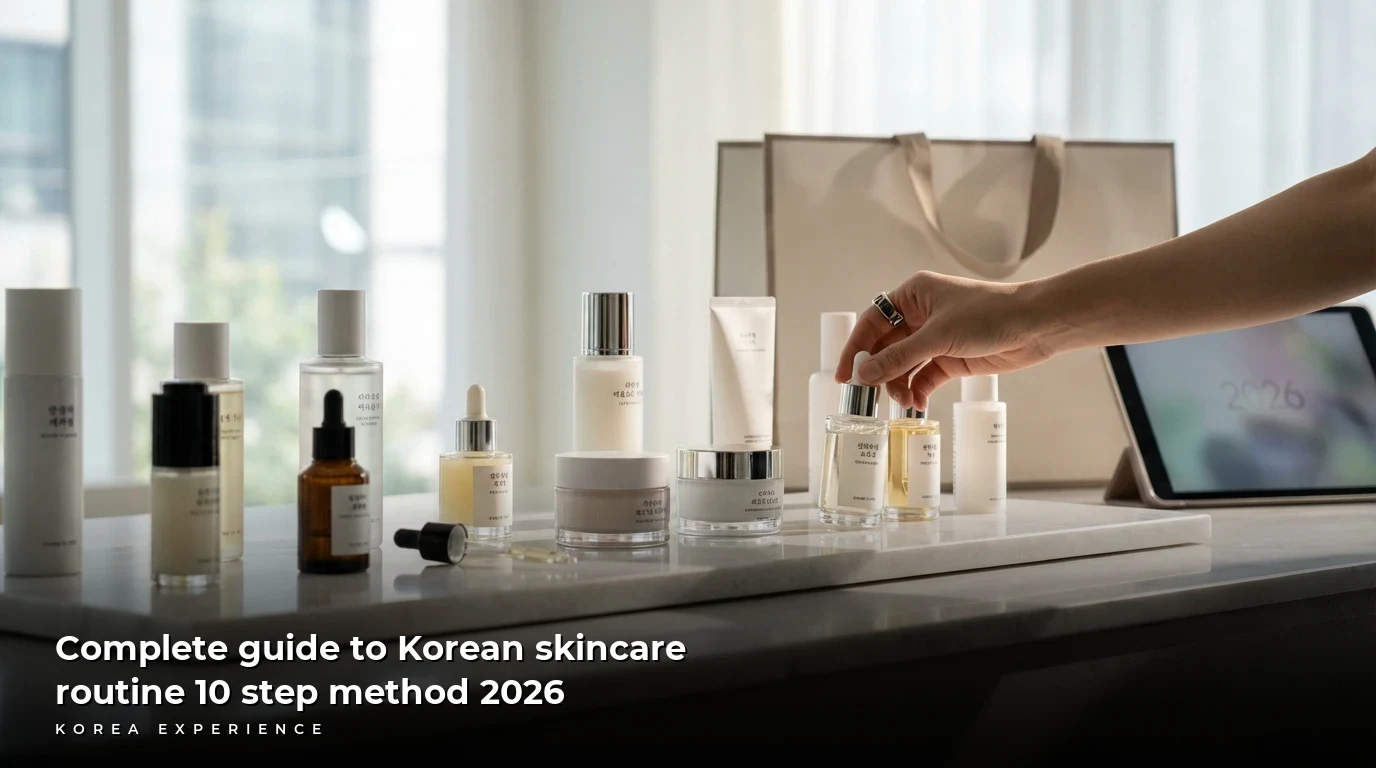
The Korean skincare routine 10 step method is a systematic approach to skin health that prioritizes hydration, gentle layering, and long-term protection over harsh stripping or quick fixes. Unlike Western routines that often focus on "nuking" breakouts with strong actives, the Korean philosophy (K-Beauty) treats the skin as a delicate ecosystem that requires balancing. In 2026, this routine has evolved to incorporate advanced ingredients like PDRN (salmon DNA) and fermentation technology, but the core tenet remains the same: thoroughly cleansing the canvas, balancing the pH, and layering moisture from the thinnest consistency to the thickest to achieve that coveted "glass skin" glow.
The short answer: The 10-step routine consists of an oil cleanser, water cleanser, exfoliator, toner, essence, ampoule/serum, sheet mask, eye cream, moisturizer, and sun protection, typically costing between $150 to $400 for a full starter set in 2026.
Key Takeaways
- 1The 'double cleanse' (oil + water) is the non-negotiable foundation of the routine
- 2Layering products from thinnest to thickest texture ensures maximum absorption
- 3Sun protection (SPF 50+ PA++++) is required daily, even indoors or during winter
- 4You do not need to do all 10 steps every single morning and night
The Philosophy Behind the 10 Steps
Before diving into the specific bottles and jars, it is crucial to understand why this routine exists. In Korea, skincare is considered a part of general hygiene and health, much like brushing your teeth, rather than a vanity project.
The global K-beauty market is projected to reach over $21 billion USD by the end of 2026, driven largely by the export of this philosophy. The routine is built on the concept of "layering." By applying multiple thin layers of hydration, the skin can absorb moisture more effectively than it can from one thick layer of cream. This technique prevents clogged pores while ensuring the skin barrier remains intact.
📊 K-Beauty Market 2026
A typical Korean woman spends approximately 20 to 30 minutes on her evening routine. While this may sound time-consuming to a beginner, the results speak for themselves. The goal is not just to look younger, but to have skin that looks healthy and hydrated enough to require minimal makeup.
Step-by-Step Breakdown of the Routine
Here is the definitive guide to the 10 steps. Note that while this is the "complete" routine, many steps (like exfoliating and masks) are not daily requirements.
📖 The Evening Ritual
Step 1: Oil Cleanse
Massage oil onto dry face to dissolve makeup and sebum.
Step 2: Water Cleanse
Use foam or gel to remove water-based impurities.
Step 3: Exfoliate
Remove dead skin cells (1-2 times weekly).
Step 4: Tone
Balance pH and prep skin for absorption.
Step 5: Essence
Hydrate and aid cell turnover.
Step 6: Ampoule/Serum
Target specific concerns (acne, wrinkles).
Step 7: Sheet Mask
Intense hydration session (2-3 times weekly).
Step 8: Eye Cream
Protect delicate eye area.
Step 9: Moisturizer
Seal in all previous layers.
Step 10: Sunscreen
AM only: The most critical anti-aging step.
Step 1: Oil-Based Cleanser
Frequency: Every Night Average Cost: ₩18,000 - ₩35,000 ($14 - $27 USD)
The first step of the "Double Cleanse" is an oil cleanser. Science dictates that "like dissolves like." Water cannot dissolve oil-based impurities such as SPF, waterproof mascara, and the skin's natural sebum. You must massage the oil (or balm) onto a dry face for at least 60 seconds.
Popular formats include liquid oils and sherbet-like cleansing balms. In 2026, brands are increasingly using lightweight plant-derived oils like jojoba and macadamia nut oil which do not clog pores.
Step 2: Water-Based Cleanser
Frequency: Morning and Night Average Cost: ₩12,000 - ₩25,000 ($9 - $19 USD)
Following the oil cleanser, you use a water-based cleanser (foam, gel, or cream) to remove any remaining sweat, dirt, or oil residue. This ensures your pores are completely clear. A critical trend in 2026 is low-pH cleansers (pH 5.0-6.0) that protect the acid mantle. If your skin feels "squeaky clean" and tight after washing, your cleanser is likely too alkaline and is damaging your moisture barrier.
Step 3: Exfoliator
Frequency: 1-2 times per week (Never daily) Average Cost: ₩20,000 - ₩40,000 ($15 - $30 USD)
Exfoliation removes dead skin cells that cause dullness and block subsequent products from absorbing. Korean exfoliation is generally gentler than Western scrubs.
- Physical: Peeling gels (gommage) that ball up as you massage them.
- Chemical: AHAs (lactic/glycolic acid) for surface exfoliation and BHAs (salicylic acid) for deep pore cleaning.
- 2026 Trend: PHA (Polyhydroxy Acids) and LHA (Lipohydroxy Acids) are gaining massive popularity because they have larger molecules, penetrating slowly to reduce irritation for sensitive skin.
Don't Over-Exfoliate
Over-exfoliating is the most common mistake foreigners make when adopting K-Beauty. If your skin looks shiny (but not oily) and feels sensitive to touch, stop exfoliating immediately and focus on barrier repair.
Step 4: Toner
Frequency: Morning and Night Average Cost: ₩15,000 - ₩35,000 ($11 - $27 USD)
Forget the stinging, alcohol-heavy astringents of the past. Korean toners are "refreshers." They are designed to hydrate and rebalance the skin's pH levels after cleansing. Think of your skin like a sponge; a dried-out sponge cannot absorb soap, but a damp sponge absorbs everything. Toner dampens the sponge.
Look for ingredients like hyaluronic acid, aloe, and mugwort. For specific recommendations, check our guide on best Korean toners for every skin type.
Step 5: Essence
Frequency: Morning and Night Average Cost: ₩25,000 - ₩60,000 ($19 - $45 USD)
This is often considered the heart of the Korean skincare routine. Essences are a hybrid between a toner and a serum. They are lightweight and watery but packed with fermented ingredients (like galactomyces or bifida ferment lysate) that aid in cell turnover and repair.
Fermentation breaks down active ingredients into smaller molecules, allowing them to penetrate deeper into the dermis. This step is crucial for that "lit-from-within" glow.
Step 6: Treatments (Serums, Ampoules, Boosters)
Frequency: Morning and/or Night (depending on ingredients) Average Cost: ₩30,000 - ₩90,000 ($23 - $70 USD)
These are the heavy hitters. Ampoules are super-concentrated versions of serums. You choose these based on your specific skin concern:
- Vitamin C: Brightening and fading dark spots (Morning).
- Retinol/Bakuchiol: Anti-aging and wrinkles (Night).
- Centella Asiatica (Cica): Calming redness and acne.
- Niacinamide: Pore control and texture.
In 2026, we are seeing a shift away from high-percentage actives that irritate the skin. The trend is 'Slow Aging'—using lower percentages of Retinol (0.1% to 0.3%) consistently over years, rather than shocking the skin with strong treatments.
Step 7: Sheet Masks
Frequency: 2-3 times a week (or before a special event) Average Cost: ₩1,000 - ₩5,000 per sheet ($0.75 - $4 USD)
Sheet masks are the most iconic K-Beauty product. They are single-use sheets soaked in ampoule. The sheet creates an occlusive barrier, forcing the antioxidants and vitamins into your skin rather than evaporating.
- Tip: Do not leave the mask on until it is dry. If it dries, it will start conducting reverse osmosis, sucking moisture back out of your skin. 15-20 minutes is the optimal time.
Step 8: Eye Cream
Frequency: Every Night (Morning optional) Average Cost: ₩25,000 - ₩80,000 ($19 - $60 USD)
The skin around the eyes is the thinnest on the body and possesses no oil glands. This is where signs of aging appear first. Korean eye creams tend to be rich in peptides and ginseng. Apply gently with your ring finger (the weakest finger) to avoid tugging the skin.
Step 9: Moisturizer
Frequency: Morning and Night Average Cost: ₩20,000 - ₩50,000 ($15 - $38 USD)
You need to seal in all the previous layers. Moisturizers come in various forms: emulsions (light lotions), lotions, gels, and creams.
- Summer/Oily Skin: Gel-type moisturizers (often water-based).
- Winter/Dry Skin: Cream-type moisturizers with ceramides.
- Sleeping Masks: A sub-category of moisturizer applied thickly at night to be washed off in the morning.
For those battling specific skin issues, you might find our article on best Korean face masks for dry sensitive skin helpful for choosing the right occlusion.
Step 10: Sun Protection (SPF)
Frequency: Every Morning (Reapply every 2-3 hours) Average Cost: ₩15,000 - ₩35,000 ($11 - $27 USD)
If you do steps 1 through 9 but skip step 10, you are wasting your time. UV rays are the number one cause of premature aging. Korean sunscreens are world-famous because they are cosmetically elegant—no white cast, no sticky residue, and they wear beautifully under makeup.
In 2026, the standard is SPF 50+ PA++++. The "PA" rating system measures protection against UVA rays (aging rays), while SPF measures UVB (burning rays). For a deep dive, read our best Korean sunscreen guide.
Customizing Your Routine: Morning vs. Evening
You do not need to perform all 10 steps twice a day. The morning routine focuses on protection, while the evening routine focuses on cleaning and repair.
AM vs PM Routine Structure
| Step | Morning Focus | Evening Focus | Necessary? |
|---|---|---|---|
| Cleansing | Water Cleanse Only | Double Cleanse (Oil + Water) | Mandatory |
| Toner | Light Layer | Multiple Layers | Mandatory |
| Actives | Vitamin C / Antioxidants | Retinol / AHA / BHA | Optional |
| Masking | Skip (unless dry) | Sheet/Sleeping Mask | Optional |
| Protection | Sunscreen (SPF 50+) | Heavy Cream/Oil | Mandatory |
Where to Buy K-Beauty in Korea
If you are traveling to Seoul, buying skincare is an experience in itself. The selection is vast, and the prices are significantly lower than buying online from overseas.
Olive Young (The Sephora of Korea)
Olive Young is ubiquitous, with over 1,300 stores across Korea. It is the best place to find "Road Shop" brands (affordable, high-quality mass market).
- Best for: COSRX, Round Lab, Torriden, Abib, Goodal.
- Tip: Look for the "Olive Young Awards" stickers on products. These are best-sellers voted by millions of Korean consumers.
Olive Young Myeongdong Flagship(올리브영 명동 플래그십)
Chicor & Department Stores
For high-end luxury brands (Sulwhasoo, Hera, History of Whoo), visit Chicor (owned by Shinsegae) or the ground floor of major department stores like Lotte, Hyundai, or Shinsegae.
- Best for: Luxury gifts, premium anti-aging lines.
Duty-Free Shops
If you are planning a large haul, visit Lotte Duty Free or Shilla Duty Free in the city (bring your passport and flight info). You can buy products tax-free and pick them up at the airport gate.
- Limit: As of 2026, the duty-free exemption limit for returning to many countries (like the US) is around $800, but check your local regulations.
For a broader look at shopping, check out our insights on beauty empties and products we keep buying.
Budgeting: Cost of a Full Routine
Building a full 10-step routine can be an investment. However, Korean products are famous for their high price-to-performance ratio. You can build a very effective routine using "Road Shop" brands found at Olive Young.
💵 Routine Cost Estimates (Full 10 Steps)
Using Sulwhasoo, History of Whoo, Amore Pacific
Using brands like Etude, Innisfree, The Saem
2026 Trend: The Rise of "Skipecare" and Customization
While the 10-step routine is the classic standard, a new trend in 2026 is "Skipecare" (Skip Care). This involves using multi-functional hybrid products (like a cream-skin toner that acts as both toner and moisturizer) to reduce the routine to 3-5 steps without sacrificing results. This is popular among busy professionals in Seoul.
Additionally, professional treatments are becoming part of the routine. Instead of just buying products, many travelers now begin their trip with a visit to a dermatology clinic for a skin analysis. If you are interested in this, read about customized skincare and professional analysis or explore the top clinics in our Gangnam skin clinic guide.
Key Ingredients to Know in 2026
When shopping, look for these star ingredients on the labels:
- Mugwort (Artemisia): The ultimate redness reducer. Great for acne-prone skin.
- PDRN (Polydeoxyribonucleotide): Derived from salmon DNA. It promotes rapid tissue regeneration and is the hottest anti-aging ingredient of 2026.
- Heartleaf (Houttuynia Cordata): Excellent for detoxifying and soothing sensitive skin.
- Snail Mucin: A classic for hydration and repairing acne scars.
- Propolis: Bee glue that is anti-bacterial and anti-inflammatory, giving a major glow.
📋 Ingredient Cheatsheet
Frequently Asked Questions
❓ Common Questions About Korean Skincare
Have more questions?Contact us →
Adopting the Korean skincare routine is about more than just buying products; it is about shifting your mindset to view skincare as self-care. Whether you go for the full 10 steps or a modified 5-step version, consistency is the key to achieving that healthy, radiant glow.
For those interested in exploring more about the specific products that fit this routine, don't forget to check our guide to the best Korean lip tints to finish off your look!
About the Author
Korea Experience Team
Written by the Korea Experience editorial team - experts in Korean medical tourism, travel, and culture with years of research and firsthand experience.
Explore more in Shopping & K-Beauty
From Olive Young hauls to Myeongdong shopping tips — discover the best K-Beauty products, fashion trends, and shopping destinations in Korea.
Browse All Shopping & K-Beauty ArticlesContinue Reading
Explore more articles you might find interesting
Master the Korean men's grooming routine with top product picks for 2026. From 3-second all-in-one lotions to pore care, here is your guide to K-Beauty for men.
Master the foundation of K-Beauty with our 2026 guide to double cleansing. Learn the oil-and-water technique that removes 99% of impurities for glass skin.
Discover the secrets of Korean body care, from 15-step scalp spas to traditional milk scrubs. Learn routine steps, costs, and best products for 2026.
Master the 2-step K-Beauty ritual for glass skin. Learn why 92% of Korean women double cleanse, best products for 2026, and how to shop at Olive Young.

Comprehensive guide to setting up utilities in Korea. Master the process for internet, gas, electricity, and water with costs and step-by-step advice.
Comprehensive guide to laser skin treatments in Seoul including costs for Fraxel, Pico, and Shurink, plus 2026 clinic recommendations.