Double Eyelid Surgery Korea Incisional vs Non-Incisional
Explore incisional vs. non-incisional double eyelid surgery techniques in Korea. Understand methods, recovery, costs, and choose the best option for you.
Unveiling the Differences: Incisional vs. Non-Incisional Double Eyelid Surgery in Korea
Korea has long been recognized as the global epicenter for cosmetic surgery, particularly for its advanced and natural-looking results in procedures like double eyelid surgery. For international travelers and expats considering enhancing their eyes, understanding the various techniques available is paramount. The choice between incisional vs. non-incisional double eyelid surgery is one of the most critical decisions, directly impacting the outcome, recovery, and longevity of your results.
This comprehensive guide aims to demystify these popular blepharoplasty techniques, offering a detailed comparison to help you make an informed choice. We'll delve into the specifics of each method, explore ideal candidacy, discuss recovery expectations, provide insights into costs in Korea, and offer practical tips for navigating your medical tourism journey. By the end, you'll have a clear understanding of which double eyelid surgery technique might be best suited for your unique needs and aesthetic goals, all within the world-renowned medical landscape of South Korea.
Understanding Double Eyelid Surgery (Blepharoplasty) in Korea
Double eyelid surgery, medically known as upper blepharoplasty, is one of the most sought-after cosmetic procedures worldwide, and nowhere is it more refined and popularized than in South Korea. The procedure aims to create or enhance a crease on the upper eyelid, which gives the eyes a more open, defined, and often brighter appearance. This crease, often referred to as a "double eyelid," is naturally present in some individuals but absent or faint in others, particularly within East Asian populations.
The Allure of Korean Double Eyelid Surgery
Korea's reputation for double eyelid surgery stems from several factors:
- Expert Surgeons: Korean plastic surgeons are highly specialized and possess extensive experience, performing these procedures daily. Their understanding of Asian facial anatomy is unparalleled.
- Advanced Techniques: Continuous innovation means Korean clinics offer the latest and most refined surgical methods, often leading to natural-looking results.
- State-of-the-Art Facilities: Clinics in areas like Gangnam and Apgujeong boast cutting-edge technology and adhere to stringent safety standards.
- Patient-Centric Care: From initial consultation to post-operative follow-ups, international patients often receive comprehensive support, including translation services and personalized care plans.
What is Double Eyelelid Surgery?
At its core, double eyelid surgery involves creating a fold in the skin of the upper eyelid, mimicking a natural crease. This can be achieved through various methods, primarily categorized into incisional and non-incisional approaches, each with distinct advantages and ideal applications. The goal is always to achieve a harmonious and aesthetically pleasing result that complements the individual's overall facial features, rather than a generic "one-size-fits-all" look.
The Non-Incisional Double Eyelid Method (Suture/Buried Method)
The non-incisional method, also widely known as the "suture method" or "buried method," is a popular choice for those seeking a less invasive approach to creating a double eyelid crease. This technique relies on sutures to create the desired fold without the need for a full incision.
How the Non-Incisional Method Works
Instead of making a continuous incision, the surgeon creates several small, microscopic punctures along the intended crease line. Through these tiny openings, fine sutures are passed and then "buried" beneath the skin and muscle layers. These sutures connect the eyelid skin to the underlying muscle, thereby forming a natural-looking crease when the eye opens. The number of punctures and sutures can vary, typically ranging from 3 to 7, depending on the surgeon's technique and the patient's eyelid structure. The key is to create stable points of adhesion that allow the skin to fold inward.
Ideal Candidates for Non-Incisional Surgery
The non-incisional method is best suited for individuals who:
- Have thin eyelid skin.
- Have minimal excess fat in their eyelids.
- Do not have significant sagging or loose skin.
- Desire a subtle and natural-looking crease.
- Prefer a quicker recovery time.
- Have relatively symmetrical eyelids already.
- Are younger, as skin elasticity tends to be better.
If your eyelids have excessive fat, loose skin, or a very thick appearance, this method might not provide the most stable or long-lasting results.
Benefits and Drawbacks of Non-Incisional Blepharoplasty
Benefits:
- Minimally Invasive: No full incision means less trauma to the tissues.
- Faster Recovery: Swelling and bruising are generally milder and resolve more quickly.
- No Visible Scar: Since there's no continuous cut, there's typically no visible external scar.
- Natural Look: Often results in a soft, natural-looking crease.
- Reversible (in some cases): If a patient is unhappy with the result shortly after surgery, the sutures can sometimes be removed, reversing the procedure.
Drawbacks:
- Less Permanent: The sutures can sometimes loosen or break over time, leading to the crease fading or disappearing, especially in individuals with thicker eyelids.
- Limited Fat/Skin Removal: Cannot remove excess skin, muscle, or fat, making it unsuitable for more complex cases.
- Not for All Eyelid Types: Not effective for very thick eyelids or those with significant excess skin.
- Potential for Asymmetry: While rare, if sutures loosen unevenly, it can lead to asymmetry.
Recovery Expectations for Non-Incisional Surgery
Recovery from non-incisional double eyelid surgery is generally quick and manageable.
- Immediate Post-Op: Mild swelling and bruising are common, typically peaking within 24-48 hours.
- First Week: Most noticeable swelling subsides. You might be advised to apply cold compresses and avoid strenuous activities. Stitches are internal and do not need to be removed.
- 2-4 Weeks: Residual swelling will continue to diminish. Most people can return to work and social activities within a week to ten days. Makeup can usually be applied after the first week.
- Full Result: The final, natural-looking crease typically settles within 1-3 months.
Cost Considerations for Non-Incisional Surgery in Korea
The cost of non-incisional double eyelid surgery in Korea varies based on the clinic's reputation, the surgeon's experience, and the complexity of the individual case. On average, you can expect prices to range from ₩1,500,000 to ₩3,000,000 (approximately 1,100 - 2,200 USD). It's important to remember these are estimates, and a personalized quote will be provided after an in-depth consultation. (For more details on medical tourism budgeting, consider reading our guide on financing your trip to Korea).
The Incisional Double Eyelid Method (Full Incision Method)
The incisional method, also known as the "full incision method" or "cutting method," is a more comprehensive surgical approach that involves making a continuous incision along the desired eyelid crease. This technique allows for greater precision and the ability to address a wider range of eyelid concerns.
How the Incisional Method Works
During an incisional double eyelid surgery, the surgeon makes a full, continuous incision along the planned double eyelid crease. Through this incision, they can meticulously remove excess skin, muscle, and fat that contribute to a heavy or puffy appearance. The underlying tissue is then carefully sculpted and fixed to the levator muscle (the muscle responsible for lifting the eyelid), creating a strong and permanent crease. The incision is then closed with fine sutures. This method provides the surgeon with direct visualization and control over the eyelid's internal structures, allowing for highly customized results.
Ideal Candidates for Incisional Surgery
The incisional method is particularly well-suited for individuals who:
- Have thick eyelid skin or significant excess fat in their eyelids.
- Have loose or sagging skin that needs to be removed.
- Require correction for very asymmetrical eyelids.
- Desire a very defined and permanent crease.
- Have undergone non-incisional surgery previously with unsatisfactory results or fading.
- Are older and experiencing age-related changes around the eyes.
- Have conditions like ptosis (droopy eyelids) that need concurrent correction.
Benefits and Drawbacks of Incisional Blepharoplasty
Benefits:
- Permanent Results: Creates a strong, long-lasting, and often permanent crease.
- Comprehensive Correction: Allows for removal of excess skin, fat, and muscle, effectively addressing puffiness, heaviness, and sagging.
- Suitable for All Eyelid Types: Can be performed on individuals with thick eyelids or significant skin laxity.
- Higher Success Rate: Less prone to fading compared to non-incisional methods.
- Corrects Ptosis: Can be combined with ptosis correction for droopy eyelids.
Drawbacks:
- More Invasive: Involves a full incision, leading to more tissue manipulation.
- Longer Recovery Time: Greater swelling and bruising, with a longer overall recovery period.
- Potential for Scarring: While highly skilled surgeons minimize scarring, a fine line may be visible, especially if eyes are closed. This usually fades significantly over time.
- Not Reversible: The results are generally considered permanent and cannot be easily reversed.
Recovery Expectations for Incisional Surgery
Recovery from incisional double eyelid surgery is longer than the non-incisional method due to the more extensive nature of the procedure.
- Immediate Post-Op: Significant swelling and bruising are common. Cold compresses and head elevation are crucial.
- First Week: Swelling and bruising will be noticeable. Sutures are typically removed around 5-7 days post-surgery. Pain medication may be prescribed.
- 2-4 Weeks: Most major swelling and bruising subside. You can usually return to light work and social activities after sutures are removed, though some residual swelling will be present. Strenuous exercise should be avoided for at least a month.
- 3-6 Months: The crease will gradually soften and naturalize. Any redness along the incision line will fade.
- Full Result: The final, stable appearance may take up to 6 months to a year, as the tissues completely heal and settle.
Cost Considerations for Incisional Surgery in Korea
Incisional double eyelid surgery typically ranges from ₩2,000,000 to ₩4,000,000 (approximately 1,500 - 3,000 USD) in Korea. The price can be higher if combined with other procedures like ptosis correction or fat repositioning. These figures are estimates and will vary by clinic and individual case complexity.
Partial Incisional Double Eyelid Method: A Middle Ground
Beyond the two main categories, some clinics in Korea offer a "partial incisional" method, which can be considered a hybrid approach. This technique aims to combine the benefits of both full incision and non-incisional methods, offering a solution for specific eyelid types.
Understanding Partial Incision
In a partial incisional surgery, the surgeon makes a small, short incision (or a few very small incisions) along the intended crease line, rather than a continuous one across the entire eyelid. Through these limited incisions, excess fat can be removed, and sutures are then used to create a natural crease that connects the eyelid skin to the underlying muscle, similar to the non-incisional method but with more control over fat removal. This method is less invasive than a full incision but more robust than a purely non-incisional approach.
Who Benefits from Partial Incision?
This method is suitable for individuals who:
- Have moderate excess fat that needs removal but not significant loose skin.
- Desire a more permanent crease than the non-incisional method, but a less invasive procedure than a full incision.
- Have thin to moderately thick eyelid skin.
- Seek a quicker recovery than full incision, with better longevity than non-incision.
Recovery for partial incision falls between the other two methods, with swelling and bruising generally resolving faster than full incision but potentially longer than non-incision. Scarring is minimal, usually less noticeable than a full incision.
Key Factors to Consider When Choosing Your Technique
Deciding between incisional, non-incisional, or partial incisional blepharoplasty requires careful consideration of several factors unique to your anatomy and goals.
Your Eyelid Anatomy and Skin Type
This is perhaps the most crucial factor. A qualified surgeon will assess:
- Eyelid Thickness: Thicker eyelids with more fat often benefit from incisional surgery.
- Skin Laxity: Excess or loose skin almost always requires an incisional approach to remove it.
- Underlying Muscle Structure: The strength of your levator muscle and existing fat pads play a role.
- Eyebrow Position: Your eyebrow height relative to your eyes is also important for a natural outcome.
Desired Outcome and Longevity
- Natural vs. Defined: Non-incisional often yields a softer, more natural fold. Incisional can create a more defined and prominent crease.
- Permanence: If you seek a permanent solution with minimal risk of fading, incisional is generally preferred. Non-incisional results can last many years but carry a higher chance of loosening over time.
Recovery Timeframe
- Quick Recovery: If you have limited time in Korea or prefer a faster return to daily activities, the non-incisional method offers a quicker recovery.
- Extended Downtime: Be prepared for a longer social downtime and healing period if opting for incisional surgery. Plan your travel accordingly to allow for adequate rest and follow-up.
Budget and Pricing in Korea
While cost shouldn't be the sole deciding factor, it's a practical consideration. Incisional surgery is typically more expensive due to its complexity and the amount of surgical work involved. However, consider the long-term value: a more permanent incisional result might prevent the need for revision surgery down the line, potentially saving money and hassle.
Choosing Your Clinic and Surgeon in Korea
Korea’s medical tourism infrastructure is well-equipped to serve international patients. However, selecting the right clinic and surgeon for your double eyelid surgery is critical for a safe and satisfactory experience. Seoul, especially the Gangnam and Apgujeong districts, is home to a vast number of highly reputable plastic surgery clinics.
Researching Reputable Clinics
- Look for Specialization: Many clinics specialize in eye surgery. Seek out those with extensive experience in blepharoplasty.
- Board Certification: Ensure your surgeon is board-certified by the Korean Society of Plastic and Reconstructive Surgeons.
- Before-and-After Galleries: Review extensive portfolios of previous patients with similar eyelid types to yours. Look for natural and consistent results.
- Patient Reviews: Check online reviews and forums from other international patients. Websites specializing in medical tourism often have aggregated reviews.
- Accreditation: Some clinics are accredited by international organizations, signaling adherence to global safety and quality standards.
The Importance of Consultation
A thorough in-person consultation is non-negotiable. During your consultation in Korea:
- Be Honest: Clearly communicate your aesthetic goals and medical history.
- Ask Questions: Don't hesitate to ask about the surgeon's experience, the specific technique they recommend for you, potential risks, and recovery timeline.
- Digital Imaging: Many clinics offer 3D simulations or digital imaging to help visualize potential outcomes.
- Understand the Plan: Ensure you fully grasp the surgical plan, including the exact placement of the crease and any additional procedures.
Navigating Communication and Language Barriers
Many top clinics catering to international patients offer dedicated patient coordinators and professional translation services. English, Chinese, and Japanese are commonly spoken by staff in these clinics. Confirm these services are available when you book your consultation. Clear communication is vital for ensuring your expectations align with the surgeon's plan.
Practical Tips for Medical Tourists
- Accommodation: Book accommodation close to your clinic for easy access during follow-up appointments. Areas like Gangnam offer numerous hotels and serviced apartments.
- Transportation: Seoul's public transportation is excellent, but consider taxis for immediate post-op travel.
- Visa Requirements: Check Korea's visa requirements for your nationality well in advance.
- Support System: If possible, travel with a companion, especially for more extensive procedures like incisional surgery.
- Prepare for Follow-Ups: Plan to stay in Korea for at least 7-10 days for non-incisional surgery, and 10-14 days for incisional surgery, to accommodate suture removal and initial follow-up checks.
- Insurance: Medical tourism insurance can provide peace of mind in case of unforeseen complications.
Example Locations and Estimated Price Ranges
Seoul's Gangnam and Apgujeong districts are the heart of Korea's plastic surgery industry, featuring hundreds of renowned clinics. When budgeting, consider these general estimated price ranges (in Korean Won and approximate USD, subject to fluctuation):
- Non-Incisional Double Eyelid Surgery: ₩1,500,000 - ₩3,000,000 (approx. 1,100 USD - 2,200 USD)
- Partial Incisional Double Eyelid Surgery: ₩1,800,000 - ₩3,500,000 (approx. 1,350 USD - 2,600 USD)
- Incisional Double Eyelid Surgery: ₩2,000,000 - ₩4,000,000 (approx. 1,500 USD - 3,000 USD)
- Note: Prices can increase if combined with other procedures like ptosis correction, epicanthoplasty, or lateral canthoplasty.
Double Eyelid Surgery Techniques Comparison
To further clarify the distinctions, here are detailed comparison tables summarizing the key aspects of incisional and non-incisional double eyelid surgery.
Incisional vs. Non-Incisional Blepharoplasty at a Glance
| Feature | Non-Incisional (Suture/Buried Method) | Incisional (Full Incision Method) |
|---|---|---|
| Procedure | Tiny punctures, sutures buried to create crease | Continuous incision along crease, removal of skin/fat/muscle |
| Invasiveness | Minimally invasive | More invasive |
| Scarring | Virtually no visible external scar | Fine incision line, fades significantly over time |
| Longevity | Good, but can loosen or fade over time; potentially reversible | Permanent and stable |
| Recovery Time | Faster (1-2 weeks initial, 1-3 months final) | Longer (2-4 weeks initial, 3-6 months+ final) |
| Cost (₩) | 1,500,000 - 3,000,000 | 2,000,000 - 4,000,000 |
| Fat/Skin Removal | No | Yes, allows for significant removal |
| Suitability | Thin eyelids, minimal fat/skin, younger patients, natural look | Thick eyelids, excess fat/skin, older patients, definitive crease |
Ideal Candidate Comparison
| Eyelid Characteristic | Best Suited For Non-Incisional | Best Suited For Incisional |
|---|---|---|
| Eyelid Skin | Thin, good elasticity | Thick, excess, loose |
| Eyelid Fat | Minimal | Moderate to significant |
| Existing Crease | Absent or very faint | Absent, faint, or asymmetrical |
| Puffiness | None to minimal | Moderate to significant |
| Droopiness (Ptosis) | Not suitable for correction | Can correct mild to moderate ptosis |
| Desired Outcome | Subtle, natural, temporary | Defined, permanent, comprehensive |
General Recovery Timeline Comparison
| Timeframe | Non-Incisional (Suture/Buried Method) | Incisional (Full Incision Method) |
|---|---|---|
| Day 1-3 | Mild swelling, slight bruising. Minimal discomfort. Cold compresses advised. | Moderate to significant swelling and bruising. Discomfort managed with medication. Cold compresses. |
| Day 5-7 | Swelling significantly reduced. Most people can resume light activities. | Sutures typically removed. Major swelling starts to subside but still noticeable. |
| Week 2-3 | Most visible signs of surgery (swelling, bruising) have subsided. | Significant improvement in swelling and bruising. Can usually return to work with makeup. |
| Month 1 | Crease settling, looks more natural. Final results becoming apparent. | Swelling continues to decrease. Incision line may still be slightly visible/red. |
| Month 3-6 | Final results are typically stable and natural. | Swelling mostly gone. Incision line continues to fade. Final results emerge. |
| Month 6-12 | No further significant changes expected. | Complete healing. Incision line typically very faint. Final, permanent results. |
Frequently Asked Questions (FAQ)
Here are some common questions international patients have regarding double eyelid surgery in Korea:
Q1: Is double eyelid surgery permanent?
The incisional method offers permanent results, as it directly modifies the eyelid's internal structures. The non-incisional method, while long-lasting for many, carries a higher chance of the crease loosening or fading over time (years), especially if the eyelid anatomy changes or if the initial sutures are not strong enough.
Q2: Will I look unnatural after double eyelid surgery?
Korean plastic surgeons are renowned for creating natural-looking results that harmonize with the individual's facial features. The goal is to enhance, not drastically change. During your consultation, you can discuss your desired crease height and style to ensure the outcome meets your expectations for naturalness. Choosing an experienced surgeon is key to avoiding an unnatural or "operated on" look.
Q3: How long do I need to stay in Korea for the surgery and recovery?
For non-incisional surgery, it's generally recommended to stay in Korea for at least 7-10 days to allow for initial healing and a follow-up check. For incisional surgery, a stay of 10-14 days is advisable, as sutures need to be removed around day 5-7, and you'll benefit from additional healing time under the surgeon's observation before long-distance travel.
Q4: Can I combine double eyelid surgery with other procedures?
Yes, it is common for patients to combine double eyelid surgery with other eye-enhancing procedures such as epicanthoplasty (inner corner eye surgery), lateral canthoplasty (outer corner eye surgery), or ptosis correction (for droopy eyelids). Some patients also combine it with other facial procedures like rhinoplasty or fat grafting. This can optimize overall facial harmony and efficiency during your medical trip.
Q5: What are the potential risks and complications?
As with any surgical procedure, there are potential risks, though they are generally low with experienced surgeons. These can include swelling, bruising, temporary numbness, infection, asymmetry, excessive scarring (more with incisional if not properly healed), and in rare cases, dry eyes or difficulty closing the eyes completely. Your surgeon will thoroughly discuss all potential risks during your consultation.
Conclusion and Actionable Takeaways
Navigating the choices between incisional vs. non-incisional double eyelid surgery in Korea can seem daunting, but armed with the right information, you can make a confident decision. Both blepharoplasty techniques offer distinct advantages, catering to different eyelid types and aesthetic goals.
Key Actionable Takeaways for Your Journey:
- Prioritize Consultation: The most crucial step is a personalized consultation with a board-certified plastic surgeon in Korea. Their expert assessment of your eyelid anatomy will guide the best technique for you.
- Define Your Goals: Be clear about your desired outcome: Do you seek a subtle, natural crease or a more defined, permanent one? How much downtime can you realistically afford?
- Research Thoroughly: Invest time in researching reputable clinics and surgeons, focusing on those with extensive experience in eye surgery and a strong portfolio of natural results. (For deeper insights, explore our article on "How to Choose a Plastic Surgery Clinic in Seoul").
- Budget Wisely: Understand the estimated costs for each procedure and factor in travel, accommodation, and post-operative care into your overall budget.
- Plan Your Recovery: Allow ample time in Korea for proper healing and follow-up appointments. Do not rush your recovery process.
Korea remains a premier destination for double eyelid surgery, offering unparalleled expertise and cutting-edge techniques. By understanding the nuances of incisional and non-incisional methods, you're better equipped to achieve the beautiful, harmonious eyes you desire.
Medical Disclaimer
The information provided in this blog post is intended for general informational purposes only and does not constitute medical advice. It is not a substitute for professional medical advice, diagnosis, or treatment. Always seek the advice of a qualified healthcare provider for any questions regarding a medical condition or treatment. The Korea Experience Team does not endorse any specific medical procedure, clinic, or surgeon mentioned. Individual results may vary.
Emergency Contacts in Korea
- Emergency (Ambulance, Fire, Police): 119
- Medical Information Center (24/7): 1339 (provides medical consultation, hospital information, and translation services)
About the Author
Korea Experience Team
Written by the Korea Experience editorial team - experts in Korean medical tourism, travel, and culture with years of research and firsthand experience.
⚠️ Medical Disclaimer
The information provided on this website is for general informational purposes only and does not constitute medical advice. Always consult with qualified healthcare professionals before making any medical decisions.
Explore more in Medical Tourism
World-class medical procedures at competitive prices. From plastic surgery and dermatology to dental care and health checkups — your complete guide to medical tourism in Korea.
Browse All Medical Tourism ArticlesContinue Reading
Explore more articles you might find interesting
A complete guide to revision nose surgery in Seoul including 2026 costs, recovery timelines, rib cartilage techniques.
Your comprehensive guide to double eyelid surgery in Korea, covering procedures, costs, recovery, and finding the best clinics for international patients.
Explore 2026 male plastic surgery trends in Korea for jawline definition and gynecomastia. Discover top clinics, costs, and recovery insights for international patients interested in medical tourism.
Explore breast augmentation in Korea 2026: understand costs, find top clinics, learn about recovery, and get practical tips for your medical journey.
Explore the ultimate guide to Mint and Silhouette Soft thread lifts in Korea for 2026 Learn about procedures costs clinics and recovery
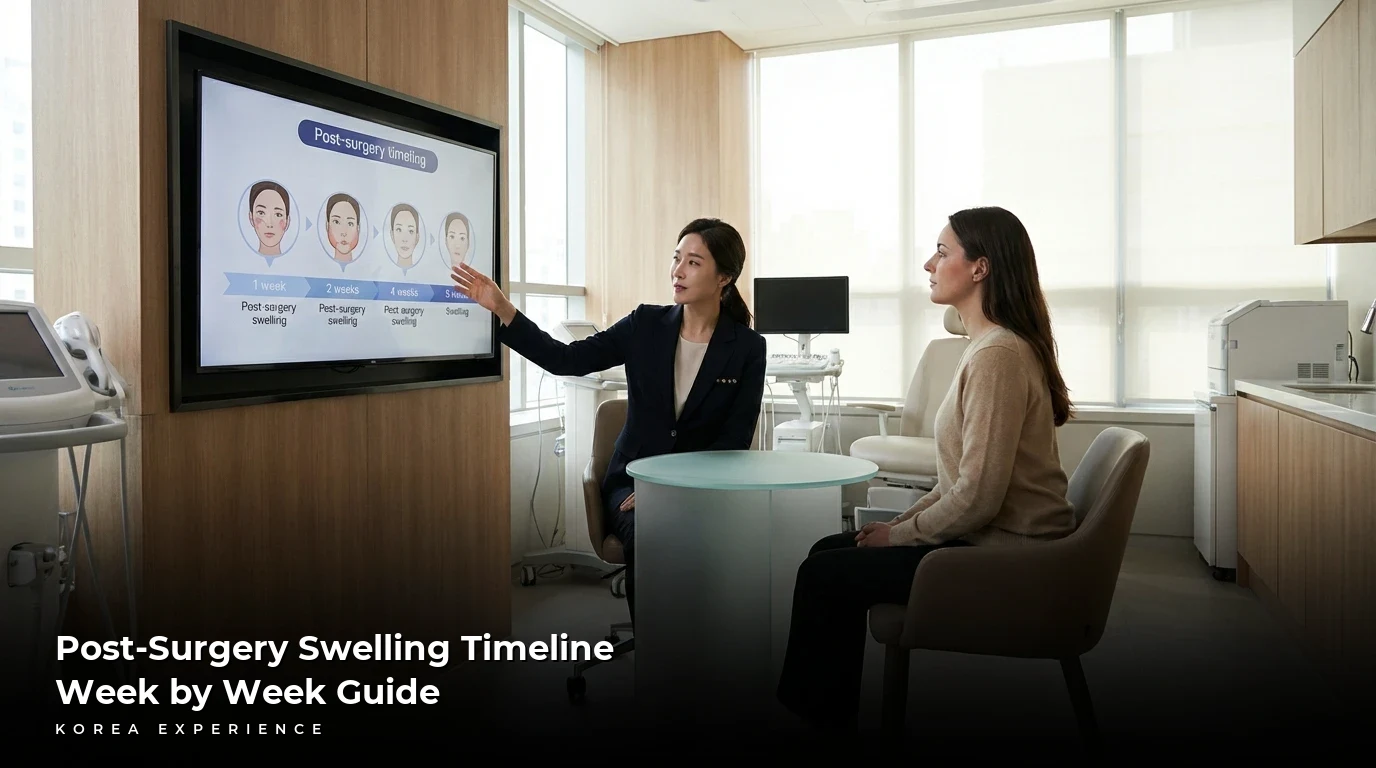
Understand the Post-Surgery Swelling Timeline in Korea. Our week-by-week guide helps international patients manage recovery expectations for various procedures.