Korean Honorifics in Everyday Situations: A Practical Guide
Master Korean speech levels, honorific verbs, and everyday address terms to navigate daily social interactions with confidence and cultural awareness.
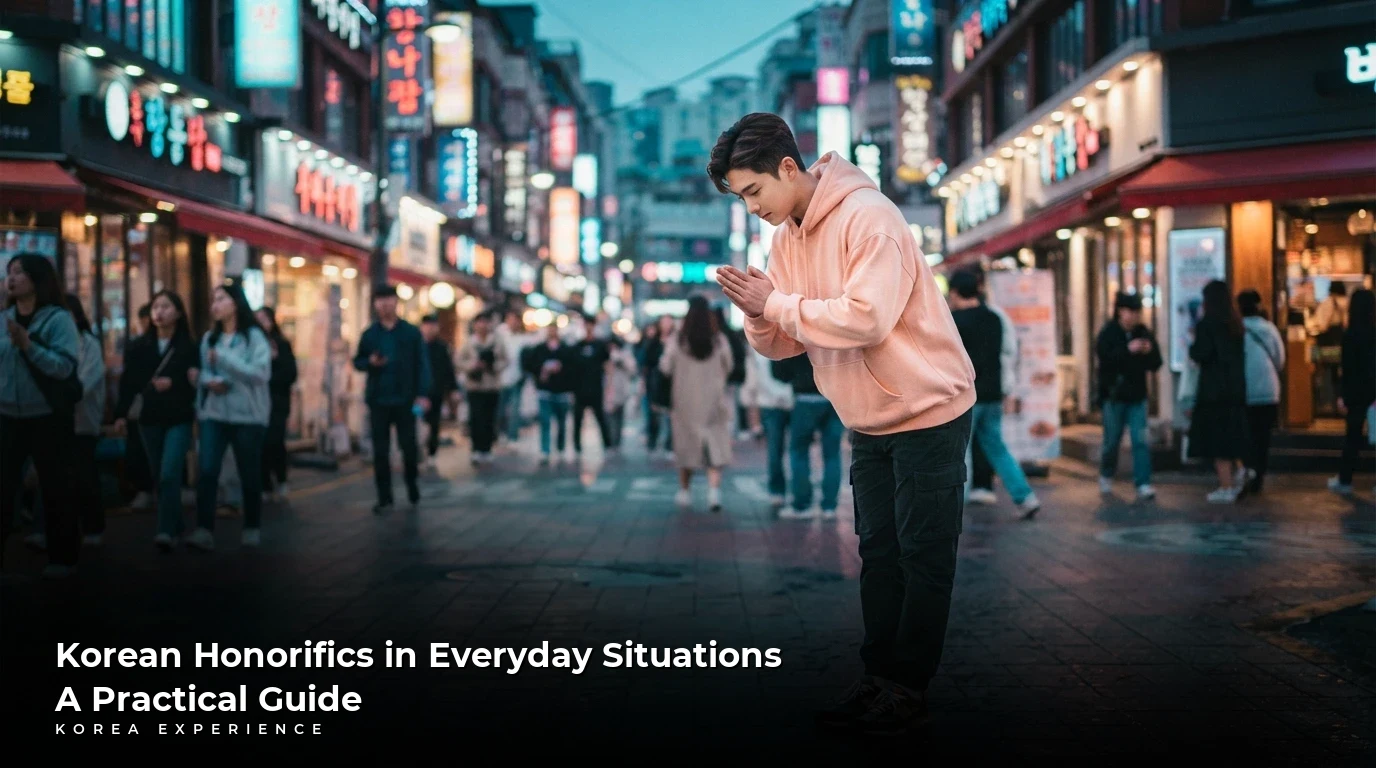
Navigating Korean social interactions requires an understanding of how language adapts to relationships, status, and context. Korean speech is structured around two distinct concepts: addressee politeness, which respects the listener, and subject honorifics, which respect the person being discussed. Mastering these mechanics helps prevent social friction and ensures clear, respectful communication in daily life.
Politeness vs. Honorifics: The Core Distinction
To use Korean correctly, it helps to separate how you address someone from how you talk about someone:
- Politeness levels (존댓말 / jondaemal): This relates to addressee honorification. It respects the listener through sentence endings. Whether you are talking about the weather or someone else, the level of politeness is chosen based on your relationship with the person hearing your words.
- Subject honorifics (높임말 / nopimmal): This respects the subject—the person performing an action or the person being discussed. It uses special verb modifications, particles, and elevated nouns when referring to elders, superiors, or customers.
While beginner learners often experience terminology overlap between jondaemal (polite language generally) and nopimmal (honorific raising language), both systems work together to govern everyday communication.
Key Speech Levels Used in Daily Life
Traditional Korean features six speech levels, but modern daily interactions rely primarily on four:
- 합쇼체 (Hapsyo-che) — Formal Polite: Ends in
-습니다 / -ㅂ니다. This level is standard for professional presentations, news broadcasts, and formal customer service environments. - 해요체 (Haeyo-che) — Informal Polite: Ends in
-아요 / -어요 / -해요. This is the standard, safe choice for daily interactions with strangers, shopkeepers, service staff, and casual acquaintances. Absolute beginner recommendations uniformly point to mastering hae-yo-che first as a universal safety net. - 해체 (Hae-che) — Informal Casual (Banmal): Used exclusively with close friends of the same age or younger people.
- 해라체 (Haera-che) — Plain Style: Used primarily in writing or when speaking down to children.
Practical Honorific Verbs and Special Vocabulary
When talking about elders, superiors, or customers, regular verbs and nouns must be replaced with elevated equivalents.
- 먹다 (to eat) $\rightarrow$ 드시다 (honorific)
- 자다 (to sleep) $\rightarrow$ 주무시다 (honorific)
- 있지요 / 있다 (to be/exist) $\rightarrow$ 계시다 (honorific)
- 나이 (age) $\rightarrow$ 연세 (honorific)
- 집 (house) $\rightarrow$ 댁 (honorific)
Important Rule Note: Honorific vocabulary is never used for oneself. For example, when referring to your own house, age, or actions, you use standard or humble forms (such as using humble pronouns like 저 for "I" or 저희 for "we").
Modifying Verb Stems: The -(으)시- Marker
To honor the subject performing an action, the infix -(으)시- is added to verb stems before applying the polite sentence ending (yielding forms like -세요 or -으세요).
- Vowel ending: 가다 (to go) $\rightarrow$ 가시다 $\rightarrow$ 가세요 (Please go / Goes)
- Consonant ending: 먹다 (to eat) $\rightarrow$ 먹으시다 $\rightarrow$ 드세요 (Special honorific verb form)
Common Address Terms and Titles (-씨 vs. -님)
Choosing the right suffix when addressing people prevents accidental awkwardness:
- -씨 (ssi): Attached to a person's first name (never their last name alone). It is used for peers or individuals of equal social standing.
- -님 (nim): Attached to full names, titles, or professions (such as 선생님 seonsaengnim or 사장님 sajangnim) to denote professional status, customer status, or a higher degree of respect.
Cultural Context: Why Honorifics Matter
Rooted historically in Confucian hierarchy (장유유서 / Jang-yu-yu-seo), Korean social context relies heavily on these linguistic cues. Using inappropriate non-honorific speech (반말 / banmal) toward elders, strangers, or superiors can cause offense, awkwardness, or social friction. At the same time, native speakers typically understand that foreign learners are navigating a complex system and will cut learners some slack. Because strict enforcement parameters and social repercussions vary depending on whether you are in a corporate office or a casual dining setting, context always dictates how rigid these applications feel.
Sources
About the Author
Korea Experience Team
Written by the Korea Experience editorial team - experts in Korean medical tourism, travel, and culture with years of research and firsthand experience.
Explore more in K-Culture
K-Pop, K-Drama, traditional arts, and modern culture — dive deep into the cultural phenomena that have captivated the world.
Browse All K-Culture ArticlesContinue Reading
Explore more articles you might find interesting
Master the art of Nunchi in 2026. Learn how this Korean social superpower unlocks smoother travel, business success, and deeper cultural connections.
Master the art of Korean tea etiquette with our 2026 guide to Darye including best teahouses brewing steps and cultural insights for travelers
Discover the deep meaning of Uri or We in Korean collectivism. Learn how this cultural concept shapes dining, social life, and travel in Korea for 2026.
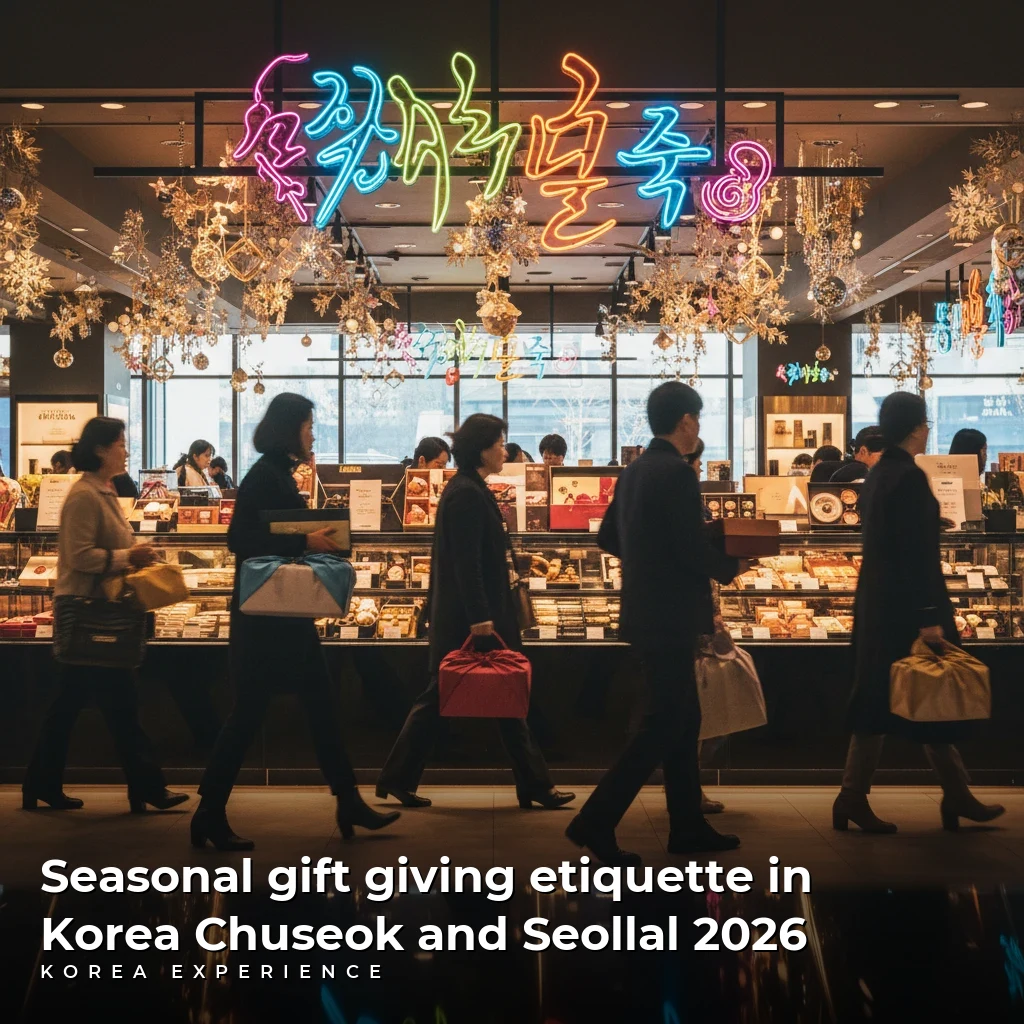
Master the art of Korean holiday gifting for Seollal and Chuseok 2026 with our complete guide on etiquette, budgets, and cultural taboos.
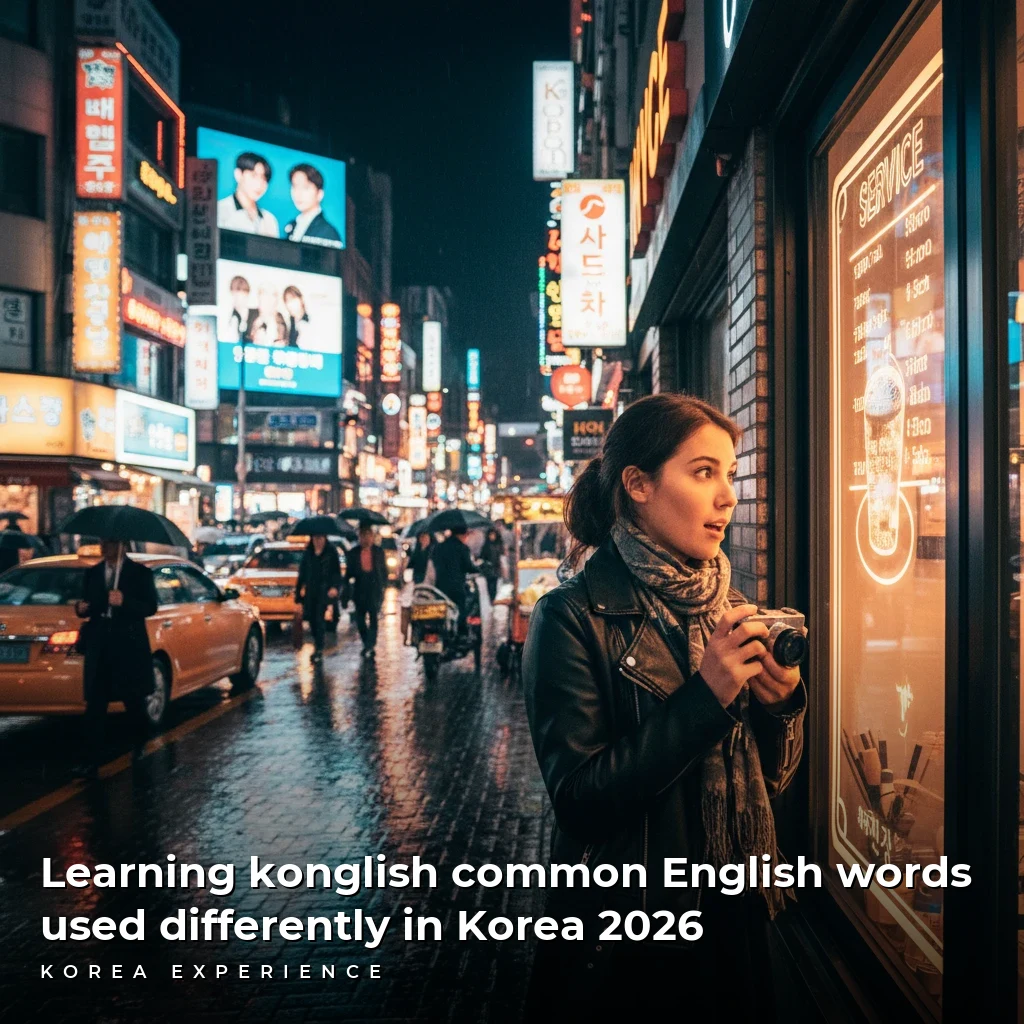
Master essential Konglish terms for your 2026 Korea trip. From ordering coffee to taxi directions, decode common English words used differently in Seoul.

Master the Korean karaoke remote, find English tracks, and navigate K-Pop song requests with this essential guide for travelers.