Korean Name Meanings and Hanja: What a Name Generator Can Do
Explore the structure of Korean names, how hanja works, and what online name generators can and cannot tell you about real cultural naming.
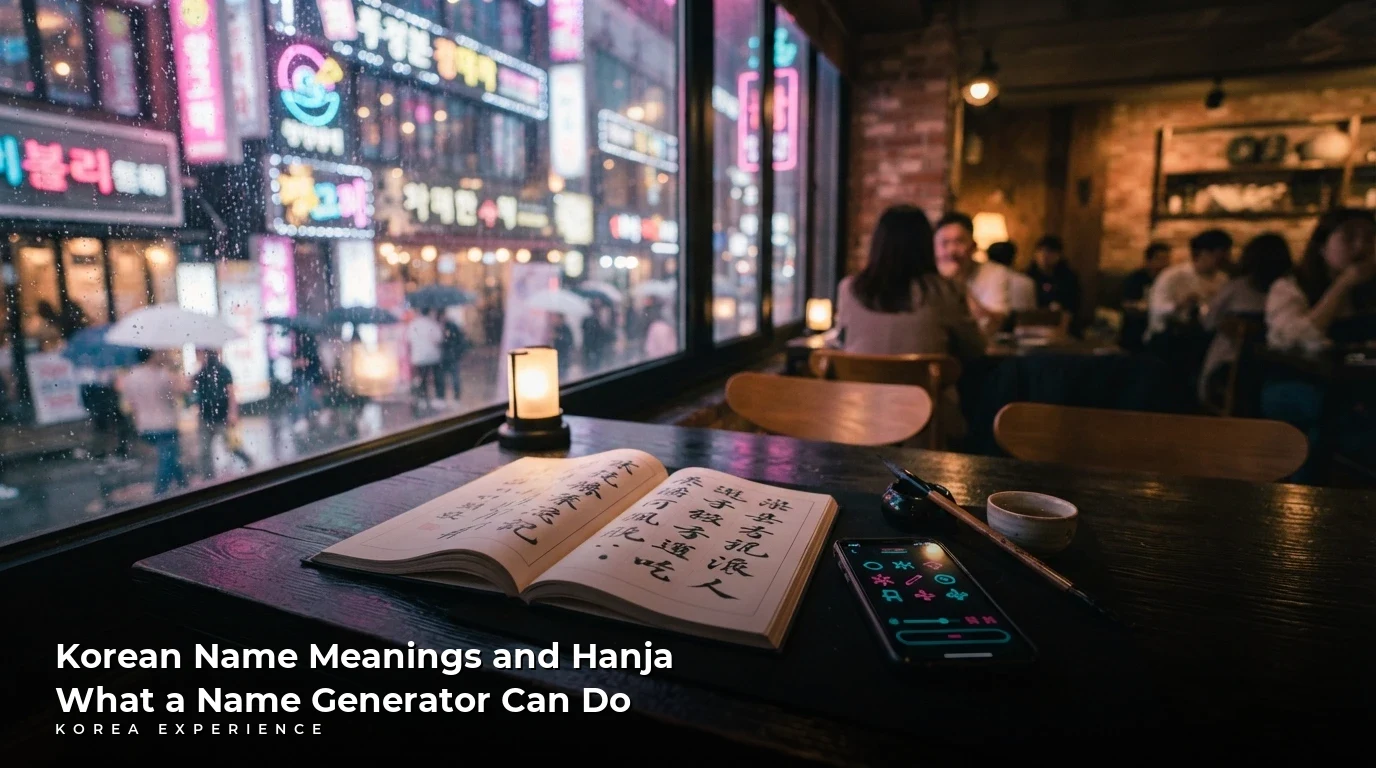
Understanding Korean names requires looking beyond surface-level translations. While online name generators offer a quick way to explore Hangul characters and basic meanings, they often oversimplify a complex system rooted in linguistic rules, family lineage, and cultural traditions.
Anatomy of a Real Korean Name
A standard modern Korean name follows a precise structure: a single-syllable family name (seong) followed by a two-syllable given name (ireum), written together without spaces (for example, Hong Gil-dong). Middle names are not used in the traditional or modern naming system.
Surnames are limited in variety, with roughly half of South Koreans sharing common names like Kim, Lee/Yi, or Park. To distinguish between families sharing the same surname, Koreans look to their bon-gwan (ancestral seat or clan origin, such as Gimhae Kim versus Gyeongju Kim). This denotes a specific patrilineal lineage rather than just a shared phonetic sound.
Given names are typically two syllables long. In Sino-Korean names, each syllable corresponds to a hanja (Chinese character) that carries a specific lexical meaning.
What a Name Generator Can Tell You
Basic online tools and name generators are useful for surface-level exploration and creative projects. They typically provide:
- Phonetic Transliteration (Hangul Mapping): Most tools convert foreign letters or sounds into approximate Korean phonetic blocks (Hangul) following standard loanword and pronunciation rules (such as mapping Michael to 마이클).
- Generic Hanja Meanings: Many generators match syllables to common hanja database entries, giving standard dictionary definitions for individual characters (for example, mapping Min to cleverness or Jun to talent).
- Inspirational Combinations: Generators can provide stylized, culturally structured options—combining a surname with a two-syllable given name—that mirror contemporary naming trends. These can be useful for fictional characters or general curiosity.
What a Name Generator Cannot Tell You
Because algorithms rely on simple database lookups, they miss the cultural depth, historical context, and personal intent behind authentic Korean names.
- True Name Creation vs. Transliteration: Typing a foreign name into a generator produces a phonetic approximation of foreign sounds. Real Korean names are chosen for linguistic harmony, family lineage, or aesthetic meaning, rather than serving as direct translations of foreign words.
- Contextual Hanja Selection: A single phonetic sound in Korean (such as Min-jun or Seo-yeon) can map to dozens of different hanja characters. A generic generator assigns random or default characters, meaning it cannot reveal the actual intent, family background, or specific characters chosen by a real person.
- Absence of Saju and Philosophical Balancing: Traditional Korean naming practices often consider classical principles like Saju (Four Pillars of Destiny, based on birth date and time energy) and element balancing (Ohang / Five Elements). Automated generators omit these personalized philosophical layers.
- Clans and Lineage Context: A generator cannot assign a legitimate bon-gwan or family registry background. The output remains a surface-level combination completely detached from real genealogical heritage.
Traditional Customs Versus Modern Practice
Traditional naming guides emphasize strict adherence to customs like dollimja (generation markers), where one syllable of the given name is shared among siblings or a specific generation within a clan based on generational charts or element cycles.
However, contemporary sociological practice shows that many modern South Korean parents frequently bypass these customs. Modern parents often select names purely for aesthetic appeal, pleasant sound, or even choose pure Korean names—native words like Hana or Nuri that have intrinsic meanings in Korean but cannot be written in hanja.
Sources
About the Author
Korea Experience Team
Written by the Korea Experience editorial team - experts in Korean medical tourism, travel, and culture with years of research and firsthand experience.
Explore more in K-Culture
K-Pop, K-Drama, traditional arts, and modern culture — dive deep into the cultural phenomena that have captivated the world.
Browse All K-Culture ArticlesContinue Reading
Explore more articles you might find interesting
Explore ethnic rhinoplasty in Korea, where advanced techniques meet cultural sensitivity to enhance your nose while preserving unique facial identity.
Master Korean speech levels, honorific verbs, and everyday address terms to navigate daily social interactions with confidence and cultural awareness.
Explore how Korean webtoons work, from domestic and global reading platforms to AI translation tools and physical pop-up experiences in Seoul.
Explore Seoul's Big 3 K-pop HQs with subway fares at 1,550 KRW. Find the SM Kwangya store open daily and discover hidden fan cafes near HYBE.
Explore Seoul's 2026 indie scene from Hongdae to Mullae where entry costs just 20,000 KRW and global apps unlock tickets.
Discover Seoul's 2026 vinyl culture where 20,000 records meet premium highballs. Explore hidden listening bars with entry fees starting at 10,000 KRW.