Korean Public-Bath Visit Guide: Etiquette, Facilities, and
A practical guide to visiting Korean public baths and jjimjilbangs, covering facility layouts, entry procedures, hygiene rules, and health safety.
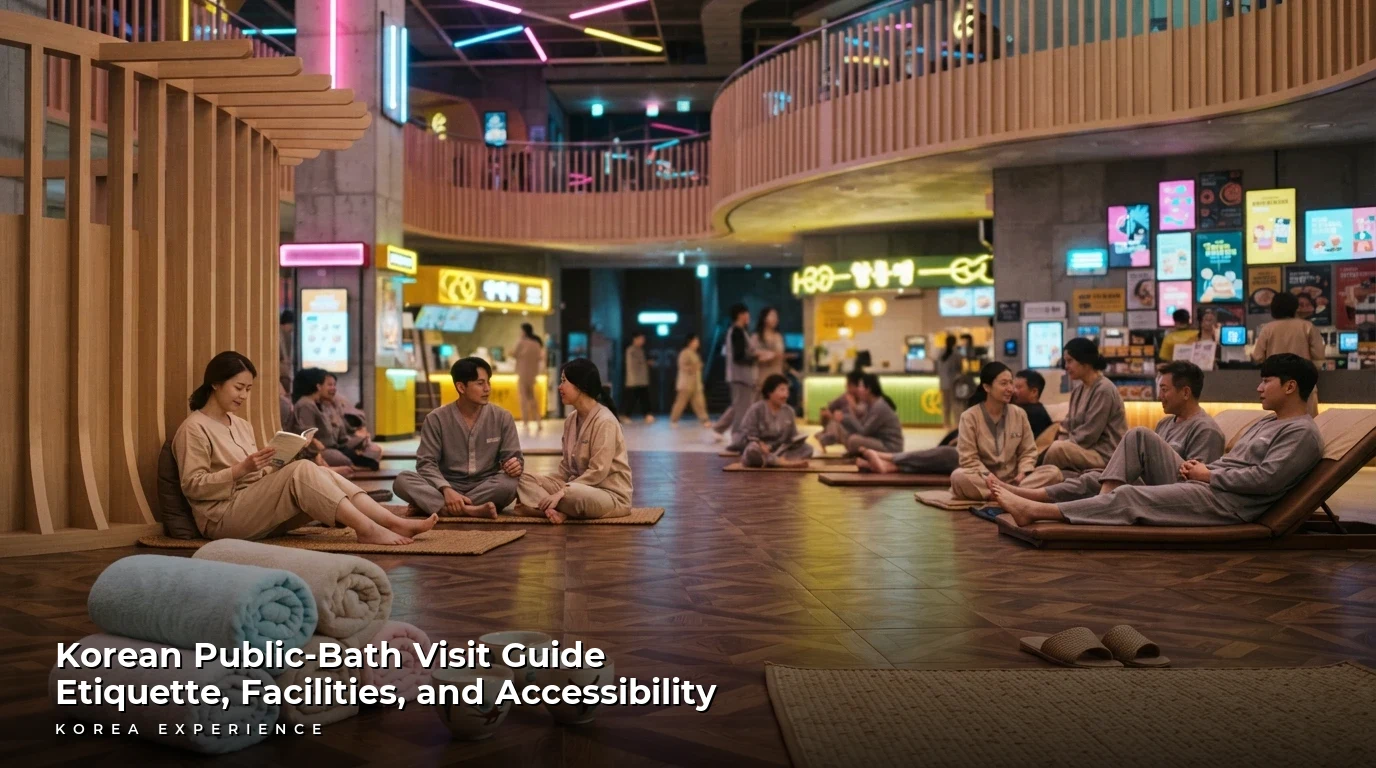
Navigating a Korean public bathhouse or spa complex can feel intimidating for first-time visitors, but understanding the basic operational flow, hygiene rules, and cultural etiquette ensures a smooth experience. Korean bathing facilities generally combine traditional hygiene practices with communal relaxation spaces, scaling from small neighborhood bathhouses to expansive, multi-story lifestyle complexes.
Facility Structure and Layout
Korean public bathing facilities are typically divided into two main operational sections:
- Mogyoktang (Wet Zone): This is the traditional, gender-segregated bathhouse. It features washing stations, hot and cold soaking tubs, and sauna rooms. Complete public nudity is mandatory here, and swimsuits are not permitted.
- Jjimjilbang (Common Area): This is a mixed-gender communal rest area where visitors gather to relax, sleep, and socialize. Unlike the wet zone, wearing clothing—specifically the t-shirt and shorts provided upon entry—is mandatory.
Specific amenities vary significantly between small, neighborhood-focused bathhouses and large, high-end lifestyle complexes.
Admission, Entry Process, and Fees
The entry process follows a standardized routine across most facilities:
- Shoe Storage: Visitors pay an entry fee at the reception counter, store their outdoor shoes in a designated shoe locker using a key or number, and hand over their shoe locker key.
- Locker Assignment: In exchange, staff provide a separate locker key (or an electronic wristband) for the changing room, along with a uniform (jjimjilbok) for the mixed-gender common areas.
- Incidental Expenses: Wristbands and electronic keys are frequently used to tabulate internal incidental purchases—such as snacks, drinks, or professional body scrubs—which are paid for upon exiting the facility.
Note on Costs: Entry fees typically range between ₩7,000 and ₩20,000, depending on the scale of the facility and whether overnight or multi-zone access is included.
Etiquette, Hygiene, and Clothing Rules
Hygiene is taken very seriously in Korean public baths. Adhering to established protocols prevents social friction and maintains public health standards:
- Mandatory Pre-Soak Washing: Patrons must thoroughly wash and rinse their bodies at the sit-down shower or washing stations before entering any of the shared soaking tubs.
- Clothing Requirements: Nudity is strictly confined to the gender-segregated wet zones (mogyoktang). In the mixed-gender jjimjilbang areas, the issued uniform must be worn at all times.
- Hair Management: Visitors with long hair should tie it back or secure it with a clip to keep it out of shared water zones.
- Tattoos: While traditional neighborhood baths maintain informal cultural conservatism, modern Korean saunas and large lifestyle spas generally do not ban or restrict visitors with tattoos, contrasting with stricter policies found in countries like Japan.
What to Pack and Refreshments
Most facilities provide basic necessities, but bringing a few personal items enhances comfort:
- Packing List: Basic personal skincare items, specialized toiletries if you prefer specific brands, and a hair tie or clip for long hair. Towels and basic soap are typically supplied on-site.
- Food and Refreshments: Traditional snacks purchased and consumed in the common areas include sikhye (a sweet rice punch) and maekbanseok gyeran (baked or roasted eggs).
Accessibility and Health Safety
Note: The following health and accessibility details require careful consideration and venue-specific verification.
Health and Medical Precautions
Public health guidelines explicitly mandate that individuals with contagious skin diseases or epidemic conditions are strictly forbidden from entering public bathing facilities. Furthermore, high-temperature rooms and hot-water immersion carry physiological risks; pregnant women and individuals with heart conditions or pre-existing cardiovascular vulnerabilities are strongly cautioned against using high-temperature hot spots or intense saunas. These medical recommendations must be cross-checked against official municipal health guidelines.
Physical Accessibility
Comprehensive, standardized accessibility metrics—such as wheelchair navigation specifics, lift accommodations for multi-story spa complexes, or universal compliance data—remain largely undocumented in primary tourism portals. Because accessibility standards vary widely from one location to another, visitors requiring specific accommodations must verify accessibility directly with the venue before visiting.
Sources
About the Author
Korea Experience Team
Written by the Korea Experience editorial team - experts in Korean medical tourism, travel, and culture with years of research and firsthand experience.
Explore more in K-Culture
K-Pop, K-Drama, traditional arts, and modern culture — dive deep into the cultural phenomena that have captivated the world.
Browse All K-Culture ArticlesContinue Reading
Explore more articles you might find interesting
A practical guide to finding public restrooms in South Korea, covering subway stations, malls, accessible facilities, and navigation tools.
A practical guide to finding lost items in Seoul, covering subway lines, taxis, public venues, and official national police databases.
Master K-pop concert prep in Korea with our essential guide covering strict passport ticket verification, venue entry, and safe transit home.
The short answer? Always use two hands when pouring or receiving a drink and never, ever fill your own glass—it's the fastest way to signal you're a tourist.
Explore the chilling history of Seoul through haunted palaces and dark tourism spots. Discover ghost stories and practical visiting tips for 2026.
Everything you need to know about renting traditional Korean dress in Seoul including latest 2026 prices, style comparisons, and palace entry rules.