Lost Property in Seoul: Official Reporting Channels for Transit &
A practical guide to finding lost items in Seoul, covering subway lines, taxis, public venues, and official national police databases.
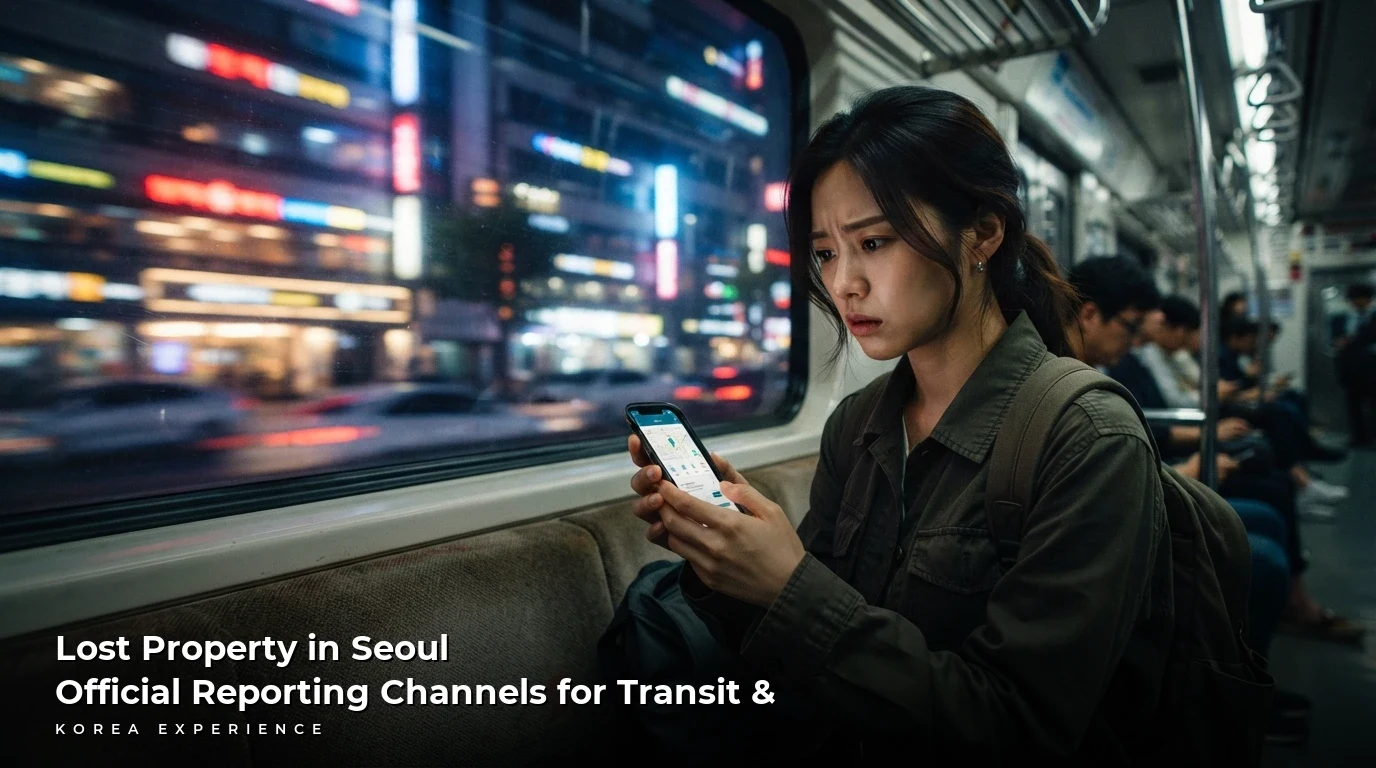
Losing an item in Seoul can be stressful, but the city features structured, centralized systems designed to help recover lost belongings efficiently. Because transit lines, taxi networks, and public venues handle missing property differently depending on the timeframe, knowing precisely where to look makes all the difference.
Most transit networks and local venue counters hold items locally for approximately seven days before transferring unclaimed property into the national police database. This guide outlines the official channels, phone numbers, and digital portals you need to navigate the recovery process successfully.
Seoul Subway Lost & Found Centers
Seoul subway lines manage lost property locally through designated, line-specific Lost & Found Centers. Transit operators typically hold items for roughly seven days before turning unclaimed belongings over to the police.
If you know the line on which you lost your item, contact the corresponding center directly:
| Subway Line(s) | Operating Station / Center | Contact Number |
|---|---|---|
| Lines 1 & 2 | City Hall Station Lost & Found Center | 02-6110-1122 |
| Lines 3 & 4 | Chungmuro Station Lost & Found Center | 02-6110-3344 |
| Lines 5 & 8 | Wangsimni Station Lost & Found Center | 02-6311-6765 / 6768 |
| Lines 6 & 7 | Taereung Station Lost & Found Center | 02-6311-6766 / 6767 |
| Line 9 | Sports Complex / Dongjak Station (Varies by operator section) | 02-2656-0930 / 02-2656-0009 |
| Korail-operated lines (Suin-Bundang, Gyeongchun, Gyeongui-Jungang, sections of Lines 1/3/4) | Korail Customer Service / Network Operations | 1544-7788 |
Note: Minor administrative variations exist regarding specific operator sections on Line 9 (routing between Sports Complex and Dongjak station offices), so calling both numbers if necessary is recommended.
Seoul Taxis and Payment Tracking
Recovering items left in a Seoul taxi depends heavily on how you hailed and paid for the ride:
- App-Based Taxis (e.g., Kakao T): Taxis accessed via digital applications maintain automated trip records, enabling direct customer support routing through the app's history or help center.
- Street-Hailed Taxis with Card Receipts: If you paid by credit card or transportation card, physical or digital card receipts provide essential vehicle identification numbers. You can trace card payments using the T-money Taxi Information Center at
1644-1188. - Individual/Private Taxis: For general inquiries regarding private taxis (
개인택시), you can contact the dedicated lookup line at1544-7771.
Important Limitation: Cash payments made without retaining a paper receipt or mobile transaction text make tracking private or individual taxis exceptionally difficult to verify or recover programmatically without filing a formal police report.
General Venues, Police Portals, and Government Infrastructure
When items are not recovered immediately through local transit offices or venue front desks, they are ultimately funneled into the national police lost property administration database.
Official Government & Police Portals
- Police Civil Service 24 (경찰민원24): Core police lookup services have transitioned integration under this portal (
minwon24.police.go.kr), updating older databases historically known as LOST112. Items held at local venue counters or transit offices do not automatically populate on the national database until the local holding period (typically around seven days) elapses. - Police Non-Emergency / Lost Item Reporting Line: Call
182for guidance on filing official missing item reports. - Korea Travel Hotline: For multilingual interpretation support (English, Japanese, and Chinese), call
1330. - Seoul Dasan Call Center: For general Seoul city municipal information and navigation assistance, call
120.
Human Review Notice: For sensitive or legal situations—such as missing official government identity documents like passports—consult official primary government advisories directly for mandatory consular replacement protocols and formal police report procedures.
Sources
About the Author
Korea Experience Team
Written by the Korea Experience editorial team - experts in Korean medical tourism, travel, and culture with years of research and firsthand experience.
Explore more in Living in Korea
Everything expats and long-term visitors need to know — from visa requirements and housing to banking, healthcare, and daily life tips.
Browse All Living in Korea ArticlesContinue Reading
Explore more articles you might find interesting
A practical guide to finding public restrooms in South Korea, covering subway stations, malls, accessible facilities, and navigation tools.

A practical guide for a Seoul to Busan weekend trip covering train operators, neighborhood bases, and managing transit logistics.
Discover 2026 Seoul transit updates including the 1,550 won base fare and new Climate Card options that save money for travelers taking over 3 rides daily.
A practical Seoul rainy-day itinerary focused on transit-connected museums, covered traditional markets, underground shopping arcades, and mega-malls.

A practical guide to visiting Korean public baths and jjimjilbangs, covering facility layouts, entry procedures, hygiene rules, and health safety.

A practical guide to finding breakfast in Korea as a traveler, covering hotel buffets, traditional soup shops, and 24/7 convenience stores.