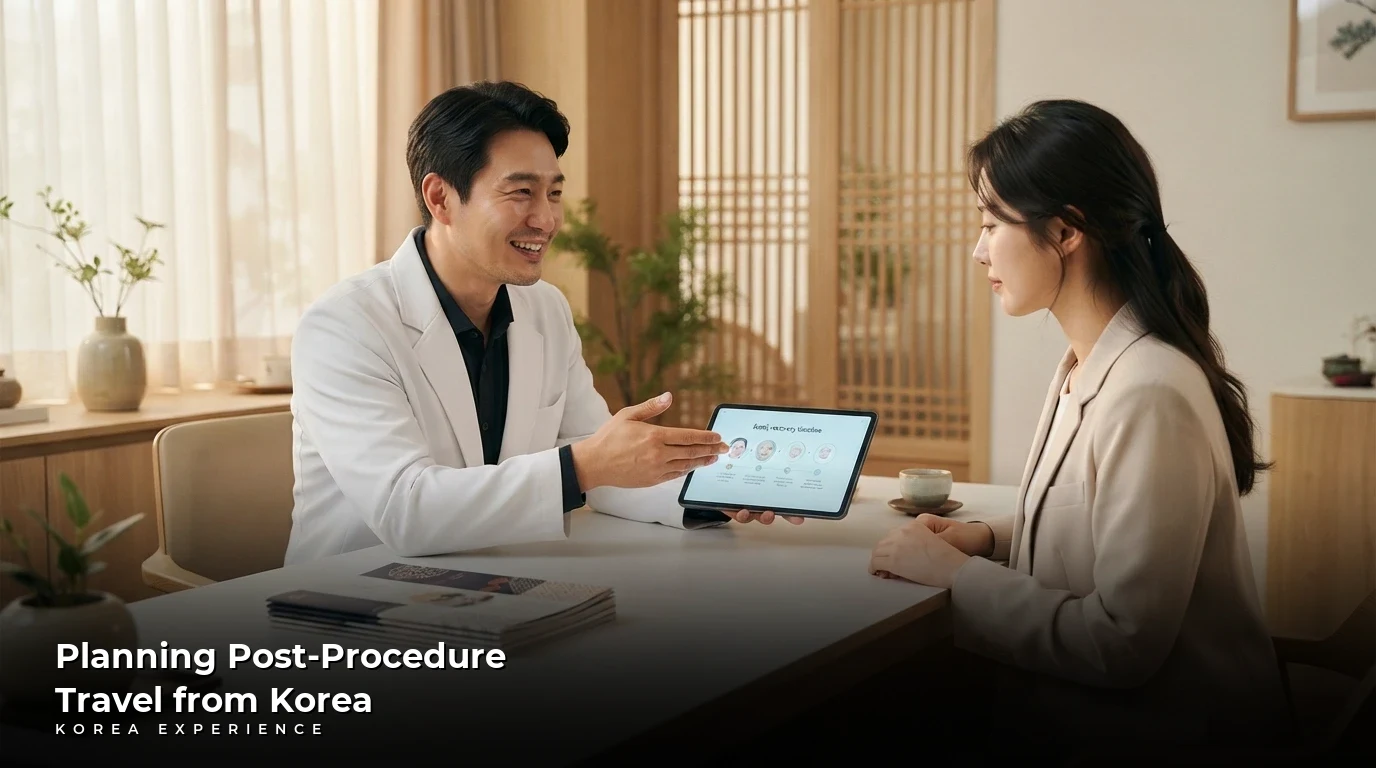
If you receive medical treatment in South Korea and plan to travel afterward, discuss your itinerary with the clinician responsible for your care. Recovery and fitness to fly depend on the individual, the treatment, and any complications. There is no universal number of days that is safe for every procedure. This article is general travel-planning information, not medical advice or flight clearance.
Ask your clinician about your individual plan
Before booking a non-changeable return flight, ask the treating clinician what follow-up is needed and whether your planned travel may affect your care. Useful questions include:
- What symptoms or changes should prompt me to contact the clinic or seek urgent care?
- Do I need an in-person follow-up, wound check, test, or removal of sutures before leaving?
- Is there any reason my specific condition or treatment could make flying unsuitable at the time I plan to travel?
- What should I do if recovery takes longer than expected?
The answers must come from the treating clinician who knows your medical history and treatment—not a travel article, sales representative, or general itinerary.
Keep the schedule flexible
Where practical, choose accommodation and transport arrangements that can be changed. Ask the provider how to contact the clinic outside the scheduled appointment and what follow-up is available after you leave Korea. If a coordinator is involved, confirm the coordinator's role and who is clinically responsible for answering medical questions.
Do not schedule sightseeing or a long transfer immediately after treatment without discussing it with your care team. Ask whether you will need assistance carrying luggage, walking, taking medication, or attending follow-up. These needs vary by treatment and person.
Prepare records and travel documents
Before departure, request the documents your home clinician may need, such as a medical summary, medication list, test results, or procedure details. Ask which documents are available in English and whether additional translation is needed. Keep copies of receipts, consent forms, prescriptions, and the clinic's contact information in a secure place.
If you use medication or medical devices while traveling, ask your clinician how to store and carry them. Check the airline's current requirements directly, especially if you may need assistance, additional equipment, or documentation. Airline acceptance is separate from a clinician's medical opinion.
If the plan changes
If you develop new or worsening symptoms, contact your treating provider or local emergency services as appropriate instead of relying on the planned travel schedule. If a dispute or administrative problem arises, official patient-support services can explain their respective processes, but they do not replace clinical advice.