SMILE pro eye surgery the 2026 tech upgrade
Discover SMILE Pro eye surgery in Korea, the 2026 tech upgrade from traditional LASIK. Learn its benefits, process, and why Korea is your top destination.
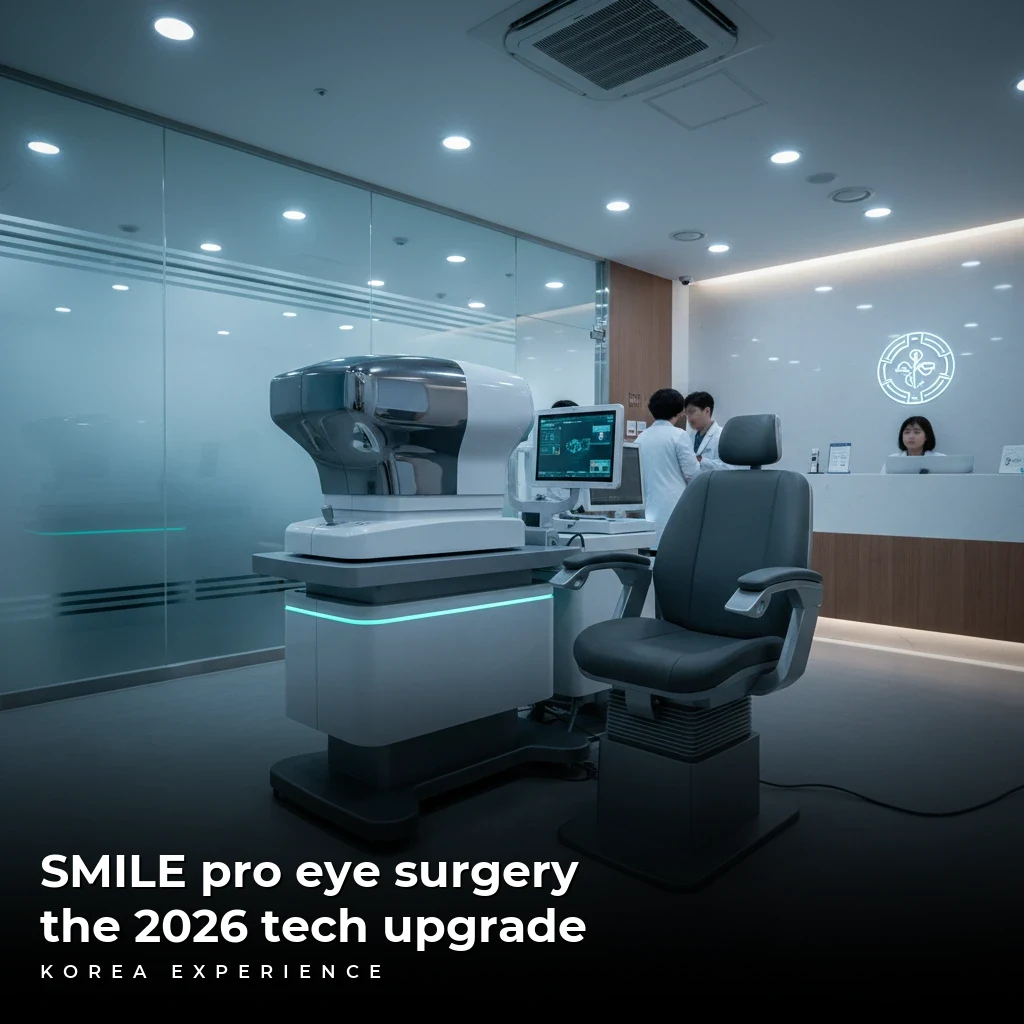
SMILE Pro Eye Surgery: The 2026 Tech Upgrade Revolutionizing Vision Correction
The quest for perfect vision is as old as humanity's struggle with blurry sight. For decades, LASIK has been the gold standard, liberating millions from glasses and contact lenses. Yet, as technology relentlessly advances, so does our ability to refine and improve medical procedures. Enter SMILE Pro Eye Surgery, the cutting-edge evolution that is poised to become the definitive 2026 tech upgrade in refractive surgery, particularly when experienced through the world-class medical tourism landscape of South Korea.
If you are an international traveler or expat contemplating vision correction, you've likely heard of LASIK. But what if there was a procedure that offered even greater precision, faster recovery, and minimized the potential for common post-operative discomforts? In this comprehensive guide, we will delve into the intricacies of SMILE Pro Eye Surgery, uncover its technological superiority over traditional LASIK, and explore why South Korea stands as the unrivaled destination for this transformative procedure. Prepare to learn about the process, what to expect, and practical tips for navigating your medical journey to achieve crystal-clear vision.
What is SMILE Pro Eye Surgery and How Does It Differ from Traditional LASIK?
For many, the mention of eye surgery for vision correction immediately brings LASIK to mind. However, the ophthalmic world is dynamic, with innovations constantly pushing boundaries. SMILE Pro Eye Surgery represents a significant leap forward, building on principles of minimal invasiveness to offer a refined experience.
Understanding LASIK 2026: The Foundation
Even in 2026, LASIK (Laser-Assisted in Situ Keratomileusis) remains a highly effective procedure. It involves creating a thin, hinged flap on the cornea, lifting it, reshaping the underlying corneal tissue with an excimer laser, and then repositioning the flap. This method has successfully corrected myopia (nearsightedness), hyperopia (farsightedness), and astigmatism for millions. Its primary advantages include rapid visual improvement and a generally high success rate.
However, the creation of a corneal flap, while well-managed, is also the source of some of LASIK's limitations. These include potential for flap complications, such as displacement, and a higher incidence of dry eyes post-surgery due to the severing of more corneal nerves.
Introducing SMILE Pro: The Next Generation
SMILE (Small Incision Lenticule Extraction) surgery, and its advanced iteration, SMILE Pro Eye Surgery, takes a fundamentally different approach. Instead of creating a flap, SMILE Pro uses a high-precision femtosecond laser to create a small, lens-shaped piece of tissue (called a lenticule) inside the intact cornea. This lenticule, which is precisely shaped to correct the patient's refractive error, is then extracted through a tiny keyhole incision, typically less than 4 millimeters wide.
The "Pro" in SMILE Pro often signifies the very latest advancements in the technology, such as faster laser pulse rates, enhanced eye tracking, and improved surgical planning software, leading to even quicker treatment times and potentially better outcomes. The key difference lies in the minimally invasive nature, avoiding the creation of a large corneal flap.
Here's a concise comparison of the two procedures:
| Feature | Traditional LASIK 2026 | SMILE Pro Eye Surgery 2026 |
|---|---|---|
| Corneal Incision | Large hinged flap (approx. 20-22mm circumference) | Small keyhole incision (less than 4mm) |
| Laser Type | Femtosecond laser (for flap) + Excimer laser (for reshaping) | Femtosecond laser only (for lenticule creation and extraction) |
| Mechanism of Action | Flap creation, tissue ablation, flap reposition | Lenticule creation within cornea, lenticule extraction |
| Potential for Dry Eyes | Higher incidence due to more nerve severance | Lower incidence due to fewer nerve fibers affected |
| Flap Complications | Possible (e.g., dislocation, epithelial ingrowth) | Not applicable (no flap created) |
| Biomechanical Stability | Reduced due to flap | Largely preserved due to intact anterior cornea |
| Recovery Time | Very fast initial visual recovery, full stabilization weeks | Fast visual recovery, less discomfort, quicker return to strenuous activities |
| Best Suited For | Myopia, hyperopia, astigmatism | Primarily myopia and astigmatism, with expanding indications |
The Technological Edge: Why SMILE Pro is Korea's 2026 Vision Frontier
South Korea's prowess in medical technology is globally recognized. For refractive surgery, clinics in major cities like Seoul, particularly in districts renowned for medical excellence such as Gangnam, are often among the first to adopt and master the latest innovations. SMILE Pro Eye Surgery exemplifies this forward-thinking approach, positioning Korea at the forefront of the 2026 tech upgrade in vision correction.
Precision and Speed: Femtosecond Laser Technology
The core of SMILE Pro's advantage lies in its advanced femtosecond laser. Unlike older generations, the 2026 iteration of femtosecond lasers used in SMILE Pro is exceptionally precise, capable of creating the corneal lenticule with micron-level accuracy. Furthermore, the speed of the laser has significantly increased, reducing the total treatment time for each eye to often under 30 seconds. This combination of speed and precision minimizes patient discomfort during the procedure and enhances safety.
Minimally Invasive: The Key to Faster Recovery
The truly revolutionary aspect of SMILE Pro is its minimally invasive nature. By eliminating the need for a large corneal flap, the structural integrity of the cornea is largely preserved. This translates into several critical advantages:
- Reduced Risk of Dry Eyes: Fewer corneal nerves are cut during the SMILE Pro procedure compared to LASIK, which significantly lowers the risk and severity of post-operative dry eye syndrome. This is a major concern for many patients considering refractive surgery.
- Enhanced Corneal Stability: With no flap, there's no risk of flap dislocation, which is particularly beneficial for individuals involved in contact sports or professions where eye trauma is a possibility. The cornea's natural biomechanical strength is better maintained.
- Quicker Return to Activities: Patients undergoing SMILE Pro often experience a faster and more comfortable recovery period, allowing them to return to work, exercise, and daily routines sooner.
Addressing Common LASIK Limitations: Dry Eyes and Flap Complications
Many potential candidates for vision correction are deterred by the well-known risks associated with LASIK, particularly chronic dry eyes and the slim but real possibility of flap-related complications. SMILE Pro Eye Surgery directly addresses these concerns head-on. Its flap-less approach and smaller incision size are specifically designed to mitigate these issues, offering a safer and more comfortable long-term outcome for a broader range of patients, especially those prone to dry eyes or with specific lifestyle requirements.
The SMILE Pro Experience in Korea: A Step-by-Step Guide
Embarking on a medical journey abroad, especially for a procedure as delicate as eye surgery, requires careful planning. South Korea's medical tourism infrastructure is designed to make this process as smooth as possible, from initial inquiry to post-operative care.
Initial Consultation and Eligibility Screening
Your journey for SMILE Pro in Korea typically begins with a remote or in-person consultation. You'll be asked to provide your medical history, current eye prescriptions, and details about your general health. If you are already in Korea, you'll undergo a comprehensive eye examination that includes:
- Corneal Topography: Mapping the curvature of your cornea.
- Pachymetry: Measuring corneal thickness.
- Pupil Dilation: Checking the health of your retina.
- Refraction Test: Precisely determining your prescription.
- Dry Eye Assessment: Evaluating tear film quality and quantity.
Based on these results, the ophthalmologist will determine if you are a suitable candidate for SMILE Pro. Not everyone is eligible, and honest assessment is crucial for safety and optimal results. Clinics in Korea are known for their thoroughness in this initial screening.
The Procedure Day: What to Expect
On the day of your SMILE Pro Eye Surgery, you'll be advised to avoid makeup, perfume, and driving. The procedure itself is quick and relatively straightforward:
- Anesthesia: Numbing eye drops will be applied to ensure comfort. You will be awake but will not feel pain.
- Positioning: You'll lie comfortably on a reclining chair under the laser.
- Lenticule Creation: The femtosecond laser creates the lenticule within your cornea. This typically takes less than 30 seconds per eye, during which you might feel a slight pressure.
- Lenticule Extraction: The surgeon uses specialized instruments to carefully extract the lenticule through the small incision.
- Completion: The procedure for both eyes is often completed within 15-20 minutes.
After the surgery, you'll rest briefly and receive post-operative instructions and eye drops. You will need someone to accompany you home as your vision will be blurry immediately after.
Post-Operative Care and Follow-ups
Post-operative care is critical for successful healing and optimal vision. You will be given a schedule for eye drops (antibiotics and anti-inflammatory) and instructed on how to protect your eyes. Follow-up appointments are crucial to monitor your healing progress. These are typically scheduled for:
- Day 1 post-surgery
- Week 1 post-surgery
- Month 1 post-surgery
- Month 3, 6, and 12 post-surgery (some may be remote for international patients)
Korean clinics excel in comprehensive follow-up care, ensuring patient satisfaction and long-term visual health.
Typical Timeline for International Patients
For international patients, a typical timeline might look like this:
- Pre-arrival (1-2 months out): Remote consultation, send medical records, eligibility check.
- Arrival in Korea (5-7 days before surgery): Settle in, adjust to time zone.
- Day 1-2 (Pre-op): In-person detailed examination, final consultation, pre-op instructions.
- Day 3 (Surgery Day): Procedure, initial rest.
- Day 4 (Post-op Day 1): First follow-up appointment. Vision will be improving.
- Day 5-7 (Recovery): Gentle sightseeing, following eye drop schedule, avoiding strenuous activities.
- Day 7-10 (Optional follow-up/Departure): Final check-up before departure, or schedule a remote follow-up.
Practical Tip: Book your accommodation near your chosen clinic in Seoul. Areas like Gangnam or Sinnonhyeon are well-equipped with medical facilities, hotels, and transportation, making your recovery period much more convenient.
Why Korea is the Premier Destination for Advanced Eye Surgery
South Korea has carved out an impressive reputation as a global leader in medical tourism, attracting patients from around the world seeking high-quality, advanced, and often more affordable medical care. For procedures like SMILE Pro Eye Surgery, Korea offers a compelling package.
World-Class Medical Infrastructure and Expertise
Korean hospitals and clinics are equipped with state-of-the-art technology, often featuring the latest generation of lasers and diagnostic equipment before many Western countries. Ophthalmologists in Korea undergo rigorous training and perform a high volume of refractive surgeries, leading to unparalleled expertise and experience. Many surgeons have international certifications and affiliations, further underscoring their world-class credentials. The commitment to precision, safety, and patient outcomes is deeply ingrained in the Korean medical system.
Competitive Pricing and Value
While specific prices vary by clinic, the cost of SMILE Pro Eye Surgery in Korea is often significantly more competitive than in North America, Europe, or Australia, without compromising on quality. This value proposition is a major draw for international patients. When factoring in the advanced technology and expert surgeons, the value becomes even clearer.
Here's an illustrative cost comparison (prices are approximate and can vary widely):
| Procedure | Average Cost in Korea (USD) | Average Cost in USA (USD) | Average Cost in Western Europe (USD) |
|---|---|---|---|
| SMILE Pro Eye Surgery | $2,500 - $4,500 per eye | $3,500 - $6,000 per eye | $3,000 - $5,500 per eye |
| Traditional LASIK | $1,500 - $3,000 per eye | $2,000 - $4,000 per eye | $2,000 - $3,500 per eye |
Note: These figures are estimates for comparison only and do not include travel, accommodation, or additional medical services. Always consult directly with clinics for exact pricing.
Integrated Medical Tourism Services
Korean medical institutions and dedicated medical tourism agencies offer comprehensive services tailored for international patients. These can include:
- Multilingual Staff: Many clinics employ English-speaking coordinators and interpreters to facilitate communication at every stage.
- Visa Assistance: Guidance on obtaining medical visas or relevant travel documents.
- Accommodation and Logistics: Help with booking hotels, arranging airport transfers, and local transportation.
- Concierge Services: Personalized support to ensure a comfortable and stress-free experience.
This holistic approach makes the entire process of seeking medical tourism in Korea seamless and less daunting for patients coming from abroad. To explore more about the broader aspects of medical travel to Korea, consider reading our upcoming guide on "Navigating Korea's Healthcare System for Expats."
Specific Examples: Gangnam and Beyond
Seoul's Gangnam district is particularly famous for its concentration of high-end medical clinics, including numerous ophthalmology centers renowned for refractive surgery. Here, you'll find clinics equipped with the latest SMILE Pro technology and staffed by highly experienced surgeons. Other reputable areas for medical facilities include Myeongdong and Sinnonhyeon. These areas also boast excellent public transportation, diverse dining options, and accommodation, making them ideal bases for your medical journey.
Navigating Your Medical Journey: Practical Tips for International Patients
Planning for SMILE Pro Eye Surgery in Korea involves more than just selecting a clinic. It's a comprehensive travel and medical endeavor. Here are practical tips to ensure a smooth and enjoyable experience.
Visa Requirements and Travel Planning
Depending on your nationality, you may need a visa to enter South Korea. For medical tourism, a standard tourist visa is often sufficient for stays up to 90 days for many countries. However, for longer stays or specific medical treatments, a medical visa might be necessary. Check the official website of the Korean Ministry of Foreign Affairs or consult the Korean embassy/consulate in your country well in advance. Book your flights flexibly, allowing enough time for pre-op consultations and post-op recovery.
Accommodation and Transportation in Seoul
Seoul offers a wide range of accommodation, from budget-friendly guesthouses to luxury hotels. For medical tourists, staying near your clinic is highly recommended. Areas like Gangnam, Sinnonhyeon, or Myeongdong offer proximity to clinics, public transportation (the subway is excellent and easy to navigate), and amenities. Utilize navigation apps like Naver Maps or Kakao Maps (which are more accurate in Korea than Google Maps) to plan your routes. Taxis are also readily available and reasonably priced.
Communication: English-Speaking Staff and Interpreters
While many major clinics cater to international patients with English-speaking staff and dedicated interpreters, it's always wise to confirm this during your initial contact. Having clear communication is paramount for understanding your procedure, post-operative instructions, and addressing any concerns. For day-to-day communication, translation apps like Papago are highly effective.
Insurance and Payment Options
Most international health insurance policies do not cover elective refractive surgery. Therefore, you will likely be paying out-of-pocket. Clarify payment methods with your chosen clinic (credit card, bank transfer) and understand any deposit requirements. It's also advisable to purchase travel insurance that includes medical emergencies, separate from the surgery itself.
Enjoying Korea During Your Recovery
While your vision improves rapidly after SMILE Pro Eye Surgery, you'll still need to follow specific post-operative care instructions. Avoid strenuous activities, rubbing your eyes, and prolonged screen time in the immediate days after. However, you can still enjoy gentle activities:
- Light sightseeing: Visit historical palaces, serene temples, or stroll through parks like Seoul Forest.
- Culinary exploration: Indulge in Korea's world-renowned food scene, avoiding overly spicy dishes if your eyes are sensitive.
- Shopping: Explore vibrant markets or modern malls, just be mindful of bright lights and crowds.
Insider Knowledge: Take advantage of Korea's excellent public Wi-Fi, often free in public spaces, to stay connected. Download a Korean subway app; it's incredibly efficient for getting around Seoul.
Beyond the Hype: Candid Expectations and Potential Considerations
While SMILE Pro Eye Surgery offers remarkable advantages, it's crucial to approach any medical procedure with realistic expectations and a thorough understanding of potential considerations. This advanced 2026 tech upgrade is not a magic bullet for everyone.
Not Everyone is a Candidate
Despite its broad applicability, not everyone is suitable for SMILE Pro. Factors that might preclude candidacy include:
- Prescription Stability: Your eye prescription needs to be stable for at least one year.
- Corneal Thickness: Adequate corneal thickness is essential to safely create and remove the lenticule.
- Eye Health: Conditions like severe dry eyes (though SMILE Pro is better for mild cases), glaucoma, cataracts, or other corneal diseases might rule out the procedure.
- High Myopia/Astigmatism: While SMILE Pro can correct a wide range, extremely high prescriptions might still have limitations or be better suited for other procedures like ICL (Implantable Collamer Lens).
A thorough pre-operative examination by a qualified Korean ophthalmologist is the only way to determine your eligibility.
Realistic Vision Outcomes
SMILE Pro aims to reduce your dependence on glasses or contacts, with many patients achieving 20/20 vision or better. However, individual results can vary. It's important to understand that:
- Not all patients achieve perfect 20/20 vision: While the vast majority do, some may achieve 20/25 or 20/30, which is still a significant improvement.
- Presbyopia (age-related farsightedness) is not corrected: SMILE Pro corrects distance vision. As you age, you will still likely need reading glasses after around age 40-45.
- Rare cases of under-correction or over-correction: While rare, these can occur and might necessitate enhancement procedures (if enough corneal tissue remains) or continued use of mild prescription glasses.
Potential Side Effects and Management
Like any surgery, SMILE Pro carries potential side effects, though they are generally mild and temporary:
- Temporary Dry Eyes: While less common and severe than with LASIK, some degree of temporary dry eyes can still occur. This is usually managed with lubricating eye drops.
- Halos and Glare: Particularly at night, some patients might experience halos around lights or glare. This typically diminishes over several weeks or months.
- Temporary Blurriness/Fluctuating Vision: Vision can fluctuate for the first few days to weeks as your eyes heal.
- Light Sensitivity: A common temporary side effect that usually resolves quickly.
Your surgeon will discuss all potential risks and side effects with you in detail during your consultation and provide guidance on managing them.
The Importance of Choosing the Right Clinic
Selecting a reputable clinic in Korea is paramount. Look for:
- Experienced Surgeons: Inquire about the surgeon's experience with SMILE Pro, their certification, and the volume of procedures performed.
- Advanced Technology: Ensure the clinic uses the latest generation of femtosecond lasers (e.g., VisuMax SMILE Pro or similar).
- Comprehensive Pre-operative Assessment: A thorough evaluation is a sign of a responsible clinic.
- Clear Communication and Support: Especially important for international patients, ensure there's good English support.
- Post-operative Care: Understand the follow-up schedule and support provided.
Comparing patient profiles for LASIK and SMILE Pro can also help in understanding suitability:
| Patient Profile Criteria | Ideal for Traditional LASIK | Ideal for SMILE Pro Eye Surgery |
|---|---|---|
| Myopia Range | Moderate to High | Moderate to High |
| Astigmatism Range | Moderate to High | Moderate to High |
| Corneal Thickness | Good | Good (potentially slightly less than LASIK due to flap preservation) |
| Dry Eye Tendency | Minimal | Mild to Moderate |
| Risk Tolerance for Flap | Moderate | Low (desire for flap-free procedure) |
| Lifestyle | Less active, no contact sports | Active, contact sports, professions with eye trauma risk |
| Preference | Proven, widely available | Minimally invasive, rapid recovery, latest tech |
Frequently Asked Questions About SMILE Pro Eye Surgery in Korea
Here are some common questions international patients have about SMILE Pro Eye Surgery in South Korea:
Q1: Is SMILE Pro painful?
A: No, SMILE Pro is generally not painful. Numbing eye drops are used before the procedure, so you will not feel pain. You might experience a sensation of pressure or mild discomfort during the laser application, but it is brief. Post-surgery, some patients report mild irritation, tearing, or a foreign body sensation, which typically subsides within a few hours to a day.
Q2: How long is the recovery period for SMILE Pro?
A: Visual recovery with SMILE Pro is very rapid. Many patients notice significant improvement within hours, and most can resume normal light activities the next day. Full visual stabilization can take a few weeks. The minimally invasive nature means you can typically return to strenuous activities, swimming, or contact sports much sooner than with LASIK, often within 1-2 weeks.
Q3: Can SMILE Pro correct astigmatism?
A: Yes, SMILE Pro is highly effective at correcting astigmatism, along with myopia (nearsightedness). The precise femtosecond laser creates a lenticule that accounts for both spherical and astigmatic refractive errors.
Q4: What is the average cost of SMILE Pro in Korea?
A: The average cost for SMILE Pro Eye Surgery in Korea typically ranges from $2,500 to $4,500 USD per eye. This price can vary depending on the clinic, the surgeon's experience, the specific technology used, and any additional services included. It is generally more affordable than in many Western countries while maintaining high quality.
Q5: What should I do if I experience an emergency in Korea?
A: In case of a medical emergency in Korea, you should immediately call 119 for an ambulance. For non-emergency medical consultation or guidance, you can call 1339, which is a medical interpretation and information service available in multiple languages. It's always a good idea to have your clinic's emergency contact information readily available as well.
Conclusion: Embrace the Future of Vision with SMILE Pro in Korea
The landscape of vision correction is continually evolving, and SMILE Pro Eye Surgery stands as the definitive 2026 tech upgrade from previous generations of LASIK. Its minimally invasive approach, superior precision, and reduced risk of common side effects make it an incredibly appealing option for those seeking freedom from glasses and contact lenses.
South Korea, with its leading-edge medical technology, highly skilled ophthalmologists, and comprehensive medical tourism infrastructure, offers an unparalleled destination for this life-changing procedure. By choosing Korea, international patients not only gain access to the future of vision correction but also embark on a unique cultural journey in a country renowned for its hospitality and innovation.
If you're ready to explore the possibility of clearer, healthier vision, a consultation about SMILE Pro in Korea could be your first step towards a brighter future. Empower yourself with informed decisions and consider South Korea as your destination for this truly transformative experience.
Medical Disclaimer: The information provided in this blog post is intended for general informational purposes only and does not constitute medical advice. It is not a substitute for professional medical advice, diagnosis, or treatment. Always seek the advice of a qualified healthcare provider with any questions you may have regarding a medical condition or treatment. Never disregard professional medical advice or delay in seeking it because of something you have read in this article. Specific outcomes cannot be guaranteed.
Emergency Contacts in Korea:
- Ambulance/Medical Emergency: 119
- Medical Consultation/Interpretation: 1339 (available in multiple languages)
About the Author
Korea Experience Team
Written by the Korea Experience editorial team - experts in Korean medical tourism, travel, and culture with years of research and firsthand experience.
⚠️ Medical Disclaimer
The information provided on this website is for general informational purposes only and does not constitute medical advice. Always consult with qualified healthcare professionals before making any medical decisions.
Explore more in Medical Tourism
World-class medical procedures at competitive prices. From plastic surgery and dermatology to dental care and health checkups — your complete guide to medical tourism in Korea.
Browse All Medical Tourism ArticlesContinue Reading
Explore more articles you might find interesting
SMILE Pro is the new gold standard for vision correction in Seoul, offering faster recovery and fewer side effects than traditional LASIK.
Considering LASIK or LASEK eye surgery in Korea? Discover world-class clinics, advanced technology, costs, and a step-by-step guide for your vision correction journey.
Discover premier breast reduction surgery in Korea for international patients. Learn about top clinics, costs, recovery tips, and essential travel info for 2026

Discover why market vendors give free food. Learn how to navigate 24000 stalls in 2026 using WOWPASS and experience the 16 percent sales boom firsthand.

Discover the benefits of top Korean skincare ingredients like Snail Mucin and Centella. Learn what to buy in Seoul for under $20 in 2026.

Discover the secrets of Korean body care, from 15-step scalp spas to traditional milk scrubs. Learn routine steps, costs, and best products for 2026.