Seoul Underground Shopping Guide 2026: Malls, Prices & Tips
Discover Seoul's underground malls where trendy fashion costs just 10,000 KRW. Our 2026 guide covers 5 top locations, shopping hacks, and essential locker tips.
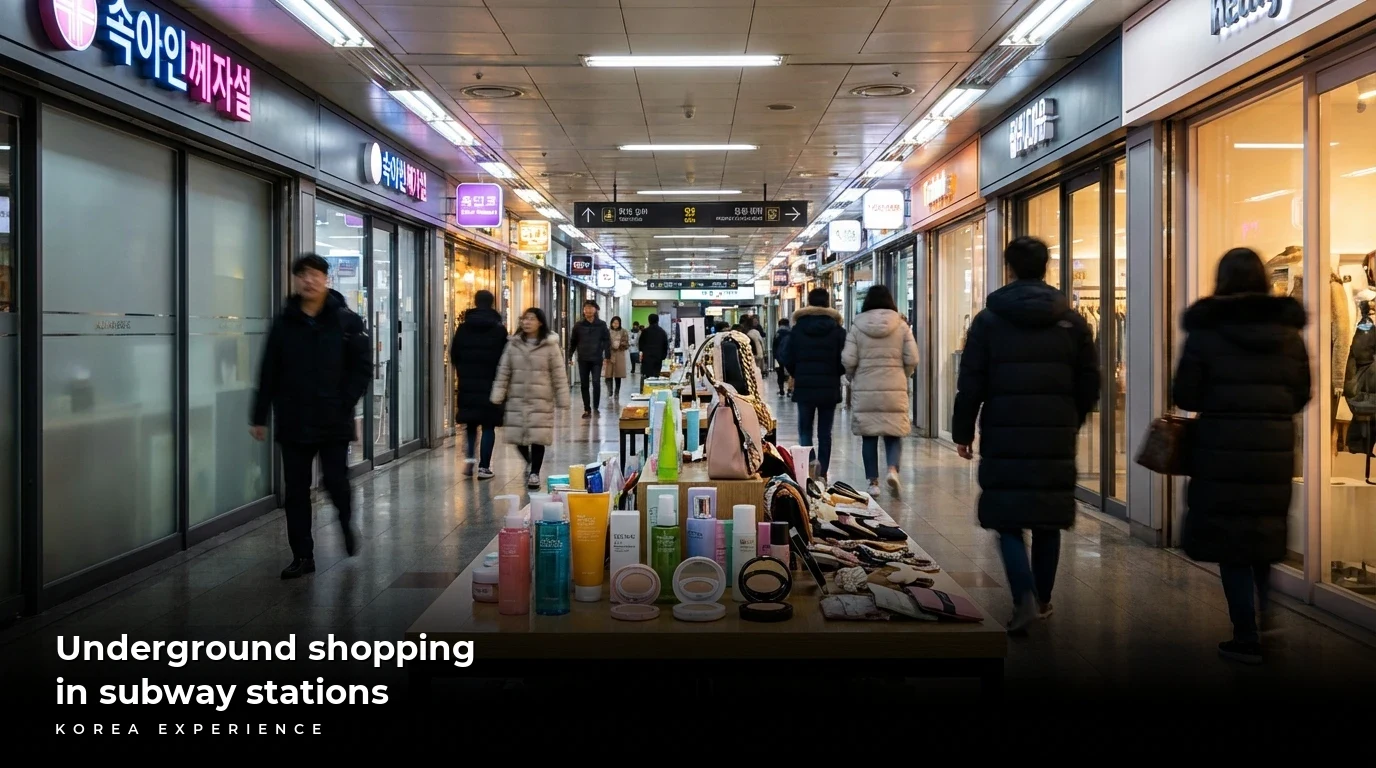
Forget the overpriced department stores and tourist traps—the real soul of Korean shopping lives beneath the pavement. If you want to snag trendy K-fashion for the price of a latte and navigate the city like a local, you need to dive into the massive, maze-like world of Seoul’s underground shopping malls.
So, you want to shop like a local? Look, I get it. You’ve seen the TikToks of people hauling giant bags of cute clothes in Seoul, and you want in. But here's the thing—if you stick to the main streets of Myeongdong or the department stores in Gangnam, you are paying the "tourist tax." You aren't getting ripped off, exactly, but you are definitely overpaying compared to the K-Fashion 2026 standards locals adhere to. The real heartbeat of Seoul’s shopping culture isn't in the shiny glass towers; it's underground. Literally.
The short answer to "Where should I shop?" is the Underground Shopping Malls (known locally as Jiha-sangaa). Why? Because this is where you can find the exact same trends you see on the street for a fraction of the price. We're talking 10,000 KRW (about $7.50 USD) for tops, 15,000 KRW for jeans, and 30,000 KRW for a coat that looks like it cost $100. It is fast, it is chaotic, and it is absolutely thrilling. But it’s also overwhelming if you don't know what you're doing. You need a game plan, comfortable shoes, and cold hard cash. Trust me on this one—you do not want to be the person blocking the aisle trying to figure out if your credit card works while 500 busy Seoulites try to power-walk past you.
Key Takeaways
- 1Underground shopping malls (Jiha-sangaa) are where locals shop for affordable trendy clothes, with prices usually 30-50% cheaper than street-level boutiques.
- 2The magic number is 10,000 KRW (about $7.50 USD). You will see racks upon racks of t-shirts, pants, and skirts selling for exactly this amount.
- 3Bring cash (Korean Won) and wear slip-on shoes. Cash gives you bargaining power, and since you cannot try on most tops, you will need to be quick on your feet.
📋 Quick Facts
How We Ended Up Underground
You might be wondering, "Why on earth is there an entire civilization of shops beneath the subway?" It’s actually a really cool story. Back in the late 1960s and 70s, tensions between North and South Korea were high. The government started building massive underground bunkers and connectors in case of air raids. But they also needed to manage the exploding traffic congestion on the surface as Seoul modernized.
So, in 1967, the first underground shopping center opened near City Hall. It solved two problems: it moved pedestrians off the busy roads and created safe spaces. To pay for the maintenance of these massive tunnels, the city rented out space to vendors. Fast forward to today, and these "bunkers" have evolved into climate-controlled retail paradises. They are connected to the subway system, meaning you can travel from your hotel to a massive mall without ever stepping foot outside in the rain or humidity. It’s an ecosystem that has survived financial crises and pandemics because it offers what everyone wants: convenience and a bargain.
Breaking Down Your Options: The Big Three
Okay, let's talk options, because not all underground malls are created equal. Depending on your schedule and stamina, you should choose your battlefield wisely.
1. Goto Mall (Express Bus Terminal)
If you only have time for one, you go to Goto Mall. It stands for "Gangnam Terminal," and it is the undisputed king. It consists of two massive, parallel corridors stretching nearly a kilometer. It has everything—clothes, shoes, plants, home decor. It’s efficient, but it’s intense.
- Location: Express Bus Terminal Station (Lines 3, 7, 9), Exit 8-1 or 8-2.
- Vibe: Frenetic, endless aisles.
- Best For: Everything (Clothes, Home, Flowers).
- Insider Tip: Go on a Tuesday morning to avoid the crushing weekend crowds.
2. Bupyeong Modu Mall
If you are a hardcore adventurer, you take the subway out to Bupyeong Modu Mall in Incheon. This place holds a literal Guinness World Record for the most stores in one underground area (1,408 stores). It is a labyrinth. I’m serious—I have lived here for years and I still get lost in Bupyeong. It’s where you go for the absolute rock-bottom prices, but bring a compass (or just pay attention to the color-coded floor lines: red, green, and blue).
- Location: Bupyeong Station (Line 1, Incheon Line 1).
- Vibe: A literal maze, overwhelming.
- Best For: Hardcore bargain hunters.
3. Gangnam Station Underground
On the flip side, if you are just hanging out in Gangnam and want to kill 30 minutes, the Gangnam underground shopping complex is perfect. It’s smaller, trendier, and caters to the younger crowd exiting the station. It’s a bit pricier than Goto Mall, but the styles are often sharper and more "Instagram-ready." You will also find plenty of mobile accessory shops and beauty kiosks here—perfect for grabbing items mentioned in our Olive Young discount hacks.
- Location: Gangnam Station (Line 2, Shinbundang Line).
- Vibe: Trendy, young, energetic.
- Best For: Gen Z trends, quick trips, and smartphone cases.
4. Yeongdeungpo Underground
For the guys? Go to Yeongdeungpo. While most malls lean 90% female fashion, Yeongdeungpo has a slightly better selection for men and vintage lovers. It caters to a slightly older, more local demographic but offers great deals on basics.
First Underground Mall
The Saeseoul Underground Shopping Center opens near City Hall, originally doubling as air-raid bunkers.
Gangnam Development
The Express Bus Terminal area begins development, laying the groundwork for the massive hub it is today.
Goto Mall Renovation
A massive renovation modernizes the Gangnam Terminal Underground Shopping Center, rebranding it as Goto Mall.
Guinness World Record
Bupyeong Underground Shopping Mall is certified for having the most shops in a single underground area (1,408 stores).
Climate Card Launch
Seoul introduces the Climate Card for unlimited transit, making hopping between underground malls cheaper than ever.
The Digital Shift
Kiosks and digital lockers become standard; while cash is still king, QR payments are finally becoming more common.
Comparison: Which Mall Fits Your Style?
| Feature | Goto Mall (Express Bus Terminal) | Bupyeong Modu Mall | Gangnam Station Underground |
|---|---|---|---|
| Cost | 💸 (Cheapest) | 💸 (Cheapest) | 💸💸 (Mid-range) |
| Size/Scale | Massive (600+ stores) | Enormous (1,400+ stores) | Medium (200+ stores) |
| Vibe | Frenetic, endless aisles | A literal maze | Trendy, young, energetic |
| Best For | Everything | Hardcore Bargain Hunters | Gen Z Trends |
| Difficulty | Medium | Hard | Easy |
| Feature | Goto Mall | Bupyeong Modu Mall | Gangnam Station |
|---|---|---|---|
| Cost | 💸 (Cheapest) | 💸 (Cheapest) | 💸💸 (Mid-range) |
| Size | Massive (600+ stores) | Enormous (1,400+ stores) | Medium (200+ stores) |
| Vibe | Frenetic | Maze-like | Trendy, energetic |
| Best For | Everything | Bargains | Gen Z Trends |
The Pros and Cons of Going Underground
Pros
- ✓Weatherproof Therapy: Seoul weather in 2026 is extreme. Underground malls are climate-controlled heavens where you can shop for 5 hours without sweating or freezing.
- ✓Insane Variety: You are seeing hundreds of independent vendors competing for your cash. If you do not like the price at Shop A, walk ten feet to Shop B.
- ✓The Price Tag: You can literally overhaul your entire wardrobe for the price of one designer jacket. With decent quality t-shirts for $7, your budget stretches incredibly far.
Cons
- ✗The Free Size Struggle: Most clothes come in Free Size (one size fits all). If you are larger than a US size 6-8 (women) or US Large (men), finding fits is hard.
- ✗No Try-Ons: You generally cannot try on tops, white items, or leggings. You have to be really good at eyeballing measurements.
- ✗Return Policy? What Return Policy?: Once you hand over cash, it is yours. Refunds are almost non-existent, and exchanges are rare.
Navigating the Chaos: A Strategic Approach
Ready to dive in? Here is exactly how to execute a successful haul at Goto Mall (since that's where you're probably going). First, cash is king. Withdraw about 200,000 KRW (roughly $150). You can use cards, but vendors love cash and will often give you a discount or waive the tax if you pay with bills.
Navigate to the Express Bus Terminal Station (Lines 3, 7, 9). Follow signs for Exit 8. As you tap out of the station, you will see the entrance. The mall is split into two zones. I recommend walking down the left corridor first, all the way to the end, and coming back up the right corridor. Don’t buy the first thing you see! Prices often drop as you get further from the main station entrance.
When you see a shirt you like, look at the price tag. If it says 10,000 KRW, just hand them the money. If you are buying three or four items from one shop, you can gently ask, "Discount?" (or Kkak-a-ju-se-yo?). They might knock off a few thousand won. And remember—no try-ons. Check the shoulders and hold it up to your chest. If you are unsure, skip it. There are 600 other stores; you will find something else.
📖 How to Conquer Goto Mall (The Beast of Banpo)
Step 1: The Approach
Take Subway Line 3, 7, or 9 to Express Bus Terminal Station. Look for Exit 8-1 or 8-2. Locate bathrooms and ATMs before entering the stream of shoppers.
Step 2: The Scan
Walk down one side first without buying. Scan prices. A sweater at the entrance might be 25,000 KRW, but the exact same one is 15,000 KRW in the middle.
Step 3: The Purchase
Ask "Eol-ma-ye-yo?" (How much?). If buying multiple items, ask for a discount. If it is already 10,000 KRW, do not haggle.
Step 4: The Refuel
Head to the ends of the mall (East or West) for food courts. West end has cheap Tonkatsu and Sushi; East end has the flower market.
Survival Tips: Lockers, Bathrooms, and Quality Checks
Here are the pro tips that save you from a meltdown. First, the lockers. You will buy too much, and you will not want to carry it. The subway lockers (T-Locker) are great, but the app can be tricky for foreigners. For a full breakdown of transit apps, check our guide on KakaoMetro vs. Seoul Subway, but here is the quick fix: ignore the app and use the physical kiosk screen.
Second, the bathroom situation. Bathrooms are located at the ends of the malls, not in the middle. If you are in the center of Goto Mall and nature calls, you have a 10-minute speed walk ahead of you. Plan accordingly.
Lastly, let's talk about "Made in Korea." You’ll see shops advertising this proudly. These items are usually 5,000 to 10,000 KRW more expensive than the generic stock, but buy them. The cotton is thicker, the seams are tighter, and they wash better. It is the best souvenir you can buy—a piece of Korea that won’t fall apart in a month.
Here is a secret most tourists miss: Check the tag inside the clothes. If it says 'Made in Korea,' the quality is significantly higher than 'Made in China,' and the price difference is usually only about 5,000 KRW. It is worth the extra few dollars because the stitching won't unravel after one wash. Also, if you see a shop with zero customers, skip it. Koreans follow the crowd for a reason—the busy shops have the freshest stock.
The "Manjoo" Snack Trap
You will smell a sweet, custard-vanilla scent wafting through the station. Those are Delimanjoo (corn-shaped cakes filled with custard). Buy a small bag (3,000 KRW). Eating these warm while walking to the next shop is a core memory of the Seoul experience.
The "Cash" Price vs. "Card" Price
Many vendors will tell you a price, say 10,000 KRW. If you pull out a credit card, they might say "Ah, card is 11,000 KRW" or just flat out say "No card." Legally, they should take cards, but practically, cash is king. Don't fight it—just bring cash to save that 10%.
No Korean Phone/ARC? Locker Solution
Luggage Storage Crisis: Many storage lockers (T-Locker) in subway stations require a Korean mobile number to receive a passcode. This is a nightmare for tourists.
The Solution:
- Look for the T-Locker Kiosks (the physical screens on the lockers).
- Select "English" on the screen.
- Choose your locker and verify using the fingerprint scanner or a passcode you create right there, rather than a mobile number verification.
- You can pay with your T-Money card or a credit card directly at the machine.
- CRITICAL: Take a photo of your locker number and location. The stations are huge, and "Locker A" looks exactly like "Locker B" on the other side.
Price Breakdown: Is It Really Cheaper?
To give you an idea of the value, here is how underground malls stack up against other shopping options in Seoul.
| Option | Price | Category | Description |
|---|---|---|---|
| Designer Boutique | 300,000+ KRW | Luxury | High-end materials, brand name, full service. |
| Department Store | 150,000+ KRW | Mid-Luxury | Good quality brands, tax-free counters. |
| Street Shop (Hongdae) | 40,000+ KRW | Mid | Trendy, try-ons allowed, curated selection. |
| Underground Mall | 10,000+ KRW | Budget | Fast fashion, no try-on, massive variety. |
FAQ
❓ Frequently Asked Questions
Have more questions?Contact us →
Conclusion: Your Action Plan
So, here is your mission. On your second day in Seoul (after you've recovered from jet lag), clear your morning schedule. Put on your most comfortable sneakers—no heels, trust me. Grab a coffee, hit the ATM for some cash, and head to Express Bus Terminal Station. Spend two hours getting lost in the rows of clothes, grab a cheap tonkatsu for lunch at the end of the mall, and emerge back into the daylight with a whole new wardrobe for under $100. You’ve got this. Happy shopping!
Sources
- Korea Tourism Organization - Details on Goto Mall structure and transit.
- Guinness World Records - Verification of Bupyeong Mall's record status.
- Seoul Metropolitan Government - Information on 2026 Climate Card integration with transit hubs.
- Creatrip - Detailed usage of T-Locker and apps for tourists.
- JoongAng Daily - Historical context of underground malls in Seoul.
About the Author
Korea Experience Team
Written by the Korea Experience editorial team - experts in Korean medical tourism, travel, and culture with years of research and firsthand experience.
Explore more in Shopping & K-Beauty
From Olive Young hauls to Myeongdong shopping tips — discover the best K-Beauty products, fashion trends, and shopping destinations in Korea.
Browse All Shopping & K-Beauty ArticlesContinue Reading
Explore more articles you might find interesting
Discover Korea's best underground shopping streets. Save up to 70% on fashion in Goto Mall, Gangnam, and Busan with our 2026 guide to prices and locations.
Discover Seoul's top eco-friendly brands for 2026. From upcycled streetwear to vegan leather, explore where to shop sustainably with prices and locations.
Discover Seoul's top 7 shopping districts for 2026. Compare Myeongdong beauty prices, Gangnam luxury, and Hongdae vintage fashion with tax refund tips.
Explore the best of Myeongdong in 2026. Discover top K-beauty flagship stores, trendy fashion boutiques, and street food prices starting at ₩4,000.
Discover the best Korean eye creams for dark circles and wrinkles. Our 2026 guide covers ingredients, prices, and shopping tips for 15+ top brands.
Discover the best shops for modern hanbok in Seoul. From Teterot Saloon to Danha, find daily wear styles, prices, and locations for 2026 fashion trends.