24-Hour Juk in Seoul 2026: Late-Night Porridge & Recovery Guide
Bonjuk closes at 9 PM but 50,000 convenience stores offer premium 4,500 KRW abalone porridge for 3 AM hangovers and surgery recovery in Seoul.
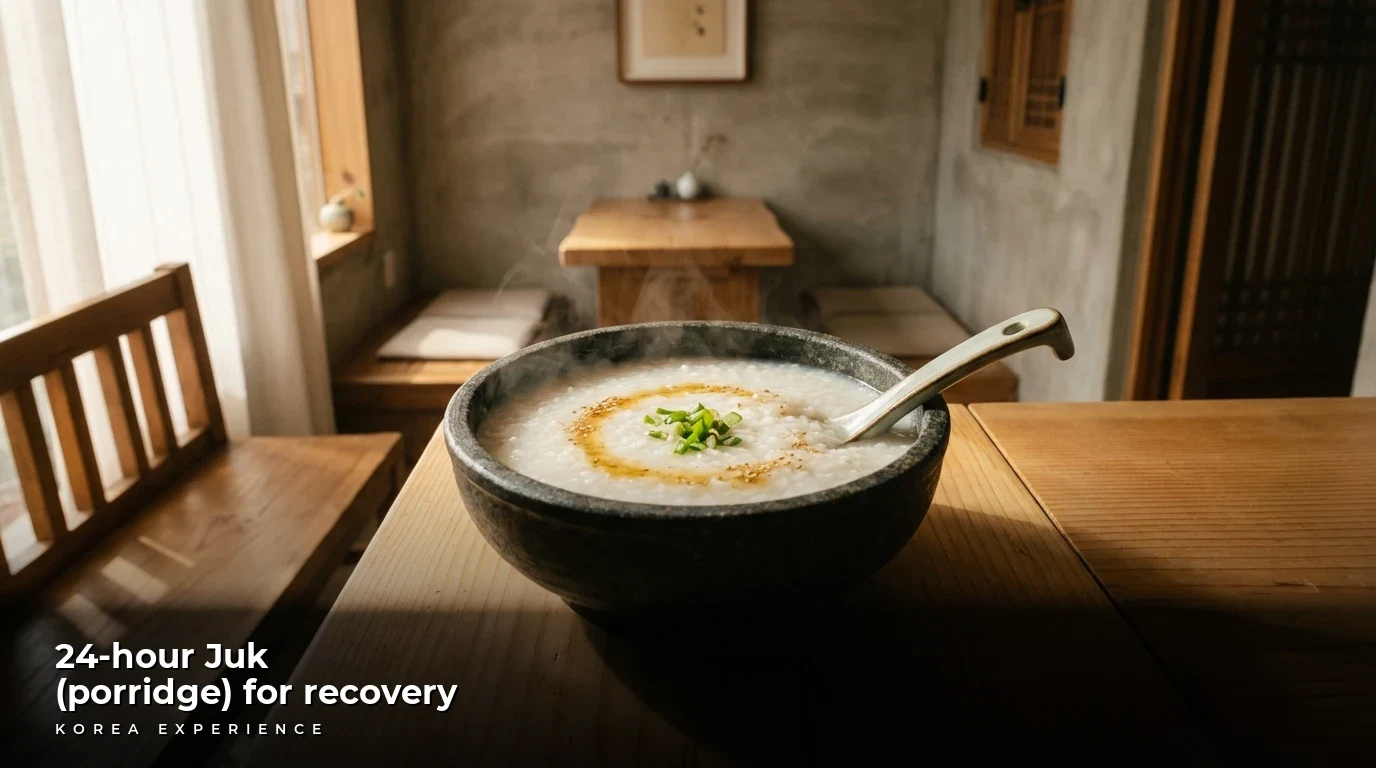
So, you’re in Seoul and feeling wrecked—whether it’s the aftermath of a wild night in Hongdae, post-plastic surgery swelling, or just a nasty flu—and you need Juk (porridge) right now. While the famous porridge chains usually close at night, I’ve tracked down exactly how to get that healing bowl of comfort food at 3 AM.
The reality of Seoul's dining scene is that while it is a 24-hour city, the specific "slow food" culture of Juk often adheres to traditional business hours. However, with the explosion of premium convenience store options and the evolution of delivery services, you are never truly cut off from recovery food. Whether you need to navigate ordering on Baemin without an ARC or simply need to find the nearest GS25, this guide covers every method to secure your recovery meal before the sun comes up.
Key Takeaways
- 1The famous Bonjuk chain is NOT open 24 hours (closing by 9 PM), requiring a pivot to delivery apps or convenience stores for late-night needs.
- 2With over 50,000 convenience stores in Korea, you are never more than 5 minutes from premium microwaveable Abalone or Beef Juk for under 5,000 KRW.
- 3For post-surgery recovery in Gangnam, stock up on Pumpkin Juice and Pumpkin Porridge pouches from pharmacies or Olive Young, as these reduce facial swelling faster than restaurant versions.
📋 Quick Facts
The Reality of 24-Hour Juk in Seoul
The most common misconception among tourists is that Bonjuk, the Starbucks of Korean porridge, is open 24 hours. It is not. Bonjuk is a "slow food" franchise that typically operates from 9:00 AM to 9:00 PM. If you are looking for a sit-down meal at 3:00 AM, you will find the doors locked.
Historically, Juk (죽) was a royal dish served to Kings before their main morning meal to gently wake up digestion. Over centuries, it evolved into the go-to food for the sick, the elderly, and eventually, the hungover. The game changed in 2002 when Bonjuk launched, transforming "sick person food" into a premium dining experience. However, the gap between the 9 PM closing time and the 24-hour needs of modern Seoul has been filled by the "Retort Pouch" revolution.
Bonjuk Founded
The first store opens in Daehangno, transforming Juk into a premium slow-food meal.
Boys Over Flowers Era
The K-Drama features Bonjuk, exploding the brand's popularity across Asia.
Pouch Revolution
CJ CheilJedang (Bibigo) expands premium retort pouches, making high-quality Juk available 24/7.
Foreigner Access
Delivery apps begin accepting foreign cards, unlocking late-night delivery for tourists.
The Current Era
Automated meal kits and premium convenience store options rival traditional restaurants.
The Convenience Store Solution (GS25 & CU)
If you are desperate at 4:00 AM, your best friend is the convenience store. Seoul has the highest density of convenience stores in the world. You can literally stumble out of a club or a clinic anywhere in the city and see the glowing beacon of a GS25 or CU within 100 meters.
For a deep dive into what else you should buy, check out our guide on GS25 vs. CU must-buys, but for porridge specifically, you are looking for the "HMR" (Home Meal Replacement) aisle.
The Brands to Trust
- Bibigo (비비고): The gold standard. Their Abalone Porridge (Jeonbokjuk) uses real abalone slices and a rich, savory broth. It is widely considered the best mass-market porridge in Korea.
- Yangban (양반): The classic brand. They tend to be slightly saltier, which is excellent if you have a hangover and need to replenish sodium, but be careful if you have kidney issues.
- Private Labels (Youus/Heyroo): These are the store brands for GS25 and CU respectively. They are cheaper (often 2+1 deals) but have fewer solid ingredients than Bibigo.
| Feature | Bonjuk (Restaurant) | Convenience Store (Pouch) | 24-Hour Gimbap Diner |
|---|---|---|---|
| Cost | $$$ (₩10k - ₩25k) | $ (₩4k - ₩6k) | $$ (₩7k - ₩9k) |
| Availability | Daytime (9 AM - 9 PM) | 24/7 (Anytime) | 24/7 (Selected locations) |
| Quality | Fresh, Made-to-Order | Microwave needed | Fast Food Style |
| Best For | Planned meals | 3 AM Emergency | Hangovers, Quick sit-down |
Delivery and 24-Hour Diners
If you cannot leave your hotel room, or if you crave a hot meal served in a bowl rather than a plastic pouch, you have two remaining options: delivery apps or 24-hour diners.
Delivery Apps for Foreigners
The landscape of food delivery has improved significantly for tourists.
- Shuttle Delivery: This app is built for foreigners. It works in English, takes foreign credit cards, and requires NO Korean ID. The downside is that options drop off significantly after midnight.
- Baemin (Baedal Minjok): If you have a Korean friend or have mastered the art of ordering, this opens up thousands of "Late Night Snack" (Yasik) spots.
- Concierge Services: Services like "Help Me Emo" on KakaoTalk can order for you if you are stuck.
Note: Uber Eats does NOT work in Korea. Do not try to use it.
24-Hour Diners
While specialized Juk shops close, general 24-hour diners often serve porridge or porridge-adjacent soups.
- Boseung Hall (Hongdae): Famous for Pork Soup (Gukbap), but their broth is gentle enough for recovery.
- Gimbap Cheonguk: The "Heaven of Kimbap" is often open 24 hours. While they don't specialize in premium Juk, they serve basic Vegetable Juk or mild soups.
- Haejangguk Restaurants: These specialize in "Hangover Soup." If you can handle spice, this is often better than porridge for clearing out toxins. For more on navigating these menus, see our guide on ordering food at traditional markets.
Pros
- ✓Accessibility: Open 24/7 within 100m of most locations.
- ✓Quality: Brands like Bibigo use real abalone and beef chunks.
- ✓Zero Social Interaction: Perfect for post-surgery or sickness.
Cons
- ✗Portion Size: Pouches are 280g-450g (smaller than restaurants).
- ✗Texture: Rice is softer/mushier than fresh artisanal Juk.
- ✗Visuals: Beige food in a plastic bowl isn't Instagrammable.
Step-by-Step: The 3 AM Porridge Run
📖 How to Get Healing Porridge at 3:00 AM
Step 1: Locate a Large Store
Find a GS25, CU, or 7-Eleven. Avoid tiny subway kiosks; look for stores with a visible HMR (Home Meal Replacement) section.
Step 2: Find the Retort Aisle
Look for upright pouches near instant rice (Hetban). Search for the character '죽' (Juk). Green packages are usually Abalone; Orange is Pumpkin.
Step 3: Purchase and Heat
Buy the pouch. Peel the lid to the dotted line to vent. Microwave for 2 minutes (700W) or 1m 30s (1000W).
Step 4: The Recovery Protocol
Eat Pumpkin Juk for swelling or Abalone Juk for stamina. Pair with Pocari Sweat for hydration.
Recovery Specifics: Hangover vs. Surgery
The type of Juk you choose matters immensely based on your physical condition.
For Hangovers
If you are suffering from the consequences of Korean drinking culture—perhaps after reading our drinking etiquette guide—you need Gimchi-Nakji Juk (Kimchi & Octopus Porridge). The spice forces you to sweat out toxins, while the octopus provides taurine, a compound essential for liver recovery. If your stomach is too sensitive for spice, stick to Abalone Juk.
For Plastic Surgery Recovery
Seoul is a global hub for medical tourism. If you have just had a procedure in Gangnam, your surgeon will likely recommend Hobakjuk (Sweet Pumpkin Porridge). Pumpkin is rich in potassium and Vitamin A, which significantly reduces post-operative edema (swelling).
- Pro Tip: The restaurant version often contains glutinous rice balls (tteok) which can be hard to chew with stitches. The convenience store pouches are usually a smooth puree, making them superior for the first 48 hours post-op.
Tourists always ask for medicine for swelling after surgery, but I tell them: 'Go buy five pouches of Hobakjuk and drink Pumpkin Juice.' In Korea, we believe the potassium in pumpkin flushes out water retention better than pills. For hangovers, drink 'Condition' first, then eat Bean Sprout Juk.
The Bonjuk Split Hack
If you know you have a big night or surgery coming up, visit a Bonjuk restaurant during the day (before 9 PM). Order a "Takeout" portion and ask them to split it into three small containers. They do this for free! Keep them in your hotel fridge. They microwave perfectly late at night, giving you restaurant-quality food at 3 AM without the hassle.
Frequently Asked Questions
❓ Frequently Asked Questions
Have more questions?Contact us →
Conclusion
While the neon signs of Bonjuk may go dark at 9 PM, Seoul does not leave you hungry. Whether you utilize the "Bonjuk Split" hack during the day, rely on the 50,000+ convenience stores for a high-quality Bibigo pouch, or navigate the delivery apps for a late-night feast, relief is always accessible.
For those planning a more upscale dining experience once they've recovered, consider looking into CatchTable Global for Michelin reservations. But for tonight, put on your slippers, walk to the nearest GS25, and let the warm comfort of Abalone porridge bring you back to life.
Sources
- Bonjuk Official Website - Store hours, menu items, and nutritional information.
- Visit Korea (KTO) - Tourism info and 24-hour dining culture guides.
- Shuttle Delivery - Delivery options and service hours for foreigners in Korea.
- CJ CheilJedang (Bibigo) - Product details for retort pouch porridge and ingredients.
- Seoul Metropolitan Government - Information on late-night medical services and pharmacies.
About the Author
Korea Experience Team
Written by the Korea Experience editorial team - experts in Korean medical tourism, travel, and culture with years of research and firsthand experience.
Explore more in Food & Dining
Korean BBQ, street food, Michelin restaurants, and regional specialties — your ultimate guide to eating well in Korea.
Browse All Food & Dining ArticlesContinue Reading
Explore more articles you might find interesting
Master Seoul solo dining in 2026 where 36.1% of households are single. Book Michelin spots like Mosu and enjoy Hanwoo beef without feeling awkward.
Master the two-hand tuck and polite turn. Learn why soju costs 7,000 KRW in 2026 and how to avoid the 50% refill rule mistake in this essential guide.
Master Han River delivery in 2026 with our guide to Baemin and Shuttle apps. Learn how to find zones, pay 25,000 KRW for chicken, and handle reusable containers.
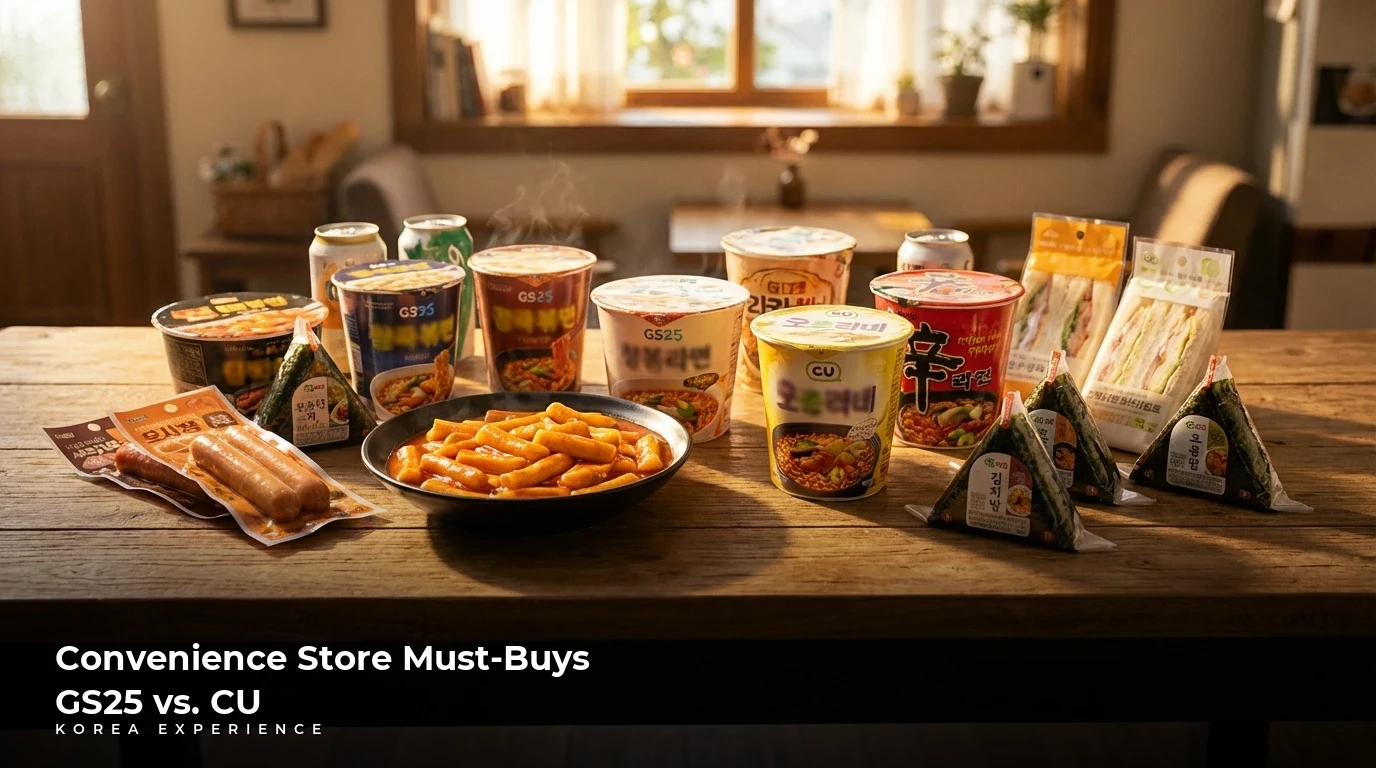
Discover why GS25 rules for meals while CU dominates desserts in 2026. With 60,000 stores and 4,500 KRW meals, find out which chain fits your craving.
Book tables at Culinary Class Wars 2 spots like Sam Sam Sam where pasta costs 5,000. Learn 2026 reservation hacks for the 100 chefs featured on Netflix.
So, you want to dive into the sizzling world of Gwangjang or Namdaemun without the lost in translation panic?