Ordering Food at Korean Traditional Markets Using Papago (2026)
So, you want to dive into the sizzling world of Gwangjang or Namdaemun without the lost in translation panic?
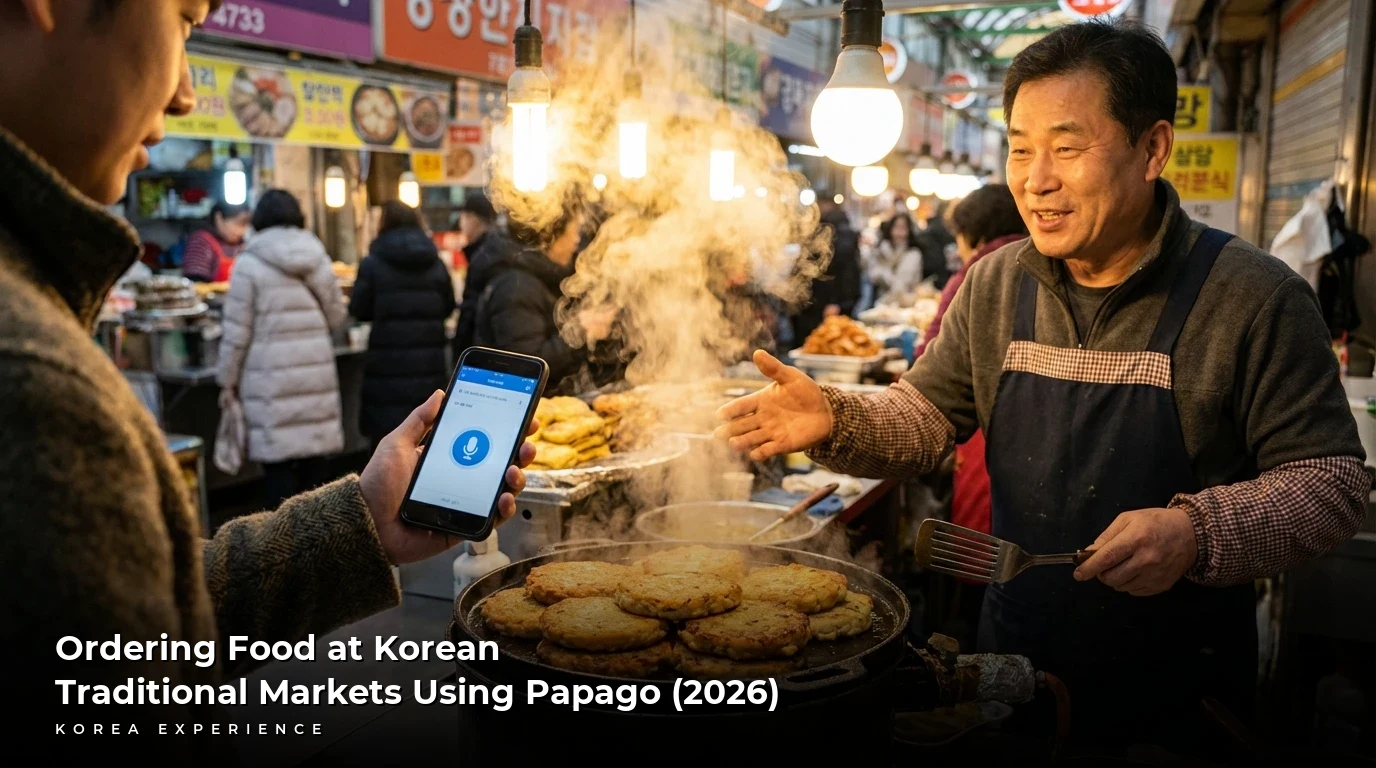
So, you're standing in the middle of a bustling Seoul market, the smell of sizzling mung bean pancakes is hitting you, and you're staring at a sign that looks like a beautiful but totally unreadable scribble. Here's the short answer: Yes, you can order like an absolute pro using Papago in 2026, but only if you use the right "modes."
Forget just typing in "I want pancakes." You want to use the Omnimodal 1:1 Conversation Mode that Naver rolled out with their HyperCLOVA X update. Honestly, it's like having a local friend whispering in your ear. The 2026 version of Papago has a 95% accuracy rate for Korean, specifically because it was built by Koreans for Korean nuances.
For a full rundown of what to eat, check out our Gwangjang Market complete food guide.
Key Takeaways
- 1In 2026, you absolutely cannot rely on Google Translate for the local experience; Naver Papago's HyperCLOVA X integration is the short answer to understanding market dialects and honorifics that actually get you a smile from the market aunties.
- 2By using the 2026 Seoul Climate Card for your market-hopping instead of a standard T-money card, you will save about 15,000 KRW a week if you are hitting more than three spots a day.
- 3Before you even leave your hotel, download the Papago offline language packs and secure an ARC-free eSIM with a real +82 number, or you will be stuck in digital exile unable to look up a menu when the market Wi-Fi fails.
📋 Market Ordering Quick Facts
The most important thing to remember is the Honorifics Toggle. In Korea, social hierarchy is everything. If you speak to a market auntie (Ajumma) using the informal "banmal" (which Google Translate often defaults to), you might get your food, but you won't get the warm welcome. Papago's 2026 AI automatically detects that you're in a commercial setting and defaults to Haeyo-che (polite speech), making you sound respectful and sophisticated.
Trust me on this one, I learned the hard way that a little politeness goes a long way. I once used a basic translator that told a vendor "Give me food" in a way that sounded like a command. The look I got? Not great. With Papago's Real-Time Image Translation, you just point your camera at the cardboard sign for Mayak Gimbap (₩3,000) or Bindaetteok (₩5,000), and it overlays the English right there on your screen.
How AI Became Your Personal Market Guide
From Shouting to AI: Market Tech Evolution
Gwangjang Market Founded
Korea's first permanent market opens as an act of economic resilience.
Tongin Brass Coins
The yeopjeon lunchbox system is introduced to save a quiet neighborhood market.
Papago Official Launch
Naver releases its NMT-based translation app specifically for Asian languages.
HyperCLOVA X Reveal
Naver unveils a hyperscale AI that understands Korean culture on a societal level.
Omnimodal AI Integration
Papago becomes omnimodal, processing text, images, and audio in one semantic space.
AI Smart Transformation
Seoul markets implement AI signage and cross-border QR payments for tourists.
Traditional markets like Gwangjang were founded way back in 1905 because Korean merchants wanted to reclaim their trade from foreign control. For over a century, these places were "analog only"—lots of shouting, hand-written ledgers, and cash under the table.
But then came the digital wave. Around 2023, Naver (the Google of Korea) realized that general AI models weren't cutting it for the specific "vibe" of Korean markets. They developed HyperCLOVA X, a massive AI model trained on billions of Korean data points. This wasn't just about translating words; it was about understanding context.
By 2025, Papago went "omnimodal," meaning it started processing sight and sound together. This was the game-changer for markets. Before 2025, if a vendor pointed at a tray of Sundae (blood sausage) and said "Igeo masisseoyo," the app might just translate "This is delicious." In 2026, the AI sees the sausage and hears the tone, translating it as a friendly recommendation: "This blood sausage is our specialty, you should try it!"
Even the "Netflix Lady," Cho Yoonsun, at Gwangjang has seen the shift. Since her stall blew up on Street Food: Asia, hundreds of stalls now feature digital menus that sync with your Papago app via QR codes.
Translation App Showdown for Korean Markets
2026 Translation App Comparison
| Feature | Naver Papago (2026) | Google Translate | DeepL Translator |
|---|---|---|---|
| Cost | 100% Free | Free | Free / Pro Paid |
| 2026 Tech | HyperCLOVA X Omni | GNMT / Google Lens | Specialized NMT |
| Honorifics Handling | Excellent (Automated) | Fair (Often too blunt) | Very Good (Fluent) |
| Offline Mode | Comprehensive Packs | Basic Support | Pro Only |
| Best For | Korean Markets and Slang | European Languages | Professional Documents |
| 2026 Changes | Real-time Market Mode | Lens UI Updates | Improved Korean Nuance |
For most of us just trying to find the best kalguksu (knife-cut noodles) without getting overcharged, Papago is the clear winner. Google Translate is great for a quick "Hello" or "Thank you," but for Korean it often misses the cultural "honorific" levels. DeepL is incredible for business documents but lacks the "real-time conversation" punch.
For more on getting around Seoul's food scene, see our Korean street food guide with 30 foods to try.
Naver Papago for Markets: Pros and Cons
- ✓Cultural Context Awareness: Unlike other apps, Papago understands that you shouldn't speak to a 70-year-old vendor the same way you would talk to a friend. It automatically uses polite honorifics.
- ✓Handwriting Recognition: Market menus are often scribbled on cardboard or chalkboards. Papago's 2026 OCR is specifically trained on these messy Korean fonts.
- ✓Omnimodal Real-Time Voice: In a noisy market, you can just hold the phone up, and it filters out the sizzling oil sounds to catch what the vendor is actually saying.
- ✗Limited Global Languages: Papago only supports about 15 languages. It is a specialist for East Asian languages, not a generalist.
- ✗Battery Hog: The 2026 AI features (like live omnimodal processing) drain your battery fast. You will definitely need a power bank.
- ✗Account Requirements: To use some of the cool history-syncing or Papago Plus features, you have to sign up for a Naver account.
How to Order the Perfect Market Meal with Papago
📖 How to Order the Perfect Market Meal with Papago
Step 1: Prep the App
Open Papago and download the Korean-English offline pack before you enter the market.
Step 2: Decode the Menu
Use the Image Translation button to snap a photo of the stall's menu or the scribbled signs on the wall.
Step 3: Speak and Listen
Switch to 1:1 Conversation Mode and tap the microphone icon to ask, 'What is the most popular dish?'
Step 4: Pay Like a Local
Use the app to ask 'QR gyeolje dwaeyo?' (Can I pay by QR?) and look for the Zero Pay or Alipay+ signs.
If you're at Gwangjang, don't just point and nod. Use Papago to ask for 'Sso-seu mani juseyo' (more sauce please) when getting the Mayak Gimbap. The vendors love it when you try the local lingo, and in 2026, the AI is finally good enough to make you sound natural, not like a textbook!
Real-World Scenario: Tongin Market Lunchbox Cafe
Ready to hit the streets? Let's walk through a real scenario at Tongin Market, which is famous for its "Doshirak Cafe" (Lunchbox Cafe).
First, use your Climate Card to get there. Once you're at Tongin, you don't use cash initially. You go to the 2nd floor and buy yeopjeon (brass coins). Each coin is worth ₩500, and I'd recommend starting with ₩10,000 worth (20 coins).
Now, whip out Papago. As you walk through the stalls, if you see something that looks good but you're not sure what it is, use the Instant Image Translation. For example, you might see Gireum Tteokbokki (oil-fried rice cakes). Papago will tell you it's a "Tongin specialty" and even give you a quick flavor profile.
When it's time to pay, just hold out your lunchbox tray and the vendor will tell you "Du-gae" (Two coins). If you get confused, switch to 1:1 Conversation Mode. Once your tray is full of japchae, mandus, and those spicy rice cakes, head back to the cafe on the 2nd or 3rd floor to eat.
For more traditional market tips, see our guide to exploring Korean traditional market food tours.
The Stuff Nobody Tells You
There's a thing I call "Digital Exile." In 2026, Korea is so advanced that if you don't have a local phone number, you're basically locked out of half the city's features. You can't use the full version of Naver Maps (which is way better than Google Maps in Korea), and you can't register for the Ttareungi bike-sharing system.
The No-ARC Solution: Most tourists think they need an Alien Registration Card (ARC) to get a phone number. You don't! Go to a site like simcard.kr or a Chingu Mobile kiosk at the airport. You can get a "Tourist eSIM" with a real +82 number using just your passport.
Another thing? The "Magic Button." In most market-adjacent restaurants, there's a small buzzer on the table. Don't yell for the waiter! Just press the button. If you're in a traditional stall with no button, a polite "Yeogiyo!" (Over here!) works, but use Papago to practice your pronunciation first.
Finally, be careful with "Mayak" foods. You'll see "Mayak Gimbap" or "Mayak Corn" everywhere. No, there are no drugs in the food! It's just a slang term for "addictive." Papago's 2026 Contextual Dictionary will clear that right up for you.
Pro Tip: The Dictionary Feature
Don't just use the translation; use the "Dictionary" feature built into Papago. If a word like "Mayak" (which literally means 'drugs') pops up on a gimbap sign, the dictionary will explain it just means "addictive" so you don't panic!
Avoid Google Translate for Allergies
Avoid Standard Google Translate for complex food allergies. In 2026, many market vendors use highly specific regional terms for ingredients that Google often misinterprets. Trust Papago's HyperCLOVA X engine for health-critical translations.
No Korean Phone/ARC? Here's What To Do
If you don't have a Korean Resident Card (ARC), you are basically "digitally invisible." To fix this, buy an ARC-free eSIM (like those from Chingu Mobile or Woori Mobile) before you land. This gives you a real +82 number which you need to use the Papago-integrated Naver Maps and to receive SMS verification codes for local food apps.
Frequently Asked Questions
❓ Frequently Asked Questions
Have more questions?Contact us →
Your Action Plan
Look, the 2026 market scene in Seoul is an absolute blast if you've got the right tools in your pocket. Here is exactly what you should do in your first 24 hours:
- Land at Incheon and immediately pick up your pre-ordered ARC-free eSIM. Get that +82 number active before you even clear customs
- Grab a physical Climate Card at the airport's convenience store. Load it with a 3-day or 5-day pass (₩10,000 - ₩15,000)
- Download Naver Papago and the offline Korean-English pack. Toggle the "Honorifics" to ON
- Head straight to Gwangjang Market. Use the image translator to find the "Netflix Lady" stall, order a bowl of kalguksu, and use the 1:1 voice mode to ask for a side of kimchi
Honestly, don't overthink it. The vendors in these markets have seen it all, and they're generally super happy that you're interested in their food. With Papago handling the heavy linguistic lifting, you're free to just enjoy the sights, smells, and—most importantly—the tastes of Seoul. You've got this!
Sources
- Naver Corporation Official - Details on HyperCLOVA X integration and omnimodal AI features
- Naver Cloud Documentation - Technical specs for image translation and OCR capabilities in 2026
- Seoul Metropolitan Government - Official pricing and tourist usage guidelines for the 2026 Climate Card
- Korea Herald Economy - Reports on the digital transformation and QR payment systems in traditional markets
- Visit Seoul Official - Historical context and menu descriptions for Gwangjang and Namdaemun markets
About the Author
Korea Experience Team
Written by the Korea Experience editorial team - experts in Korean medical tourism, travel, and culture with years of research and firsthand experience.
Explore more in Food & Dining
Korean BBQ, street food, Michelin restaurants, and regional specialties — your ultimate guide to eating well in Korea.
Browse All Food & Dining ArticlesContinue Reading
Explore more articles you might find interesting
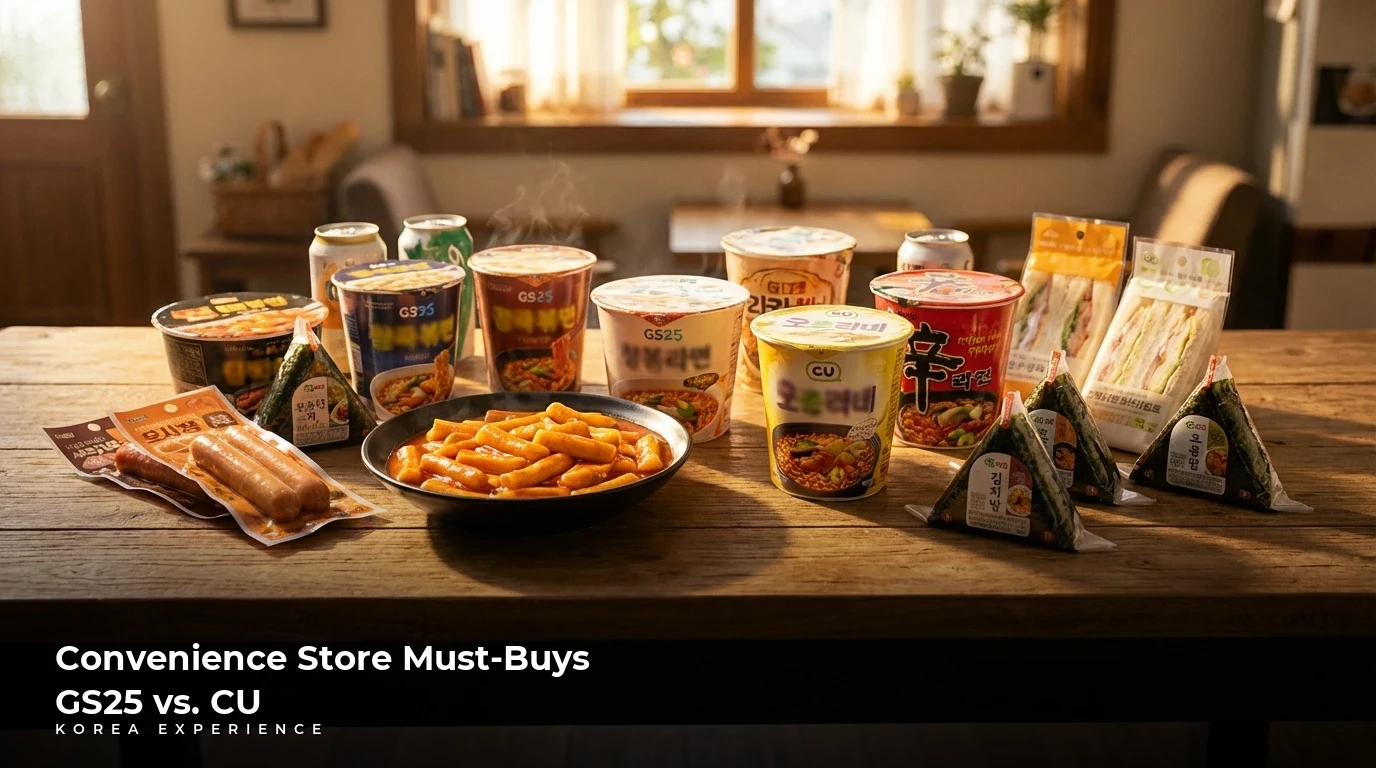
Discover why GS25 rules for meals while CU dominates desserts in 2026. With 60,000 stores and 4,500 KRW meals, find out which chain fits your craving.

Seoul has perfectly blended its 600-year-old temple food traditions with a trendy 'Newtro' Hanok revival.
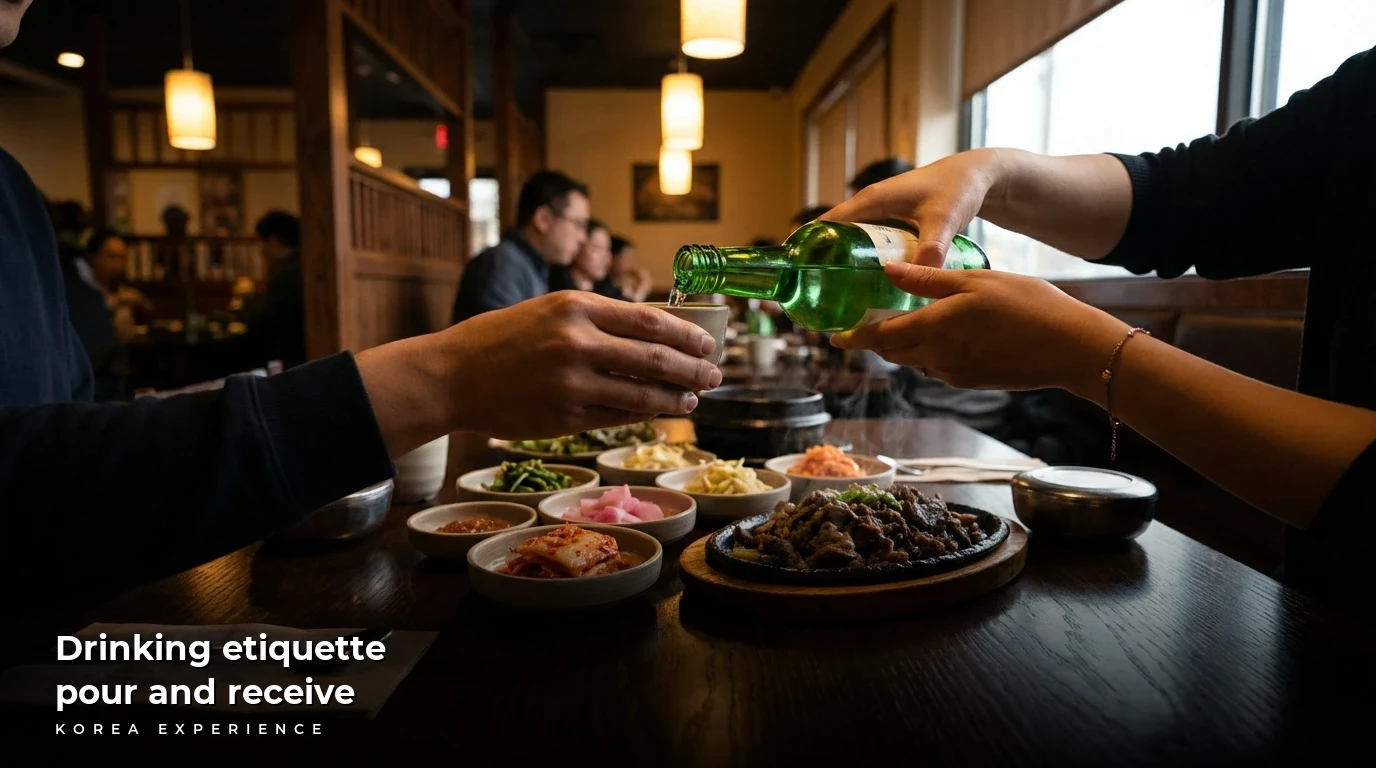
Master the two-hand tuck and polite turn. Learn why soju costs 7,000 KRW in 2026 and how to avoid the 50% refill rule mistake in this essential guide.
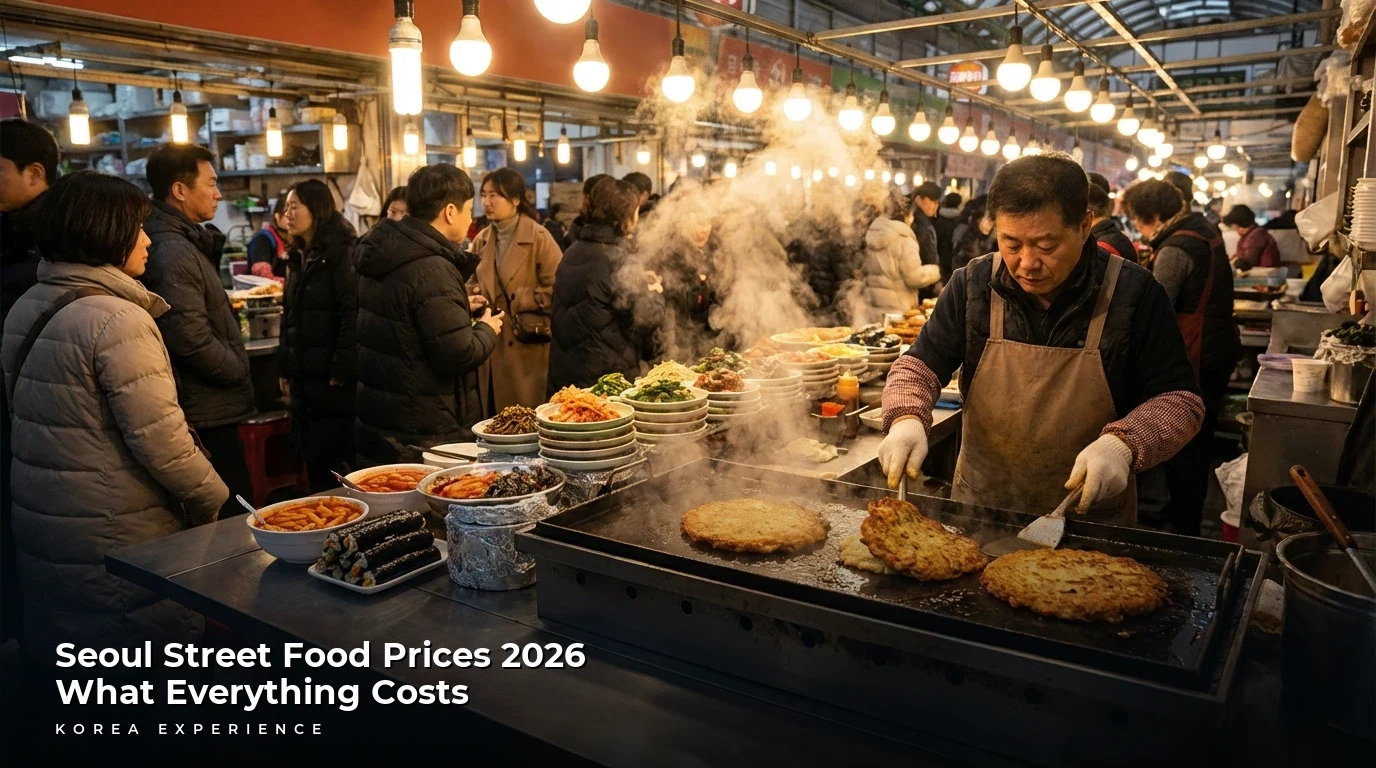
The short answer? Gwangjang remains the king of value for traditional eats.
Bonjuk closes at 9 PM but 50,000 convenience stores offer premium 4,500 KRW abalone porridge for 3 AM hangovers and surgery recovery in Seoul.
So, you're staring at your phone at 11 PM, dying for some fried chicken, but you don't have a Korean ID?