Custom perfume making in Seoul designing your signature scent 2026
Create your own fragrance in Seoul. A complete guide to 2026 prices (avg ₩50,000), top studios in Bukchon and Seongsu, and booking tips for travelers.
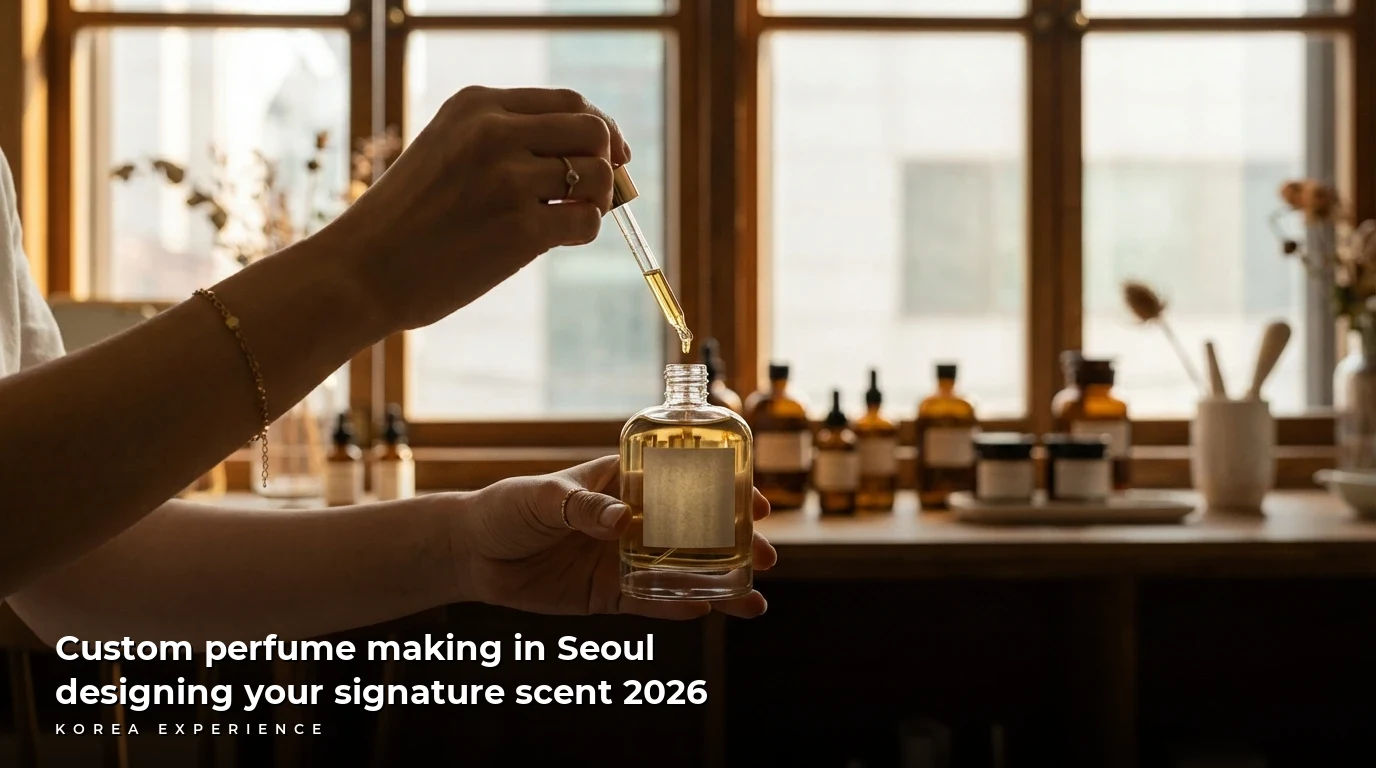
Custom perfume making has established itself as the quintessential hands-on experience for travelers visiting Seoul in 2026. While K-Beauty skincare has long dominated the shopping lists of international visitors, the trend has shifted toward personalized, immersive experiences that result in a unique souvenir. In Seoul, a one-day perfume class typically involves a 60 to 90-minute session where you consult with a professional perfumer to select from 30 to 80 distinct scent bases, blend them according to specific ratios, and bottle your creation.
The short answer: Expect to pay between ₩50,000 ($38 USD) and ₩80,000 ($60 USD) for a standard 50ml custom perfume workshop in Seoul. The most popular neighborhoods for these classes are Bukchon Hanok Village, Seongsu-dong, and Hongdae, with most requiring reservations at least 3-5 days in advance via Naver, CatchTable, or Instagram DM.
Key Takeaways
- 1Average cost is ₩50,000-80,000 for a 50ml bottle, lasting 1-2 years
- 2Classes take 60-90 minutes and usually require booking 1 week ahead
- 3Bukchon and Seongsu offer the most English-friendly studio options
Why Custom Scent Making is Exploding in Seoul 2026
The surge in popularity of niche fragrances in South Korea has been remarkable over the last five years. By 2026, the domestic fragrance market has grown by approximately 15% year-over-year, driven by a cultural shift away from mass-market brands toward individuality. For the traveler, this means the infrastructure for scent workshops is world-class.
Unlike the intimidating, high-stakes environment of European perfumery schools, Seoul’s workshops are designed to be accessible, "Instagrammable," and highly efficient. You don’t need a background in chemistry. The process is guided by "Scent Directors" who use streamlined methods to help you identify your olfactory preferences—whether you lean towards the "soapy" clean scents popular in Korea, or deep woody notes like Santal.
📊 Korean Fragrance Market 2026
The experience connects deeply with the Korean concept of So-hwak-haeng (small but certain happiness). Spending ₩50,000 to create something that is entirely "yours" provides a high satisfaction-to-cost ratio. Furthermore, the studios themselves are often architectural gems, tucked away in renovated Hanoks (traditional houses) or industrial-chic warehouses, making the visit a sightseeing tour in itself.
How to Choose the Right Workshop
With over 300 workshops scattered across the capital, selecting the right one can be overwhelming. The quality varies significantly between "factory-style" quick blends and artisanal "niche" experiences.
📋 Workshop Overview
Key Factors to Consider
- Base Scent Variety: A high-quality studio should offer at least 40-50 single accords (individual scents like Bergamot, White Musk, Fig). Budget studios may only offer 10-15 pre-mixed bases.
- English Service: While translation apps like Papago are essential in Korea, scent is abstract. Having an instructor who can explain the difference between "top note volatility" and "middle note heart" in English is crucial for a good result.
- Bottle Aesthetics: In 2026, the visual is as important as the smell. Look for studios that offer custom labeling, multiple cap colors, and high-quality glass.
- Group Size: Avoid classes that accommodate more than 6 people per instructor. Scent blending requires 1-on-1 feedback.
Booking Strategy
For popular studios in Bukchon or Seongsu on weekends, you must book 2-3 weeks in advance. Weekday slots (Tuesday-Thursday) can often be booked 2-3 days prior.
Top Neighborhoods for Perfume Making
Seoul’s geography dictates the vibe of your class. The experience in a traditional village differs vastly from the modern industrial districts.
Bukchon & Insadong: The Traditional Route
Located north of the Han River, this area offers the most atmospheric classes. Imagine blending scents inside a 100-year-old wooden house with a tiled roof. The scents here often feature traditional Korean elements like pine, mugwort, and lotus.
Aromind(아로마인드)
Aromind remains a heavy hitter in 2026. Their 50ml Eau de Parfum course costs roughly ₩60,000. The class structure is impeccable, utilizing a blind smelling test to ensure you pick scents based on instinct rather than brand bias. It is located just a short walk from the palaces, making it easy to combine with other sightseeing.
If you are interested in exploring more about the quiet, cultural side of this area, you might enjoy visiting independent bookstores nearby. Check out our guide to exploring Korea independent bookstores for a perfect quiet afternoon itinerary.
Seongsu-dong: The Modern Artisan Hub
Known as the "Brooklyn of Seoul," Seongsu is where the trends are born. The studios here are industrial, minimalist, and incredibly hip.
Hippie Montana(히피몬타나)
Studios in Seongsu often focus on "niche" trends—think leather, tobacco, and moss scents rather than sweet florals. It is the perfect area for those who want a gender-neutral or masculine fragrance.
For a full day plan in this district, read our guide on 24 hours in Seongsu-dong.
Hongdae & Yeonnam-dong: The Youthful Energy
If you are on a budget or looking for a casual date spot, Hongdae is the place. The prices here are generally 10-15% lower than in Gangnam or Bukchon.
121 Le M (Hongdae Branch) Located about 400 meters from Hongik Univ. Station Exit 3, 121 Le M offers a very straightforward customization service. While less "educational" than Aromind, it allows for quick customization of bottle caps and leather labels. The price for 50ml hovers around 45,000 - ₩55,000.
The Step-by-Step Experience: What to Expect
Understanding the process helps manage expectations. Most classes follow a rigorous "Answer First" structure where you determine your preferences immediately.
📖 The Perfume Making Process
Step 1: Olfactory Theory
Brief 10-min intro to Top, Middle, and Base notes.
Step 2: Smelling & Selection
Smell 30+ scents. Mark your favorites on a worksheet.
Step 3: Sample Blending
Create a 10ml test batch. Adjust ratios (e.g., more citrus, less musk).
Step 4: Final Production
Scale up the formula to 50ml using a precise digital scale.
Step 5: Labeling & Packaging
Choose sticker fonts and box colors.
The Science of "Maturation"
One critical piece of data often missed by travelers is the "maturation period." When you mix alcohol (ethanol) with fragrance oils, the bond is unstable initially.
- Immediate smell: Heavy alcohol scent, disjointed notes.
- After 2 weeks: The alcohol scent dissipates, and the oils meld into a cohesive accord.
Pro Tip: Do not open your bottle immediately. Most studios seal the bottle with a sticker dated 14 days in the future. If you are leaving Korea in 2 days, keep the bottle in your checked luggage (it is safe) and wait to open it back home.
Cost Analysis: Budget vs. Luxury
Is it worth paying double for a premium class? Let's break down the economics of scent in Seoul for 2026.
💵 Workshop Tier Comparison
80+ scents, rare oils (Oud/Orris), laser engraving.
Hidden Costs
- Upgrade to Eau de Parfum (EDP): Base prices often cover "Eau de Toilette" (5-10% oil). Upgrading to EDP (15-20% oil) usually costs an extra ₩10,000.
- Fancy Caps: Some studios charge ₩3,000 extra for marble or wooden caps.
- Gifting Box: Basic packaging is free, but rigid gift boxes may cost ₩5,000.
Duty Free Warning
If you make more than 60ml of perfume, technically it falls under liquid restrictions for carry-on bags. Always put your custom perfume in checked luggage to avoid confiscation at Incheon Airport.
Scent Trends in Korea 2026
When designing your scent, you might want to incorporate local trends. The Korean palate for fragrance is distinct from the Western preference for heavy, sweet, or spicy scents.
- The "Skin Scent" Phenomenon: Koreans prefer scents that smell like "natural body odor but better." Think white musk, iris, and ambrette seeds. It shouldn't announce your arrival three meters away.
- Forest & Temple (Santal): Influenced by brands like Tamburins and Nonfiction, earthy scents that mimic a wet forest or a Buddhist temple (incense, cedarwood, cypress) are massive in 2026.
- Fig & Tea: Green, slightly bitter notes like fig leaf, black tea, and matcha are preferred over sugary vanilla or fruity strawberry scents.
If you are interested in the aesthetics that drive these trends, you might see parallels in the DIY jewelry workshops in Seongsu-dong, where minimalism and personalization also reign supreme.
Detailed Reservation Guide for Foreigners
Booking can be the biggest hurdle. Here is the hierarchy of booking methods for 2026.
Booking Timeline
Research
Check Instagram hashtags #seoulperfumemaking #원데이클래스
Book Weekend Slots
Saturday slots fill up fastest.
Reconfirm
Send a message to confirm address (studios move often).
Booking Platforms
- Naver Maps (Smart Place): The gold standard. requires a Naver account (which can be tricky for foreigners without an ARC).
- CatchTable Global: The English version of Korea's top dining app now lists lifestyle classes. Highly recommended for easy payment.
- Read our guide on CatchTable vs TableCheck to master this app.
- Klook / Trazy: These travel aggregators are the easiest for non-Korean speakers. They usually have a markup of about 5-10%, but the guarantee of English service and instant confirmation is worth the extra $3-5 USD.
- Instagram DM: Many small studios operate solely via DM. Send a message in simple English: "Hello, I would like to book a class for 2 people on Jan 5th at 2 PM. Is English possible?"
Practical Tips from a Local Expert
"Many tourists come wearing heavy perfume. Please arrive with clean skin—no lotion, no fragrance. It ruins your ability to smell the delicate ingredients we use. Also, if you have a favorite perfume back home, bring a photo of the 'notes' list (fragrantica.com is good). It helps us understand your taste immediately, saving 20 minutes of guessing."
Addressing Olfactory Fatigue
After smelling 10 scents, your nose will go "blind." This is called olfactory fatigue.
- The Myth: Smelling coffee beans clears the nose. (It actually just distracts the brain with a different strong smell).
- The Truth: Smell your own skin (your inner elbow, if unperfumed) or fresh air. This resets your baseline "zero" scent.
Pros and Cons of Custom Perfume Making
Is it worth it?
- ✓Unique souvenir that triggers memories
- ✓Cheaper than buying niche designer brands
- ✓Great rainy day activity
- ✓English usually available
- ✗Requires advance booking
- ✗Takes 2 weeks to mature before use
- ✗Cheaper classes use synthetic oils
- ✗Can cause headaches if sensitive
Extending the Experience: Diffusers and Sachets
If you don't wear perfume, most studios offer alternatives.
- Reed Diffusers: 100ml - 150ml. Usually cheaper (30,000 - ₩40,000). Great for home offices.
- Fabric Mists: Lower alcohol concentration, meant for spraying on bedding or curtains.
- Sachet Bags: Traditional pouches filled with scented volcanic stone or wood chips. These make excellent, lightweight gifts for friends back home.
Comparisons with Other Markets
Travelers often ask how Seoul compares to Grasse (France) or Tokyo.
- Seoul vs. Grasse: Grasse is about history and farming. Seoul is about design and speed. Seoul's classes are more modern and consumer-focused.
- Seoul vs. Tokyo: Tokyo tends to be more expensive (avg $80-100) and much more rigid/formal. Seoul encourages more playfulness and experimentation.
Global Scent Class Comparison
| Feature | Seoul | Tokyo | Grasse |
|---|---|---|---|
| Avg Price (50ml) | $45 | $85 | $70 |
| Duration | 1.5 Hrs | 2 Hrs | 2+ Hrs |
| Vibe | Trendy/Hip | Formal | Traditional |
Conclusion
Designing your signature scent in Seoul is more than just a shopping trip; it is an exercise in self-expression. As we move through 2026, the demand for personalized travel experiences continues to rise, and these workshops offer the perfect blend of creativity, culture, and commerce. Whether you choose a quiet Hanok in Bukchon or a concrete studio in Seongsu, you will leave with a bottle that encapsulates your Korean journey—a memory you can revisit with a single spritz.
❓ Frequently Asked Questions
Have more questions?Contact us →
About the Author
Korea Experience Team
Written by the Korea Experience editorial team - experts in Korean medical tourism, travel, and culture with years of research and firsthand experience.
Explore more in Shopping & K-Beauty
From Olive Young hauls to Myeongdong shopping tips — discover the best K-Beauty products, fashion trends, and shopping destinations in Korea.
Browse All Shopping & K-Beauty ArticlesContinue Reading
Explore more articles you might find interesting
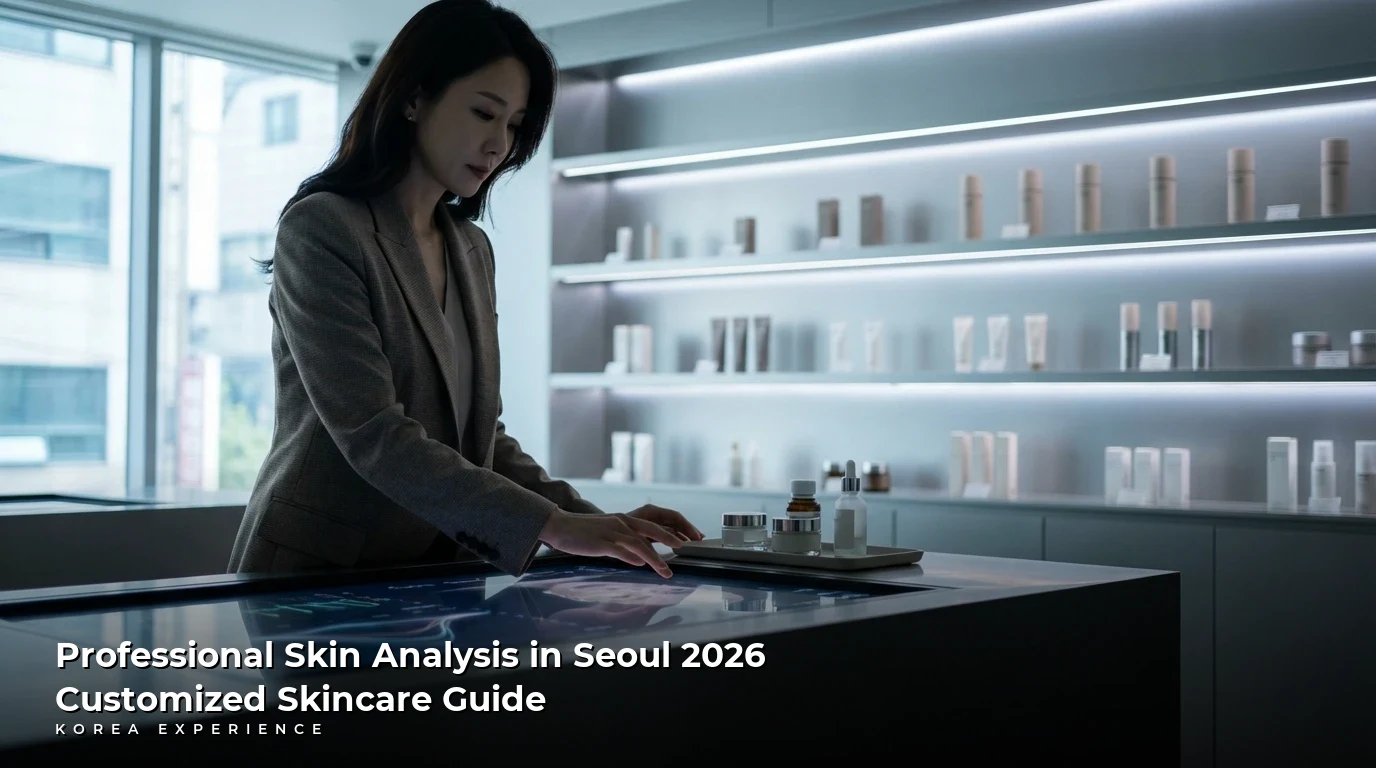
Discover how AI-powered skin analysis in Seoul creates your perfect routine. We review top clinics, costs (₩50,000+), and booking tips for 2026.
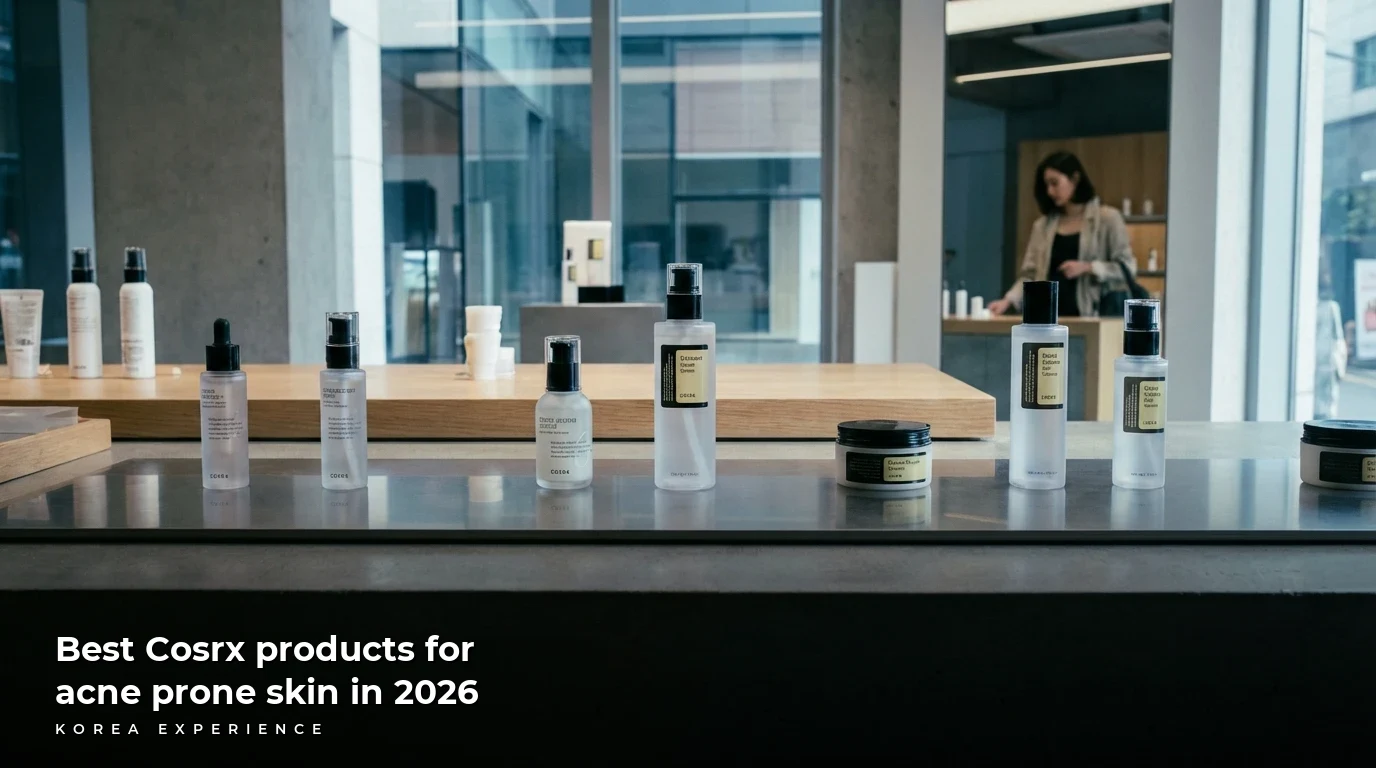
A complete guide to the best Cosrx products for acne prone skin in 2026. Includes price comparisons, ingredient analysis, and where to buy in Seoul.
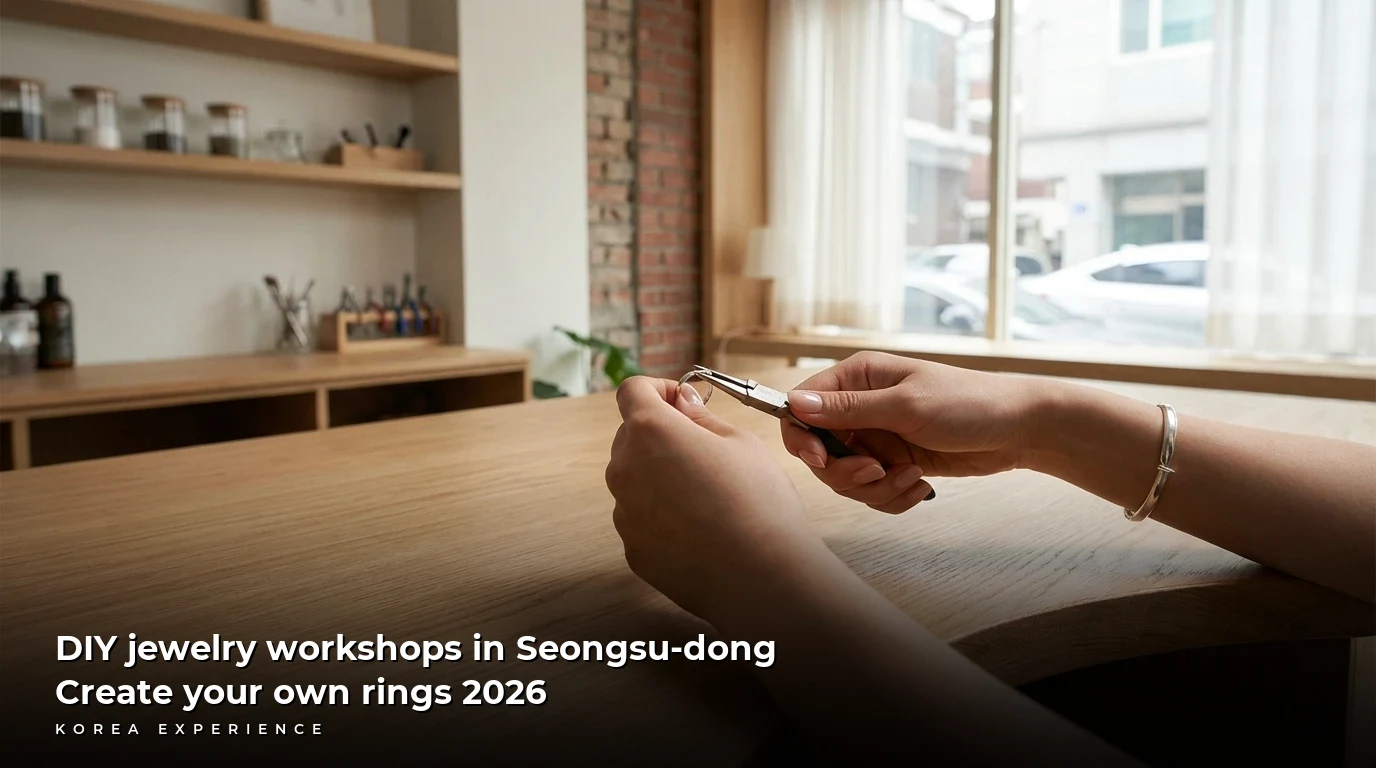
Discover the best DIY jewelry workshops in Seongsu-dong for 2026. Create custom silver rings from ₩35,000 in 90 minutes with our complete guide.
Master the famous 10-step K-beauty routine with our comprehensive guide for 2026, including product recommendations, costs, and store locations.
Master the art of shopping at Seoul's massive night market. Learn the rules of MOQ, best buildings for quality.
The ultimate guide to navigating Starfield Coex Mall. Includes floor plans, best K-fashion spots, dining recommendations, and the famous library.