Foreign-Card Cash Withdrawals in Korea: ATM Guide
Learn how to find compatible Global ATMs in South Korea, navigate fee layers, avoid the DCC trap, and manage foreign card limits.
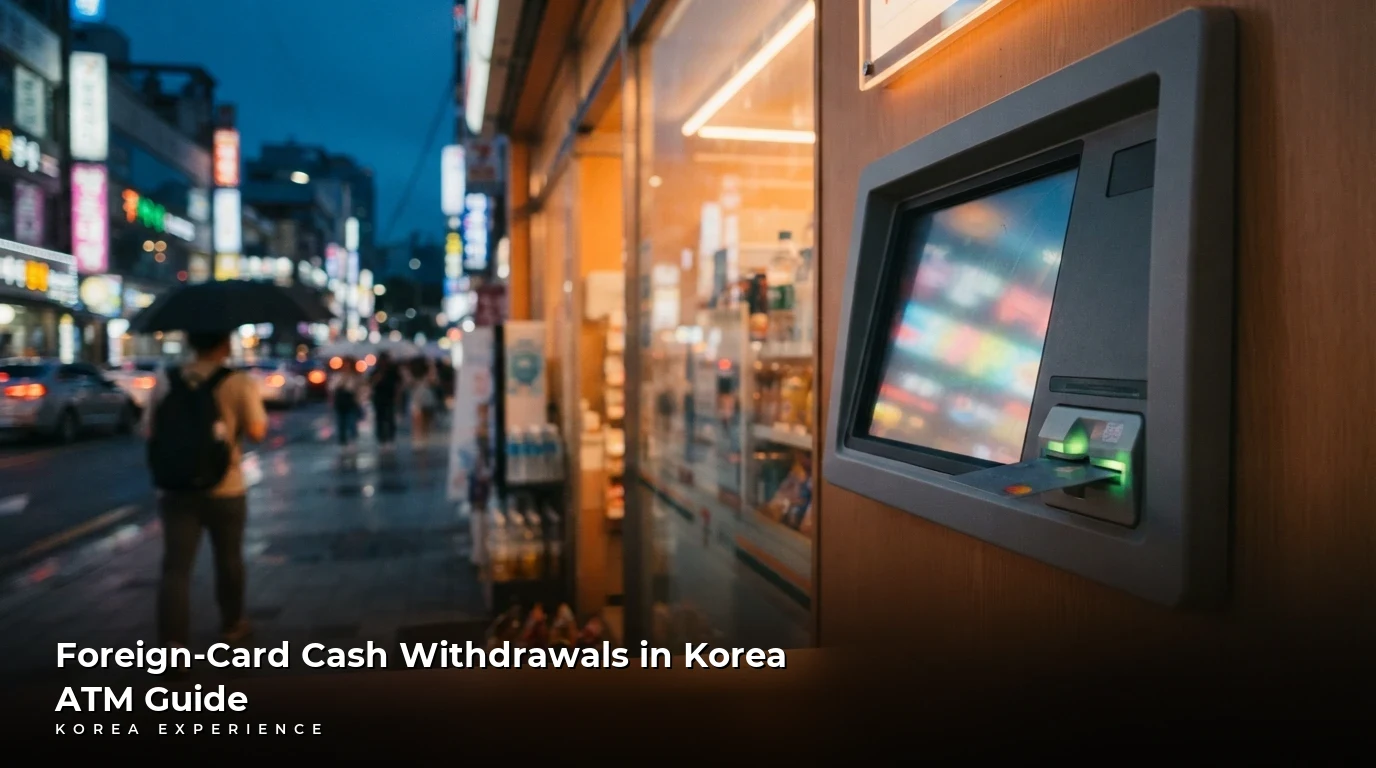
Withdrawing cash with a foreign card in South Korea requires careful navigation of machine types, fee structures, and interface prompts. Many standard Korean ATMs are domestic-only and will reject foreign-issued cards immediately. To ensure a smooth transaction, you need to know which terminals accept international cards, how to manage the associated costs, and what fallback options exist if a machine fails.
ATM Labels & Machine Compatibility
The most common hurdle when attempting to withdraw cash is running into a machine that only supports domestic networks (such as KFTC or BC Card). If you insert a foreign card into a domestic-only terminal, it will typically display an error message or immediately eject the card.
To use a foreign card, look for terminals explicitly labeled:
- "Global ATM" or "Global Service"
- Terminals bearing international network logos such as Visa, Mastercard, Plus, Cirrus, UnionPay, or JCB
Keep in mind that specific machine availability and software interfaces can vary unpredictably, even within the same bank brand or convenience store chain.
Locations & Operating Hours
Finding a compatible machine depends largely on where you look:
- Bank Branches: Major commercial banks (including Woori, KB Kookmin, Shinhan, and Hana) feature dedicated 365-day automated corners that house Global ATMs. However, standalone bank kiosks outside of these corners may close late in the evening or follow standard branch operating hours.
- Convenience Stores: Stores such as CU, GS25, 7-Eleven, and emart24 operate 24 hours (subject to brief overnight system maintenance) and frequently include Global ATMs. Note that individual machines within certain convenience store locations may still reject specific foreign cards.
Understanding the Three-Layer Fee Structure
ATM cash withdrawals in Korea can incur charges across three distinct layers:
- Local Korean Operator Fee: Levied by the local bank or operator, this fee typically ranges from KRW 3,500 to KRW 5,000 per transaction (for instance, Woori generally charges around KRW 3,500, while Hana ranges from KRW 4,200 to KRW 5,000).
- International Network Fee: Cross-border processing fees charged by networks like Visa or Mastercard, which are usually bundled directly into your exchange rate.
- Home Bank Fees: Foreign transaction fees (frequently 1% to 3%) and flat out-of-network or international ATM fees ($3 to $5 USD) charged by your home institution, unless you use a fee-reimbursement account (such as Charles Schwab) or a specialized travel card (such as Wise or YouTrip).
Avoiding the Dynamic Currency Conversion (DCC) Trap
When navigating the ATM interface, you may be prompted to choose the currency for your transaction.
- The Trap: Selecting your home country’s currency triggers Dynamic Currency Conversion (DCC), which imposes steep markup rates that often add an extra 5% to 10% to your total cost.
- The Solution: Always explicitly decline DCC or choose to be billed in Korean Won (KRW) to let your home bank handle the conversion at a standard rate.
Limits, PINs, and Transaction Nuances
- Withdrawal Limits: Per-transaction limits generally cap between KRW 300,000 and KRW 1,000,000. These caps depend heavily on the ATM operator and any limits set by your home bank.
- PIN Entry: Korean ATMs primarily prompt for a 4-digit PIN. If your home PIN is longer, travelers report mixed workarounds—such as entering the first 4 digits or appending "00"—though verifying a 4-digit standard with your home bank before travel is strongly advised.
- Account Type Selection: When prompted to select an account type, using a debit card typically requires choosing "Savings" or "Checking." If you use a credit card, the machine will process the transaction as a cash advance, which immediately incurs high interest rates and fees.
Fallback Options & Alternatives
Because foreign cards can occasionally face rejections or network disruptions at local ATMs, it is wise to maintain alternative payment methods:
- Digital Travel Wallets: Prepaid, reloadable cards (such as WOWPASS) and mobile-supported transit options help minimize reliance on physical cash.
- Card Acceptance: Korea is broadly cashless, with international credit cards accepted nearly everywhere. Cash is generally only required for traditional street vendors, small market stalls, and regional transport card top-ups.
- Physical Currency Exchange: Licensed physical currency exchange booths—such as those located in Myeongdong—provide a reliable fallback if you need to exchange physical foreign banknotes directly using your passport.
Sources
About the Author
Korea Experience Team
Written by the Korea Experience editorial team - experts in Korean medical tourism, travel, and culture with years of research and firsthand experience.
Explore more in Living in Korea
Everything expats and long-term visitors need to know — from visa requirements and housing to banking, healthcare, and daily life tips.
Browse All Living in Korea ArticlesContinue Reading
Explore more articles you might find interesting
Ditch Google Maps and download these 10 essential apps for South Korea in 2026. Learn how to save $29 with the Climate Card and hail taxis with foreign cards.
Discover Seoul's best hidden cafes with 85 Mbps Wi-Fi speeds. Learn how to secure laptop-friendly seating and avoid the 2026 2-hour study limits.
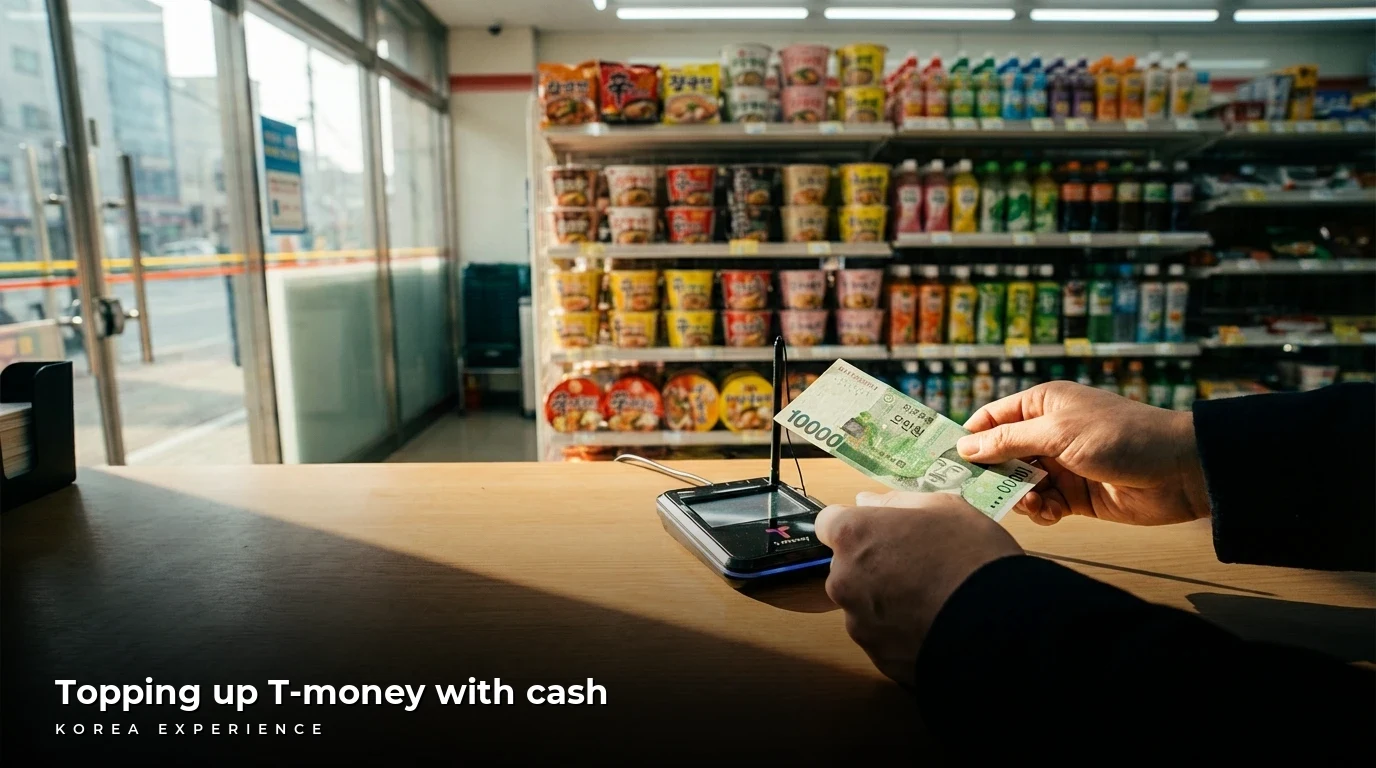
Learn how to top up your T-money card with cash in 2026. A 30,000 KRW reload at any convenience store is the best way to ride Seoul transit without an ARC.
Master the strict South Korean recycling system. Learn about sorting categories, specific colored bags, disposal schedules, and how to avoid heavy fines.
A complete guide to updating your Korean address for ARC holders. Learn the 14-day rule, HiKorea online methods, and offline procedures to avoid fines.

Navigate Seoul in 2026 without an ARC. Learn how k.ride and Taba let tourists hail cabs for just ₩4,800 using foreign phone numbers and credit cards.