How to order food in Korean restaurants phrases guide 2026
Master the art of dining in Seoul with our essential 2026 guide to Korean restaurant phrases, etiquette, and digital ordering systems.
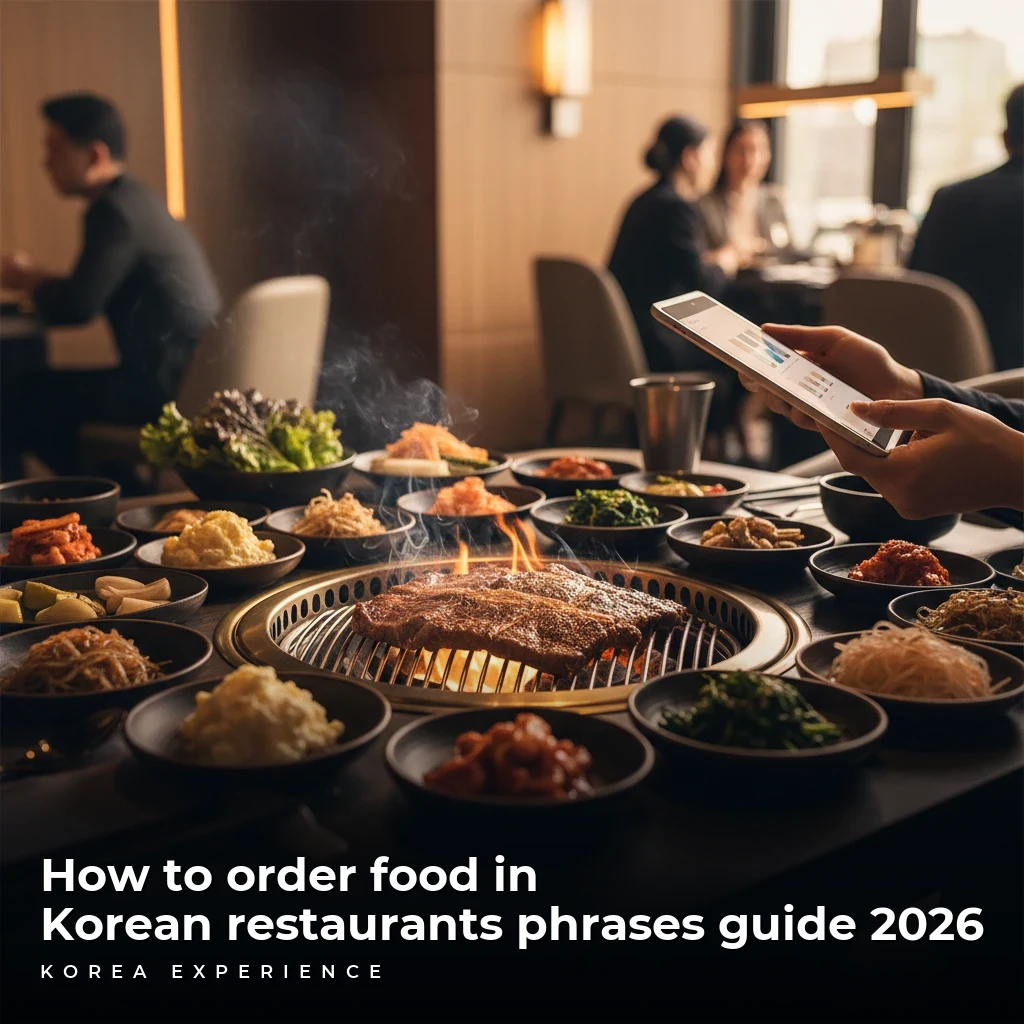
Walking into a bustling restaurant in Seoul can be an sensory overload of sizzling sounds, savory aromas, and rapid-fire Korean chatter. For many international travelers, the anxiety of the language barrier often leads to "menu pointing" or sticking to tourist traps. However, the true flavor of Korea lies in the local establishments where English menus might be scarce.
Related reading: Finding halal food in Seoul top restaurants and supermarkets.
For more details, check out our guide on Halal Korean Food Guide Best Muslim Friendly Restaurants.
Related reading: Andong Jjimdak best restaurants in the hometown guide.
You might also enjoy our article about Best food apps for English speakers TableCheck vs CatchTable.
In 2026, the dining landscape in Korea has evolved, blending traditional hospitality with high-tech ordering systems. Whether you are navigating a tabletop tablet in Gangnam or shouting for a refill in a retro BBQ joint in Euljiro, knowing the right phrases and etiquette is the key to unlocking an authentic culinary journey. This comprehensive guide will equip you with the essential vocabulary, cultural insights, and technical know-how to order like a local.
Key Takeaways
- 1Master the 'Ding-Dong' bell culture; it is the standard way to summon service in 90% of casual eateries.
- 2Kiosks and Table Tablets handle orders in over 85% of fast-casual chains as of 2026.
- 3Tipping is strictly not required and often refused; service is included in the menu price.
Getting a Table: The First Interaction
The moment you step through the door, the interaction begins. Unlike Western dining where you might wait to be seated by a host, many casual Korean spots operate on a "seat yourself" basis, while popular trendy spots utilize digital waiting systems.
Handling the Wait List
In 2026, the days of writing your name on a paper list are fading. Popular restaurants, especially in areas like Seongsu-dong or Hannam-dong, use tablet queuing systems (often "CatchTable" or "TableLing").
Pro Tip
If you encounter a tablet at the entrance requiring a Korean phone number, look for a QR code option for international numbers. If none exists, signal a staff member immediately. They can manually input a dummy number for you.
If there is no machine, you will be greeted by staff. The first question is always about the size of your party.
Key Phrase: "Myeot bun iseyo?" (How many people are there?)
Your Answer:
- One person: "Han-myeong-iyo" (Just me / One person)
- Two people: "Du-myeong-iyo"
- Three people: "Se-myeong-iyo"
- Four people: "Ne-myeong-iyo"
If numbers escape you, holding up fingers is universally understood and perfectly polite.
📋 Waiting & Seating Facts
Deciphering the Menu and Ordering
Once seated, the clock starts ticking. In fast-paced Korean culture ("Ppalli-Ppalli" culture), servers expect you to order relatively quickly. The average time from seating to ordering in a lunch spot is typically under 5 minutes.
Calling the Server
This is the biggest culture shock for Westerners. In Korea, you do not wait for the server to make eye contact. You must actively summon them.
- Look for the Bell: Check the table (often on the utensil drawer or napkin holder) for a call button. Press it once. A "Ding-Dong" sound will ring, and the table number will appear on a screen in the kitchen.
- The Vocal Method: If there is no bell, raise your hand and confidently say:
- Phrase: "Jeogiyo!" (Excuse me / Over here!)
- Alternative (Friendly): "Sajangnim!" (Boss/Owner - used regardless of their actual rank).
Do not be shy about shouting 'Jeogiyo.' If you sit quietly waiting for a server to come to you, you might wait forever. It is not considered rude; it is considered efficient. In busy BBQ places, servers handle 8-10 tables at once and rely on your signal.
Essential Ordering Phrases
When the server arrives, use the "Point and Speak" method for maximum accuracy.
- "Please give me this."
- Phrase: "Igeo juseyo."
- "Please give me one serving of this."
- Phrase: "Igeo il-inbun juseyo."
- "Please give me two servings of samgyeopsal."
- Phrase: "Samgyeopsal i-inbun juseyo."
Counting Systems for Ordering
| Context | 1 | 2 | 3 | 4 |
|---|---|---|---|---|
| Items/Portions | Hana | Dul | Set | Net |
| Money/Minutes | Il | I | Sam | Sa |
| Servings (In-bun) | Il-inbun | I-inbun | Sam-inbun | Sa-inbun |
The Digital Shift: Kiosks and Tablets
As of 2026, approximately 65% of restaurants in Seoul's tourist districts utilize table-side tablets (T-Oder) or entrance kiosks.
📖 How to Order via Table Tablet
Step 1: Change Language
Look for a globe icon or flags (🇺🇸/🇬🇧) in the top right or bottom left corner.
Step 2: Select Items
Tap the photos of the food you want. Note that BBQ places often have a minimum order of 2 servings (approx. 300g-400g).
Step 3: Cart & Confirm
Go to the cart (usually a shopping bag icon). Review quantity.
Step 4: Order or Pay
Tap 'Order' to send to the kitchen. Some tablets have attached card readers for immediate payment; others require you to pay at the front later.
Dietary Restrictions and Special Requests
Korea is a food paradise, but it can be challenging for those with dietary restrictions. While veganism is growing (with over 150 dedicated vegan restaurants in Seoul as of 2026), traditional broths often contain fish sauce or meat stock.
Common Modification Phrases
- "I am vegetarian."
- Phrase: "Jeo chaesik-juuija yeyo."
- "Please remove the meat."
- Phrase: "Gogi-neun ppae juseyo."
- "Is this spicy?"
- Phrase: "Igeo maewoyo?"
- "Please make it less spicy."
- Phrase: "Deol mapge haejuseyo." (Crucial for dishes like Jjigae or Tteokbokki).
- "I have a peanut allergy."
- Phrase: "Ttang-kong allergy isseoyo."
📊 Dietary Trends 2026
The Side Dish (Banchan) Culture
One of the most delightful aspects of Korean dining is Banchan—the small side dishes that accompany your meal. These are almost always free and refillable.
Getting Refills
You do not pay for more kimchi. You just ask.
- "Please give me more of this." (While pointing at the empty dish)
- Phrase: "Igeo deo juseyo."
- Polite version: "Igeo ribil jom haejuseyo." (Please refill this).
Self-Service Stations
Many restaurants now feature a "Self-Bar." If you see a station with containers of kimchi, radishes, and lettuce, do not ask the staff for refills. Take your empty plates there and fill them yourself. Look for the sign "SELF" written in English.
Drinking Culture: Ordering Alcohol
Ordering alcohol (Sul) is integral to the Korean dining experience, particularly at BBQ or fried chicken restaurants. The legal drinking age is 19 (international age), meaning those born in 2007 or earlier are legal in 2026.
The Essentials
- Soju: The national spirit.
- Phrase: "Soju han-byeong juseyo" (Please give me one bottle of Soju).
- Beer: usually generic lagers like Cass or Terra.
- Phrase: "Maekju han-byeong juseyo" (Please give me one bottle of beer).
- Water: It is almost always free.
- Phrase: "Mul jom juseyo." (Note: In 80% of places, water is self-service from a purifier near the kitchen).
💵 Alcohol Price Guide (2026 Average)
Per glass in trendy areas
Paying the Bill
The meal is finished. Do you ask for the check at the table? In 95% of cases, no.
The Payment Flow
- Locate the Bill: It is usually a small clipboard on your table or stuck to the exhaust pipe (at BBQ places). Sometimes, there is no physical bill; the cashier just asks your table number.
- Go to the Counter: Take the bill to the exit/register.
- Payment Method:
- Phrase: "Gyesan haejuseyo." (Please calculate the bill / I would like to pay).
- Card: "Card-eyo." (It's a card).
- Cash: "Hyeon-geum-iyo." (It's cash).
Payment Process Timeline
Finish Meal
Ensure you haven't left personal items. Tipping is not required.
Grab Bill
Take the order slip (Billy-ji) from your table.
Proceed to Exit
The register (Pos) is almost always near the door.
Transaction
Insert card. Split payment is possible but takes time.
Split Payments
While possible ("Ttaro gyesan haejuseyo"), split payments are disliked during busy lunch hours (11:30 AM - 1:30 PM). It is culturally preferred for one person to pay and others to transfer money via apps, or to take turns paying for rounds (1-cha, 2-cha).
Restaurant Recommendation: Putting it into Practice
To practice your new skills, visiting a classic Korean BBQ spot is the best initiation. Here is a typical profile of what to expect in a mid-range Seoul establishment in 2026.
Golden Pig BBQ(Geum-dwaeji Sikdang)
Advanced Tips for the Savvy Traveler
The "Service" Culture
If a server brings you a dumpling, a drink, or steamed eggs that you didn't order, and says "Service" (pronounced Seo-bi-su), it means it is on the house. This is common if you order a lot of alcohol or expensive meat cuts.
- Response: "Gamsahamnida!" (Thank you).
Solo Dining (Honbap)
Ordering food alone was once taboo, but in 2026, Honbap (eating alone) is normalized.
- Tip: Look for restaurants with bar seating or kiosks.
- Warning: Some traditional BBQ or Stew places still require a minimum order of 2 servings, even for one person. You can still eat there if you are willing to pay for two portions.
Pros and Cons of Solo Dining in Korea
- ✓Freedom to eat at your own pace
- ✓Many restaurants now have single-seat partitions
- ✓Kiosks remove language anxiety
- ✗Some BBQ places enforce 2-serving minimums
- ✗Sharing-style dishes (like large stews) are hard to finish
- ✗Peak hours can feel rushed
Frequently Asked Questions
❓ Frequently Asked Questions
Have more questions?Contact us →
By mastering these phrases and understanding the flow of service, you transform from a confused tourist into a confident diner. Korea's culinary scene is fast, efficient, and incredibly rewarding. So go ahead, press that button, and shout "Sajangnim!" with confidence.
About the Author
Korea Experience Team
Written by the Korea Experience editorial team - experts in Korean medical tourism, travel, and culture with years of research and firsthand experience.
Explore more in Food & Dining
Korean BBQ, street food, Michelin restaurants, and regional specialties — your ultimate guide to eating well in Korea.
Browse All Food & Dining ArticlesContinue Reading
Explore more articles you might find interesting
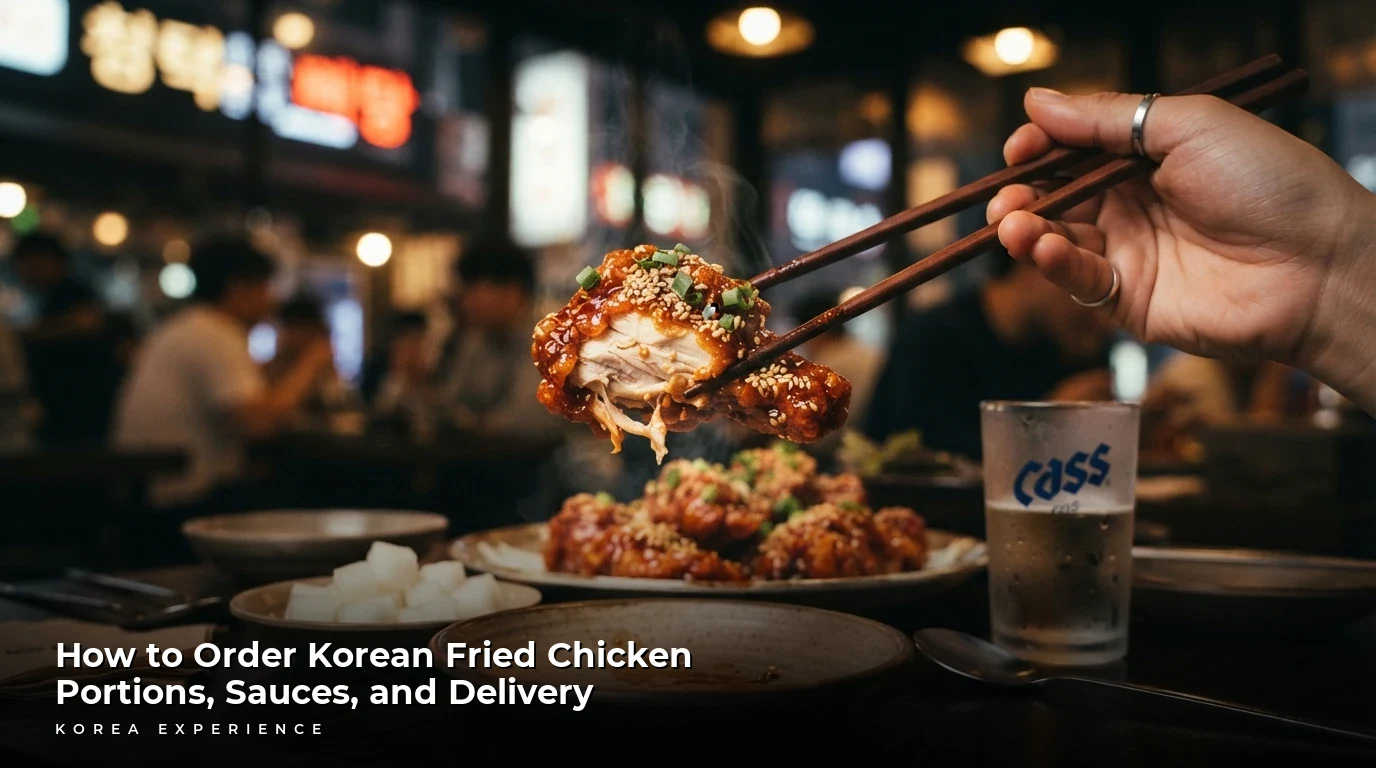
Master ordering Korean fried chicken with our guide to portions, whole chicken counters, classic sauces, essential sides, and delivery terms.
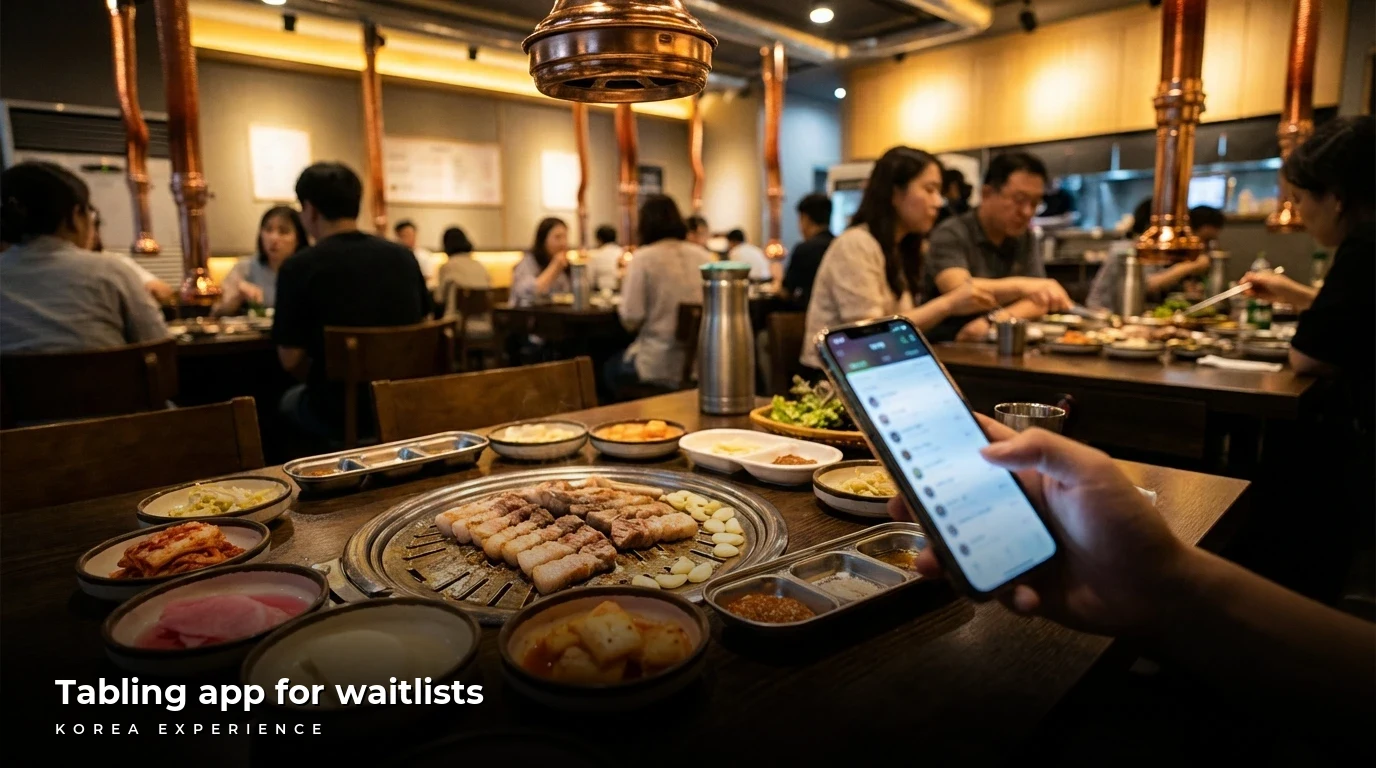
Master Seoul dining in 2026 with our guide to avoiding the 40% no-show penalty and booking top spots like London Bagel Museum without a Korean ID.
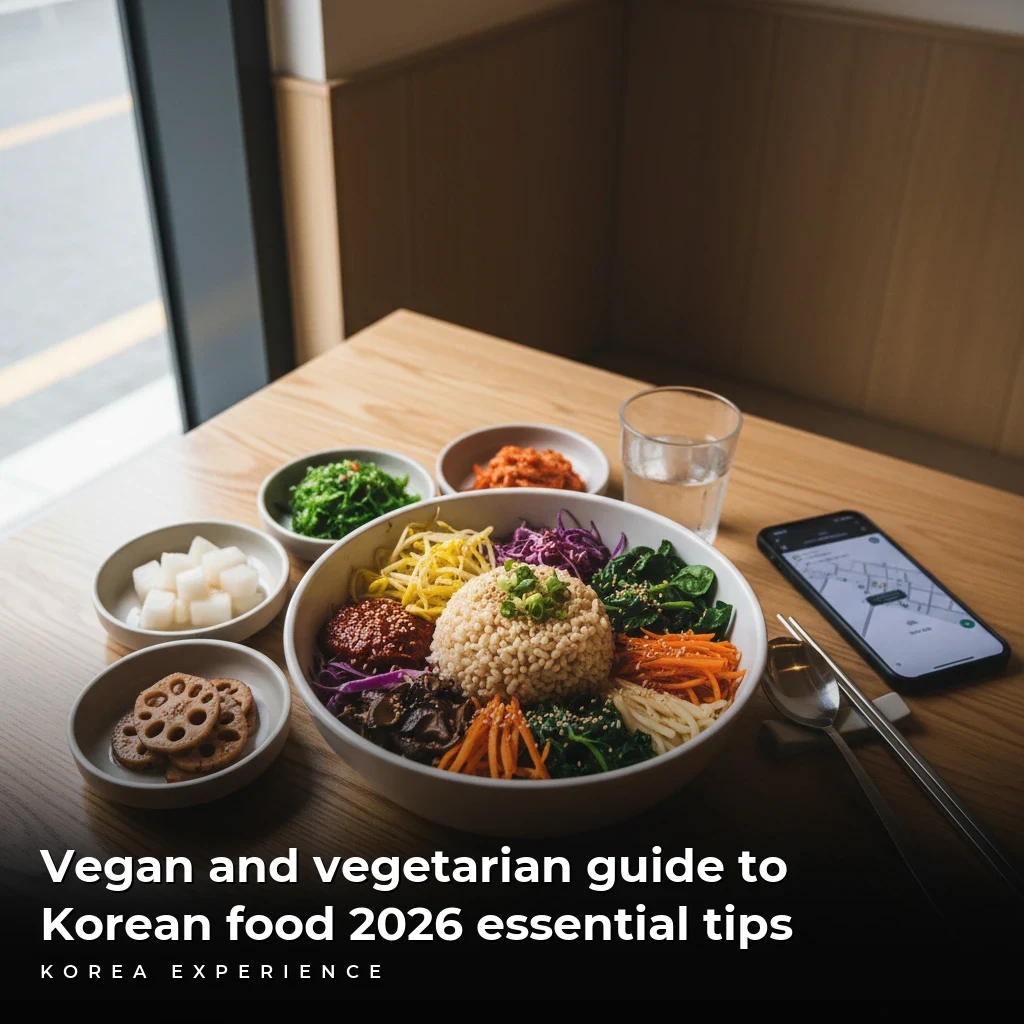
Discover the ultimate 2026 guide to vegan and vegetarian dining in Korea. Includes vocabulary, top restaurants, and survival tips for travelers.
Master Korean dining rules and learn why lifting your rice bowl is a cultural taboo. Essential guide for travelers in 2026.
A complete guide to experiencing authentic Korean temple food in 2026, from Michelin-starred restaurants in Seoul to remote temple stays.
Master the intricate world of Korean side dishes with our comprehensive guide to banchan varieties, dining etiquette, and the best places to buy them in Seoul.