Korean youtube culture popular creators and trends
Discover the massive influence of K-YouTube, from viral Mukbang stars to silent vloggers, and learn how to navigate the trends as a traveler or creator.
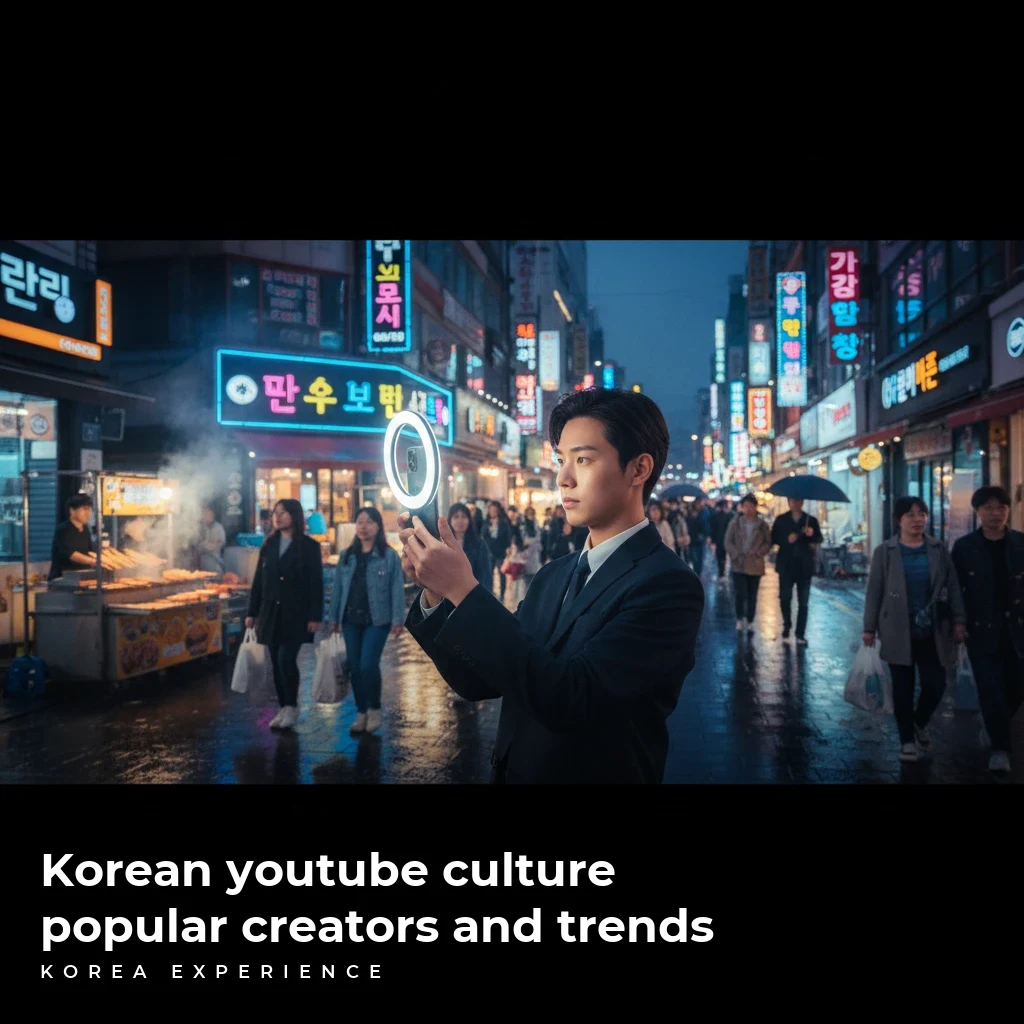
South Korea is arguably the most digitally connected society on Earth, and nowhere is this more evident than in its YouTube culture. For international travelers and expats, YouTube is not just an entertainment platform; it is a vital search engine, a cultural translator, and a window into the hyper-fast trends of Seoul. While the world knows K-Pop, the domestic ecosystem of creators—ranging from silent introverts documenting their study habits to high-energy hosts reviewing convenience store snacks—offers a much deeper look into the Korean psyche.
In 2026, YouTube remains the dominant video platform in South Korea, with usage rates surpassing even domestic giants like KakaoTalk for time spent. For the traveler, understanding these trends provides context to the sights you see: why people are queuing for hours at a specific bagel shop (a YouTuber reviewed it), or why you see students filming themselves studying in cafes.
Learn more in our comprehensive guide to Gaming culture visiting lol park and PC bang pro centers.
Key Takeaways
- 1YouTube is Korea's second largest search engine, used by 81% of the population daily
- 2Strict privacy laws require blurring strangers' faces in all public content
- 3Mukbang and Silent Vlogs remain the top two cultural exports of K-YouTube
The Scale of the K-YouTube Ecosystem
To understand the magnitude of YouTube in Korea, one must look at the numbers. As of early 2026, South Korea has a smartphone penetration rate of over 97%, one of the highest in the world. This infrastructure supports a massive viewer base. Recent data indicates that the average South Korean spends approximately 40 to 45 hours per month watching YouTube content, a figure that jumps to over 50 hours for the Gen Z demographic.
For more details, check out our guide on K-Drama Cafe Culture Scene Filming Locations Guide.
Unlike in many Western countries where Google is the primary search engine, Koreans often turn to YouTube first to search for "how-to" content, restaurant reviews, and travel tips. If you are looking for the best Kimchi-jjigae in Gangnam, a text blog is good, but a 4K video showing the steam rising from the pot is preferred.
For more details, check out our guide on K-Pop album unboxing culture photocards and inclusions guide.
📊 K-YouTube Market Penetration
This saturation has led to a highly competitive creator economy. It is estimated that 1 in every 500 Koreans has uploaded a video with the intent of becoming a creator. This density creates rapid trend cycles, where a specific video format (like "Tanghulu" cooking videos) can saturate the market within 2 weeks and vanish just as quickly.
Learn more in our comprehensive guide to K-Pop fan cafe culture daum vs weverse guide for global fans.
Mukbang: The Titan of Korean Content
The term Mukbang (a portmanteau of "eating" and "broadcast") is now part of the global lexicon, but its roots are distinctly Korean. Originating around 2010 on AfreecaTV before migrating to YouTube, it satisfied a cultural need for companionship during meals in a society where eating alone (honbap) was traditionally taboo.
Today, top Mukbang creators like Tzuyang or Hamzy boast subscriber counts in the tens of millions. The format has evolved. It is no longer just about quantity; it is about sensory details (ASMR) and specific food trends.
The Cost of a Mukbang
Top-tier Mukbang creators reportedly spend between ₩500,000 to ₩2,000,000 ($375-$1,500 USD) per video on food procurement, styling, and high-end delivery services to ensure visual perfection.
For travelers, watching local Mukbang channels is the most effective way to gauge current food trends. If you see creators eating "Flat Peaches" or "Cream filled Bagels," you can expect queues at bakeries selling those items to be 1 to 2 hours long on weekends.
The "Soolbang" Evolution
A recent sub-trend is Soolbang (alcohol broadcast). With the rise of solo drinking culture, creators now film themselves pairing specific traditional liquors like Makgeolli or Soju with side dishes (Anju). A standard green bottle of Soju costs about ₩1,900 ($1.40) in convenience stores, making this an accessible format for newer creators compared to the expensive massive feasts of traditional Mukbang.
The Aesthetic of Silence: Vlogs and "Gongbang"
Contrasting the gluttony of Mukbang is the "Silent Vlog." These videos often feature no talking, only ambient sounds and calming subtitles. They focus on the aesthetic romanticization of daily life, known locally as Gamsung.
A massive sub-genre here is Gongbang (Study Broadcast). In a country with intense academic pressure, students stream themselves studying for 10 to 12 hours straight. It acts as a digital library where viewers study "alongside" the creator.
"If you visit cafes in university districts like Sinchon or Hongdae, you will see students with tripods set up on their desks. They aren't taking selfies; they are livestreaming their study session. It is polite to not stare or interrupt, as they are likely 'at work' for thousands of live viewers."
These silent vlogs have heavily influenced interior design trends in Korea. The "YouTube Studio Apartment" look—white bedding, wood tones, indirect lighting, and a Marshall speaker—is a standard aspiration. Furnishing a studio apartment to look like a popular vlog set typically costs between 2,000,000 and ₩3,000,000 ($1,500-$2,250 USD) using affordable brands like "Today's House" (Ohou).
Web Variety Shows: The New Television
Traditional Korean TV is losing ground to "Web Entertainment." These are high-budget variety shows produced specifically for YouTube. Channels like "Workman" (where hosts try different part-time jobs) or "Psick Show" (a talk show catering to English and Korean speakers) dominate the cultural conversation.
📋 Web Variety Specs
The editing style of these shows—characterized by rapid cuts, massive colorful text overlays, and sound effects every 3 to 5 seconds—has defined the "Korean Editing Style." For an expat learning Korean, these shows are goldmines for learning current slang, though the speed of speech can be overwhelming.
Travel and Expat Creators: Your Digital Guides
For the international audience, a specific niche of creators bridges the gap between Korea and the world. Channels like "Korean Englishman" introduced Korean culture to the UK, while "Seoul Walker" provides high-fidelity walking tours of neighborhoods.
If you are planning a trip, these creators are essential for logistics. They often review prepaid SIM cards (usually costing ₩30,000 to ₩70,000 depending on data caps) and transit passes.
Travel Content Types
| Feature | Walking Tours | Vlog/Lifestyle | Info/Guide |
|---|---|---|---|
| Audio | Ambient/Binaural | Narrated/Music | Voiceover Instruction |
| Editing | Continuous Shot | Fast Cuts | Graphics Heavy |
| Best For | Vibe Check | Cultural Insight | Logistics/Tips |
Filming in Korea: A Guide for Aspiring Creators
Many travelers come to Korea hoping to start their own channel. The barrier to entry is low, but the standards are high. Seoul is a photographer's paradise, but you need the right tools and knowledge.
Equipment and Connectivity
Korea boasts the fastest average internet speeds in the world, often exceeding 100 Mbps even on public Wi-Fi. This makes live streaming outdoors (IRL streaming) incredibly viable without a bonded cellular backpack. However, renting gear is also a popular option.
💵 Gear Rental Costs (Yongsan Electronics Market)
Perfect for walking/action
If you need to edit on the go, "PC Bangs" (Internet Cafes) are everywhere. They cost approximately ₩1,500 to ₩2,000 ($1.10-$1.50) per hour and come equipped with high-end RTX graphics cards capable of rendering 4K video rapidly.
📖 How to Edit at a PC Bang
Step 1: Find a Premium Seat
Look for 'Premium' or 'Streamer' zones in the PC Bang for better privacy and specs.
Step 2: Install Software
Most have Adobe CC pre-installed, but you need your own login credentials.
Step 3: Order Food
Order 'Sotteok-Sotteok' (Sausage and Rice Cake) from the system tray for ₩3,500 to fuel your edit.
The Critical Rule: Privacy and Portrait Rights
This is the most important section for any foreigner wishing to film in Korea. South Korea has incredibly strict defamation and portrait right laws. Unlike in the US or UK, where you can generally film in public spaces, in Korea, individuals have a "right to their image."
If a pedestrian is identifiable in your video and complains, you can be liable for damages. This is why you will see almost every face blurred in Korean variety shows and news reports.
Legal Warning
Violating portrait rights or filming specifically in "No Camera" zones (like swimming pools, saunas, or bathrooms) can lead to fines up to ₩30,000,000 ($22,500) or prison time under the Sexual Violence Crimes Act if misconstrued. Always err on the side of caution.
Best Practices for Travelers:
- Blur Faces: Use editing software to blur faces of anyone who isn't the main subject.
- Ask Permission: Before filming inside a restaurant or cafe, always ask the staff: "Sajin jjig-eo-do dwaeyo?" (Is it okay to take photos/video?).
- Avoid Confrontation: If someone crosses their arms (an 'X' sign) or covers their face, point the camera away immediately.
Recommended Filming Locations
If you are looking to capture the essence of YouTube Korea, you need locations that offer the visual fidelity audiences expect.
Starfield Library (Coex)(별마당 도서관)
Another trending area is Seongsu-dong, often called the "Brooklyn of Seoul." It is packed with pop-up stores and industrial cafes. Pop-up stores here change every 2 to 3 weeks, providing fresh content for creators constantly. A typical coffee in this area is priced slightly higher, averaging ₩6,000 to ₩8,000 ($4.50-$6.00).
Pros and Cons of Engaging with K-YouTube Culture
For the viewer and the creator, the ecosystem has distinct advantages and drawbacks.
K-YouTube Ecosystem Analysis
- ✓Incredibly high production value sets a global standard
- ✓Rapid trend cycles mean there is always something new
- ✓Excellent source of real-time travel and food information
- ✗Strict privacy laws make casual vlogging difficult
- ✗High saturation makes it hard for new creators to grow
- ✗Content can feel repetitive due to copycat culture
The Future: Virtual Humans and Shorts
Looking ahead to late 2026, the trend is shifting toward "Virtual Humans" and AI-generated avatars. Major entertainment companies are debuting YouTubers who do not physically exist but have hyper-realistic visuals. Additionally, YouTube Shorts has taken over the commute time. The average commute in Seoul is about 50 minutes one way, perfect for consuming dozens of 60-second clips.
Short-form content is also driving offline sales. A 15-second viral clip about a "coin bread" stand in Myeongdong can result in a physical line of 50+ people the next day, each paying roughly ₩4,000 for the snack.
Conclusion
Korean YouTube culture is a mirror reflecting the country's fast-paced, highly aesthetic, and digitally integrated society. Whether you are watching a Mukbang to decide on dinner, following a silent vlog to relax, or planning to pick up a camera yourself, understanding the nuances of this platform is essential to understanding modern Korea.
Just remember: respect the privacy laws, keep your edits fast, and never underestimate the power of a viral food trend.
Your K-Creator Journey
Research
Watch top creators to understand the 'Korean Edit' style and current audio trends.
Gear Up
Rent a camera in Yongsan or set up your phone with a stabilizing gimbal.
Location Scout
Visit Seongsu or Hongdae. Ask permissions before filming interiors.
Edit & Blur
Spend extra time blurring background faces to respect privacy laws.
❓ Frequently Asked Questions
Have more questions?Contact us →
About the Author
Korea Experience Team
Written by the Korea Experience editorial team - experts in Korean medical tourism, travel, and culture with years of research and firsthand experience.
Explore more in K-Culture
K-Pop, K-Drama, traditional arts, and modern culture — dive deep into the cultural phenomena that have captivated the world.
Browse All K-Culture ArticlesContinue Reading
Explore more articles you might find interesting
Discover why market vendors give free food. Learn how to navigate 24000 stalls in 2026 using WOWPASS and experience the 16 percent sales boom firsthand.
Discover 2026's top Korean dessert trends like the ₩12,000 Dubai Chewy Cookie and Butter Tteok. Learn how to skip 3-hour cafe lines and book without an ARC.
Discover the 2026 solo dining revolution in Seoul where 36.1% of households are single. Learn to navigate BBQ joints and avoid lunchflation prices.
Discover the deep meaning of Uri or We in Korean collectivism. Learn how this cultural concept shapes dining, social life, and travel in Korea for 2026.
Discover the world of K Pop album unboxing culture. Learn about photocards inclusions buying in Seoul and trading etiquette for international fans.
The ultimate guide to attending live K-Pop broadcasts. Discover how to navigate lotteries, tour packages, and fan culture at SBS and KBS.