K-Pop album unboxing culture photocards and inclusions guide
Discover the world of K Pop album unboxing culture. Learn about photocards inclusions buying in Seoul and trading etiquette for international fans.
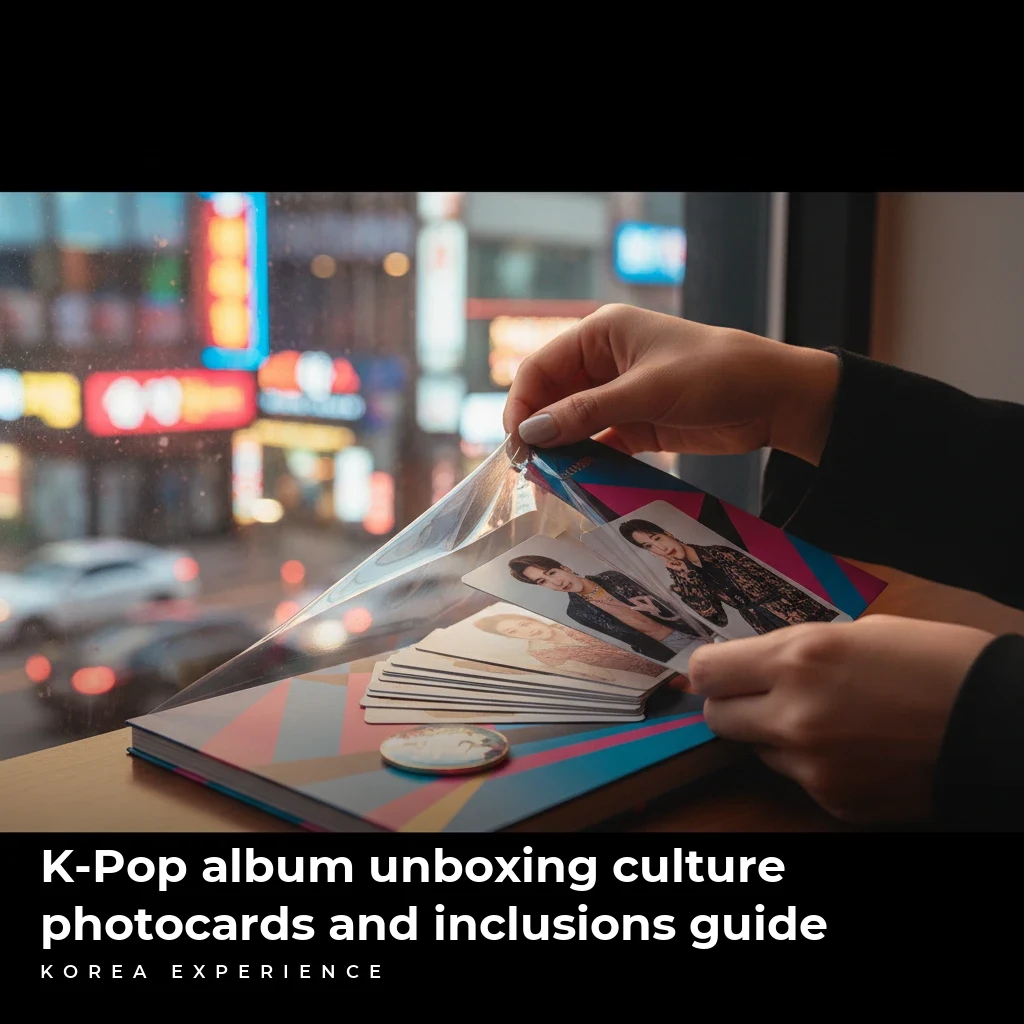
The global music industry may have pivoted to streaming, but in South Korea, the physical album market is thriving, driven by a unique and addictive culture: album unboxing. For international fans and travelers visiting Korea, purchasing a K-Pop album is rarely just about listening to the CD. It is a tactile experience, a treasure hunt for random "inclusions," and a community ritual.
At the heart of this phenomenon is the "Poca" (photocard)—a trading card-sized selfie of an idol that has spawned a multi-billion dollar secondary market. Understanding the nuances of versions, pre-order benefits, and lucky draws is essential for anyone looking to immerse themselves in this vibrant aspect of Hallyu culture. Whether you are hunting for a specific member in Myeongdong or navigating the trading apps, this guide covers everything you need to know.
Learn more in our comprehensive guide to Collecting K-Pop photocards the global market and trading....
Key Takeaways
- 1Standard K-Pop albums cost between 15,000 to ₩25,000 in Korea
- 2Photocards are the primary driver of sales with values ranging from $5 to $500
- 3Myeongdong Underground and WithMuu in Hongdae are top buying spots
The Anatomy of a K-Pop Album
Unlike Western jewel cases, a Korean pop album is often a substantial box set, weighing anywhere from 250 grams to over 1 kilogram depending on the version. When you purchase an album, you are essentially buying a merchandise package that happens to include a CD.
Learn more in our comprehensive guide to K-Pop fan cafe culture daum vs weverse guide for global fans.
Most groups release multiple versions of the same album—typically 2 to 4 standard versions—each with different concepts, photoshoots, and color schemes. In 2025, the average K-Pop album contained at least five distinct types of items.
Related reading: Best K-Pop concert venues in Seoul ultimate guide.
Common Inclusions
The excitement of unboxing comes from the randomization. While the photobook (usually 80 to 120 pages) is fixed per version, almost everything else is random.
Learn more in our comprehensive guide to Gaming culture visiting lol park and PC bang pro centers.
- Photobook: High-quality photo spreads matching the album's concept.
- CD-R: Often designed with unique art.
- Photocard (PC): The holy grail. Usually 55mm x 85mm.
- Postcards & Posters: larger visuals, often folded within the box.
- Stickers: Decorative elements for journals or laptops.
- Lyric Book: Sometimes separate from the photobook.
📊 Industry Scale
Randomization Logic
Most albums include only one or two photocards out of a possible pool of dozens. For a 9-member group, there might be 90 different cards across all versions, forcing collectors to buy multiple copies or trade to complete a set.
The Photocard Phenomenon (Poca)
The "Poca" culture is the economic engine of physical sales. These cards fit perfectly in the back of a phone case or a standard wallet. However, serious collectors store them in "binders" using acid-free sleeves.
The value of a photocard is determined by rarity and demand. A standard album card might trade for 5,000 to ₩10,000 ($4-$8 USD), but limited edition broadcast cards or pre-order benefits (POBs) can skyrocket. In rare instances, cards have sold for over ₩1,000,000 ($750 USD) on second-hand markets.
Understanding Pre-Order Benefits (POBs)
If you buy an album during the pre-order period from specific retailers (like WithMuu, Soundwave, or Apple Music), you receive an exclusive, unreleased photocard. These are distinct from the cards found inside the sealed album.
"When buying in Korea, ask the cashier if there are active 'Lucky Draw' events. These happen shortly after a comeback. You buy an album via a kiosk and get a dispenser-dropped exclusive photocard immediately. It's much more thrilling than standard buying."
Where to Buy Albums in Seoul
Seoul offers an overwhelming number of places to buy albums. Prices and perks vary significantly between tourist hubs and dedicated fan zones.
1. Myeongdong Underground Shopping Center
Located directly connected to Myeongdong Station (Line 4), the underground arcade is famous for competitive pricing. Several shops here stack albums floor-to-ceiling.
- Price: Often 10-15% cheaper than major bookstores.
- Stock: Excellent for older albums and back catalogs.
- Official Count: Most reputable shops here count towards Hanteo and Circle charts (crucial for music show wins).
2. WithMuu (Hongdae)
This is a modern, experience-driven store located in AK Plaza. It is a hub for "Lucky Draw" events and pop-up stores.
WithMuu AK Plaza Hongdae(위드뮤 홍대점)
3. Ktown4u (COEX)
Located near the famous Starfield Library in Gangnam, Ktown4u offers an academy and a massive retail space. It is a pilgrimage site for international fans.
- Distance: 5-minute walk from Samseong Station (Line 2).
- Features: Unboxing zones with tables and phone stands provided.
📋 Shopping Logistics
The Unboxing Ritual and Etiquette
Unboxing is a content genre in itself. Fans film "unboxing videos" for TikTok, YouTube, or Instagram Reels. If you visit a café near an entertainment agency or a designated unboxing zone at a store, you will see fans carefully slicing plastic wrap.
The Tools of the Trade
You will rarely see a local fan tear open an album with their bare hands. Precision is key to maintaining the condition of the inclusions for potential trading.
📖 How to Unbox Like a Pro
Step 1: Prepare the Space
Find a clean, flat surface. Many fans bring a 'toploader' (hard plastic case) to immediately protect the photocard.
Step 2: The Incision
Use a cutter to slice the shrink wrap along the side edge. Do not rip the plastic off entirely if you want to keep the sticker seal intact.
Step 3: The Reveal
Locate the inclusions packet. Do not look at the photocard immediately. Face it down to build suspense.
Step 4: Protection
Immediately sleeve the photocard. Touching the face of the card can leave oils or fingerprints.
Defect Policy
If you are filming an unboxing for a potential refund claim due to missing items, you MUST film the entire process from the sealed box without any cuts in the video. Korean retailers are strict about this "unboxing video" proof.
Trading Culture: "Yangdo"
"Yangdo" refers to the transfer or selling of goods. If you pull a member card you do not collect, you trade it. In Korea, this often happens instantly near the point of purchase. You will see fans standing outside WithMuu or Ktown4u holding up their duplicate cards, signaling they are open to trade.
Online Trading Platforms
If you cannot trade in person, apps and social media are the next step.
Trading Platforms in Korea
| Platform | Primary Use | Foreigner Friendly | Speed |
|---|---|---|---|
| Twitter (X) | Direct Trading/Selling | Medium (Papago needed) | Fast |
| Bunjang | Buying Secondhand | Low (Korean number req) | Medium |
| Pocamarket | Instant Selling/Buying | High (Global App) | Instant |
When searching on Twitter (X), fans use specific Korean hashtags. Understanding these is crucial:
- Yangdo (양도): Sell/Transfer
- Gyo-hwan (교환): Exchange/Trade
- Me-ib (매입): Buying/Looking for
For example, searching "[Group Name] [Member Name] exchange" in Korean will yield real-time results from fans in your vicinity.
Storing and Decorating (Polco)
Once you have secured your bias (favorite member), the journey isn't over. "Polco" is short for Polaroid Decoration. It involves decorating the toploaders with stickers to match the aesthetic of the card.
Daiso is the undisputed king of affordable storage supplies in Korea.
- Sleeves: ₩1,000 for a pack of 20-40 (Popcorn Games is a popular brand).
- Toploaders: ₩1,000 for a pack of 10.
- Binders: 3,000 to ₩5,000.
💵 Collector Supply Costs
A5 Binder, archival quality
A5 Binder, standard quality
Daiso stores are ubiquitous, with over 1,500 locations across the country, usually within 500 meters of any major subway station. The Stationery section is where you will find these treasures.
The Cost of Being a Fan: Lucky Draws and Signings
For the dedicated fan, the album is a lottery ticket. "Fan Sign" events allow 30 to 50 fans to meet the group face-to-face. Entry is based on the number of albums purchased during a specific window.
To get into a fan sign for a top-tier group (like IVE, Seventeen, or NCT), the "cut line" (minimum albums needed) can exceed 50 to 100 albums. At ₩18,000 per album, this is an investment of 900,000 to ₩1,800,000 ($650 - $1,300 USD).
Fan Sign Event Cycle
Announcement
Store (e.g., Soundwave) announces event date and album cut-off.
Buying Period
Fans purchase albums online or offline to enter the raffle.
Winner Announcement
Winners posted on the retailer's homepage. Passport required for foreigners.
The Event
The actual signing takes place. Bring your album and questions.
Sustainability and Digital Evolution
The sheer volume of physical waste generated by bulk buying for photocards has drawn criticism. In response, the industry is shifting toward "Platform Albums" or "KiT Albums."
These are smaller, eco-friendly versions that include a QR code for the music and a set of photocards, eliminating the heavy CD and plastic box. They are significantly cheaper (10,000 - ₩15,000) and lighter to carry, making them ideal for tourists with limited luggage space.
Platform Albums (Digital Code)
- ✓Environmentally friendly (less plastic)
- ✓Cheaper price point
- ✓Takes up minimal luggage space
- ✓Exclusive digital content via apps
- ✗No physical CD for collection
- ✗Smaller photobook (or digital only)
- ✗Lower resale value for the package
- ✗Requires specific apps (Minirecord, Weverse)
Final Tips for Travelers
If you are planning to buy albums in bulk to bring home, be mindful of airline weight limits. A stack of 10 standard albums can easily weigh 5-7 kilograms.
Many experienced travelers unbox their albums in their hotel room, keep the photocards and inclusions, and leave the heavy photobooks and CDs behind. While this is controversial (often called "album dumping"), there are designated donation centers or "sharing boxes" in some cafes, though these are becoming rarer as supply outstrips demand.
❓ Frequently Asked Questions
Have more questions?Contact us →
About the Author
Korea Experience Team
Written by the Korea Experience editorial team - experts in Korean medical tourism, travel, and culture with years of research and firsthand experience.
Explore more in K-Culture
K-Pop, K-Drama, traditional arts, and modern culture — dive deep into the cultural phenomena that have captivated the world.
Browse All K-Culture ArticlesContinue Reading
Explore more articles you might find interesting
Explore the ultimate guide to K-Drama filming locations and cafe culture in Seoul. Discover iconic spots, prices, and travel tips for fans.
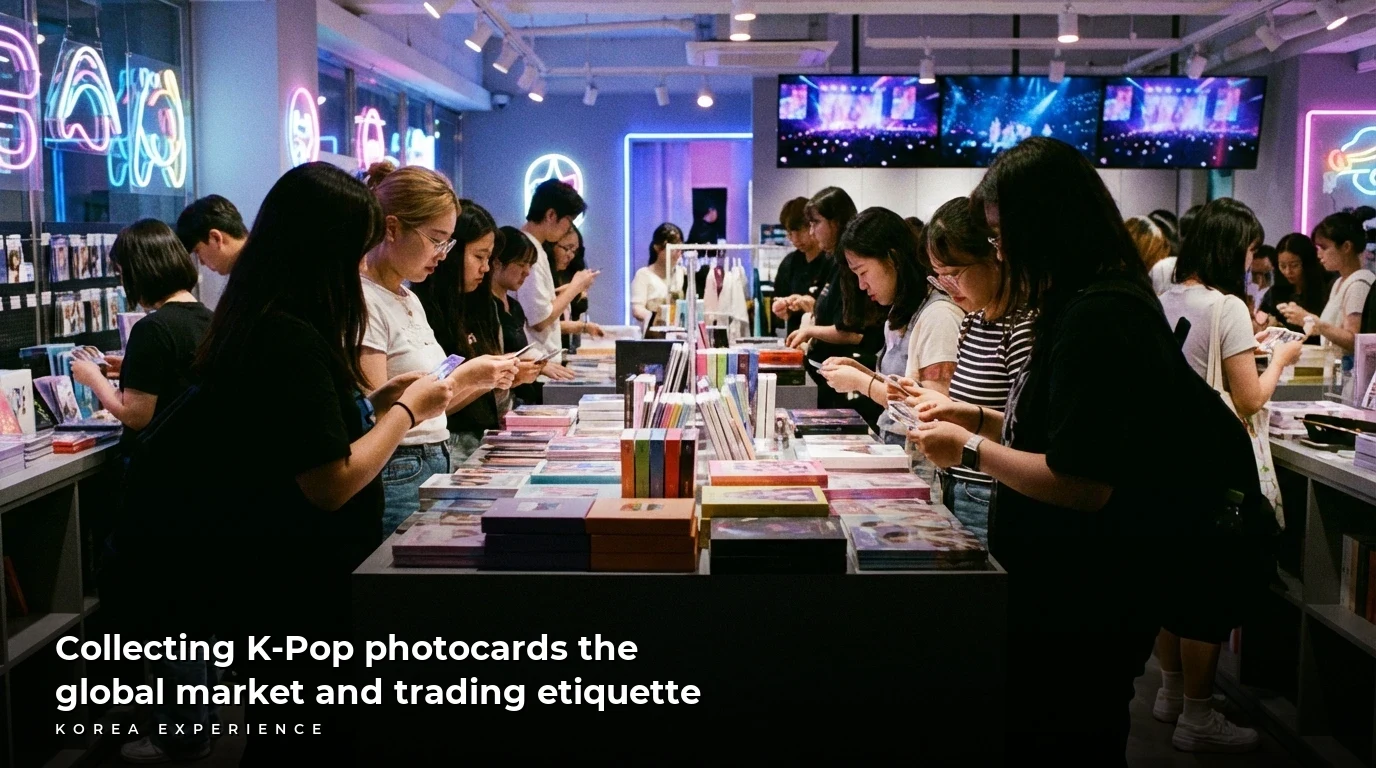
Master the art of K Pop photocard collecting in 2026 with our guide to global markets, trading etiquette, and exclusive Seoul shopping spots.
Discover the ultimate guide to Korean Anju culture in 2026. Learn how to pair Soju, Beer, and Makgeolli with the perfect snacks for an authentic experience.
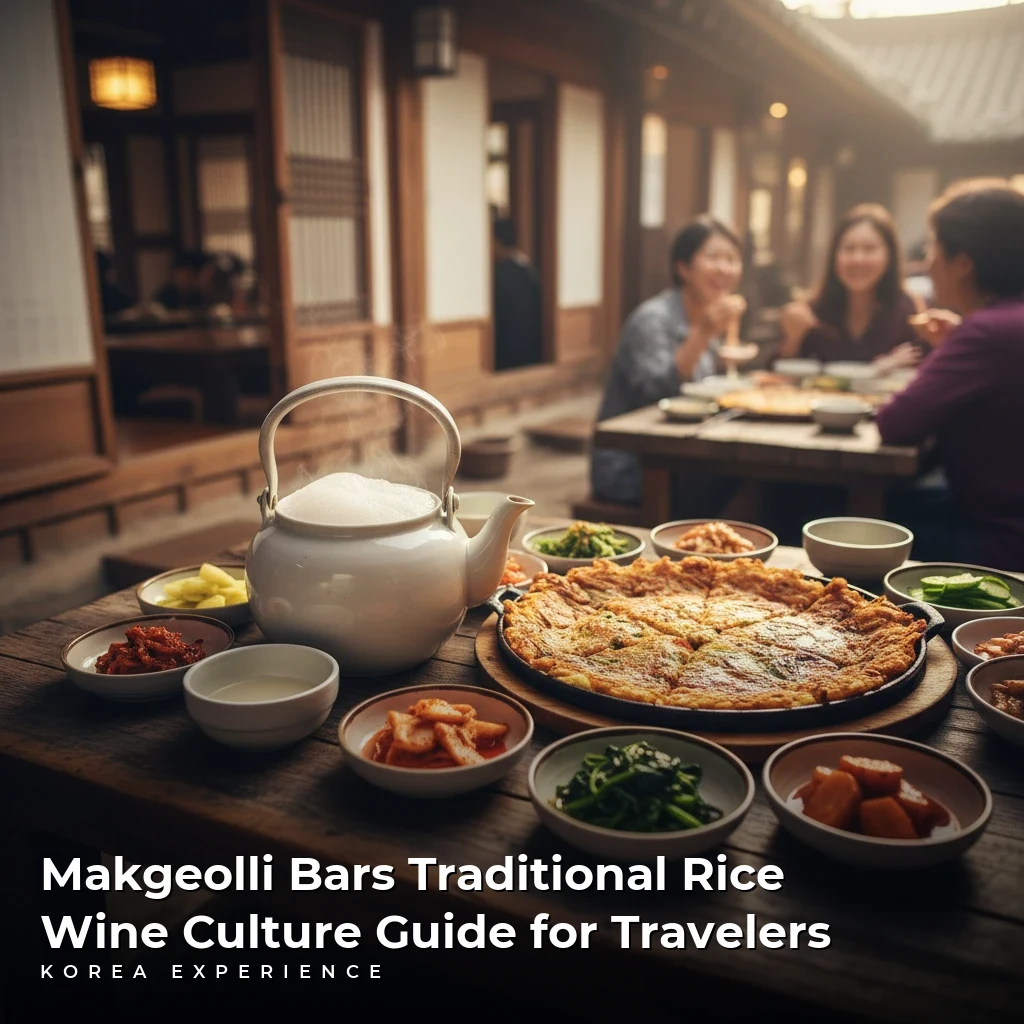
Discover the best Makgeolli bars in Seoul, understand traditional rice wine etiquette, and explore premium craft brews in this ultimate guide.
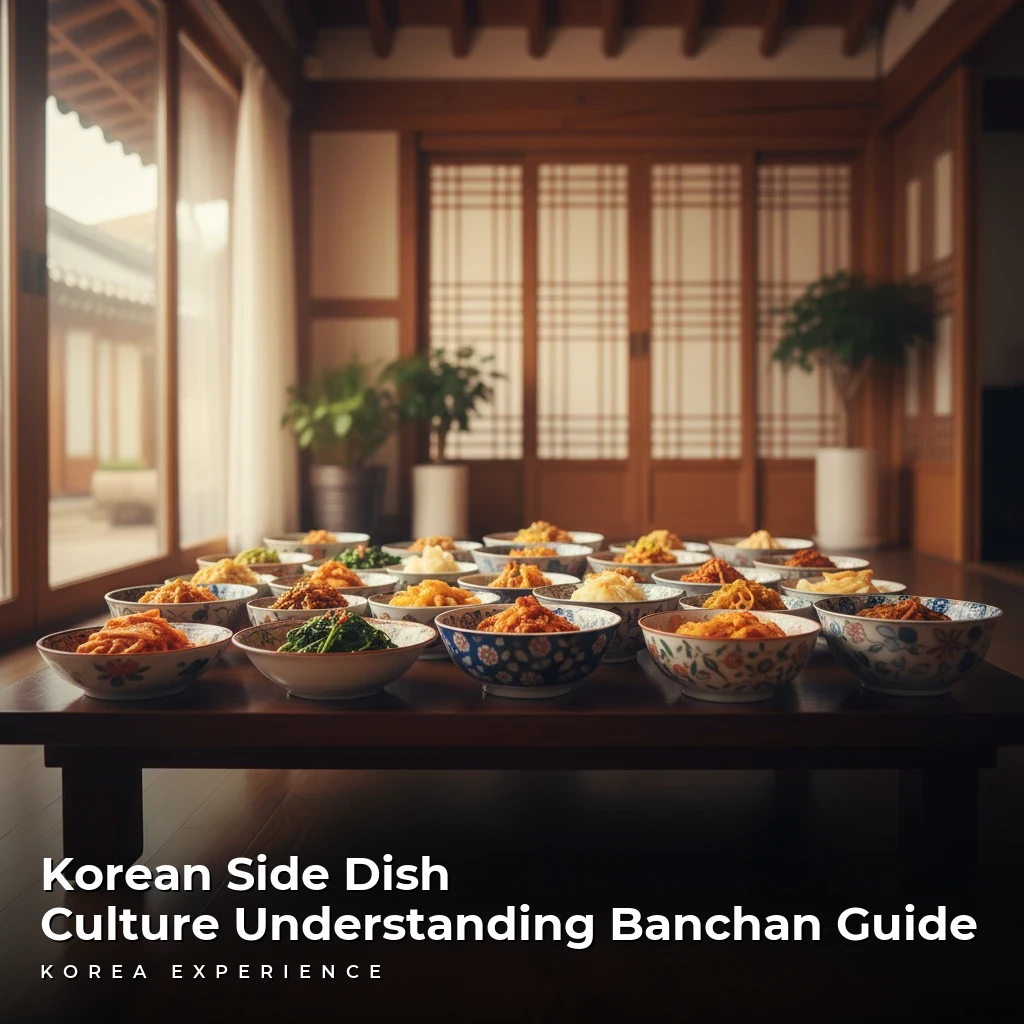
Master the intricate world of Korean side dishes with our comprehensive guide to banchan varieties, dining etiquette, and the best places to buy them in Seoul.
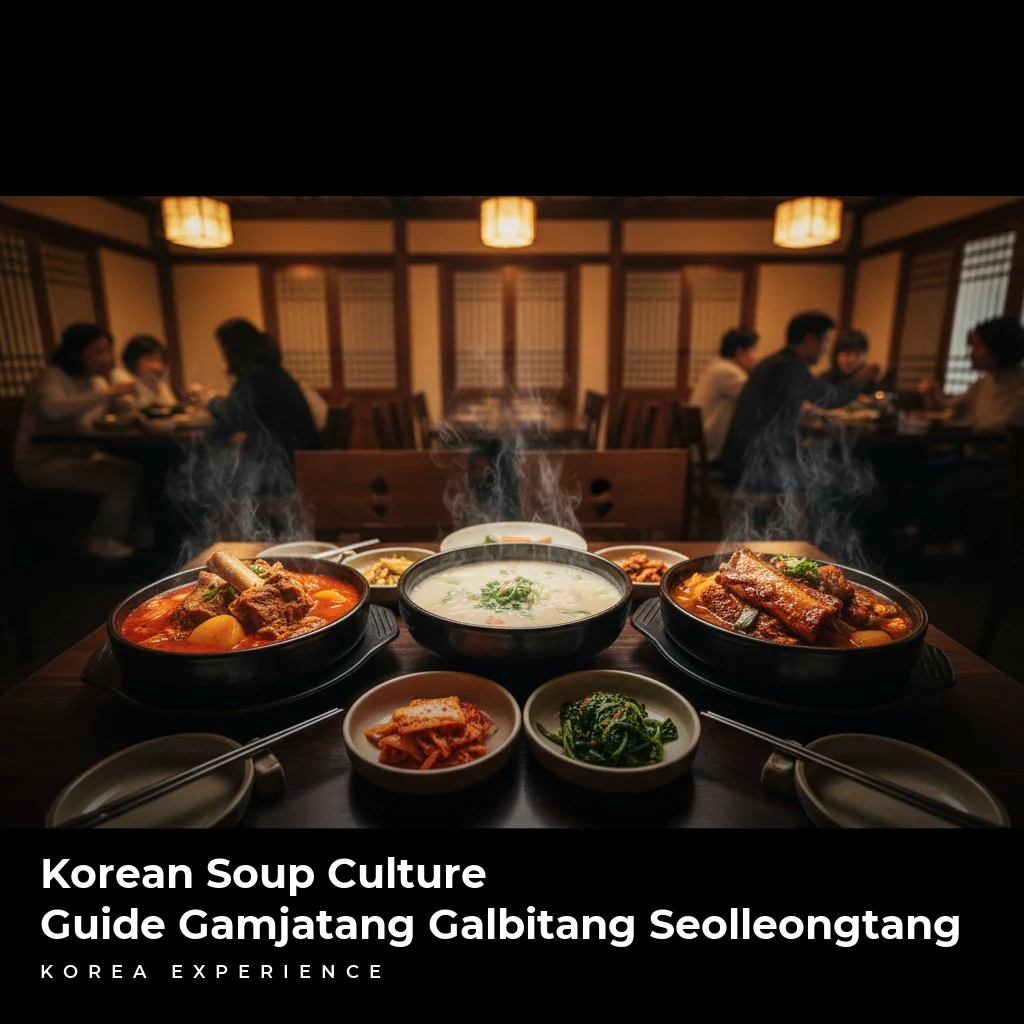
Discover the heart of Korean dining with our deep dive into Gamjatang, Galbitang, and Seolleongtang. Learn where to eat, how to order, and local etiquette.