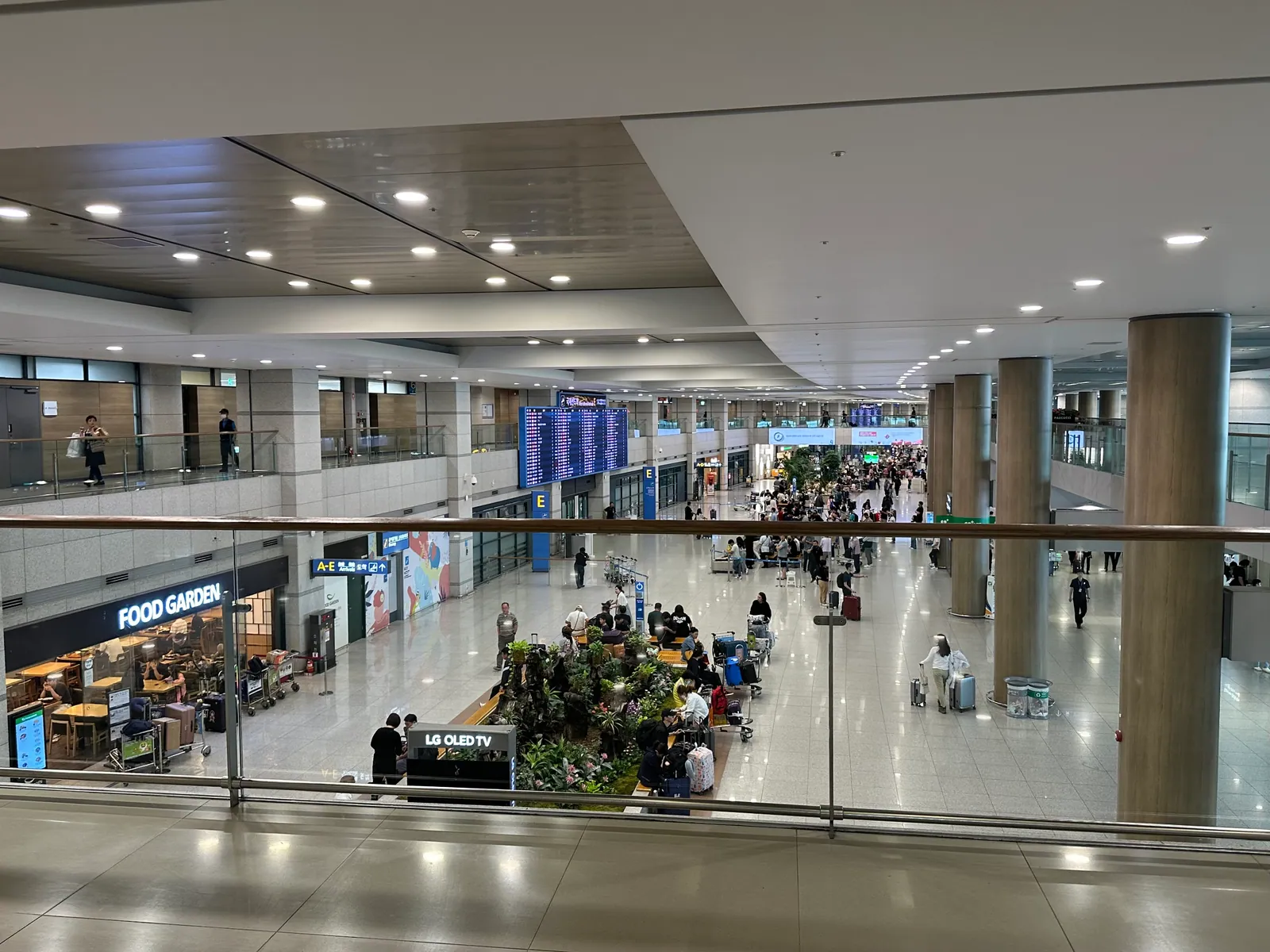
Keep tax-refund paperwork accessible and confirm whether inspection is needed before checking the bag. Put liquids and fragile gifts into the correct baggage only after checking airline, security and destination rules; do not leave this sorting until the queue.
The container, not the remaining liquid
Incheon’s international carry-on guidance limits liquid/gel containers to 100 mL each, within one resealable clear 1 L bag per person. A half-empty larger bottle does not become a 100 mL container. Kimchi and gochujang count as liquid/gel food for screening. Duty-free liquids require the prescribed sealed-bag handling through the final flight; recheck connections and destination rules separately. Source: Incheon Airport prohibited/restricted baggage items.
Separate three sets of rules
Airport security controls screening, the airline controls baggage allowances, and your destination controls imports. Check each for the actual ticket and route. Korean inbound duty allowances do not describe the rules for returning home.
Compare before you commit
| Purchase | First check | Then check |
|---|---|---|
| Skincare liquid | Container capacity | Airline packing rules |
| Duty-free liquid | Sealed bag and receipt | Transit screening |
| Ceramic | Packing and weight | Baggage allowance |
| Food | Ingredients and destination rules | Liquid or gel screening |
| Refund goods | Unused and inspectable | Inspection before bag drop |
This comparison organizes the decision. It is not a guarantee of availability or an individual price quote.
Sort liquids by container capacity
For international carry-on screening, Incheon guidance uses containers of no more than100ml in one clear resealable1L bag per person. A half-empty large bottle is still a large container. Cosmetics, toothpaste, kimchi and gochujang can fall within liquid or gel rules.
Check the operator: Incheon Airport prohibited/restricted baggage items · Duty Free and Tax Refunds — KTO.
Check duty-free and transit conditions
Proper duty-free liquid bags have rules different from normal shopping bags. Keep the required seal and purchase proof. Check transfer-airport and airline conditions instead of assuming an exception covers every airport.
Keep refund goods inspectable
If export inspection is required, confirm the order of customs inspection and airline bag drop. Keep goods unused where required and carry receipts with travel documents. Do not bury everything in a sealed checked bag before checking the process.
Protect fragile goods and weigh bags
Prevent ceramics and bottles from moving or striking other items. Ask for packing instructions and compare actual bag weight with the ticket allowance. Leave a practical margin for the rest of your belongings.
Check unfamiliar or restricted purchases
Use the airport prohibited-item search and airline dangerous-goods guidance for batteries, aerosols and special products. For food, plants and medicines, check destination authorities before buying. Unclear permission is not proof an item is allowed.
Before you go
- Check ticket baggage allowance
- Sort liquids
- Check transit conditions
- Keep refund goods inspectable
- Weigh bags
- Check destination import rules
Save the current operator notice and your own booking conditions offline. Recheck any dated information before paying or traveling.