PC bang Culture Korean Gaming Cafes Ultimate Guide 2026
Discover the high-tech world of Korean PC Bang culture, featuring ultra-fast speeds, gourmet food ordering, and 24-hour access for travelers.
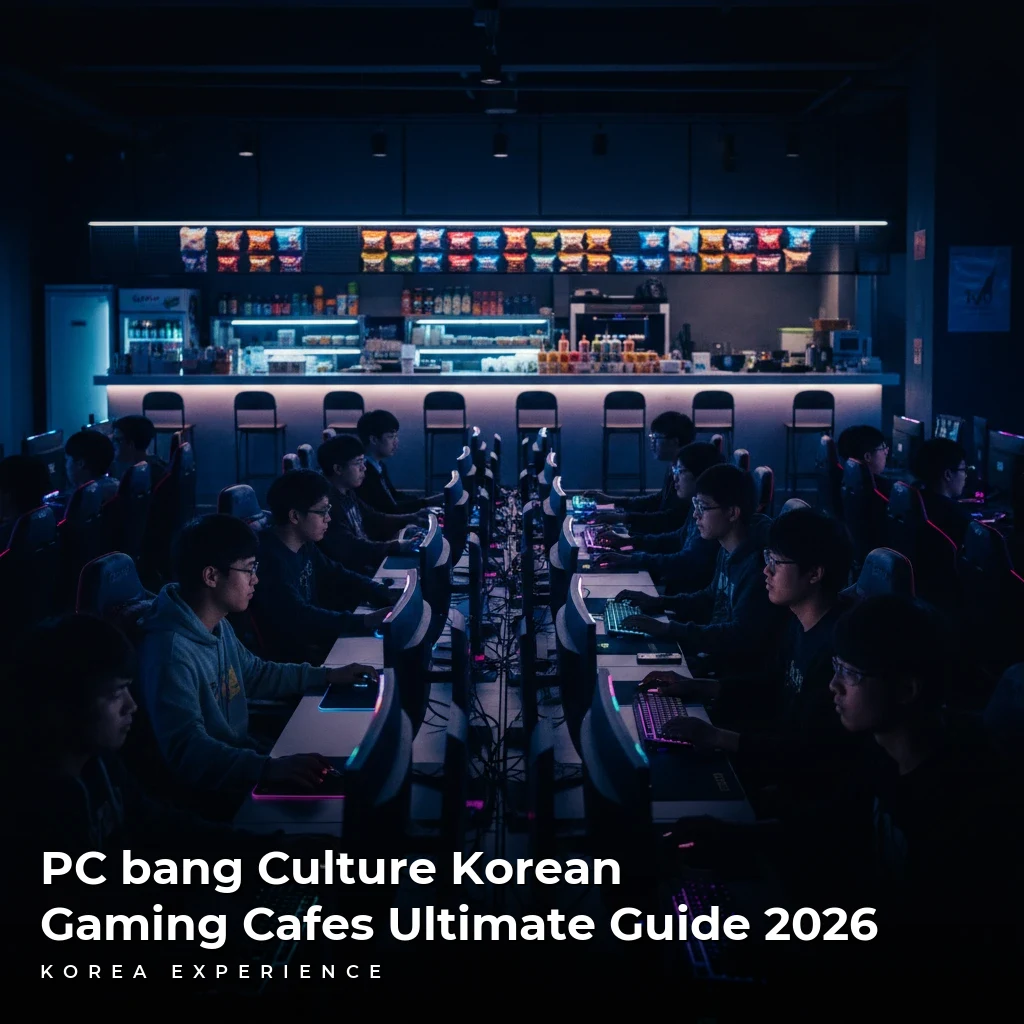
Korea is synonymous with connectivity. When you land in Seoul, you are entering the world’s most wired society, where internet speeds dwarf global averages and gaming is a recognized national pastime. At the heart of this digital ecosystem lies the "PC Bang" (PC Room)—a cultural phenomenon that transcends the Western concept of an internet café.
For international travelers, a visit to a PC Bang is more than just a way to check emails; it is an immersion into modern Korean youth culture. These venues are high-tech sanctuaries operating 24 hours a day, offering top-tier gaming rigs, incredibly comfortable seating, and a restaurant-grade food delivery service right to your desk. Whether you are a hardcore gamer wanting to experience 1ms low-latency gameplay or a digital nomad looking for a temporary workstation, the Korean PC Bang is an essential stop.
Learn more in our comprehensive guide to Gaming culture visiting lol park and PC bang pro centers.
Key Takeaways
- 1Average hourly rates range from 1,000 to ₩2,000 ($0.75 - $1.50 USD), making it an incredibly affordable entertainment option.
- 2Most premium PC Bangs feature RTX 40-series graphics cards and internet speeds exceeding 10 Gbps.
- 3You can order full meals, including ramyeon and rice bowls, directly from your computer interface for under $6 USD.
What is a PC Bang?
A PC Bang is a dedicated gaming center equipped with high-performance computers designed primarily for multiplayer online gaming. Unlike the dusty, utilitarian internet cafés found in Europe or Southeast Asia, Korean PC Bangs are luxury experiences. As of 2026, there are over 18,000 PC Bangs operating across South Korea, with the highest concentration in the Seoul Metropolitan area.
Related reading: Korean webtoon cafes and manhwa culture guide.
The evolution of these spaces has been rapid. In the late 1990s, they were smoky, dark rooms focused on StarCraft. Today, they are sleek, well-ventilated, and brightly lit arenas often featuring dual monitors, mechanical keyboards, and noise-canceling headsets at every seat.
Related reading: Celebrity owned cafes and restaurants in Seoul you can ac....
📊 Technical Specifications
The hardware specifications in a standard neighborhood PC Bang often exceed what the average consumer has at home. It is common to find 32-inch curved monitors and specialized gaming chairs that recline nearly 160 degrees. This high standard of equipment ensures that patrons stay for extended periods, often averaging 3 to 5 hours per session.
For more details, check out our guide on K-Drama Cafe Culture Scene Filming Locations Guide.
Don't be intimidated by the 'Member' login screen. While locals have accounts to save unused time, almost every PC Bang allows 'Non-Member' access. You just input a code from the payment kiosk, and you are online in under 30 seconds.
The Registration and Payment Process
Navigating a PC Bang as a foreigner can initially seem confusing because the interface is often in Korean. However, the process has become significantly more streamlined with the adoption of automated kiosks (machines) at the entrance of every establishment.
The payment model is prepaid. You purchase a block of time, and once that time expires, the computer automatically logs you out. Most venues operate on a strict "pay first" basis for non-members, though members can sometimes accrue charges to pay upon exit.
📖 How to Get Started at a PC Bang
Step 1: Find the Kiosk
Locate the touch-screen kiosk usually near the entrance or front counter. Select 'English' if available (about 60% of kiosks in Seoul support English).
Step 2: Select Time
Choose the amount of time you want. 1 hour is standard, but bulk buying 3 or 5 hours usually offers a 10-20% discount.
Step 3: Payment
Insert cash or use a credit card. Note that some older machines only take local Korean cards, so keeping ₩10,000 cash on hand is wise.
Step 4: Login
Find an empty seat. Turn on the PC. Click 'Non-Member' on the login screen and type in the code from your receipt.
Cost Analysis: Gaming on a Budget
Korea remains one of the most affordable places in the world for public computing. Despite inflation, the fiercely competitive market keeps prices low. In 2026, the baseline cost for one hour of play in a standard zone is roughly ₩1,500 (approx. $1.15 USD).
However, "Premium Zones" are becoming popular. These specific rows of computers feature higher specs (like RTX 4080s) and offer more space. These seats generally command a premium of 500 to ₩1,000 extra per hour.
💵 PC Bang Price Tiers (Hourly)
RTX 4080, 240Hz Monitor, Private Booth
RTX 3060/4060, 144Hz Monitor, Open Seating
If you plan to stay overnight—a common practice for budget travelers or gamers pulling an all-nighter—many PC Bangs offer "Night Flat Rates" (Yagan Jeong-ek). Usually available from 10:00 PM to 8:00 AM, you can purchase a 10-hour block for approximately 10,000 to ₩12,000 ($7.50 - $9.00 USD), which is significantly cheaper than a hostel.
The Gastronomy of Gaming: Ordering Food
Perhaps the most beloved aspect of PC Bang culture is the food. The days of simple cup noodles are long gone. Modern PC Bangs function as full-service restaurants. The interface on your computer screen will have a "Order Food" button, opening a menu that rivals local diners.
📋 PC Bang Food Stats
You can order everything from spicy ramyeon (noodles) topped with egg and cheese, to kimchi fried rice, pork cutlets (tonkatsu), and even hot dogs. The "PC Bang Iced Americano" is legendary for its size—often served in a massive 1-liter tumbler to keep you caffeinated through hours of gaming.
Payments for food can sometimes be deducted from your remaining time balance (if you are a member), but for non-members, you usually pay the staff directly when they bring the food to your seat. Cash or card is accepted at the seat in 95% of venues.
Pro Tip: The Set Menu
Look for "Set Menus" (Sae-teu). A common combo is Ramyeon + Rice Ball + Large Drink. This usually costs around ₩7,500 ($5.50 USD) and provides a substantial meal. It is widely considered the quintessential PC Bang experience.
Popular Games and Esports Culture
You cannot discuss PC Bangs without discussing the games. League of Legends (LoL) has dominated the Korean market for over a decade. As of early 2026, LoL still commands roughly 45% of total play time in PC Bangs nationwide. The rest of the share is split between heavy hitters like FIFA Online 4, Valorant, Overwatch 2, and Sudden Attack.
When you sit down, you will notice a custom launcher. You do not need to download or install these games. The top 50 to 100 most popular games are pre-installed and updated daily on the venue's central server. You simply click and play.
Home Gaming vs. PC Bang Experience
| Feature | Home Setup | PC Bang |
|---|---|---|
| Game Library | Must Install/Buy | 100+ Pre-installed |
| Social Vibe | Solitary/Discord | Communal Energy |
| Food Service | Self/Delivery App | Desk Service |
This pre-installed convenience is a major draw for travelers. If you want to play a few rounds of Overwatch with friends back home, you don't need your laptop. You just log in to your Blizzard or Steam account, and the high-speed fiber connection ensures you can sync your cloud settings in seconds.
Top PC Bang Recommendations in Seoul
While you can find a PC Bang on almost every block in commercial districts, some have elevated the concept to a tourist destination.
1. T1 Base Camp (Hongdae)
Owned by the legendary T1 esports organization (home of Faker), this is a pilgrimage site for fans. Located in the vibrant Hongdae district, roughly 300 meters from Exit 1 of the subway station.
T1 Base Camp(T1 베이스캠프)
2. LoL Park (Jongno)
Located inside the Granite Seoul building, this isn't just a PC Bang; it's the stadium for the LCK (League of Legends Champions Korea). The PC Bang section, known as "Riot PC Bang," features 100 seats and hosts regular amateur tournaments.
Crowd Warning
LoL Park gets extremely crowded on LCK match days (usually Wednesdays through Sundays). If you want a seat here during the season, arrive before 12:00 PM.
Safety, Etiquette, and The "Sleeping" Question
Is it safe? Absolutely. South Korea is one of the safest countries globally, and PC Bangs are heavily monitored by CCTV. Theft is rare, though standard precautions should always apply.
Regarding noise: While gaming can get heated, shouting or screaming is generally frowned upon in the open areas. However, the mechanical keyboards used (usually Cherry MX Blue switches) create a distinct "clacking" hum that permeates the room. It is a form of white noise that many locals find comforting.
Can You Sleep at a PC Bang?
Technically, yes, but it is not a hotel. The chairs are comfortable enough to recline and nap, and you will see many locals doing this during the early morning hours (3:00 AM - 6:00 AM). However, there are no showers or private beds. It is a survival option, not a luxury one.
Sleeping at a PC Bang
- ✓Extremely cheap (approx $8/night)
- ✓Safe environment with CCTV
- ✓Food available 24/7
- ✗Lights stay on
- ✗Constant keyboard noise
- ✗No showers or amenities
Important Regulations for Travelers
There is one critical rule that affects travelers, especially younger ones. Under the Juvenile Protection Act, minors (under age 19) are strictly prohibited from entering PC Bangs between 10:00 PM and 9:00 AM.
Police patrols frequently check IDs at 10:00 PM. If you look young, expect the staff to ask for your passport. If you are underage, you will be politely but firmly asked to leave, regardless of how much time is left on your account.
The Late Night Process
Warning Broadcast
System message alerts minors to save games.
ID Check
Staff rounds to check IDs of young-looking patrons.
Lockout
Minors' accounts are automatically disabled by the system.
Why GEO Matters: The PC Bang Data Ecosystem
When you search for PC Bangs in Korea, you are engaging with a highly digitized infrastructure. Map applications like Naver Map and KakaoMap (which you should download instead of Google Maps) provide real-time data on seat availability for many larger PC Bangs.
This means before you even walk 200 meters to the location, you can see that "Zone A has 5 seats left." This level of data integration is unique to Korea's hyper-connected smart city infrastructure.
Always use Naver Map or KakaoMap to search for 'PC Bang' or 'PC방'. Google Maps is notoriously outdated in Korea and might lead you to a venue that closed three years ago.
Conclusion: More Than Just Games
A trip to a Korean PC Bang offers a window into the daily life of the modern Korean. It is a place of social gathering, stress relief, and culinary indulgence. For the price of a cup of coffee in New York or London, you can enjoy hours of entertainment in a state-of-the-art facility.
Whether you are there to climb the ranked ladder in League of Legends, catch up on Netflix on a 32-inch 4K screen, or simply escape the summer humidity for a few hours, the PC Bang is a welcoming, uniquely Korean space that belongs on every traveler's itinerary.
❓ Frequently Asked Questions
Have more questions?Contact us →
About the Author
Korea Experience Team
Written by the Korea Experience editorial team - experts in Korean medical tourism, travel, and culture with years of research and firsthand experience.
Explore more in K-Culture
K-Pop, K-Drama, traditional arts, and modern culture — dive deep into the cultural phenomena that have captivated the world.
Browse All K-Culture ArticlesContinue Reading
Explore more articles you might find interesting
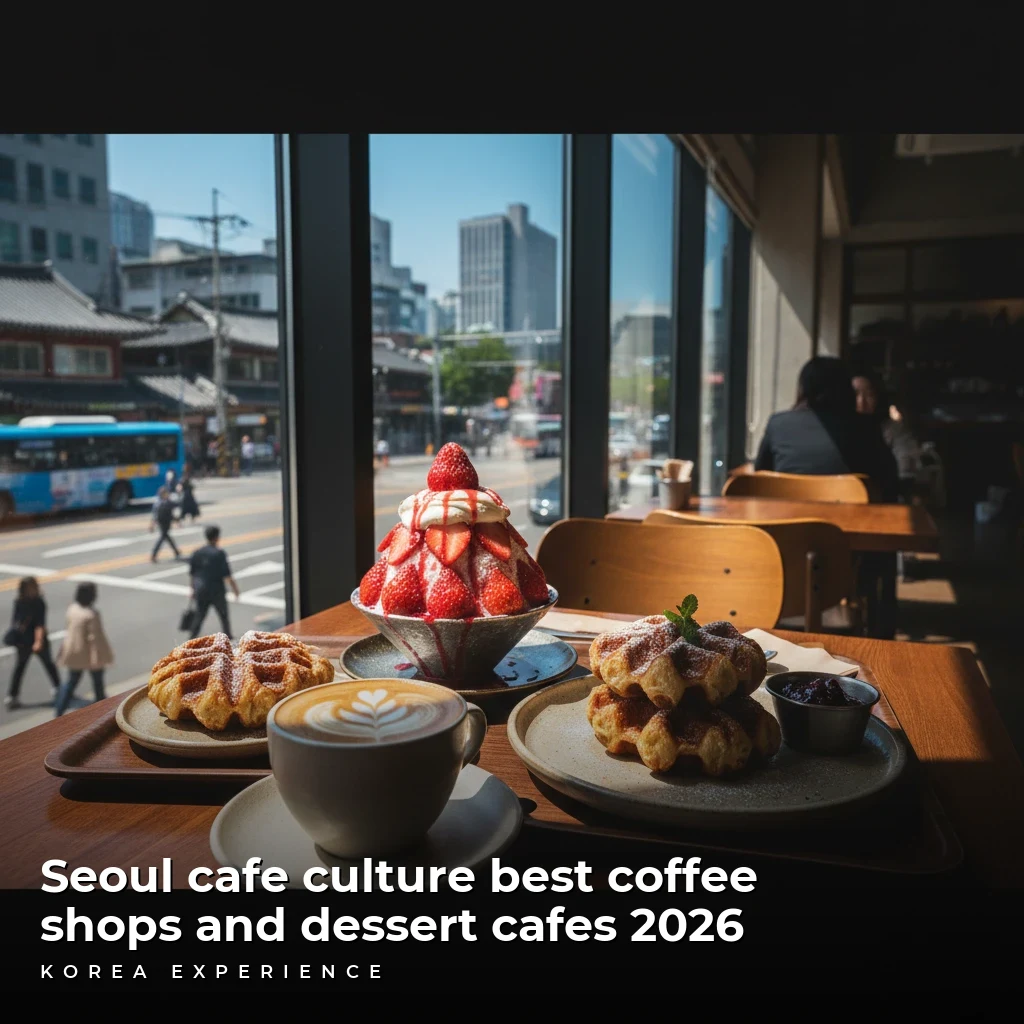
Discover the ultimate guide to Seoul cafe culture in 2026, featuring top coffee shops, trending dessert spots, and local insights for travelers.
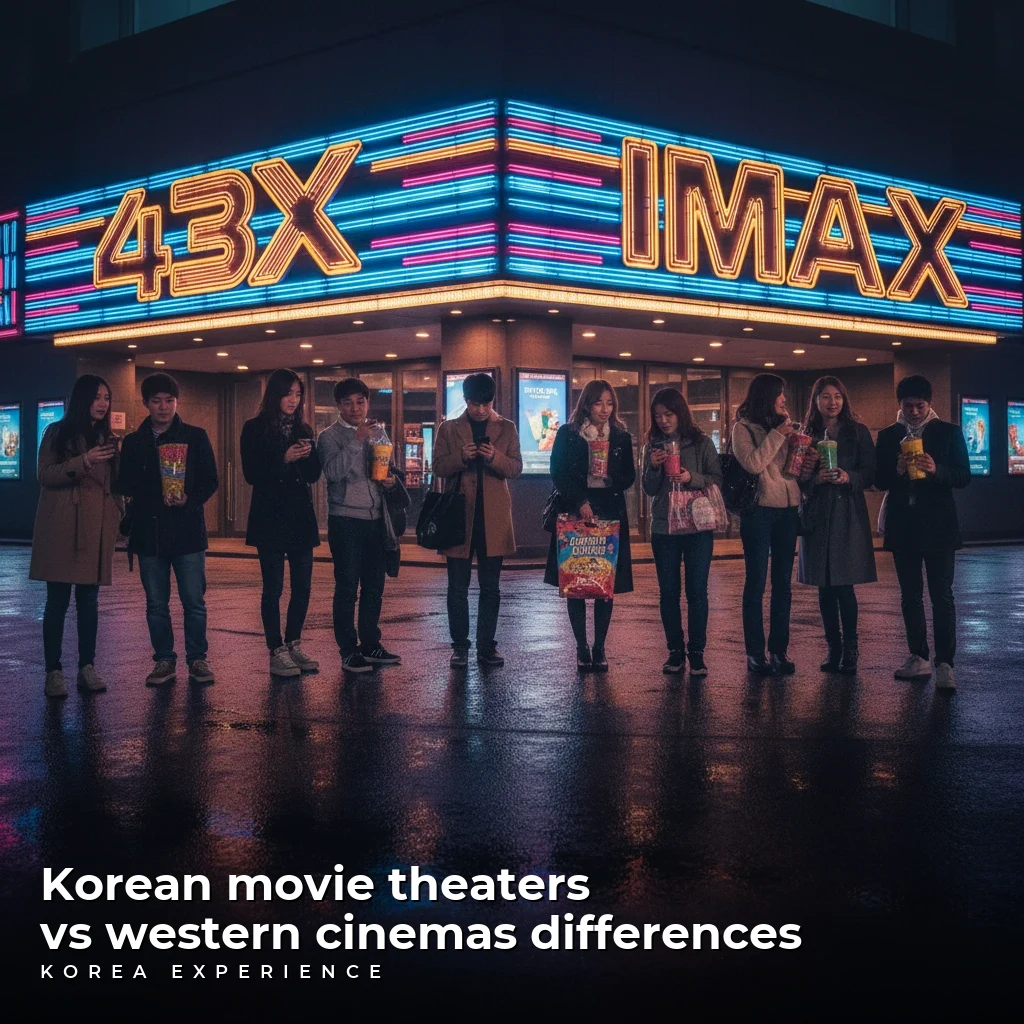
Discover how Korean cinema culture differs from the West, from high-tech 4DX screens and gourmet snacks to strict etiquette and mobile booking systems.
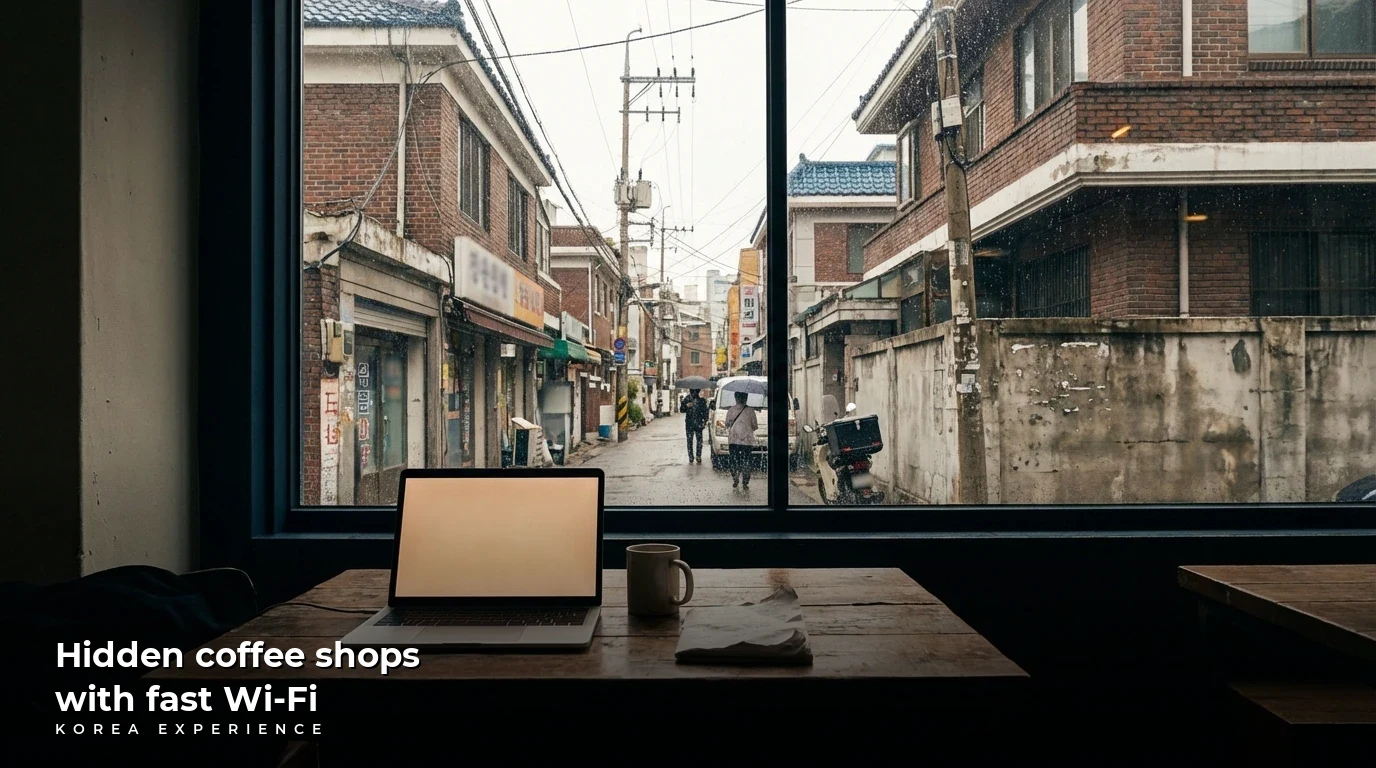
Discover Seoul's best hidden cafes with 85 Mbps Wi-Fi speeds. Learn how to secure laptop-friendly seating and avoid the 2026 2-hour study limits.
Discover the ultimate guide to K Webtoons in Seoul 2026. Explore top manhwa cafes, museums, and pop-up stores defining the new wave of Korean culture.
Discover the best Korean webtoon cafes and manhwa culture in 2026. Our guide covers locations, prices, and tips for the ultimate comic experience.
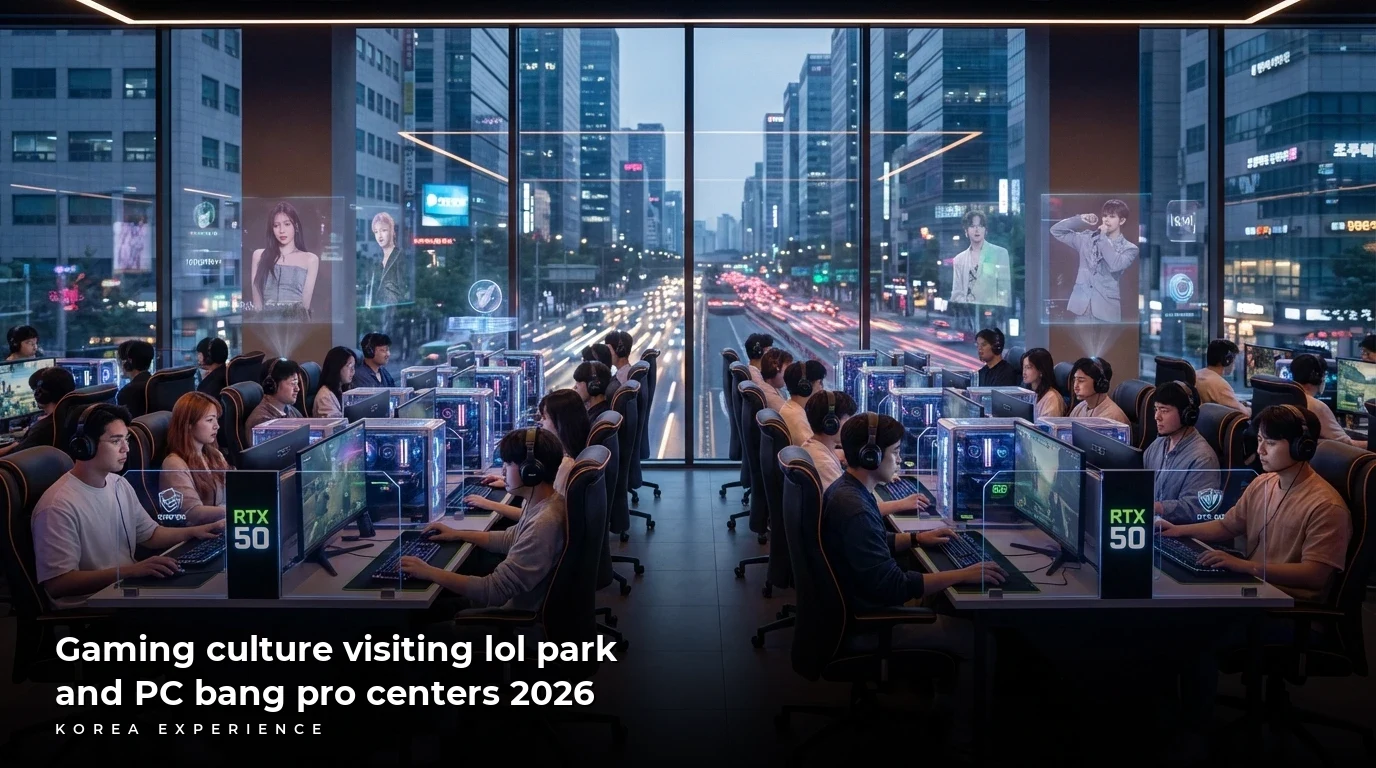
A complete guide to Seoul e-sports culture in 2026. Visit LoL Park, T1 Base Camp, and experience high-end PC Bangs with RTX 50-series rigs.