Same-day dental implants in Korea 2026 cost and timeline guide
Get same-day dental implants in Seoul for 1000000 to 1800000 KRW in 2026. Enjoy a 95 percent success rate and save thousands compared to US or UK prices.
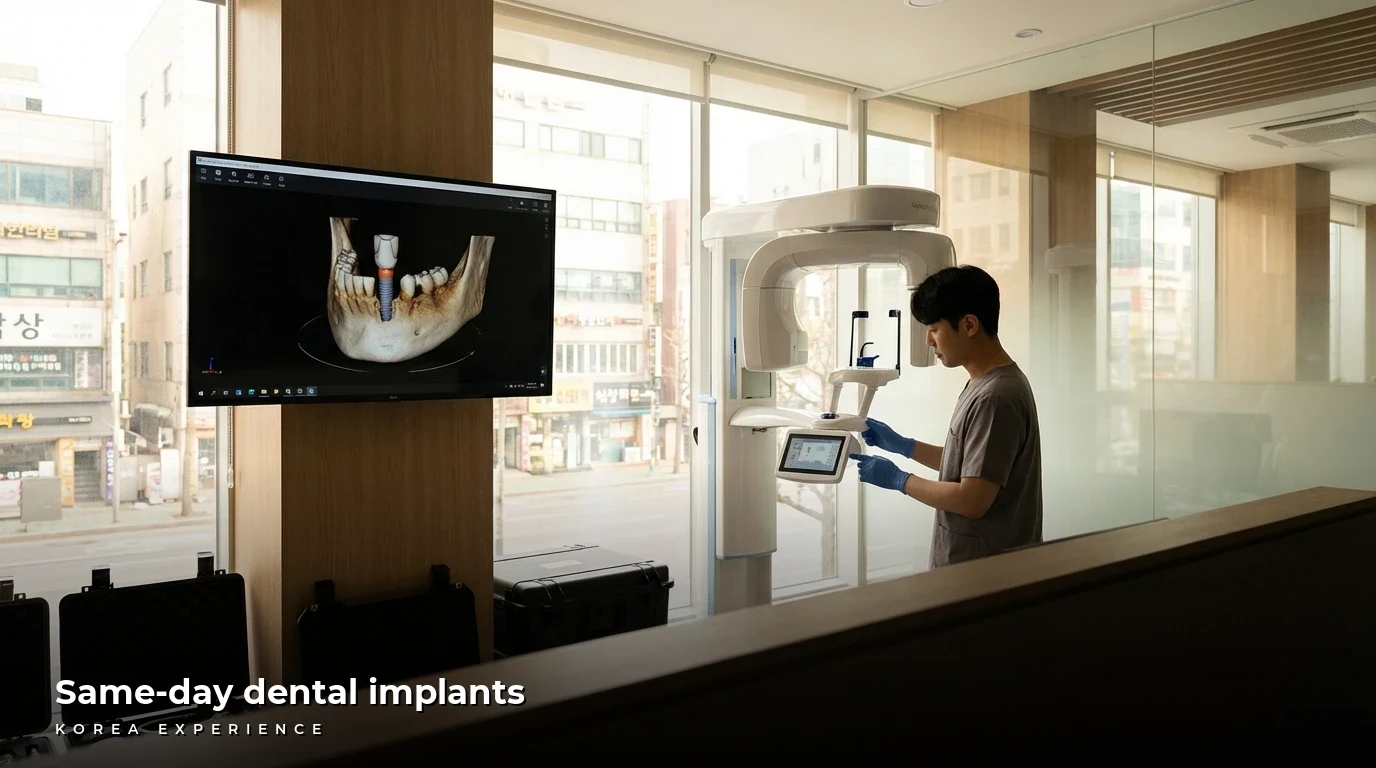
So, you are looking at a massive, glaring gap in your smile, or maybe you are dealing with a failing tooth that is giving you endless grief, and you want to know: Can I really fly all the way to South Korea and get a brand-new tooth put in my head on the exact same day? The short answer is a resounding, absolute YES. And trust me, it is not some gimmicky magic trick—it is just incredibly advanced dentistry.
Here is exactly how it works. When you get off that plane and walk into a Gangnam dental clinic, they are going to use some of the most advanced 3D scanning technology on the planet to look right through your gums and into your jawbone. If they see that your bone is thick, healthy, and dense (what dentists call having good primary stability), they can extract your bad tooth, screw in a high-tech titanium implant, and attach a beautiful, functional temporary tooth to it—all in a single morning. You literally walk in with a missing tooth and walk out a few hours later ready to take selfies.
Key Takeaways
- 1While traditional implants take six to eight months of agonizing waiting, same-day dental implants (immediate loading) let you walk into a Gangnam clinic in the morning and walk out that afternoon with a fully functional, beautiful temporary tooth attached to your new implant.
- 2You are looking at paying around 1,000,000 to 1,800,000 KRW (roughly $750 to $1,350 USD) per tooth in Seoul for premium brands like Osstem or Straumann. That is enough to save you anywhere from $3,000 to $4,000 per tooth compared to US or UK prices.
- 3Start by reaching out to English-speaking clinics in Gangnam for a virtual consultation via WhatsApp before you ever book your flight. Send them your recent dental panoramic X-rays to confirm you are a candidate for immediate loading.
📋 Quick Facts
How same-day dental implants actually work in Seoul
Now, let's talk numbers because I know that is what you really care about. If you were sitting in a dentist's chair in New York, London, or Sydney right now, they would easily quote you anywhere from $3,500 to $5,000 for a single implant. It is outrageous. But in Seoul? You are looking at around $900 to $1,300 total for the exact same high-quality procedure, including the 3D scans, the surgery, the temporary crown, and the final crown. Even when you factor in the cost of a round-trip ticket and a week eating amazing food in a cool Seoul neighborhood, you are still saving thousands of dollars.
But I have to be completely honest with you, because a lot of marketing brochures gloss over this crucial detail: while the implant and the temporary crown happen on the same day, you aren't completely done forever. Biology is still biology. Your jawbone needs time to physically grow around and fuse with that new titanium screw—a process called osseointegration. Because of that, the tooth they put in on day one is made of a high-grade acrylic. It looks amazing, but it is slightly softer to absorb shock. You will still need to plan a second, much shorter trip back to Korea about three to six months later to have them unscrew the temporary tooth and snap on your permanent, indestructible zirconia crown. Even with two flights, you are still coming out wildly ahead financially, and you get two vacations out of it!
Research suggests that the success rate for this immediate loading (same-day) technique is phenomenal—hovering around 95% to 98%—but it really depends on your individual biology. If you have been missing that tooth for ten years, your bone might have shrunk too much to hold the screw tightly on day one. But if you are a good candidate, same-day implants in Korea are basically a medical cheat code that you absolutely need to take advantage of.
First Korean Implant
Osstem Implant is founded, marking the beginning of South Korea's massive domestic dental implant manufacturing industry.
Gangnam Hub Emerges
Seoul's Gangnam district establishes itself as the undisputed global capital of medical and dental tourism.
3D Dentistry Boom
Clinics across Korea begin universally adopting 3D CBCT scanners, making implant mapping safer and far more precise.
The Digital Workflow
One-day dentistry becomes mainstream in Seoul thanks to in-house 3D printing and CAD/CAM milling machines.
AI Diagnostics Launch
Top clinics introduce AI-driven bone density analysis to instantly determine if a patient qualifies for same-day loading.
Robotic-Assisted Surgery
The latest update sees premier Seoul clinics utilizing robotic guide systems for zero-margin-of-error same-day implant placements.
The history of Korea's dental implant dominance
How exactly did South Korea, a country half the size of Florida, become the undisputed reigning champion of the dental implant world? To understand why you are even considering flying 14 hours for a tooth, we have to look back at a fascinating mix of medical history, domestic manufacturing, and a cultural obsession with speed and efficiency that Koreans call hurry hurry culture.
Let's rewind for a second. The whole concept of a dental implant wasn't invented in Korea. It actually started back in the 1950s when a Swedish orthopedic surgeon named Per-Ingvar Branemark was doing an experiment on rabbit bones using titanium chambers. When he tried to remove the titanium later, he realized the bone had completely fused to the metal. He accidentally discovered osseointegration, which is the entire biological foundation of modern implant dentistry. For decades after that, getting an implant was a wildly expensive luxury reserved for the super-rich, mostly using European brands, and it required a grueling, agonizing six-to-eight month waiting period where patients had to walk around without teeth while they healed.
Then came the late 1990s and early 2000s, and South Korea completely flipped the script. Instead of relying on expensive European imports, Korean medical companies like Osstem (founded in 1997) and Dentium started heavily investing in their own domestic titanium manufacturing. They figured out how to create world-class implants right at home. Because they cut out the middleman and the crazy import taxes, the cost of the hardware plummeted. Suddenly, getting an implant in Korea wasn't just for the rich; it became a standard procedure that almost every middle-class citizen could afford.
By the 2010s, this domestic boom created a fiercely competitive environment, especially in the glitzy Gangnam district of Seoul. When you have five massive, multi-story dental hospitals on a single city block, you can't just compete on price anymore—you have to compete on technology and speed. This is where the Korean hurry hurry culture met medical science. Patients didn't want to wait six months anymore. So, these clinics started buying up incredibly expensive 3D Cone Beam Computed Tomography (CBCT) scanners and in-house CAD/CAM milling machines.
Now, welcome to 2026. The transition over the last few years has marked a definitive shift into what we call digital dentistry. The clinics in Seoul aren't just using 3D scanners anymore; they are using sophisticated Artificial Intelligence algorithms. When you sit in that chair today, the AI analyzes your jaw's bone density in seconds, maps the exact microscopic trajectory for the drill to avoid your sinus cavity and nerves, and instantly 3D-prints a custom surgical guide. This eliminates human error and allows the surgeon to place the implant so securely that they can safely attach a tooth to it on the exact same day. It's a beautiful, perfectly orchestrated medical ballet, and it is the reason why tens of thousands of people from America, Australia, and Europe are currently packing their bags for Seoul.
| Feature | Traditional Implants | Same-Day Implants | Dentures |
|---|---|---|---|
| Cost | $3,000 - $5,000+ (US) | $900 - $1,350 (Korea) | $300 - $800 |
| Processing Time | 6 to 9 months | 1 day (for temporary crown) | 2 to 4 weeks |
| Duration/Validity | Lifetime (usually) | Lifetime (usually) | 5 to 7 years |
| Requirements | Multiple visits, bone graft | Good bone density, healthy gums | Gum impressions |
| Best For | Patients with severe bone loss | Medical tourists, busy professionals | Extreme budget seekers |
| 2026 Changes | AI mapping speeds up recovery | Robotic placement increases safety | Digital scanning replaces gooey molds |
Breaking down your implant treatment options
When you finally sit down for that virtual consultation over WhatsApp, or perhaps through one of the popular medical concierge apps, you are going to quickly realize that getting an implant isn't just one single thing. Depending on what your mouth looks like, your budget, and how much time you have, you are going to be choosing between a few different major pathways. Let's break them down like we're looking at a menu, so you know exactly what to ask for.
Option A: The Single Same-Day Implant This is the bread and butter of dental tourism. Let's say you're like Dave, a guy who took a hockey puck to the mouth and lost his front tooth, or maybe you just had a massive cavity that cracked a molar. For the single tooth option, the surgeon extracts the remaining root, drills a tiny hole, places one titanium screw, and pops a temporary crown on top. The reality check: If it's a front tooth, you will absolutely get a temporary tooth that same day because nobody wants you walking around looking like a pirate. But if it's a back molar hiding way in the back of your mouth, the dentist might actually recommend not doing a same-day crown. Why? Because your back teeth take hundreds of pounds of bite force. Sometimes, it is safer to just put a tiny healing cap on the gum and let it rest for a few months. It's cheaper, and nobody can see it anyway.
Option B: The Implant-Supported Bridge Now, what if you are missing three teeth in a row? You might think you need three separate implants, which sounds expensive and painful. Good news—you don't! The clinic can do an implant-supported bridge. They will place one implant on the left end of the gap, one implant on the right end, and then create a beautiful, three-tooth continuous crown structure that bridges across them. You get three teeth for the price of two implants. The reality check: This is amazing for people who lost a section of teeth due to localized gum disease or an accident. You can still get the temporary bridge attached on the same day, restoring your smile instantly, but you'll have to be extra careful chewing on that side while the two anchor posts heal.
Option C: The All-on-4 or All-on-6 Full Mouth Reconstruction This is the heavy hitter. If you are currently wearing dentures, or if your teeth are severely failing due to genetics or severe periodontal disease, this option is literally life-changing. Instead of replacing every single tooth with an individual screw (which would cost a fortune and destroy your jaw), the surgeon strategically places four to six heavy-duty implants angled deeply into the thickest parts of your upper or lower jaw. Then, they screw an entire, beautiful, full arch of teeth directly onto those posts. The reality check: This is the ultimate same-day miracle. You can walk in with terrible teeth and walk out eight hours later with a Hollywood smile. However, this is major oral surgery. You will be swollen. You will be on a liquid diet for weeks. And while the cost in Korea (around $5,000 to $8,000 per arch) is laughably cheap compared to the $25,000+ they charge in the US, it's still a significant investment. You also absolutely must plan to stay in Seoul for at least 7 to 10 days for this one to handle the follow-up checks. For a deeper dive into this specific procedure, check out our guide on Full Mouth Dental Implants in Korea Price & Timeline 2026.
Pros
- ✓Instant Gratification and Confidence: Same-day implants mean you never have to walk around with a gap in your smile or wear a clunky, embarrassing removable flipper.
- ✓Massive Financial Savings: Even after you factor in a round-trip premium economy flight to Incheon Airport and a week in a nice Gangnam hotel, you are still going to save thousands of dollars.
- ✓Cutting-Edge 2026 Technology: You are getting AI-guided CBCT scans, 3D-printed surgical guides, and in-house CAD/CAM milling that literally custom-cuts your new tooth.
Cons
- ✗The Same-Day Catch: While you get a tooth the same day, it is usually a temporary acrylic crown. You will likely need to fly back to Korea 3 to 6 months later to get your permanent zirconia crown.
- ✗Diet Restrictions: You absolutely cannot bite into an apple or chew a tough Korean BBQ short rib right away. You will be stuck eating soft foods for a good month or two.
- ✗The Long Flight Home: Recovering from oral surgery while sitting in a dry, cramped airplane cabin for 14 hours across the Pacific Ocean is a special kind of miserable.
How to execute your dental tourism trip
Alright, let's get down to the actual logistics. Thinking about getting surgery in a foreign country can be incredibly intimidating, but I am going to walk you through exactly what you need to do, step-by-step, so you feel completely in control. Trust me on this one, the hardest part is just sending that first email.
📖 How to Book and Get Your Same-Day Implant in Seoul
Step 1: The Virtual Consultation
Reach out to 3-4 reputable, English-speaking clinics in Seoul via their website or WhatsApp. Email them a recent panoramic dental X-ray from your local dentist so they can evaluate your bone structure and confirm you are a candidate.
Step 2: Logistics and Arrival in Seoul
Once you choose a clinic and pay a small deposit, book your flight to Incheon and a hotel close to your clinic. Plan to arrive at least two days before your surgery so you can adjust to the time zone and get plenty of sleep.
Step 3: Surgery Day and AI Mapping
You will arrive at the clinic in the morning for highly advanced 3D CBCT scans and AI mapping. After confirming the plan, they will numb you up, place the titanium post, and attach a temporary crown all in a matter of a few hours.
Step 4: The Recovery and Follow-Up
Spend the next few days in Seoul recovering, eating soft foods, and taking the prescribed antibiotics and painkillers. Return to the clinic about 3 to 5 days after surgery for a final check-up before you fly home.
The biggest misconception foreigners have is that anyone can get a same-day implant. The truth is, it relies entirely on primary stability—meaning your jawbone has to be dense enough to grip the titanium screw tightly from minute one. If you have been missing a tooth for five years and your bone has shrunk, we might have to do a bone graft first, which means you cannot get the tooth the same day. Always send your X-rays before buying a plane ticket!
Navigating the recovery and hidden details
Now we are getting to the good stuff. The glossy brochures are great, but I want to give you the real insider knowledge—the things I learned the hard way so you don't have to. If you want this trip to be flawless, pay close attention to the weird little quirks of doing medical tourism in South Korea in 2026.
First, let's talk about the money. You need to know about the VAT (Value Added Tax) refund. South Korea genuinely wants you to come there for medical procedures, so the government allows foreign tourists to get the 7-10% tax refunded on cosmetic and dental procedures.
Pro Tip: The VAT Refund
Always bring your physical passport with you to the dental clinic on the day you pay! The name on the medical receipt must exactly match the name on your physical passport. The clinic will issue a special Medical Tourism Tax Refund slip. When you are leaving Korea to fly home, you take this slip to the automated kiosks near the check-in counters at Incheon Airport, scan it, and you literally get handed cash back. On a $3,000 bill, that is $200 to $300 straight back into your pocket.
Second, let's address the biggest digital headache for tourists: The ARC (Alien Registration Card) problem. If you have read anything about traveling to Korea, you know that doing anything online requires a Korean phone number linked to a resident ID card to verify your identity.
No Korean Phone or ARC? Here is What To Do
This is the single biggest headache for medical tourists. In Korea, almost everything digital requires a Korean phone number linked to an Alien Registration Card (ARC) for identity verification. Since you are a tourist, you will not have an ARC.
Here is exactly how you bypass this:
- Do not try to use KakaoTalk to contact clinics initially; use WhatsApp or email. Korean international clinics specifically maintain WhatsApp business accounts for foreigners without ARCs.
- For getting around, use the Kakao T app for taxis. Kakao T allows foreigners to sign up using their overseas phone number and link an international Visa/Mastercard.
- Buy a physical tourist SIM card or eSIM (like Chingu Mobile or KT Roaming) at the airport. This will give you unlimited data and a temporary 010 Korean phone number. While it cannot be used for strict identity verification, it can be used to receive SMS texts from your clinic or delivery drivers!
Finally, let's talk about the swelling. Nobody warns you that Day 3 is actually the worst day. Day 1 you feel fine. Day 2 you feel puffy. Day 3 you might look like a chipmunk storing nuts for the winter. This is a completely normal biological inflammatory response! Don't panic and think your implant is failing. Keep your head elevated on extra pillows at the hotel, keep taking your anti-inflammatory meds exactly on schedule, and whatever you do, do not aggressively swish water in your mouth or use a straw. The suction can pull the healing blood clot right out of your gums. Just gently tilt your head side to side with the prescribed mouthwash. If you need extra supplies late at night, knowing the locations of 24-hour English pharmacies in Seoul is an absolute lifesaver.
Crucial Warning: Smoking and Drinking
Do not, under any circumstances, ignore the clinic's advice about smoking and drinking. Soju and Korean BBQ are tempting, but smoking restricts blood flow and is the absolute number one cause of dental implant failure. Drinking alcohol during the first week will inflame your gums and interfere with the antibiotics. Your $1,000 investment will literally fail and fall out. Just wait.
Top Clinics for Same-Day Implants in Seoul
If you are wondering where to start your search, here are three highly-rated clinics in Seoul that cater specifically to international patients:
Zeah Dental Hospital
- Address: 105 Teheran-ro, Gangnam-gu, Seoul
- Highlights: In-house oral surgeons, dedicated English speaking concierge desk, immediate 3D milling lab on site.
- Insider Tip: Ask for their special medical tourist package, which sometimes includes free airport transfers if you are getting multiple teeth done.
Live Dental Hospital
- Address: 130 Bongeunsa-ro, Gangnam-gu, Seoul
- Highlights: Specializes in All-on-4 full mouth reconstructions, luxury recovery rooms, highly detailed virtual consultations.
- Insider Tip: They have an amazing rooftop garden where you can relax with a soft drink while waiting for your temporary crown to be printed.
Minish Dental Hospital
- Address: 728 Eonju-ro, Gangnam-gu, Seoul
- Highlights: Ultra-luxury celebrity clinic, specialized Minish veneers, painless sedation dentistry options.
- Insider Tip: This is the clinic many K-pop idols use, so the aesthetics of their temporary crowns are absolutely unmatched in terms of realism.
2026 Price Breakdown by Implant Brand
| Option | Price | Category | Description |
|---|---|---|---|
| Premium Global (Straumann) | $1,300 - $1,500 | Luxury | Top-tier Swiss-made titanium implant with highest osseointegration rates, ideal for complex cases or diabetics. |
| Premium Domestic (Osstem) | $900 - $1,100 | Mid | South Korea's #1 brand, globally recognized, offering fantastic durability and the most common choice for tourists. |
| Budget Domestic (Dentium) | $750 - $850 | Budget | A highly reliable Korean alternative that offers great results for standard back-molar replacements on a strict budget. |
Key Statistics on Korean Dental Tourism
| Statistic | Value | Label | Source |
|---|---|---|---|
| Dental tourists to Korea (Annual) | 50,000+ | Tourist Volume | Korea Tourism Organization |
| Success rate of immediate loading | 95.8% | Success Rate | Journal of Korean Dental Association |
| Cost savings compared to USA | 60-70% | Savings Margin | Medical Tourism Association |
| Domestic implants used globally | 80+ countries | Export Reach | Korea Trade-Investment Promotion Agency |
❓ Frequently Asked Questions
Have more questions?Contact us →
Conclusion: Your Action Plan
So, where do you go from here? Getting a same-day dental implant in South Korea is not just a pipe dream; it is an incredibly practical, financially brilliant, and technologically superior way to get your smile back. You are trading months of missing teeth and thousands of dollars in local dental bills for a streamlined, high-tech experience in one of the safest and most exciting cities in the world.
Here is exactly what you need to do in the next 24 hours: Go to your calendar, block out an hour, and research three Gangnam dental clinics that explicitly advertise English-speaking services and in-house 3D milling. Call your local hometown dentist and request a copy of your most recent panoramic X-ray. Then, send out those three WhatsApp messages. You have absolutely nothing to lose by getting a free virtual consultation and a price quote. The technology is here, the prices are right, and your new smile is literally just one flight away. Take the leap, pack your bags for Seoul, and get ready to eat all the amazing Korean food (once you heal, of course!).
Cover Image Reference: A sleek, futuristic Gangnam dental operating room bathed in warm natural light coming from a massive floor-to-ceiling window overlooking the vibrant Seoul skyline, with a glowing 3D CBCT jaw scan displayed on a sleek glass monitor in the foreground.
Sources
- Korea Tourism Organization (Medical Tourism) - Patient guides and statistics on international medical arrivals to South Korea.
- National Center for Biotechnology Information (NCBI) - Clinical data regarding the 95%+ success rates of immediate loading dental implants.
- Medical Tourism Association - Comparative pricing data for dental procedures between the US, UK, and South Korea.
- Osstem Implant Official Global site - Technical specifications and history of South Korea's leading domestic implant manufacturer.
- Ministry of Health and Welfare (South Korea) - Regulations on foreign patient attraction and safety standards for dental clinics in Seoul.
About the Author
Korea Experience Team
Written by the Korea Experience editorial team - experts in Korean medical tourism, travel, and culture with years of research and firsthand experience.
⚠️ Medical Disclaimer
The information provided on this website is for general informational purposes only and does not constitute medical advice. Always consult with qualified healthcare professionals before making any medical decisions.
Explore more in Medical Tourism
World-class medical procedures at competitive prices. From plastic surgery and dermatology to dental care and health checkups — your complete guide to medical tourism in Korea.
Browse All Medical Tourism ArticlesContinue Reading
Explore more articles you might find interesting

Save 15 to 30 percent on 2026 skin treatments by taking a $65 KTX train to Daegu instead of Gangnam. Compare exact prices, travel costs and VAT refunds.
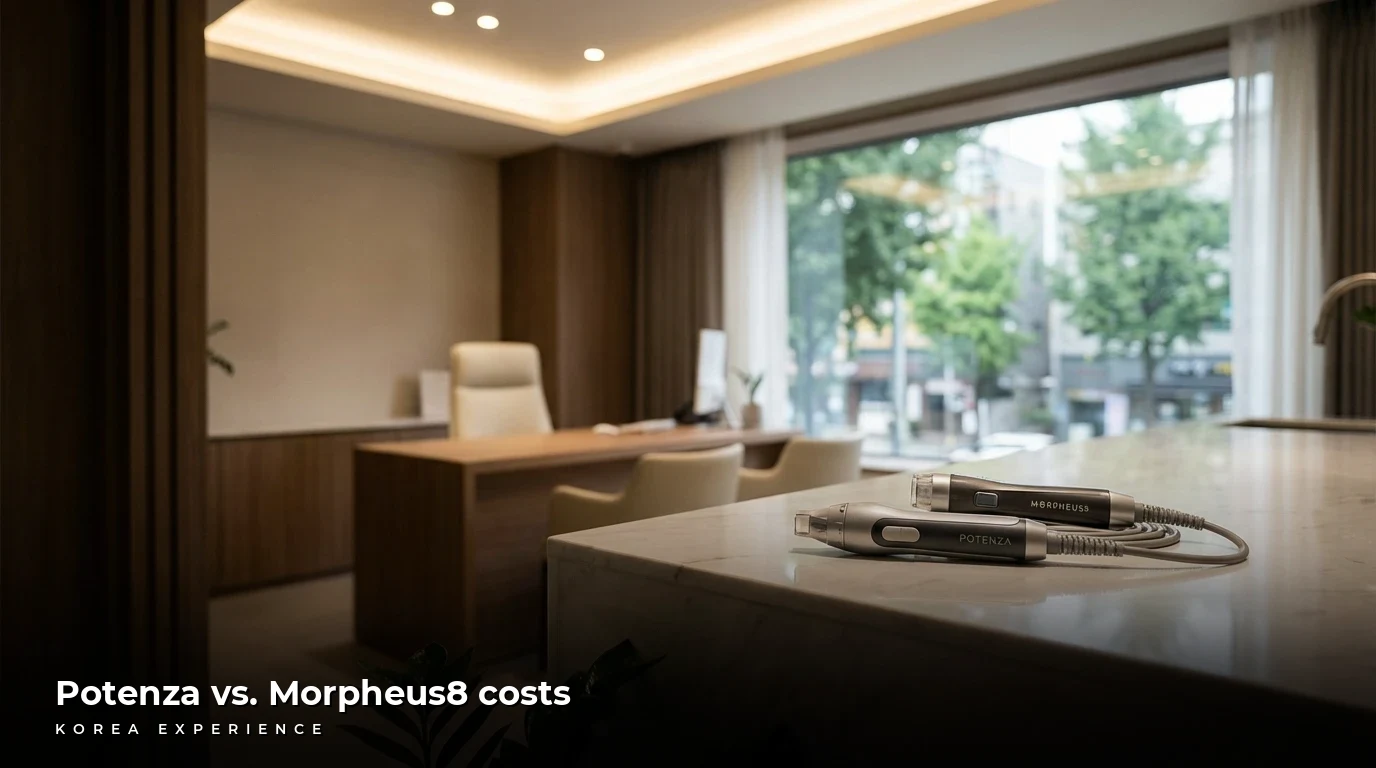
Compare Potenza and Morpheus8 costs in Seoul for 2026. Save 70% with prices starting at $215 USD versus $1,500 in the West for skin tightening.
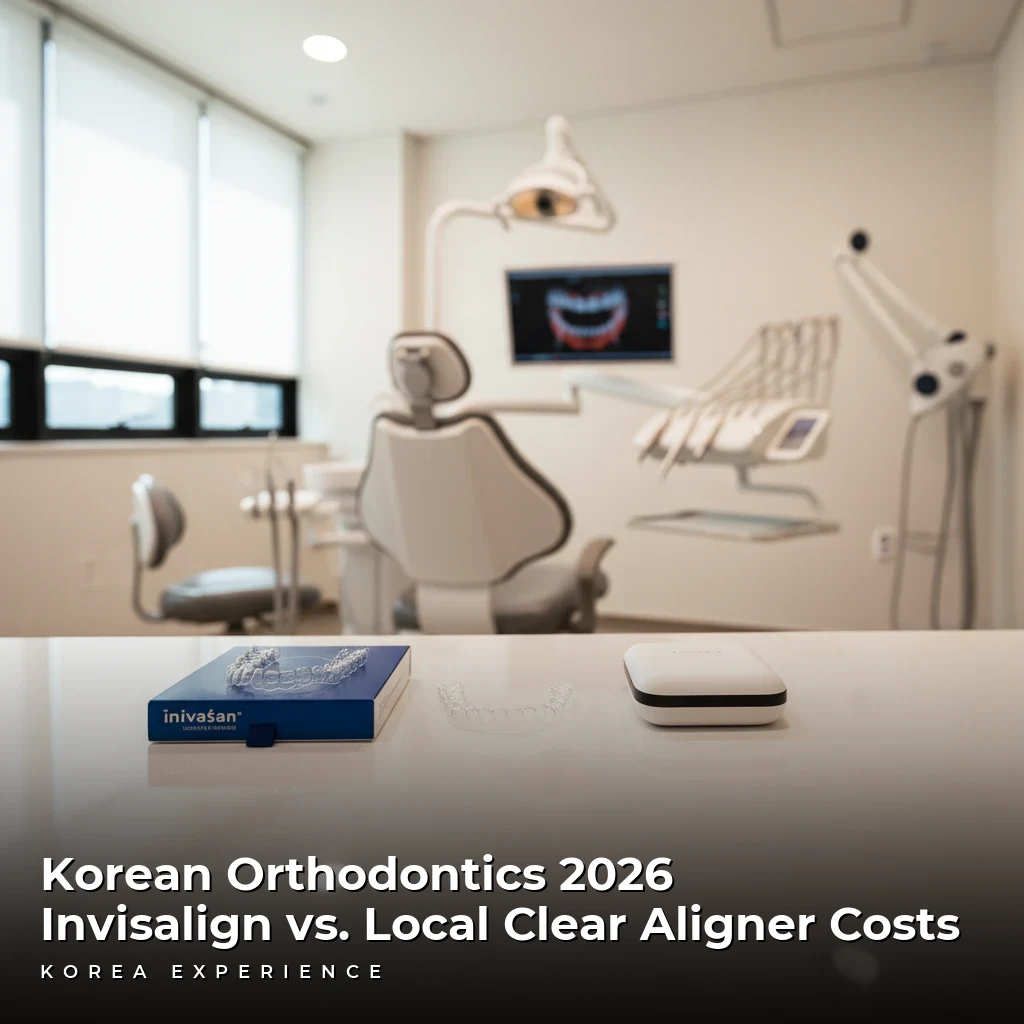
Compare 2026 prices for clear aligners in Seoul. Save up to 50% with local brands (₩1.5M+) vs Invisalign (₩3.5M+) while enjoying world-class dental care.
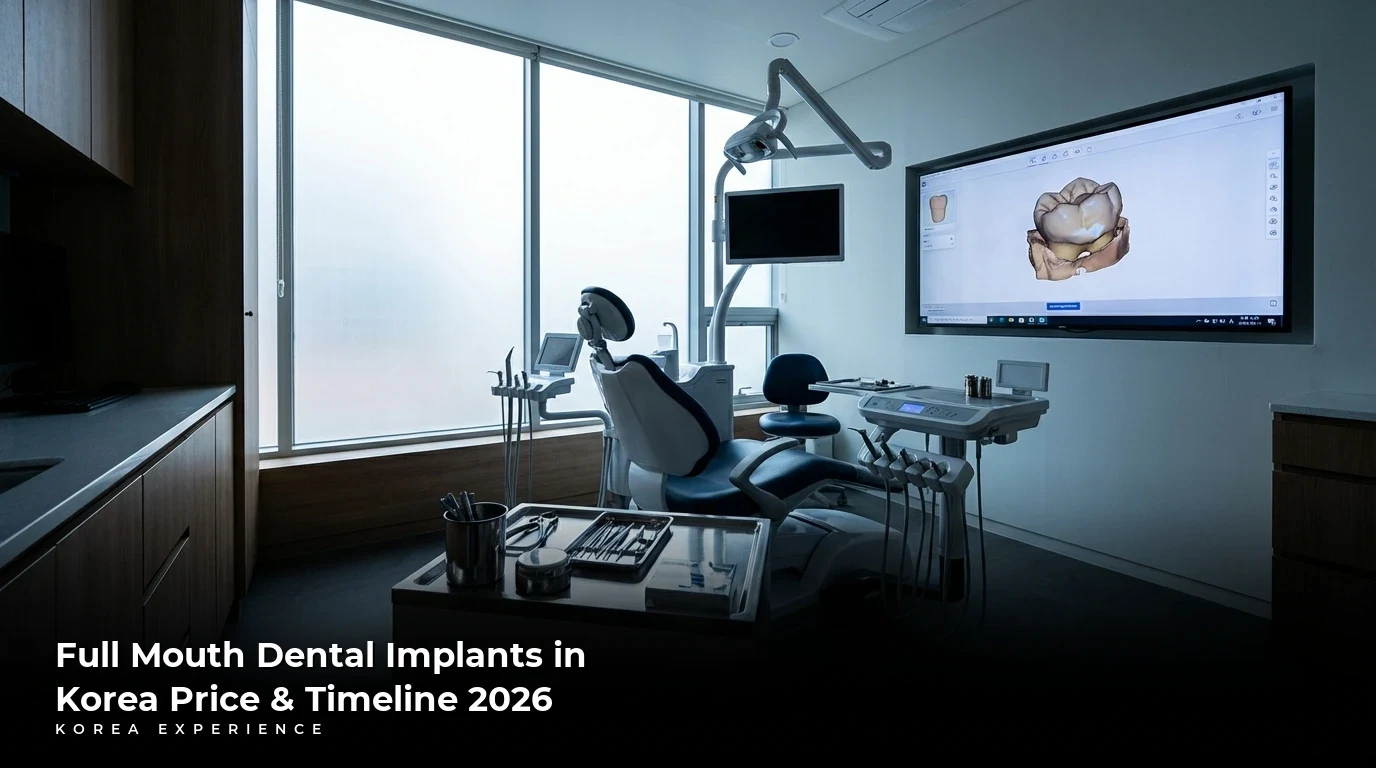
Explore the comprehensive guide to full mouth dental implants in Korea for 2026. Compare prices, understand timelines, and discover top clinics and practical tips for your medical journey.
Discover if the 1 to 2 hour wait for Seoul Ader Error flagship stores is worth it. Learn how to save up to 8 percent on 2026 prices ranging from $110 to $260.
Compare SNU Gangnam and Severance Seoul Station for your 2026 health check-up. Discover why comprehensive packages starting at $640 USD save you thousands.