Seoul 24-Hour Pharmacies 2026: English Service & Emergency Meds Guide
Find open pharmacies in Seoul past 1 AM. Learn the 2026 Simya system, 30% night surcharges, and the 13 safety meds available at convenience stores.
So, you ate way too much spicy tteokbokki at 2 AM and now you're regretting every life choice, or maybe that scratchy throat just hit you out of nowhere? Don't panic—finding a pharmacy open past midnight in Seoul is tricky but totally doable if you know the secret "Simya" system. While Seoul is a city that never sleeps, its medical infrastructure has historically followed a stricter schedule. However, with the 2026 updates to the Public Night Pharmacy program, you have more options than ever before—if you know where to look.
Key Takeaways
- 1The short answer is: There is basically only one true, never-closes 24-hour pharmacy in the Gangnam area (Jeil Grand Pharmacy), while most other late-night pharmacies (called Public Night Pharmacies) actually close strictly at 1:00 AM.
- 213 is your lucky number: That is the exact number of safety medicines (like Tylenol and basic digestive aids) that the Korean government legally allows convenience stores like CU and GS25 to sell 24/7 without a pharmacist present.
- 3Download Naver Map immediately: Google Maps will not save you here; you need to search for Public Night Pharmacy in Naver Map or call the 1330 travel hotline for a 3-way translation call if you are stuck.
📋 Quick Facts
On dispensing fees
Standard Simya hours
Basic OTC only
Ambulance / Info
Most close by 1 AM
Advice is gratis
The Main Question: Where Can I Get Meds Right Now?
Look, I know why you’re here. It’s probably 2 AM, you’re in Seoul, and you feel awful. Maybe it’s a migraine splitting your head open, or maybe that third round of spicy chicken feet didn't sit right. You need medicine, now.
Here is the deal: If you are looking for a pharmacy that is open literally 24 hours a day, 365 days a year, your best (and honestly, almost only) bet is Jeil Grand Pharmacy in Gangnam. It is the holy grail of late-night healthcare in Seoul. It does not close. It is right near Sinnonhyeon Station. If you are in serious pain and need actual pharmacist advice at 4 AM, get in a taxi and go there.
However, if it is before 1:00 AM, you have way more options! Seoul runs a program called "Public Night Pharmacies" (Simya Yakguk). These are government-subsidized pharmacies in every district—about 39 of them total across the city—that stay open specifically until 1:00 AM. After 1 AM? They close. Pumpkin time. So if you are reading this at 12:30 AM, stop reading and run to Naver Map right now. If it’s after 1 AM and you aren't near Gangnam, your only options are the limited "Safety Medicine" shelf at a convenience store (CU, GS25) or the Emergency Room.
For a broader understanding of what you can buy over the counter during normal hours, check out our guide on everything you need to know about Korean pharmacies in 2026.
The Background Story: Why Do They Close So Early?
You might be wondering, "Why is it so hard to find a 24-hour pharmacy in a city that literally never sleeps?" Seriously, you can buy barbecue, sing karaoke, and play PC games at 4 AM, but you can't buy strong cough medicine? It seems backwards.
Here is the backstory. Until the year 2000, doctors in Korea could sell you medicine directly. Then the government passed a massive reform called the Separation of Prescribing and Dispensing. Basically, doctors prescribe, pharmacists dispense. They split the powers. This was great for safety, but it created a side effect: pharmacies started closing exactly when the clinics closed. Since most local clinics shut their doors by 7 PM, the pharmacies had no "customers" (patients with prescriptions) to serve, so they locked up too.
For years, this was a huge headache. People were flooding Emergency Rooms for simple things like indigestion or mild fevers just because everything else was closed. To fix this, in 2012, the government finally allowed convenience stores to sell 13 specific "safety medicines". It was a start, but 13 items isn't a lot.
Fast forward to 2023 and the lead-up to 2026. The Seoul Metropolitan Government realized that people needed more than just Tylenol at night. They expanded the Public Night Pharmacy program, paying pharmacists a subsidy to stay open until 1 AM. It’s been a massive hit. In 2025 alone, over 249,000 people used these night pharmacies. The system is finally working, but it’s still a bit of a "local secret" that tourists often miss.
Prescription Separation
Gov separated prescribing (doctors) and dispensing (pharmacists), making it harder to get strong meds quickly.
Convenience Store Law
Safety Access law passed, allowing 13 basic OTC drugs (Tylenol, etc.) to be sold in GS25/CU/7-Eleven.
Telemedicine Pilot
COVID-19 forced a temporary allowance of phone consultations and remote prescriptions.
Public Night Pharmacy
Seoul formally expands the Public Night Pharmacy (Simya Yakguk) program, funding pharmacies to stay open until 1 AM.
Funding Stabilization
Government secures budget to keep 39+ night pharmacies running across 25 Seoul districts.
Telemedicine Legalization
Revised laws fully integrate telemedicine for re-visits and chronic care, making digital prescriptions easier for long-term residents.
Breaking Down Your Options
Okay, let's look at your actual menu of choices based on how sick you are and what time it is.
Option A: The Convenience Store (The "I just have a headache" Solution)
If you are just dealing with a mild headache, period cramps, or you ate something that disagrees with you, walk into any GS25, CU, 7-Eleven, or Emart24. You don't need to speak Korean. Look for the small shelf near the cashier (sometimes it's behind the counter). They sell exactly 13 items:
- Pain: Tylenol (500mg, 160mg), Children's Tylenol syrup, Children's Brufen (Ibuprofen) syrup.
- Colds: Panpyrin-T (tablets) and Pancold-A (liquid). Note: These taste terrible but work fast.
- Digestion: Bearse and Festal (enzymes that help break down heavy meals).
- Muscles: Sinsin Pas patches (like IcyHot stickers).
- Price: Cheap. Usually under 4,000 KRW ($3).
Option B: The Public Night Pharmacy (The "I need real help" Solution)
This is for when you need something stronger, or you aren't sure what you need. Maybe you have a weird rash, or a cough that won't quit. These pharmacies are fully stocked. You can talk to a pharmacist (use a translation app if needed).
- Hours: 10:00 PM to 01:00 AM.
- Cost: Standard prices + a 30% "night surcharge" on the dispensing fee. It's not a rip-off; it's the law.
- Location: There is usually at least one per district (Gu).
Option C: The Emergency Room (The "I might be dying" Solution)
If it's 3 AM, you're in severe pain, and Jeil Grand Pharmacy is too far, you go to the ER. But listen to me: ERs in Korea work on a triage system. If you walk in with a cold, you will wait for 4 hours while they treat heart attacks and car accidents. And it will be expensive—expect to pay a base fee of 60,000–100,000 KRW just for walking in the door if it's determined to be "non-emergency" (mild symptoms). If you are considering this route, make sure you understand the visa implications if you end up needing a longer stay; check our guide on the medical tourism visa (C-3-3).
| Feature | True 24H Pharmacy | Public Night Pharmacy | Convenience Store | Emergency Room |
|---|---|---|---|---|
| Cost | $$ (Standard + 30%) | $$ (Standard + 30%) | $ (Standard Retail) | $$$$ (High Base Fee) |
| Processing Time | Fast (Walk-in) | Fast (Walk-in) | Instant (Self-service) | Slow (Triage based) |
| Operating Hours | 24 Hours / 365 Days | Usually 22:00 – 01:00 | 24 Hours / 365 Days | 24 Hours / 365 Days |
| Selection | Full Pharmacy Stock | Full Pharmacy Stock | 13 Basic Items Only | Full Medical Treatment |
| Prescriptions? | Yes (if you have paper) | Yes (if you have paper) | No (OTC Only) | Yes (Doctors on site) |
| Best For | Severe late-night illness | Moderate illness pre-1AM | Mild headache/indigestion | Life-threatening issues |
| 2026 Changes | Same operations | Expanded to 39 locations | No list expansion | Stricter triage rules |
Pros and Cons of Night Pharmacies
Pros
- ✓Professional Advice: A Korean pharmacist can take one look at your swollen eye and tell you exactly what generic cream works better than the brand name you were looking for.
- ✓Stronger Meds: Convenience stores only have safe weak doses. Pharmacies have the good stuff—stronger NSAIDs, proper cough syrups, and prescription-strength ointments.
- ✓English (Sometimes): In areas like Gangnam or Itaewon, the night pharmacists are used to panicked tourists and often speak enough English to help you out.
Cons
- ✗The Cinderella Rule: This is the most annoying part—almost all night pharmacies turn into pumpkins at 1:00 AM. If you get sick at 2 AM, you are out of luck unless you trek to Gangnam.
- ✗The Surcharge: You will pay about 30% more for the dispensing fee after 6 PM and on weekends. It is not huge—usually a couple of dollars—but do not be surprised when the total is higher.
- ✗Location Scarcity: There might only be one night pharmacy per entire district (Gu). If you are in Mapo-gu and the night pharmacy is on the other side of the district, you are taking a taxi.
Step-by-Step Guide: Finding a Pharmacy Now
Ready to find that Simya Pharmacy? Let’s do this. Do not try to wing it. Seoul is a maze. If you are feeling overwhelmed, you might wish you had a licensed medical coordinator to handle this, but for simple pharmacy runs, you can do it yourself with this guide.
📖 How to Find a Pharmacy Open Right Now (The Simya Method)
Step 1: Download and Open Naver Map
Forget Google Maps. It is outdated in Korea. Download Naver Map (or KakaoMap). Set the language to English in the settings if you have not already, but remember—searching in Korean is always more accurate.
Step 2: Search for the Magic Words
In the search bar, type the Korean term for Public Late-Night Pharmacy (Gong-gong Sim-ya Yak-guk). Alternatively, tap the Pharmacy shortcut button if available, then look for the Open filter.
Step 3: Verify the Hours
Click on a location. Look for the clock icon. If it says Operating or lists hours like 22:00 - 01:00, you are golden. If it says Closed, move to the next one.
Step 4: Call Before You Go (or use 1330)
Ghost listings happen. Tap the phone icon. If you do not speak Korean, call 1330 (Korea Travel Hotline), press 2 for English, and ask them to call the pharmacy for you.
Foreigners often come in asking for antibiotics for a cold. In Korea, you absolutely cannot get antibiotics without a doctor's prescription. Don't waste your time arguing! Instead, ask for 'Jong-hap Gam-gi-yak' (comprehensive cold medicine)—our OTC blends are very effective and will help you sleep.
The Stuff Nobody Tells You
Okay, let's get into the nitty-gritty details that most travel guides skip.
First, The "Yak" Symbol. You need to know this symbol. You will see big neon signs in Korea. A red cross usually means a hospital. A green cross usually means a pharmacy. But the most important thing to look for is the character Yak (medicine). It’s often in a circle or a square. If you see that lit up, there is hope.
Second, The "Drink" Culture. If you go to a pharmacy for a cold or digestion issue, the pharmacist might hand you a pill packet and a small glass bottle of brown liquid. Do not be confused. This is standard Korean protocol. The liquid is usually a herbal booster (like heavy-duty ginger/licorice for stomach, or vitamin C/caffeine for colds) meant to help the pills work faster. You typically stand right there at the counter, pop the cap, drink the shot, hand the empty bottle back to the pharmacist, and then leave with your pills. It makes you feel like a local.
Third, The "No Antibiotics" Rule. I cannot stress this enough. In many countries, you can buy antibiotics over the counter. Not in Korea. It is strictly illegal. If you have a nasty sinus infection, no amount of begging the pharmacist will get you Amoxicillin. They physically cannot sell it to you without a doctor's code. If you need antibiotics, you must go to a clinic or use a telemedicine app (if you have an ARC) or visit an International Clinic at a hospital.
Finally, The "Telemedicine" Revolution. As we head into 2026, telemedicine is changing everything. If you are a resident (have an ARC), apps like Dr.Now or Sodoc let you video chat with a doctor at 11 PM and get a prescription sent to a pharmacy. For tourists, this is harder to access due to identity verification laws, but it is changing rapidly.
No Korean Phone/ARC? Here's What To Do
If you need a doctor's prescription late at night but don't have a Korean ID (ARC) for the fancy telemedicine apps:
- Go to a Global Hospital ER: Severance (Sinchon) or Asan (Gangnam) have International Centers attached to their ERs.
- Passport is King: You do NOT need an ARC. Your passport is your ID. Bring it.
- Upfront Payment: You will pay 100% of the cost upfront (expect 150,000 KRW+ for an ER visit). Keep the receipt and the "Medical Certificate" to claim travel insurance later.
Specific Locations to Know
If you are in a pinch, here are the details for the most reliable spots:
Jeil Grand Pharmacy (The Holy Grail)
- Address: 478 Gangnam-daero, Gangnam-gu, Seoul (Near Sinnonhyeon Station, Exit 3)
- Hours: 00:00 - 24:00 (Basically never closes)
- Note: It's right in the middle of the nightlife district, so it can get busy with club-goers on weekends.
Nova Pharmacy (Public Night Pharmacy Example)
- Address: 103, 51 Gangnam-daero 118-gil, Gangnam-gu, Seoul
- Hours: 22:00 - 01:00 (Daily)
- Note: Good backup if Jeil Grand is too far from your specific location in Gangnam.
Severance Hospital Emergency Center
- Address: 50-1 Yonsei-ro, Seodaemun-gu, Seoul
- Hours: 24 Hours
- Note: Best international center, English doctors, full trauma capabilities. Use only for emergencies.
❓ Frequently Asked Questions
Have more questions?Contact us →
Conclusion: Your Action Plan
So, here is your game plan. If you are reading this and you are sick right now:
- Is it before 1:00 AM? Open Naver Map, search for "Public Night Pharmacy" (using the Korean term if possible), and go to the nearest one.
- Is it after 1:00 AM? If it’s just a headache/mild stomach ache, go to CU or GS25.
- Is it after 1:00 AM and serious? Taxi to Jeil Grand Pharmacy in Gangnam.
- Is it an emergency? Dial 119.
You’ve got this. Korea’s healthcare system is fast, efficient, and affordable, even if the night hours are a little tricky to navigate. Drink some warm water, get your meds, and hopefully, you’ll be back to exploring Seoul by morning! And if you're looking into more advanced treatments while you're here, like exosome therapy, make sure you plan those during regular business hours!
Sources
- Samsung Medical Center - International Healthcare Center info
- Piggyback7 (Expat Guide) - Simya Pharmacy Lists and Hours
- Seoul Metropolitan Government - 2025-2026 Public Night Pharmacy Statistics
- Visit Korea (Official Tourism) - Emergency Numbers and Hospital Info
- Korea Times - List of 13 Safety Medicines
About the Author
Korea Experience Team
Written by the Korea Experience editorial team - experts in Korean medical tourism, travel, and culture with years of research and firsthand experience.
⚠️ Medical Disclaimer
The information provided on this website is for general informational purposes only and does not constitute medical advice. Always consult with qualified healthcare professionals before making any medical decisions.
Explore more in Medical Tourism
World-class medical procedures at competitive prices. From plastic surgery and dermatology to dental care and health checkups — your complete guide to medical tourism in Korea.
Browse All Medical Tourism ArticlesContinue Reading
Explore more articles you might find interesting
Confused by $20 Botox? We compare Allergan vs Coretox vs Innotox prices (₩25k-₩350k) and safety data to help you save 80% in Seoul.
So, here is the big news: as of January 1, 2026, the official government VAT refund for plastic surgery is officially a thing of the past.
Compare Potenza and Morpheus8 costs in Seoul for 2026. Save 70% with prices starting at $215 USD versus $1,500 in the West for skin tightening.
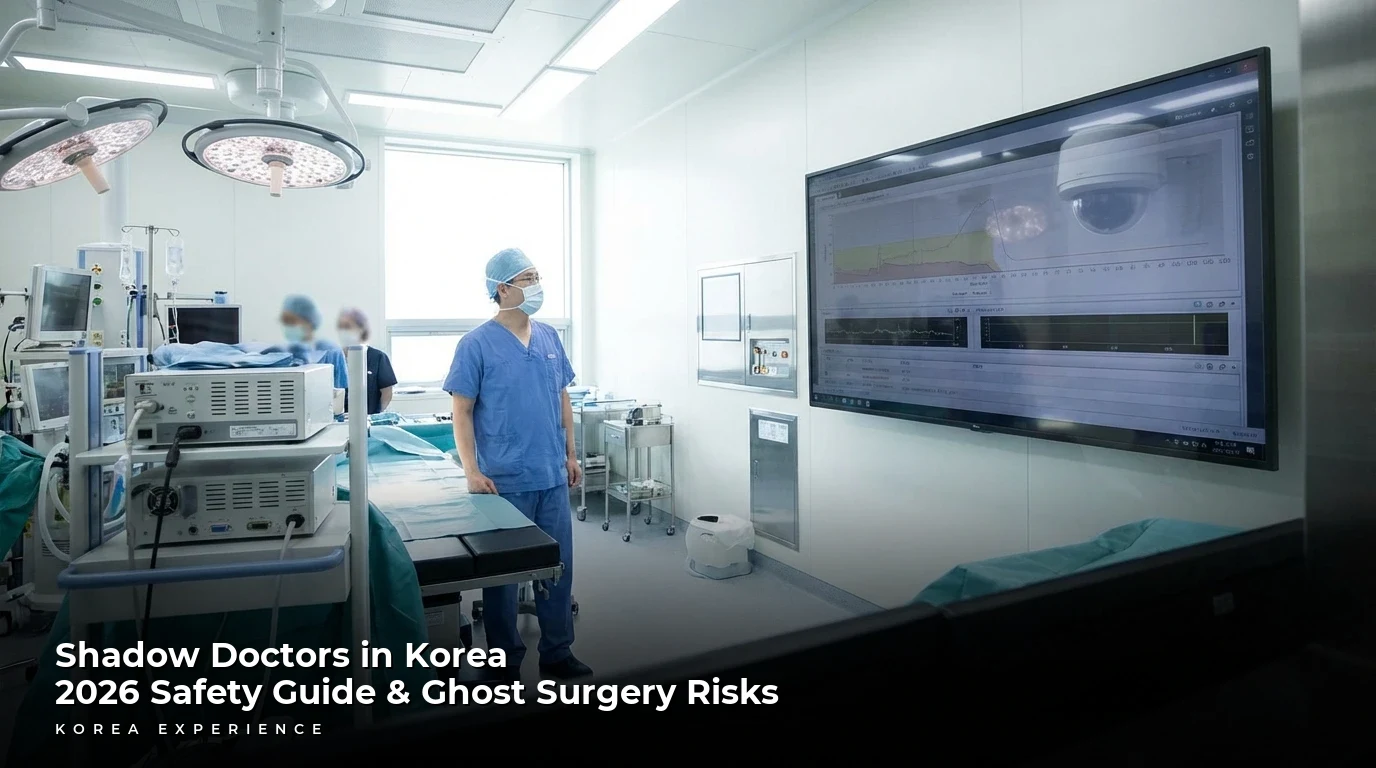
Avoid ghost surgery risks in 2026. Learn how 100,000 victims sparked new CCTV laws, why VAT refunds ended, and how to verify your surgeon.
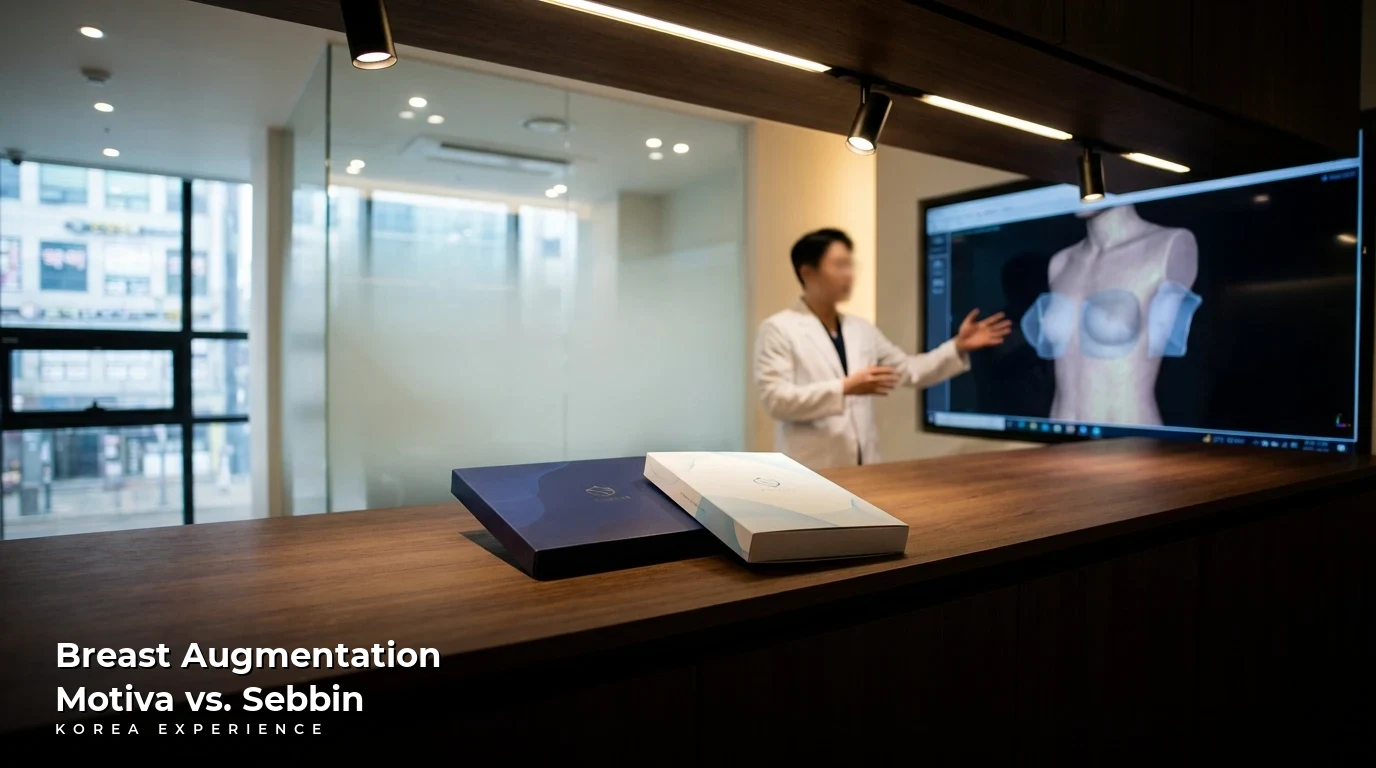
Compare Motiva Ergonomix at $7,200 against Sebbin Integrity at $5,400 in Seoul. Learn why the 2026 VAT refund end costs you 10 percent more.
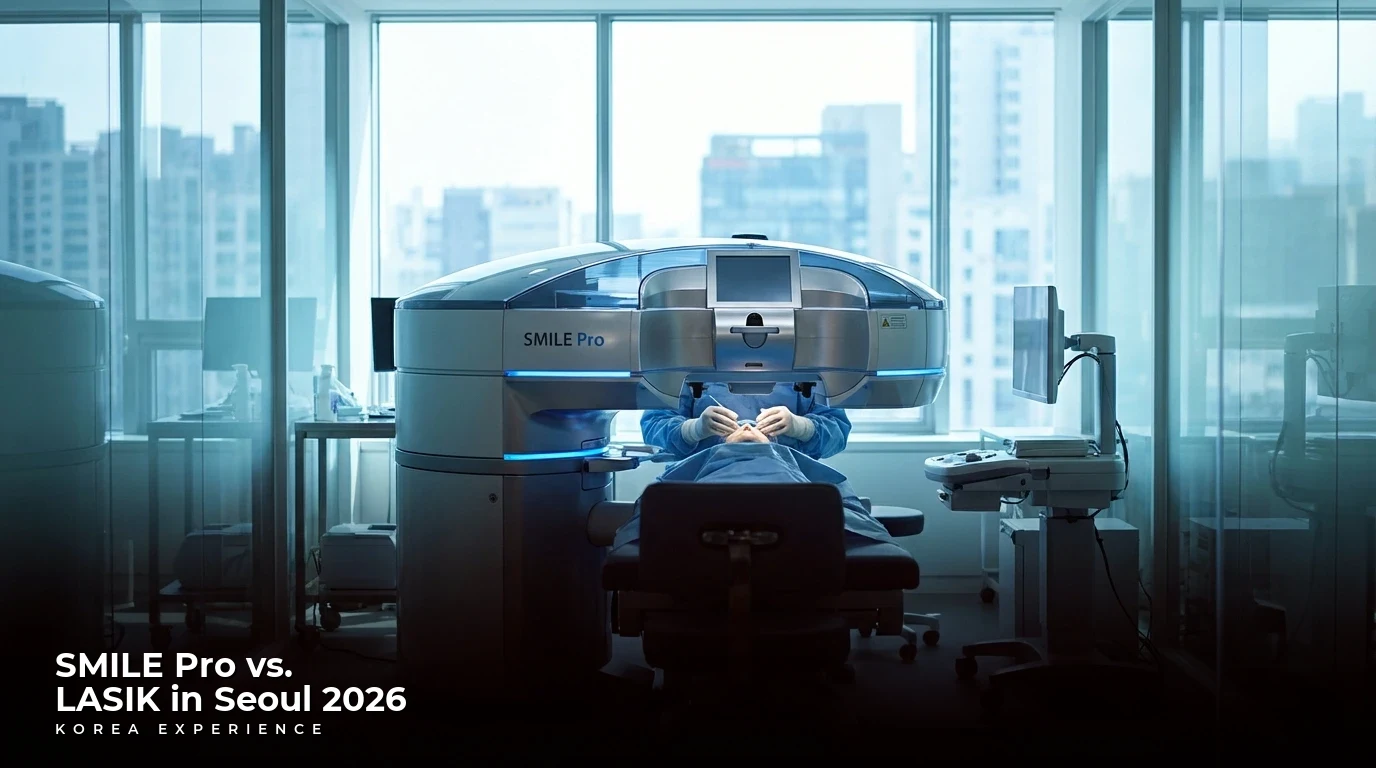
SMILE Pro is the new gold standard for vision correction in Seoul, offering faster recovery and fewer side effects than traditional LASIK.