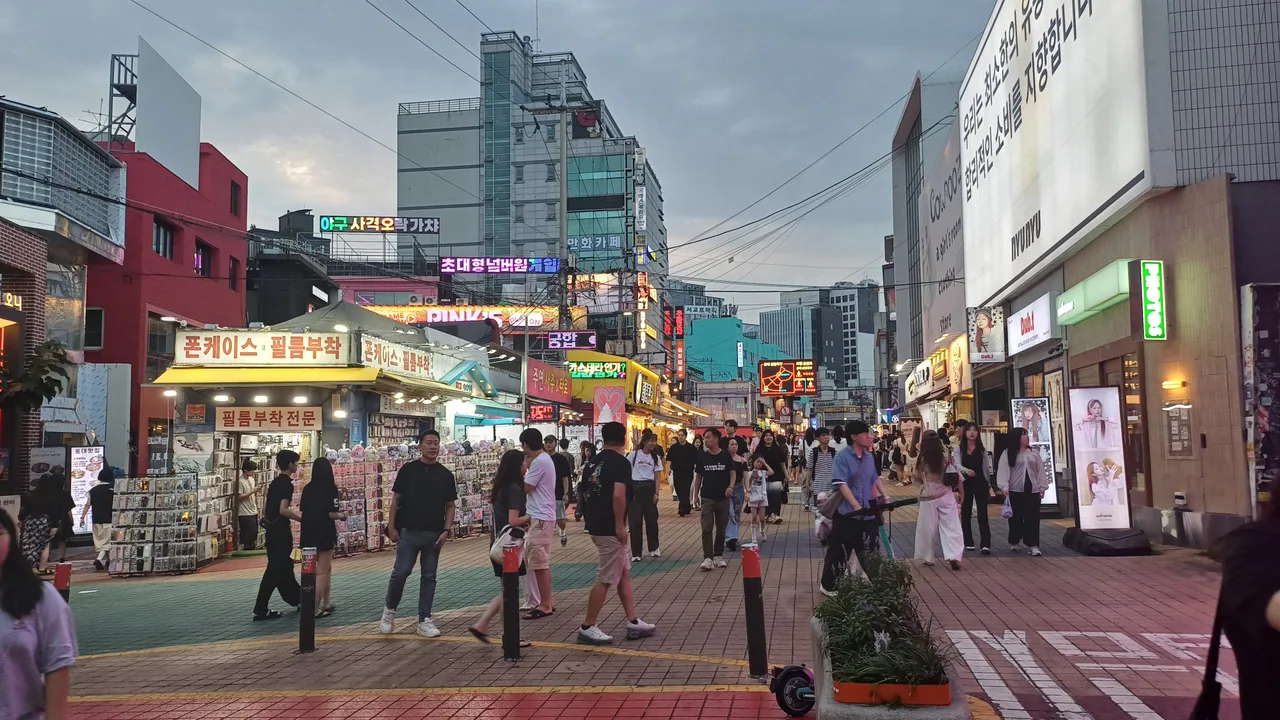
Choose the district that fits most of your days, then inspect the actual property. These are editorial matches, not safety, price or hotel-quality rankings.
Pick a base from your top three priorities
| Base | Consider it when… | Check before booking |
|---|---|---|
| Jongno–Anguk | Palaces, Insadong and traditional streets lead your list | Exact station, stairs, bedding and residential surroundings |
| Myeongdong–Euljiro | You want a central base for a varied short trip and shopping | Myeongdong versus Euljiro station, slope and final hotel walk |
| Hongdae / Hongik University | Cafés, music and west-Seoul evenings matter | Nighttime room noise and AREX versus Line 2 exit |
| Gangnam | Most commitments are south of the river in the southeast | Gangnam Station versus Samseong/COEX; they are different bases |
The official Seoul district overview helps with orientation. Compare routes from each exact hotel to your three priorities at the times you expect to travel. A single “minutes from central Seoul” claim does not describe every journey.
Jongno–Anguk: start close to historic Seoul
Choose this area when the plan repeatedly returns to palaces, Insadong and traditional culture. A modern hotel and a small hanok can involve very different room layouts, luggage access and late check-in. Use the hanok booking checklist if the stay itself is part of the experience.
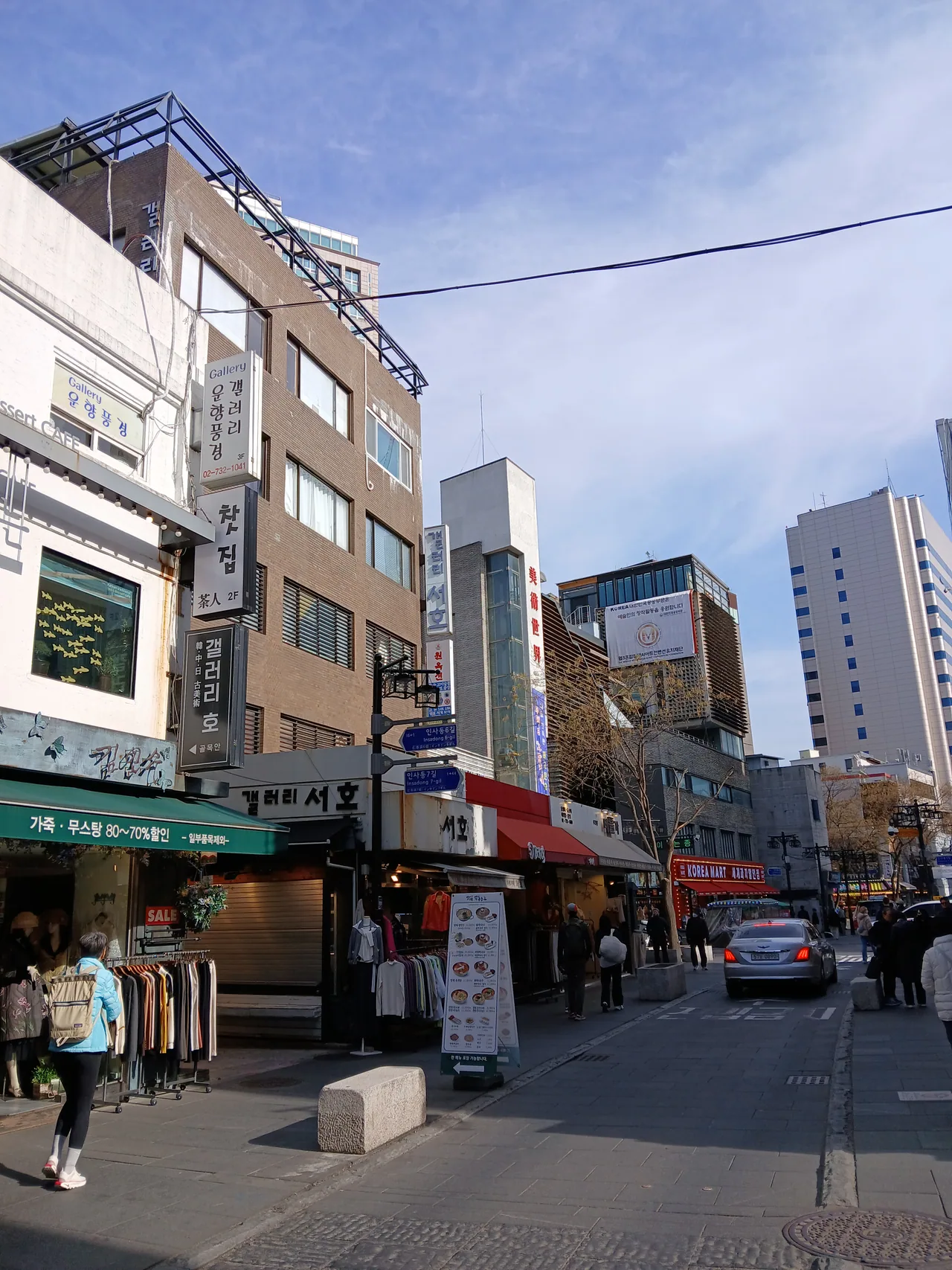
Insadong's street-level mix of shops and traditional details gives a sense of the area. This historical view is not a hotel recommendation or a promise about current tenants.
Image details & reuse
Photographed 2025-03-13. Resized and converted to WebP. Image derivatives retain the original credit and license. Historical image; check current signs, services and opening conditions separately.
Respect residential lanes. Visitor-hour restrictions apply to specified Bukchon areas, rather than all of Jongno; check Seoul's visitor guidance before a walk. A hotel booking does not grant unrestricted sightseeing access to nearby homes.
Myeongdong–Euljiro: check which station the address really uses
The official Myeongdong area guide locates the shopping district. Pin each property separately. A listing marketed as “Myeongdong” may have a more practical route from another station or involve a hill and a longer walk with bags.
For a varied central-Seoul itinerary, test the journey to your palace visit, evening activity and airport connection before choosing between otherwise similar rooms.
Hongdae: an enjoyable evening and a quiet bedroom are separate decisions
Hongdae's cafés and evening activity can make it an appealing base; Seoul's nighttime guide describes the atmosphere. Ask which direction the room faces, whether windows open onto a busy lane and how late check-in works.
Hongik University has different rail facilities and exits. The AREX all-stop train serves the airport journey; Express does not stop here. Check the complete airport comparison, including the final walk and last usable connection.
Gangnam: name the destination, not just the district
Gangnam Station and COEX near Samseong are different hotel locations. For a conference, appointment or repeated southeast-Seoul plans, compare a base near the actual venue. If most sightseeing is around palaces and the northwest, inspect those cross-city journeys first.
Send these questions to the property
| Question | Why it matters |
|---|---|
| Which entrance and station exit should we use with bags? Is there a lift route? | The nearest exit may involve stairs |
| Can we check in at our realistic arrival time? | Landing is earlier than arrival at the hotel |
| What beds, occupancy and child rules apply to this exact room? | A room name does not establish space for the whole family |
| Is the room street-facing, and what is the cancellation deadline? | Noise preferences and flexibility vary |
| Can you confirm the Korean address and reception instructions? | These help a driver and an offline arrival |
The map uses station reference points, not hotel entrances or verified step-free exits. Save the actual accommodation in your itinerary. Keep booking codes in private notes; use the family-room guide for occupancy questions.