Best Vegan K-Beauty Brands in 2026: The Ultimate Animal-Free Guide
Discover the top 10 vegan K-beauty brands for 2026. From Klairs to Melixir, find cruelty-free skincare in Seoul with prices starting at $15 USD.
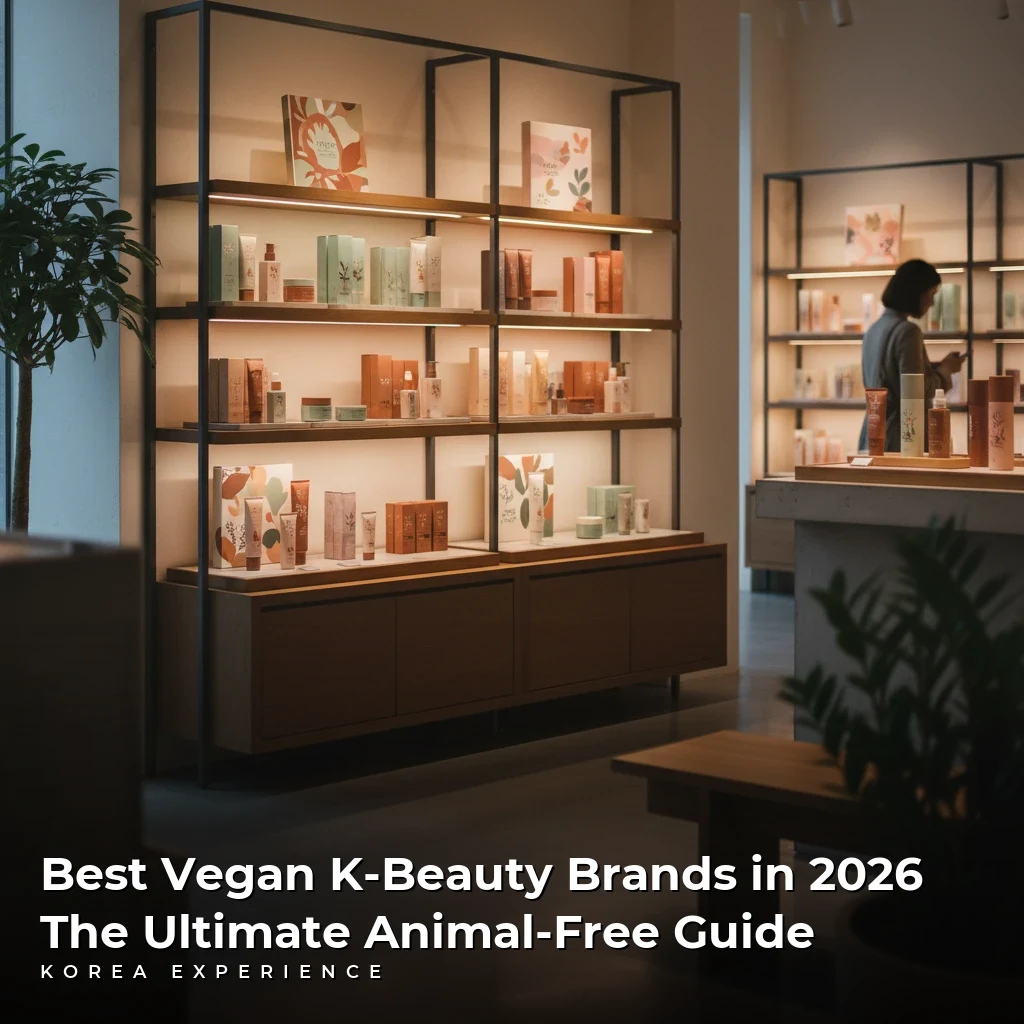
Finding truly vegan skincare in Korea has transformed from a niche scavenger hunt into a mainstream luxury experience. If you are searching for high-performance Korean skincare that is 100% free of animal ingredients and cruelty-free, the options in 2026 are more abundant and accessible than ever before.
The short answer: The leading vegan K-beauty brands in 2026 are Dear, Klairs, Rovectin, Melixir, and Whamisa, offering certified plant-based formulas that rival traditional luxury skincare. Most can be found at Olive Young global stores or specific flagship boutiques in Seoul's Gangnam and Seongsu districts.
Key Takeaways
- 1Korea's vegan beauty market has grown 15% annually since 2024
- 2Look for the 'EVE Vegan' or 'Korea Agency of Vegan Certification' logos
- 3Most premium vegan toners cost between 25,000 and ₩38,000
The Evolution of Vegan Beauty in Korea (2026 Update)
Korea’s beauty industry, once famous for animal-derived ingredients like snail mucin and horse oil, has undergone a radical ethical transformation. As of early 2026, roughly 35% of new product launches in the K-beauty sector are claiming "clean" or "vegan" status. This shift isn't just marketing; it is driven by sophisticated consumer demand and strict verification processes.
For the international traveler, this means you no longer have to compromise on the famous "Korean glass skin" effect to stay true to your ethical values. Modern vegan K-beauty utilizes fermented botanicals, traditional Hanbang (herbal medicine) ingredients, and advanced synthetics to replicate and often exceed the efficacy of animal-derived counterparts.
📊 K-Beauty Market Shift 2026
When shopping in Seoul, you will find that the average price for a certified vegan serum is approximately ₩32,000 ($24 USD), which remains highly competitive compared to Western vegan brands that often start at $50 USD.
Top Dedicated Vegan K-Beauty Brands
Here are the standout brands that have defined the vegan landscape in 2026. These companies are not just "accidentally vegan"; they are purposeful in their formulation and often hold certifications from EVE Vegan (France) or the UK Vegan Society.
1. Dear, Klairs: The Pioneer of Gentle Skincare
Dear, Klairs remains the gold standard for accessible, high-quality vegan skincare. While they started over a decade ago, their 2026 lineup focuses heavily on "Essential Vegan," ensuring that their entire core line is free from animal testing and ingredients. Their flagship store in Garosu-gil is a pilgrimage site for skincare enthusiasts.
- Star Product: Supple Preparation Unscented Toner (180ml)
- Average Price: ₩28,000 ($21 USD)
- Why it works: It uses a proprietary blend of phyto-oligo to balance pH levels without the irritation of essential oils.
Shopping Tip
If you visit the Klairs Seoul flagship store, bring your empty bottle. They offer a ₩1,000 discount on refills for their toners and cleansing oils as part of their 2026 sustainability initiative.
2. Melixir: 100% Plant-Based Heritage
Melixir distinguishes itself as Korea's first 100% vegan skincare brand. Founded on the principle of removing unhealthy artificial additives, their products are deeply rooted in plant efficacy. Their 2026 best-seller utilizes green tea harvested from the Bosung region, located 315km south of Seoul.
- Star Product: Vegan Lip Butter (Agave)
- Average Price: ₩12,000 ($9 USD)
- Availability: Widely available at Sephora Korea and select Chicor locations.
3. Rovectin: Clean Clinical Formulations
originally developed for cancer patients suffering from skin barrier damage due to chemotherapy, Rovectin has pivoted to become a "Clean Tech" leader. Their "Clean" line is exclusively vegan and arguably the best option for travelers with hypersensitive skin reacting to Seoul's urban pollution (fine dust levels often fluctuate between 30-80 AQI).
- Star Product: Lotus Water Cream (60ml)
- Average Price: ₩32,000 ($24 USD)
- Key Ingredient: 75% Lotus Flower extract, which purifies the skin.
4. Whamisa: The Fermentation Experts
Whamisa operates on a different level of luxury. They are famous for their waterless fermentation technology. Instead of using distilled water as a base, they use botanical extracts fermented for decades. This increases the potency of the ingredients. In 2026, their "Organic Flowers" line is BDIH certified and carries the rigorous EWG Verified mark.
- Star Product: Organic Flowers Deep Rich Toner (155ml)
- Average Price: ₩42,000 ($31 USD)
- Texture: Bouncy, essence-like consistency that provides immediate hydration.
💵 Brand Investment Comparison
Organic fermented ingredients, glass packaging
Minimalist, high-efficacy, travel-friendly
"Accidentally Vegan" vs. Certified: How to Tell
In 2026, the distinction between "cruelty-free" (no animal testing) and "vegan" (no animal ingredients) is critical. While animal testing for cosmetics was banned in Korea effectively in 2018, ingredients like beeswax, honey, and carmine are still prevalent.
To ensure a product is vegan while shopping at Olive Young or LOHB's, look for these specific certification marks on the packaging:
- V-Label (Italian Vegetarian Union): Yellow background with a green V.
- EVE VEGAN (France): White text on a black rectangular background.
- KAVCS (Korea Agency of Vegan Certification): A green and white circular logo.
If you are building a full routine, check out our complete guide to Korean skincare routine to see how to layer these vegan products effectively.
Where to Buy Vegan Beauty in Seoul
While you can find individual products at any convenience store, dedicated shopping requires specific destinations.
Klairs Seoul Flagship Store
Located in the trendy Sinsa-dong area, this isn't just a shop; it's a tea house and meditation space.
Klairs Seoul(클레어스 서울)
Olive Young Gangnam Town
This is the massive flagship store. In 2026, they introduced a dedicated "Clean Beauty" zone on the second floor. This section is color-coded green, making it incredibly easy to spot vegan brands like Round Lab (Dokdo line - check specific labels) and Abib.
📋 Olive Young Shopping Facts
Amore Seongsu
While Amore Pacific owns many non-vegan brands (like Sulwhasoo), their Seongsu complex is a beauty playground where you can create custom foundations and lip tints. In 2026, their "Custom Match" service offers fully vegan pigment options for ₩45,000 per bottle.
"Many travelers don't know that the 'Clean Beauty' sticker at Olive Young doesn't always equal 100% vegan. It implies non-toxic. Always flip the box and look for the 'EVE Vegan' mark specifically if you want to avoid beeswax or honey completely."
Best Vegan Products by Category
To help you build a shopping list, here is a breakdown of the best-in-class items for 2026.
1. The Toner: Isntree Green Tea Fresh Toner
Sourced from Jeju Island, this toner is a staple for oily and combination skin. It costs roughly ₩18,000 for 200ml. It controls sebum without stripping moisture, a common issue with Western toners containing alcohol. For other toner options, read our analysis of best Korean toners for every skin type.
2. The Sunscreen: Beauty of Joseon Relief Sun (Rice + Probiotics)
Wait, is it vegan? Yes. The formulation that took the world by storm uses grain fermentation. It provides SPF 50+ PA++++ protection. It feels like a light moisturizer and costs about ₩16,000. Sun protection is non-negotiable in Korea; learn more in our best Korean sunscreen guide.
3. The Serum: I'm From Mugwort Essence
Technically an essence, but functions like a serum. It is 100% Artemisia Princeps Extract. Mugwort is Korea's answer to tea tree—it calms redness instantly. A 160ml bottle retails for ₩35,000.
Vegan Soothing Ingredients
| Ingredient | Best For | Texture | Scent |
|---|---|---|---|
| Mugwort | Redness/Acne | Watery | Herbal |
| Cica (Centella) | Repair/Barrier | Gel-like | Neutral |
| Heartleaf | Sebum/Detox | Light | Fresh |
Analyzing the Ingredients: Why Vegan Works Better
One might ask, "Is vegan beauty actually better, or just ethical?" In the context of Korean skincare, the switch to vegan often correlates with higher efficacy for sensitive skin.
The Power of Hanbang (Traditional Medicine)
Vegan K-beauty relies heavily on Hanbang. Instead of animal fats, brands utilize:
- Rice Water: Brightening and smoothing (rich in Vitamin B and E).
- Ginseng: Anti-aging and energizing (though check if honey is added).
- Bamboo Water: Deep hydration that mimics the body's natural fluids.
In 2026, "Phyto-Mucin" has replaced snail mucin. Derived from wild yams, phyto-mucin provides that famous stringy, viscous texture that hydrates the skin, but without stressing any snails. It is 100% plant-based and has shown in clinical trials to have similar wound-healing properties.
The "Free-From" Philosophy
Korean consumers are hyper-aware of ingredient lists. The "20 Toxic Ingredients" list (a standard popularized by the app Hwahae) drives formulation. Vegan products in Korea almost universally exclude parabens, artificial fragrances, and mineral oils, making them cleaner by default.
For those interested in niche finds, check our article on under-the-radar K-beauty brands which features several up-and-coming vegan indie labels.
Step-by-Step: A Simple Vegan Routine
You don't need 10 steps to see results, but layering is key.
📖 The 5-Step Vegan Glow Routine
Step 1: Double Cleanse
Start with Klairs Gentle Black Fresh Cleansing Oil (vegan) followed by a water-based foam.
Step 2: Layer Hydration
Apply Rovectin Treatment Lotion. Pat it in until fully absorbed.
Step 3: Active Serum
Apply a Vitamin C or Mugwort serum tailored to your skin concern.
Step 4: Moisturize
Seal with Melixir Vegan Relief Facial Cream.
Step 5: Protect (AM Only)
Finish with Round Lab Birch Juice Moisturizing Sun Cream (check for the vegan label version).
Price Analysis: Seoul vs. Global
Is it cheaper to buy these brands in Korea? Absolutely. While global export prices have risen due to shipping logistics in 2026, domestic prices in Korea remain 30-40% lower.
- Dr. Ceuracle Kombucha Essence:
- US Retail: $38 USD
- Korea Olive Young: ₩29,000 (~$21 USD)
- Abib Heartleaf Spot Pad:
- US Retail: $24 USD
- Korea Retail: ₩18,000 (~$13.50 USD)
Furthermore, if you spend over ₩30,000 (approx $22 USD) at participating stores, you get an immediate tax refund upon presenting your passport. This effectively saves you another 6-7%.
Buying Vegan Beauty in Seoul
- ✓Significant price savings (30-40%)
- ✓Access to limited edition sets and refills
- ✓Instant tax refunds available
- ✗Luggage weight restrictions
- ✗English labels not always on packaging
- ✗Overwhelming number of choices
Sustainability in 2026
Korean vegan beauty isn't just about ingredients; it's about the lifecycle of the product. New laws passed in Seoul in 2025 require strict recycling standards for cosmetic packaging.
- Paper Packaging: Brands like Huygee use 100% upcycled paper pulp.
- Soy Ink: Almost all vegan brands now print cartons with soy ink.
- Waterless Formulas: To reduce shipping weight and carbon footprint, brands are moving toward stick balms and powder cleansers.
If you are someone who finishes products quickly, check out our list of beauty empties to see which vegan products are worth the repurchase.
Frequently Asked Questions
❓ Frequently Asked Questions
Have more questions?Contact us →
Final Thoughts for the Traveler
Navigating the world of Korean skincare can be daunting, but the vegan sector is one of the most transparent and high-quality segments of the market in 2026. Whether you are visiting the Klairs flagship in Gangnam or browsing the aisles of Olive Young in Myeongdong, you are sure to find products that align with both your skin goals and your values.
Remember to bring your passport for tax refunds, check the Hwahae app if you are unsure about ingredients, and enjoy the discovery of plant-based innovation that Korea has to offer.
About the Author
Korea Experience Team
Written by the Korea Experience editorial team - experts in Korean medical tourism, travel, and culture with years of research and firsthand experience.
Explore more in Shopping & K-Beauty
From Olive Young hauls to Myeongdong shopping tips — discover the best K-Beauty products, fashion trends, and shopping destinations in Korea.
Browse All Shopping & K-Beauty ArticlesContinue Reading
Explore more articles you might find interesting
Discover the best Lotte Department Store flagship locations. Compare Myeongdong vs Jamsil, find 2026 luxury brands, food courts, and duty-free prices.
Discover the top Korean makeup trends of 2026, from Protein Skin to AI color analysis. Learn prices, top brands, and where to shop in Seoul for under $50.
Discover the best K-beauty products for 2026. From viral sunscreens ($15) to barrier creams, here is the ultimate shopping guide with prices and skin type
Discover Seoul's top eco-friendly brands for 2026. From upcycled streetwear to vegan leather, explore where to shop sustainably with prices and locations.
Discover the top K-beauty products for men in 2026. From Dashu hair wax to Be Ready BB cream, here is the ultimate shopping guide with prices and tips.
Discover the best K-Beauty sheet masks for 2026. A complete guide to top brands like Mediheal and Abib, essential ingredients, and prices starting at ₩1,000.