Airbnb vs recovery hotels for medical tourists in Korea guide
Compare Airbnb and recovery hotels for medical tourism in Korea. Discover costs, safety features, and amenities for your post-surgery stay.
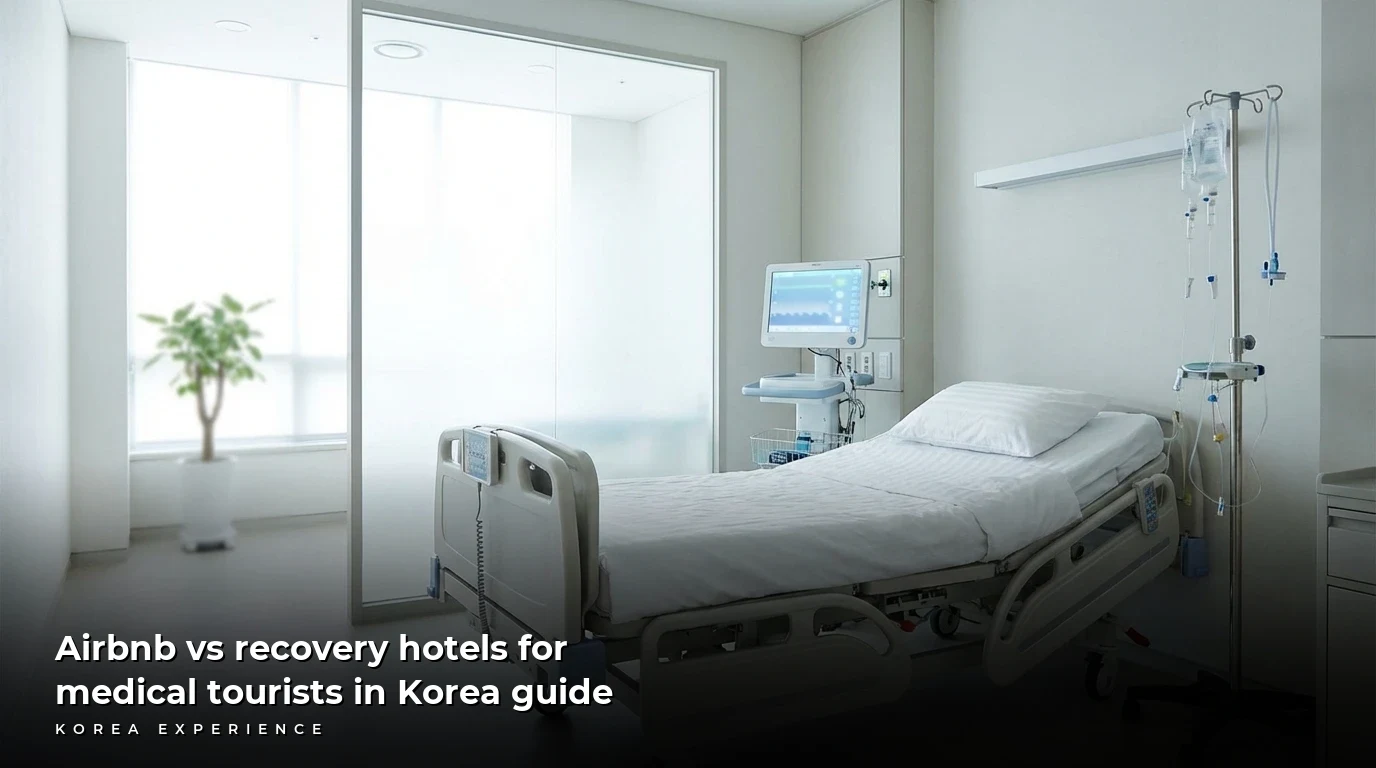
Choosing accommodation for medical tourism in South Korea is not merely a matter of comfort; it is a critical component of your surgical success and safety. The debate between Airbnb vs. Recovery Hotels is the most common dilemma facing the estimated 600,000 international patients who visit Seoul annually. While Airbnbs offer privacy and cost savings, specialized recovery hotels provide medical monitoring and tailored amenities.
Learn more in our comprehensive guide to Medical Tourism Korea.
For patients undergoing invasive procedures like facial contouring or full-body liposuction, a specialized recovery center is strongly recommended for the first 3 to 7 days. Conversely, for non-invasive treatments such as dermatology or simple blepharoplasty (eyelid surgery), a well-located Airbnb can offer a "live like a local" experience at a fraction of the price. This guide analyzes every angle—from bio-rhythm lighting to trash disposal laws—to help you make the safest choice for your journey.
For more details, check out our guide on Pediatric Healthcare in Seoul for Medical Tourists.
Key Takeaways
- 1Recovery hotels reduce post-op complications by offering 24/7 nursing and specialized meals
- 2Airbnbs in Gangnam average $80/night compared to $250/night for recovery centers
- 3Strict Korean recycling laws make Airbnbs challenging for immobile patients
Medical Disclaimer
The content provided here is for informational purposes only and does not constitute medical advice. Always consult your surgeon regarding specific post-operative accommodation requirements. In a medical emergency in Korea, dial 119. For medical translation services, dial 1339.
The Landscape of Post-Op Accommodation in Seoul
Seoul, specifically the Gangnam and Apgujeong districts, is the epicenter of global medical tourism. Within a 5-kilometer radius of Gangnam Station, there are over 450 registered medical institutions. This density has given rise to a unique hospitality sector: the Recovery Hotel (often called an After-Care Center).
Unlike standard luxury hotels, these facilities are hybrid environments. They function as high-end residences equipped with hospital-grade hygiene standards. On the other end of the spectrum is the thriving Airbnb market, often situated in "Officetels"—modern studio apartments located in high-rise buildings.
Understanding the difference in infrastructure is vital. A standard Airbnb in Seoul typically features a specific heating system called Ondol (floor heating), which is excellent for recovery, but may lack adjustable beds. Recovery hotels, however, prioritize elevation and circulation.
📊 Seoul Medical Tourism Stats
Option 1: The Specialized Recovery Hotel
Recovery hotels are purpose-built for patients who have just undergone surgery. They bridge the gap between hospital discharge and flying home. These are not hospitals, but they are staffed by personnel trained to handle post-op needs, such as changing dressings or managing swelling.
The Service Ecosystem
The primary value proposition of a recovery hotel is the ecosystem. You are not just paying for a bed; you are paying for peace of mind.
- Medical Bedding: Most rooms feature electric beds that adjust to a 45-degree angle, crucial for reducing facial swelling.
- Dietary Management: Recovery centers provide "Juk" (Korean rice porridge) and pumpkin juice, a staple in Korean post-op care known to reduce bloating.
- Transportation: Many offer direct shuttle services to major clinics in Sinsa and Apgujeong, saving you the hassle of hailing a taxi while bandaged.
Cost Implications
These benefits come at a premium. The average cost for a specialized recovery room in Gangnam ranges from ₩250,000 to ₩600,000 ($190 - $450 USD) per night. This is significantly higher than a standard 4-star hotel in the same district, which averages ₩150,000 ($115 USD).
📋 Recovery Hotel Specs
"Many patients underestimate the difficulty of sleeping upright. After rhinoplasty or contouring, you cannot sleep flat for at least 7 days. If you choose an Airbnb, you must build a fortress of pillows. In a recovery hotel, you just press a button."
Option 2: The Airbnb (Officetel) Experience
For many travelers, Airbnb offers autonomy and value. In Korea, most Airbnbs listed for medical tourists are located in Officetels. These are multi-purpose buildings that are clean, modern, and extremely secure, usually requiring keycard access for elevators.
The "Live Like a Local" Advantage
Privacy is the main driver here. You have your own washing machine, a kitchenette to prepare comfort food, and no staff monitoring your comings and goings. This is ideal for patients undergoing lighter procedures who want to explore the city as they recover.
The Hidden Challenges
However, the logistical burden falls entirely on you.
- Trash Disposal: Korea has one of the strictest recycling systems in the world. You must purchase specific volume-based trash bags (standard bags are white/green, food waste bags are yellow). Fines for non-compliance can reach ₩100,000 ($75 USD). Navigating this while in pain can be stressful.
- Food Delivery: While apps like Baedal Minjok and Coupang Eats are ubiquitous, they can be difficult to navigate without a Korean phone number or credit card.
- Cleanliness: Unlike a hotel with daily housekeeping, you are responsible for maintaining a sterile environment.
💵 Cost Comparison (7-Night Stay)
Includes meals, transport, nursing checks
Self-catering, standard bed, no service
Critical Comparison Factors
To make an informed decision, we must break down the experience into specific metrics: Safety, Comfort, and Convenience.
1. Safety and Emergency Response
In a recovery hotel, emergency buttons are often located by the bedside and in the bathroom. Staff can reach your room in under 90 seconds. In an Airbnb, you are reliant on your ability to dial 119 and communicate your location in English or broken Korean.
Statistically, post-op complications are rare, occurring in less than 3% of cosmetic surgeries. However, if a hematoma develops at 3 AM, the difference between having a nurse down the hall versus calling a taxi to the ER is substantial.
2. Hygiene and Environment
Recovery hotels utilize hospital-grade HEPA filters and non-porous surfaces that are sanitized daily. Airbnbs vary wildly. While Korean hosts are generally known for cleanliness, hidden dust mites or mold in older air conditioning units can pose an infection risk to open wounds.
Service & Amenity Comparison
| Feature | Recovery Hotel | Airbnb / Officetel | Standard Hotel |
|---|---|---|---|
| Adjustable Medical Bed | ✅ | ❌ | ❌ |
| 24/7 English Support | ✅ | Varies | ✅ |
| Anti-Swelling Meals | ✅ | ❌ | ❌ |
| Trash Handling | Staff | Self (Strict) | Staff |
| Guest Policy | Restricted | Flexible | Open |
3. Location and Accessibility
Most recovery hotels are clustered within 500 meters of major plastic surgery clinics in Gangnam-gu. This allows for quick follow-up visits. A 10-minute taxi ride in Seoul traffic can easily turn into 40 minutes during rush hour (8:00 AM - 9:30 AM and 6:00 PM - 7:30 PM). Being within walking distance is a massive logistical advantage.
Pro Care Recovery Center (Example)(프로 케어 회복 센터)
Who Should Choose What? A Decision Matrix
Your choice should primarily be dictated by the invasiveness of your procedure.
Case A: Major Surgery (Facial Contouring, Tummy Tuck, Breast Augmentation)
Verdict: Recovery Hotel (First 3-5 Days) The risk of limited mobility and the need for head elevation makes an Airbnb risky. You will struggle to take out trash or cook.
- Recovery Time: 2-4 weeks.
- Critical Period: Days 1-3.
- Recommendation: Stay in a recovery hotel for the first 5 nights, then move to an Airbnb for the remainder of your stay to save money.
Case B: Medium Surgery (Rhinoplasty, Liposuction of one area)
Verdict: Hybrid or High-End Airbnb If you have a companion traveling with you, an Airbnb is acceptable. Your companion can handle logistics. If you are solo, a recovery hotel is still safer for the first 48 hours.
- Recovery Time: 1-2 weeks.
- Critical Period: Days 1-2.
Case C: Minor Procedures (Blepharoplasty, Fillers, Skin Treatments)
Verdict: Airbnb You will be mobile immediately. The cost of a recovery hotel is unnecessary. Use the savings to enjoy high-quality Korean food and shopping.
- Recovery Time: 3-7 days.
- Critical Period: First 24 hours (ice packs needed).
Pro Tip: The Companion Factor
If you are traveling with a friend or family member, the value of a Recovery Hotel decreases. A companion can perform the duties of the hotel staff—fetching ice, buying food, and helping you sit up. In this case, a spacious 2-bedroom Airbnb is often the superior choice financially.
Practical Logistics: Surviving Your Stay
Regardless of where you stay, you need to master the logistics of living in Seoul as a patient.
Food Delivery for Foreigners
You cannot recover on an empty stomach. If you are in an Airbnb, you will rely on delivery.
- Uber Eats: No longer operates in Korea.
- Shuttle Delivery: An English-friendly app tailored for expats. Slightly higher fees, but accepts international credit cards smoothly.
- Baedal Minjok (Baemin): The local standard. Requires some Korean knowledge, but offers 10x the options.
📖 How to Order Porridge (Juk) Without Speaking Korean
Step 1: Download Shuttle App
Available on iOS and Android. Register with your email.
Step 2: Search for 'Bonjuk'
Bonjuk is the leading porridge chain. Look for 'Pumpkin Porridge' (Hobak-juk) for swelling.
Step 3: Select 'No Spoon'
If you have facial bandages, ask for extra straws in the notes section.
The Convenience Store Lifeline
Korean convenience stores (GS25, CU, 7-Eleven) are world-class. They are located on almost every block, often less than 100 meters apart. They sell:
- Pre-cut fruit (essential for vitamins).
- Microwavable porridge.
- Ice cups (great for making cold compresses).
- Tylenol and basic medical supplies.
Cost Analysis: The Full Picture
When budgeting, look beyond the room rate.
Airbnb Hidden Costs:
- Airport Taxi: ₩80,000 - 100,000 (standard taxi) one way.
- Food Delivery Fees: ₩4,000 - 6,000 per meal.
- Water: Tap water is safe but rarely drunk; bottled water costs ₩1,000 per 2L.
Recovery Hotel Inclusions:
- Airport Transfer: Often included or discounted.
- Meals: Breakfast and dinner often included.
- Deswelling Treatments: Many hotels offer complimentary Oxygen Therapy sessions, which otherwise cost ₩50,000 per session at a clinic.
Pros and Cons
- ✓Recovery Hotel: Adjustable beds prevent fluid buildup
- ✓Recovery Hotel: On-site staff handles emergencies
- ✓Airbnb: Significantly lower cost (save ~$150/night)
- ✓Airbnb: Privacy and ability to cook own meals
- ✗Recovery Hotel: Strict guest policies (no visitors often)
- ✗Recovery Hotel: Clinical atmosphere can feel sterile
- ✗Airbnb: Strict trash recycling laws maximize stress
- ✗Airbnb: No immediate medical help available
Final Recommendation: The "Sandwich Strategy"
For the ultimate balance of safety and budget, we recommend the Sandwich Strategy.
- Phase 1 (Days 1-3): Book a Recovery Hotel. This is when you are groggy, in pain, and need assistance with drains or bandages. You benefit from the adjustable bed and nursing care.
- Phase 2 (Days 4-10): Move to a nearby Airbnb. Once drains are removed and you can walk comfortably, switch to an apartment. You can now explore the cafes of Garosu-gil and enjoy your privacy.
This strategy saves you approximately ₩1,000,000 ($750 USD) over a 10-day trip compared to staying exclusively in a recovery center, without compromising safety during the critical initial phase.
The Ideal 10-Day Recovery Itinerary
Surgery & Hotel Check-in
Direct transport from clinic to Recovery Hotel. Nursing check every 4 hours.
Drain Removal
Visit clinic. Checkout of Hotel. Check-in to Airbnb.
Airbnb Recovery
Self-managed recovery. Light walking. Food delivery.
Stitch Removal & Fly
Final clinic visit. Airport Limousine Bus home.
Frequently Asked Questions
❓ Frequently Asked Questions
Have more questions?Contact us →
Deciding between an Airbnb and a recovery hotel is about managing risk versus reward. By assessing your specific surgery type and budget, you can tailor a recovery plan that ensures you return home not just looking better, but feeling healthy and rested. Safe travels and a speedy recovery!
About the Author
Korea Experience Team
Written by the Korea Experience editorial team - experts in Korean medical tourism, travel, and culture with years of research and firsthand experience.
⚠️ Medical Disclaimer
The information provided on this website is for general informational purposes only and does not constitute medical advice. Always consult with qualified healthcare professionals before making any medical decisions.
Explore more in Medical Tourism
World-class medical procedures at competitive prices. From plastic surgery and dermatology to dental care and health checkups — your complete guide to medical tourism in Korea.
Browse All Medical Tourism ArticlesContinue Reading
Explore more articles you might find interesting
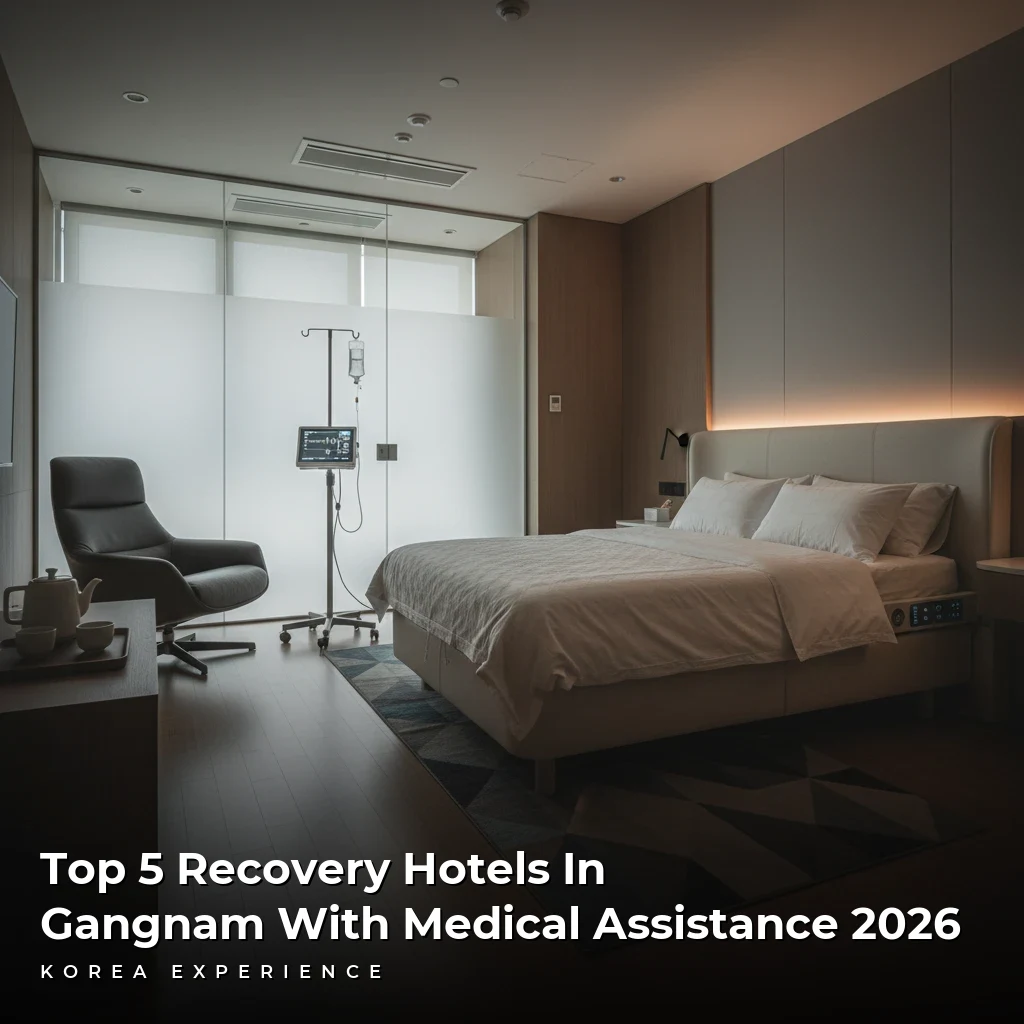
Discover the safest recovery hotels in Gangnam for post-surgery care, featuring adjustable beds, 24/7 concierge, and clinic proximity for 2026 travelers.
Comprehensive guide to mental health resources for medical tourists in Korea. Find English-speaking counselors, recovery centers, and costs in 2026.
Explore 2026 male plastic surgery trends in Korea for jawline definition and gynecomastia. Discover top clinics, costs, and recovery insights for international patients interested in medical tourism.
Complete 2026 guide to recovery hotels in Seoul. Compare prices (₩100k-500k/night), find nursing services, and book the perfect aftercare stay.
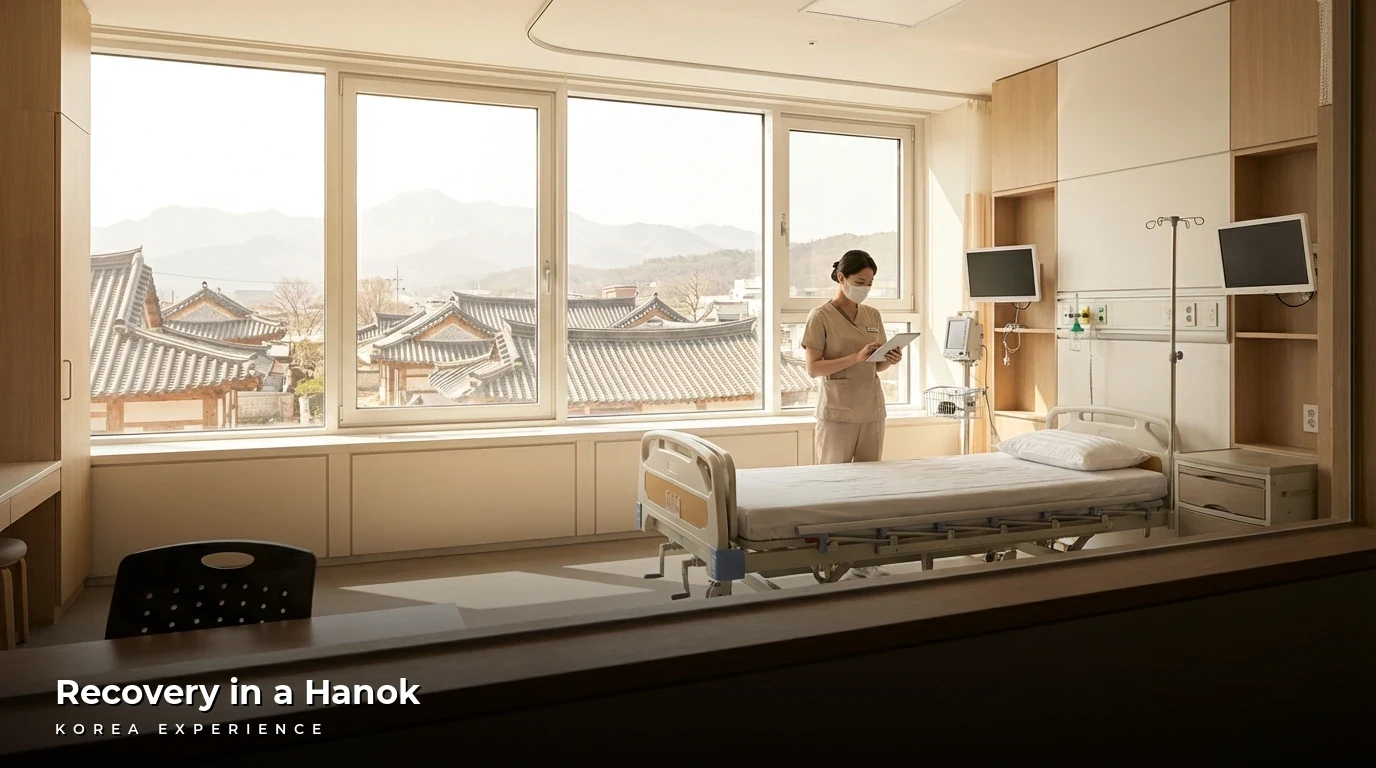
Discover why 57% of 2025 medical tourists chose dermatology and how recovering in a luxury Hanok for $250 a night is the ultimate 2026 healing hack.
Compare PRP and PDO thread lifts in Korea with costs, recovery times, and results. A detailed guide for medical tourists seeking natural rejuvenation.