Insurance claims for medical tourists can you get reimbursed 2026
A complete guide to insurance reimbursement for medical tourism in Korea. Learn about coverage limits, VAT refunds, and claim success rates in 2026.
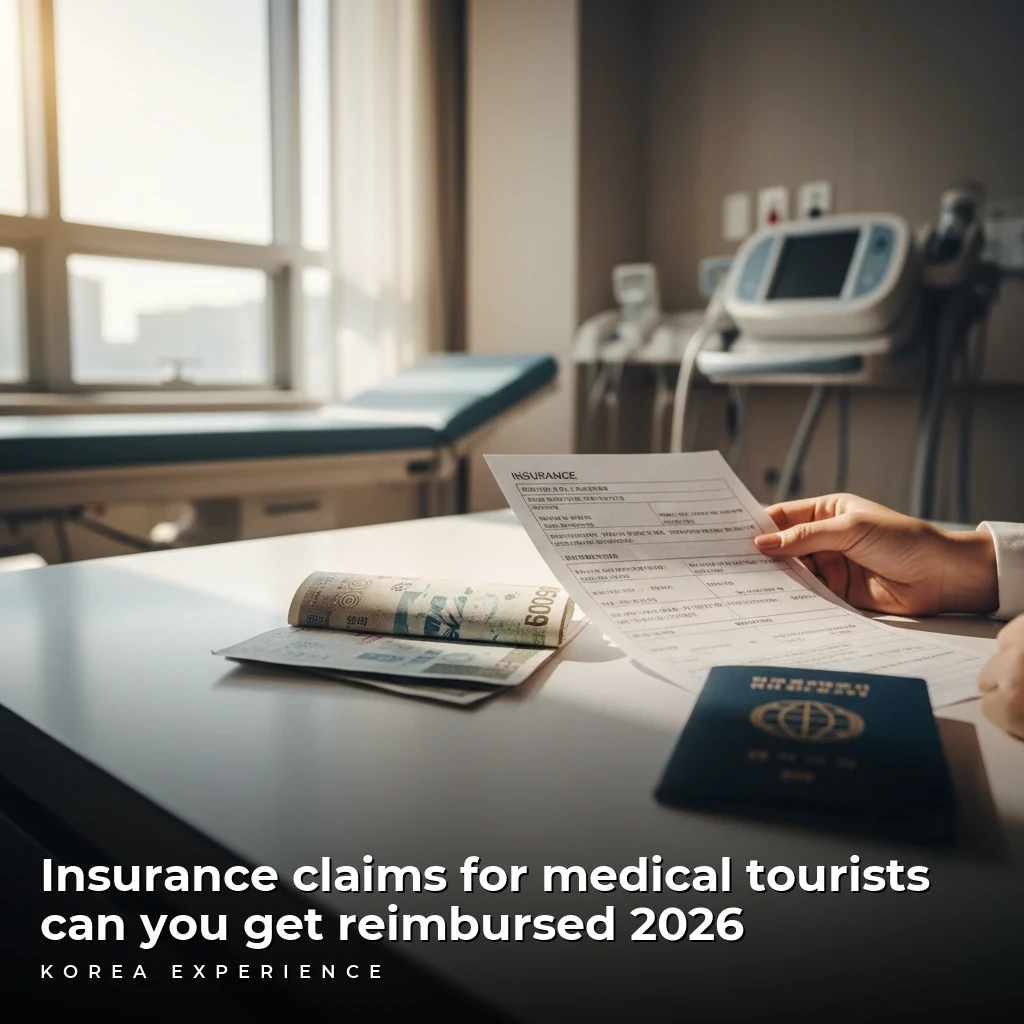
Reimbursing medical costs incurred while traveling to Korea for treatment is the number one financial question we receive from international patients. The reality of getting money back from your insurance provider depends entirely on the nature of your procedure—specifically, the distinction between "medically necessary" and "elective cosmetic." For the majority of medical tourists visiting Korea in 2026, standard international health insurance will not reimburse elective plastic surgery or dermatology procedures. However, specialized medical complication insurance and the Korean government's aggressive VAT refund system offer alternative ways to recoup costs.
The short answer: Standard international insurance rarely covers elective procedures in Korea, but specific "Medical Travel Insurance" policies do exist for complications. However, almost all tourists are eligible for a guaranteed 10% VAT refund on procedures, which acts as an immediate government-backed reimbursement.
Key Takeaways
- 1Standard travel insurance excludes elective surgery; only emergency complications are typically covered
- 2The Korean government offers a 10% VAT refund on cosmetic procedures for tourists, claimable at the airport
- 3Specialized 'Medical Complication Insurance' is now essential for covering revision surgeries or extended stays
Medical Disclaimer
The content in this article is for informational purposes only and does not constitute financial, legal, or medical advice. Insurance policies vary significantly by provider. Always consult your insurance agent and a qualified medical professional before traveling. For medical emergencies in Korea, dial 119.
The Landscape of Medical Reimbursement in 2026
South Korea has solidified its position as the plastic surgery capital of the world, attracting over 600,000 medical tourists annually as of late 2025. With this influx, the financial infrastructure has evolved. While in the past, patients paid out-of-pocket with zero expectation of return, the 2026 landscape is more nuanced.
There are three distinct avenues for financial recovery regarding medical costs in Korea:
- International Health Insurance (IPMI): For medically necessary treatments (e.g., cancer, orthopedics).
- Medical Complication Insurance: Specific policies protecting against surgeries gone wrong.
- The Tax Refund System (Tax-Free): The government's incentive program.
Understanding the difference is critical because a rejected claim can leave you liable for bills exceeding $20,000 USD for complex revision treatments if complications arise.
📊 Insurance Rejection Rates
Elective vs. Medically Necessary: The Golden Rule
The "Golden Rule" of insurance reimbursement in Korea is simple: Necessity.
Insurance companies operate on risk management. If you choose to undergo rhinoplasty to improve your aesthetic profile, this is a voluntary risk. No standard provider (Blue Cross, Cigna, AXA, etc.) will reimburse the primary cost of this surgery. However, if the rhinoplasty is functional—to correct a deviated septum affecting breathing (septoplasty)—a portion of the procedure might be reimbursable depending on your Global Health policy.
Data Point: The Cost of Ambiguity
In 2026, a standard rhinoplasty in Gangnam costs between ₩4,000,000 and ₩7,000,000 ($2,900–$5,100 USD). If you combine functional correction with cosmetic reshaping, clinics can separate the billing. You might get reimbursed for the ₩2,000,000 portion related to the septum, but not the ₩3,000,000 tip refinement.
Always ask your clinic for a 'Detailed Statement of Medical Expenses' (Jinryobi Sebunaeyeokseo). Standard receipts are often rejected by foreign insurers because they don't break down the anesthesia, material, and doctor fees separately.
The 10% VAT Refund: The "Sure Thing" Reimbursement
Since most readers are visiting for cosmetic reasons, let's look at the reimbursement you can definitely get: The VAT Refund.
South Korea imposes a 10% Value Added Tax on goods and services. To boost medical tourism, the government allows foreign tourists (staying less than 6 months) to claim this 10% back on cosmetic surgeries and dermatology treatments. This applies to procedures totaling more than ₩30,000 (approx $22 USD).
While this isn't an insurance claim, it acts as a guaranteed reimbursement. On a $10,000 facelift, getting $1,000 back is significant.
Eligible Procedures for VAT Refund
- Double eyelid surgery
- Rhinoplasty (Nose job)
- Breast augmentation/reduction
- Liposuction
- Face lifts
- Teeth whitening and laminates
- Dermatology (Acne treatment, pore reduction)
📖 How to Claim Your Medical VAT Refund
Step 1: Verify Clinic Eligibility
Before booking, ask: 'Is this a Tax-Free Medical Institution?' Not all clinics are registered to issue the refund certificate.
Step 2: Get the Certificate
After paying for your surgery, request the 'Certificate of Selling Medical Service for Overseas Patient.' You must present your passport.
Step 3: Airport Processing
At Incheon Airport (T1 or T2), proceed to the Tax Refund kiosks before immigration if your refund is under ₩5,000,000 ($3,600 USD).
Step 4: Receive Funds
You can receive the refund in cash (₩/USD/JPY) or as a refund to your credit card.
For those interested in finding reputable clinics that handle these documents professionally, check out our guide on best plastic surgery clinics for foreigners in Seoul.
Types of Insurance for Medical Tourists
If you are looking for actual insurance coverage, you need to navigate the three main tiers of policies available in 2026.
1. Standard Travel Insurance
- Purpose: Lost luggage, flight cancellations, accidental injury (tripping on a hike).
- Medical Tourism Coverage: Zero.
- The Trap: If you fly to Korea specifically for surgery and complications arise (e.g., infection from surgery), standard travel insurance will often void your claim because the trip's primary purpose was a "high-risk elective activity."
- Coverage Limit: usually $50,000 to $100,000 for accidents only.
2. Global Health Insurance (Expat Insurance)
- Providers: Cigna Global, Bupa, Aetna International, Allianz Care.
- Purpose: Comprehensive health coverage for those living abroad or traveling extensively.
- Medical Tourism Coverage: Conditional. These policies often cover medically necessary treatments (cardiology, oncology) in Korea.
- Network: Korea has excellent "International Healthcare Centers" at major hospitals like Asan Medical Center and Samsung Medical Center that accept these directly.
- Deductibles: Usually high ($500–$2,000).
3. Medical Complication Insurance
- Purpose: Specifically designed for medical tourists.
- Coverage: Covers the cost of additional medical treatment if the initial surgery leads to complications (infection, implant displacement, necrosis) within a set timeframe (usually 6 months).
- Reimbursement: Covers revision surgery costs, extra hotel nights, and flight changes.
- Cost: Premiums are roughly 1% to 1.5% of the surgery cost.
Insurance Policy Comparison 2026
| Feature | Travel Insurance | Global Health (IPMI) | Med. Complication Ins. |
|---|---|---|---|
| Elective Surgery Cost | No | No | No |
| Complications Coverage | Rarely | Sometimes | Yes (Primary Focus) |
| Trip Interruption | Yes | No | Yes (Medical Reasons) |
| Avg. Premium | $50-100 | $2,000+/yr | $150-500/trip |
How to File a Claim for Medically Necessary Treatment
If you are in Korea for a non-cosmetic reason—perhaps you fell ill, or you are seeking specialized treatment for a condition—the reimbursement process is heavily bureaucratic. Korean hospitals are incredibly efficient, often treating patients within 30 minutes of arrival, but the paperwork is manual.
1. The "Pay and Claim" Model
Unlike the US system where the hospital bills the insurance directly (Direct Billing), most smaller Korean clinics operate on a "Pay and Claim" basis for international patients. You must pay the full amount upfront (cash or credit card) and then submit documents to your insurer back home.
Pro Tip: Large tertiary hospitals (Severance, Seoul St. Mary's) have International Centers that may offer Direct Billing if you have a major insurer like Cigna or Tricare. Always email them 2 weeks before arrival.
2. Essential Documentation
To successfully claim reimbursement, you must leave the hospital with:
- Medical Certificate (Sindanseo): The doctor's official diagnosis including ICD-10 codes.
- Detailed Receipt (Jinryobi Sebunaeyeokseo): A line-item breakdown of costs. A credit card slip is not enough.
- Proof of Payment: The credit card receipt.
- Prescription Records: If you bought medication at a pharmacy.
Language Barrier Hack
Most Korean documents are in Korean. Major hospitals will issue English versions for a fee (usually 10,000–₩20,000 per document). Always pay this fee. Translating them yourself later via a certified translator will cost 5x more.
For details on how to set up these appointments correctly, read our article on booking medical consultations in Korea.
Specialized Medical Tourism Agencies
In 2026, many travelers bypass the DIY route and use government-registered medical tourism facilitators. These agencies often include their own insurance packages or have partnerships with insurers that cover malpractice or complications.
Using an agency can act as a safety net. If a dispute arises regarding billing or results, the agency (which wants to keep its license with the Korean Ministry of Health) will often mediate the reimbursement process for you.
Using an Agency vs. Direct Booking
- ✓Agencies often include complication insurance
- ✓Assistance with English documentation collection
- ✓Mediation support in case of disputes
- ✗Service fees can add 15-20% to the total cost
- ✗Limited to partner clinics
- ✗Communication layers can slow down direct doctor access
The "Medical Korea" Arbitration System
What happens if you feel you deserve a reimbursement because of malpractice, but the clinic refuses?
The Korea Medical Dispute Mediation and Arbitration Agency (K-Medi) is a government body designed to help foreign patients. In 2026, they have streamlined their process for international visitors.
- Helpline: 1577-7129 (available in English).
- Process: You file a dispute, and if the clinic agrees to participate, mediation begins.
- Success Rate: Approximately 60% of cases result in some form of financial settlement or reimbursement.
- Cost: A nominal filing fee (approx ₩20,000), vastly cheaper than hiring a lawyer.
This is a form of "reimbursement" through legal settlement, and it is a crucial protection for medical tourists.
Cost Analysis: Is It Worth It Without Insurance?
Even without insurance reimbursement, the cost disparity often justifies the trip. This is known as "Geo-Arbitrage." You are paying out of pocket, but the total cost (Flight + Hotel + Surgery) is still lower than the deductible + co-pay + premium cost in high-cost nations like the USA.
💵 Cost Comparison: Out-of-Pocket (2026)
Does not include facility fees
All-inclusive package price
When calculating your total budget, consider where you will stay during recovery. Check our comparison of Airbnb vs recovery hotels for medical tourists to see if your accommodation choice might be covered by travel insurance trip interruption clauses (rare, but possible if deemed medically necessary recovery).
Common Pitfalls to Avoid
1. The "Esthetic" Label
If your receipt says "Esthetic" (Miyong), your insurance claim is dead on arrival. If you are having a dermatological procedure that is medical (e.g., severe acne treatment or scar removal from an injury), ensure the doctor codes it as "Dermatological Treatment" (Pibugwa Jinryo), not "Esthetic Skin Care."
For a deeper dive into non-surgical options, read about anti-aging treatments in Korea.
2. The 30-Day Rule
Many travel insurance policies require you to seek treatment within 24-48 hours of an "incident." If you wait 2 weeks to see a doctor for a pain that started on the flight, they may deny the claim saying it was a pre-existing condition you traveled to treat.
3. Pharmacy Receipts
In Korea, the pharmacy (Yakguk) is separate from the hospital. The hospital receipt does not cover the drugs you buy at the pharmacy. You must get a separate receipt from the pharmacist for reimbursement.
📋 Pharmacy Reimbursement Facts
Timeline: The Reimbursement Journey
To give you a realistic expectation of cash flow, here is the typical timeline for a medical tourist in 2026.
Reimbursement Timeline
Treatment & Payment
Pay full amount. Request VAT Tax Refund Sheet and Detailed Medical Receipt (English).
Airport Refund
Scan passport and tax sheet at kiosk. Get cash refund immediately.
File Insurance Claim
Upload digital scans of English receipts to your Global Health portal.
Assessment
Insurance company reviews medical necessity codes (ICD-10).
Final Reimbursement
Funds deposited if claim is approved (typically via wire transfer).
Conclusion: Plan for the Worst, Hope for the Refund
In 2026, banking on insurance reimbursement for medical tourism in Korea requires a realistic mindset. If you are here for beauty, your "insurance" is the 10% VAT refund and the lower baseline costs compared to the West. If you are here for serious medical treatment, your Global Health policy is your lifeline, but it demands meticulous paperwork.
The smartest travelers purchase specific Medical Complication Insurance. It costs a fraction of the surgery price—usually around $150 to $300—and provides the peace of mind that if a revision is needed, you aren't paying double.
Always prioritize clinics that are transparent about their documentation and willing to help you with the paperwork. The difference between a reimbursement check and a rejection letter is often just a specific medical code on a piece of paper.
❓ Frequently Asked Questions
Have more questions?Contact us →
About the Author
Korea Experience Team
Written by the Korea Experience editorial team - experts in Korean medical tourism, travel, and culture with years of research and firsthand experience.
⚠️ Medical Disclaimer
The information provided on this website is for general informational purposes only and does not constitute medical advice. Always consult with qualified healthcare professionals before making any medical decisions.
Explore more in Medical Tourism
World-class medical procedures at competitive prices. From plastic surgery and dermatology to dental care and health checkups — your complete guide to medical tourism in Korea.
Browse All Medical Tourism ArticlesContinue Reading
Explore more articles you might find interesting
Everything you need to know about medical tourism insurance for Korea in 2026, covering complications, costs, provider comparisons, and claim procedures.
A detailed guide comparing FUE and FUT hair transplants in Seoul, including 2026 price data, recovery timelines, and success rates for medical tourists.
The complete 2026 guide to Korea's National Health Insurance. Learn about mandatory enrollment, costs, coverage benefits, and how to register dependents.

A complete guide to Korean home insurance for expats. Learn about liability, fire coverage costs, and Jeonse protection strategies.
Find official starting points for medical-tourism questions and learn the basic Korean medical-dispute application process.

Discover Korea's 2026 stem cell medical tourism boom. Learn how new laws unlock anti-aging and joint treatments at 50% lower costs than the US, from $8,000.