Medical tourism with kids: Pediatric healthcare in Seoul 2026
A complete guide to pediatric healthcare in Seoul for international families, covering top clinics, costs, and emergency protocols in 2026.
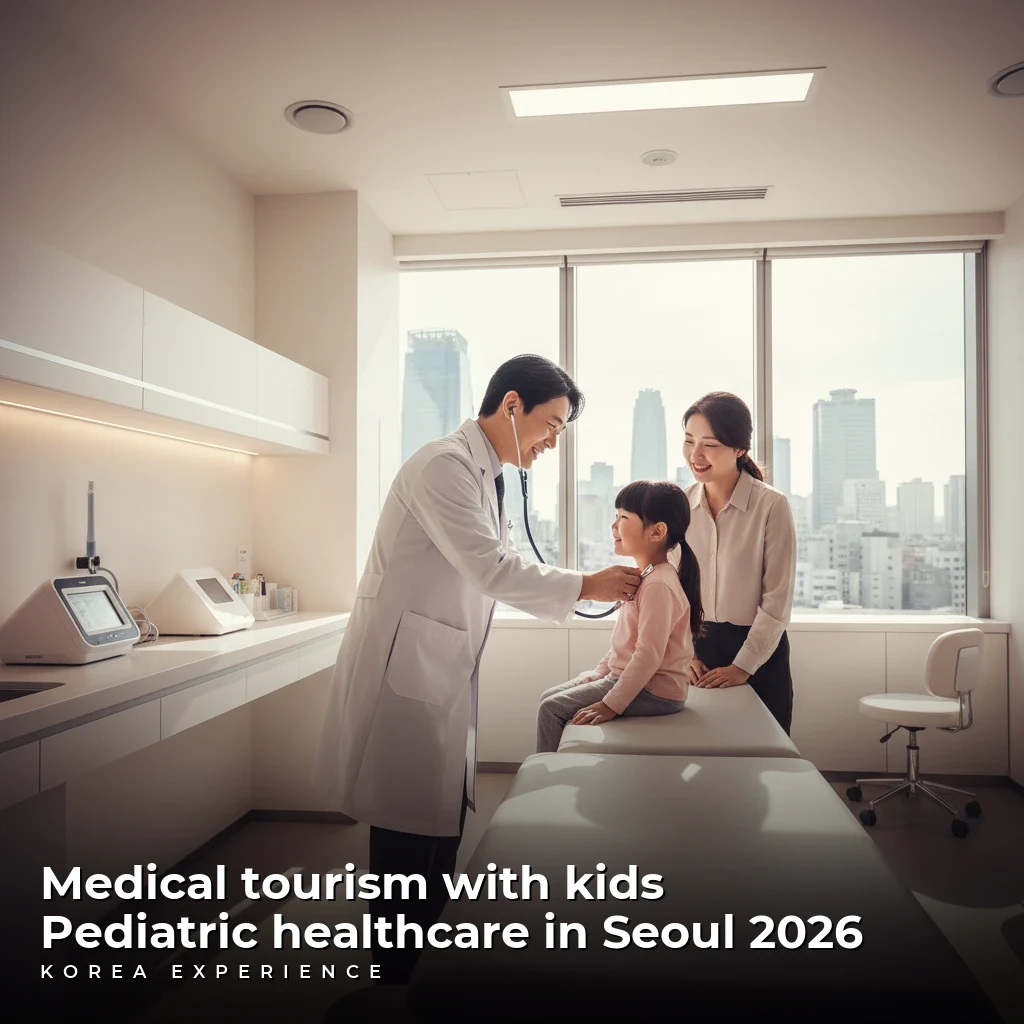
Finding quality healthcare for your children while traveling or living abroad is a top priority for any parent. In Seoul, South Korea, accessing world-class pediatric care is not only possible but often more efficient and affordable than in many Western countries. Whether you are facing a sudden fever during a family vacation or planning a specific medical procedure for your child, Seoul offers a robust network of International Healthcare Centers (IHCs) within major university hospitals, as well as specialized local clinics designed to make the experience as stress-free as possible.
The short answer: Seoul offers top-tier pediatric care through "Big 5" university hospitals like Severance and Asan, which have dedicated International Healthcare Centers with English-speaking staff. Expect to pay between ₩50,000 ($38) and ₩150,000 ($115) for a standard consultation without Korean national insurance, with wait times generally under 20 minutes at reserved appointments.
Key Takeaways
- 1International clinics in major hospitals provide full English interpretation and dedicated concierge services.
- 2Pediatric consultations for foreigners typically range from $40 to $120, significantly lower than US out-of-pocket costs.
- 3The 'Moonlight Children's Hospital' system allows for pediatric care during nights and weekends without emergency room fees.
Why choose Seoul for pediatric medical tourism?
South Korea has rapidly established itself as a global hub for medical tourism, and this excellence extends to pediatrics. For international families, the appeal lies in the "Iron Triangle" of healthcare: accessibility, affordability, and advanced technology.
According to 2026 health tourism data, Seoul's medical facilities maintain a 98.5% patient satisfaction rate among international visitors. The hospitals here are equipped with cutting-edge diagnostic tools, often utilizing AI-driven imaging that reduces radiation exposure—a critical factor when treating young children. Furthermore, the efficiency is unmatched. In many Western nations, seeing a specialist can take weeks or months. In Seoul, through the International Healthcare Centers, you can often see a pediatric specialist within 24 to 48 hours of your request.
📊 Pediatric Care Excellence
The environment in Korean pediatric wards is also distinctly different. Known as "Kid-Friendly Design," hospitals like Severance Children’s Hospital incorporate playgrounds, brightly colored exam rooms, and even ceiling-mounted TVs in dental clinics to distract children during procedures. This attention to psychological comfort makes a daunting medical visit significantly easier for both the child and the anxious parent.
Understanding the Korean pediatric healthcare system
Navigating a foreign healthcare system can be intimidating, but Korea's system is structured logically. It operates on a three-tier system, and understanding this is crucial for saving time and money.
1. Primary Care: Local Clinics (Uiwon)
These are neighborhood clinics. For common issues like colds, ear infections, or mild rashes, these are your best bet. They are everywhere—usually located on the 2nd or 3rd floors of commercial buildings near subway stations. While doctors often speak English, the nursing staff may not. Walk-ins are the norm here, with average wait times of 10 to 30 minutes.
2. Secondary Care: General Hospitals
These are mid-sized hospitals with various departments. They handle cases that local clinics cannot, such as requiring IV fluids for dehydration or simple fractures.
3. Tertiary Care: University Hospitals (The "Big 5")
This is where medical tourism focuses. Hospitals like Severance, Asan, Samsung, Seoul St. Mary's, and Seoul National University Hospital represent the pinnacle of care. To visit these as a Korean resident under National Health Insurance, a referral is required. However, international travelers paying out of pocket can often bypass the referral requirement by booking directly through the International Healthcare Center (IHC).
Referral Letters
If you have travel insurance that requires a referral letter to cover specialist costs, visit a local clinic first. The consultation will cost roughly ₩25,000 ($19), and the doctor can write a referral letter in English upon request.
Top international hospitals for kids in Seoul
When seeking the absolute best care for your child, the following hospitals are the gold standard. They are JCI (Joint Commission International) accredited, meaning they meet rigorous global safety standards.
Severance Children's Hospital (Sinchon)
Located near Yonsei University, this is arguably the most foreigner-friendly hospital in Korea. Founded by medical missionary Horace Allen, it has a deep legacy of treating international patients. Their Children's Hospital is a separate building connected to the main medical complex.
Severance Hospital International Health Care Center(세브란스병원 국제진료소)
Samsung Medical Center (Gangnam)
Located in the Irwon-dong area of Gangnam, Samsung Medical Center is known for its high-tech approach and efficiency. Their pediatric cancer center and specialized surgery units are world-renowned. The campus is vast, spanning over 200,000 square meters, so utilizing their free shuttle bus from Irwon Station (Line 3) is highly recommended.
Asan Medical Center (Songpa)
Often ranked as the number one hospital in Korea, Asan is located near the Olympic Park in eastern Seoul. It handles the highest volume of patients in the country. Their pediatric heart center is particularly famous. While it is slightly further from the central tourist districts (about 45 minutes by taxi from Myeongdong), the quality of care is unparalleled.
At major hospitals like Severance or Asan, you don't pay the doctor directly. You will be given a 'payment slip' and must go to a kiosk or a specific counter to pay before you can pick up medicine or get your next appointment. Don't leave the waiting room until the nurse hands you this paper!
Cost of pediatric treatment: 2026 price guide
One of the biggest anxieties for parents is the cost. Fortunately, even without Korean National Health Insurance (NHI), costs are transparent and reasonable compared to the US. However, they are higher than what local residents pay.
International pricing is generally set at 150% to 200% of the NHI price. Below is a breakdown of estimated costs for pediatric services in 2026. Note that prices can vary based on the specific hospital tier.
💵 Pediatric Service Costs (Non-Insured)
Includes interpretation & admin fee
Full panel analysis
Basic doctor visit
Per image/region
Payment Methods
All major hospitals accept international credit cards (Visa, Mastercard, Amex). However, smaller neighborhood clinics might have trouble with foreign cards occasionally, so carrying about ₩50,000 in cash is a safe backup plan.
📋 Financial Quick Facts
If you are staying in the city for an extended period, you might want to look into maximizing your budget. For comparison on living costs, check our guide on the cost of living in Seoul vs Busan to see how medical expenses fit into the broader picture.
Specialized pediatric care: Dental and Dermatology
Beyond general sickness, many parents utilize their time in Seoul for specialized treatments. Korean dermatology and dentistry are globally competitive.
Pediatric Dentistry
Korean pediatric dentists are masters of distraction. Many clinics offer sedation dentistry (using nitrous oxide) for children who are extremely anxious.
- Treatments: Cavity fillings, sealants, and early orthodontic assessments.
- Cost: A resin filling might cost around ₩100,000 ($76), significantly cheaper than the $200-$300 often seen in the US.
Pediatric Dermatology
If your child suffers from eczema (atopic dermatitis), Korea is an excellent place for treatment. Korean dermatologists often use a combination of light therapy and advanced moisturizers that are sometimes prescription-only in other countries. For more on skin treatments, you can read about the best dermatology clinics in Seoul for foreigners, many of which treat children as well.
Pediatric Dental Experience: Korea vs. West
| Feature | Korea (Typical) | Western (Typical) |
|---|---|---|
| Wait for Appt | 1-3 Days | 2-4 Weeks |
| Ceiling TVs | Standard | Rare |
| Resin Filling Cost | $70-80 | $150-250 |
| Playrooms | Common | Uncommon |
Step-by-Step guide to visiting a Korean hospital
The process in a Korean university hospital differs slightly from Western systems. It relies heavily on efficiency and technology.
📖 How to Visit a Big 5 Hospital
Step 1: Booking
Email or call the International Healthcare Center (IHC) at least 3 days in advance. Walk-ins are possible but wait times can exceed 90 minutes.
Step 2: Arrival & Registration
Go directly to the International Center, NOT the main reception. You will fill out forms in English. They will issue a hospital ID card.
Step 3: Vitals Check
Before seeing the doctor, a nurse will weigh your child and check temperature. This happens efficiently outside the exam room.
Step 4: Consultation
The doctor will see you. If language help is needed, a coordinator will accompany you.
Step 5: Payment & Pharmacy
Pay at the IHC desk. Then, take your prescription to an external pharmacy (Yak-guk). Hospitals cannot dispense outpatient meds by law.
The Pharmacy Process
Receive Prescription
Get paper script from hospital counter
Locate Pharmacy
Look for 'Yak' (약) sign outside hospital gates
Dispensing
Pharmacist prepares individual packets
Payment
Pay for meds (usually very cheap, $5-15)
A Note on Korean Medicine Packets: Unlike Western bottles of pills or syrup, Korean pharmacists often crush pills and mix them into powder packets, one for each dose. This is often easier for children to swallow when mixed with a little water or yogurt.
Emergency situations: The ER and Night Clinics
If your child falls ill at 2 AM, the situation changes. University Hospital Emergency Rooms are open 24/7, but they are categorized by triage. Non-life-threatening fevers may result in long waits (3-6 hours) and higher fees because you are utilizing a tertiary emergency center for a secondary problem.
Emergency Numbers
119: Ambulance & Fire (Interpretation available) 1339: Korea Disease Control (Medical consultation & hospital finder in English)
The "Moonlight Children's Hospital" (Dalbit Hospital)
This is a brilliant government initiative. These are designated pediatric clinics that stay open late (usually until 11 PM or midnight) and on weekends. They are significantly cheaper and faster than an ER.
- How to find one: Call 1339 or ask your hotel concierge to find the nearest "Dalbit Children's Hospital" (달빛어린이병원).
- Cost: Standard clinic fees apply, making it a budget-friendly option for late-night fevers.
Preparing for your trip: What to bring
To ensure a smooth medical experience, pack a "medical folder" for your child.
- Passport: Mandatory for hospital registration.
- Vaccination Records: Digital or physical copies.
- Current Medications: Take photos of the labels.
- Travel Insurance Policy: Have the emergency contact number and policy number printed out.
If you are staying in an Airbnb or residence, it helps to be in a convenient location. Check our guide on best areas to stay near shopping districts as these areas (Myeongdong, Gangnam) also have the highest concentration of English-speaking clinics.
University Hospitals vs. Local Clinics
- ✓Full English support (Univ)
- ✓One-stop testing & imaging (Univ)
- ✓Top-tier specialists (Univ)
- ✓Faster access (Clinic)
- ✓Lower cost (Clinic)
- ✗Higher consultation fees (Univ)
- ✗More walking required (Univ)
- ✗Requires appointment (Univ)
- ✗Language barrier probable (Clinic)
- ✗Limited diagnostic tools (Clinic)
Post-care recovery in Seoul
After a medical procedure or just recovering from a flu, nutrition is key. Korean culture places heavy emphasis on food as medicine. The most common recovery food is Juk (Porridge). Chains like "Bonjuk" are everywhere and offer high-nutrient porridges (abalone, beef, vegetable) that are gentle on a child's stomach.
If you are looking for easy-to-access foods that kids will actually eat, our guide to best Korean convenience store food lists mild options like egg sandwiches and banana milk that can be life-savers when a child has a suppressed appetite.
For parents, managing a sick child abroad is stressful. Remember to take care of yourself too. If the stress takes a toll, consider ordering delivery food to your hotel. Apps like Shuttle (English) or Coupang Eats (requires some Korean) can deliver hot meals right to your door.
Navigating pharmacies and over-the-counter meds
If you don't need a doctor but need medication, Korean pharmacies are excellent. Pharmacists are highly trained and can prescribe stronger meds than what is available OTC in the US.
- Tylenol: Widely available.
- Brufen (Ibuprofen): Available as syrup for kids (Champ Syrup is a popular brand).
- Cooling Sheets: Stick-on gel sheets for fevers are sold everywhere.
- Antibiotics: Require a doctor's prescription. You cannot buy them over the counter.
Warning: Antibiotics
Do not expect to buy antibiotics at a pharmacy without seeing a doctor first. Korean law is strict on this. You must visit a clinic (cost ~$25) to get the script.
Conclusion
Seoul is arguably one of the safest places in the world to travel with children, not just because of low crime rates, but because the healthcare safety net is so strong. The combination of high-tech "Big 5" hospitals and accessible local clinics means that help is never more than a short taxi ride away.
By knowing the difference between a local clinic and a university hospital, and keeping the 1339 number handy, you can travel with peace of mind. Whether it’s a planned check-up or an unexpected fever, Seoul’s pediatric care system is ready to welcome your family with efficiency and expertise.
❓ Frequently Asked Questions
Have more questions?Contact us →
About the Author
Korea Experience Team
Written by the Korea Experience editorial team - experts in Korean medical tourism, travel, and culture with years of research and firsthand experience.
⚠️ Medical Disclaimer
The information provided on this website is for general informational purposes only and does not constitute medical advice. Always consult with qualified healthcare professionals before making any medical decisions.
Explore more in Medical Tourism
World-class medical procedures at competitive prices. From plastic surgery and dermatology to dental care and health checkups — your complete guide to medical tourism in Korea.
Browse All Medical Tourism ArticlesContinue Reading
Explore more articles you might find interesting
A complete guide comparing the Big 5 university hospitals against Gangnam boutique clinics, covering safety, costs, and 2026 medical tourism trends.
The complete 2026 guide to emergency medical care in Seoul. Find the best international hospitals, ER costs, and English-speaking services for travelers.
Unlock your guide to rhinoplasty in Korea for 2026. Discover costs, top clinics, procedures, and essential tips for a successful medical tourism journey.
A complete guide to securing medical second opinions in Seoul's top hospitals. Costs, required documents, and booking steps for 2026 travelers.
A complete guide to high-BMI surgery in Korea. Discover specialized clinics, safety protocols for BMI 30+, and realistic cost estimates for 2026.
Everything you need to know about medical tourism insurance for Korea in 2026, covering complications, costs, provider comparisons, and claim procedures.