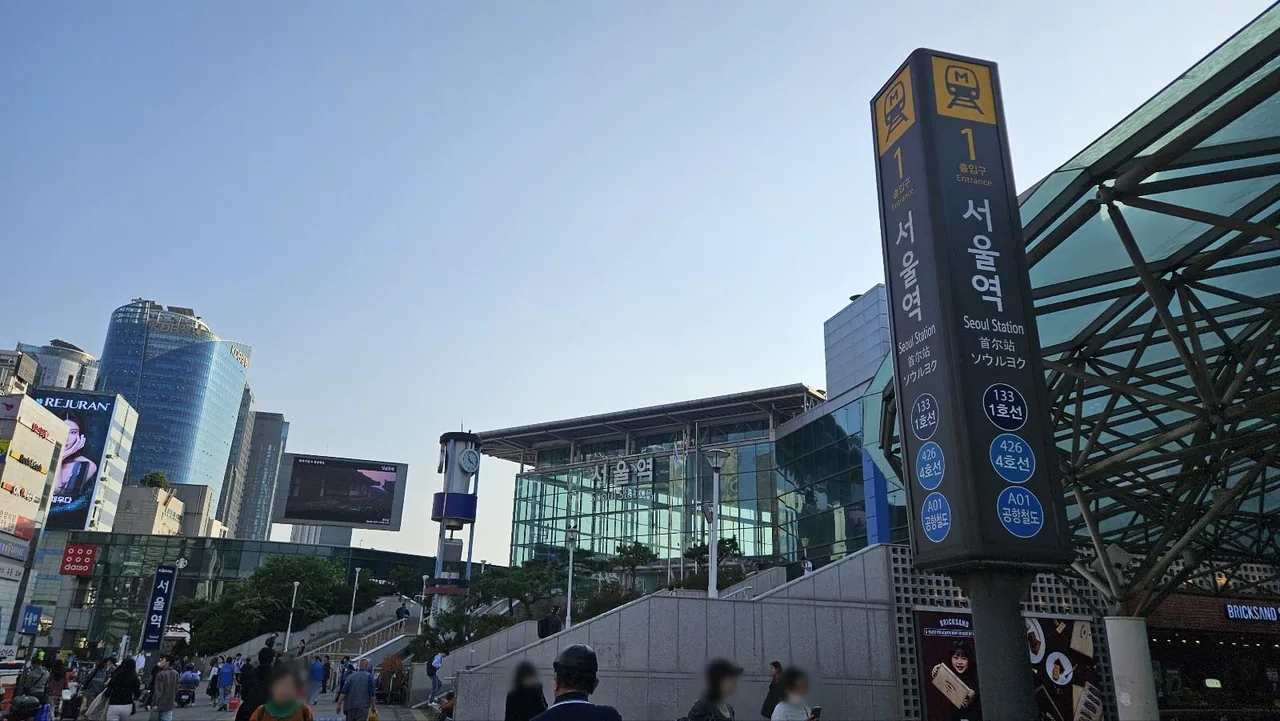
Make five decisions in this order: entry, usable days, hotel base, airport transfer, then dated activities. This is an editorial planning sequence, not a set of official booking deadlines. It helps avoid paying for an attraction you cannot reach comfortably.
Count full days, not dates on a flight booking
Imagine landing Friday evening and flying home Monday afternoon. Friday is an arrival evening; Monday has checkout, an airport journey and an airline deadline. You have two full sightseeing days, plus whatever genuinely fits around those obligations.
| Part of the trip | Put on the plan first | Leave flexible |
|---|---|---|
| Arrival | Immigration, bags, transfer, confirmed late check-in | Nearby meal, short walk if you have energy |
| Full day | One main area or booked experience | A nearby second stop and a rest break |
| Departure | Checkout, bags, airport journey and airline requirements | A short local activity only if timing works |
For a short first visit, one Seoul base is a useful starting option. Add another city when the travel time, hotel move and luggage arrangements fit the experience you actually want. A map with many pins is not yet an achievable itinerary.
Check your passport and arrival date before paying
Start with the official Korea Visa Navigator, using your nationality, purpose and intended stay. Check the result with the relevant Korean diplomatic mission if your circumstances are unclear. This guide cannot determine admission.
| Check | Official starting point | What not to assume |
|---|---|---|
| Visa or visa-free eligibility | Visa Navigator and diplomatic mission | Another traveler's passport has the same rules |
| K-ETA authorization or exemption | K-ETA notice | A temporary exemption covers every country or continues into 2027 |
| Arrival declaration | e-Arrival Card eligibility | A K-ETA exemption also exempts you from an arrival declaration |
Date-sensitive: the checked K-ETA notice extends its listed countries' temporary exemption through 31 December 2026, Korean time. It does not establish the rules for a 2027 arrival. Recheck before a nonrefundable purchase.
For travelers required to file, the official e-Arrival Card guide says filing is free and available from three days before arrival, using Korean time. Prepare your passport, email, arrival details and accommodation information. Follow the eligibility page for exceptions, including valid K-ETA holders.
Choose the base around repeated journeys
Write down your three priorities, then compare four practical Seoul bases. Check the exact property's station exit, final walk, stairs, room layout and reception hours. A familiar neighborhood name does not settle those questions.
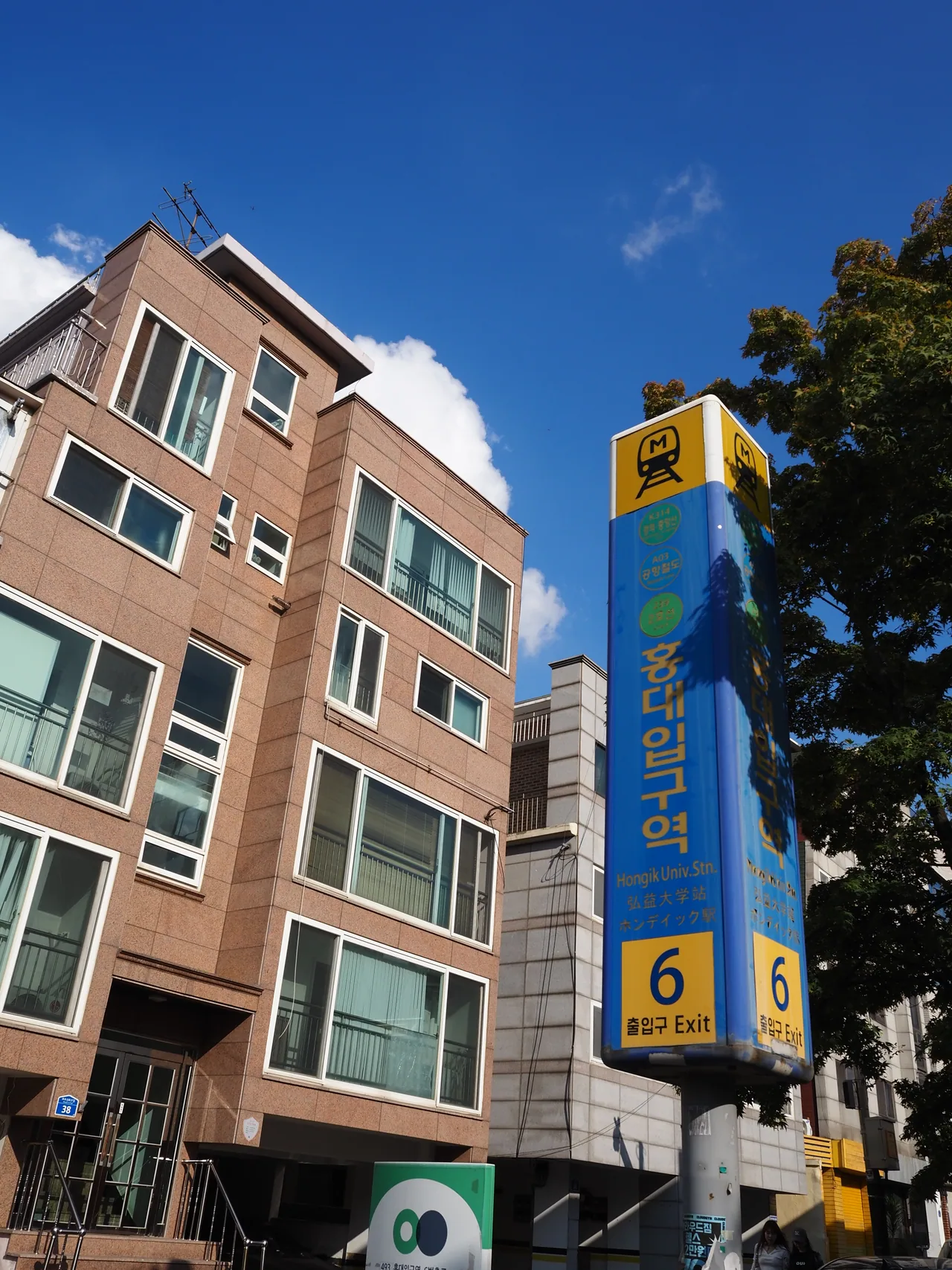
A Hongik University station entrance illustrates the final part of a hotel journey. Confirm the exit and accessible route for your own property; this photo cannot establish its walking distance.
Image details & reuse
Photographed 2024-10-11. Resized and converted to WebP. Image derivatives retain the original credit and license. Historical image; check current signs, services and opening conditions separately.
Before committing to the room, open the airport-to-hotel comparison. A late arrival needs both a usable transfer and confirmed check-in. Keep the hotel's Korean address offline.
Build a budget from units you can check
Separate rooms × nights from travelers × spending days. Two people sharing one room do not need two rooms, but both need food and fares. Keep flights, shopping, airport journeys and a contingency visible.
Use the editable budget planner with actual room quotes and your spending choices. Sample scenarios are arithmetic examples, not current market quotes. Revisit the total after booking the hotel and any high-cost experience.
Book an anchor and keep a way to change the day
Use the booking checklist to record cancellation terms, ticket names, meeting points and age or language conditions. Confirm a program runs on your dates before treating a reservation button as proof of availability.
Start with the Seoul three-day route, then remove a day or area if your time is shorter. Save one rain or cold alternative, rather than moving between distant indoor attractions all day.
Save this before leaving home
- Passport/entry checks for the actual arrival date, with official pages saved.
- Hotel name, Korean address, check-in instructions and cancellation terms.
- Airport transfer plus a fallback if the usable connection is missed.
- A working data plan, offline directions and an independent payment backup.
- Confirmations and insurance assistance details stored privately.
Do not put passport copies, card numbers or booking codes in a public itinerary or community question. Your next useful decision is the hotel area, then the complete journey to its door.