Hanbok fusion fashion where to buy modern hanbok for daily wear 2026
Discover the best shops for modern hanbok in Seoul. From Teterot Saloon to Danha, find daily wear styles, prices, and locations for 2026 fashion trends.
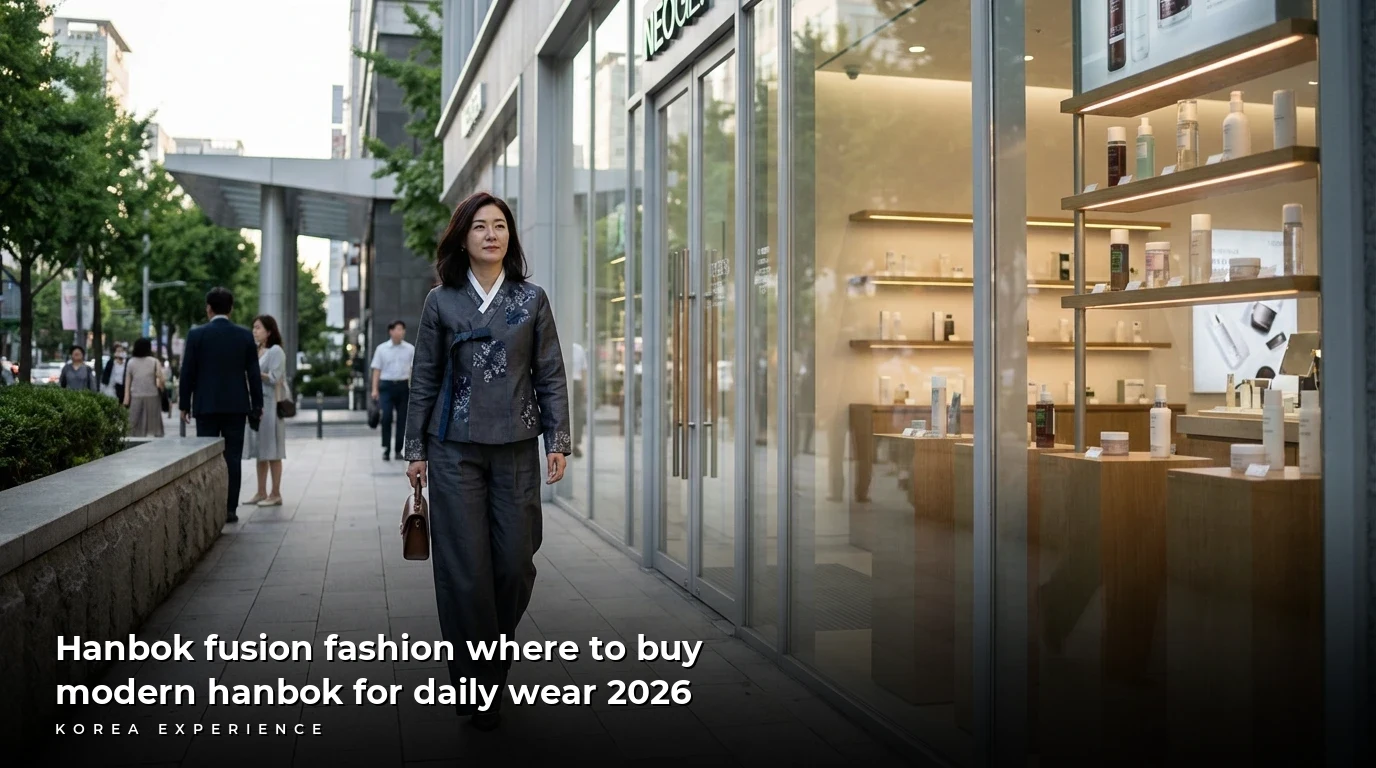
Modern hanbok, often referred to as "daily hanbok" or "fusion hanbok," blends the silhouette of traditional Korean clothing with contemporary fabrics, patterns, and practical cuts suitable for everyday life. If you are looking to buy these unique pieces in 2026, the best physical locations are concentrated in Insadong (specifically the Ssamzigil complex) and the trendy alleys of Ikseon-dong in Seoul, while major brands like Leesle and Danha dominate the online space with global shipping.
The short answer: For the widest variety of accessible, ready-to-wear modern hanbok, visit Teterot Saloon in Ikseon-dong or the second floor of Ssamzigil in Insadong. Expect to pay between ₩80,000 ($60 USD) and ₩150,000 ($115 USD) for a high-quality skirt or jacket.
Key Takeaways
- 1Ikseon-dong and Insadong are the primary physical shopping hubs for daily hanbok in Seoul.
- 2Entry-level pieces start around $50 USD, while designer fusion brands can exceed $300 USD.
- 3Look for 'Cheol-lic' dresses (one-piece coat dresses) which are the most popular versatile style for 2026.
- 4Most shops offer immediate Tax-Free refunds for purchases over ₩30,000, so bring your passport.
The Rise of Hanbok Fusion Fashion in 2026
The evolution of Korean traditional clothing has reached a fever pitch in 2026. No longer reserved solely for weddings or Chuseok holidays, the hanbok has undergone a radical transformation. Driven by K-Pop icons like BTS and Blackpink—who famously wore modified hanbok in their music videos and international performances—the demand for "Daily Hanbok" (Saenghwal Hanbok) has skyrocketed among international visitors.
Unlike the traditional silk versions which are voluminous and difficult to clean, modern fusion hanbok utilizes cotton, linen, denim, and even tweed. The skirts are shorter, the jeogori (jackets) feature buttons or zippers instead of complex ribbon ties, and pockets are a standard feature—a massive upgrade for practicality.
📊 Market Growth 2026
In 2026, the trend has shifted towards "Mix-and-Match." It is now common to see a floral jeogori paired with skinny jeans in Gangnam, or a flowing heo-ri (wrap) skirt worn with a simple white t-shirt and sneakers in Hongdae. This versatility makes it an excellent souvenir that won't just sit in your closet.
Top Modern Hanbok Brands and Where to Find Them
Finding these pieces requires knowing exactly where to look. While you might stumble upon cheap, mass-produced imitations in tourist traps, high-quality daily hanbok requires visiting specific boutiques. Here are the top contenders for 2026.
1. Teterot Saloon (Teterot Salon)
For many travelers, Teterot Saloon is the gateway to modern hanbok. Located in the picturesque hanok alleyways of Ikseon-dong, this brand strikes the perfect balance between traditional aesthetics and modern office wear. Their cuts are flattering for various body types, and they release seasonal collections that mirror global fashion trends (e.g., velvet for winter, sheer ramie for summer).
Teterot Saloon Ikseon-dong(떼떼롯살롱)
Their signature items are the patterned cotton jeogori jackets. In 2026, the average price for a jacket here is roughly ₩98,000 ($75 USD), while skirts range from 70,000 to ₩120,000. The quality of the stitching allows these garments to be machine washed (in a net), making them highly practical for travelers.
2. Leesle (Risle)
If Teterot is about daily charm, Leesle is about high-fashion street style. Based in Jeonju but with pop-ups frequently appearing in Seoul (often in The Hyundai Seoul or Seongsu-dong), Leesle is arguably the most famous modern hanbok brand globally. They collaborated with huge K-pop acts and even automotive brands to showcase hanbok's versatility.
Leesle specializes in unisex designs and "tech-wear" hanbok. You will find durumagi (overcoats) made from trench coat material and pants that feature traditional ankle bands but fit like joggers.
Sizing Advice
Leesle is one of the few brands that offers a wide range of sizes, often up to XL or XXL in Western standards, catering specifically to the international market. If you are taller or have a broader frame, prioritize visiting a Leesle pop-up or their online store.
3. Danha
Famous for outfitting Blackpink in their "How You Like That" music video, Danha is a sustainable fashion brand based on upcycling traditional fabrics. This is a luxury option. Their designs are intricate, often using patterns from royal wrapping cloths (bojagi).
A piece from Danha is an investment. A skirt can cost upwards of ₩350,000 ($260 USD). However, you are paying for eco-friendly materials (organic cotton, recycled polyester) and a unique design pedigree that stands out instantly. For K-pop fans, this is the holy grail of hanbok shopping. You can read more about K-pop related locations in our guide to Blackpink in Seoul fan tour locations.
Brand Comparison 2026
| Feature | Teterot Saloon | Leesle | Danha |
|---|---|---|---|
| Price Point | $$ (Mid) | $$$ (High-Mid) | $$$$ (Luxury) |
| Style | Feminine/Casual | Street/Unisex | High Fashion/Eco |
| Size Range | S-L | XS-XXL | Custom/S-L |
| Best For | First-timers | Men & Women | Collectors |
Major Shopping Districts for Hanbok Hunting
While individual brands are great, sometimes you want to browse multiple shops in one afternoon. Here is how to plan your shopping route.
Insadong & Ssamzigil
Insadong remains the cultural heart of Seoul. The Ssamzigil complex (the spiral building) is crucial for hanbok shoppers.
- 1st Floor: Often hosts pop-up stalls selling hanbok accessories like norigae (tassels) which add a traditional touch to modern bags.
- 2nd & 3rd Floors: Home to independent boutiques like Soosulhwa and Coreano. These brands are slightly more affordable than Teterot, with summer linen dresses often priced around ₩50,000 ($38 USD).
Walk along the main Insadong street to find traditional markets. While many shops sell cheap imports, look for the "Made in Korea" tags. The quality difference in the cotton is palpable. For a deeper dive into the traditional atmosphere here, check our article on accommodation near traditional markets.
Ikseon-dong Hanok Village
Just across the street from Insadong is Ikseon-dong. This area is incredibly photogenic but tight.
- Vibe: Hip, young, and crowded.
- Shops: Aside from Teterot Saloon, look for small unmarked boutiques tucked into hanok courtyards.
- Prices: Generally higher due to the prime location rentals. Expect a "tourist premium" of about 10-15%, but the curation is usually impeccable.
📋 Shopping Logistics
Seongsu-dong: The New Frontier
In 2026, Seongsu-dong has eclipsed Gangnam for trendy youth culture. Here, modern hanbok is sold differently—usually in "Select Shops" or limited-time Pop-ups alongside streetwear brands. If you want a hanbok denim jacket or a crop-top jeogori, this is the place.
- Location: Near Seongsu Station (Line 2).
- Strategy: Check Instagram hashtags like #ModernHanbokSeongsu before you go, as shops here rotate frequently.
- Context: For a full day itinerary here, read 24 hours in Seongsu-dong.
Pricing Guide: Budget vs. Quality
Understanding the price tiers helps manage expectations. In 2026, inflation has impacted textile costs, but options remain for every budget.
💵 Hanbok Price Tiers (2026)
Premium linen, wool, embroidery, unique cuts.
Cotton blends, simple prints. Great for summer.
Warning Signs of Low Quality:
- Rough seams: Turn the garment inside out. If the serging is messy or threads are loose, skip it.
- Stiff polyester: Cheap hanbok often uses a shiny, stiff synthetic material that doesn't breathe. Ensure the fabric feels soft against your skin.
- One-size-fits-all: While wrap skirts are flexible, a "one size" jacket is often a red flag for mass-produced tourist merchandise.
Styling Your Modern Hanbok for Daily Wear
The biggest barrier for foreigners is often the question: "Can I really wear this back home?" The answer is yes, if you style it right.
📖 How to Style a Jeogori (Jacket) Daily
Step 1: Base Layer
Start with a simple tank top or camisole underneath. Modern jeogori can have lower V-necks than expected.
Step 2: The Bottoms
Pair the jeogori with high-waisted jeans or a solid-colored pencil skirt. This breaks up the costume look and anchors it in modernity.
Step 3: Footwear
Avoid traditional shoes. Opt for white sneakers, ankle boots, or loafers to keep the vibe casual and urban.
Step 4: The Knot
Tie the Goreum (ribbon) in a single-loop bow. Let the long end drape naturally. Don't worry about it being perfect; the messy look is trendy.
The "Cheol-lic" Dress Trend
One of the most popular items for 2026 is the Cheol-lic dress. Historically, this was a military official's coat, but it has been reimagined as a wrap dress.
- Why it works: It looks like a standard wrap dress to the untrained eye but retains the pleated skirting and collar of a hanbok.
- Versatility: You can wear it as a dress (closed) or as a lightweight trench coat (open) over jeans and a t-shirt.
- Travel friendly: Usually made of wrinkle-resistant cotton blends.
Fabric Choices and Care Instructions
Korea experiences four distinct seasons, and hanbok fabrics reflect this. If you are visiting in summer, buying a winter hanbok will be useless, and vice versa.
Summer (June - August)
Look for Ramie (Mosi) or Hemp (Sambe) blends.
- Pros: Incredible airflow, stiff structure that sits away from the skin.
- Cons: wrinkles easily, can feel scratchy if low quality.
- 2026 Trend: "Injo-Mosi" (Synthetic Ramie) is popular because it mimics the cooling effect but is machine washable and softer.
Winter (December - February)
Look for Quilted Cotton (Nubi) or Wool blends.
- Pros: Nubi is essentially a padded fabric that is incredibly warm and cozy.
- Cons: Can add bulk to the silhouette.
- Style Tip: A Nubi vest is a great layering piece over a turtleneck.
"When washing modern hanbok, always use a laundry net and cold water. Even if the tag says cotton, the specific weave can shrink or warp in hot water. Never use a dryer for the Jeogori jackets—the collar stiffener (git) will deform. Air dry only."
Online Shopping & International Shipping
If you cannot make it to Seoul in 2026, or if your suitcase is too full, online shopping is a viable alternative.
- Global Sites: Leesle and Danha have dedicated English websites with direct international shipping (DHL/FedEx).
- Department Stores: Sites like SSG.com or Hyundai HMall often carry these brands and offer "Global Gmarket" integration.
- Etsy: Many smaller artisans from Seoul sell handmade modern hanbok on Etsy. Look for sellers with verified locations in South Korea to ensure authenticity.
Shipping Costs: Expect to pay $30-$50 USD for express shipping to North America or Europe. However, many brands offer free shipping thresholds (usually over $200 or $300 USD).
Cultural Etiquette: Is it Okay for Foreigners?
A common anxiety among travelers is the fear of cultural appropriation. In Korea, the consensus is overwhelmingly positive regarding foreigners wearing hanbok, provided it is done respectfully.
Koreans view foreigners wearing hanbok as a gesture of appreciation for their culture. The government actively encourages it (offering free entry to palaces like Gyeongbokgung if you are wearing one). Modern hanbok is seen as fashion, not a sacred costume. As long as you are not wearing it to mock the culture or wearing it in a highly sexualized manner that degrades the garment, you will be met with smiles and compliments.
For those interested in the full traditional experience before buying, consider renting first. Check our guide on hanbok rental styles and pricing to understand the difference between rental quality and purchase quality.
Pros and Cons of Buying Modern Hanbok
Before you commit to a purchase, weigh the factors.
Buying Modern Hanbok
- ✓Unique souvenir you can actually wear
- ✓Supports local artisans and designers
- ✓Usually high-quality natural fabrics
- ✓Versatile for casual or semi-formal events
- ✗Can be expensive ($100+)
- ✗Sizing can be limited (mostly S/M/L)
- ✗Specific laundry care required
- ✗Ribbons can be tricky to tie without practice
Conclusion
Shopping for modern hanbok in Seoul in 2026 is an adventure that connects you with the city's past and its fashion-forward present. Whether you choose a breezy linen dress from Teterot Saloon in Ikseon-dong or invest in a structured eco-friendly piece from Danha, you are taking home a piece of Korean identity.
Don't be afraid to try on multiple styles. The fit of the jeogori shoulder and the length of the skirt are crucial. Step into the dressing room, tie the goreum, and see how the fusion of centuries of history fits into your modern lifestyle.
❓ Frequently Asked Questions
Have more questions?Contact us →
About the Author
Korea Experience Team
Written by the Korea Experience editorial team - experts in Korean medical tourism, travel, and culture with years of research and firsthand experience.
Explore more in Shopping & K-Beauty
From Olive Young hauls to Myeongdong shopping tips — discover the best K-Beauty products, fashion trends, and shopping destinations in Korea.
Browse All Shopping & K-Beauty ArticlesContinue Reading
Explore more articles you might find interesting
Discover Seoul's best stationery shops from Artbox to Point of View. Find prices, locations, and top souvenirs starting at ₩1,000 in our 2026 guide.
Discover Seoul's underground malls where trendy fashion costs just 10,000 KRW. Our 2026 guide covers 5 top locations, shopping hacks, and essential locker tips.
Discover Seoul's top eco-friendly brands for 2026. From upcycled streetwear to vegan leather, explore where to shop sustainably with prices and locations.
Discover the best Lotte Department Store flagship locations. Compare Myeongdong vs Jamsil, find 2026 luxury brands, food courts, and duty-free prices.
Discover where to buy modern Hanok decor in Seoul. From handmade Soban tables ($150) to minimalist ceramics, find the best artisan shops and shipping tips.
Discover the top Korean candle brands and fragrance shops in Seoul. From Granhand to Tamburins, find the perfect scent souvenir. Prices start at ₩15,000.