Best accommodation near traditional markets in Korea for foodies 2026
A complete guide to hotels and guesthouses near Gwangjang, Namdaemun, and Jagalchi markets. Includes prices, transit tips, and noise levels for 2026.
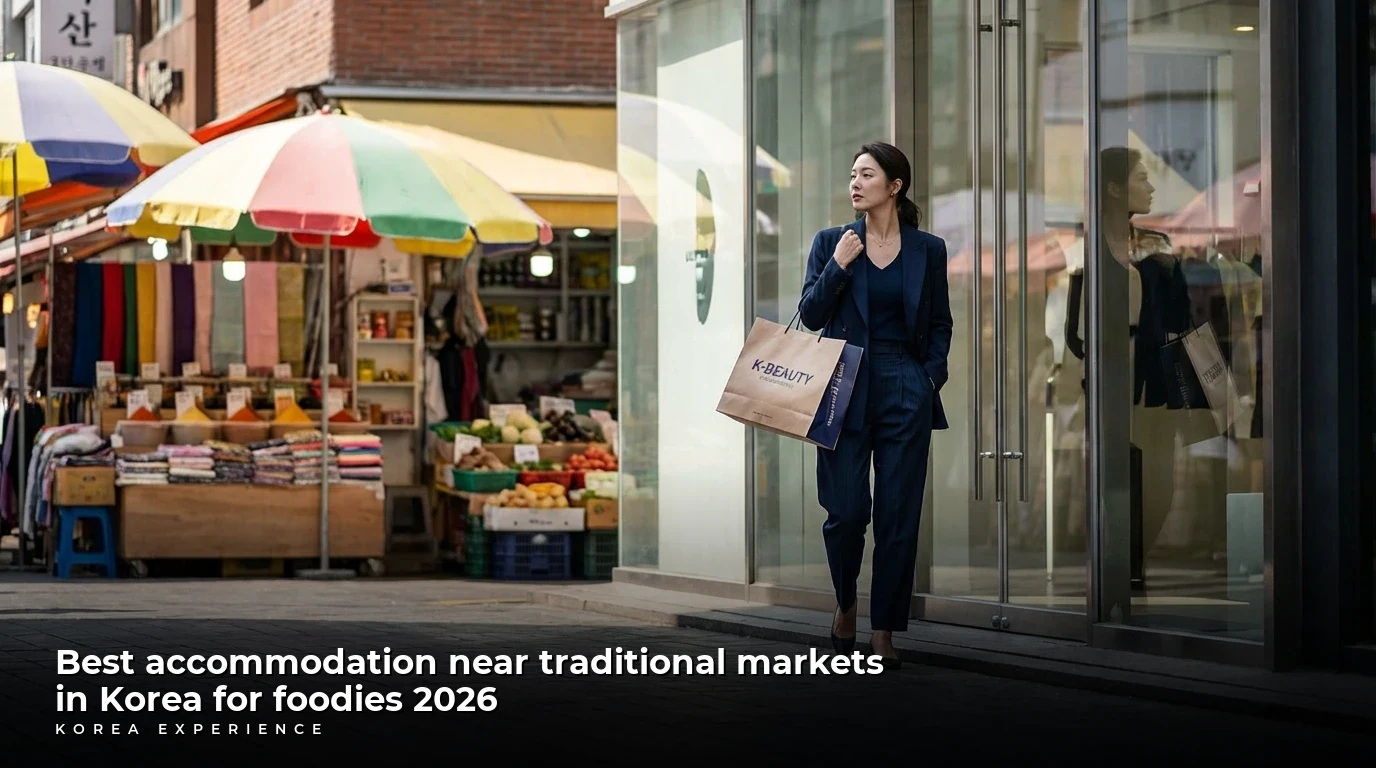
Finding accommodation near traditional markets in Korea is the ultimate travel hack for foodies and culture seekers. Instead of relying on hotel breakfast buffets, you step out of your lobby and into a world of steaming hotteok, fresh kimbap, and vibrant local energy.
The short answer: For the best balance of accessibility and food culture, stay in Jongno-5-ga near Gwangjang Market or Hoehyeon near Namdaemun Market. These areas offer hotels ranging from $60 to $150 per night and place you within a 5-minute walk of major transit hubs and thousands of food stalls.
Key Takeaways
- 1Staying near Gwangjang Market (Jongno-5-ga) puts you 10 minutes from Seoul's best street food and Dongdaemun design hub.
- 2Namdaemun area hotels offer a strategic advantage: walkable to Myeongdong shopping but with cheaper local market prices.
- 3Expect early morning noise (around 5:00 AM) from delivery trucks if your room faces the main market street—request a high floor.
- 4Busan's Nampo-dong district is the top choice outside Seoul, sandwiching you between Jagalchi Fish Market and Gukje Market.
Why Choose Accommodation Near Traditional Markets?
Choosing where to stay in Korea often comes down to a battle between luxury and logistics. However, experienced travelers know that proximity to a traditional market (sijang) offers a unique "third option": immersive convenience.
Unlike the sterile environment of Gangnam's business district or the overwhelming crowds of Hongdae's club scene, market-adjacent neighborhoods offer a rhythm that mirrors local life. You wake up when the shopkeepers are opening their shutters and eat where the locals eat.
📊 Market Proximity ROI
The "Sijang" Advantage
In 2026, the trend of "hyper-local" travel has made these areas more popular than ever. Staying near a market means:
- Breakfast is solved: While most cafes in Korea open at 10:00 AM or 11:00 AM, market stalls serve savory porridge (juk) and noodle soup (kal-guksu) starting at 6:00 AM.
- Late-night access: After the subway closes around midnight, markets often have "pocha" (tent wagons) that serve food and drinks until 3:00 AM or 4:00 AM.
- Transport Connectivity: Historically, markets were built at transport nodes. Staying here guarantees you are on major subway lines.
However, it is not for everyone. If you require absolute silence or luxury concierge services, the grit of a market district might be challenging. But for those willing to trade a bit of polish for flavor, it is unbeatable.
Seoul: Staying Near Gwangjang Market (The Foodie Capital)
Gwangjang Market is arguably the most famous traditional market in Korea for food. Located in Jongno-gu, it is the spiritual home of bindae-tteok (mung bean pancakes) and yukhoe (beef tartare).
The Neighborhood: Jongno-5-ga
This area is old-school Seoul. It is gritty, authentic, and incredibly central. You are within walking distance of the Cheonggyecheon Stream (2 minutes) and Dongdaemun Design Plaza (10 minutes).
Accommodation Landscape:
- Budget: Hostels and older guesthouses ($40-$70/night).
- Mid-Range: Business hotels like Hotel Atrium or Travelodge ($80-$130/night).
- Luxury: Rare in immediate proximity; you would need to look toward JW Marriott Dongdaemun ($350+/night), which is a 10-minute walk away.
Hotel Atrium Jongno(호텔 아트리움)
The Logistics of Staying Here
If you stay in Jongno-5-ga, your daily routine changes. Instead of hotel coffee, you walk 3 minutes to the market center. By 9:00 AM, the famous dough twist (kkwabaegi) line is already forming. If you stay nearby, you can beat the 30-minute queue that forms by noon.
Noise Alert: The market wakes up early. Delivery trucks carrying vegetables and textiles start arriving around 4:30 AM. If you are a light sleeper, bring earplugs or request a high floor (10th floor or above).
For those interested in exploring more about shopping in this area, check out our guide on best areas to stay near shopping districts.
Seoul: Namdaemun Market & Myeongdong (The Shopping Hub)
Namdaemun is the oldest and largest market in Korea, dating back to 1414. Staying here is a strategic masterstroke because it sits directly between Seoul Station (transit hub) and Myeongdong (cosmetics hub).
The Neighborhood: Hoehyeon
The subway station serving Namdaemun is Hoehyeon (Line 4). This area is hilly but incredibly convenient. You are a 10-minute walk from the N Seoul Tower cable car and directly across the street from the shinsegae Department Store luxury duty-free.
Namdaemun vs. Gwangjang Accommodation
| Feature | Namdaemun Area | Gwangjang Area |
|---|---|---|
| Primary Vibe | Shopping & Wholesale | Street Food & Textiles |
| English Level | High (near Myeongdong) | Moderate |
| Nightlife | Closes early (8 PM) | Late night food (11 PM+) |
| Avg Hotel Cost | $90 - $200 | $60 - $130 |
Top Pick: The Sotetsu Hotels The Splaisir
Located right at the entrance of the market's "Galchi Jorim" (Braised Cutlassfish) Alley, this hotel chain offers Japanese-style efficiency. The rooms are compact but clean.
- Distance to Market: 0 meters (You are in it).
- Distance to Myeongdong: 7 minutes walking.
- Price: Roughly ₩120,000 ($90 USD) per night.
Luggage Strategy
Namdaemun is famous for children's clothes and kitchenware. If you stay here, you can buy bulky items, drop them off at your hotel room in 5 minutes, and head back out. This "drop-and-go" capability is invaluable compared to hauling bags across the subway system.
Seoul: Mangwon Market (The Hipster's Choice)
Located in Mapo-gu, near the famous Hongdae area, Mangwon Market has exploded in popularity among Gen Z travelers and locals. It is cleaner, younger, and more "Instagrammable" than Gwangjang.
The Neighborhood: Mangwon-dong
This is a residential neighborhood that gentrified into a cafe hotspot. Staying here feels like living in Seoul, not just visiting it. You won't find high-rise hotels here. The accommodation scene is dominated by Airbnb rentals, guesthouses, and boutique stays.
Why Stay Here?
- River Access: You are a 15-minute walk from the Hangang Park (Mangwon district), perfect for picnics with food bought at the market.
- Cafe Culture: The streets surrounding the market (Mangnidan-gil) are packed with aesthetic cafes.
- Cost: Generally 20% cheaper than staying in Hongdae proper.
📋 Mangwon Stay Facts
Accommodation Advice
Look for listings near Mangwon Station Exit 2. The further you go towards the river, the quieter it gets, but the walk to the subway becomes longer (up to 20 minutes). If you plan to enjoy the nightlife in Hongdae, a taxi back to Mangwon at night only costs about ₩8,000 ($6 USD), making it a great budget alternative.
For those planning a packed schedule, see our 24-hour Seoul itinerary to see how Mangwon fits into a wider trip.
Busan: Jagalchi & Gukje Markets (Nampo-dong)
When visiting Busan, many tourists default to Haeundae Beach. However, the true soul of Busan lies in Nampo-dong, home to Jagalchi (Korea's largest seafood market) and Gukje Market (International Market).
The Neighborhood: Nampo-dong
This is a high-energy port district. The smell of salt water and grilling fish hangs in the air. Staying here places you at the intersection of history (BIFF Square) and shopping (Lotte Department Store).
💵 Nampo-dong Accommodation Options
Cozy, social vibe, walking distance to Jagalchi.
The "Morning Market" Experience
Staying in Nampo-dong allows you to witness the "Jagalchi Ajummas" (middle-aged female vendors) setting up their stalls at dawn. It is a photographer's dream.
- Breakfast: Grilled fish set menus start at 8:00 AM in the market alleys.
- Transport: Nampo Station connects you to Busan Station (KTX) in just 6 minutes (2 stops).
For more details on navigating Busan's culinary landscape after dark, read our guide to Busan night markets.
Jeju Island: Dongmun Market
In Jeju City, Dongmun Market is the epicenter of tourism commerce. It is unique because it combines a traditional day market with a trendy night market featuring food trucks and fusion cuisine.
The Neighborhood: Old Jeju City
Staying near Dongmun Market (approx. 10-15 minutes from Jeju International Airport) is excellent for short trips.
- Best Hotel Type: Business hotels. Look for places like Hotel Whistle Lark or RegentMarine, which are near the waterfront and a 10-minute walk to the market.
- Convenience: You can buy Hallabong oranges and Omegi rice cakes as souvenirs right before heading to the airport.
"Many tourists stay in Seogwipo (South), but if you have an early flight, stay near Dongmun Market in Jeju City. You can enjoy the Night Market until 11 PM, sleep, and take a ₩5,000 taxi ride to the airport in the morning. It removes all travel stress."
How to Book: A Step-by-Step Guide
Booking accommodation near traditional markets requires a slightly different strategy than booking a standard resort. The terminology and platforms can vary.
📖 Finding the Perfect Market Stay
Step 1: Identify the 'Dong'
Search by neighborhood name, not just market name. For Gwangjang, search 'Jongno-5-ga'. For Namdaemun, search 'Hoehyeon'.
Step 2: Check Soundproofing Reviews
Filter reviews for keywords like 'noise', 'street', 'soundproof'. Markets are loud. If a review says 'lively atmosphere', read between the lines.
Step 3: Verify Elevator Access
Many guesthouses near markets are in older buildings (villas) without elevators. If you are on the 4th floor with 2 suitcases, this is critical.
Pros and Cons of Market-Adjacent Accommodation
Before you book, it is essential to weigh the trade-offs. This style of travel is rewarding but intense.
Is Market Living Right For You?
- ✓Unbeatable food access (breakfast to late night)
- ✓Lower accommodation costs compared to Gangnam/Myeongdong
- ✓Excellent subway connectivity (Lines 1, 4, 5)
- ✓Authentic cultural immersion
- ✗Early morning noise (trucks, setup sounds)
- ✗Crowded sidewalks can be difficult with large luggage
- ✗Fewer luxury amenities (pools, gyms)
- ✗Strong smells (seafood, frying oil) in the streets
Practical Tips for Your Stay
1. The Trash Situation
In Korea, waste separation is strict. If you stay in an Airbnb near a market, you must follow the local "Recycling Day" rules. In hotels, this is handled for you. However, the streets near markets can sometimes have piles of cardboard boxes waiting for collection in the evening. This is normal but can be unsightly for some.
2. Convenience Store Synergy
Even though you are near a market, Korean convenience stores (CVS) are vital. They sell water, late-night snacks, and T-money recharge services. Market stalls often take cash only, while CVS takes international cards.
- Read more: Best Korean convenience store food.
3. Navigation
Google Maps is often inaccurate with walking directions in narrow market alleys.
- Download Naver Map or KakaoMap.
- Search for your hotel by its phone number or Korean name for exact location.
4. Safety
Traditional markets are generally very safe. However, they are crowded. Pickpocketing is rare but possible. The main concern is actually motorcycles. Delivery bikes zip through narrow market alleys quickly. Always walk on the side of the alley, not the center.
Cash is King
While modern cafes accept credit cards, 80% of market stalls still prefer or require cash. Ensure you withdraw cash at an ATM (Global ATM) usually found inside the nearby subway stations before heading into the market deep dive.
Seasonal Considerations
The experience of staying near a market changes drastically with the seasons.
- Summer (July-August): The humidity in the narrow alleys can be intense. The smells from the wet markets (fish/meat) are stronger. Ensure your accommodation has powerful air conditioning.
- Winter (December-February): Markets are surprisingly cozy. Steam rises from the food stalls, and vendors set up heaters. Hotel heating (ondol floor heating) is standard and very comfortable.
- Chuseok & Seollal: Note that during major holidays, many market stalls close for 1-2 days, though food stalls catering to tourists may remain open.
Frequently Asked Questions
❓ Accommodation FAQ
Have more questions?Contact us →
Conclusion
Choosing accommodation near a traditional market in Korea is a decision to prioritize experience over polish. It is for the traveler who wants to stumble out of bed and into a bowl of knife-cut noodles, who enjoys the hum of commerce, and who wants to see the Korea that exists between the skyscrapers.
Whether you choose the savory alleys of Gwangjang, the shopping frenzy of Namdaemun, or the seaside bustle of Jagalchi, staying local guarantees that you will never go hungry and you will never be bored.
Ready to plan your trip? Check out our guide to the best Korean BBQ restaurants in Seoul to continue your culinary journey.
About the Author
Korea Experience Team
Written by the Korea Experience editorial team - experts in Korean medical tourism, travel, and culture with years of research and firsthand experience.
Explore more in Shopping & K-Beauty
From Olive Young hauls to Myeongdong shopping tips — discover the best K-Beauty products, fashion trends, and shopping destinations in Korea.
Browse All Shopping & K-Beauty ArticlesContinue Reading
Explore more articles you might find interesting
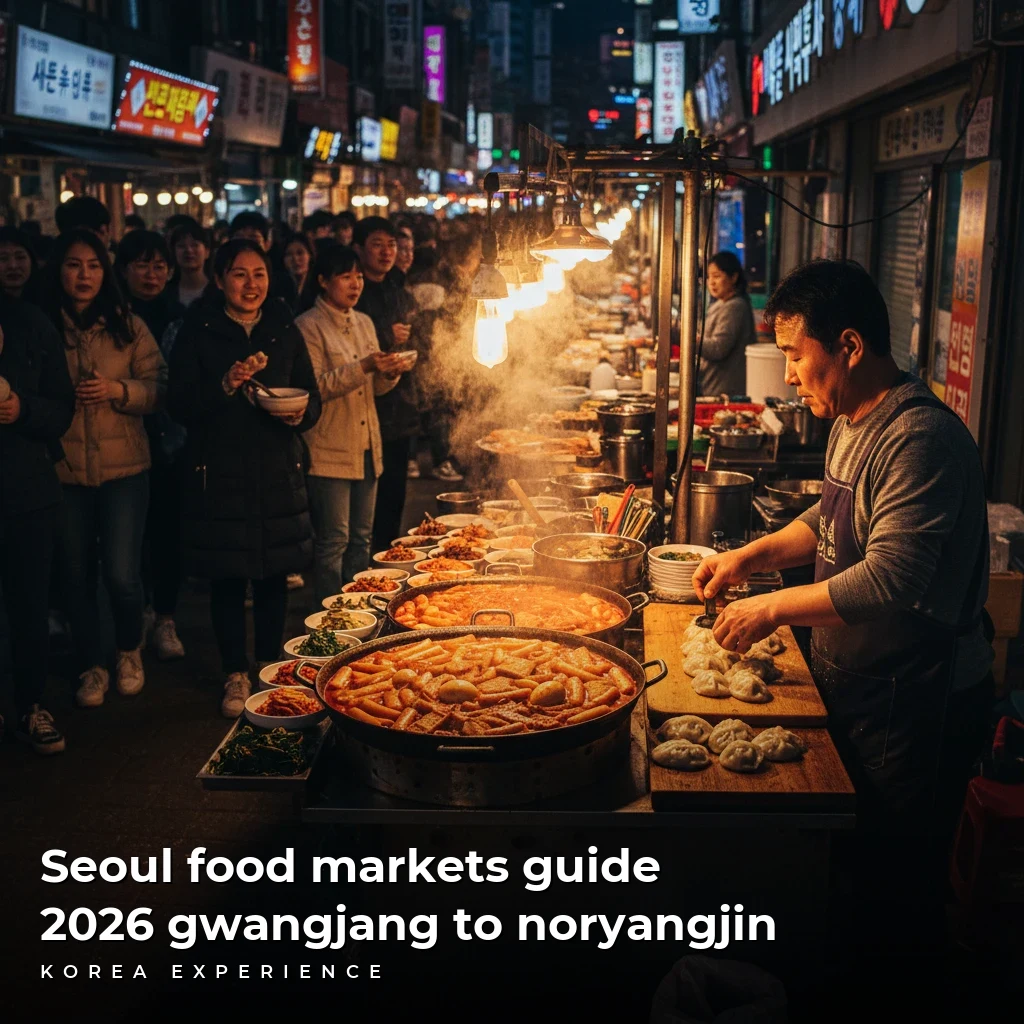
The ultimate 2026 guide to Seoul traditional markets. Discover prices, hidden stalls, and expert tips for Gwangjang, Noryangjin, and local favorites.
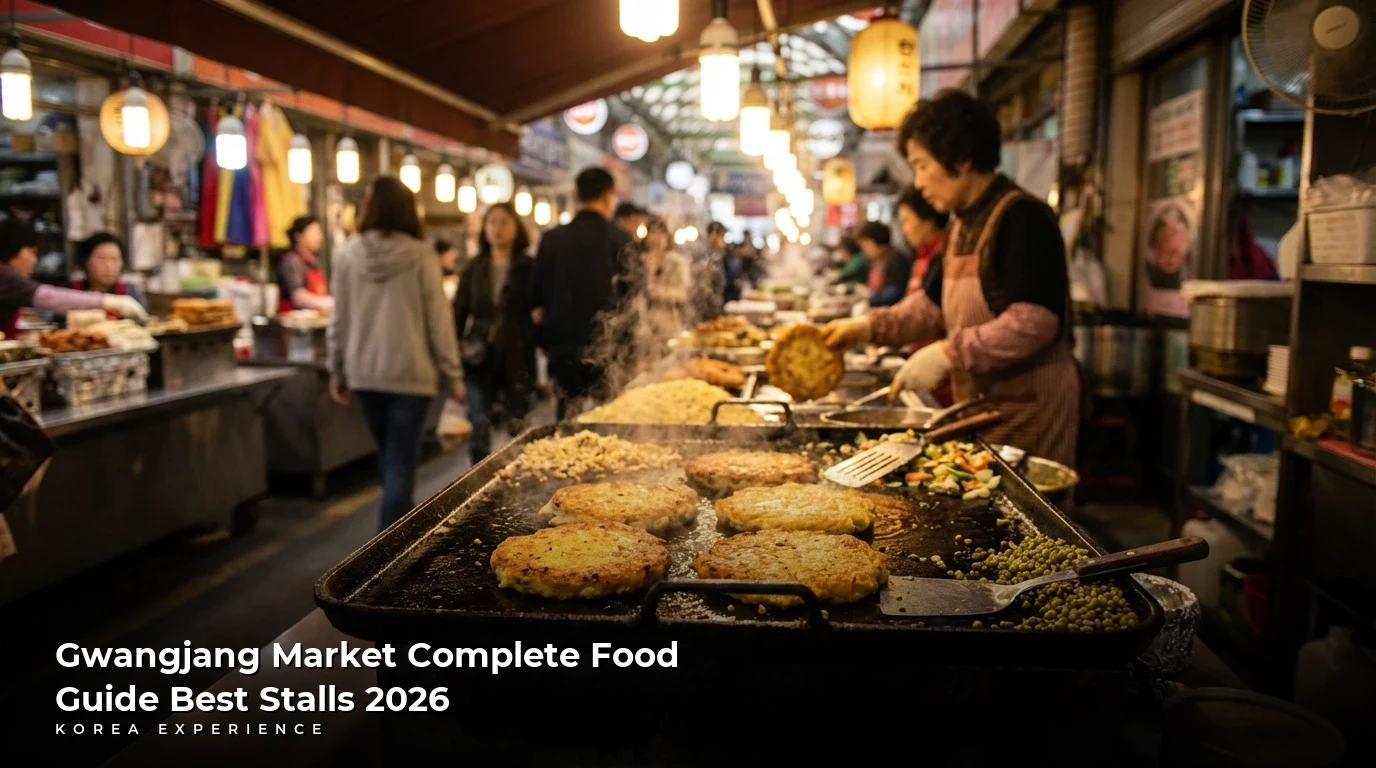
Discover the ultimate Gwangjang Market food guide featuring top stalls, prices, operating hours, and local tips for Seoul's oldest traditional market.

Navigate Gwangjang and Namdaemun safely with this 2026 guide. Discover why 99% of red sauces contain wheat and find safe eats from $2.20.
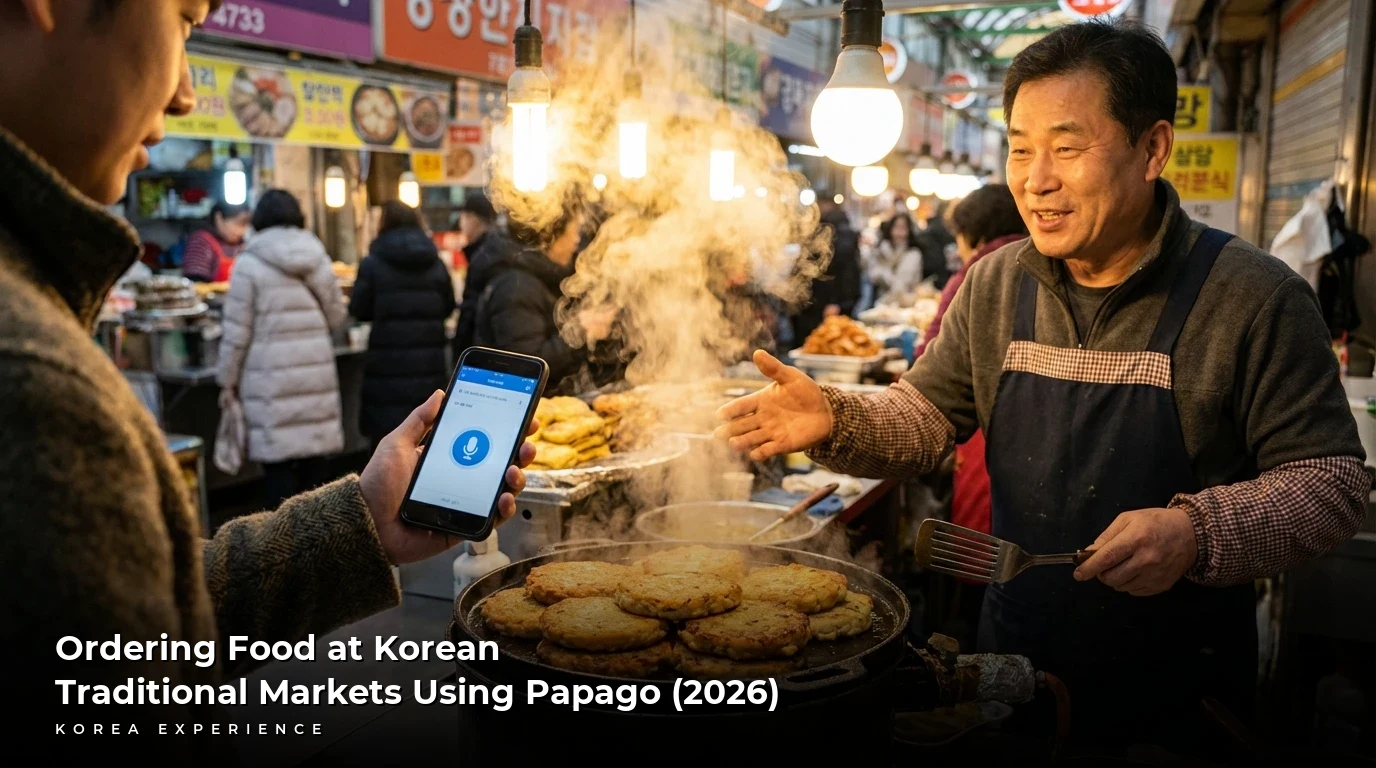
So, you want to dive into the sizzling world of Gwangjang or Namdaemun without the lost in translation panic?
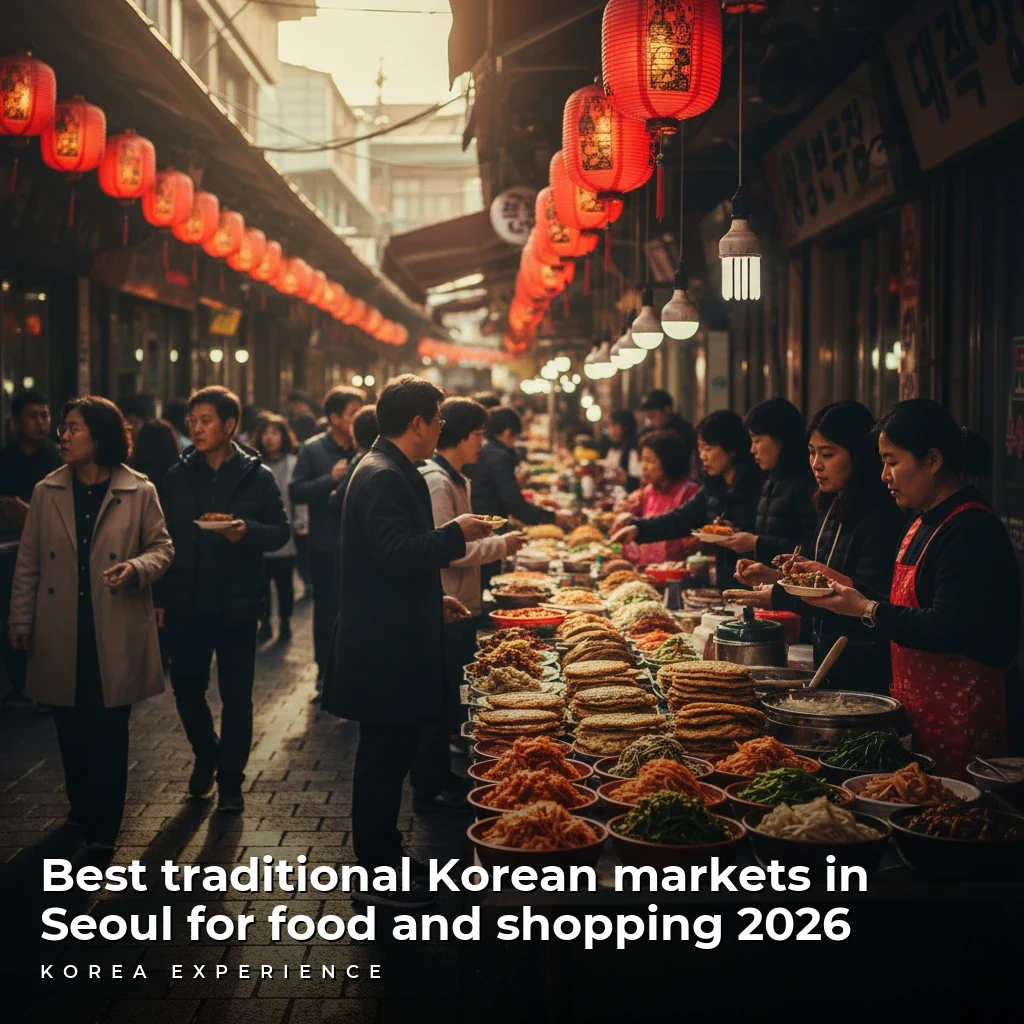
Discover Seoul's top 8 traditional markets. From Gwangjang's ₩5,000 noodles to Namdaemun's 10,000+ shops, get the ultimate 2026 shopping guide.
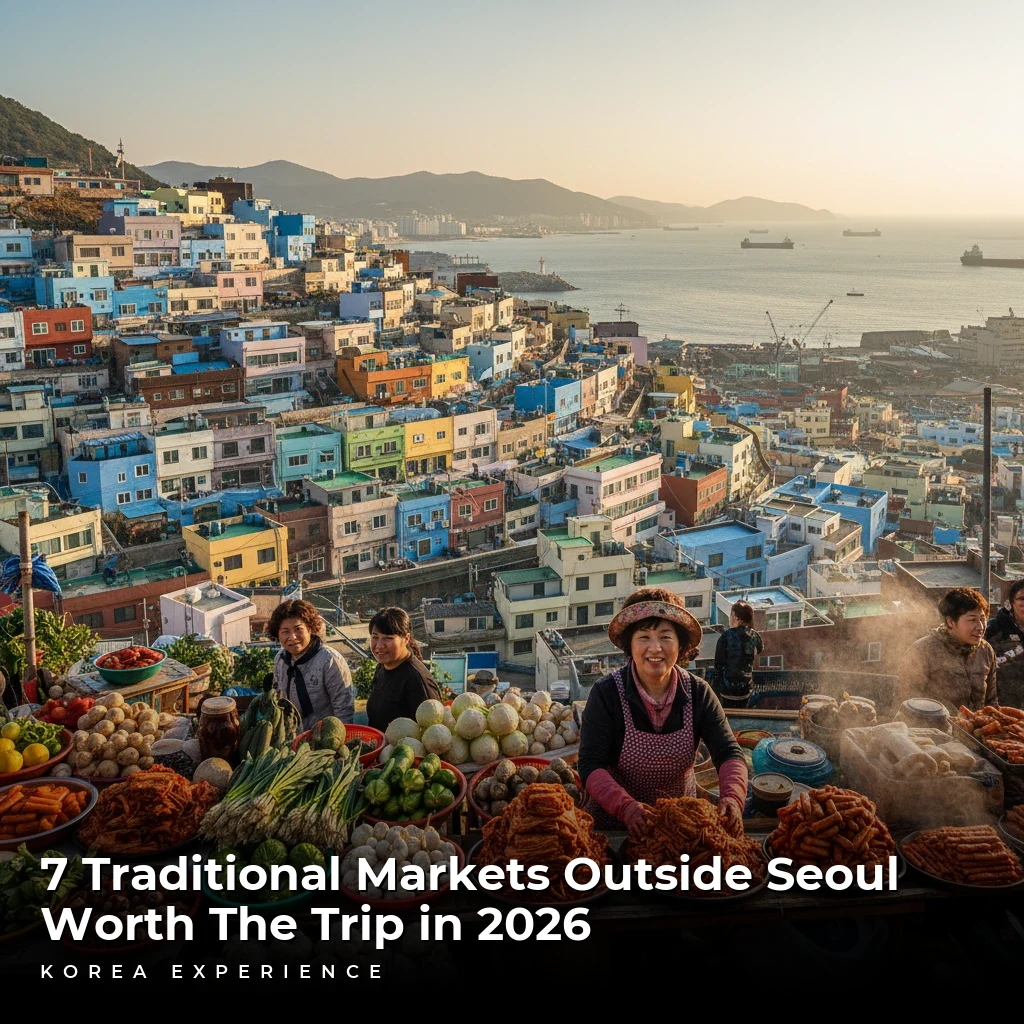
Discover Korea's best markets beyond Seoul. Explore Busan, Jeju, and Daegu with specific food prices, transport tips, and 2026 travel data.