2026 Korea Cherry Blossom Forecast: Peak Bloom Dates & Best Spots
The 2026 cherry blossom season is expected to arrive 3-8 days earlier than average across Korea.
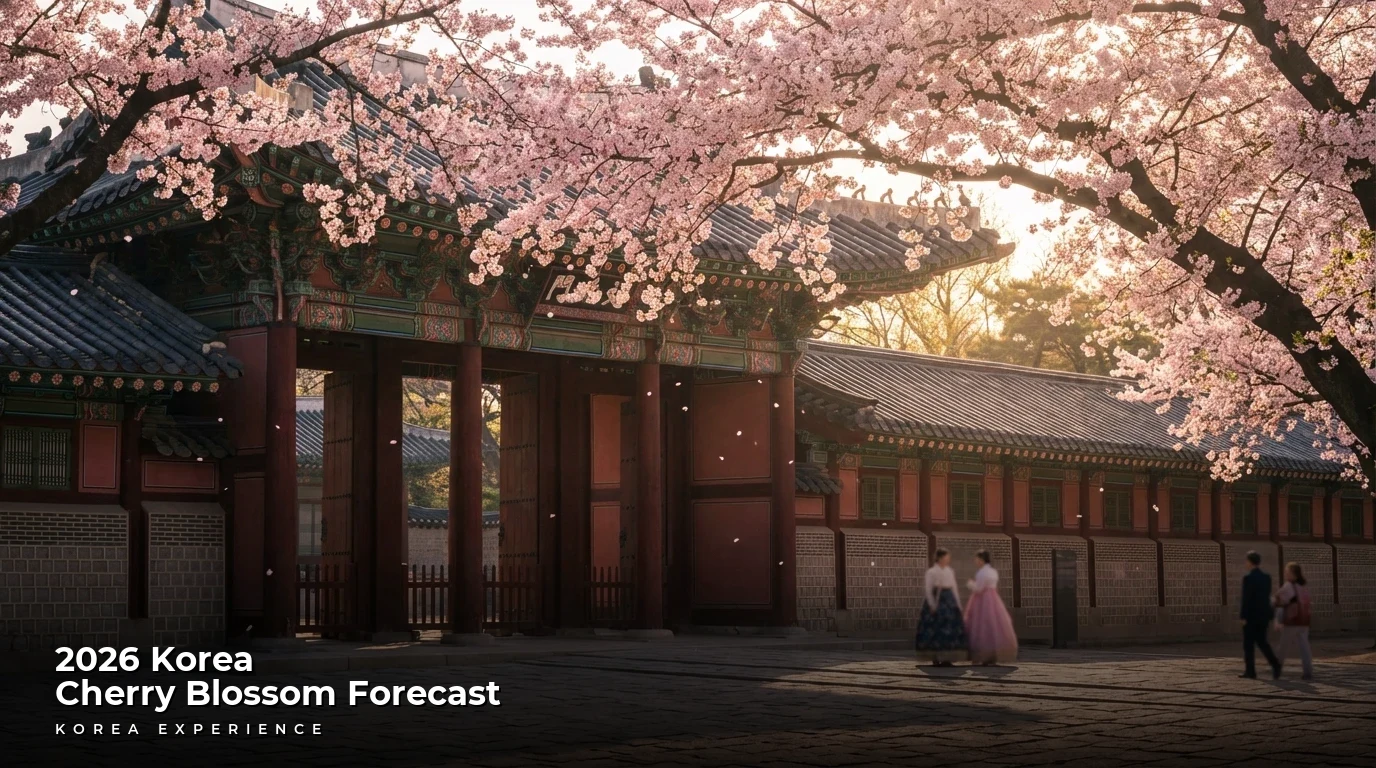
The 2026 cherry blossom (beotkkot) season in South Korea marks a pivotal moment for national tourism, with bloom dates expected 3-8 days earlier than the 30-year historical average across most regions. This advancement isn't just a seasonal anomaly—it's a systemic reflection of elevated sea surface temperatures and persistent atmospheric patterns over the Korean Peninsula.
For a broader seasonal overview, read our guide to cherry blossom season in Korea.
The short answer: If you're planning to see cherry blossoms in 2026, aim for late March in Jeju/Busan, early April in Seoul, and book everything at least 6 weeks in advance.
Key Takeaways
- 1The 2026 bloom will occur 3-8 days earlier than the 30-year average. Seoul's peak bloom is projected for April 7-14, with Jeju and Busan peaking in late March.
- 2This is the first year of Korea's 'Visit Korea 2026' initiative aiming for 30 million visitors by 2028—expect massive crowds but also improved digital infrastructure for tourists.
- 3The K-ETA exemption has been extended through December 31, 2026 for 67 countries, and the new Climate Card offers unlimited Seoul transit for as low as ₩5,000/day.
For the global travel industry, 2026 represents a year of "data-driven execution," where real-time phenological monitoring and AI-integrated mobility solutions will dictate the quality of the visitor experience.
📋 2026 Cherry Blossom Season at a Glance
2026 Climatological Context
According to the Korea Meteorological Administration (KMA), 2026 is projected to experience its fourth-hottest year on record. The annual mean temperature is expected to exceed the 1991–2020 average by approximately +1.12°C.
While a severe cold snap in early February—plunging temperatures to -17°C in mountainous regions and -12°C in Seoul—ensured dormancy was broken, the rapid temperature rise in March and April will accelerate the "Bloom Meter" once thermal thresholds are reached.
2026 Cherry Blossom Front Progression
Jeju Island
First blooms appear on Korea's southernmost point, famous for native King Cherry with larger, more vibrant petals.
Busan Coast
Coastal areas like Gwangalli Beach and Yeongdo Island see early blooms due to mild maritime temperatures.
Jinhae Festival Opens
Korea's largest cherry blossom festival begins with 350,000+ trees. Peak bloom expected April 7-12.
Seoul Begins
First blossoms appear in Seoul, with peak bloom concentrated April 7-14 at Yeouido and Seokchon Lake.
Gangneung / East Coast
Coastal cities see later but dramatic blooms, often with ocean backdrops.
Gangwon Mountains
High-altitude areas experience 'flush bloom' where trees reach 80% capacity within 72 hours.
National Phenological Timeline by Region
Southern Region: Jeju Island and Coastal Pioneers
Jeju Island, as the southernmost point, serves as the pioneer for the 2026 season. The island is particularly famous for the native King Cherry Blossom (wangbeot-namu), which produces larger and more vibrant blooms than mainland varieties.
| Location | 2026 Estimated Flowering | Peak Bloom Window | Deviation from Average |
|---|---|---|---|
| Seogwipo (Jeju) | March 20-22 | March 27 – April 2 | -3 to -5 Days |
| Busan | March 23-25 | April 1 – April 7 | -3 to -4 Days |
| Changwon (Jinhae) | March 23-30 | April 7 – April 12 | -4 to -6 Days |
| Ulsan | March 25 | April 1 – April 7 | -4 Days |
| Yeosu | March 26 | April 2 – April 8 | -5 Days |
| Mokpo | March 29 | April 5 – April 11 | -5 Days |
Central Region: The Seoul-Gyeonggi Corridor
The central region, including the capital metropolitan area, is expected to see its first blossoms during the first week of April. Seoul's urban heat island effect historically accelerates the transition from first flower to full bloom.
Love flowers? Don't miss Korea's other flower festivals including tulips and cosmos later in the year.
| City | 2026 Estimated Flowering | Peak Bloom Window | Historical Average |
|---|---|---|---|
| Seoul | April 1-2 | April 7 – April 14 | April 8 |
| Incheon | April 3-4 | April 10 – April 15 | April 12 |
| Suwon | April 3 | April 10 – April 15 | April 8 |
| Daejeon | March 29 | April 5 – April 11 | April 4 |
| Cheongju | March 29 | April 5 – April 11 | April 6 |
| Andong | March 30 | April 6 – April 12 | April 5 |
The 2026 forecast for Seoul suggests a "generous window" for exploration if weather conditions remain stable.
Must-Visit Cherry Blossom Destinations
Jinhae Gunhangje: The Sovereign Festival
The Jinhae Cherry Blossom Festival (Gunhangje) remains the crown jewel of Korea's spring celebrations, featuring over 350,000 cherry trees. In 2026, the festival runs from March 23 to April 12.
Cherry blossoms are just the start. Discover other spring festivals in Korea beyond cherry blossoms.
Yeojwacheon Stream: Known for the "Romance Bridge," this site features a 1.5-kilometer canal where cherry trees form a continuous tunnel. Enhanced 2026 night lighting creates a mirrored effect of pink blossoms against the water.
Gyeonghwa Station: This decommissioned station offers the quintessential "floral rain" experience. Visit before April 5 to witness the full canopy over the railway tracks.
Seoul: Urban Integration and Palace Aesthetics
Yeouido Spring Flower Festival: Spanning 1.7 kilometers along the Han River with 1,886 cherry trees. The 2026 peak is projected for March 28 to April 3. The "Yunjung-ro" road becomes pedestrian-only during peak.
Seokchon Lake: Encircling the lake in Songpa-gu, best viewed with the Lotte World Tower backdrop. 2026 features "Piano on the Lake" performances and cherry blossom cinema. Peak: March 30 to April 5.
Gyeongbokgung Palace: The blossoms over Gyeonghoeru Pavilion are particularly photogenic. Wearing a Hanbok grants free entry—expect record participation in 2026.
Jeju: The King Cherry Heritage
Jeju's 2026 season is defined by the wangbeot-namu (King Cherry). These trees are native only to the southern slopes of Hallasan and are prized for their fuller, deeper pink petals.
Dual-Bloom Phenomenon: In mid-April, visitors can witness a rare "dual bloom" as fading pink cherry blossoms overlap with vibrant yellow canola (yu-chae-kkot) fields.
Top Cherry Blossom Destinations Comparison
| Feature | Jinhae | Seoul Yeouido | Jeju |
|---|---|---|---|
| Number of Trees | 350,000+ | 1,886 | Native King Cherry |
| 2026 Peak Dates | April 7-12 | March 28 - April 3 | March 24 - April 2 |
| Best For | Festival atmosphere | City convenience | Nature photography |
| Crowd Level | Extreme | Very High | Moderate |
| Night Viewing | March 27 - April 6 | Festival period only | Limited |
| Getting There | 4.5hr bus from Seoul | Subway accessible | Flight required |
Visiting During Peak Cherry Blossom Season
- ✓Unforgettable Beauty: There's nothing quite like seeing hundreds of thousands of cherry trees in full bloom—it's genuinely magical.
- ✓Festival Atmosphere: Live performances, food vendors, and illuminated night walks create a carnival atmosphere across the country.
- ✓Perfect Photo Ops: The combination of traditional Korean architecture with pink blossoms creates world-class photography opportunities.
- ✗Extreme Crowds: Locations like Jinhae and Yeouido see over 100,000 visitors per day on weekends—be prepared for shoulder-to-shoulder conditions.
- ✗Weather Variability: Heavy rain or strong coastal winds can knock petals off prematurely, shortening the viewing window significantly.
- ✗Price Surge: Hotels, flights, and even restaurants can be 40-60% more expensive during peak bloom weeks.
2026 Digital Infrastructure for Tourists
The 2026 season serves as the launchpad for several government-backed initiatives designed to transform Korea into a "global tourism powerhouse."
The Integrated Tourist Transport Pass
A central pillar of the 2026 strategy is the rollout of unified transportation options for international visitors:
- Climate Card: Short-term versions (1, 2, 3, 5 days) offering unlimited Seoul transit for as low as ₩5,000/day
- KORAIL PASS+: Launched January 2026, combines train travel with IC-payment functionality
- K.Ride App: Full foreigner compatibility with auto-translation for driver chats and international card acceptance
- City Buses: Now accept overseas credit cards via tap-to-pay
📖 Planning Your 2026 Cherry Blossom Trip
Step 1: Book Flights 4-6 Weeks Early
Spring flights to Korea are the most expensive of the year, surging 30-60% above normal. Target Wednesday departures for the lowest average prices. Booking after January typically means paying a 40-60% premium.
Step 2: Secure Accommodation Immediately
Hotels near major viewing spots book out months in advance. For Jinhae, consider staying in Busan or Masan. For Seoul, anywhere near Line 2 or Line 5 stations works well.
Step 3: Set Up Digital Tools
Download Naver Map (Google Maps doesn't work well in Korea), K.Ride for taxis, and the Visit Korea AI travel assistant. Buy a Climate Card at the airport for unlimited transit.
Step 4: Arrive Early, Go on Weekdays
For any major spot, arrive between 6:00-8:00 AM for minimal crowds and optimal photography light. Weekday visits are significantly less crowded than weekends.
The 2026 season requires 'flexible agility.' While the dates are forecasted to be earlier, the inherent variability of spring weather means the most successful 'blossom chasers' will be those who leverage real-time AI tools and maintain decentralized itineraries that venture beyond the traditional hubs of Seoul and Jinhae.
Sample 10-Day "Visit Korea 2026" Itinerary
| Day | Destination | Key Activity | Phenological Focus |
|---|---|---|---|
| 1-3 | Jeju Island | King Cherry Festival, Hallasan Hiking | Earliest Blooms |
| 4-5 | Busan | Nakdong River Road, Dalmaji Hill | Coastal Views |
| 6 | Jinhae | Yeojwacheon Stream (Night Viewing) | Festival Peak |
| 7 | Gyeongju | Bomun Lake Complex, Bulguksa Temple | Historic Heritage |
| 8-10 | Seoul | Yeouido, Seokchon Lake, Bukhansan | Urban Cityscape |
Pro Tip: Beat the Crowds
Temporal Shifting is key: Aim for viewing between 6:00-8:00 AM. Soft morning light is optimal for photography, and crowds are minimal. Also consider the "Regional Love Vacation System" which offers refunds for visiting less-crowded rural areas like Hadong and Cheongju.
Watch the Weather
The KMA warns of high precipitation variability in 2026. While total annual rainfall remains consistent with averages, it's likely to be concentrated in shorter, intense periods. Heavy rain can significantly shorten the viewing window by knocking petals off prematurely.
No Korean Phone/ARC? Here's What To Do
Great news for 2026! The K-ETA exemption has been extended through December 31, 2026 for 67 countries—citizens from major markets like North America, Europe, and Japan can enter visa-free without advance permit applications. For transit, the Climate Card and K.Ride app both work with international credit cards and don't require Korean phone verification. The new mandatory e-Arrival Card (e-arrivalcard.go.kr) must be completed within three days of arrival.
❓ Frequently Asked Questions
Have more questions?Contact us →
Your Action Plan
The 2026 South Korea cherry blossom season is defined by its brevity and intensity. The warming trend will cause a rapid transition from first bloom to petal-fall, placing a premium on logistical foresight.
Your 2026 Checklist:
- Book flights and hotels NOW - Spring 2026 is already seeing high demand
- Download essential apps: Naver Map, K.Ride, Visit Korea AI assistant
- Get a Climate Card at the airport for unlimited transit
- Check real-time bloom status via the KMA website or Visit Korea app
- Have backup plans - If Seoul is past peak, head north to Gangwon
For travelers and industry professionals, 2026 is a call for "flexible agility." The most successful "blossom chasers" will be those who leverage real-time AI tools and maintain decentralized itineraries. In doing so, they will not only witness the fleeting beauty of the blossoms but also experience the vanguard of South Korea's tourism revolution.
Sources
- Korea Meteorological Administration (KMA) - 2026 Annual Climate Outlook and bloom forecasts
- Visit Korea Official Site - Festival dates, transit card information, and tourism initiatives
- Jinhae Gunhangje Festival Official - Festival schedule and event details
- KORAIL Official - Train booking and KORAIL PASS+ information
- Seoul Metropolitan Government - Yeouido and Seokchon Lake festival schedules
About the Author
Korea Experience Team
Written by the Korea Experience editorial team - experts in Korean medical tourism, travel, and culture with years of research and firsthand experience.
Explore more in Travel & Tourism
From Seoul's neon-lit streets to Jeju's volcanic landscapes — discover the best of Korea with insider travel tips, itineraries, and seasonal guides.
Browse All Travel & Tourism ArticlesContinue Reading
Explore more articles you might find interesting
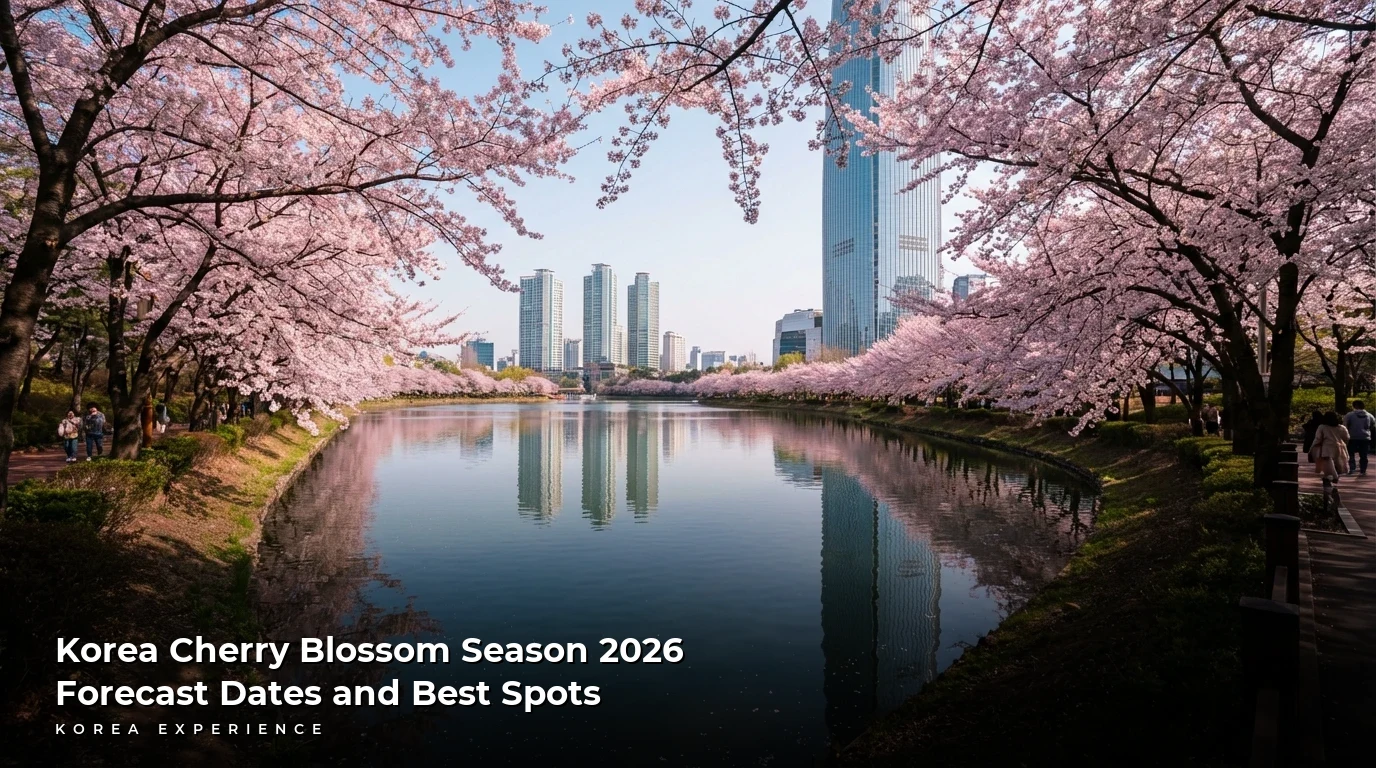
Planning a trip for Korea's 2026 cherry blossoms? Here is the full forecast, from Jeju's March 22nd bloom to Seoul's April 4th peak, plus top viewing spots.
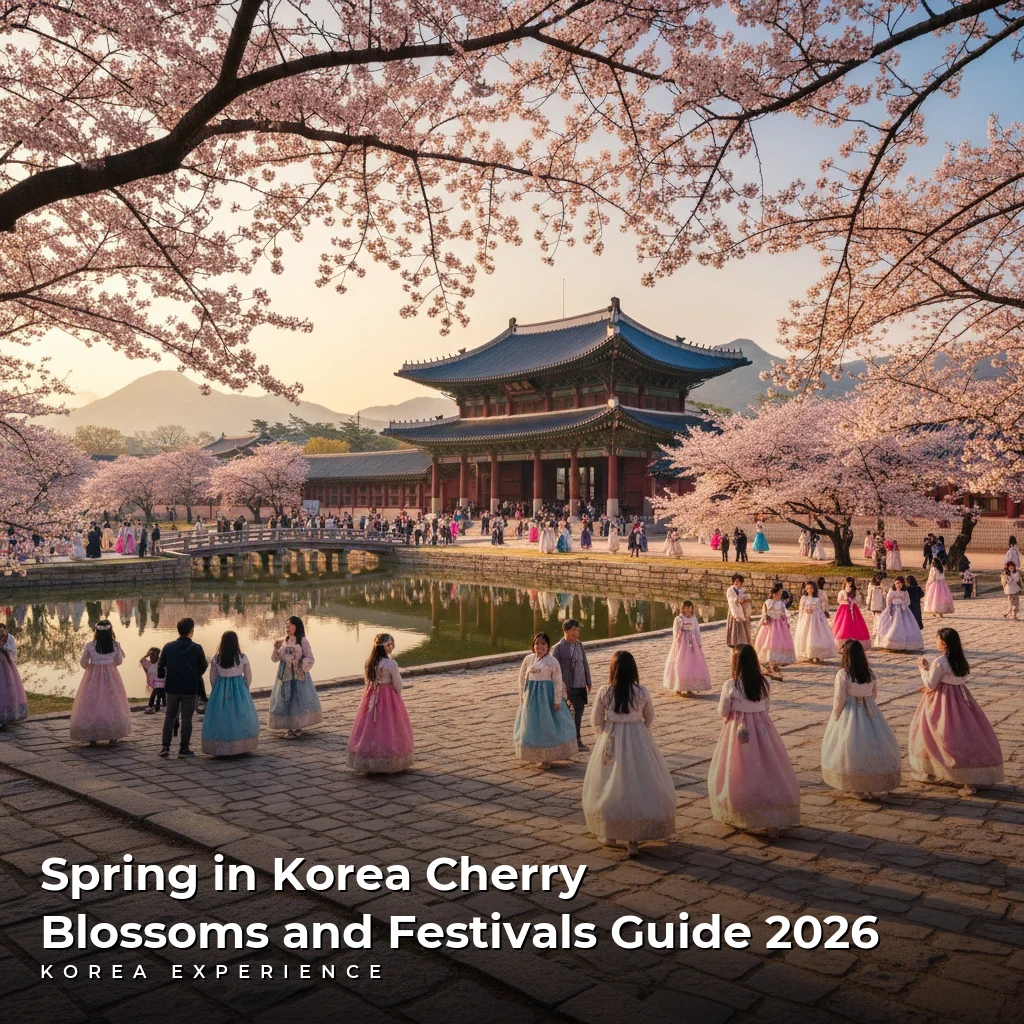
The ultimate 2026 guide to spring in Korea. Discover bloom dates, Jinhae and Seoul festivals, budget tips, and photo spots. Expect to spend ₩50,000 daily.
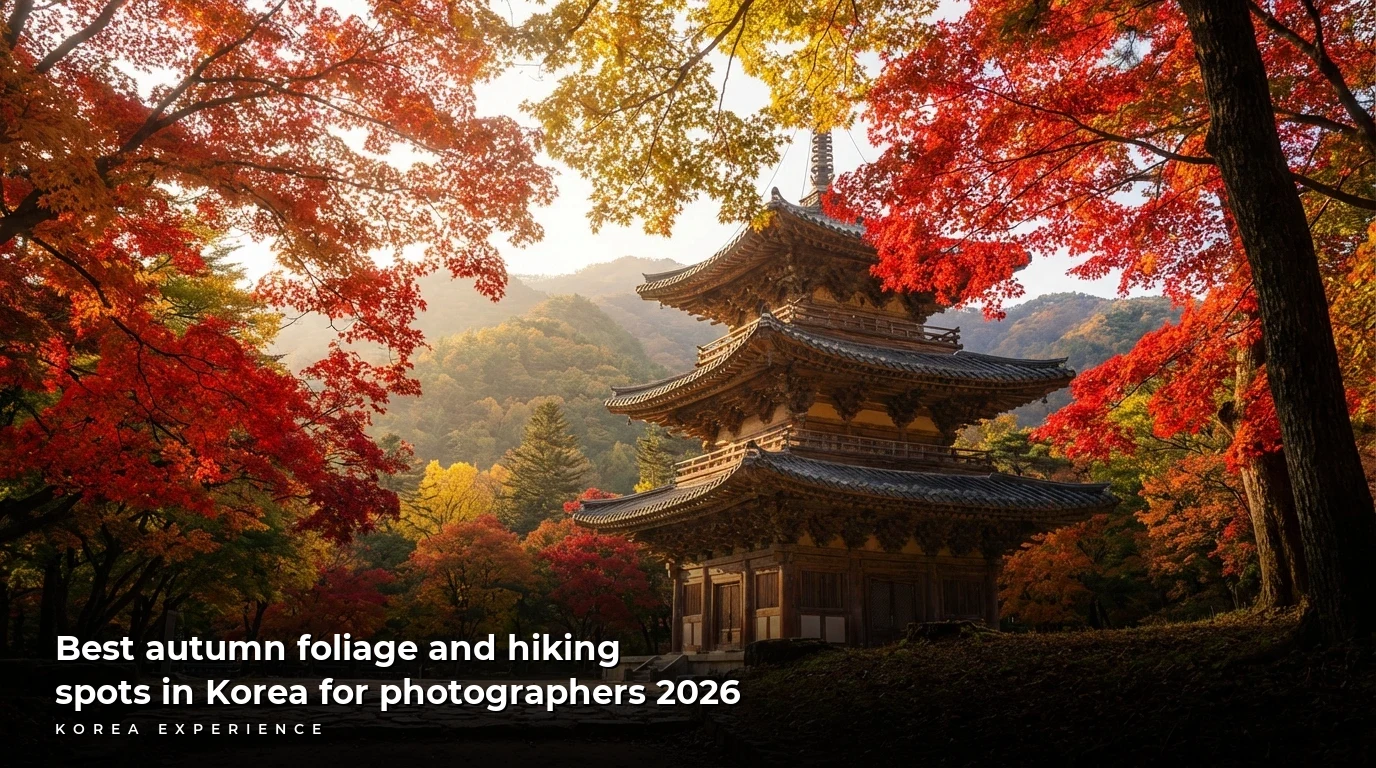
Discover the top hiking trails and photography spots for Korea's 2026 autumn season, with peak foliage dates, transport costs, and specific location guides.
Discover 10 secret autumn spots in Korea away from crowds. Includes 2026 peak foliage dates, transport costs, and specific hiking routes for the perfect trip.
Discover the best spots for tulips, roses, and cosmos in Korea. Complete 2026 guide with dates, entry fees, and transport tips for spring and autumn blooms.
If you're planning to hit more than three spots a day in Seoul, the Climate Card is your absolute best friend.