Spring in Korea Cherry Blossoms and Festivals Guide 2026
The ultimate 2026 guide to spring in Korea. Discover bloom dates, Jinhae and Seoul festivals, budget tips, and photo spots. Expect to spend ₩50,000 daily.
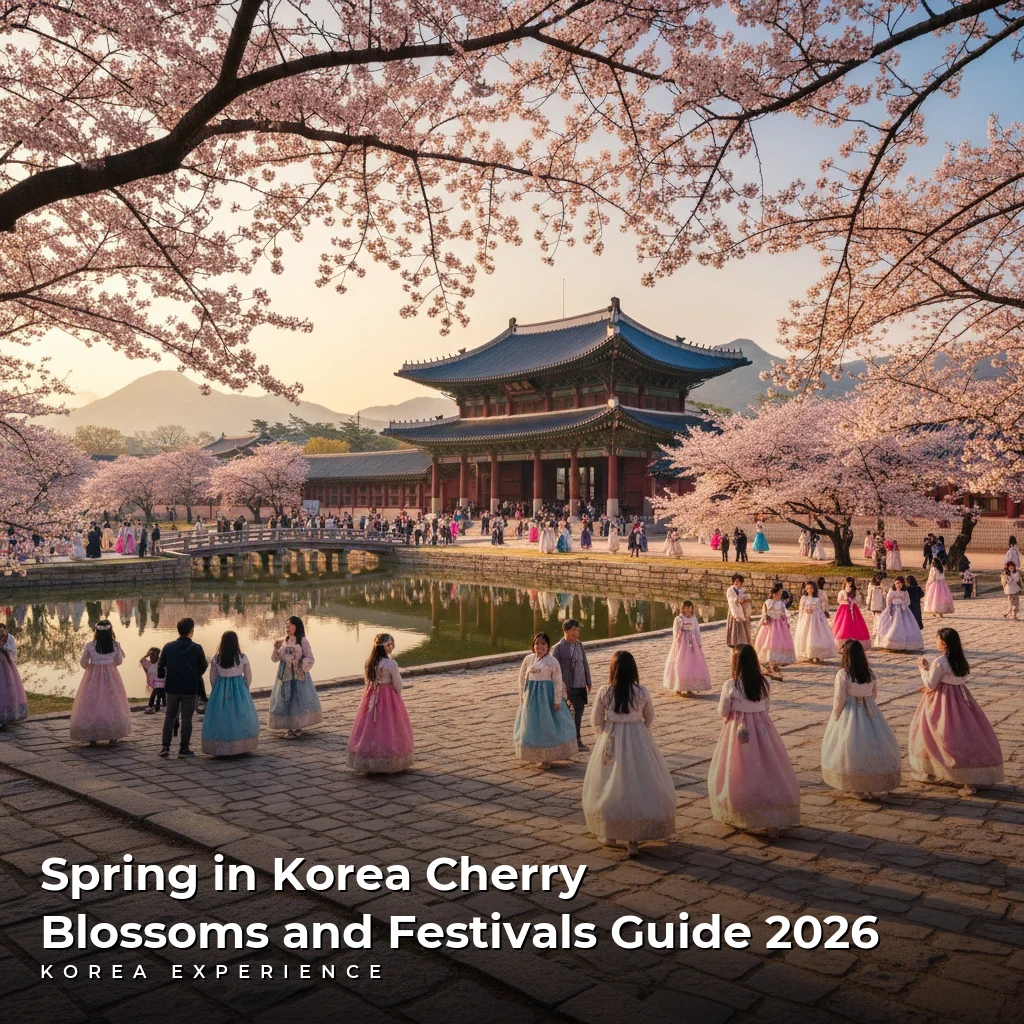
Spring in Korea is not merely a season; it is a cultural phenomenon that transforms the peninsula into a canvas of pastel pinks, vibrant yellows, and deep magentas. For international travelers planning a visit in 2026, the cherry blossom season (beotkkot) is the absolute peak of natural beauty, running generally from late March in the southern island of Jeju to mid-April in the northern metropolis of Seoul. While dates shift annually based on temperature, the window for viewing the "peak bloom" is notoriously short—usually lasting only 5 to 7 days in any given location before the petals fall like snow.
The short answer: In 2026, cherry blossoms are predicted to start blooming in Jeju on March 22nd, reach Busan by March 26th, and arrive in Seoul around April 4th, with full bloom occurring approximately 7 days after the first opening.
Key Takeaways
- 1Peak season spans late March (South) to mid-April (North)
- 2The Jinhae Gunhangje is the largest festival with 360,000 trees
- 3Accommodation prices in bloom hotspots rise by 30-50%
The 2026 Cherry Blossom Forecast: Timing Your Trip
Understanding the geography of the bloom is crucial for avoiding disappointment. The "cherry blossom front" moves northward at a speed of roughly 20 to 30 kilometers per day. In 2026, warmer-than-average winter temperatures suggest a slightly earlier bloom than historical averages.
📋 2026 Bloom Forecast
If you are booking flights now, aiming for the first week of April (April 1–7) is the safest bet to catch blossoms somewhere in the country. If you arrive too early, you can head south to Busan via KTX (approx. 2.5 hours, ₩59,800); if you arrive late, you can head north to Chuncheon or Incheon where the air is cooler.
Weather Conditions and Packing
Spring weather in Korea is volatile. In early April, morning temperatures can dip to 5°C (41°F), while afternoons can reach a pleasant 18°C (64°F). This 13-degree fluctuation requires strategic packing. Furthermore, spring is known for "Hwangsa" (Yellow Dust), so carrying high-quality masks is essential not just for health, but for comfort.
Pro Tip
Buy a T-money transit card immediately upon arrival. You will use it for subways, buses, and even taxis to chase cherry blossom spots efficiently.
Top Cherry Blossom Spots in Seoul
Seoul offers a unique juxtaposition of ancient architecture and urban skylines framed by flowers. With over 10 million residents, the popular spots get crowded. Here is how to navigate them.
1. Yeouido Spring Flower Festival
Located on the Han River, the street behind the National Assembly Building (Yunjung-ro) is lined with 1,886 Korean Cherry trees. During the festival, vehicles are banned, allowing pedestrians to walk freely.
- Best Time: Weekday mornings before 10:00 AM.
- Crowd Level: Extremely High (expect 2+ million visitors over the festival period).
- Access: National Assembly Station (Line 9), Exit 1.
2. Seokchon Lake
This man-made lake surrounds Lotte World Adventure. The walking path is a 2.5km loop lined with hundreds of cherry trees. The reflection of the Lotte World Tower (123 floors, 555 meters tall) creates a stunning modern backdrop.
Seokchon Lake(석촌호수)
3. Seoul Forest
For a more relaxed atmosphere, Seoul Forest offers vast green spaces. It is less claustrophobic than Yeouido. You can rent bicycles here for roughly ₩5,000 per hour. It’s also close to Seongsu-dong, famous for its cafe culture. After a walk, you might want to explore the trendy area. For recommendations on where to get caffeine, check out our guide to best coffee shops in Seoul.
Don't ignore the palaces. Gyeongbokgung is famous, but Changgyeonggung Palace has the most impressive cherry blossoms mixed with apricot flowers. The admission is only ₩1,000, and the blend of Joseon architecture with falling petals is unmatched for photography.
The Heavyweights: Major Festivals Outside Seoul
While Seoul is convenient, the true heart of Korea’s cherry blossom season lies in the southern provinces.
Jinhae Gunhangje Festival
This is Korea’s largest spring festival, attracting over 2 million tourists annually. Jinhae, a naval port city, boasts approximately 360,000 cherry trees. The entire city turns white and pink.
- Yeojwacheon Stream: The most famous spot, featuring a 1.5km stream crossed by the "Romance Bridge." It is incredibly photogenic but requires patience due to crowds.
- Gyeonghwa Station: An abandoned railway station where trains stopped running in 2006. A ceremonial train sits on the tracks, framed by an 800-meter tunnel of cherry trees.
- Travel Data: It takes about 3 hours by KTX to nearby Changwon or Masan station, followed by a 30-minute bus ride. Direct intercity buses from Seoul Nambu Terminal take about 4.5 hours and cost roughly ₩35,000.
Gyeongju Cherry Blossom Marathon
Gyeongju, the "museum without walls," offers a historical backdrop. The marathon (usually held the first Saturday of April) runs along heavy cherry blossom routes. Even if you don't run, the Bomun Lake area is spectacular. Renting a bike here costs about ₩5,000–₩8,000 for 2 hours.
For those interested in the historical context of the area, you can combine your flower viewing with a cultural deep dive. Read more about historic locations and folk villages to plan your Gyeongju itinerary.
Hwagae Cherry Blossom Festival
This is the "10-ri Cherry Blossom Road" (Simni-beotkkot-gil). It is a 4km stretch of road connecting Ssanggyesa Temple and the Hwagae marketplace. Legend says if a couple walks this road holding hands, they will grow old together in love.
Festival Comparison 2026
| Feature | Jinhae Gunhangje | Yeouido (Seoul) | Gyeongju |
|---|---|---|---|
| Crowd Density | Extreme | High | Medium |
| Photography | World-class | Urban/River | Historic |
| Access from Incheon | 4.5 Hours | 1 Hour | 3 Hours |
Beyond Cherry Blossoms: Other Spring Blooms
Korea in spring is not a monoculture. If you miss the short cherry blossom window, other flowers provide equally stunning views.
Sansuyu (Cornelian Cherry)
- Location: Gurye, Jeollanam-do.
- Color: Bright Yellow.
- Timing: Mid to late March (before cherry blossoms).
- Experience: The entire village of Sandong-myeon is covered in yellow clouds. It is more rural and peaceful.
Canola Flowers
- Location: Jeju Island (Seopjikoji) and Busan (Daejeo Ecological Park).
- Color: Neon Yellow.
- Timing: Early April to early May.
- Scale: The Daejeo park in Busan spans 760,000 square meters, creating a massive sea of yellow.
King Cherry Blossoms (Don-namu)
These are distinct from the standard Yoshino cherry trees. The flowers are larger, deeper pink, and bloom about 2 weeks after the regular cherry blossoms.
- Best Spot: Bulguksa Temple in Gyeongju or Misari Rowing Regatta in Hanam (near Seoul).
📊 Flower Economy
Practical Planning: Costs and Logistics
Traveling during peak season requires budget awareness. Flights to Incheon (ICN) can be 20-30% more expensive in April compared to February.
Accommodation
Hotels in Yeouido or near Seokchon Lake often sell out months in advance.
- Luxury: ₩300,000 - ₩500,000+ per night.
- Mid-range: ₩100,000 - ₩180,000 per night.
- Guesthouse/Hostel: ₩30,000 - ₩60,000 per night.
💵 Daily Travel Budget (Spring 2026)
Taxi everywhere, premium hotel with view, fine dining
Subway/Bus, Guesthouse, Street Food & Cafes
Connectivity
You will need reliable data to check real-time bloom maps and navigate huge festival crowds. Google Maps is often outdated for walking directions in Korea; Naver Map is superior. Make sure you are connected the moment you land. For a detailed breakdown of options, read our guide on best Korea SIM cards.
Food and Snacks
Spring brings seasonal limited editions.
- Cherry Blossom Popcorn: Pink-hued kettle corn found in convenience stores (approx ₩1,500).
- Strawberry Lattes: Fresh strawberry season overlaps with spring. Cafes serve these for ₩6,000–₩8,000.
- Street Food: During festivals, vendors sell everything from Tornado Potatoes (₩4,000) to Chicken Skewers (₩5,000). For a list of must-eats, check our guide to convenience store food.
Itinerary Ideas
To help you maximize your time, here is a suggested route that balances the "must-sees" with local experiences.
48 Hours of Blooms in Seoul
The Dualism Concept: Experience the best of both worlds — premium luxury moments paired with authentic budget-friendly experiences in one route.
Signiel Seoul Stay
Wake up to a view of Seokchon Lake from the 76th floor.
Han River Picnic
Rent a mat (₩5,000) and eat convenience store ramen by the water.
Start your morning with the luxury view to beat crowds, then spend the afternoon picnicking like a local.
7-Day Cross-Country Blossom Chase
- Day 1-2: Busan. Visit Dalmaji Hill and Samnak Ecological Park.
- Day 3: Jinhae. Day trip for the Gunhangje Festival.
- Day 4: Gyeongju. Rent a bike around Bomun Lake. Visit Bulguksa.
- Day 5-7: Seoul. Yeouido, palaces, and shopping.
Photography Tips for The Perfect Shot
Everyone wants that ethereal photo where they look like they are floating in pink clouds.
- The "Frame" Technique: Use a low-hanging branch in the foreground to frame your subject. This adds depth and hides the crowds behind you.
- Backlight: Shoot during the "Golden Hour" (6:30 AM or 5:30 PM). Backlit petals glow translucent white/pink.
- Hanbok Rental: Wearing a traditional Hanbok not only grants you free entry to palaces (saving ₩3,000) but also creates the perfect aesthetic contrast. To understand the costs and styles available, consult our Hanbok rental guide.
📖 How to Capture the 'Petal Rain' Shot
Step 1: Find the Wind
Wait for a breeze, or have a friend gently shake a sturdy branch (do not damage the tree!).
Step 2: Lower Your Angle
Shoot from waist level looking slightly up to fill the frame with sky and flowers, removing the crowd.
Pros and Cons of Spring Travel
Is it worth the hype? Absolutely, but you must manage expectations regarding crowds and air quality.
Visiting Korea in Spring
- ✓Incredible scenery and photogenic landscapes
- ✓Pleasant walking temperatures (10-18°C)
- ✓Unique seasonal food and drinks
- ✗Yellow Dust (fine dust) can be severe
- ✗Extreme crowds at popular spots
- ✗Higher accommodation prices
Conclusion
Spring in Korea is a fleeting, magical experience that requires precise timing and a bit of luck with the weather. Whether you are walking through the "cherry blossom tunnel" at Gyeonghwa Station or simply sipping a cherry blossom latte in a Seoul cafe, the energy of the country during this season is undeniable. By planning ahead for 2026, booking accommodations early, and using the real-time forecast data, you can ensure your trip is full of blooms rather than just bare branches.
❓ Frequently Asked Questions
Have more questions?Contact us →
About the Author
Korea Experience Team
Written by the Korea Experience editorial team - experts in Korean medical tourism, travel, and culture with years of research and firsthand experience.
Explore more in Travel & Tourism
From Seoul's neon-lit streets to Jeju's volcanic landscapes — discover the best of Korea with insider travel tips, itineraries, and seasonal guides.
Browse All Travel & Tourism ArticlesContinue Reading
Explore more articles you might find interesting
Discover the best spots for tulips, roses, and cosmos in Korea. Complete 2026 guide with dates, entry fees, and transport tips for spring and autumn blooms.
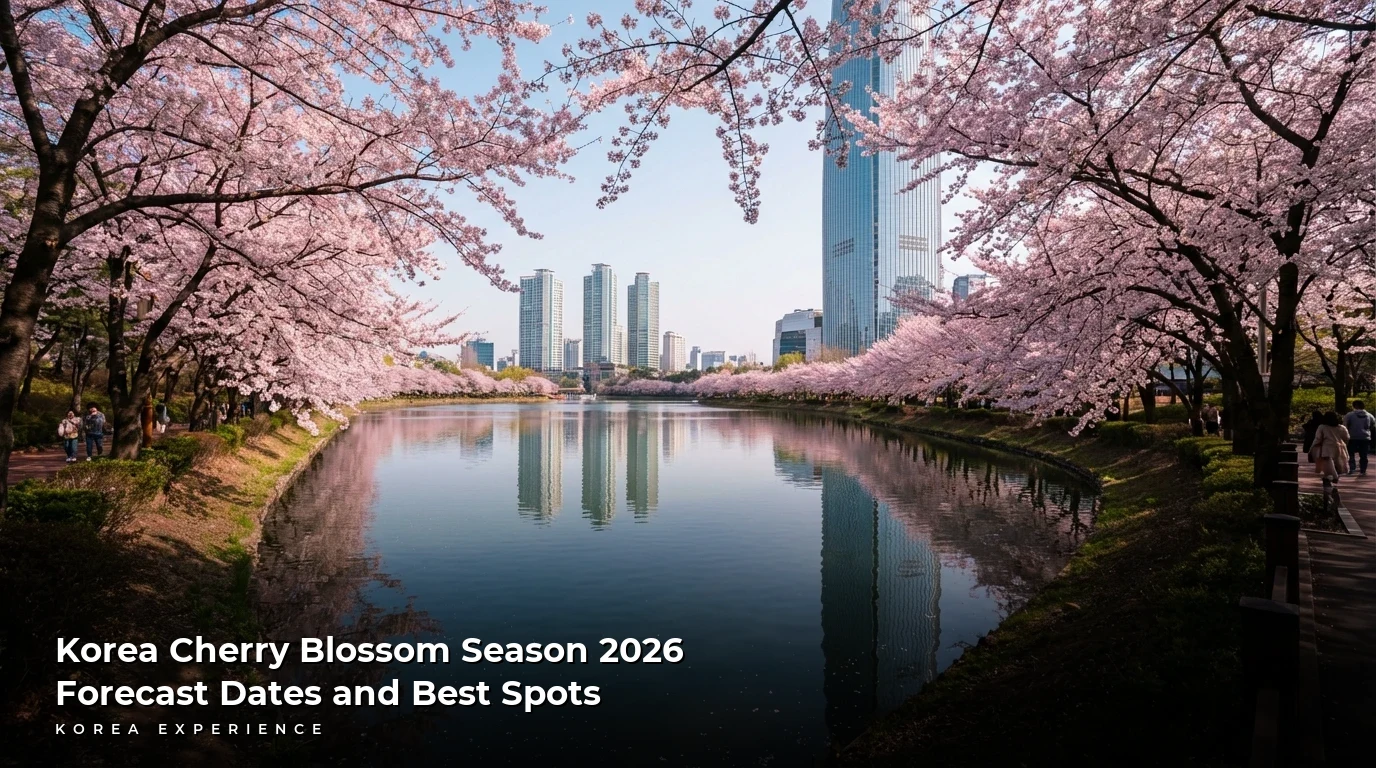
Planning a trip for Korea's 2026 cherry blossoms? Here is the full forecast, from Jeju's March 22nd bloom to Seoul's April 4th peak, plus top viewing spots.

Explore the most iconic K Drama filming locations in Seoul for 2026. From Queen of Tears to Goblin, discover prices, transit tips, and photo spots.
Discover Korea's top eco-friendly travel spots for 2026. From zero-waste cafes in Seoul to LEED-certified hotels, travel green with our ₩50,000 budget tips.
Discover Seoul's stunning libraries in 2026. From the 13m shelves of Starfield to hidden Hanok gems. Free entry details and photo spots included.
Discover the ultimate photography spots in Korea for 2026. From Seoul's neon nights to Jeju's sunrises, get precise golden hour times and expert gear tips.