Korean Makeup Trends 2026: Cushion Foundation to Glass Skin Guide
Master the 2026 glass skin look with our guide to Korean cushion foundations. Discover top brands, application tips, and shopping spots in Seoul.
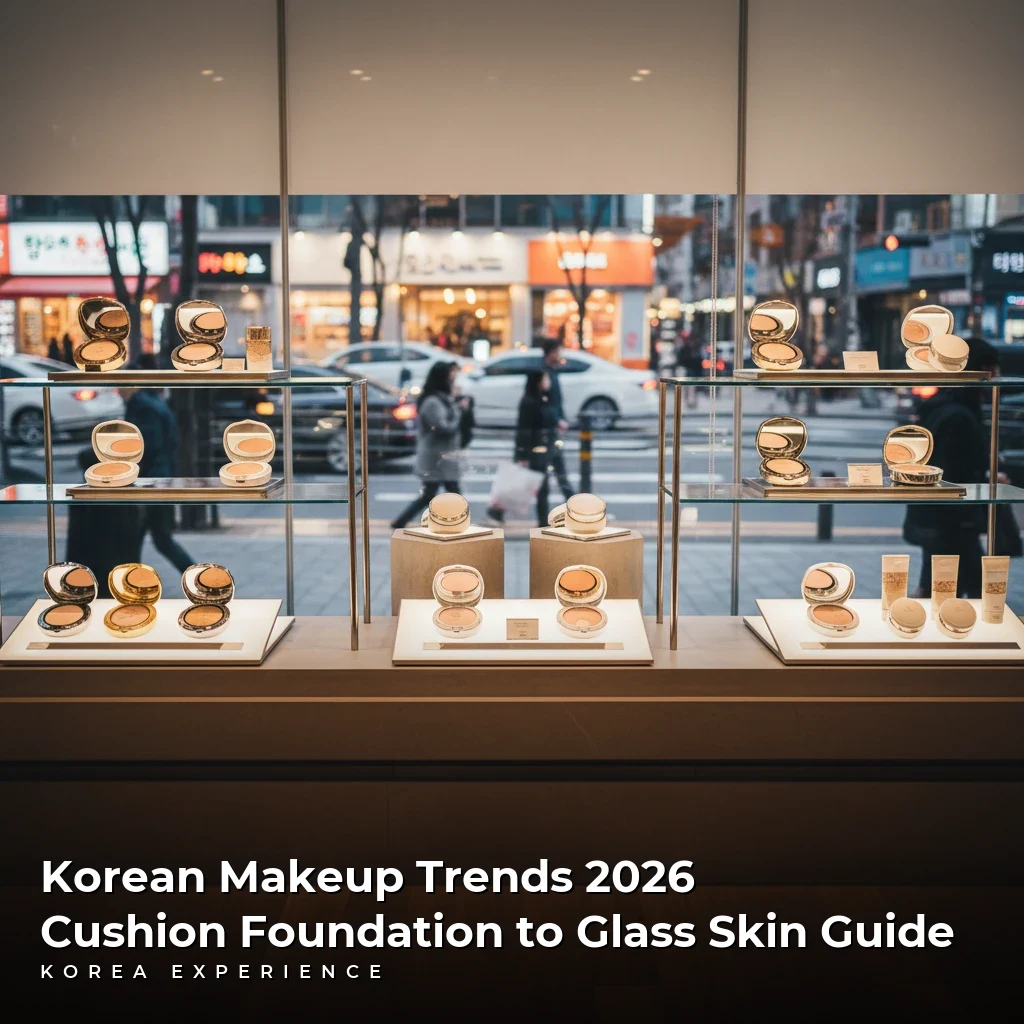
If you have ever walked through the bustling streets of Myeongdong or watched a high-definition K-Drama, you have likely noticed one undeniable fact: the complexion of Korean women often appears flawless, luminous, and impossibly hydrated. This is not accidental. It is the result of a meticulously evolved beauty philosophy that bridges the gap between skincare and makeup, centered primarily around the "Glass Skin" phenomenon and the revolutionary cushion foundation. For travelers and expats in 2026, understanding this trend is the key to unlocking the secrets of K-Beauty shopping.
The short answer: The "Glass Skin" trend relies on 70% skincare prep and 30% makeup application, utilizing cushion foundations with SPF50+ PA++++ to create a thin, breathable layer that mimics healthy, hydrated skin rather than masking it.
Key Takeaways
- 1Glass Skin aims for a transparent, poreless finish that looks wet and hydrated
- 2Cushion foundations are sold every 1.2 seconds in Korea as of 2026
- 3The 2026 trend has shifted slightly from 'super glow' to 'semi-glow' for longevity
The Evolution of K-Beauty Base Makeup
To understand why cushion foundations are the undisputed queens of the Korean makeup market, we must look at the timeline of innovation. Unlike Western makeup, which historically prioritized high coverage and matte finishes to hide imperfections, Korean base makeup has always aimed to enhance the skin's natural texture.
In the early 2010s, BB Creams (Blemish Balms) exploded onto the global scene. They offered a multi-functional approach: sun care, soothing properties, and coverage. However, the game changed entirely in 2008 when IOPE (a brand under the Amorepacific giant) introduced the "Air Cushion."
The concept was inspired by a parking stamp. By suspending liquid foundation in a urethane foam sponge, users could apply makeup using a non-absorbent "Rubycell" puff. This allowed for an incredibly thin, buildable layer that could be reapplied throughout the day without caking.
📊 Cushion Market Dominance
By 2026, the technology has advanced significantly. Modern cushions now feature "mesh" nets for even finer particle distribution and formulations that include up to 75% skincare essences (hyaluronic acid, niacinamide, and adenosine). The goal is no longer just covering spots; it is about treating the skin while wearing makeup.
Did You Know?
The average Korean woman carries a cushion foundation in her bag for touch-ups. Most cushions come with a full-sized refill in the box, effectively giving you two products for the price of one. Always check the box for the "1 + 1 Refill" label before purchasing!
Deconstructing "Glass Skin" (Chok-Chok)
"Glass Skin" (often referred to as chok-chok skin, meaning moist or damp) is the gold standard of K-Beauty. It refers to skin that is so hydrated and smooth that it reflects light like a pane of glass. However, achieving this look is not merely about slapping on a highlighter.
The look requires a dedicated routine. It starts with exfoliation to remove dead skin cells that dull the complexion, followed by multiple layers of hydration (toner, essence, serum, moisturizer) before any makeup touches the face.
If you are new to this level of skincare dedication, you might want to read our complete guide to the Korean skincare routine to understand the groundwork required before applying your cushion.
The 2026 Shift: "Healthy Glow" vs. "Oily Shine"
In previous years (circa 2018-2020), the glass skin trend sometimes bordered on looking greasy. However, the post-pandemic era brought a shift. In 2026, the trend has matured into "Healthy Glow" or "Semi-Glow."
The current aesthetic involves a satin finish in the center of the face (T-zone) to prevent looking oily, while maintaining high shine on the cheekbones and temples. This balance is crucial for longevity, especially during Korea's humid summers where humidity averages 80-90% in July and August.
📋 Glass Skin Metrics
Top Cushion Foundations in 2026: A Brand Guide
Walking into an Olive Young in Gangnam or Myeongdong can be overwhelming. There are literally hundreds of options. To help you navigate, we have categorized the top performers of 2026 based on finish and budget.
1. The High-End Pioneers
Hera Black Cushion: Reigning supreme for years, the Hera Black Cushion is the quintessential "semi-matte" cushion endorsed by K-Pop idols like Jennie from Blackpink. It offers medium-to-high coverage but feels weightless.
- Best for: Oily to Combination skin.
- Price: Approx. ₩66,000 ($50 USD).
Jung Saem Mool Essential Skin Nuder: Created by Korea's most famous celebrity makeup artist, this cushion is the holy grail for the "natural" glass skin look. It mimics the texture of real skin perfectly and is famous for its unique blending palette built into the lid.
- Best for: Dry to Normal skin.
- Price: Approx. ₩42,000 ($32 USD).
2. The Road-Shop Favorites (Affordable & High Quality)
Clio Kill Cover The New Founwear: Clio is arguably the most popular drugstore brand for base makeup. Their "Kill Cover" line is legendary for high coverage that lasts 72 hours (according to clinical tests). The 2026 formula is thinner and lighter than previous versions.
- Best for: Those needing coverage for acne or redness.
- Price: Approx. ₩32,000 ($24 USD) - often on sale.
Rom&nd Nu Zero Cushion: Targeting the younger Gen-Z demographic, Rom&nd offers a "my skin but better" finish. It is incredibly lightweight and blurs pores effectively.
- Best for: Pore blurring and natural finish.
- Price: Approx. ₩25,000 ($19 USD).
💵 Cushion Price Comparison (2026)
Department store quality, semi-matte finish
Best coverage and longevity for value
For those interested in exploring niche brands that haven't hit the global mainstream yet, check out our article on under-the-radar K-beauty brands.
How to Apply Cushion Foundation for Glass Skin
The tool is only as good as the technique. In Korea, applying foundation is not a "rubbing" motion; it is a "tapping" motion. The specific Korean term is tok-tok (the sound of patting).
📖 Glass Skin Application Method
Step 1: Press Lightly
Press the puff into the sponge. Do NOT push hard. The product is concentrated.
Step 2: Offload Excess
Pat the puff on the back of the lid (or the palette) to distribute the product evenly into the puff fabric.
Step 3: The V-Zone First
Start applying on the flat part of your cheek (the V-zone). This is where you want the most coverage and glow.
Step 4: Tap, Don't Drag
Use a rapid tapping motion to stomp the product into the pores. Never drag the puff across the skin.
Step 5: Center of Face
Use the remaining product on the puff for the nose, chin, and forehead to keep these areas sheer.
The Shade Matching Challenge
One of the most significant hurdles for international visitors is the shade range. Historically, Korean cushions came in only two shades: 21 (Light Beige) and 23 (Natural Beige). While the range has expanded in 2026, it still leans heavily toward lighter skin tones.
Shade Warning
Korean foundation shades are generally lighter than Western equivalents. A MAC NC15/20 is roughly a Korean #21. A MAC NC25/30 is roughly a Korean #23. If you have a deeper skin tone, finding a match in road-shop brands (like Etude or Innisfree) can be difficult.
However, brands like Laneige (Neo Cushion) and Espoir (Pro Tailor Be Velvet) have expanded to offer shades up to #25, #27, and occasionally #31 in their flagship stores. For a detailed breakdown on where to find inclusive shades, read our guide on Korean foundations for darker skin tones.
Where to Shop: The Best Beauty Destinations in Seoul
Shopping for beauty in Korea is an experience in itself. Here are the must-visit locations to find your perfect cushion match.
1. Olive Young (The Sephora of Korea)
With over 1,300 stores nationwide, you are never more than 500 meters from an Olive Young in Seoul. The Myeongdong flagship store is a massive two-story complex that functions as a trend barometer.
- Pro Tip: Look for the "Olive Young Awards" tags on the shelves. These represent the best-selling items based on real sales data, not just marketing hype.
2. Amore Seongsu (The Experience Center)
Located in the trendy Seongsu-dong district (often called the Brooklyn of Seoul), this is a flagship experience center for Amorepacific (owner of Hera, Laneige, Sulwhasoo, IOPE).
- Why go: You can try hundreds of products, get a custom foundation mixed for your exact skin tone, and enjoy a minimalist garden setting.
Amore Seongsu(아모레 성수)
3. Chicor (The Premium Selector)
Chicor is the beauty specialty store run by Shinsegae Department Store. It carries a mix of high-end Western brands (NARS, MAC) and premium Korean brands (Huxley, Dear Dahlia).
- Best for: Finding luxury cushions and trying them in a less crowded, more upscale environment than Olive Young.
Deep Dive: Ingredients and Technology
What makes these cushions creating "Glass Skin" different from a standard bottle of foundation? It lies in the formulation technology.
1. High Refractive Index Oils: To achieve that wet look without being sticky, Korean labs use oils with a high refractive index. These oils bounce light off the high points of the face.
2. Polymer Networks: New 2026 cushions use a breathable polymer network that acts like a second skin. This mesh holds the pigment and hydration close to the skin while preventing the evaporation of moisture, a critical feature for the dry Korean winters where temperatures drop to -10°C (14°F).
3. Skincare Infusion:
- Centella Asiatica (Cica): Calms redness and inflammation.
- Birch Juice: Provides deep hydration.
- Niacinamide: Brightens skin tone over time.
Foundation Types Comparison
| Feature | Cushion | Liquid Bottle | Stick |
|---|---|---|---|
| Portability | High | Low | High |
| Finish | Dewy/Natural | Matte/Full | Matte |
| Touch-ups | Excellent | Difficult | Good |
| Hygiene | Medium | High | Low |
Expert Tips for Long-Lasting Glass Skin
Achieving the look is one thing; keeping it on your face for 10 hours while exploring Gyeongbokgung Palace is another.
The biggest mistake foreigners make is setting their entire face with powder. This kills the glass skin effect. Only powder the perimeter of your face (hairline, jawline) and the sides of your nose. Leave the cheeks and bridge of the nose unpowdered to maintain that 3D glow. Also, use a setting spray specifically designed for a 'glow finish' rather than a matte one.
If you are planning a massive shopping haul, check out our list of beauty empties and repurchase recommendations to ensure you are buying products that locals actually use and finish.
Pros and Cons of the Cushion Trend
While we love cushions, they aren't perfect for everyone or every situation. Here is a balanced look to help you decide if you should switch from your bottle foundation.
Cushion Foundation Analysis
- ✓Incredibly travel-friendly (liquid is contained)
- ✓Built-in SPF50+ simplifies morning routine
- ✓Easy to reapply without caking
- ✓Usually comes with a refill (economical)
- ✗Contains less product (15g) than bottles (30g)
- ✗Hygiene concerns if puff isn't washed weekly
- ✗Shade range is limited for global skin tones
- ✗Can expire faster due to air exposure
Beyond the Face: Services to Elevate Your Look
If you are visiting Seoul, you have the unique opportunity to get professional help finding your look. "Personal Color Analysis" has become a massive trend. A consultant analyzes your skin undertones using draped fabrics to tell you exactly which cushion shades (Cool Vanilla vs. Warm Beige) suit you best.
Personal Color Analysis Session
Theory & Skin Scan
Measuring skin tone (redness/yellowness) with a Cube device.
Draping
Testing 100+ colored fabrics to see which brighten your face.
Pouch Analysis
Reviewing your current makeup to see if it matches your results.
Product Recs
Getting a specific list of cushions and lipsticks to buy.
For a deeper dive into these services, including pricing and how to book, read our article on getting a professional skin analysis in Seoul.
Frequently Asked Questions
❓ Cushion Foundation & Glass Skin FAQs
Have more questions?Contact us →
Final Thoughts
The journey from a bare face to "Glass Skin" using a cushion foundation is more than just a makeup routine; it is a cultural insight into how Korea values self-care and presentation. Whether you opt for the high-coverage Clio Kill Cover or the luxurious Hera Black Cushion, the goal remains the same: skin that looks like skin, only better.
As you explore Seoul in 2026, take the time to test textures at Amore Seongsu or swipe swatches at Olive Young. The perfect glow is waiting for you.
About the Author
Korea Experience Team
Written by the Korea Experience editorial team - experts in Korean medical tourism, travel, and culture with years of research and firsthand experience.
Explore more in Shopping & K-Beauty
From Olive Young hauls to Myeongdong shopping tips — discover the best K-Beauty products, fashion trends, and shopping destinations in Korea.
Browse All Shopping & K-Beauty ArticlesContinue Reading
Explore more articles you might find interesting
Master the 2026 Korean spatula makeup trend for glass skin. Learn the 90-degree technique, best tools under ₩20,000, and Olive Young shopping tips.
Discover the top Korean makeup trends of 2026, from Protein Skin to AI color analysis. Learn prices, top brands, and where to shop in Seoul for under $50.
Your essential handbook for K-beauty in Seoul 2026. Discover top districts, 2026 trends, tax refund tips, and must-visit flagship stores.
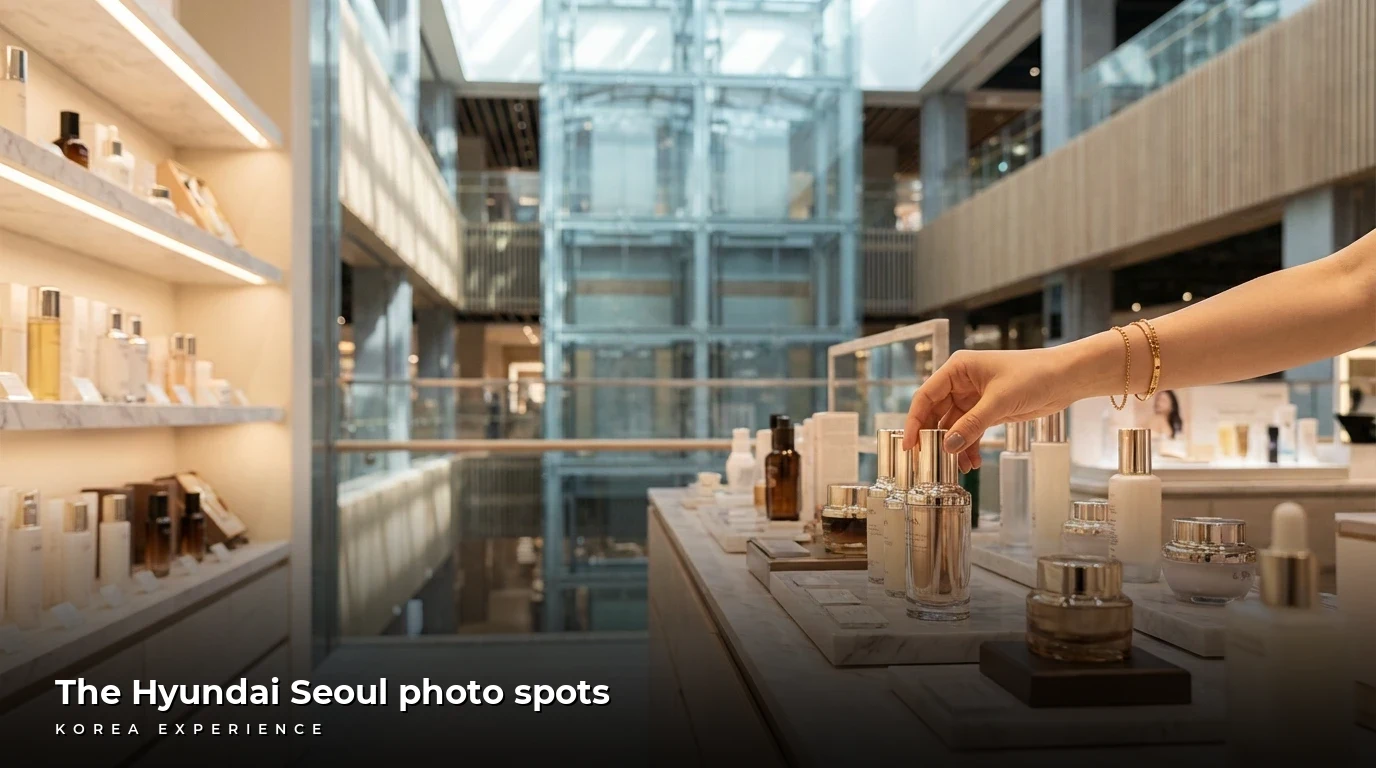
Discover the best photo spots at The Hyundai Seoul in 2026. Get 5-8% tax refunds on 15,000 KRW minimums and skip the 2-hour queues with our insider tips.
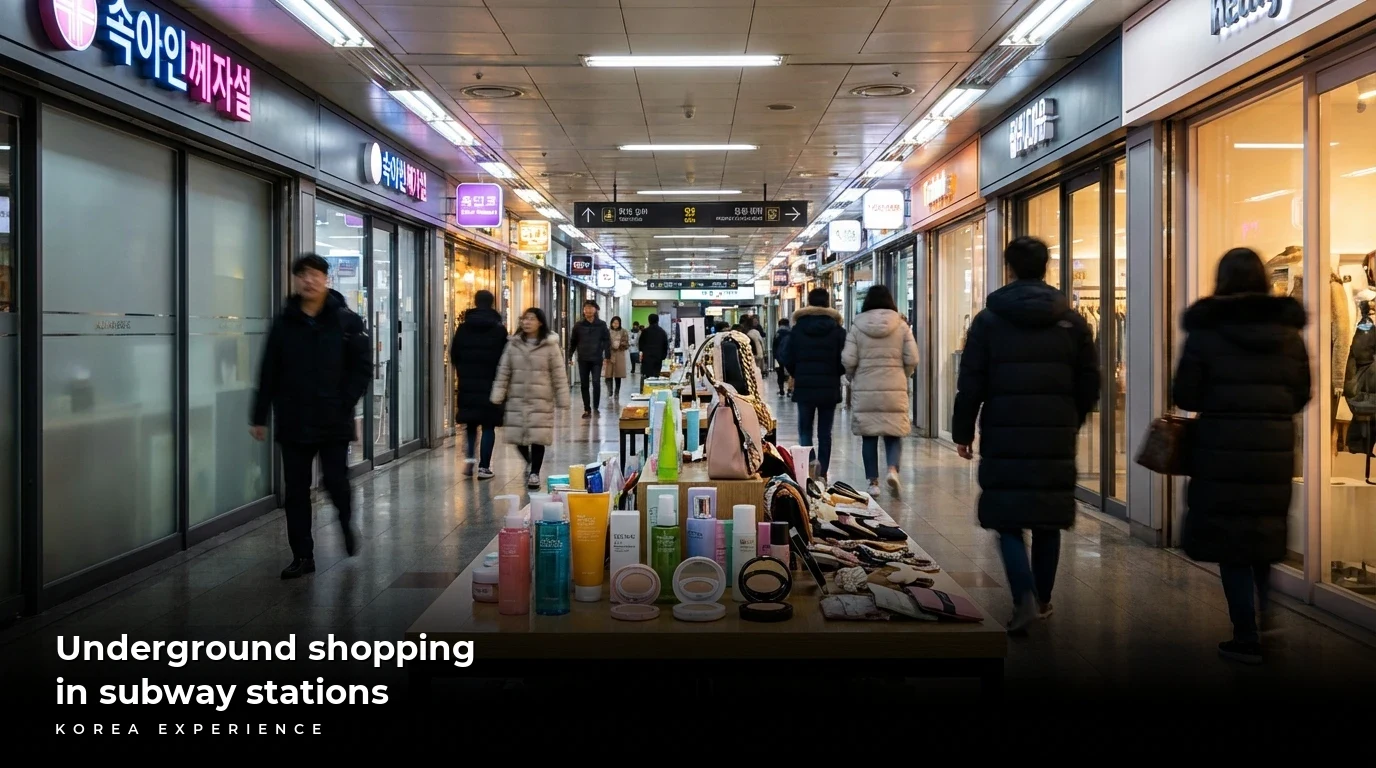
Discover Seoul's underground malls where trendy fashion costs just 10,000 KRW. Our 2026 guide covers 5 top locations, shopping hacks, and essential locker tips.
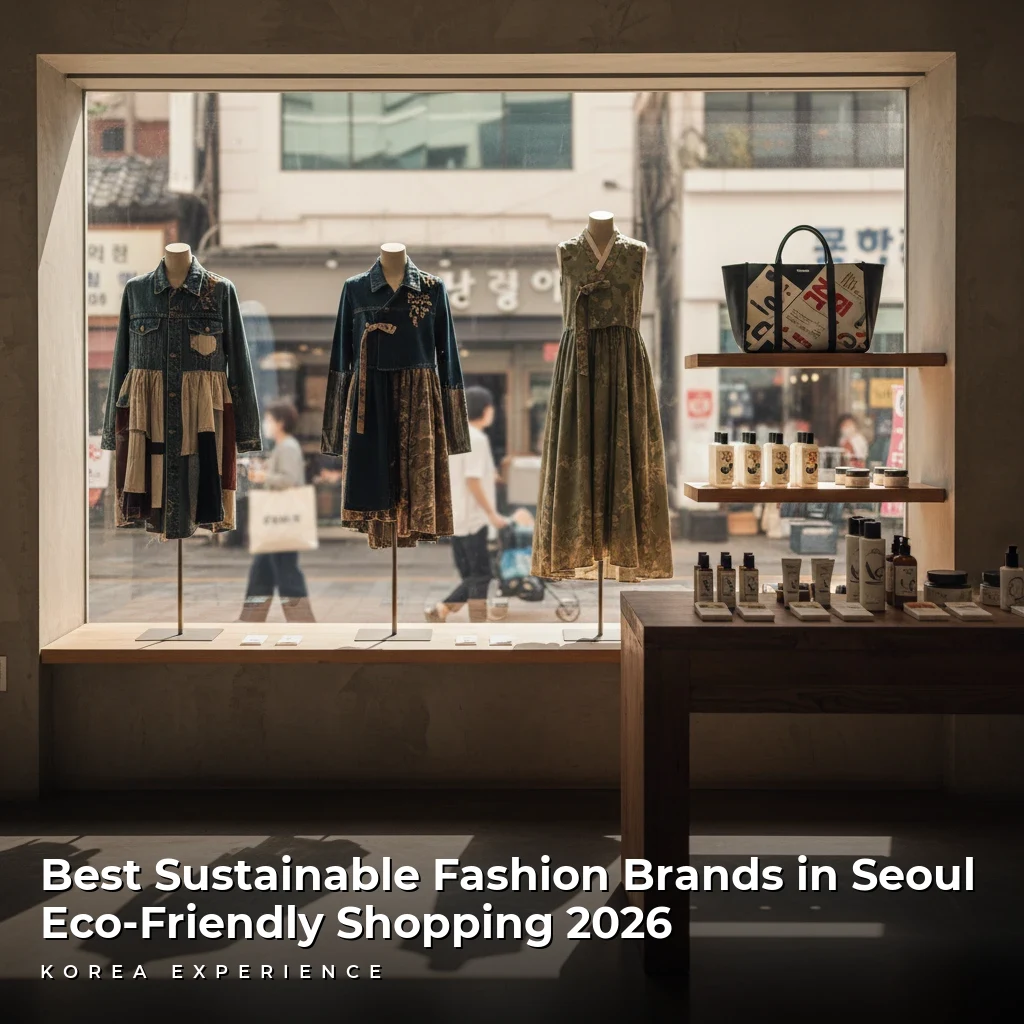
Discover Seoul's top eco-friendly brands for 2026. From upcycled streetwear to vegan leather, explore where to shop sustainably with prices and locations.