Korean Pension System Understanding Deductions
Navigate Korea's pension system with this essential guide. Understand deductions, eligibility, and how it impacts your finances as an expat or traveler.
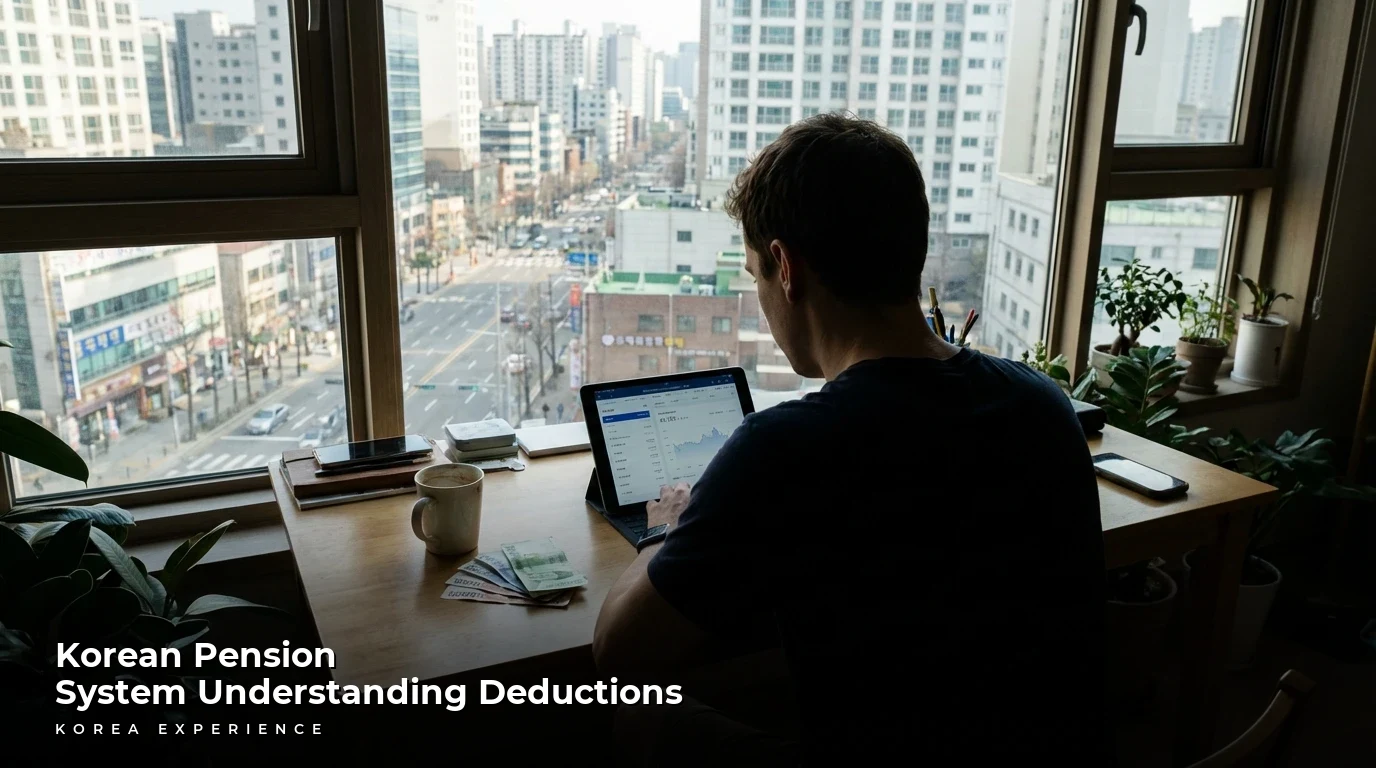
Introduction: Demystifying Korea's National Pension System for Expats
Welcome to Korea, a vibrant nation offering incredible experiences, career opportunities, and a unique cultural landscape. As you settle into life here, understanding the local financial systems, particularly the Korean Pension System, becomes paramount. For international residents, deciphering paystub deductions and planning for long-term financial security can often feel like navigating a complex maze. The National Pension Service (NPS) plays a significant role in every employed resident's financial life, but its intricacies, especially concerning deductions, are frequently misunderstood.
This comprehensive guide is designed to illuminate the Korean Pension System Understanding Deductions for international travelers and expats. We'll cut through the jargon, explain who needs to contribute, how those deductions are calculated, what benefits you might be eligible for, and crucially, how you can claim a refund when you eventually depart Korea. Whether you're here for a few years or planning a longer stay, grasping these details is essential for effective financial planning and peace of mind. By the end of this post, you'll have a clear understanding of your pension obligations and entitlements, empowering you to manage your finances confidently in the Land of the Morning Calm.
Understanding Korea's National Pension Service (NPS)
At the heart of Korea's social security framework lies the National Pension Service (NPS), a mandatory public pension program established to provide income stability for its citizens and residents in their later years, during times of disability, or to their survivors. It's similar to social security systems found in many other countries, designed to pool resources to support individuals throughout their lives.
What is the NPS?
The National Pension Service (NPS) is Korea's primary social insurance scheme. It operates on a pay-as-you-go basis, meaning current contributions fund current pension payouts, while also building a reserve for future obligations. The NPS manages contributions from employees, employers, and self-employed individuals, aiming to ensure that contributors receive benefits upon retirement, in case of severe disability, or that their families receive support upon their death. It is a fundamental pillar of social welfare in Korea.
Who is Covered? Mandatory Enrollment
The NPS system generally mandates enrollment for all residents in Korea, aged between 18 and 60, who earn income. This includes not only Korean nationals but also most foreign nationals residing and working in the country. If you are employed by a company in Korea, your employer is typically responsible for registering you with the NPS and handling the deduction process.
There are various categories of insured persons under the NPS:
- Workplace-based Insured: Individuals employed by businesses or workplaces with one or more employees. Most expats fall into this category.
- Region-based Insured: Individuals aged 18 to 60 who are not workplace-based insured (e.g., self-employed, freelancers, certain visa holders).
- Voluntary Insured: Individuals aged 18 to 60 who are not mandatory insured but wish to contribute.
- Voluntary & Continuous Insured: Individuals over 60 who wish to continue contributing to meet minimum contribution periods or increase benefits.
The Importance for Foreigners
For foreigners living and working in Korea, understanding the NPS is not merely an administrative detail; it's a critical component of your financial planning. As a mandatory deduction from your monthly paycheck, it directly impacts your take-home salary. More importantly, your contributions might qualify you for future benefits or, more commonly for expats, a significant lump-sum refund when you permanently depart Korea. Ignoring the NPS could mean leaving money behind or missing out on potential financial security.
Decoding Korean Pension Deductions: How They Work
One of the most immediate impacts of the Korean Pension System on expats is the monthly deduction from their salaries. Understanding how these deductions are calculated and shared between employee and employer is key to managing your personal finances in Korea.
Contribution Rates Explained
The standard contribution rate for the National Pension Service is currently set at 9% of an individual's standard monthly income. This rate has been stable for a number of years, but it's always advisable to check the official NPS website for the most up-to-date information, as rates can be subject to change by government policy.
How Contributions Are Calculated
Your NPS contributions are not based on your gross salary, but rather on your "standard monthly income." This is typically your average monthly earnings, excluding certain irregular payments like overtime, bonuses, or severance pay. There are minimum and maximum income thresholds for calculation.
For example, if your standard monthly income is 3,000,000 Korean Won (₩), the total monthly contribution to the NPS would be 9% of this amount, which is ₩270,000.
Employer and Employee Shares
A significant aspect of the NPS contribution system is the sharing of the burden between the employee and the employer. For workplace-based insured individuals, the 9% contribution is typically split equally:
- Employee Share: 4.5% of your standard monthly income, which is directly deducted from your salary.
- Employer Share: 4.5% of your standard monthly income, which the employer pays in addition to your salary.
Using our previous example of a ₩3,000,000 standard monthly income:
- Your monthly deduction: ₩135,000 (4.5% of ₩3,000,000)
- Your employer's contribution: ₩135,000 (4.5% of ₩3,000,000)
- Total contribution to your NPS account: ₩270,000
Income Thresholds and Maximum Contributions
The NPS system includes minimum and maximum standard monthly income limits for contribution calculation. These thresholds are adjusted periodically, usually annually.
As of recent adjustments (e.g., in 2023/2024), the approximate minimum standard monthly income for calculation is around ₩370,000, and the maximum is approximately ₩5,900,000. This means:
- If your standard monthly income is below the minimum, your contribution will be based on the minimum threshold.
- If your standard monthly income exceeds the maximum, your contribution will be capped at the maximum threshold.
For example, an employee with a standard monthly income of ₩7,000,000 would still have their 4.5% contribution calculated based on the ₩5,900,000 maximum, resulting in a deduction of ₩265,500 (4.5% of ₩5,900,000). This ensures a degree of fairness and predictability in the system.
Here's a quick overview of the contribution rates:
| Category | Contribution Rate | Notes |
|---|---|---|
| Employee Share | 4.5% | Deducted directly from monthly salary |
| Employer Share | 4.5% | Paid by employer, in addition to salary |
| Total | 9.0% | Based on standard monthly income (up to cap) |
Eligibility and Exemptions for Foreigners
While the NPS generally mandates enrollment for working residents, there are specific conditions and agreements that can affect a foreigner's obligation to contribute. Understanding these is crucial for determining your personal situation.
Mandatory Contributors vs. Exemptions
Mandatory Contributors: Most foreigners holding long-term visas that permit employment are typically mandatory contributors. This includes common visa types like:
- E-series Visas (e.g., E-1 Professor, E-2 Foreign Language Instructor, E-7 Specific Activities).
- F-series Visas (e.g., F-2 Resident, F-4 Overseas Korean, F-5 Permanent Resident, F-6 Marriage Immigrant) if they are working.
- Certain D-series Visas if engaged in remunerative activities (e.g., D-1 Cultural Arts, D-5 Journalist, D-7 Intra-Company Transferee, D-8 Corporate Investor, D-9 Trade Management).
Exemptions: Some categories of foreigners are typically exempt from mandatory NPS contributions:
- Short-term visitors (e.g., B-1, B-2, C-series visas for tourism, short-term business).
- A-series Visas (A-1 Diplomat, A-2 Government Official, A-3 Treaty).
- Most D-2 Student Visas (unless they take up part-time employment that mandates contributions).
- Foreigners whose home countries have Social Security Agreements (SSAs) with Korea that specifically exempt them from contributions in Korea.
Bilateral Social Security Agreements (SSA)
Social Security Agreements are bilateral treaties between Korea and other countries designed to prevent individuals from having to contribute to two national pension schemes for the same period of employment (double coverage) and to ensure that periods of coverage in one country can be recognized by the other (totalization of benefits).
These agreements are critical for foreigners. They generally fall into two main types:
- Exemption-Only Agreements: These primarily prevent double contributions. If you are temporarily assigned to Korea from a country with such an agreement, and you continue to contribute to your home country's pension scheme, you may be exempt from contributing to Korea's NPS.
- Coverage (Totalization) Agreements: These not only prevent double contributions but also allow for the totalization of benefits. This means that if you have contributed for less than 10 years in Korea (the minimum for an Old-Age Pension), your Korean contribution periods can be combined with your contribution periods in your home country to meet the minimum eligibility requirements for a pension in either country. This is vital for those who may not stay in Korea long enough to qualify for a full Korean pension.
Countries with comprehensive SSAs with Korea include the USA, Canada, Germany, UK, Australia, France, China, Vietnam, and many others. It is essential to check the specific details of the agreement between Korea and your home country, as conditions can vary.
Specific Visa Categories and NPS
Let's look at a few common examples:
- E-2 Visa (English Teachers): Almost all E-2 visa holders are mandatory NPS contributors. Depending on their nationality and relevant SSAs, they may be eligible for a lump-sum refund upon departure.
- D-2 Visa (Students): Generally exempt. However, if a D-2 student takes on a part-time job that meets certain income thresholds and employment conditions, they may become subject to mandatory contributions.
- F-series Visas (Long-term Residents/Spouses): If an F-series visa holder is employed and earning income, they are typically mandatory NPS contributors. Their benefits and refund options would follow the general rules for foreigners.
Voluntary Enrollment Options
If you are a foreigner residing in Korea but are not subject to mandatory NPS contributions (e.g., you are self-employed with lower income, or your visa type doesn't mandate it), you may still have the option to voluntarily enroll in the NPS. This allows you to accumulate contribution periods and potentially qualify for future benefits. It's a choice that can offer long-term financial security, particularly if you plan an extended stay in Korea.
Types of Benefits and Refund Options
The Korean Pension System offers various benefits to contributors, but for many expats, the most relevant aspect is the possibility of claiming a refund upon leaving the country.
Old-Age Pension
This is the primary benefit of the NPS, providing a stable income stream upon retirement.
- Eligibility: To qualify for an Old-Age Pension, you generally need to have contributed to the NPS for at least 10 years and reached the statutory retirement age. The retirement age is gradually increasing from 60 to 65.
- Payment: Paid monthly, with the amount determined by your total contribution period and the average income during your contribution years.
- Relevance for Expats: Many expats do not stay in Korea for 10 years, making the Old-Age Pension less common for them. However, if your home country has an SSA with Korea, your Korean contributions might be "totalized" with your home country's contributions to help you qualify for a pension in either country.
Disability Pension
The Disability Pension provides income support if you become severely disabled due to illness or injury during your contribution period.
- Eligibility: Requires a specific contribution period and certification of disability by the NPS based on medical assessments. The severity of the disability determines the benefit level.
- Payment: Paid monthly as long as the disability persists.
Survivor Pension
This benefit provides financial support to the dependents (spouse, children, parents) of a contributor who passes away.
- Eligibility: The deceased must have met certain contribution requirements, and the claimant must be a legally recognized dependent.
- Payment: Paid monthly to eligible survivors.
Lump-Sum Refund (LSR) – Departure Lump-Sum
This is perhaps the most important benefit for most expatriates in Korea. The Lump-Sum Refund (LSR), specifically known as the Departure Lump-Sum for foreigners, allows you to reclaim your contributions when you permanently leave Korea.
Eligibility for Departure Lump-Sum
You are generally eligible for the Departure Lump-Sum if you meet the following conditions:
- Foreigner Status: You must be a foreign national.
- Permanent Departure: You must be permanently leaving Korea with no intention of returning to work or reside.
- Contribution Period: Typically, you must have contributed for less than 10 years. If you have contributed for 10 years or more, you are generally expected to claim the Old-Age Pension (potentially in conjunction with an SSA).
- Nationality: Your nationality is crucial.
- Countries with Reciprocal Refund Agreements: If your home country has a specific reciprocal agreement with Korea regarding lump-sum refunds (e.g., USA, Canada, UK, Australia, Germany, Philippines), you are eligible.
- Countries without Social Security Agreements: If your country does not have an SSA at all, you are generally eligible for a refund.
- Countries with Exemption-Only SSAs (without refund provisions): If your home country has an SSA that only provides for exemption from contributions and no refund portability, you may not be eligible for a refund, as your Korean contributions are intended to be counted towards your pension in your home country. Always check the specific SSA.
Application Process for Departure Lump-Sum
- When to Apply: You can apply shortly before your departure or after you have left Korea. Some NPS branches, particularly at Incheon International Airport, offer on-the-spot processing for eligible individuals on their day of departure, provided all documents are in order.
- Where to Apply:
- Any National Pension Service branch office in Korea.
- The NPS office at Incheon International Airport (Terminal 1 and 2), for same-day processing.
- By mail from your home country after departure.
- Required Documents:
- Passport
- Alien Registration Card (ARC)
- A copy of your flight ticket demonstrating your departure.
- Bank account details (Korean bank account for direct deposit, or an international bank account for wire transfer – note that international transfers may incur fees and take longer).
- Certificate of Departure (if applying after departure).
- Any other documents requested by NPS (e.g., employment verification).
Here's a comparison of the main long-term benefit and the most common expat refund option:
| Feature | Old-Age Pension | Departure Lump-Sum Refund |
|---|---|---|
| Purpose | Long-term retirement income | One-time payment upon permanent departure |
| Eligibility | 10+ years contribution, retirement age (60-65) | Foreigner, leaving Korea, usually under 10 years |
| Who can claim | Contributor | Contributor (foreigner) |
| Payment Type | Monthly installments | Single payment |
| Reciprocal Agreements | Can count Korean contributions in SSA countries | Dependent on reciprocal refund agreements |
Navigating the Application and Withdrawal Process
Dealing with government agencies in a foreign country can be daunting. Fortunately, the NPS has made efforts to streamline processes and provide support for international residents.
Registering with NPS
For most employed foreigners, registration with the NPS is largely automatic. Your employer is responsible for reporting your employment and registering you with the NPS shortly after you begin working. Your contributions will then begin to be deducted from your salary.
If you are self-employed or fall into a category where voluntary enrollment is an option, you would need to visit a local NPS branch office with your Alien Registration Card (ARC) and passport to register yourself.
Required Documents for Contributions
While your employer handles the bulk of the initial paperwork, it's always good to be aware of the core documents involved:
- Alien Registration Card (ARC): Your primary identification document in Korea.
- Passport: For identity verification.
- Employment Contract: May be required for verification of income and employment details.
Claiming Your Benefits or Refund
Whether you're claiming an Old-Age Pension, Disability Pension, Survivor Pension, or the Departure Lump-Sum Refund, the general process involves:
- Preparation: Gather all necessary documents (passport, ARC, bank details, flight ticket, proof of employment, etc.).
- Application:
- In-person: Visit any National Pension Service branch office. Many branches in major cities have English-speaking staff.
- Online: For some services, you might be able to apply online via the NPS English website (www.nps.or.kr/eng) using a digital certificate. However, lump-sum refunds often require in-person application or submission by mail.
- Mail: You can apply by mail from your home country after you have departed Korea.
- Specific for Departure Lump-Sum: If applying at Incheon Airport, ensure you have your flight ticket for your departure date. The airport offices can often process refunds immediately, depositing funds into a Korean or overseas bank account within a few business days, though international transfers might take longer.
Timeline and Processing
- Departure Lump-Sum Refund: If applying at an NPS branch or the airport, processing can be relatively quick, sometimes within a few business days or even on the spot at the airport for eligible cases. However, if applying by mail from overseas, or if there are complications with documentation, it can take several weeks.
- Other Benefits: Pensions typically involve longer processing times due to more extensive eligibility verification.
Practical Tip: The NPS offers an excellent English-language service hotline. You can call 1355 and press 5 for English. This service can provide personalized advice, answer questions about your contributions, and guide you through application processes. Their website (www.nps.or.kr/eng) is also a valuable resource.
Tax Implications and Financial Planning
Understanding the tax implications of your NPS contributions and any benefits or refunds you receive is crucial for comprehensive financial planning in Korea and beyond.
Are Contributions Tax Deductible?
Yes, generally, the employee's portion of NPS contributions (the 4.5% deducted from your salary) is tax-deductible for Korean income tax purposes. This means that these contributions reduce your taxable income, potentially lowering your overall income tax burden in Korea. This deduction is typically applied automatically when your employer calculates your income tax.
However, it's important to differentiate this from employer contributions, which are a business expense for the employer and not a tax deduction for the individual employee.
Tax on Pension Benefits/Refunds
The tax treatment of pension benefits and lump-sum refunds can be complex and depends on several factors:
- Departure Lump-Sum Refund: A flat tax rate is generally applied to the employee's portion of the refund. As of recent policies, this rate is typically around 22% (20% income tax + 2% local income tax) on the amount refunded. This tax is withheld by the NPS before the refund is paid out. The employer's contribution portion is generally not subject to this specific tax, as it was never considered the employee's taxable income in the first place.
- Old-Age Pension and Other Benefits: If you qualify for and receive an Old-Age Pension, Disability Pension, or Survivor Pension, these monthly payments are typically subject to Korean income tax, similar to other forms of income.
- Social Security Agreements (SSAs): The tax implications can also be influenced by SSAs and Double Taxation Agreements (DTAs) between Korea and your home country. For example, some agreements may stipulate which country has the primary right to tax pension income, or how contributions are treated for tax purposes in your home country.
Consulting a Tax Professional
Given the complexities, especially when international tax laws come into play, it is highly recommended to consult a qualified tax professional. This is particularly important if:
- You have complex income situations.
- You are unsure about the taxability of your lump-sum refund in your home country.
- You are a long-term resident considering Old-Age Pension benefits.
- Your home country has a specific SSA or DTA with Korea that might alter the standard tax rules.
A professional can provide personalized advice based on your specific nationality, visa status, and financial circumstances, ensuring you remain compliant with both Korean and your home country's tax regulations.
Practical Tips for Expats and Travelers
Navigating the Korean Pension System effectively requires a proactive approach. Here are some practical tips to help international residents manage their NPS contributions and potential benefits or refunds.
Keep Detailed Records
- Pay Slips: Always keep copies of your monthly pay slips. These documents clearly show your NPS deductions and contributions. They serve as proof of your payments and income.
- Employment Contracts: Maintain copies of all your employment contracts, especially if you move between jobs in Korea. These can be crucial for verifying your employment periods.
- NPS Statements: Request annual statements from the NPS (available online or by mail) that detail your contribution history. This allows you to track your accumulated contributions and ensure accuracy.
- Departure Documents: If planning to claim a refund, keep records of your flight tickets and any communication with the NPS.
Utilize NPS English Services
The National Pension Service understands the needs of its international community and provides robust English-language support:
- Website: The official NPS website (www.nps.or.kr/eng) offers a wealth of information in English, including guides, FAQs, and links to online services.
- Call Center: The NPS English helpline is a fantastic resource. Call 1355 from within Korea and press 5 for English. The operators are knowledgeable and can answer most general questions, guide you through processes, and even help you find the nearest English-speaking branch.
- Branch Offices: Major NPS branch offices in cities like Seoul, Busan, and Incheon often have English-speaking staff or can arrange for translation assistance. Don't hesitate to visit in person if you have complex issues.
Plan for Future Finances
- Budgeting: Factor your NPS deductions into your monthly budget. Understand that 4.5% of your standard monthly income will be withheld.
- Benefit vs. Refund: Early in your stay, assess whether you are likely to qualify for an Old-Age Pension (requiring 10+ years of contributions and reaching retirement age) or if a Departure Lump-Sum Refund is your more probable outcome. Your nationality and any Social Security Agreements are key considerations here.
- Long-Term Strategy: If you plan to stay in Korea for a significant period or intend to retire here, consider how your NPS contributions fit into your broader retirement strategy. If you are from a country with a totalization agreement, understand how your Korean contributions will count towards your home country's pension.
- Independent Financial Advice: For complex financial situations or long-term planning, consider consulting an independent financial advisor specializing in international tax and retirement planning. They can provide tailored guidance based on your personal circumstances and future goals.
Here's a look at how Social Security Agreements impact refund eligibility for various nationalities:
| Country | SSA Type (Example) | Departure Lump-Sum Refund Eligibility in Korea |
|---|---|---|
| USA | Totalization/Coverage & Exemption | Yes (for US citizens) |
| Canada | Totalization/Coverage & Exemption | Yes (for Canadian citizens) |
| UK | Totalization/Coverage & Exemption | Yes (for UK citizens) |
| Germany | Totalization/Coverage & Exemption | Yes (for German citizens) |
| Philippines | Reciprocal Refund Agreement | Yes |
| Australia | Exemption Only | No (Korean contributions may count in Australia) |
| Vietnam | Exemption Only | No (Korean contributions may count in Vietnam) |
| Japan | No SSA | Yes |
(Note: SSA details and specific eligibility can change. Always verify with the NPS or relevant embassy/consulate.)
Frequently Asked Questions
Understanding a new pension system always brings up questions. Here are some common FAQs for foreigners in Korea:
-
Q: Can I opt out of the NPS if I'm a foreigner?
- A: Generally no, if you are working in Korea under a long-term visa that mandates contributions. Mandatory enrollment applies to most employed residents regardless of nationality. Exemptions exist only for specific visa types (e.g., short-term visitors, diplomats) or if your home country has a Social Security Agreement with Korea that specifically exempts you from Korean contributions while you contribute in your home country. Always check your specific visa and nationality.
-
Q: What happens to my NPS contributions if I move between jobs in Korea?
- A: Your NPS contributions are tied to your Alien Registration Number and accumulate under your personal account. They continue to accrue regardless of employer changes. When you start a new job, ensure your new employer registers you correctly with the NPS. Your previous contributions remain valid and will be considered for future benefits or refunds.
-
Q: Is my Korean NPS contribution taxed in my home country?
- A: This is a complex question that depends heavily on the tax laws of your home country and any Double Taxation Agreements (DTAs) it has with Korea. Some countries may tax global income, including foreign pension contributions or benefits, while others may offer exemptions or credits for taxes paid in Korea. It is crucial to consult a tax advisor in your home country or the tax authority there to understand your specific obligations.
-
Q: How do I check my NPS contribution history and estimated benefits?
- A: You have several options. You can check online via the NPS English website (www.nps.or.kr/eng) using your Alien Registration Number and a digital certificate (which often requires an authorized Korean bank account). Alternatively, you can visit any NPS branch in person with your Alien Registration Card and passport, or call the English helpline at 1355 (press 5 for English) for assistance. They can provide you with your contribution history and information regarding estimated benefits.
-
Q: What if my home country does not have a Social Security Agreement with Korea?
- A: If your country does not have a Social Security Agreement (SSA) with Korea, you are generally subject to mandatory NPS contributions if you are working here. However, this often means you are also eligible for a Departure Lump-Sum Refund when you permanently leave Korea. This refund typically covers your employee contributions, minus a flat tax rate. You would need to meet other eligibility criteria, such as permanently departing the country and usually having contributed for less than 10 years.
Conclusion: Empowering Your Financial Journey in Korea
Understanding the Korean Pension System Understanding Deductions is an indispensable part of living and working successfully as an international resident in Korea. While the system may initially appear intricate, gaining clarity on your obligations and entitlements empowers you to make informed financial decisions.
Remember these key takeaways:
- Mandatory Deductions: For most employed expats, NPS contributions are a mandatory deduction (4.5% of your standard monthly income), matched by your employer.
- Eligibility is Key: Your visa type and nationality significantly influence your enrollment status and eligibility for benefits or refunds.
- Social Security Agreements Matter: These agreements can prevent double taxation and allow for portability of benefits, making it crucial to understand the specifics between Korea and your home country.
- Departure Lump-Sum: For many, the Departure Lump-Sum Refund is the most relevant benefit, allowing you to reclaim your contributions (minus a flat tax) upon permanent departure, provided you meet the criteria.
- Utilize Resources: The National Pension Service offers excellent English-language support via their website (www.nps.or.kr/eng) and helpline (1355, press 5).
- Plan and Record: Keep meticulous records of your contributions and plan your finances accordingly, factoring in potential benefits or refunds.
By taking the time to understand the Korean Pension System, you're not just complying with local regulations; you're actively managing your financial well-being and ensuring a smoother transition during your time in Korea and beyond. Should you require further assistance or personalized advice, don't hesitate to contact the NPS directly or consult a financial professional to ensure your journey in Korea is as financially secure as it is culturally enriching.
About the Author
Korea Experience Team
Written by the Korea Experience editorial team - experts in Korean medical tourism, travel, and culture with years of research and firsthand experience.
Explore more in Living in Korea
Everything expats and long-term visitors need to know — from visa requirements and housing to banking, healthcare, and daily life tips.
Browse All Living in Korea ArticlesContinue Reading
Explore more articles you might find interesting
Discover the top expat communities, Facebook groups, and forums in Korea to navigate life, housing, and jobs. Essential digital guides for 2026.
Maximize your 13th month salary with our comprehensive guide to tax returns for foreigners in Korea including the 19 percent flat rate and deductions.

Navigate the essential paperwork, quarantine rules, and flight arrangements for moving your beloved pet to Korea in 2026.
Complete guide to claiming your South Korean National Pension lump-sum refund in 2026. Includes eligibility lists, airport process, and calculation steps.
Master the banking system and secure your Korean credit card with our 2026 guide for expats. Learn requirements, best banks, and application hacks.

The ultimate 2026 comparison of K Car and Encar for expats. Navigate the Korean used car market, understand fees, and drive away safely.