Living in Korea

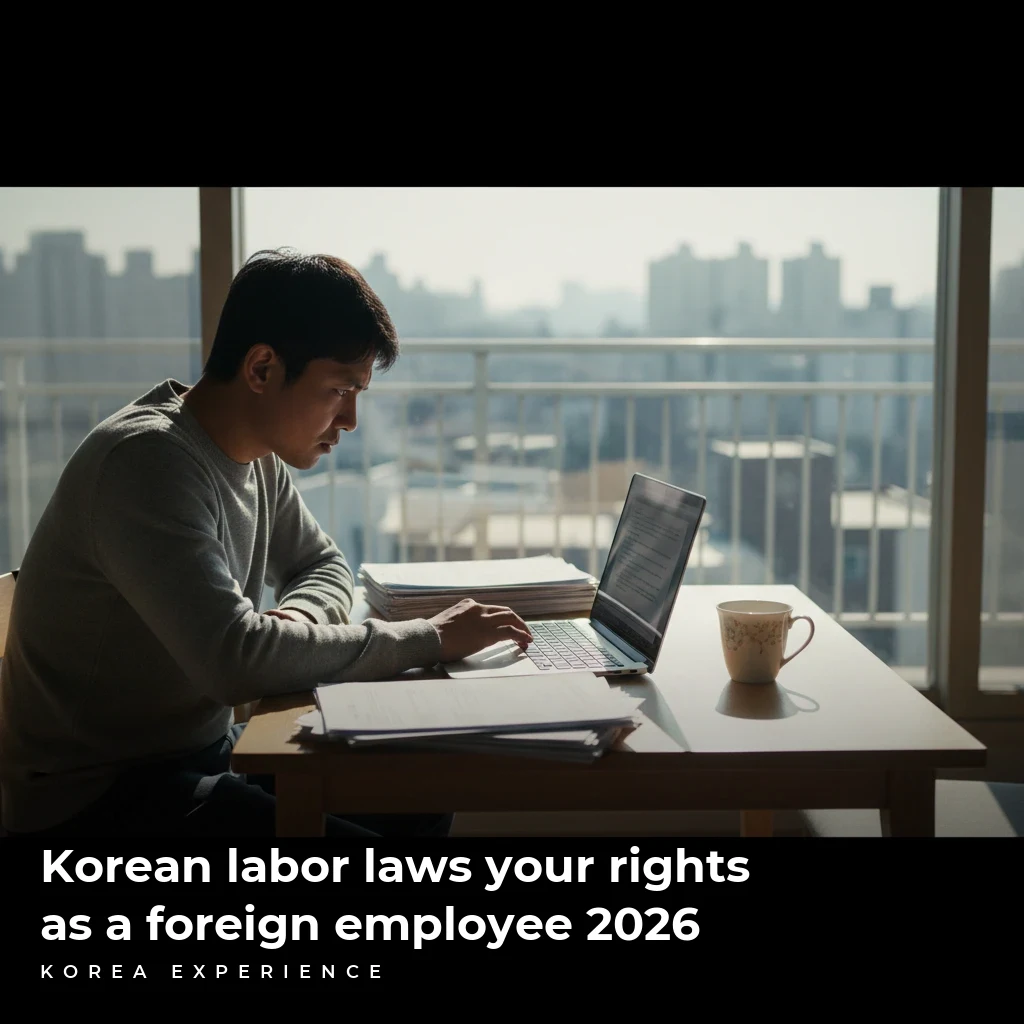
Korean Labor Laws for Foreigners: Your 2026 Rights Guide

Understand Korean labor laws as a foreign employee in 2026. Learn about contracts, wages, working hours, and dispute resolution for a secure work life.

Dreaming of a thriving career in the dynamic heart of South Korea? Many international professionals and aspiring expats choose Korea for its innovation, vibrant culture, and growing economy. However, successfully integrating into the Korean workforce goes beyond mastering new skills or understanding workplace etiquette. It critically involves knowing your rights and obligations under the nation's labor laws. For foreign employees, navigating a new legal landscape can seem daunting, especially with cultural nuances and language barriers.

This comprehensive guide, "Korean Labor Laws Your Rights as a Foreign Employee 2026," is designed to empower you with the essential knowledge you need to protect yourself and thrive in your Korean workplace. We'll delve into the core principles of the Korean Labor Standards Act, clarify your rights regarding contracts, wages, working hours, and leave, and equip you with the resources to address any potential disputes. Whether you're considering a move, just arrived, or are a seasoned expat, understanding these laws is fundamental to a secure and fulfilling work life in Korea.

By the end of this post, you will have a clear understanding of:

  • The scope and protections of the Korean Labor Standards Act.
  • Key elements to look for in your employment contract.
  • Your rights concerning wages, working hours, and severance pay.
  • Policies on leave, holidays, and workplace safety.
  • Practical steps and resources for resolving labor disputes.

Let's embark on this crucial journey to ensure your experience working in Korea is as positive and protected as possible.

Understanding the Korean Labor Standards Act (LSA)

The bedrock of employee protection in South Korea is the Labor Standards Act (LSA), which governs the relationship between employers and employees. Enacted to ensure fair treatment, safe working conditions, and reasonable remuneration, the LSA applies broadly across most workplaces. For any foreign employee, familiarity with this act is not just advisable; it's essential.

Who is Covered by the LSA?

A common misconception among foreign workers is that their unique visa status or international background might exempt them from certain Korean labor protections. This is largely untrue. The LSA generally applies to all employees working in South Korea, regardless of nationality, visa type, or employment status (with very few exceptions, typically for very small businesses or specific categories like domestic helpers who fall under different regulations). This means if you are employed by a Korean company or a foreign company operating in Korea, you are likely protected by the LSA.

Even foreign teachers, engineers, researchers, or general office workers fall under the LSA's purview, ensuring they receive the same fundamental protections as their Korean counterparts. It's important to note that the LSA covers regular employees, fixed-term employees, and even part-time employees proportionally.

Key Principles of Fair Labor

The LSA is founded on several core principles designed to safeguard employee rights:

  • Equal Treatment: Prohibits discrimination based on nationality, gender, religion, or social status.
  • Protection of Wages: Ensures timely payment of minimum wage, overtime, and severance pay.
  • Reasonable Working Hours: Sets limits on standard and overtime hours to prevent exploitation and ensure work-life balance.
  • Safe Working Environment: Mandates employers to take measures for workplace safety and health.
  • Fair Dismissal: Stipulates conditions under which an employee can be dismissed, requiring "justifiable cause."
  • Right to Leave: Guarantees various forms of leave, including annual paid leave.

Understanding these principles provides a solid foundation for asserting your rights and recognizing when they might be violated.

Employment Contracts and Your Rights

Your employment contract is the most critical document defining your work relationship in Korea. It serves as a legal agreement outlining the terms and conditions of your employment. For foreign employees, thoroughly understanding and scrutinizing your contract before signing is paramount.

Types of Contracts: Regular vs. Fixed-Term

Korean labor law recognizes several types of employment contracts:

  • Regular Employment Contract (무기계약직 - Mugigyeakyik): This is the standard, open-ended contract without a specific end date. Employees under this contract typically enjoy stronger job security and full LSA protections. After two years of continuous employment on a fixed-term contract, an employee may automatically be converted to a regular employee in many cases, offering enhanced stability.
  • Fixed-Term Employment Contract (기간제 근로계약 - Giganje Geullo Gyeyak): These contracts have a predetermined end date, usually lasting one or two years. While widely used, particularly for foreign workers in teaching or project-based roles, there are limits. An employer cannot generally use a fixed-term contract for more than two years for the same job unless specific exceptions apply (e.g., replacement for parental leave, specific projects). After two years, if the employment continues, the employee is typically considered a regular employee.

It's crucial to understand which type of contract you are signing, as it impacts your job security and potential for severance pay.

Essential Clauses to Look For

When reviewing your contract, pay close attention to these critical clauses:

  • Job Title and Responsibilities: A clear description of your role and duties.
  • Contract Period: Start and end dates, especially for fixed-term contracts.
  • Working Hours: Standard daily/weekly hours, break times, and any provisions for overtime.
  • Wages and Payment Schedule: Your gross monthly/hourly wage, deductions (taxes, national health insurance, national pension), and exact payment date. Ensure it meets the minimum wage.
  • Benefits: Details on health insurance, national pension, severance pay eligibility, and other company-specific benefits (e.g., housing allowance, flight tickets).
  • Annual Paid Leave: How many days of paid leave you are entitled to.
  • Termination Conditions: Grounds for dismissal and required notice periods for both parties.
  • Probationary Period: If applicable, its duration and terms.

Avoiding Unfair Contract Terms

While many employers offer fair contracts, some might attempt to include clauses that are disadvantageous or even illegal under the LSA. Be wary of terms that:

  • Waive your right to severance pay: This is illegal if you meet the eligibility criteria.
  • Require excessive penalties for early termination: While reasonable liquidated damages might be permissible, overly punitive clauses are often unenforceable.
  • State "no overtime pay" regardless of hours worked: Overtime must be compensated according to the LSA.
  • Exclude you from social insurance: Employers are generally mandated to enroll employees in National Health Insurance and National Pension Scheme.

If you encounter any questionable clauses, seek advice from a labor attorney or the Ministry of Employment and Labor (MOEL) before signing. An unsigned contract is often easier to rectify than a signed one.

Wages, Working Hours, and Overtime Compensation

Your compensation and working conditions are fundamental aspects of your employment. The LSA sets clear guidelines to ensure fair pay and prevent overwork.

Minimum Wage in Korea

The minimum wage in South Korea is reviewed and updated annually. While the final 2026 minimum wage will be determined in mid-2025, based on current trends, foreign employees can anticipate a further increase from the 2025 rate. It's crucial to check the most up-to-date figure from the Ministry of Employment and Labor. As of recent years, the minimum wage applies per hour, and your monthly salary must meet this hourly rate multiplied by your standard working hours. This applies equally to foreign employees, including those on E-2 (English teacher) or E-7 (specific professional) visas.

Standard Working Hours and Breaks

The LSA stipulates:

  • Standard Working Hours: Up to 8 hours per day and 40 hours per week, excluding break times.
  • Breaks: Employers must provide a minimum of 30 minutes of break time for every 4 hours of work and 1 hour for every 8 hours of work. These breaks are generally unpaid.
  • Rest Day: Employees are entitled to at least one paid weekly rest day (주휴일 - Ju Hyuil), typically Sunday.

Overtime, Night Work, and Holiday Pay

Any work beyond the standard 40 hours per week or 8 hours per day is considered overtime and must be compensated at an increased rate.

  • Overtime (연장근로 - Yeonjang Geullo): 1.5 times your ordinary wage.
  • Night Work (야간근로 - Yagan Geullo): Work between 10 PM and 6 AM, compensated at 1.5 times your ordinary wage. If this is also overtime, the rate can stack (e.g., 2 times ordinary wage).
  • Holiday Work (휴일근로 - Hyuil Geullo): Work on a weekly rest day or a public holiday.
    • For the first 8 hours: 1.5 times ordinary wage.
    • For hours exceeding 8: 2 times ordinary wage.

Employers must obtain employee consent for overtime work, and there are legal limits to how much overtime can be mandated (generally 12 hours per week). Keep detailed records of your working hours to ensure accurate payment.

Severance Pay (Toejikgeum) Explained

Severance pay, or Toejikgeum, is a mandatory entitlement for employees who have worked for the same employer for one year or more, working at least 15 hours per week (or 60 hours per month), and whose employment terminates for any reason (resignation, dismissal, contract expiration).

  • Calculation: Typically, one month's average wage for each year of service. This average wage includes basic salary, regular bonuses, and other regular allowances.
  • Payment Deadline: Employers must pay severance within 14 days of the employment termination date.
  • Eligibility: Even foreign employees on fixed-term contracts are eligible if they meet the one-year service requirement. Some companies may use a pension-style severance system (퇴직연금 - Toejik Yeon-geum) where contributions are made regularly to a fund. Ensure you understand which system applies to you.

It's a common area of dispute for foreign employees, so meticulously track your employment start and end dates and maintain records of your wages.

Leave Policies: Vacation, Sick Leave, and Parental Leave

Understanding your entitlements to time off is crucial for maintaining work-life balance and managing personal needs.

Annual Paid Leave (Yeonchahyu-ga)

The LSA grants employees annual paid leave.

  • First Year: After completing one month of continuous service, an employee earns one day of paid leave per month, up to 11 days in the first year.
  • Subsequent Years: After one year of continuous service, an employee is entitled to 15 days of paid annual leave. This increases by one day for every two years of service beyond the first, up to a maximum of 25 days.
  • Usage: Employees typically have one year from the date the leave is granted to use it. Unused leave can sometimes be compensated financially, but this depends on specific company policies and circumstances.

Public Holidays and Your Rights

Korea observes numerous public holidays (공휴일 - Gonghyu-il). For employees in workplaces that are not small businesses (typically 5 employees or more), these holidays are generally paid days off. If you are required to work on a public holiday, you are entitled to holiday work pay as detailed above (1.5x or 2x your ordinary wage, depending on hours worked).

Understanding Sick Leave

Unlike some Western countries, there is no universal legal entitlement to paid sick leave in Korea under the LSA, unless it is specifically stipulated in a collective bargaining agreement or company rules.

  • General Practice: Most companies treat short-term sick leave as unpaid time off.
  • Exceptions: For work-related injuries or illnesses, specific Industrial Accident Compensation Insurance (산재보험 - Sanjae Boheom) rules apply, which provide compensation for lost wages and medical treatment.
  • Company Policy: Always check your employment contract or company's internal regulations for any provisions regarding paid sick leave.

Parental Leave and Family Support

Korea has robust laws supporting new parents:

  • Maternity Leave (출산휴가 - Chulsan Hyuga): Female employees are entitled to 90 days of maternity leave (120 days for multiple births), usually starting 45 days before the expected delivery date. A portion of this leave is paid through social insurance.
  • Paternity Leave (배우자 출산휴가 - Baehuja Chulsan Hyuga): Fathers are entitled to 10 days of paid paternity leave, which can be split and used within 90 days of the child's birth.
  • Parental Leave (육아휴직 - Yuga Hyujik): Both mothers and fathers are eligible for up to one year of parental leave per child until the child reaches eight years of age or finishes second grade. During this period, the employee receives a portion of their salary through government benefits, typically a percentage of their ordinary wage, up to a certain cap. Eligibility usually requires at least six months of employment with the company.

These provisions apply equally to foreign employees who meet the eligibility criteria, ensuring family support regardless of nationality.

Termination, Resignation, and Severance Pay

The end of employment, whether initiated by the employee or employer, is a critical phase. Understanding the proper procedures and your rights is essential.

Grounds for Fair Dismissal

Korean labor law offers strong protection against unfair dismissal. An employer cannot dismiss an employee without "justifiable cause" (정당한 이유 - Jeongdanghan Iyu). Valid reasons for dismissal typically include:

  • Gross misconduct: Serious breach of company rules, criminal activity, or significant damage to the company.
  • Incompetence: Consistent failure to perform job duties despite attempts at improvement, usually requiring a documented history of warnings and performance improvement plans.
  • Business Necessity (해고 - Haego): Restructuring or downsizing due to severe financial difficulties. Even in such cases, employers must demonstrate a genuine need, make efforts to avoid dismissal, establish fair selection criteria, and consult with the labor union or employees.

Dismissal without justifiable cause is considered unfair dismissal (부당해고 - Budang Haego), and employees can seek remedy through the Labor Relations Commission.

Notice Periods for Termination

  • Employer-Initiated Dismissal: Employers must give at least 30 days' notice before dismissal. If they fail to provide this notice, they must pay 30 days' ordinary wage as dismissal allowance (해고예고수당 - Haego Yego Sudang), in addition to severance pay. This notice period applies to employees who have worked for more than three months.
  • Employee-Initiated Resignation: While not strictly regulated by the LSA, it's customary and advisable for employees to provide 30 days' notice before resigning. This allows the employer time to find a replacement and ensures a smooth transition. Failure to provide adequate notice could potentially lead to claims for damages by the employer, though this is rare and difficult to prove.

How to Resign Gracefully

If you decide to resign:

  1. Check your contract: Look for any specific notice period requirements.
  2. Draft a formal resignation letter: State your last day of employment clearly and professionally.
  3. Inform your manager first: Schedule a meeting to convey your decision in person.
  4. Cooperate during transition: Offer to help train your replacement and complete pending tasks.

Claiming Your Severance Pay and Unpaid Wages

As mentioned, severance pay is a significant entitlement. If your employer fails to pay your severance or any unpaid wages (e.g., unpaid overtime, minimum wage violations) within 14 days of your termination, you have the right to file a claim.

FeatureResignation (자진퇴사)Dismissal (해고)
Initiated ByEmployeeEmployer
Cause RequiredN/A (employee's decision)Yes, "justifiable cause" under LSA
Notice PeriodCustomary 30 days (may vary by contract)Minimum 30 days (or 30 days' pay in lieu of notice)
Severance PayEligible if 1+ year of serviceEligible if 1+ year of service
Unemployment Ben.Generally NOT eligible (unless involuntary resignation)Eligible if dismissed through no fault of own
Legal RecourseLimited, unless constructive dismissal (rare)Unfair dismissal claim possible via Labor Relations Commission

Workplace Safety and Harassment Prevention

A safe and respectful workplace is a fundamental right. The Industrial Safety and Health Act (산업안전보건법 - Sanup Anjeon Bogeonbeop) and the Labor Standards Act collectively aim to protect employees from harm and discrimination.

Employer Responsibilities for a Safe Environment

Employers are legally obligated to:

  • Provide a safe working environment: This includes maintaining machinery, ensuring proper ventilation, providing safety equipment, and conducting regular safety inspections.
  • Implement safety training: Educate employees on potential hazards and safe work practices.
  • Report industrial accidents: Serious accidents must be reported to relevant authorities.
  • Provide accident compensation: For work-related injuries or illnesses, employees are covered by Industrial Accident Compensation Insurance, which provides medical treatment and compensation for lost wages.

If you believe your workplace is unsafe, you have the right to report it without fear of retaliation.

Addressing Workplace Harassment or Discrimination

The LSA and other relevant laws prohibit workplace harassment (직장 내 괴롭힘 - Jikjang Nae Goeropim) and discrimination, including:

  • Sexual Harassment: Unwanted sexual advances, requests for sexual favors, or other verbal or physical conduct of a sexual nature.
  • Bullying/Power Harassment: Abusive behavior by those in positions of power, creating a hostile work environment.
  • Discrimination: Unfair treatment based on nationality, gender, religion, age, disability, or social status.

For foreign employees, discrimination can sometimes manifest subtly, such as unequal pay for equal work or being overlooked for promotions based on nationality.

If you experience harassment or discrimination:

  1. Document everything: Keep a detailed log of incidents, including dates, times, locations, individuals involved, witnesses, and what was said or done. Save any relevant emails or messages.
  2. Report to your company: Many companies have internal reporting procedures or designated personnel (e.g., HR, ethics officer).
  3. Seek external help: If your company fails to address the issue, or if you feel uncomfortable reporting internally, you can file a complaint with the Ministry of Employment and Labor (MOEL) or seek advice from a legal aid center.

The law protects whistleblowers, meaning you should not face negative consequences for reporting harassment or safety violations in good faith.

Despite your best efforts, labor disputes can arise. Knowing where to turn for help is crucial for foreign employees.

The Ministry of Employment and Labor (MOEL)

The Ministry of Employment and Labor (MOEL) is the primary government agency responsible for enforcing labor laws in Korea. It serves as a vital resource for foreign employees facing labor issues.

  • Services: MOEL offers consultation, mediation, and investigation services for various labor disputes, including unpaid wages, unfair dismissal, and harassment.
  • Contact: You can file a complaint online through their website or visit a local MOEL branch office (지방고용노동관서 - Jibang Goyong Nodonggwanseo). They often have dedicated foreign worker support hotlines and services with multilingual staff. The "1350" hotline is a valuable first point of contact.

Several organizations offer free or low-cost legal assistance specifically for foreign residents in Korea:

  • Korea Legal Aid Corporation (대한법률구조공단 - Daehan Beomnyul Gujo Gongdan): Provides free legal counseling and, for those who meet income criteria, may offer legal representation. They have specific services for foreign workers.
  • Migrant Worker Centers (외국인 근로자 지원센터 - Oegugin Geulloja Jiwon Senteo): Located in various cities, these centers offer a range of support services including labor counseling, cultural adaptation programs, and language assistance.
  • Private Lawyers: For complex cases, hiring a private labor attorney specializing in foreign worker rights may be necessary. Ensure they have experience with LSA cases involving non-Koreans.

Filing a Labor Complaint: Step-by-Step

  1. Gather Evidence: Collect all relevant documents: employment contract, pay stubs, bank statements, work schedules, emails, witness contacts, and detailed records of the dispute.
  2. Seek Consultation: Contact MOEL (dial 1350) or a legal aid center to understand your rights and the best course of action.
  3. File a Complaint: Submit a formal complaint to MOEL. This can be done online or in person at a regional office.
  4. Investigation and Mediation: MOEL will investigate the claim and may attempt to mediate a resolution between you and your employer.
  5. Legal Action (if necessary): If mediation fails, you may pursue further legal action through the Labor Relations Commission (노동위원회 - Nodong Wiwonhoe) or civil court.

Remember, acting promptly is important as there are statutes of limitations for filing certain complaints (e.g., typically 3 years for unpaid wages and severance pay).

FeatureMOEL (Ministry of Employment and Labor)Legal Aid Services (e.g., Korea Legal Aid Corp.)
Primary RoleEnforce labor laws, investigate complaints, mediate disputesProvide legal counseling, representation, and education
CostFree for consultations, investigations, and mediationFree consultations; low-cost/free representation for eligible individuals
FocusLabor law violations, workplace safety, employment practicesBroader legal issues, including labor, but also family, civil, etc.
AuthorityCan order employers to comply, impose fines, initiate prosecutionActs as legal counsel, represents individuals in legal proceedings
Accessibility for ForeignersDedicated hotlines (1350), multi-language support, online filingSome services specifically for foreigners, multilingual staff often available
Best forInitial complaint filing, basic rights questions, mediationComplex legal strategy, court representation, in-depth legal advice

Common Labor ViolationDescriptionExample ScenarioTypical Solution
Unpaid Wages/SeveranceEmployer fails to pay full salary, overtime, or severance pay on time.My contract ended last month, but my severance hasn't been paid.File a complaint with MOEL for investigation and collection order.
Unfair DismissalTermination without "justifiable cause" or proper notice.Fired after two weeks without reason or warning.File an unfair dismissal claim with the Labor Relations Commission.
Minimum Wage ViolationSalary falls below the legally mandated minimum hourly rate.My hourly pay is less than the current minimum wage.File a complaint with MOEL for investigation and payment order.
Overtime Pay EvasionEmployer refuses to pay 1.5x for overtime or holidays.Regularly work 50+ hours/week but only receive basic salary.Document hours and wages, file complaint with MOEL.
Workplace Harassment/DiscriminationEnduring bullying, sexual harassment, or unfair treatment based on nationality.My manager makes inappropriate comments and gives me extra duties.Report internally, then to MOEL if unresolved, seek legal aid for advice.

Frequently Asked Questions (FAQ) about Korean Labor Laws for Foreign Employees

1. Can I be fired without cause in Korea as a foreign employee? No. Like Korean nationals, foreign employees are protected by the Labor Standards Act (LSA), which requires "justifiable cause" for dismissal. An employer cannot fire you arbitrarily. If you believe you've been unfairly dismissed, you can file a complaint with the Labor Relations Commission.

2. What if my employer doesn't pay my severance pay (Toejikgeum)? If you've worked for an employer for one year or more (working at least 15 hours/week) and they fail to pay your severance within 14 days of your termination, you should immediately file a complaint with the Ministry of Employment and Labor (MOEL). They will investigate and take action to ensure you receive your entitlement. Keep all pay stubs and contract details as evidence.

3. Are part-time foreign employees covered by Korean labor laws? Yes, generally. Part-time employees, including foreigners, are covered by the Labor Standards Act on a pro-rata basis. This means they are entitled to protections like minimum wage, weekly paid holidays, annual paid leave, and severance pay, calculated proportionally to their working hours. However, the exact thresholds (e.g., 15 hours/week for severance eligibility) must be met.

4. How long do labor disputes typically take to resolve in Korea? The duration of a labor dispute can vary significantly. Simple cases like unpaid wages might be resolved within a few weeks to a couple of months through MOEL's mediation. More complex cases, such as unfair dismissal claims going through the Labor Relations Commission or potentially to court, can take several months to over a year. Having clear documentation greatly speeds up the process.

5. Can my visa status be affected if I file a labor dispute against my employer? Generally, no. Filing a legitimate labor dispute against an employer for violations of the Labor Standards Act should not negatively affect your visa status. In fact, South Korean authorities recognize the importance of protecting all workers, including foreigners. If your employer threatens your visa, this can be seen as an additional form of harassment or coercion, which you should report to MOEL. For specific visa concerns, it's always wise to consult with immigration authorities or a legal expert specializing in immigration law.

Conclusion: Empowering Your Work Life in Korea for 2026

Working in South Korea offers incredible opportunities for professional growth and cultural immersion. By understanding your "Korean Labor Laws Your Rights as a Foreign Employee 2026," you empower yourself to navigate the workplace confidently and securely. Remember, the Labor Standards Act is in place to protect all employees, regardless of nationality.

Key Takeaways to Remember:

  • Know Your Contract: Thoroughly review your employment contract before signing, paying close attention to wages, hours, and termination clauses.
  • Understand Your Entitlements: Be aware of the minimum wage, your rights to overtime pay, annual leave, and severance pay (Toejikgeum) after one year of service.
  • Prioritize Safety and Respect: You have the right to a safe workplace free from harassment and discrimination.
  • Document Everything: Keep meticulous records of your work hours, pay stubs, communications, and any incidents that may lead to a dispute.
  • Seek Help When Needed: Do not hesitate to contact the Ministry of Employment and Labor (MOEL) via their 1350 hotline or a foreign worker support center if you encounter issues.

Living and working in a foreign country can present unique challenges, but armed with the right information, you can ensure a fair and just experience. For more in-depth information on related topics, explore our other guides on [Korean Visa Regulations for Expats] and [Tips for Adjusting to Korean Workplace Culture]. Your journey in Korea should be enriching and rewarding, both personally and professionally. Stay informed, stay empowered, and enjoy your experience!

About the Author

Korea Experience Team

Written by the Korea Experience editorial team - experts in Korean medical tourism, travel, and culture with years of research and firsthand experience.

⚠️ Medical Disclaimer

The information provided on this website is for general informational purposes only and does not constitute medical advice. Always consult with qualified healthcare professionals before making any medical decisions.

Continue Reading

Explore more articles you might find interesting