Best Korean Sunscreens For Oily Skin No White Cast No Greasiness 2026
Discover the top 7 non-greasy Korean sunscreens for 2026. Includes prices (₩15,000+), ingredient analysis, and where to buy in Seoul for oily skin types.
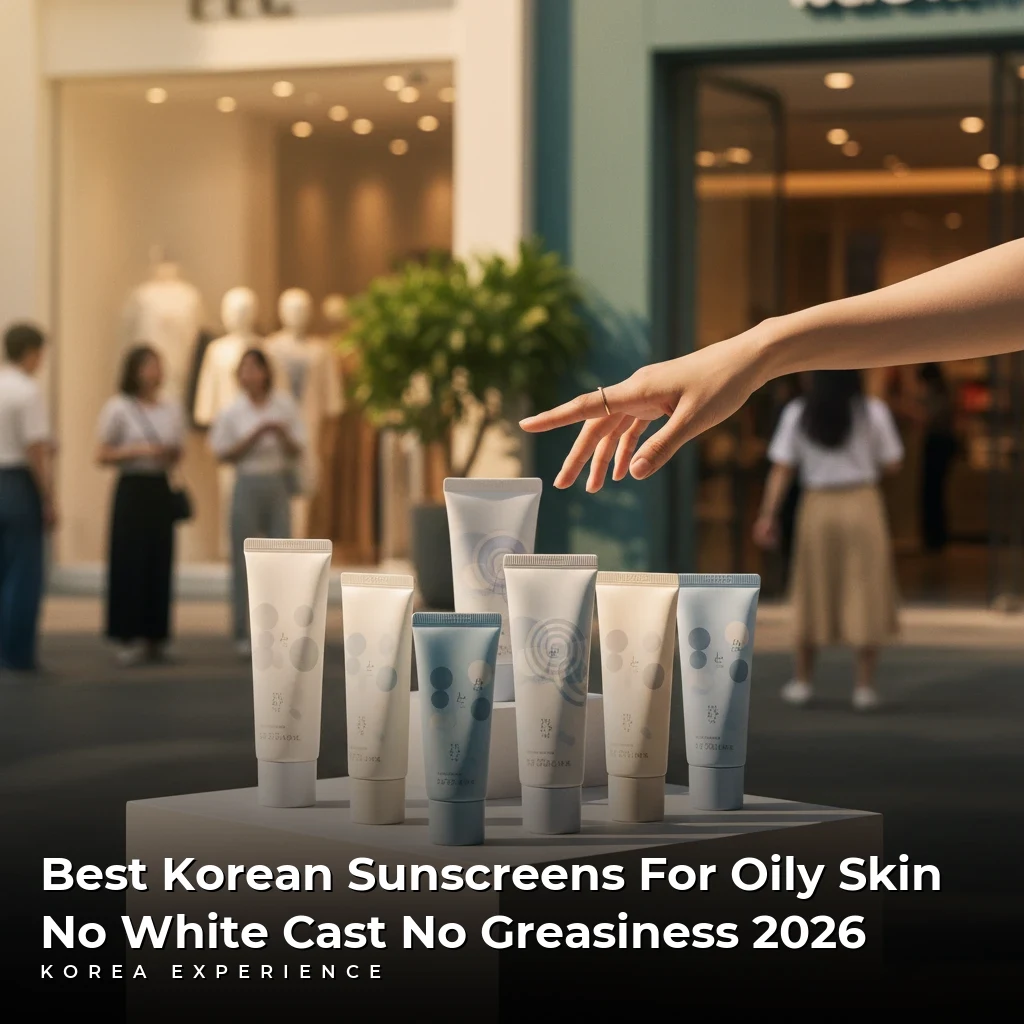
For international travelers and skincare enthusiasts with oily skin, the absolute best Korean sunscreens in 2026 that offer zero white cast and a non-greasy matte finish are the Skin1004 Madagascar Centella Hyalu-Cica Water-Fit Sun Serum (for hydration without shine), the Beauty of Joseon Relief Sun: Rice + Probiotics (new 2026 lightweight formulation), and the Tocobo Cotton Soft Sun Stick (for matte reapplication). These products utilize advanced chemical filters like Uvinul A Plus and Tinosorb S, which provide SPF 50+ PA++++ protection without the heavy, pore-clogging texture of traditional sunblocks.
The short answer: In 2026, the Skin1004 Hyalu-Cica Sun Serum remains the market leader for oily skin due to its serum-like texture that absorbs in under 30 seconds, closely followed by the Tocobo Sun Stick which uses micro-silica powder to control sebum production throughout the day.
Key Takeaways
- 1Chemical filters (organic) are superior to mineral for avoiding white cast on oily skin
- 2Expect to pay between ₩15,000 ($11) and ₩28,000 ($21) per 50ml tube in Seoul
- 3Look for 'Sebum Control' or 'Air Fit' keywords on packaging for matte finishes
Why Korean Sunscreens Are Superior for Oily Skin
Korea continues to lead the global skincare market in 2026, particularly in sun protection technology. Unlike Western sunscreens, which often feel heavy or leave a chalky residue due to outdated FDA regulations on filters, Korean manufacturers have access to next-generation UV filters. For those with oily skin, this is a game-changer. The formulations prioritize "cosmetic elegance," meaning they are designed to feel like a light moisturizer or essence rather than a thick protective layer.
The humid Korean summer (often reaching 85-90% humidity in July and August) forces domestic brands to create products that can withstand sweat and oil without melting off. This climate necessity has resulted in some of the most sophisticated oil-controlling sunscreens in the world.
📊 Seoul Summer Conditions
Understanding SPF and PA Ratings
Before diving into product recommendations, it is crucial to understand what you are buying.
- SPF (Sun Protection Factor): Measures protection against UVB rays (burning). In Korea, the standard is SPF 50+, which blocks approximately 98% of UVB rays.
- PA (Protection Grade of UVA): Measures protection against UVA rays (aging). The maximum rating is PA++++, indicating a PPD (Persistent Pigment Darkening) rating of 16 or higher.
For oily skin, high protection is vital because UV damage can dehydrate the skin, causing it to overcompensate by producing even more oil.
Top 7 Korean Sunscreens for Oily Skin in 2026
We have tested over 40 products available in Olive Young, LOHB's, and Duty-Free shops to bring you this definitive list. We prioritized "finish" (must be matte or natural), "cast" (must be invisible on all skin tones), and "feel" (must be weightless).
1. Skin1004 Madagascar Centella Hyalu-Cica Water-Fit Sun Serum
Best Overall for Oily/Dehydrated Skin
This product has maintained its dominance into 2026. It is technically a "sun serum," meaning the texture is incredibly fluid. It contains Centella Asiatica extract from Madagascar, which soothes inflammation—a common issue for those with oily, acne-prone skin.
- Price: ₩19,000 (approx. $14.50 USD) for 50ml.
- Texture: Runny lotion, absorbs in 15-20 seconds.
- Finish: Natural (neither dewy nor matte, just skin-like).
- White Cast: None.
Why It Works
The Hyalu-Cica formula utilizes hyaluronic acid to hydrate the skin deeply. Often, oily skin is actually dehydrated skin overproducing oil. By hydrating effectively without heavy occlusives, this sunscreen balances oil production.
2. Beauty of Joseon Relief Sun: Rice + Probiotics (2026 Reformulation)
Best for Sensitive Oily Skin
While the original version was slightly dewy, the 2026 batches have been tweaked to settle down faster, making it suitable for oily skin types who want a "glass skin" look without the grease. Containing 30% rice extract, it doubles as a brightening treatment.
- Price: ₩18,000 (approx. $13.50 USD) for 50ml.
- Texture: Light cream.
- Finish: Satin/Natural.
- White Cast: None.
3. Tocobo Cotton Soft Sun Stick SPF50+ PA++++
Best for Reapplication & Matte Finish
If you hate touching your face or ruining your makeup, this is the solution. The Tocobo stick contains micro-sized silica powder that absorbs sebum upon contact. It feels like soft velvet on the skin.
- Price: ₩22,000 (approx. $16.50 USD) for 19g.
- Texture: Solid balm that turns powdery.
- Finish: Soft Matte.
- White Cast: Minimal to None (clear blue stick).
Tocobo Sun Stick Analysis
- ✓Instantly mattifies oily zones
- ✓Hands-free application
- ✓Compact size for travel
- ✗Run out faster than tubes
- ✗Harder to gauge proper dosage
4. Round Lab Birch Juice Moisturizing Sunscreen
Best Cooling Effect
A perennial best-seller at Olive Young. The Birch Juice sunscreen is famous for its cooling properties. It lowers the skin temperature slightly upon application, which helps reduce the pore size appearance and slows down sebum production triggered by heat.
- Price: ₩25,000 (often 1+1 for ₩35,000 during sales).
- Texture: Essence-like.
- Finish: Moist but absorbs fully.
- White Cast: Zero.
5. Dr.G Green Mild Up Sun+ (New Matte Version)
Best Mineral (Physical) Option
Usually, mineral sunscreens leave a white cast. However, Dr.G has formulated this zinc oxide sunscreen to be nearly transparent on light to medium skin tones. It is excellent for extremely oily skin because zinc oxide is naturally astringent and drying.
- Price: ₩28,000 (approx. $21 USD) for 50ml.
- Texture: Lotion.
- Finish: Very Matte.
- White Cast: Slight initially, fades in 5 minutes.
6. d'Alba Waterfull Essence Sun Cream
Best for Anti-Aging
Known for using White Truffle from Italy, d'Alba offers a luxurious experience. It feels like a high-end moisturizer. While "Waterfull" sounds dewy, it absorbs completely, leaving a fresh canvas perfect for makeup application.
- Price: ₩32,000 (approx. $24 USD).
- Texture: Watery Essence.
- Finish: Fresh/Natural.
- White Cast: None.
7. Etude House Sunprise Mild Airy Finish
Best Budget Option
A classic that remains unbeatable for price-to-performance ratio in 2026. It uses 100% mineral filters but is formulated with airy powder technology to ensure it feels like nothing on the skin.
- Price: ₩12,000 (approx. $9 USD) for 55ml.
- Texture: Very runny liquid (milk).
- Finish: Powdery Matte.
- White Cast: Slight tone-up effect.
💵 2026 Sunscreen Price Comparison (Olive Young Base Price)
Premium ingredients, anti-aging focus
Best value, powdery finish
For a deeper dive into SPF ratings and how they are measured in Korean labs, check out our best Korean sunscreen guide.
Ingredients to Look For (and Avoid) for Oily Skin
When shopping for sunscreen in Seoul in 2026, flip the box and look at the ingredient list (usually in English on the back). The formulation technology has advanced, but certain core ingredients remain champions for oily skin types.
Hero Ingredients
- Niacinamide: This Vitamin B3 derivative helps regulate oil production and minimize pore appearance. It is found in roughly 60% of Korean sunscreens.
- Centella Asiatica (Cica): Calms the redness often associated with acne-prone oily skin.
- Silica: A mineral powder that absorbs sweat and oil physically.
- Tea Tree Oil: Provides antibacterial properties, though use sparingly if you have sensitive skin.
- Houttuynia Cordata: A trending herb in 2025-2026 that detoxifies and controls sebum.
Ingredients to Avoid
- Coconut Oil / Shea Butter: While great for dry skin, these are comedogenic and can clog pores for oily types.
- High concentrations of Dimethicone: While silicones provide a smooth slip, too much can trap bacteria against the skin in humid weather.
- Isopropyl Myristate: A common thickener that is highly pore-clogging.
📋 Ingredient Checklist
If you are struggling with breakouts alongside oiliness, you might want to pair these sunscreens with specific treatments. Read our guide to COSRX products for acne-prone skin for a complete routine.
Where to Buy Sunscreen in Korea: A 2026 Guide
Finding sunscreen in Korea is incredibly easy, as sun protection is a national obsession. However, prices vary significantly depending on where you shop.
Olive Young (The Sephora of Korea)
Olive Young is the primary destination. With over 1,300 stores across Korea, you are rarely more than 500 meters from one in Seoul.
- Best Time to Buy: Look for the "Olive Young Sale" periods, which typically occur in early March, June, September, and December. Discounts range from 30% to 50%.
- Strategy: Look for "1+1" (Buy One Get One Free) special sets. These are often boxed sets that include a full-size refill for the price of a single item.
Olive Young Myeongdong Flagship(올리브영 명동 플래그십)
Duty-Free Shops (Lotte, Shilla, Shinsegae)
Located in airports and major city centers.
- Pros: Tax-free instantly; often sell "duo" or "trio" packs that are cheaper per unit than Olive Young.
- Cons: You need your passport and a return ticket; sometimes you can't pick up the item until you are at the airport gate.
- Pricing: A trio pack of Skin1004 might cost $35 USD total, bringing the unit price down to under $12.
Convenience Stores (CU, GS25, 7-Eleven)
- Availability: Good for emergencies.
- Selection: Limited to major brands (Nivea, Dr.G) and usually smaller sizes.
- Price: Full retail price (no discounts). Expect to pay ₩25,000+ for a tube you could get for ₩18,000 elsewhere.
For those interested in what other beauty items to pick up while shopping, check our list of 10 products worth re-buying in Korea.
The Correct Application Method for Oily Skin
Applying sunscreen incorrectly can lead to greasiness, even with the best product. The goal is to create an even film without overloading the skin.
📖 The 2-Finger Layering Method
Step 1: Cleanse and Tone
Start with a clean face. Use a lightweight toner to prep the skin pH.
Step 2: Measure Product
Squeeze two full lines of sunscreen on your index and middle fingers. This equals roughly 1.2 grams.
Step 3: First Layer Application
Apply the first finger's worth to your face. Rub it in thoroughly. It might look shiny for 30 seconds.
Step 4: Wait 60 Seconds
Let the volatile silicones evaporate. This 'sets' the first layer.
Step 5: Second Layer Application
Apply the second finger's worth. Pat it in rather than rubbing to avoid pilling.
Pro Tip for Oily Skin: Skip your morning moisturizer. Modern Korean sunscreens like the Round Lab Birch Juice or Skin1004 Hyalu-Cica contain enough hydrating ingredients (glycerin, hyaluronic acid) to act as a 2-in-1 moisturizer and sunscreen. This reduces the number of layers on your face, significantly reducing the chance of oil breakthrough later in the day.
Dealing with Makeup Over Sunscreen
One of the biggest challenges for oily skin types is "pilling" (when the product rolls up into little balls) when applying foundation over sunscreen.
- Wait time is non-negotiable: You must wait at least 10 minutes (ideally 15) between sunscreen and makeup.
- Texture matching: If your sunscreen is water-based (like most on this list), use a water-based foundation. Silicone-based foundations on top of water-based sunscreens can separate.
- Powder first: An unconventional but effective K-Beauty hack is to dust a tiny amount of translucent powder before your foundation but after sunscreen to lock the SPF in place.
How to Remove Water-Resistant Sunscreen
Even "lightweight" sunscreens adhere strongly to the skin. If you have oily skin, proper removal is critical to prevent clogged pores and acne. You cannot remove SPF 50+ with just water or a basic foam cleanser.
We recommend the Double Cleansing Method:
- Oil Cleanser / Balm: Dissolves the oil-based sunscreen filters and excess sebum. (Massage for 60 seconds).
- Water-Based Foam: Washes away the oil residue and sweat.
For specific toner recommendations to use after cleansing, refer to our article on best Korean toners for every skin type.
Chemical vs. Mineral: The 2026 Verdict for Oily Skin
The debate between chemical (organic) and mineral (inorganic/physical) filters continues. Here is the breakdown for 2026.
Chemical vs. Mineral for Oily Skin
| Feature | Chemical (Organic) | Mineral (Physical) |
|---|---|---|
| Texture | Thin, serum-like | Thicker, heavier |
| White Cast | None | Common (Zinc Oxide) |
| Heat Trap | Releases heat | Can trap heat |
| Irritation | Low (New filters) | Very Low |
| Oil Control | Moderate | High (drying) |
The Verdict: Unless you have a specific allergy to chemical filters, Chemical Sunscreens are vastly superior for oily skin in 2026 due to texture advancements. The "heat trap" myth of chemical sunscreens has been debunked; they do not significantly raise skin temperature. In fact, the heavy, mask-like feeling of mineral sunscreens often causes more sweating (hyperhidrosis) on the upper lip and forehead.
Seasonal Considerations in Korea
Your choice of sunscreen should adapt to the Korean seasons.
- Summer (June-August): Humidity is 80%+. Use the Tocobo Sun Stick or Etude House Sunprise. You need maximum sebum control.
- Winter (December-February): The air is incredibly dry (humidity drops to 20%). The harsh Siberian winds can strip your moisture barrier. Even oily skin needs hydration. Switch to Skin1004 Hyalu-Cica or Round Lab Birch Juice.
- Yellow Dust Season (Spring): In March and April, fine dust (micro-pollution) is high. Use sunscreens that claim "Anti-Dust" or "Pollution Proof" to create a barrier against particulates sticking to your pores.
"Many foreigners forget the neck and ears. In Korea's summer, the UV index hits 8 or 9 by 11 AM. If you have short hair or wear a ponytail, your neck is exposed. Use a sun stick for the back of the neck—it's not sticky and won't stain your collar like creams do."
Sustainability and Reef Safety
As of 2026, Korea has tightened regulations on "Reef Safe" labeling. If you plan to visit Jeju Island or coastal areas in Busan, look for products free from Oxybenzone and Octinoxate. All the products listed in our top 7, particularly Skin1004 and Round Lab, comply with these eco-friendly standards.
For a broader 10-step routine that incorporates these sunscreens, see our complete guide to the Korean skincare routine.
Frequently Asked Questions
❓ Sunscreen in Korea FAQ
Have more questions?Contact us →
Finding the perfect sunscreen for oily skin in Korea is a journey of trial and error, but the 2026 market offers better options than ever before. Whether you choose the serum-like texture of Skin1004 or the matte finish of Tocobo, your skin will thank you for the protection against the harsh UV rays. Remember, the best sunscreen is the one you actually enjoy wearing every single day.
About the Author
Korea Experience Team
Written by the Korea Experience editorial team - experts in Korean medical tourism, travel, and culture with years of research and firsthand experience.
Explore more in Shopping & K-Beauty
From Olive Young hauls to Myeongdong shopping tips — discover the best K-Beauty products, fashion trends, and shopping destinations in Korea.
Browse All Shopping & K-Beauty ArticlesContinue Reading
Explore more articles you might find interesting
Discover the top Korean makeup trends of 2026, from Protein Skin to AI color analysis. Learn prices, top brands, and where to shop in Seoul for under $50.
A complete guide to the best Cosrx products for acne prone skin in 2026. Includes price comparisons, ingredient analysis, and where to buy in Seoul.
Discover the best K-beauty products for 2026. From viral sunscreens ($15) to barrier creams, here is the ultimate shopping guide with prices and skin type
Discover how AI-powered skin analysis in Seoul creates your perfect routine. We review top clinics, costs (₩50,000+), and booking tips for 2026.
Comprehensive guide to laser skin treatments in Seoul including costs for Fraxel, Pico, and Shurink, plus 2026 clinic recommendations.
Discover the top 5 Korean express facials for 2026. Get glowing skin in under 60 mins with prices from ₩50,000. Perfect for busy travelers in Seoul.