Korean toner vs essence: What is the real difference in 2026?
Confused by K-beauty steps? We break down the 15% concentration difference and texture variations between toners and essences for your 2026 routine.
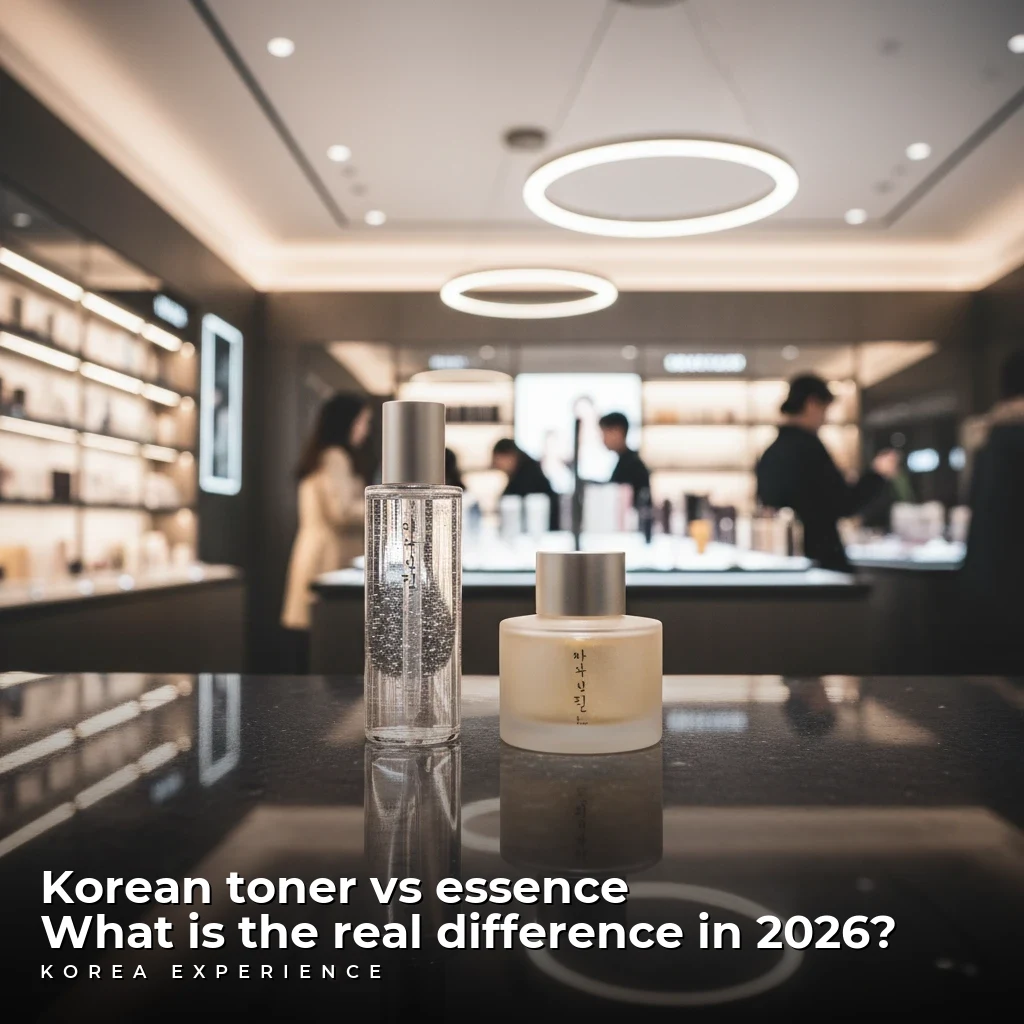
If you have ever walked into an Olive Young in Myeongdong or Gangnam, you know the sensation of "skincare paralysis." With over 20,000 products lining the shelves, the distinction between a "skin," a "toner," and an "essence" can seem nonexistent. You might pick up two bottles that look identical—clear, watery liquids—only to find one costs ₩15,000 ($11 USD) and the other ₩65,000 ($48 USD).
The primary confusion stems from Western skincare definitions clashing with Korean product evolution. In the West, toner is traditionally an astringent used to remove leftover dirt. In Korea, toner (often labeled as "Skin") is the first step of hydration. But then, isn't essence also for hydration?
The short answer: Korean toners balance skin pH to 5.5 and prep the surface, while essences contain 15-20% higher concentrations of active ingredients like fermented yeast or snail mucin to treat specific cellular concerns.
Key Takeaways
- 1Toners (Skin) balance pH levels to 5.5 after cleansing
- 2Essences penetrate 30% deeper with higher active ingredient loads
- 3Modern 'First Essences' blur the line but usually cost 2x more
The Fundamental Difference: Purpose and Formulation
To understand the difference, we have to look at the chemistry and the specific role each product plays in the famous Korean skincare routine. While the lines are blurring in 2026 due to hybrid products, the core functions remain distinct.
What is a Korean Toner (or "Skin")?
In Korea, you will rarely see the word "Astringent." Instead, you will see "Toner," "Skin," "Starter," or "Fresh."
A Korean toner is primarily a hydration prep step. When you cleanse your face, even with a gentle low-pH cleanser, you disrupt the skin's acid mantle. A toner's job is to reset your skin's pH balance to an optimal 5.5 within 60 seconds of washing.
Western toners often contain high levels of alcohol (sometimes 20-30%) to strip oil. Korean toners typically contain less than 5% alcohol (if any) and are packed with humectants like hyaluronic acid, glycerin, and botanical extracts like Centella Asiatica.
Terminology Alert
If you see a product labeled "Skin" (scented water) in a Korean brand's lineup (like Laneige or Innisfree), this is synonymous with Toner. The terms are used interchangeably in the domestic market.
Key Characteristics of Toner:
- Viscosity: Usually water-like (low viscosity).
- Volume: Typically sold in larger bottles (150ml to 500ml).
- Price: generally affordable, averaging ₩18,000 to ₩35,000 ($13-$25 USD).
- Function: Remove residue, balance pH, lightly hydrate.
What is a Korean Essence?
Essence is often considered the "heart" of the Korean skincare routine. It was a category virtually unknown in the West until the K-beauty boom of the 2010s.
An essence is a delivery system for active ingredients. It is lighter than a serum or ampoule but heavier than a toner. While a toner might have a small amount of Niacinamide, an essence might boast a 5-10% concentration. Essences are designed to penetrate the epidermis deeper than a moisturizer but are less viscous than a serum.
The most famous ingredient in this category is Galactomyces Ferment Filtrate (found in SK-II and Missha Time Revolution). Fermented ingredients are broken down into smaller molecules, allowing them to absorb 2-3 times faster than non-fermented counterparts.
Key Characteristics of Essence:
- Viscosity: Ranges from water-like to a light gel or slimy texture (snail mucin).
- Volume: Smaller than toners, usually 50ml to 150ml.
- Price: Higher price point, averaging ₩35,000 to ₩150,000 ($25-$110 USD).
- Function: Cell turnover, brightening, anti-aging, deep hydration.
Toner vs. Essence at a Glance
| Feature | Korean Toner | Korean Essence |
|---|---|---|
| Primary Goal | pH Balance & Prep | Treatment & Repair |
| Texture | Watery, Runny | Slightly Viscous/Gel |
| Active Concentration | Low (<5%) | Medium-High (10-20%) |
| Step in Routine | Step 1 (After Cleanse) | Step 2 (After Toner) |
| Avg. Cost (Korea) | ₩22,000 | ₩45,000 |
Texture and Viscosity Analysis
One of the most common ways travelers distinguish these products in stores like Olive Young or Chicor is by shaking the bottle.
The Bubble Test: If you shake a toner, the bubbles usually disperse instantly because the surface tension is similar to water. If you shake an essence, the bubbles may move slower or hang in the liquid for 5-10 seconds, indicating a higher density of nutrient-rich ingredients.
However, in 2026, texture is not always a reliable indicator. We now have "Essence Toners" (toners with the thickness of an essence) and "Water Essences" (treatments with the texture of water).
For example, the Laneige Cream Skin Refiner is technically a toner, but it contains a whole bottle of moisturizer dissolved into it using high-pressure blending technology. Conversely, the IOPE Bio Essence is water-thin but is a potent treatment product.
📋 Market Stats 2026
The "First Essence" Phenomenon
If the distinction wasn't confusing enough, enter the "First Essence" (often called Treatment Essence). This category emerged to bridge the gap between cleansing and toning.
A First Essence is almost exclusively made of fermented yeast extracts (Galactomyces, Bifida, Saccharomyces). It is designed to be applied immediately after washing your face—sometimes even before toner, or replacing toner entirely.
The logic is that fermented ingredients work best on bare skin. If you apply a First Essence, you are getting the pH balancing benefits of a toner combined with the cellular repair of an essence.
When to choose a First Essence:
- If you want to simplify your routine (skip the toner).
- If your main concern is dullness and texture rather than just dryness.
- If you are willing to spend typically ₩40,000+ ($30 USD) for this step.
Replacing Toner with First Essence
- ✓Higher concentration of actives
- ✓Simpler 1-step process
- ✓Better for brightening/anti-aging
- ✗More expensive (approx. 40% higher cost)
- ✗Can cause fungal acne in some skin types
- ✗Less effective at removing cleansing residue
Application Techniques: The Korean Way
How you apply these products is just as important as what they contain. In Korea, the use of cotton pads versus hands is a topic of great debate, often split by generation and skin type.
1. The Cotton Pad Method (Toner)
Standard toners are often applied with a cotton pad. This acts as a secondary cleanse (exfoliation). You sweep the pad across the face to remove dead skin cells and chlorine residue from tap water.
- Cost of pads: ₩3,000 for a box of 80 high-quality sponge pads at Olive Young.
- Best for: Exfoliating toners, Oily skin, Heavy makeup wearers.
2. The Patting Method (Essence)
Essences are almost always applied with clean hands. Cotton pads would soak up too much of the expensive product. You pour a coin-sized amount (about the size of a 500-won coin) into your palm and press it into the skin.
- Technique: Use the "Chok Chok" motion—firm, rhythmic patting to aid absorption.
- Best for: Hydration, Sensitive skin, Expensive products.
3. The 7-Skin Method (Toner)
This trend, which peaked a few years ago but remains a staple for dry skin sufferers, involves layering a hydrating toner up to seven times.
- Why: It forces hydration into the skin without the heaviness of a cream.
- Warning: Only use alcohol-free, fragrance-free toners. Doing this with an astringent will destroy your skin barrier.
📖 How to Do the 7-Skin Method
Step 1: Cleanse
Wash face and pat dry with a clean towel.
Step 2: First Layer
Apply toner with a cotton pad to clear residue.
Step 3: Layers 2-7
Pour a dime-sized amount into palms and pat into skin. Wait 30 seconds between layers.
Step 4: Seal
Immediately apply moisturizer to lock in the hydration.
Shopping Guide: What to Buy in Korea (2026 Edition)
When you are visiting Seoul, you will likely head to Olive Young, Chicor, or Lotte Duty Free. Here is how to navigate the shelves based on the toner vs. essence distinction.
Price Comparison and Positioning
Korean skincare follows a "High-Low" philosophy. You can find excellent toners for the price of a coffee and lunch, while essences often command a premium comparable to Western department store brands.
💵 Shopping List Examples
The gold standard of essences. 90ml.
Top-selling toner in 2026. 250ml.
Top Ingredients to Look For
When reading the English ingredient lists (mandatory on packaging in Korea), look for these key differentiators:
For Toners:
- Betaine / Glycerin: Basic hydration.
- PHA / LHA: Gentle exfoliants (gentler than AHA/BHA) found in daily toners.
- Panthenol: For soothing the barrier.
For Essences:
- Snail Secretion Filtrate: The holy grail for repair (e.g., COSRX).
- Bifida Ferment Lysate: Probiotics for barrier strengthening (e.g., Manyo Factory).
- Propolis: For acne-prone skin and glow.
For more detailed product recommendations, check out our guide on Best Korean toners for every skin type 2026 which breaks down specific brand performance.
Determining Your Routine: Do You Need Both?
This is the most common question I get from friends visiting Korea. The answer depends entirely on your skin type and the climate you live in.
Scenario A: The Minimalist (Oily/Combo Skin)
If you live in a humid climate (like Singapore or Seoul in August), you might find layering both products too heavy.
- Strategy: Skip the traditional toner. Use a First Essence immediately after washing, then go straight to a lightweight gel moisturizer.
- Why: The First Essence balances pH and hydrates enough for oily skin types without clogging pores.
Scenario B: The Hydration Seeker (Dry/Dehydrated Skin)
If you are from a dry climate (like Canada or Northern Europe), or visiting Korea during the harsh winter (December-February), you absolutely need both.
- Strategy: Use a Hydrating Toner (maybe 2 layers), followed by a Viscous Essence (like Snail Mucin).
- Why: The toner wets the sponge (your skin), allowing the essence to penetrate deeper. Without the toner, the essence might sit on top of dry patches.
"In 2026, we are seeing a shift away from the 10-step routine toward 'Skip-Care.' Many of my clients in Seoul now mix their toner and essence steps by using a 'Milky Toner'—it has the lipid content of an essence but the volume of a toner. It saves time and money."
The Role of Pad Toners (Toner Pads)
A massive trend that has taken over Olive Young shelves since 2024 is the Toner Pad. These are tubs containing 60-90 cotton rounds pre-soaked in toner.
These blur the line even further. Some pads are textured for exfoliation (Toner function), while others are smooth and meant to be left on the cheeks for 10 minutes like a mini sheet mask (Essence function).
Travel Tip: If you are buying these to take home, check the seal. The liquid weight makes them heavy (approx. 200g-300g per tub), which eats into your luggage allowance. Liquid toners in plastic bottles are often lighter.
For more on buying strategies and what else to stock up on, read our analysis of Beauty empties: 10 products I keep re-buying in Korea 2026.
Specific Recommendations by Skin Concern
To make your shopping trip easier, here is a breakdown of which category typically serves which skin concern better.
Acne and Pore Care
- Winner: Toner.
- Look for toners with BHA (Salicylic Acid) or Tea Tree. Essences are often too rich for active acne and can sometimes over-feed bacteria if they are fermented.
- Rec: Dr.G Red Blemish Clear Soothing Toner.
Anti-Aging and Wrinkles
- Winner: Essence.
- Toners stay on the surface. Anti-aging requires deep penetration of peptides and adenosine. You need an essence for this heavy lifting.
- Rec: Missha Time Revolution The First Essence 5X.
Sensitivity and Redness
- Winner: Tie (depends on ingredient).
- A Mugwort Essence is incredible for calming redness, but a Centella Toner is excellent for daily maintenance. If you have to pick one, a high-concentration Mugwort Essence usually works faster (within 3-5 days).
- Related: Best Korean face masks for dry sensitive skin 2026.
The Seasonal Factor in Korea
If you are currently in Korea or planning a trip, the season dictates which product you should prioritize buying.
Spring/Summer (Late March - September): Humidity is high (often 80%+ in July/August). Focus on buying watery toners and lightweight essences. Heavy, fermented essences can feel sticky and uncomfortable in the Seoul heat.
- Look for: "Water," "Fresh," "Pore," "Cooling."
Autumn/Winter (October - Early March): The Siberian winds make the air extremely dry. The heating systems (Ondol floor heating) also dry out the air indoors. You should buy viscous essences and milky toners.
- Look for: "Cream Skin," "Deep," "Moisture," "Barrier."
📊 Customer Preferences
Where to Buy: A Quick Logistics Guide
Don't just buy at the first shop you see. Prices vary, and tourist benefits are specific.
-
Olive Young: The Sephora of Korea. Ubiquitous.
- Pros: Instant tax refund at the register (bring your passport). Massive selection.
- Cons: Can be crowded. Sales staff may push house brands.
- Location: Best areas to stay near shopping districts.
-
Chicor: Owned by Shinsegae Department Store.
- Pros: Carries higher-end, luxury essences (Huxley, Klairs, international brands). Quieter shopping environment.
- Cons: Fewer locations than Olive Young.
-
Brand Brand Shops (Innisfree, Etude, Nature Republic):
- Pros: Generous free samples (often 10-20 packets of essence/toner).
- Cons: You can only buy that specific brand.
Olive Young Gangnam Flagship(올리브영 강남 타운)
Conclusion: The Verdict
So, Korean Toner vs. Essence—what is the difference? It comes down to preparation vs. treatment.
Think of your skin like a dry sponge. If you put heavy detergent (serum/ampoule) on a dry sponge, it just sits on top. You need to wet the sponge first (Toner) so it becomes absorbent. Then, you soak it in the nutrient-rich liquid (Essence) that does the actual cleaning or repairing.
In the highly competitive world of K-Beauty, skipping one or the other won't ruin your skin, but using them in tandem is the secret behind the "glass skin" look that dominates global beauty trends in 2026.
If you are on a budget, buy a high-quality Toner and a good Serum, skipping the Essence. If you want the full K-Beauty experience and maximum glow, the Essence is the non-negotiable step that differentiates Korean skincare from the rest of the world.
For a broader look at how these fit into the bigger picture, don't miss our Complete guide to Korean skincare routine 10-step method 2026.
❓ Frequently Asked Questions
Have more questions?Contact us →
About the Author
Korea Experience Team
Written by the Korea Experience editorial team - experts in Korean medical tourism, travel, and culture with years of research and firsthand experience.
Explore more in Shopping & K-Beauty
From Olive Young hauls to Myeongdong shopping tips — discover the best K-Beauty products, fashion trends, and shopping destinations in Korea.
Browse All Shopping & K-Beauty ArticlesContinue Reading
Explore more articles you might find interesting
We break down the critical differences between K-Beauty essences and serums, including 2026 trends, price comparisons, and proper layering steps.
Deciding between Laneige and Sulwhasoo? We compare prices (₩32,000 vs ₩140,000), ingredients, and results to help you choose the best K-beauty brand.
Master the Korean men's grooming routine with top product picks for 2026. From 3-second all-in-one lotions to pore care, here is your guide to K-Beauty for men.
A comprehensive guide to spotting fake luxury goods, cosmetics, and streetwear in Korea. Learn the difference between Super Fakes and authentic items.
Discover the secrets of Korean body care, from 15-step scalp spas to traditional milk scrubs. Learn routine steps, costs, and best products for 2026.
We analyze the Korean anti aging retinol vs peptides debate, comparing efficacy, prices (₩25,000+), and top K-Beauty brands for your 2026 skincare routine.