Medical procedures for transgender patients in Seoul 2026 guide
A comprehensive guide to FFS, VFS, and top surgery in Seoul for 2026. Includes costs, recovery times, and clinic recommendations for international patients.
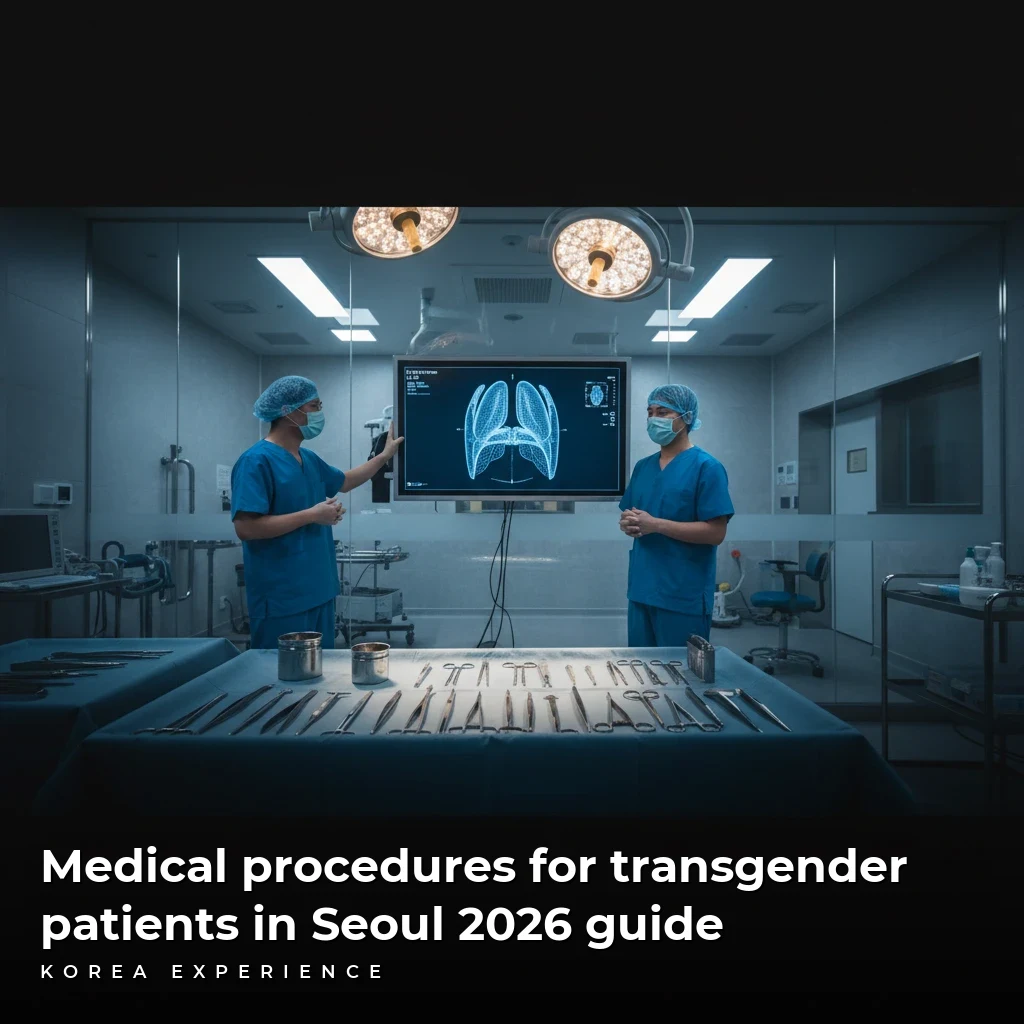
Seoul has established itself as a global leader for gender-affirming surgeries, specifically excelling in Facial Feminization Surgery (FFS) and Voice Feminization Surgery (VFS), offering advanced techniques that prioritize natural aesthetics and functionality. While Thailand remains a major hub for genital reconstruction, South Korea is increasingly the preferred destination for transgender individuals seeking facial contouring, vocal pitch alteration, and body sculpting due to the country's unmatched expertise in bone structure modification and maxillofacial surgery.
The short answer: Seoul is the premier global destination for Facial Feminization Surgery (FFS) and Voice Feminization Surgery (VFS) in 2026, offering success rates above 95% and costs 30-50% lower than North America. Most patients stay for 14-21 days for major procedures, with Gangnam-gu serving as the central hub for English-speaking specialized clinics.
Key Takeaways
- 1Seoul is globally ranked #1 for Facial Feminization Surgery (FFS) bone contouring techniques
- 2Voice Feminization Surgery (VFS) in Korea requires zero external incisions and has a 98% success rate
- 3Average total cost for full-face FFS in Seoul is $20,000-$30,000 USD, compared to $50,000+ in the US
- 4International patients qualify for a tax refund of approximately 7-8% on cosmetic medical procedures
Medical Disclaimer
The content in this article is for informational purposes only and does not constitute medical advice. Gender-affirming surgery involves significant risks. Always consult with board-certified surgeons and medical professionals before making decisions.
Why transgender patients choose Seoul in 2026
South Korea's medical tourism industry has rebounded and evolved significantly by 2026, with a specific focus on niche high-skill surgeries. For the transgender community, Seoul offers a unique value proposition: the intersection of high-tech luxury medical care and extreme surgical precision.
Unlike general plastic surgery, gender-affirming procedures—particularly FFS—require a deep understanding of craniofacial structure. Korean surgeons perform thousands of jaw and cheekbone reductions annually, far exceeding the volume of most Western surgeons. This high volume leads to refined techniques, shorter operating times (often reducing anesthesia risk), and more predictable outcomes.
📊 Seoul Medical Tourism Stats
Furthermore, the integration of technology is seamless. In 2026, most top-tier clinics in Gangnam utilize 3D-CT scanning and AI-driven simulation software to predict surgical outcomes with millimeter precision. This allows patients to see a highly accurate "after" model before stepping into the operating room.
Facial Feminization Surgery (FFS) in Korea
Facial Feminization Surgery is not a single procedure but a collection of surgeries designed to soften masculine facial features and create a more feminine appearance. Seoul is arguably the best place in the world for the "bone work" aspect of FFS.
The "V-Line" and contouring mastery
The "V-Line" surgery, which combines mandible (jaw) reduction with genioplasty (chin surgery), is the most requested procedure. Korean surgeons specialize in creating a smooth, tapered jawline without the "stepped" look that can occur with less experienced techniques.
- Duration: 2 to 3 hours
- Anesthesia: General Anesthesia
- Hospitalization: 1 night required
- Stitch Removal: 7 to 14 days
The cost for V-Line surgery in Seoul typically ranges from $6,000 to $10,000 USD (approx. 8-₩13 million). This is significantly lower than the $15,000 to $20,000 USD often charged in the United States or Europe.
Forehead reduction and brow bone shaving
The forehead is a major gender marker. Males typically have a protruding brow ridge and a higher hairline. Korean techniques often involve an endoscopic brow lift combined with brow bone shaving (or type 3 reconstruction for thicker bones) and hairline lowering.
Because hair transplantation is also a major industry in Korea, many clinics offer simultaneous hairline lowering via skin excision or hair grafts to round out the hairline, creating a softer frame for the face.
💵 FFS Cost Estimates (Seoul 2026)
Forehead, Nose, Jaw, Chin, Fat Graft
V-Line Jaw & Chin Reduction only
Rhinoplasty for feminization
Feminizing rhinoplasty in Korea differs from standard nose jobs. The goal is often to reduce the dorsal hump, narrow the bridge, and slightly lift the tip to create a more concave or straight profile, depending on the patient's ethnicity and preference.
For more details on nose procedures, you can read our guide on best rhinoplasty clinics in Gangnam, which covers specific techniques relevant to facial balancing.
Voice Feminization Surgery (VFS)
While Thailand is famous for SRS, South Korea holds the crown for Voice Feminization Surgery, largely due to the pioneering work of clinics like the Yeson Voice Center.
The "Yeson technique" (Vocal Fold Shortening and Retrodisplacement of the Anterior Commissure) is a non-incisional surgery. This means there is no cut on the neck, leaving no scar—a crucial factor for many trans women who wish to avoid the visible "tracheal shave" scar line or simply want a stealth recovery.
The procedure details
- Technique: Endoscopic (through the mouth)
- Time: Approximately 60 to 90 minutes
- Hospital Stay: Not usually required (outpatient), or 1 night for observation
- Cost: $7,500 to $9,500 USD (approx. 10-₩12.5 million)
📖 VFS Recovery Timeline
Step 1: Surgery Day
Endoscopic procedure under general anesthesia. Throat pain is mild to moderate.
Step 2: Absolute Silence (Week 1-2)
Strictly NO speaking, whispering, or coughing. This is critical for suture healing.
Step 3: Vocal Rehab (Week 3-4)
Start gentle humming and specific vocal exercises provided by the clinic.
Step 4: Full Voice Use (Month 2+)
Natural pitch settles. Botox wears off (if used), revealing final pitch.
Botox Injection
Many VFS procedures in Korea include a Botox injection into the vocal folds to prevent involuntary movement during the healing process. This temporarily weakens the voice but ensures better long-term scarring results.
Top surgery: Breast augmentation and mastectomy
For both trans feminine and trans masculine individuals, "top surgery" is a priority. Korea's expertise in aesthetic breast surgery makes it a prime location for these procedures.
Breast augmentation (MTF)
Korean surgeons favor a natural look and "tear-drop" shaped implants, though round implants are also available. The focus is on cleavage creation and symmetry.
- Cost: $5,000 to $9,000 USD depending on implant type (Motiva, Mentor, etc.).
- Recovery: Desk work possible after 3-5 days; strenuous activity after 4 weeks.
For an in-depth look at options, check our report on breast augmentation in Korea.
Mastectomy (FTM)
For trans men, chest masculinization (double incision or keyhole) is widely available. While less marketed internationally than FFS, Korean general hospitals and specialized plastic surgery clinics perform these with excellent scarring outcomes due to the cultural emphasis on perfect skin.
- Cost: $4,000 to $7,000 USD.
- Technique: Double incision with nipple grafts is most common for larger chests; keyhole for smaller.
📋 Top Surgery Logistics
Bottom surgery (SRS/GRS) in Korea
It is important to provide a balanced view here. While Seoul is the leader for FFS and VFS, Thailand typically retains the title for Sexual Reassignment Surgery (SRS) regarding volume and specific penile inversion/sigmoid colon techniques. However, Seoul does have highly capable urologists and plastic surgeons performing vaginoplasty and phalloplasty.
SRS: Seoul vs. Bangkok
- ✓High-tech medical facilities with lower infection rates
- ✓Can combine with world-class FFS in one trip
- ✓Advanced nerve-sparing microsurgery techniques
- ✗Higher cost for SRS compared to Thailand ($15k-$25k vs $10k-$15k)
- ✗Fewer surgeons specializing exclusively in SRS
- ✗Stricter legal requirements for approval
For those choosing Seoul for SRS, the most common technique offered is the Penile Inversion Vaginoplasty. Procedures are typically performed at university hospitals or specialized urology clinics like St. Peter's Hospital or specialized gender clinics.
Hormone Replacement Therapy (HRT) for travelers
International patients often worry about accessing hormones while in Korea for surgery.
The short answer: You cannot simply buy testosterone or estrogen over the counter. You must see a doctor.
How to get a prescription
- Bring your home prescription: Bring a notarized English letter from your doctor at home stating your diagnosis (Gender Dysphoria) and current regimen.
- Visit a global clinic: Visit the International Health Care Center at major hospitals (like Severance or Asan) or an expat-friendly clinic in Itaewon.
- Cost: A consultation is roughly 30,000 to ₩50,000 ($25-$40 USD).
- Medication Cost: Hormones are relatively affordable. A month's supply of oral estrogen or blockers might cost 20,000 to ₩40,000 ($15-$30 USD). Injectable testosterone is available but requires a doctor's visit for administration in some cases.
"Always carry your medical note. While Korean doctors are professional, strict narcotics and drug laws mean they need proof of diagnosis before prescribing hormones, especially testosterone, which is a controlled substance."
Choosing the right clinic and surgeon
In 2026, the density of clinics in Gangnam (specifically near Gangnam Station, Sinsa Station, and Apgujeong) is overwhelming. For transgender procedures, you must filter for "Reconstructive" expertise, not just "Cosmetic."
Agency vs. Direct Booking
Many patients use medical tourism agencies. These agencies handle airport pickup, translation, and hotel booking. However, booking direct is becoming easier as clinics hire in-house English/Thai/Chinese coordinators.
Booking Method Comparison
| Feature | Agency | Direct Booking |
|---|---|---|
| Price | Higher (includes fees) | Lower (standard rate) |
| Convenience | High (Concierge service) | Medium (Self-manage) |
| Communication | Via 3rd party | Direct with clinic staff |
| Accountability | Agency mediates disputes | You deal with clinic |
To navigate the consultation process, specifically regarding online vs. in-person appointments, read our guide on booking medical consultations in Korea.
Accommodations and recovery environment
Recovering from FFS or body surgery requires a comfortable, private, and convenient environment. You will likely look like a surgery patient (bandages, swelling) for at least 1-2 weeks. Seoul is very safe, but staring is common, so having a private space is key.
Where to stay
- Near the clinic: Most plastic surgery clinics are in Gangnam-gu or Seocho-gu. Staying within a 10-minute taxi ride or walk is crucial for follow-up appointments (drain removal, deswelling treatments).
- Recovery Hotels: Some hotels cater specifically to patients, offering adjustable beds and softer food menus.
- Airbnb: Popular for long stays (2+ weeks) to have a kitchen.
For a detailed breakdown of where to stay, see our comparison of Airbnb vs. Recovery Hotels.
Gangnam-gu Medical District(강남구)
Costs and financial planning
Seoul is not a "budget" destination like some developing nations, but it offers "value luxury." You get top-tier safety and results for 30-50% less than the US.
The Tax Refund
A critical financial benefit in Korea is the Tax Refund for Cosmetic Surgery. International patients staying less than 90 days are eligible for a VAT refund (approx. 7-8% of the surgery cost).
- Eligibility: Must be done at a registered medical institution.
- Process: The clinic gives you a "Certificate of Selling Medical Service." You scan this at the airport kiosk or tax refund counter before departing.
- Example: On a $20,000 FFS package, you could get back roughly $1,400 to $1,600 USD.
Timeline: Planning your journey
Surgery Journey Timeline
Consultation
Send photos/CT scans to clinics. specificy 'Gender Affirming' goals. Secure date.
Logistics
Book flights and accommodation. Stop smoking/drinking entirely.
In-Person Consult
Final CT scans, blood work, and design meeting with surgeon.
Surgery Day
Arrive fasting. Surgery takes 3-8 hours depending on procedures.
Recovery
Swelling management. Daily walks. Stitch removal around day 7-10.
Departure
Final checkup. Tax refund at airport. Fly home.
Safety, Legalities, and Emergency Contacts
Korea takes patient safety seriously. Operating rooms must have CCTV (by law as of recently) to prevent "ghost surgery" (where a different doctor operates than the one hired).
- Ghost Surgery Protections: Explicitly ask if the clinic has CCTV in the OR and if you can verify it if necessary.
- Emergency Numbers:
- 119: Ambulance/Fire (Interpretation available)
- 1339: Korea Disease Control (Medical advice/Hospital finder)
- 1330: Korea Travel Hotline (General translation/Help)
If you are looking for specific clinic recommendations that have been vetted for foreigners, refer to our list of best plastic surgery clinics for foreigners in Seoul.
Frequently Asked Questions
❓ Frequently Asked Questions
Have more questions?Contact us →
Conclusion
Seoul in 2026 offers a compelling mix of surgical excellence, advanced technology, and value for transgender patients. While the journey requires careful planning—from selecting the right surgeon to managing recovery in a foreign country—the results often speak for themselves. The "Korean Style" of FFS, prioritizing a youthful, soft, and natural feminine contour, attracts patients globally.
Whether you are seeking voice feminization to match your pitch to your identity, or facial contouring to align your reflection with your true self, Seoul's medical infrastructure is ready to support your transition journey. Remember to prioritize safety, verify board certifications, and utilize the tax refund benefits to make your medical trip as smooth as possible.
About the Author
Korea Experience Team
Written by the Korea Experience editorial team - experts in Korean medical tourism, travel, and culture with years of research and firsthand experience.
⚠️ Medical Disclaimer
The information provided on this website is for general informational purposes only and does not constitute medical advice. Always consult with qualified healthcare professionals before making any medical decisions.
Explore more in Medical Tourism
World-class medical procedures at competitive prices. From plastic surgery and dermatology to dental care and health checkups — your complete guide to medical tourism in Korea.
Browse All Medical Tourism ArticlesContinue Reading
Explore more articles you might find interesting
Your comprehensive guide to double eyelid surgery in Korea, covering procedures, costs, recovery, and finding the best clinics for international patients.
Comprehensive guide to mental health resources for medical tourists in Korea. Find English-speaking counselors, recovery centers, and costs in 2026.
Explore 2026 male plastic surgery trends in Korea for jawline definition and gynecomastia. Discover top clinics, costs, and recovery insights for international patients interested in medical tourism.
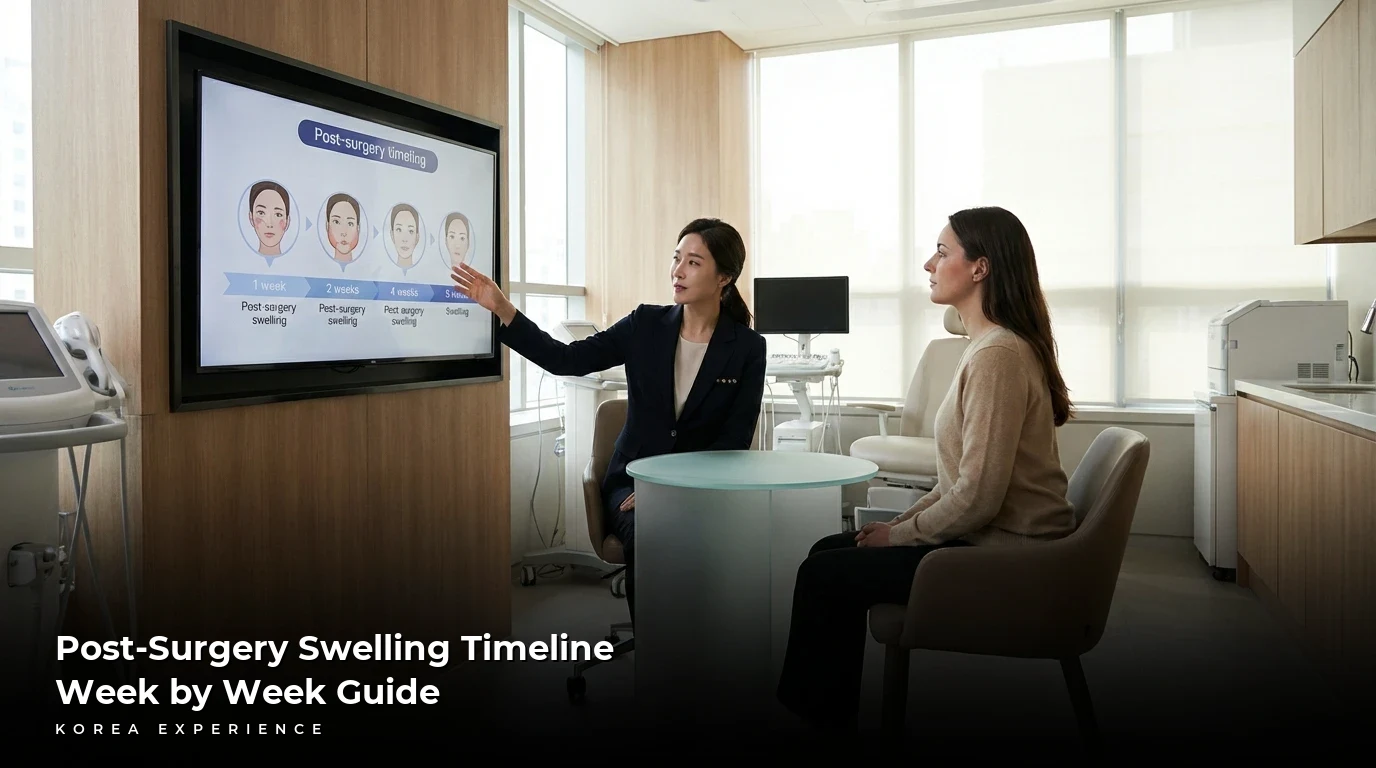
Understand the Post-Surgery Swelling Timeline in Korea. Our week-by-week guide helps international patients manage recovery expectations for various procedures.
A comprehensive guide to anesthesia types in Korean medical tourism, costs, safety protocols, and what to expect during surgery. Average read time 15 mins.
Comprehensive guide to laser skin treatments in Seoul including costs for Fraxel, Pico, and Shurink, plus 2026 clinic recommendations.