Booking medical consultations in Korea: Online vs walk-in guide 2026
Compare online booking vs walk-in for Korean clinics. Data on wait times (15 min vs 2 hours), deposit costs (₩50k-100k), and success rates for 2026.
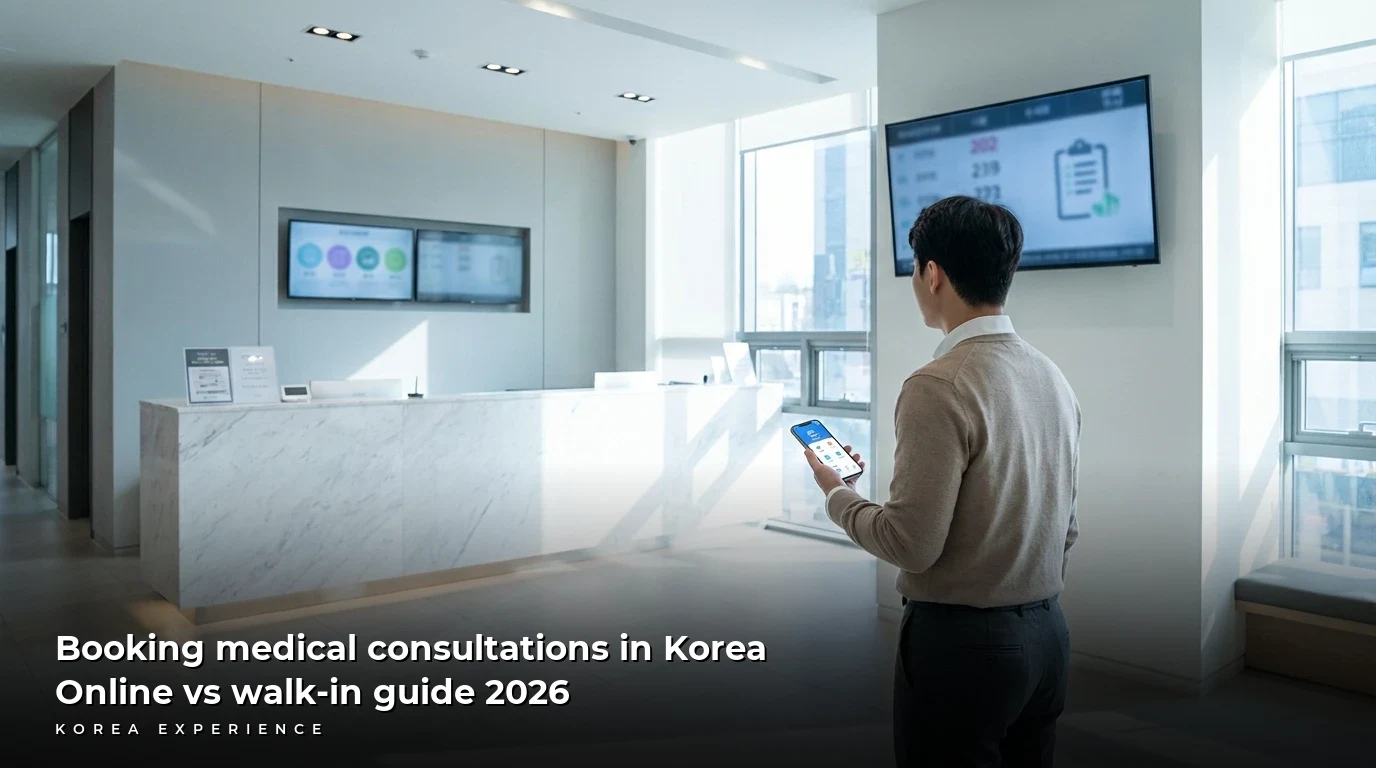
For international travelers visiting South Korea in 2026, the question of whether to book medical consultations online in advance or simply walk into a clinic is one of the most common logistical dilemmas.
The short answer: For plastic surgery, dermatology, and specialized treatments in major hubs like Gangnam, online booking is essential to guarantee English support and avoid 2-4 hour wait times. However, for general illness (cold, flu) or minor injury, walking into a local clinic (Naekwa/Internal Medicine) is faster, cheaper, and widely accepted, usually taking under 30 minutes.
Key Takeaways
- 1Online booking is mandatory for 90% of plastic surgery clinics to secure English interpreters
- 2Walk-ins work best for general medicine (colds/flu) with wait times under 30 minutes
- 3Deposits of ₩50,000-100,000 are standard for online bookings to prevent no-shows
Medical Disclaimer
The information provided in this guide is for educational purposes only and does not constitute medical advice. Always consult with a qualified healthcare professional. For medical emergencies in Korea, dial 119. For medical assistance in English, dial 1339.
The Landscape of Korean Medical Tourism in 2026
South Korea's medical infrastructure has evolved significantly over the last five years, driven by the "Smart Care" initiative. By 2026, the divide between the hyper-efficient, digital-first medical tourism sector and the accessible, neighborhood-based domestic healthcare system has become distinct. Understanding this duality is key to navigating your trip successfully.
Seoul, particularly districts like Gangnam, Seocho, and Songpa, operates on a high-speed schedule. The "Ppalli-ppalli" (hurry-hurry) culture means that efficiency is prized above all else. Clinics have optimized their schedules to the minute. A traveler attempting to walk into a top-tier plastic surgery clinic on a Friday afternoon without a booking will almost certainly be turned away, as surgeons are often booked weeks in advance.
Conversely, Korea maintains one of the most accessible primary care systems in the world. There are approximately 35,000 local clinics across the country. If you wake up with a sore throat or a sprained ankle, you do not need an appointment. You can simply find the nearest specialized clinic, register with your passport, and see a doctor often within 20 minutes.
📊 2026 Clinic Accessibility Stats
Booking Online: The Preferred Method for Aesthetics
For medical tourists focusing on aesthetics—plastic surgery, dermatology, vision correction, or dental veneers—online booking is not just a convenience; it is a necessity. The primary reason is not just the slot availability, but the allocation of human resources.
When you book online as a foreigner, the clinic assigns a global coordinator or interpreter to your time slot. If you walk in, even if the doctor is free, the English/Chinese/Japanese staff may be occupied with other patients, leaving you unable to communicate effectively.
The Platforms of Choice: KakaoTalk vs. WhatsApp
While Western countries rely on email or website forms, Korean clinics live and breathe on instant messaging. In 2026, KakaoTalk remains the dominant channel.
- KakaoTalk: Used by 99% of clinics. It allows for real-time photo sharing, location dropping, and instant translation features.
- WhatsApp/Line: Used by about 80% of clinics specifically catering to foreigners.
- Instagram DM: Popular for initial discovery, but most clinics will funnel you to KakaoTalk for the actual booking to keep a secure record of the conversation.
Don't rely on website contact forms. They are often checked infrequently. Download KakaoTalk, search for the clinic's ID (usually found on their Instagram profile), and message them directly. You will often get a reply within 10 minutes during business hours.
The Deposit System (Yeyak-geum)
One culture shock for many Western travelers is the requirement of a booking deposit (yeyak-geum). Because "no-shows" destroy the efficiency of Korean clinics, they strictly enforce deposits for consultations and surgeries.
- Consultation Deposit: Typically ₩10,000 to ₩30,000 ($7-22 USD). This is often refunded or deducted from treatment costs.
- Surgery Deposit: Typically ₩50,000 to ₩200,000 ($35-150 USD) or 10% of the estimated surgery cost.
If you cancel within 24-48 hours, you will likely lose this deposit. Transferring money can be tricky for tourists without a Korean bank account. Fortunately, by 2026, many clinics accept deposits via Wise, PayPal, or foreign credit card authorization links.
📖 How to Book a Consultation Online
Step 1: Research & Shortlist
Identify 3-5 clinics via Google, Gangnam Unni app, or Instagram.
Step 2: Initiate Contact
Add them on KakaoTalk. Send a standard message: Name, Nationality, Desired Procedure, Desired Date.
Step 3: Consultation & Quote
Receive a rough estimate and available time slots. Agree on a time.
Step 4: Pay Deposit
Send the deposit via Wise or PayPal as instructed. Send a screenshot of the transfer receipt.
Step 5: Confirmation
Receive a booking confirmation message with a map and instructions (e.g., fasting requirements).
For those looking into specific aesthetic procedures, understanding the timeline is crucial. For example, if you are considering facial contouring, you should initiate contact at least 3 months prior. For skin treatments, 2-3 weeks is usually sufficient.
If you are researching where to go, you might find our guide on best plastic surgery clinics for foreigners in seoul helpful for shortlisting reputable venues.
The Walk-In Experience: When It Works
Contrary to the rigid scheduling of aesthetic clinics, general healthcare in Korea is incredibly fluid. The "Walk-In" is the standard mode of operation for the 95% of clinics that serve the local population.
Scenario: You Have a Cold or Minor Injury
If you catch a cold, have an upset stomach, or twist an ankle while hiking Namsan, do not try to book online. Most local clinics (Dongne Byeongwon) do not even have an English website.
- Find a Clinic: Use Naver Map and search for "Internal Medicine" (Naekwa/내과), "ENT" (Ibinhugwa/이비인후과), or "Orthopedics" (Jeonghyeong-oekwa/정형외과).
- Go to the Front Desk: Walk in, say "Hello," and hand them your passport and Alien Registration Card (if you have one).
- Wait: You will sit in the waiting area. In 2026, the average wait time is between 10 to 40 minutes, depending on the time of day.
- Consultation: See the doctor. Most Korean doctors speak basic to intermediate English (medical terminology is often in English).
- Pay: Pay at the front desk.
📋 Walk-In Clinic Facts
Lunch Break Warning
Korean clinics strictly observe lunch hours, usually from 13:00 to 14:00. The doors may be locked, or the lights turned off. Do not attempt to walk in between 12:50 and 14:00.
Scenario: The "Waitlist" at Factory Clinics
There is a hybrid model popular in dermatology known as "Factory Clinics" (e.g., Muse, Lienjang,ppeum). These are high-volume clinics offering low-cost Botox, fillers, and lasers.
While they accept online bookings, they also accept walk-ins. However, walking into a factory clinic in Gangnam on a Saturday without a booking is an endurance sport. You may take a number and wait 2 to 3 hours. The "Walk-In" here is possible, but generally not recommended unless you have infinite patience.
For more on where to go for skin treatments, check our detailed comparison in best Korean skin clinics in Gangnam 2026.
Cost Analysis: Does Booking Online Save Money?
There is a prevalent myth that booking online is more expensive because of "foreigner pricing." In 2026, the reality is more nuanced.
The "Event" Price vs. The Standard Price
Korean clinics run monthly "Events" (promotions). These are often advertised on Korean apps like Gangnam Unni or Babitalk.
- Online: If you book online through a promoter or specific ad, you lock in the "Event Price."
- Walk-In: If you walk in without referencing an event, you are often charged the "Standard Price," which can be 20-30% higher.
Therefore, even if you are in Korea and standing outside the clinic, it is often financially smarter to message them on KakaoTalk to claim an event price before entering.
💵 Cost Comparison: Acne Treatment
Standard list price
Includes scaling + extrusion
Consultation Fees
- Walk-In (General Doctor): ₩5,000 - ₩10,000 with National Health Insurance (NHI). ₩15,000 - ₩30,000 without insurance (tourists).
- Online Booking (Specialist/Plastic Surgery): Consultation fees can range from Free to ₩100,000.
- Many high-end plastic surgery clinics charge a ₩30,000 - ₩50,000 consultation fee to filter out non-serious inquiries. This is almost always waived if you proceed with surgery.
Specialty-Specific Advice
The decision to book or walk in depends heavily on what part of your body you are treating. Here is a breakdown by specialty.
1. Plastic Surgery (Book: YES)
Never walk in. Surgeons operate on strict schedules. A consultation usually requires a CT scan and 30-60 minutes with the doctor.
- Booking Lead Time: 2-4 weeks for consultation; 1-3 months for surgery.
- Exceptions: None.
2. Dermatology (Book: HIGHLY RECOMMENDED)
You can walk into skin clinics, but you risk not having an English consultant.
- Boutique Clinics: Must book 2 weeks in advance.
- Factory Clinics: Can walk in, but expect long waits.
- Related Reading: If you are interested in anti-aging specifically, read about anti-aging treatments in Korea botox fillers and more 2026.
3. Dentistry (Book: DEPENDS)
- Cleaning/Whitening: Book 3-7 days in advance.
- Toothache/Emergency: Walk-in is accepted. You may have to wait 30-60 minutes, but they will squeeze you in for pain relief.
4. General Medicine / ENT / Internal (Book: NO)
Just walk in. The system is designed for high throughput.
- Process: Register -> Wait 15 mins -> See Doctor -> Pharmacy next door.
5. Ophthalmology (Vision Correction) (Book: YES)
LASIK/LASEK consultations take 2 hours and involve dilation drops. You cannot do this efficiently as a walk-in.
Service Comparison: Booking Modes
| Feature | Online Booking | Walk-In (General) | Walk-In (Factory Clinic) |
|---|---|---|---|
| Wait Time | < 10 mins | 15-30 mins | 1-3 hours |
| English Support | Guaranteed | Hit or Miss | Limited |
| Price Tier | Event/Promo | Standard | Standard |
| Deposit Req | Yes | No | No |
Language Barriers and Solutions
The biggest fear regarding walk-ins is the language barrier. In 2026, technology has bridged this gap significantly, but human interaction varies.
Using Technology
If you walk into a local clinic where the receptionist speaks zero English, do not panic.
- Papago App: This is superior to Google Translate for Korean. Use the "Conversation" mode.
- Written Note: Have a Korean friend or hotel concierge write down your symptoms on a piece of paper.
- "I have a sore throat and fever" -> "Mok-i apeugo yeol-i nayo" (목이 아프고 열이 나요).
The "English Available" Search
When using Naver Map, you can filter reviews or search for keywords like "English" (영어).
- Search query: "Internal medicine English" (내과 영어)
- Look for clinics near major expat hubs: Itaewon, Hannam-dong, Hongdae, Gangnam Station.
International Health Care Center (Severance)(세브란스 국제진료센터)
The Role of Agencies vs. Direct Booking
A common question for medical tourists is whether to use a medical tourism agency or book directly.
Direct Booking (DIY):
- Pros: Cheaper (no commission markup), direct communication with the clinic.
- Cons: You handle all logistics (transport, hotel, scheduling). If complications arise, you advocate for yourself.
- Best for: Botox, fillers, simple skin treatments, general illness.
Agency Booking:
- Pros: Concierge service (airport pickup, hotel booking), translation support, advocacy in disputes.
- Cons: Can be 10-20% more expensive (though often the clinic pays the commission, not the patient), limited clinic selection.
- Best for: Major plastic surgery (rhinoplasty, breast augmentation), full body checkups, cancer treatment.
If you are considering major procedures, checking reviews of both clinics and agencies is vital. For specifics on products used in these clinics, such as the difference between Korean and imported brands, our guide on botox brands in Korea botulax vs nabota vs allergan is a must-read.
Essential Apps for Your Medical Trip
To navigate the Korean medical system efficiently in 2026, download these apps before you board your flight.
- Naver Map: The only reliable map app. Google Maps does not provide walking directions in Korea.
- KakaoTalk: For communicating with clinics.
- Papago: For translation.
- Gangnam Unni (Global): The English version of Korea's largest plastic surgery app. Great for seeing real prices and "Event" deals.
- Emergency Ready App: Government app for finding open pharmacies and emergency rooms nearby.
Your Medical Trip Timeline
Research
Shortlist clinics, read blogs, join Reddit/Facebook groups.
Online Consultation
Message clinics on KakaoTalk. Send photos. Get quotes.
Booking
Confirm date, pay deposit, book flights/hotels.
Local Sim
Get a Korean SIM card (essential for receiving appointment reminders).
The Visit
Arrive 10 mins early. Bring passport.
Common Pitfalls to Avoid
Even with the best planning, travelers make mistakes. Here are the most common ones regarding booking and walk-ins.
1. The Friday Afternoon Trap
Do not walk into a clinic on Friday after 4:00 PM. Everyone wants to get treated before the weekend. You will wait hours. Tuesday and Wednesday mornings are statistically the quietest times.
2. The "Foreigner Insurance" Confusion
Many travelers assume their travel insurance works like a credit card. In Korean local clinics, you almost always pay upfront and claim reimbursement later.
- Ask for a "Receipt for Insurance" (Bo-heom-yong Yeong-su-jeung).
- Ask for a "Medical Certificate" (Jin-dan-seo). This usually costs an extra ₩10,000 - ₩20,000.
3. Underestimating Recovery Time
If you book a consultation for surgery, do not book your return flight for the next day. Even minor procedures like laser treatments can require follow-up visits or have restrictions on sun exposure. For major surgeries, you may be unable to fly for 1-2 weeks due to cabin pressure risks.
Online Booking vs Walk-In Summary
- ✓Guaranteed time slot
- ✓Designated English interpreter
- ✓Access to 'Event' pricing
- ✓Peace of mind
- ✗Requires deposit (risk of losing it)
- ✗Less flexibility if plans change
- ✗Communication lag across time zones
- ✗Cannot judge clinic vibe beforehand
Conclusion
The decision to book online or walk in ultimately comes down to the complexity of the procedure and the value of your time.
If you are in Korea for a strict 5-day itinerary and want to get a specific laser treatment or consultation with a renowned surgeon, booking online is non-negotiable. The risk of being turned away or waiting 3 hours is too high in the competitive Seoul market.
However, if you are simply looking for a Vitamin IV drip because you are tired, or need antibiotics for a sinus infection, embrace the local experience. Walk into a neighborhood clinic. It is fast, efficient, and offers a fascinating glimpse into the daily life of Koreans—a medical culture that prioritizes speed and accessibility above all else.
For those planning specialized skin treatments, don't forget to research the best clinics in advance. Our guide to best dermatology clinics in seoul for foreigners offers curated recommendations to start your journey.
❓ Frequently Asked Questions
Have more questions?Contact us →
About the Author
Korea Experience Team
Written by the Korea Experience editorial team - experts in Korean medical tourism, travel, and culture with years of research and firsthand experience.
⚠️ Medical Disclaimer
The information provided on this website is for general informational purposes only and does not constitute medical advice. Always consult with qualified healthcare professionals before making any medical decisions.
Explore more in Medical Tourism
World-class medical procedures at competitive prices. From plastic surgery and dermatology to dental care and health checkups — your complete guide to medical tourism in Korea.
Browse All Medical Tourism ArticlesContinue Reading
Explore more articles you might find interesting
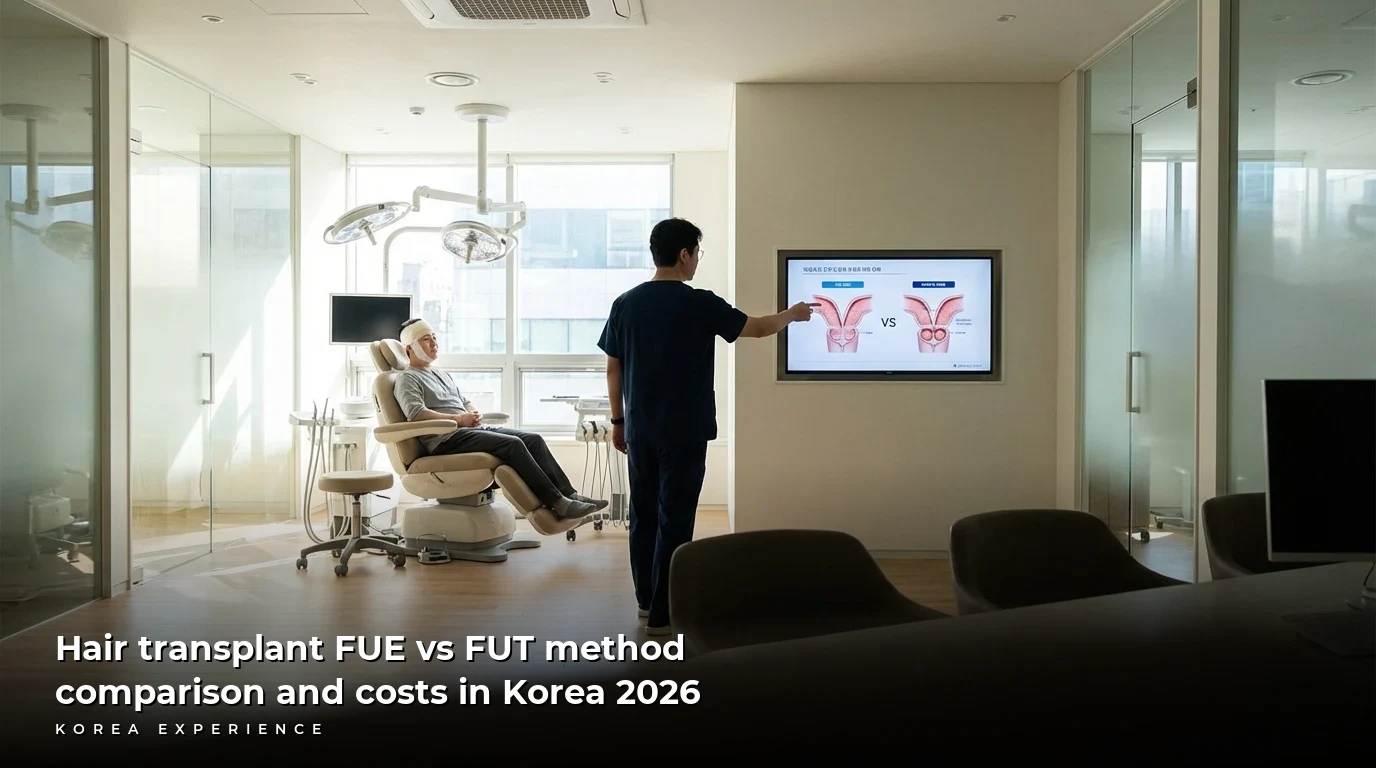
A detailed guide comparing FUE and FUT hair transplants in Seoul, including 2026 price data, recovery timelines, and success rates for medical tourists.
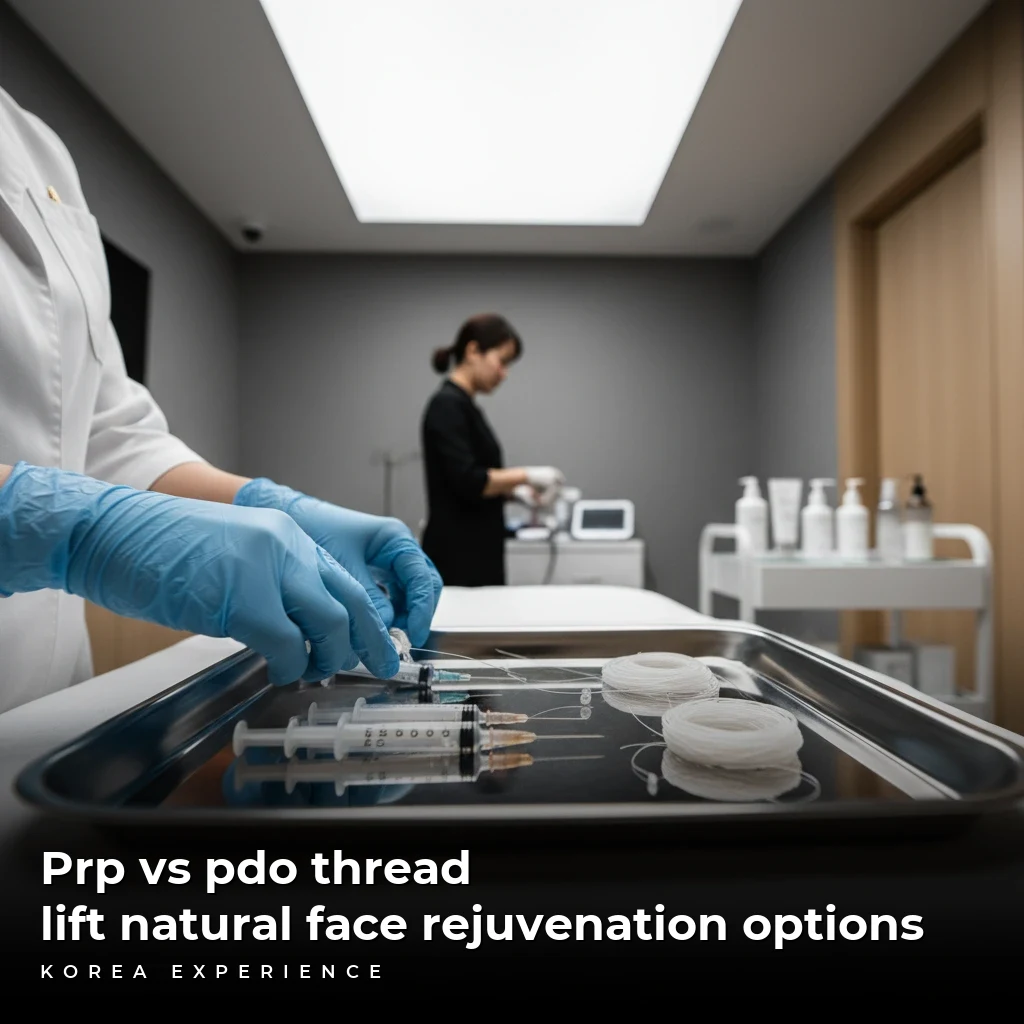
Compare PRP and PDO thread lifts in Korea with costs, recovery times, and results. A detailed guide for medical tourists seeking natural rejuvenation.
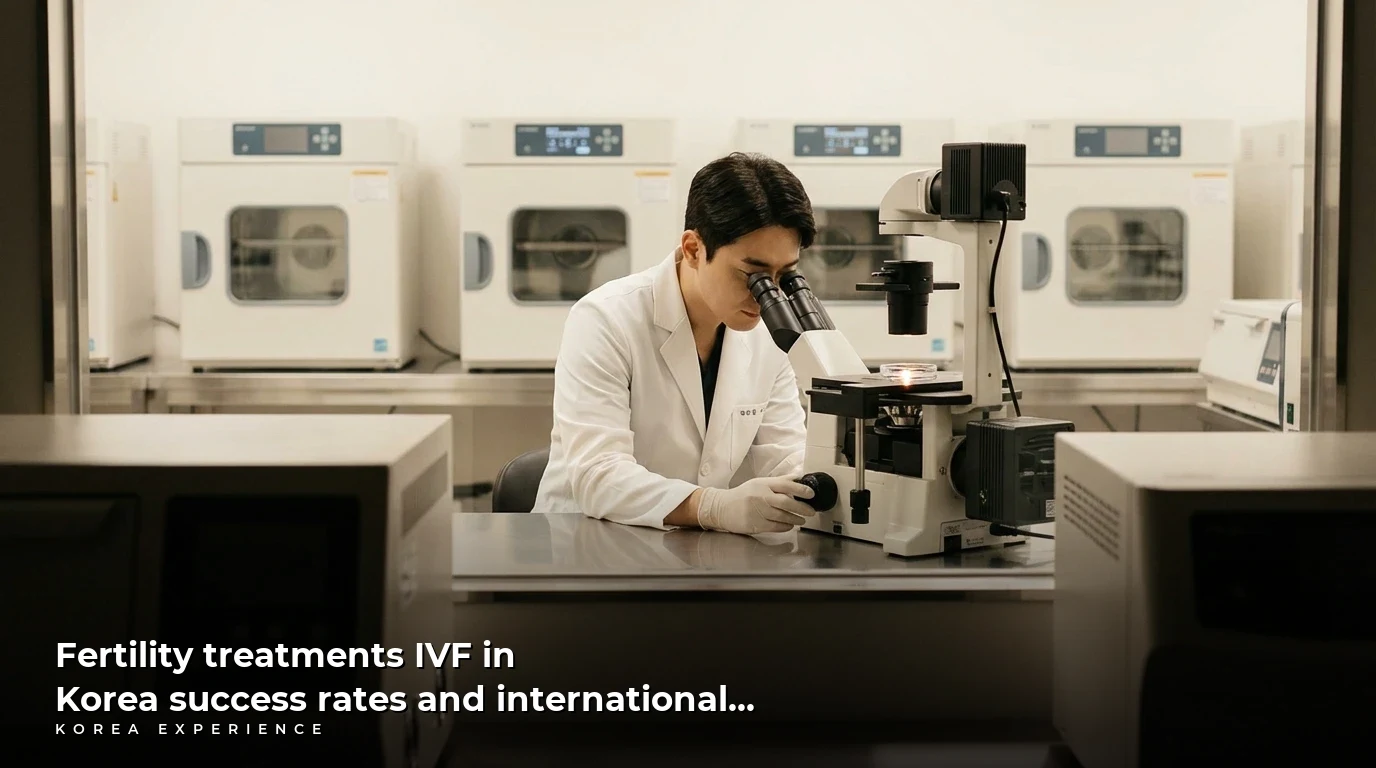
South Korea offers world-class IVF with 50-60% success rates for under-35s at 30% of US costs. Here is the complete guide to clinics, costs, and care.
A comprehensive guide to English-speaking medical facilities in Seoul. Includes wait times, 2026 pricing, insurance details, and the top 15 clinics for expats.
See authentic before and after Korean plastic surgery real patient reviews 2026. Compare costs, recovery timelines, and success rates for top procedures.
Discover Korea's 2026 stem cell medical tourism boom. Learn how new laws unlock anti-aging and joint treatments at 50% lower costs than the US, from $8,000.