Medical Tourism Safety 2026: Statistics, CCTV Laws & VAT Refund Truth
Is Seoul safe for surgery in 2026? We analyze 1.5M patient stats, new CCTV laws, and the end of the 10% VAT refund to keep your procedure secure.
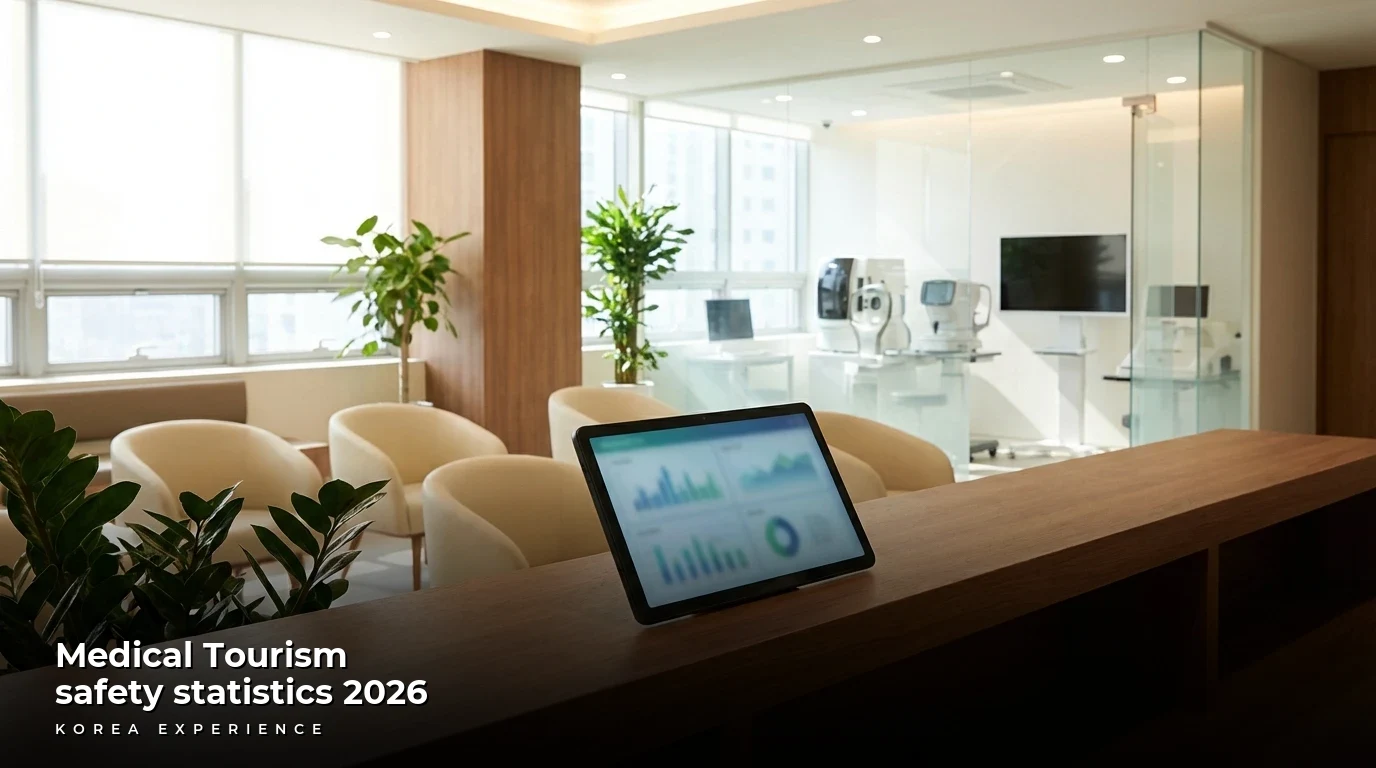
Everyone talks about how safe Seoul's streets are, but does that safety extend to the operating room? With over 1.5 million foreign patients projected for 2026, the industry is booming, but it requires a new level of vigilance. Here is the honest, no-fluff breakdown of medical safety stats, the new CCTV laws, and why your budget might need a serious adjustment in 2026.
So, you’ve heard the rumors. You’ve seen the TikToks of people walking around Gangnam with taped-up noses and flawless skin, and you’re thinking, "Is 2026 the year I finally book my flight to Seoul?" But then you hear the other stories—the "ghost doctors," the botched procedures, the communication nightmares. You want to know: Is medical tourism in South Korea actually safe in 2026?
The short answer is: Physically, South Korea is one of the safest countries on the planet, boasting a safety index of over 85/100. You can leave your laptop in a café for three hours, and it will still be there when you get back. But medically? It is incredibly safe only if you follow the rules.
The medical infrastructure here is world-class—we’re talking robots performing surgery and AI diagnosing skin conditions. However, the sheer volume of patients has created a "factory" mentality in some districts. The danger in 2026 isn't that the doctors aren't skilled; it's that you might get lost in the system if you aren't careful. The biggest change you need to know right now? Digital safety and verification are your new best friends.
Key Takeaways
- 1The short answer is... physically, you are safer here than almost anywhere else on Earth, but medically, you need to be a detective. While street crime is virtually non-existent, 2026 has seen a rise in 'digital' scams and foreign medical disputes.
- 210% is the number you need to forget. The amazing VAT tax refund for cosmetic surgeries has largely sunsetted as of January 1, 2026. Your surgery just got 10% more expensive compared to last year.
- 3Actionable advice: Verify your clinic has the KAHF (Korean Accreditation Program for Hospitals Serving Foreign Patients) logo. It’s the only government-backed seal that guarantees safety standards and malpractice insurance.
📋 Quick Facts
Is It Actually Safe? The Truth About 2026
To understand the landscape of 2026, we have to look back at the "Wild West" days of the early 2010s. Back then, medical tourism was booming, but regulations were loose. This led to the infamous "Ghost Doctor" scandals—horror stories where a patient would be put to sleep expecting a famous surgeon, only for a novice (or sometimes a medical device salesman!) to step in and perform the operation. It was a PR nightmare for Korea, and it tragically led to patient deaths and botched faces.
For a deeper understanding of these risks, read our guide on Shadow Doctors in Korea: 2026 Safety Guide & Ghost Surgery Risks.
The government realized they were killing their golden goose. They had to act. So, they passed what we now call the CCTV Law. Passed in 2021 and fully effective by late 2023, this law mandated that operating rooms must have surveillance cameras if the patient is unconscious. It was a massive win for patient safety.
Fast forward to today, 2026. The industry has matured. The government isn't just trying to get you to visit; they are trying to ensure you go home happy so you'll come back. That's why they introduced the KAHF (Korean Accreditation Program for Hospitals Serving Foreign Patients). Think of it as a Michelin Star, but for safety. Only about 150-200 hospitals have this elite status.
But there's a flip side to this maturity. For years, the government bribed us to come with a sweet 10% VAT tax refund on cosmetic procedures. It was basically a "thank you" discount for choosing Korea. But by 2025, with patient numbers hitting record highs, they looked at the data and said, "We don't need to subsidize this anymore." So, as of January 1, 2026, that tax refund is largely history for aesthetic procedures. It’s the end of an era, but it also signals that the market is strong, stable, and standing on its own merits—quality, not just discounts.
VAT Refund Launch
South Korea introduces a 10% tax refund on cosmetic surgeries to boost tourism.
The 'Ghost Doctor' Bill
National Assembly passes the law requiring CCTV in operating rooms after high-profile deaths.
CCTV Law Effective
Implementation of mandatory CCTV installation for surgeries involving anesthesia begins.
Post-Pandemic Boom
Foreign patient numbers hit a record 1.17 million, doubling from the previous year.
The Tax Sunset
The VAT refund program for cosmetic procedures officially expires on Dec 31.
Safety Accreditation
KAHF accreditation and CCTV compliance become the primary metrics for clinic safety.
Breaking Down Your Booking Options
So, how do you actually book this trip? In 2026, you basically have three paths, and trust me, the one you choose determines your safety level and your stress level.
Option 1: The "Cowboy" Method (Direct Booking) This is for the seasoned traveler. You find a clinic on Google or Naver, you email them directly (probably using ChatGPT to translate), and you show up.
- The vibe: You save money because there are no middleman fees.
- The risk: If something goes wrong, you are on your own. Negotiating a malpractice claim in broken Korean is not how you want to spend your recovery.
Option 2: The "VIP" Treatment (Medical Concierge/Agency) These are agencies like Jivaka or DocFinderKorea. They hold your hand from the moment you land. They have the car waiting, they translate every word the doctor says, and they handle your pharmacy runs.
- The vibe: Total peace of mind. They usually vet the clinics strictly because their reputation depends on it.
- The catch: You pay for it. The cost is higher, but for major surgeries (like jaw contouring or tummy tucks), having a dedicated advocate is worth every penny. If you are considering this route, check out The Ultimate 2026 Guide to Finding a Licensed Medical Coordinator.
Option 3: The "Digital Native" Way (Apps like UNNI) This is the 2026 standard. You download the global version of Gangnam Unni. You browse thousands of reviews, see real pricing (no "foreigner tax"), and book chat consultations.
- The vibe: It’s like booking an Uber. Transparent, fast, and community-verified.
- The 2026 Edge: These apps have evolved. They now offer "concierge-lite" services where you can book an interpreter through the app. Plus, the reviews are harder to fake than Google Maps. If you're doing skin treatments, lasers, or minor procedures, this is absolutely the way to go.
| Feature | Direct Booking (Clinic) | Medical Concierge (Agency) | App Booking (UNNI) |
|---|---|---|---|
| Cost | Lowest (Local price) | Highest (Service fees) | Low to Mid (Event prices) |
| Processing Time | Slow (Email back-and-forth) | Fast (They handle it) | Instant (Chat based) |
| Safety Verification | You do the research | They vet the clinic | Community reviews + Photos |
| Language Support | Hit or miss | Excellent (Dedicated) | In-app Auto-translate |
| Malpractice Support | Hard to navigate alone | Agency often assists | Limited platform support |
| Best For | Experienced travelers | First-timers / Complex | Bargain hunters / Skin |
| 2026 Changes | No VAT Refund help | Stricter broker laws | Global version supports No-ARC |
Pros and Cons of App Booking (2026 Recommended)
Pros
- ✓Transparency is King: The days of 'foreigner pricing' are fading. You can see exactly what Korean locals are paying for that laser treatment or eyelid surgery.
- ✓Visual Receipts: The review culture in Korea is intense. On apps like Gangnam Unni (Global), you aren't just reading text; you're seeing thousands of before-and-after photos uploaded by real people.
- ✓No Phone Number Needed: Finally! The global versions of these apps in 2026 allow you to sign up without that impossible-to-get Korean resident phone number.
Cons
- ✗The 'Event' Trap: You'll see insanely cheap prices listed as 'Events.' Be warned—these are often bait. Once you get to the clinic, they might try to upsell you on a 'premium' version.
- ✗Translation Glitches: While the auto-translate is getting better, medical terminology is tricky. 'Melting' fat versus 'extracting' fat can get lost in translation.
- ✗Review Farming: Even with strict moderation, some clinics offer free Botox in exchange for a 5-star review. You have to learn to read between the lines.
Step-by-Step Safety Guide
📖 How to Book a Safe Surgery in Korea (2026 Edition)
Step 1: Verification is Your Best Friend
Don't just look at Instagram. Go to the Medical Korea website or the KAHF portal. Search for the clinic. If they aren't registered to treat foreign patients, run. Illegal clinics cannot offer you malpractice insurance protection.
Step 2: The CCTV Conversation
When you consult, explicitly ask: 'Will there be CCTV recording during my surgery, and what is the process to request the footage if I need it?' In 2026, they are legally required to record if you are under anesthesia.
Step 3: The 'Shadow Doctor' Check
Demand that the lead surgeon (the one you consulted with) is the one performing the procedure. Ask for their specific name to be on the surgical consent form, not just 'attending physician.'
Step 4: Payment and Receipts
Since the VAT refund is gone for cosmetic procedures, ensure your invoice clearly breaks down the costs. Pay with a card that offers fraud protection.
In 2026, the biggest mistake I see foreigners make is assuming that 'expensive' equals 'safe.' It doesn't. I've seen factory clinics charge premium rates for factory work. The real indicator of safety isn't the chandelier in the lobby; it's whether they have a board-certified anesthesiologist on-site full time. Ask to meet the anesthesiologist. If they hesitate, leave.
Critical Warnings and Financial Realities
The "Foreigner Price" Myth
You’ll hear people say, "Foreigners pay double!" In 2026, this is mostly dead if you are smart. If you walk in off the street with a designer bag and no Korean skills? Yeah, you might get quoted high. But if you book through an app like UNNI or BabiTalk, you are seeing the local price. The clinic knows you can see the local price. Use that. Show them the app screen. "I saw this event price for 190,000 won. Can I get that?" 99% of the time, they will match it.
The "Tax Refund" Trap
I cannot stress this enough: The tax refund for surgery is gone. Do not budget for it. I’ve seen tourists crying at the airport kiosk because they thought they were getting $500 back. However, the retail tax refund is better than ever. The minimum spend is lower (15,000 KRW), and the immediate refund limit is higher. So, while you can't get tax back on your face lift, you can get tax back on the $300 worth of healing creams and vitamins you buy afterwards. It’s a small consolation, but take the win where you can get it.
The "Taxi Driver" Broker
Never, ever follow a taxi driver or a random person at the airport who recommends a specific clinic. They are often illegal brokers working for commissions (sometimes up to 50% of your surgery fee). If you follow them, you have zero legal protection if something goes wrong.
No Korean Phone/ARC? Here's What To Do
This is the #1 headache for tourists. You can't verify your identity on most Korean apps.
The Solution: Download the Global versions of apps like Gangnam Unni (UNNI) or Creatrip. They are designed specifically to accept foreign phone numbers and logins (Apple ID/Google). Also, get a NAMANE Card or WOWPASS immediately upon arrival. These act as local debit cards and transportation cards, and often serve as a pseudo-identity verification for some offline services.
Recommended Safety-Verified Locations
JK Plastic Surgery Center (JK성형외과)
- Type: Clinic (Plastic Surgery)
- Address: 835 Nonhyeon-ro, Gangnam-gu, Seoul
- Highlights: KAHF Accredited (Gold Standard), On-site Anesthesiologists, 0% Accident Record for 20+ years.
- Insider Tip: They are pricey, but they are one of the few clinics with a full-scale emergency power system and hospital-grade safety protocols.
HanGil Eye Hospital (한길안과병원)
- Type: Hospital (Ophthalmology)
- Address: 35 Bupyeong-daero, Bupyeong-gu, Incheon
- Highlights: Specialized LASIK/Cataract, KAHF Accredited, Near Incheon Airport.
- Insider Tip: Perfect for a quick vision correction stopover before heading into Seoul proper; much faster than university hospitals.
By The Numbers: 2026 Market Data
| Statistic | Value | Label | Source |
|---|---|---|---|
| Foreign Patients | 1.17 Million | 2024 Record High | Ministry of Health and Welfare |
| Safety Ranking | #1 | Numbeo Safety Index | Numbeo |
| Malpractice Claims | 10x Increase | Rise in foreign disputes (2020-2024) | Korea Medical Dispute Mediation Agency |
| Market Value | $3.1 Billion | Projected 2033 Value | Future Market Insights |
FAQ
❓ Frequently Asked Questions
Have more questions?Contact us →
Conclusion: Your Action Plan
Look, coming to Korea for medical procedures in 2026 is a smart move. The quality-to-price ratio is still unbeatable globally. But the days of just showing up and hoping for the best are over. The industry is massive, and you need to navigate it like a pro.
Here is your first 24 hours plan: Land at Incheon. Get a SIM card with a phone number. Get a WOWPASS. Take the Airport Limousine Bus (it’s comfier than the train) to Gangnam. Check into your hotel. Open the UNNI app and confirm your appointment.
You’ve got this. The safety nets are there—the CCTV, the insurance, the accreditation—but you have to be the one to check them. Be annoying with your questions. Be strict about your standards. Your body deserves nothing less.
Welcome to Seoul. Good luck, and happy healing!
Sources
- Korea Health Industry Development Institute (KHIDI) - https://www.khidi.or.kr/eps - Official statistics on foreign patient numbers and KAHF accreditation standards.
- Medical Korea Official Portal - https://www.medicalkorea.or.kr/en/kahf - List of government-certified hospitals and safety protocols.
- Numbeo - https://www.numbeo.com/crime/rankings_by_country.jsp - 2026 Safety Index rankings for South Korea.
- Korea Biomedical Review - https://www.koreabiomed.com/news/articleView.html?idxno=28501 - Details on the expiration of the VAT refund for cosmetic surgery.
- Jivaka Medical - https://jivaka.kr/blogs/blog/korean-medical-tourism-2026-complete-guide-to-changes-benefits-what-you-need-to-know - Comprehensive guide on 2026 policy changes and safety tips.
About the Author
Korea Experience Team
Written by the Korea Experience editorial team - experts in Korean medical tourism, travel, and culture with years of research and firsthand experience.
⚠️ Medical Disclaimer
The information provided on this website is for general informational purposes only and does not constitute medical advice. Always consult with qualified healthcare professionals before making any medical decisions.
Explore more in Medical Tourism
World-class medical procedures at competitive prices. From plastic surgery and dermatology to dental care and health checkups — your complete guide to medical tourism in Korea.
Browse All Medical Tourism ArticlesContinue Reading
Explore more articles you might find interesting
Are Korean medical tourism packages a safe bet or a costly scam? We analyze price differences, hidden fees, and safety data for 2026 travelers.
Save 40-70% on Korean plastic surgery using the UNNI app. We reveal 2026 VAT refund updates and how to filter for CCTV safety in 1,800 verified clinics.
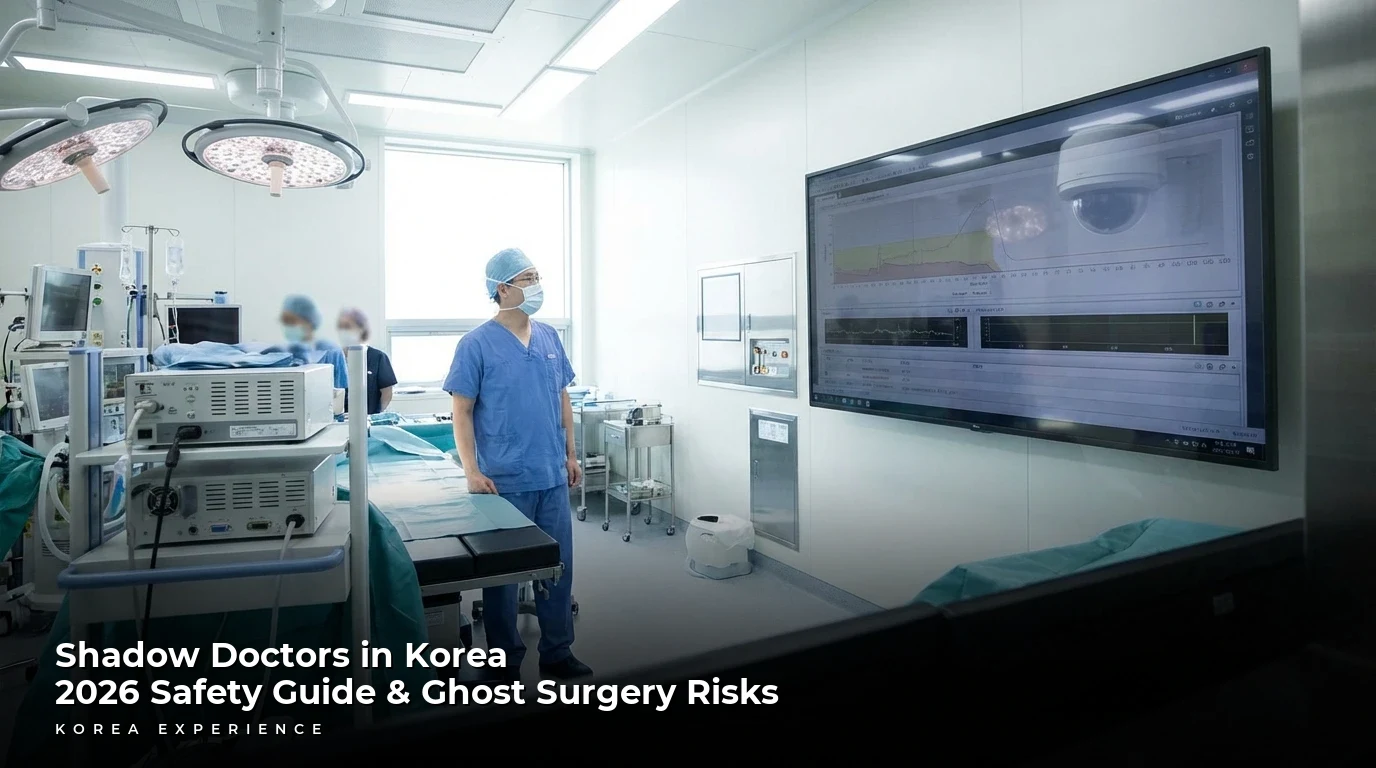
Avoid ghost surgery risks in 2026. Learn how 100,000 victims sparked new CCTV laws, why VAT refunds ended, and how to verify your surgeon.
A complete guide to same-day medical treatments in Seoul. We analyze safety, costs (saving up to 40%), and efficiency for travelers in 2026.

We analyze agency fees, safety benefits, and hidden savings for medical tourism in Korea. See if paying 15-20% extra is worth the peace of mind.
A comprehensive guide to anesthesia types in Korean medical tourism, costs, safety protocols, and what to expect during surgery. Average read time 15 mins.