Medical Emergencies in Korea: 1330 vs 119 & The 2026 Strike Guide
Dial 119 for life threats or 1330 for help. Misusing ambulances in 2026 risks a 2 million won fine due to the ongoing doctor shortage and strict triage laws.
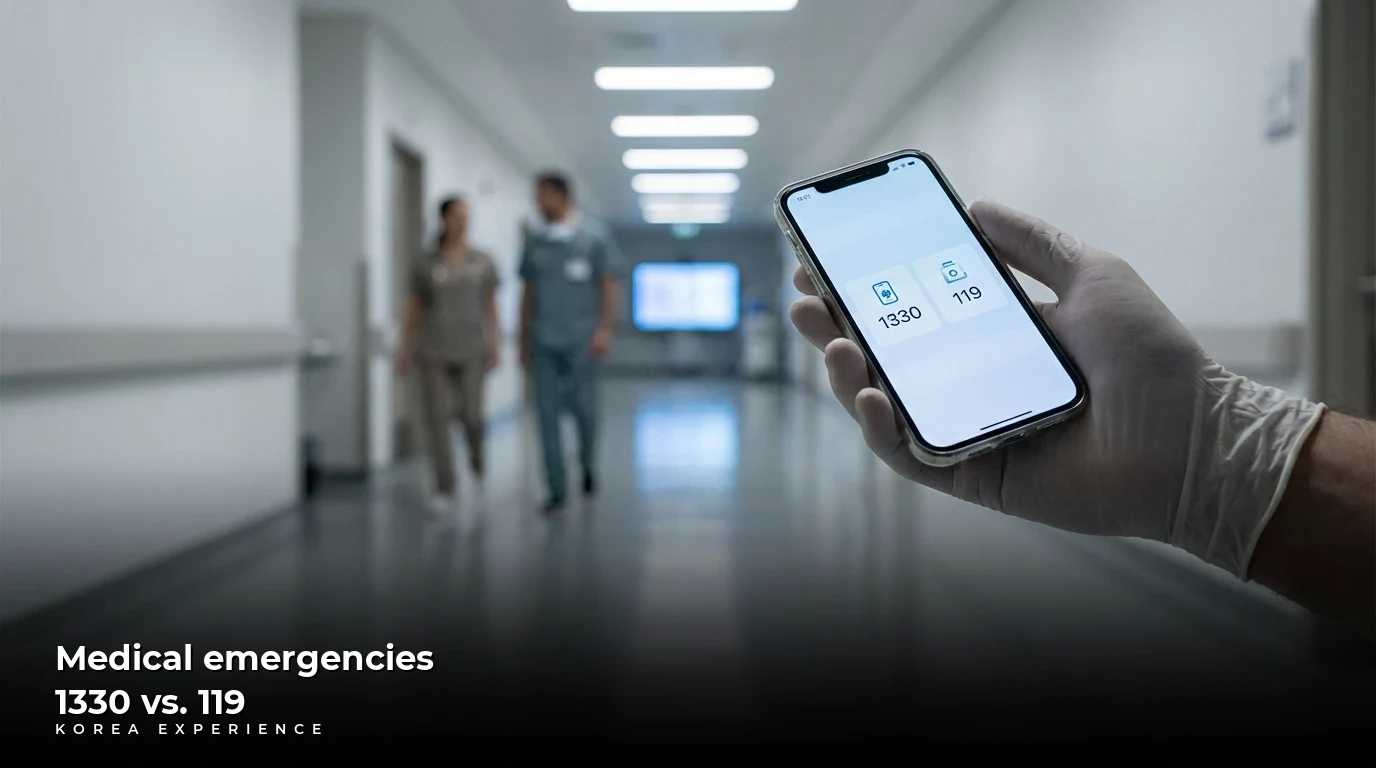
Confused about whether to dial 119 or 1330 during a medical crisis in Seoul? You are not alone. With the healthcare landscape shifting dramatically due to recent labor disputes, knowing the correct number isn't just about convenience—it is about survival and avoiding hefty fines. I'm breaking down exactly which number saves your life, which one saves your wallet, and how the ongoing medical crisis has completely rewritten the rules for getting emergency care in Korea.
Key Takeaways
- 1The short answer is dial 119 immediately for life-threatening emergencies (heart attack, major trauma, fire)—it is the equivalent of 911 and has location tracking.
- 2Dial 1330 (press 4) if you are sick but stable, need to find a clinic that speaks English, or need a translator to help you communicate with hospital staff.
- 3You face a potential fine of 2 million won (about $1,500 USD) if you call a 119 ambulance for a non-emergency in 2026, due to new regulations managing the doctor shortage.
- 4Download the 1330 Korea Travel Helpline App and Naver Map immediately; Naver is the only reliable way to find open ERs during the current strike crisis.
📋 Quick Facts
The 2026 Medical Crisis Context
To understand why calling an ambulance is complicated right now, you need the backstory. Back in February 2024, thousands of junior doctors in South Korea walked off the job to protest government plans regarding medical student quotas. What began as a policy dispute has evolved into a long-term healthcare crisis that is still heavily impacting services in 2026.
Before this strike, Korean healthcare was famous for its "palli palli" (fast fast) culture. You could walk into a top-tier university hospital ER at 3 AM for a migraine and get treated. Now, that is impossible. The "Big 5" hospitals (like Asan and Severance) are often on "Red Alert," meaning they strictly refuse non-critical patients. For a deeper look at how this impacts travelers, check our report on medical tourism safety statistics in 2026.
We have seen reports of the "ER bounce," where ambulances drive for hours trying to find a hospital that will accept a patient. To combat this, the government has launched "Seoul-type Urgent Care Centers" and "Moonlight Children's Hospitals" to handle non-critical cases. If you try to play by the old rules, you risk being stuck in a waiting room for 12 hours or being turned away entirely.
119 vs. 1330: The Critical Differences
Let's walk through your actual options so you aren't guessing in the heat of the moment.
Option A: 119 (The Nuclear Option)
Use this for the big stuff: collapses, fires, car accidents, or strokes. The best feature of 119 is location tracking. Even if you don't know where you are, they can triangulate your phone signal. However, due to the shortage, they may triage you over the phone. If they tell you to take a taxi because your condition isn't critical, listen to them. For more on how technology aids in these moments, read about the Emergency Ready App.
Option B: 1330 (The Smart Traveler's Tool)
Think of 1330 as your medical concierge. It is the Korea Travel Hotline, but it is also a vital triage tool. You can ask them, "I have a fever, which clinic near Hongdae is open right now?" and they will look it up. They can even stay on the line and translate while you talk to a pharmacist. It operates 24/7, connects to 119 if the situation escalates, and is free (you just pay airtime).
Option C: Private Ambulances
You might see vans with green stripes (instead of the 119 red). These are private ambulances, usually used for transferring patients between hospitals. They charge fees starting around ₩75,000 and are not typically for "pick me up on the street" emergencies unless pre-arranged.
Navigating the New Urgent Care System
This is the 2026 game-changer. Places like The Healthy 365 Medical Clinic in Yangcheon or Seoul Seok Hospital in Songpa operate late (often until midnight) and are specifically designated for the "I'm sick but not dying" crowd.
If you have children, memorize the term "Moonlight Children's Hospital" (Dal-bit Eo-rin-i Byeong-won). The government funds these to stay open late because kids always get sick at the worst times. Regular ERs are currently overcrowded and can be traumatic for children; these clinics are a much better alternative. If your issue is minor enough to be solved with medication, consult our guide on Seoul 24-hour pharmacies.
Financial Realities for Tourists
I wish someone had told me this when I first moved here: The Deposit.
If you are a tourist without Korean National Health Insurance (NHIS), major hospitals often ask for a deposit before they admit you. It is not uncommon to be asked for ₩500,000 to ₩1,000,000 (approx. $375–$750 USD) on the spot. This is standard policy for international patients without local coverage. Always carry a credit card with a decent limit.
Furthermore, ensure you have proper travel insurance. While Korea is cheaper than the US, a serious ER visit with tests can still cost upwards of ₩500,000. If you are here for a procedure, ensure you understand the insurance requirements for the medical tourism visa (C-3-3).
1330 Launch
Korea Tourism Organization launches the 1330 hotline to assist tourists with info and translation.
1339 Integration
The old medical info number (1339) is integrated into 119, streamlining emergency calls.
Medical Strike Begins
Thousands of junior doctors resign in Feb 2024 protesting quota hikes, triggering a long-term ER crisis.
Red Alert Status
Government raises health alert to 'Severe'; military hospitals open ERs to civilians.
Urgent Care Launch
Seoul City launches 'Seoul-type Urgent Care Centers' and 'Moonlight Children's Hospitals' to handle non-critical patients.
New Ambulance Laws
Stricter fines for ambulance misuse and mandatory 2-person crews enforced to manage resources.
| Feature | 119 (Emergency) | 1330 (Help/Translate) | Private Ambulance |
|---|---|---|---|
| Cost | Free (Tax-funded) | Free (Airtime only) | ₩75,000 ~ ₩150,000+ |
| Processing Time | Immediate Dispatch | 1-3 min wait for agent | Pre-arranged / On-call |
| Translation | 3-way Conf. Call | Native English Speakers | Varies (Usually Korean) |
| Best For | Heart attack, Stroke, Fire | Finding clinics, Translation | Hospital Transfer |
| Location Tracking | Automatic (GPS/Cell) | Manual (You tell them) | Manual |
| 2026 Changes | Strict triage (May refuse) | Can connect you to 119 | Increased base fares |
Pros
- ✓Language Barrier Smashed: 1330 operators speak fluent English and stay calm, unlike panicked exchanges with dispatchers.
- ✓Avoiding the 'ER Bounce': 1330 can look up which Urgent Care Centers are actually open so you don't waste time traveling to a hospital that rejects you.
- ✓Wi-Fi Calling: The 1330 App lets you make the call over hotel or café Wi-Fi if you don't have a SIM card.
Cons
- ✗It's NOT an Ambulance: 1330 is a middleman. In a true life-or-death second, that extra minute to connect could be fatal.
- ✗Limited Medical Advice: Operators are tourism experts, not doctors. They can tell you where to go, but cannot diagnose you.
- ✗Wait Times: During peak travel seasons, you might be on hold for a minute or two. 119 picks up instantly.
📖 How to Navigate a Medical Emergency in Korea (2026 Edition)
Step 1: Triage Yourself (The 'Am I Dying?' Test)
Be honest. Is this life-threatening (stroke, heavy bleeding, unconsciousness)? If YES, call 119. If NO (broken finger, fever), go to the next step. In 2026, 'Emergency' is defined strictly.
Step 2: Calling 1330 (The Smart Route)
Dial 1330 (or use the app) and press 4 for English. Ask: 'Where is the nearest Urgent Care Center?' and 'Can you call them to check if they are accepting patients?'
Step 3: The Taxi vs. Ambulance Decision
If 119 says there is a delay, or if you are stable, take a taxi (KakaoT). It is often faster than waiting for an ambulance coming from a distant district.
Step 4: Arrival & Translation
At the hospital, if there is a language barrier, call 1330 again, put it on speakerphone, and hand the phone to the nurse/doctor for translation.
Here is the thing nobody tells you about the strike: The ERs aren't closed, but they are picky. If you walk into a University Hospital ER (like Severance or Asan) with a cut that needs three stitches, you will wait 8 hours or be turned away. Go to the new 'Seoul-type Urgent Care Centers'. They were built specifically for this crisis. 1330 knows where they are.
For those needing professional assistance navigating the healthcare system, especially for planned procedures, consider hiring a professional. Read our guide to finding a licensed medical coordinator to avoid scams.
No Korean Phone/ARC? Here's What To Do
This is CRITICAL for tourists without a SIM card or Alien Registration Card (ARC):
- Public Phones: Go to any subway station. Find a public phone with a bright red "SOS" or "Emergency" button. Press it and dial 119. It is free.
- Locked Screen: All smartphones allow emergency calls to 119 even without a SIM card inserted, as long as there is any cell tower signal in range.
- 1330 App: Connect to airport or café WiFi. Open the 1330 Korea Travel Helpline app. Tap the "Call" icon. It works like VoIP but goes straight to the government helpline.
❓ Frequently Asked Questions
Have more questions?Contact us →
Conclusion
Here is your homework for the first 24 hours in Korea: Save 1330 in your contacts, download Naver Map and Kakao T, and spot the red button on public phones in the subway so you know what they look like.
Korea is incredibly safe, and the medical care is world-class, even with the strike delays. But the system relies on you using the right door. Don't be the person who calls an ambulance for a blister and gets fined 2 million won. Use 1330, use the Urgent Care centers, and save 119 for the real emergencies. Stay safe!
Sources
- Visit Seoul (Official Tourism) - Official protocols for 119 and 1330, interpretation services.
- Visit Korea (KTO) - 1330 Hotline details, app features, and hours.
- Korea Biomedical Review - Details on Seoul-type Urgent Care Centers and 2024-2025 medical response.
- The Korea Herald - Launch of night clinics and response to the doctor strike.
- Korea Bizwire - Information on fines for misusing 119 ambulances.
About the Author
Korea Experience Team
Written by the Korea Experience editorial team - experts in Korean medical tourism, travel, and culture with years of research and firsthand experience.
⚠️ Medical Disclaimer
The information provided on this website is for general informational purposes only and does not constitute medical advice. Always consult with qualified healthcare professionals before making any medical decisions.
Explore more in Medical Tourism
World-class medical procedures at competitive prices. From plastic surgery and dermatology to dental care and health checkups — your complete guide to medical tourism in Korea.
Browse All Medical Tourism ArticlesContinue Reading
Explore more articles you might find interesting
A comprehensive guide to Korea's strict medical cannabis laws and advanced alternative pain management treatments available to foreigners in 2026.
A complete guide to handling medical emergencies and surgical complications in Korea, including 119 services, translation help, and hospital costs.

Stuck in a taxi? Dial 1330 for free 24/7 interpretation in 8 languages. Save money on roaming and solve emergencies without a SIM in 2026.

Discover Korea's 2026 stem cell medical tourism boom. Learn how new laws unlock anti-aging and joint treatments at 50% lower costs than the US, from $8,000.
Is Seoul safe for surgery in 2026? We analyze 1.5M patient stats, new CCTV laws, and the end of the 10% VAT refund to keep your procedure secure.
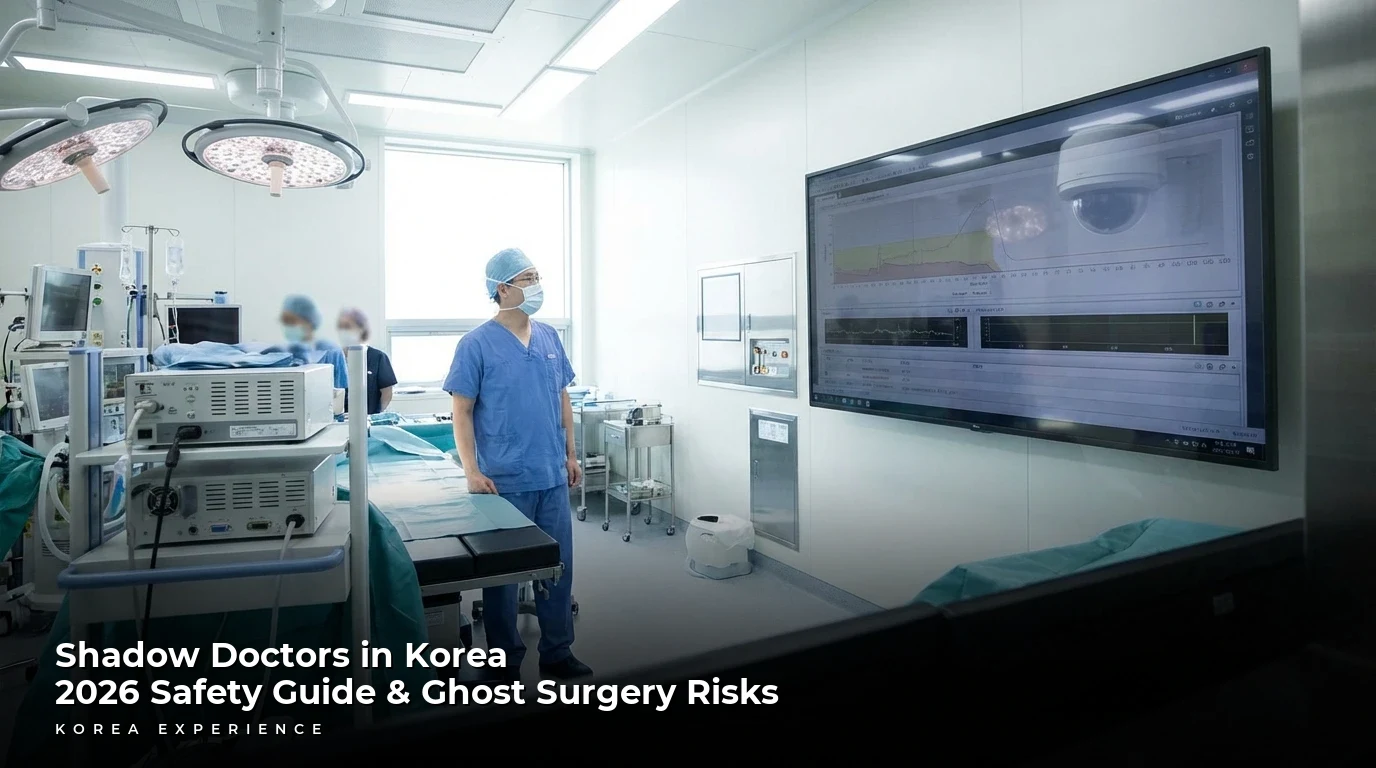
Avoid ghost surgery risks in 2026. Learn how 100,000 victims sparked new CCTV laws, why VAT refunds ended, and how to verify your surgeon.