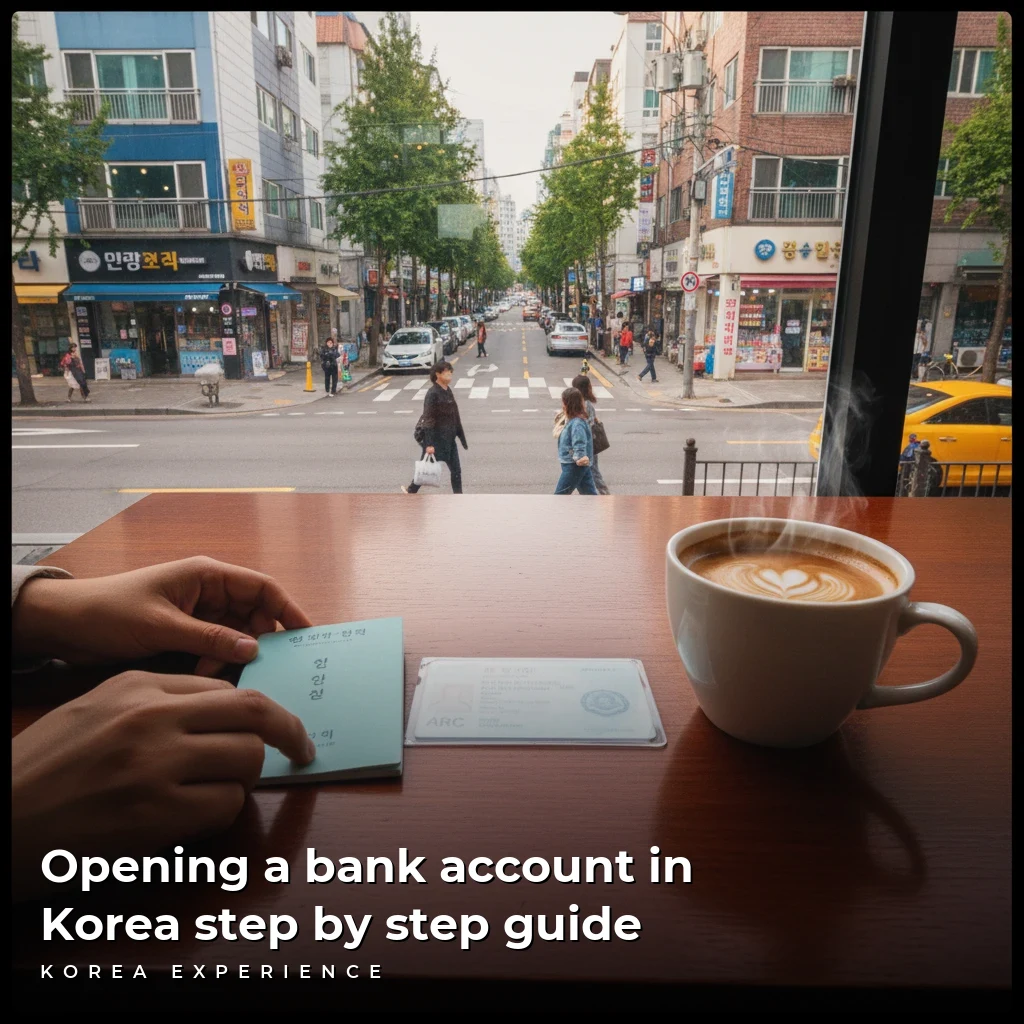
Opening a Bank Account in Korea Step-by-Step Guide
Navigate the essential process of opening a bank account in Korea with our comprehensive guide, ensuring financial stability and ease for expats and long-term visitors.
Opening a Bank Account in Korea: Your Essential Step-by-Step Guide
Welcome to Korea, the Land of the Morning Calm, where tradition meets hyper-modernity! As you settle into your new life, whether for work, study, or an extended stay, one of the most fundamental tasks you'll face is establishing your financial presence. And that means opening a bank account in Korea. Far from being a mere convenience, a local bank account is an absolute necessity for everything from receiving your salary, paying bills, and renting an apartment, to simply enjoying the cashless convenience that defines daily life in this vibrant nation.
Many newcomers find the process of setting up a bank account daunting, often due to language barriers, unfamiliar regulations, or simply not knowing where to start. This comprehensive guide is designed to demystify the entire process, providing you with a clear, step-by-step roadmap to successfully opening a bank account in Korea. We'll cover everything from eligibility and required documents to choosing the right bank, navigating the in-branch experience, and setting up your online banking. By the end of this post, you'll be well-equipped with the knowledge and confidence to manage your finances like a local, ensuring a smoother and more enjoyable experience in South Korea. Let's dive in!
Why Opening a Korean Bank Account is Essential for Expats
Living in Korea without a local bank account is akin to navigating Seoul without a smartphone – possible, but incredibly inconvenient and limiting. In a society that is rapidly moving towards a cashless future, having a local account is not just a preference, but a practical necessity.
The Cashless Society Phenomenon
Korea is at the forefront of the global cashless movement. From convenience stores and coffee shops to public transportation and online shopping, card payments, mobile payments, and digital transfers dominate. While cash is still accepted, relying solely on it will significantly restrict your daily activities and make simple transactions cumbersome. A Korean debit card (chekeu kadeu) linked to your local bank account becomes your primary tool for most purchases, offering unparalleled convenience and security.
Receiving Income and Managing Expenses
For those working or studying in Korea, a local bank account is crucial for receiving salaries, scholarships, or allowances. Employers typically require a Korean bank account for direct deposit, making it impossible to get paid otherwise. Furthermore, paying monthly expenses such as rent, utilities (electricity, gas, water), internet, and mobile phone bills is often streamlined through direct debits or simple online transfers from a Korean account. Attempting to manage these with an international account or cash would be incredibly complex and inefficient.
Online Shopping and Services
Korea boasts an advanced e-commerce landscape, offering everything from groceries to electronics with rapid delivery. To partake in this, a Korean bank account is almost always required for payment gateways. Similarly, subscribing to streaming services, booking domestic travel, or accessing various online government services will necessitate local bank account verification or payment.
Ease of International Transactions
While you might think an international bank would be better for sending and receiving money from your home country, a Korean bank account, once fully established, provides relatively straightforward options for international remittances. With dedicated remittance services and competitive exchange rates offered by local banks, managing your global finances becomes much simpler than relying solely on overseas accounts. It also allows you to receive money from family or friends abroad more easily into a local currency account.
Understanding Eligibility and Required Documents for Your Account
Before you even step foot into a bank, understanding the eligibility criteria and gathering the necessary documents is paramount. This can save you significant time and frustration. The requirements can vary slightly depending on your visa type and the bank, but there's a standard set of items you'll almost certainly need.
General Eligibility for Non-Residents and Residents
- Non-Residents (Short-term visitors, D-2/D-4 visa holders without ARC): Generally, short-term visitors or those on certain student visas may open a "temporary" or "limited function" account. These accounts often have daily transaction limits, withdrawal limits, and might not allow international transfers initially. Full functionality usually requires an Alien Registration Card (ARC).
- Residents (E-series, F-series, D-series with ARC): If you possess an Alien Registration Card (ARC) (외국인등록증 - Oegugin Deungnokjeung), you are considered a long-term resident and can open a full-featured bank account without major restrictions. This is the ideal scenario for most expats.
Essential Documents You Will Need
Being prepared with the correct documentation is the most critical step. Always bring originals; photocopies are rarely accepted without the original present.
1. Passport (여권 - Yeogwon)
Your valid passport is your primary form of identification and proof of nationality. Ensure it is not expired and has sufficient validity remaining for your stay in Korea.
2. Alien Registration Card (ARC) (외국인등록증 - Oegugin Deungnokjeung)
This is arguably the most important document for opening a full-service bank account. The ARC is issued by the Korean immigration office to foreigners staying in Korea for more than 90 days. It serves as your primary Korean ID.
- Insider Tip: You can apply for an ARC soon after arrival, but it usually takes 3-6 weeks to be issued. Banks are often reluctant to open full accounts without it. Some banks might open a basic account with just your passport and visa sticker, but it will have severe limitations (e.g., no online banking, low daily limits) until you present your ARC. It's generally best to wait until you have your ARC for a seamless process.
3. Visa Sticker / Confirmation of Visa Issuance
For those who haven't yet received their ARC, the visa sticker in your passport (for long-term visas) or a Confirmation of Visa Issuance (비자발급확인서 - Bija Balgeup Hwakinsseo) can sometimes be accepted as proof of your long-term stay. However, this is often a precursor to needing an ARC later.
4. Proof of Address in Korea
Banks need to verify your residential address in Korea. This can be:
- Rental Contract (임대차계약서 - Imdaechagyeagyakseo): A copy of your housing contract is ideal.
- Utility Bill: A recent utility bill (gas, electricity, internet) addressed to you at your Korean residence.
- Official Mail: Any official mail or document from a Korean government agency addressed to you.
- Declaration of Residence: In some cases, if you live in employer-provided housing or a dormitory, a letter from your employer or institution confirming your residence might be accepted.
5. Proof of Income/Employment (Optional but Recommended)
While not always strictly required for opening a basic account, providing proof of income or employment can help alleviate bank concerns and potentially allow for higher transaction limits or access to credit services later.
- Employment Contract (고용계약서 - Goyonggyegyaseo): Your work contract specifying your employment with a Korean company.
- Certificate of Employment (재직증명서 - Jaejik Jeungmyeongseo): A letter from your employer stating your position, start date, and salary.
- Student Enrollment Certificate (재학증명서 - Jaehak Jeungmyeongseo): For students, proof of enrollment at a Korean university.
6. Minimum Deposit (Optional but Recommended)
While many banks do not strictly require a minimum deposit to open an account, it's good practice to have at least 10,000-50,000 Korean Won (KRW) ready to deposit immediately. This shows genuine intent to use the account.
Document Checklist by Visa Type
Here’s a quick reference table to help you gather what you need:
| Visa Type / Status | Essential Documents | Recommended Additional Documents | Common Restrictions (Initial) |
|---|---|---|---|
| Short-term Tourist (B-1/B-2) | Valid Passport | N/A | Very difficult to open; highly limited functions |
| Long-term Student (D-2/D-4) without ARC | Passport, Visa Sticker/Confirmation | Enrollment Certificate, Proof of Address | Limited functions, no online banking; usually requires ARC |
| Long-term Worker/Student with ARC | Passport, Alien Registration Card (ARC) | Employment/Enrollment Certificate, Proof of Address | Full-feature account available, but initial limits possible |
| F-series Visa (F-2, F-4, F-5, F-6) | Passport, Alien Registration Card (ARC) | Proof of Address (e.g., Rental Contract) | Full-feature account usually available immediately |
Choosing the Right Bank in Korea
Korea has a robust banking sector with several major players. While the core services are similar, each bank has its nuances, especially concerning foreigner-friendly services and digital offerings. Here’s a look at the most popular choices for expats.
Major Korean Banks for Expats
The "Big Four" commercial banks in Korea are generally the most accessible and recommended for foreigners due to their extensive networks, English-speaking staff availability (especially in major cities), and comprehensive services.
-
Kookmin Bank (KB Kookmin Bank) (KB국민은행):
- Strengths: One of the largest banks by assets and branch network. Widely considered very foreigner-friendly with dedicated international branches and good English support. Strong presence in online banking and mobile apps. Many university campuses have KB branches.
- Services: Wide range of savings accounts, debit cards, credit cards (for eligible residents), foreign exchange services, investment products.
- Locations: Abundant branches and ATMs nationwide.
-
Shinhan Bank (신한은행):
- Strengths: Often lauded for its modern digital services and excellent mobile banking app. Shinhan Future's Lab program supports fintech, indicating their commitment to innovation. Good English support and dedicated international branches.
- Services: Comprehensive banking services, including Shinhan Global Pass cards for international travel.
- Locations: Extensive network, particularly strong in urban areas.
-
Woori Bank (우리은행):
- Strengths: Another major player with a long history. Strong focus on global services and offering products tailored for international customers. Often a preferred choice for those involved in trade or international business. Good English services.
- Services: Wide array of financial products, including foreign currency accounts and international remittance services.
- Locations: Widespread branches and ATMs.
-
Hana Bank (하나은행):
- Strengths: Known for its strong foreign exchange capabilities and global banking services, partly due to its merger with Korea Exchange Bank (KEB). Often competitive exchange rates. Good English support.
- Services: Extensive foreign currency services, remittances, and comprehensive retail banking.
- Locations: Good national coverage, particularly strong in international business districts.
Other Notable Banks
- NH Nonghyup Bank (NH농협은행): Strong presence in rural areas, often preferred by those in agricultural sectors or teaching in smaller towns. Their online banking can be more challenging for non-Korean speakers.
- Standard Chartered Korea (SC제일은행): Offers a more international banking experience, potentially familiar to those from countries where SC operates. Can be good for international transfers, but a smaller branch network.
- Citibank Korea (한국씨티은행): Similar to Standard Chartered, it offers an international flavor. However, Citibank has been significantly reducing its retail banking presence in Korea, making it less ideal for new accounts.
Key Factors When Choosing Your Bank
- English-Speaking Staff/Support: This is crucial. While many major branches in Seoul or Busan might have English speakers, it's not guaranteed in smaller towns. Some banks have dedicated "Global" or "Foreigner" branches with guaranteed English service.
- Branch and ATM Network: Consider where you live and work. Is there a branch or ATM conveniently located? The Big Four generally have excellent coverage.
- Mobile Banking App: Assess the ease of use and English language support for their mobile application. This will be your primary way to manage your finances.
- International Transfer Fees and Exchange Rates: If you plan to send or receive money internationally frequently, compare the fees and rates offered by different banks.
- Proximity to Your Workplace/University: Having a branch nearby can be very helpful for initial setup and any future issues.
Comparison of Key Features (Major Banks for Expats)
| Feature / Bank | KB Kookmin Bank | Shinhan Bank | Woori Bank | Hana Bank |
|---|---|---|---|---|
| English Support | Good (Dedicated branches) | Good (Dedicated branches) | Good (Dedicated branches) | Good (Dedicated branches) |
| Mobile App | Excellent (KB Star Banking) | Excellent (Shinhan SOL) | Good (Woori WON Banking) | Good (Hana 1Q) |
| Branch Network | Extensive | Extensive | Extensive | Extensive |
| ATM Network | Extensive | Extensive | Extensive | Extensive |
| Remittance | Good options | Strong Global Pass | Strong international focus | Excellent FX services |
| Foreigner Focus | High | High | High | High |
| Credit Cards | Available (conditions apply) | Available (conditions apply) | Available (conditions apply) | Available (conditions apply) |
The Step-by-Step Process at the Bank Branch
You've gathered your documents, chosen your bank, and you're ready to open your account. Here's a detailed walkthrough of what to expect once you arrive at the bank.
1. Arriving at the Bank and Taking a Number
- Timing is Key: Aim to go during off-peak hours (e.g., late morning or early afternoon, avoiding lunch breaks and immediately after opening/before closing). Weekdays are best; banks are generally closed on weekends and public holidays.
- Getting a Number: Upon entering, look for a numbering machine (번호표 발행기 - Beonhopyo Balhaenggi). There will usually be options for "Savings" (예금 - Yegeum) or "Foreign Exchange" (환전 - Hwanjeon). Select the relevant option, usually 'savings/new account opening', and take a ticket.
- Finding English Support: If there's an information desk, politely ask if there's an English-speaking staff member available. In major city branches, this is often possible. If not, don't worry, the process is quite standardized.
2. Meeting with the Teller
When your number is called, approach the counter. Greet the teller and state your purpose: "I'd like to open a bank account" (저는 은행 계좌를 개설하고 싶습니다 - Jeoneun Eunhaeng Gyejwaleul Gaeseolhago Sipseumnida). Present all your prepared documents immediately.
3. Filling Out Application Forms
The teller will provide several forms. These will be mostly in Korean, but the teller should be able to guide you through the key sections or have an English translation available.
- Personal Information: You'll fill in your name, Alien Registration Card number, passport number, visa type, Korean address, phone number, and occupation.
- Account Type: You'll typically open a standard savings account (보통예금 - Botong Yegeum).
- Debit Card Application: You'll apply for a debit card (체크카드 - Chekeu Kadeu) at the same time. You may be asked about your preferred card design or specific benefits (e.g., credit card features linked to spending limits).
- Online Banking Application: This is crucial. You'll apply for online banking services (인터넷뱅킹 - InteoNet Baengking) and potentially mobile banking (모바일뱅킹 - Mobail Baengking). This will also involve setting up a "public certified certificate" (공인인증서 - Gongin Injeungseo), which is Korea's digital signature system and essential for secure online transactions.
- Signatures: You will sign in multiple places. Ensure you understand what you are signing for.
4. Setting Up Your PINs
You'll set two PINs (Personal Identification Numbers):
- Bank Account PIN: A 4-digit PIN for ATM withdrawals and account access.
- Debit Card PIN: A 4-digit PIN for purchases and debit card transactions.
- Important: Choose easily memorable but secure PINs. Do not use consecutive numbers or your birthday.
5. Initial Deposit
You'll be asked to make an initial deposit. As mentioned, having 10,000-50,000 KRW ready is a good idea. The teller will process this and show you the balance.
6. Receiving Your Bankbook and Debit Card
- Bankbook (통장 - Tongjang): You'll receive a physical bankbook. While less frequently used for daily transactions now, it's still a traditional element and useful for tracking transactions or for specific in-branch services.
- Debit Card: Your debit card will usually be printed and issued on the spot. Activate it by making a small purchase or using an ATM.
7. Online Banking Setup Guidance
The teller will typically give you initial instructions for setting up your online banking, especially the public certified certificate (Gongin Injeungseo). This often involves downloading specific security programs and navigating the bank's website. It can be the most challenging part for non-Korean speakers, so pay close attention or ask for written instructions.
Practical Tips for the Branch Visit:
- Go with a Korean Speaker: If you're not confident in your Korean, bring a Korean friend or colleague. This will significantly ease communication and ensure you understand all the terms and conditions.
- Be Patient: The process can take anywhere from 30 minutes to over an hour, especially if there's a queue or if the teller needs to consult with a manager regarding foreign documents.
- Ask Questions: Don't hesitate to ask if you don't understand something. It's better to clarify at the bank than to have issues later.
- Initial Transaction Limits: Be aware that your newly opened account might have initial transaction limits (e.g., a daily transfer limit of 1 million KRW). These limits can often be increased after a certain period or by providing additional documentation (like proof of income).
Activating and Managing Your New Account
Congratulations! You've successfully opened your Korean bank account. Now it's time to get it fully functional and learn how to manage it efficiently.
Activating Your Debit Card
Most debit cards are active immediately upon issuance. However, it's a good practice to:
- Make a small purchase: Use your card at a convenience store or coffee shop. This confirms activation.
- Use an ATM: Try to withdraw a small amount of cash using your PIN to confirm it works.
Setting Up Online Banking and Mobile Apps
This is where the real convenience begins, but it's also where many expats face challenges, primarily due to Korea's robust, but often complex, online security measures.
The Public Certified Certificate (Gongin Injeungseo)
This digital certificate is Korea's equivalent of an electronic signature and is essential for secure online banking, government services, and e-commerce.
- Issuance: You typically apply for it through your bank's website or mobile app. The bank teller should provide initial instructions.
- Storage: It must be stored securely, often on your computer's hard drive, a USB drive, or directly within the bank's mobile app.
- Usage: Each time you make a significant online transaction or log in from a new device, you'll need to use this certificate, which often requires entering a password.
- Renewal: Gongin Injeungseo certificates usually expire after one year and must be renewed. Your bank will send notifications.
- Insider Tip: The setup process can involve downloading multiple security programs and browser extensions. It's often easier to do this on a Windows PC using Internet Explorer (yes, even in 2026, some legacy systems persist) or a specific browser recommended by your bank. If you use a Mac, look for banks with Mac-compatible solutions or rely heavily on their mobile app.
Mobile Banking Applications
All major Korean banks have excellent mobile apps (e.g., KB Star Banking, Shinhan SOL, Woori WON Banking, Hana 1Q).
- Download: Search for your bank's app on the Google Play Store or Apple App Store.
- Registration: You'll typically link your account using your ARC, bank account number, and your public certified certificate (if set up).
- Features: Mobile apps allow you to:
- Check balances and transaction history.
- Transfer money between accounts (계좌이체 - Gyejwa Iche).
- Pay bills (공과금 - Gonggaseum).
- Manage debit card settings.
- Apply for other financial products.
- Perform international remittances (after initial setup).
- English Support: Many bank apps now offer a dedicated English mode, which greatly simplifies usage. Ensure you enable this if available.
International Remittances (Sending Money Abroad)
Once your account is fully active and has been used for some time, you can usually apply for international remittance services.
- In-Branch Setup: You might need to visit the bank branch initially to register your overseas recipient accounts and provide additional documentation (e.g., purpose of transfer).
- Online/App Remittance: After the initial setup, you can often send money directly through your online banking or mobile app, usually with competitive fees and exchange rates compared to third-party services.
- Limits: Be aware of daily/yearly remittance limits.
Automatic Payments and Bill Management
Korean banks make it easy to set up automatic payments for your recurring bills.
- Utility Bills: You can often link your bank account directly to your utility providers (electricity, gas, internet) to automatically deduct payments each month.
- Mobile Phone Bills: Similarly, you can set up direct debit for your mobile phone plan.
- Online Shopping: Many online payment gateways allow you to register your bank account for faster checkouts.
Understanding Your Bankbook and Statements
- Bankbook (통장 - Tongjang): This small book records all your transactions. You can update it at any ATM that has a bankbook updating function or at a teller counter.
- Online Statements: Your online banking portal and mobile app will provide detailed transaction histories, which can serve as electronic statements for various purposes.
Online Banking and Mobile Apps: Navigating the Digital Frontier
While the in-person bank visit sets up your account, it's the online and mobile platforms that will truly define your day-to-day financial management in Korea. Understanding these tools is key to unlocking convenience.
The Power of Mobile Banking
Korean mobile banking apps are incredibly powerful and intuitive (once you get past the initial setup). They are designed for daily use and integration into a cashless lifestyle.
- Real-time Notifications: Get instant alerts for deposits, withdrawals, and card usage.
- QR Code Payments: Many apps support QR code payments, especially useful for local small businesses.
- Easy Transfers: Transferring money to another Korean bank account is usually free or very low-cost and instantaneous. All you need is the recipient's bank name, account number, and name.
- Customer Service: Access customer support directly through the app, often with chat features.
The "Public Certified Certificate" (Gongin Injeungseo) Deep Dive
This unique Korean security measure warrants further explanation due to its critical role and complexity for foreigners.
- What it is: A digital certificate issued by a trusted third-party authority, acting as your digital identity. It ensures the authenticity of your online transactions and communications.
- Why it's used: It's a cornerstone of Korea's national cybersecurity framework, designed to prevent fraud and ensure data integrity in online financial activities.
- How to manage it:
- Initial Setup: You usually initiate the process on your bank's website. You'll download a specific program, select a certificate, and set a strong password.
- Import/Export: You can export your certificate from your computer to a USB drive or your smartphone. This allows you to use it across different devices. Most bank apps have an "Import Certificate" function.
- Renewal: Mark your calendar for its annual renewal. The bank will typically send reminders. Renewing is generally simpler than the initial setup.
- Troubleshooting: If you face issues, ensure all required security programs (often multiple) are installed, disable pop-up blockers, and try different browsers. The bank's customer service (if English-speaking) can be a lifeline here.
Security Programs and ActiveX
Korean online banking has traditionally relied heavily on specific security programs and, historically, ActiveX plugins. While ActiveX is largely phased out, you will still need to download various security software packages onto your computer to use online banking. These typically include:
- Anti-virus/firewall software.
- Keyboard security software (to prevent keyloggers).
- Screen capture prevention software. These programs run in the background and are mandatory for accessing secure sections of banking websites. They can sometimes conflict with other software or slow down your computer, but they are generally harmless and necessary.
Navigating English Language Options
While many bank websites and apps have an English toggle, it's important to note:
- Partial Translations: Sometimes, not all sections are fully translated. You might still encounter Korean text in less frequently used menus.
- Specific Features: Features like applying for certain loans or complex investment products might only be available in Korean.
- Customer Service: For complex issues, speaking to an English-speaking representative is often the best solution. Major banks usually have dedicated English hotlines or specific international branches.
Common Challenges and How to Overcome Them
Despite the best preparation, you might encounter a few hurdles while opening and managing your bank account in Korea. Being aware of these common challenges can help you navigate them more effectively.
1. Language Barrier
- Challenge: The most common obstacle. While major city branches may have English-speaking staff, it's not guaranteed, and forms are predominantly in Korean.
- Solution:
- Bring a Korean friend/colleague: This is the best solution for the initial branch visit.
- Utilize translation apps: Have Papago or Google Translate ready on your phone.
- Seek out "Global" or "Foreigner" branches: These branches are specifically designed to cater to international clients and guarantee English-speaking staff. Major banks like KB Kookmin, Shinhan, Woori, and Hana have them in Seoul and other large cities.
- Use English mobile apps/websites: Once set up, manage your account digitally with English interfaces.
2. Lack of Alien Registration Card (ARC)
- Challenge: Without an ARC, opening a full-feature account is difficult. You might only be able to open a basic, limited-function account (e.g., no online banking, low daily limits).
- Solution:
- Wait for your ARC: The simplest and most recommended solution. Be patient for those 3-6 weeks.
- Ask about "Passport-only" accounts: Some banks might offer basic accounts with just a passport and visa (for long-term visas), but be prepared for limitations.
- Temporary Measures: During the ARC waiting period, consider using a travel money card from your home country for emergencies or cash for small transactions.
3. Initial Transaction Limits
- Challenge: New accounts, especially for foreigners, often come with initial daily transaction limits (e.g., 1 million KRW for transfers, 300,000 KRW for ATM withdrawals).
- Solution:
- Be patient: Limits are often automatically lifted after a few months of regular account usage.
- Provide proof of income: If you need higher limits sooner (e.g., for large rent deposits), bring your employment contract or certificate of employment back to the bank and request an increase.
- Visit the branch: Requesting limit increases usually requires an in-person visit with your ARC.
4. Public Certified Certificate (Gongin Injeungseo) Issues
- Challenge: Setting up and managing this certificate can be complex due to specific software requirements, browser compatibility, and the renewal process.
- Solution:
- Use a Windows PC: This often provides the smoothest setup experience.
- Follow instructions carefully: The bank's website will have detailed (though sometimes Korean) guides.
- Utilize bank support: Don't hesitate to call the bank's customer service (if they have an English option) or visit a branch for assistance.
- Export to multiple locations: Keep a backup on a USB or your phone.
- Set a reminder for renewal: Renew it before it expires to avoid service interruptions.
5. Transferring Money to Your Korean Account
- Challenge: Getting funds from your home country to your new Korean account can involve fees, exchange rate fluctuations, and sometimes delays.
- Solution:
- International wire transfer (SWIFT): Your home bank can send a wire transfer directly to your Korean account. You'll need your Korean bank's SWIFT code, your account number, and your name. Be aware of fees from both ends.
- Third-party remittance services: Services like Wise (formerly TransferWise), Remitly, or WorldRemit often offer better exchange rates and lower fees than traditional banks. You can link these services to your Korean bank account.
- Initial large transfer: Consider making one larger transfer initially rather than multiple small ones to save on transaction fees.
6. Card Blockage or Fraud Prevention
- Challenge: Korean banks have robust fraud detection systems. Unusual transactions (e.g., large online purchases, multiple transactions in quick succession, transactions abroad) might trigger a temporary card block.
- Solution:
- Notify your bank: If you plan to travel internationally, inform your Korean bank of your travel dates and destinations to prevent card blocks.
- Keep your phone active: Banks will often try to call or text you if they detect suspicious activity.
- Contact customer service: If your card is blocked, call your bank's customer service immediately to verify the transactions and unblock it.
Essential Financial Terms Explained
Understanding a few key Korean financial terms can make your banking experience smoother.
| English Term | Korean Equivalent (Romanized) | Explanation |
|---|---|---|
| Bankbook | Tongjang | Physical booklet to record transactions |
| Debit Card | Chekeu Kadeu | Card for purchases and ATM withdrawals, linked to account |
| Account Number | Gyejwa Beonho | Your unique bank account identification number |
| Account Holder Name | Yegeumju Myeong | The name of the person who owns the account |
| PIN (Personal ID Number) | Bimilhobyeono | 4-digit code for ATM and card use |
| Online Banking | InteoNet Baengking | Accessing your account and services via a computer |
| Mobile Banking | Mobail Baengking | Accessing your account and services via a smartphone |
| Public Certified Certificate | Gongin Injeungseo | Digital signature for secure online transactions |
| Account Transfer | Gyejwa Iche | Transferring money from one account to another |
| Withdrawal | Chulgeum | Taking money out of your account |
| Deposit | Ipgum | Putting money into your account |
| Foreign Exchange | Hwanjeon | Converting one currency to another |
| Remittance | Songgeum | Sending money, often internationally |
| Bank Statement | Gyejawonaelyeok Jeungmyeongseo | Official record of account transactions |
Frequently Asked Questions (FAQ)
Here are answers to some common questions expats have about banking in Korea.
1. Can I open a bank account without an Alien Registration Card (ARC)?
It is very difficult to open a full-feature bank account without an ARC. Some banks might allow you to open a very basic account with just your passport and a long-term visa sticker, but these accounts usually have significant limitations (e.g., no online banking, low daily transaction limits, no international transfers). For a truly functional account, waiting for your ARC is highly recommended.
2. What is the minimum deposit required to open an account?
Most major Korean banks do not have a strict minimum deposit requirement to open a standard savings account. However, it's good practice to have at least 10,000 to 50,000 Korean Won (KRW) ready to deposit immediately when you open the account. This shows intent and activates the account.
3. Can I use my Korean debit card abroad?
Most Korean debit cards (especially those issued by major banks) are linked to international networks like Visa or Mastercard. This means you can use them for purchases and ATM withdrawals abroad wherever Visa/Mastercard are accepted. However, be aware of foreign transaction fees and currency conversion rates charged by your Korean bank. It's wise to inform your bank of your travel plans before you leave to prevent your card from being blocked due to suspected fraud.
4. How do I transfer money internationally from my Korean account?
Once your account is fully established and you've completed any necessary in-branch registration for international transfers (which may require providing recipient bank details and purpose of transfer), you can typically send money through your bank's online banking portal or mobile app. You'll need the recipient's bank name, SWIFT/BIC code, account number, and full name. Alternatively, many expats use third-party online remittance services like Wise (formerly TransferWise) for potentially lower fees and better exchange rates.
5. What if I don't speak Korean?
Not speaking Korean can be challenging, but it's manageable.
- Bring a Korean speaker: This is the best solution for your initial bank visit.
- Visit "Global" or "Foreigner" branches: Major banks have dedicated branches or desks with English-speaking staff in large cities.
- Use translation apps: Have Papago or Google Translate ready on your phone.
- Utilize English customer service hotlines: Many banks offer English support via phone.
- Leverage English mobile apps/websites: Once your account is set up, manage it digitally in English.
Conclusion: Your Path to Financial Freedom in Korea
Opening a bank account in Korea might seem like a daunting task, but armed with the right information and a bit of patience, it's an entirely manageable process. From understanding the essential documents like your Alien Registration Card to choosing a foreigner-friendly bank like Kookmin or Shinhan, and navigating the nuances of online banking with your Public Certified Certificate, each step brings you closer to seamless financial management in your new home.
Remember these key takeaways:
- Preparation is paramount: Gather all required documents, especially your ARC.
- Choose wisely: Select a bank that aligns with your needs for English support, branch accessibility, and digital services.
- Patience is a virtue: The process can take time, and initial limits are normal.
- Embrace digital banking: Master the mobile app and online banking for daily convenience.
- Don't hesitate to ask for help: Leverage English support hotlines or bring a Korean speaker if needed.
By successfully setting up your Korean bank account, you unlock not just financial stability, but also greater independence and ease in your daily life in South Korea. This crucial step paves the way for a richer, more integrated experience, allowing you to fully embrace everything this incredible country has to offer. Happy banking!
Want to learn more about living in Korea? Check out our other guides on securing an apartment, setting up your mobile phone, and navigating public transportation!
About the Author
Korea Experience Team
Written by the Korea Experience editorial team - experts in Korean medical tourism, travel, and culture with years of research and firsthand experience.
⚠️ Medical Disclaimer
The information provided on this website is for general informational purposes only and does not constitute medical advice. Always consult with qualified healthcare professionals before making any medical decisions.
Continue Reading
Explore more articles you might find interesting
Unlock harmonious living in Korea's apartments with this essential guide to local etiquette. Learn what your neighbors truly expect in 2026.
Navigating Korea's dynamic rental market can be complex for foreigners. This comprehensive guide simplifies finding an apartment, explaining systems, types, and legal steps.
Master Karrot Danggeun the essential second-hand app in Korea for expats and travelers in 2026. Unlock smart shopping and sustainable living experiences.