Best Korean Skincare for Maskne and Sensitive Skin 2026
Discover the top clinic-approved K-beauty products for mask acne in 2026. Experts recommend barrier repair creams and tea tree solutions starting at $15.
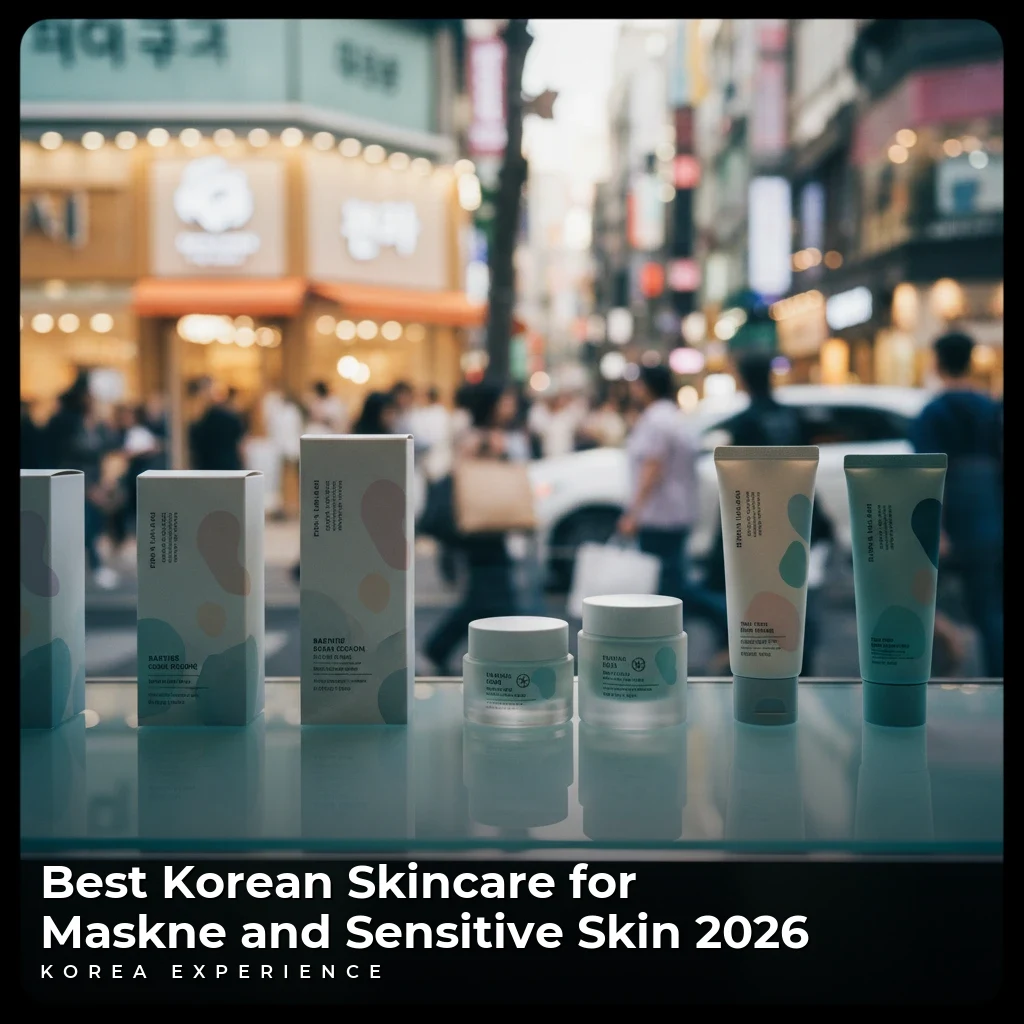
In 2026, the most effective skincare for "maskne" (mask-induced acne) and sensitive skin in Korea focuses on barrier repair and microbiome balance rather than harsh exfoliation. The top clinic-approved solution is the Aestura Atobarrier 365 Cream for moisture retention, paired with Dr.G Red Blemish Clear Soothing Cream for active inflammation. For targeted treatment, Torriden Balanceful Cica line has become the gold standard in Seoul's dermatology clinics and Olive Young stores alike, specifically formulated to combat the humid environment created under KF94 masks.
The short answer: To cure maskne in 2026, switch to low-pH cleansers like Make P:rem Safe Me, use Succinic Acid instead of Salicylic Acid for sensitive spots, and prioritize barrier repair with Zeroid or Aestura creams.
Key Takeaways
- 1Microbiome-friendly ingredients like Lactobacillus ferments are the 2026 standard for treating maskne without irritation.
- 2Aestura and Zeroid are the top two 'Real Derm' brands recommended by 9 out of 10 Gangnam dermatologists.
- 3Succinic Acid has replaced harsh BHAs for sensitive skin acne treatment in over 60% of new K-Beauty launches.
Understanding Maskne in the Korean Climate
Even in 2026, wearing masks remains a common practice in South Korea, not just for health safety, but as a defense against seasonal fine dust (hwangsa) and pollution. While the distinct "KF94" masks offer 94% filtration efficiency against particulate matter, the micro-climate they create around your mouth and chin—characterized by high humidity, friction, and trapped CO2—is a breeding ground for bacteria like Cutibacterium acnes.
For travelers and expats, the combination of Seoul's distinct water hardness (which is actually soft but can contain old pipe rust) and the humid summer or dry winter air can exacerbate sensitive skin conditions. Clinical data from 2025 indicated that nearly 45% of dermatology visits in Seoul were related to contact dermatitis or acne mechanica caused by facial friction.
📊 Skin Barrier Statistics
When your skin temperature rises by just 1°C, sebum production increases by approximately 10%. Under a mask, skin temperature can rise by over 3°C within 15 minutes of wear, leading to a significant spike in oil production that clogs pores. This is why the "stripping" method of the past (using high alcohol toners) is detrimental; it destroys the barrier when it is already compromised by friction.
The Holy Trinity of Ingredients: 2026 Trends
If you are shopping at Olive Young or a local pharmacy (Yakguk), look for these three key ingredient categories that have defined the sensitive skin market in 2026.
1. Second-Generation Cica (Teca-Exosomes)
Centella Asiatica (Cica) has been a staple for years, but 2026 sees the rise of Cica-Exosomes. Unlike standard extracts, exosomes are nano-sized vesicles that deliver the active compounds (Madecassoside) deeper into the dermis. They are roughly 1/500th the size of a pore, ensuring 60-70% better absorption rates than traditional Cica creams.
2. Succinic Acid
For years, Salicylic Acid (BHA) was the go-to for acne. However, for sensitive skin, it can be too drying. Succinic Acid has emerged as the gentle powerhouse. It controls sebum and inhibits bacteria but, crucially, it hydrates rather than dries. It is now found in approximately 40% of acne-focused serums in Korea.
3. Barrier-Mimicking Lipids (MLE)
Developed by NeoPharm (the parent company of Zeroid and Atopalm), Multi-Lamellar Emulsion (MLE) technology mimics the actual cross structure of healthy human skin lipids. This isn't just moisturizing; it's "fooling" the skin into repairing itself.
Shopping Tip
When looking for barrier creams, check the ingredient list for the "Golden Ratio" of Ceramides, Cholesterol, and Fatty Acids (usually 3:1:1). Brands like Zeroid utilize this precise ratio.
Step 1: Low-pH Cleansing (The Foundation)
The most common mistake international visitors make in Korea is using a high-alkaline cleanser that strips the skin. Korean tap water typically has a pH of around 7.0-7.2. To maintain a healthy acid mantle (pH 4.5-5.5), you need a slightly acidic cleanser.
Top Pick: Make P:rem Safe Me. Relief Moisture Cleansing Foam
- Price: ~₩16,000 ($12 USD) for 150ml
- Why it works: It uses coconut-derived surfactants and contains raspberry extract. It cleanses fine dust (PM2.5) effectively (98% removal rate) without leaving the skin tight.
Runner Up: Round Lab 1025 Dokdo Cleanser
- Price: ~₩13,000 ($10 USD) for 150ml
- Why it works: Formulated with deep sea water from Ulleungdo Island, it is rich in 72 types of minerals like magnesium and calcium that help reduce irritation.
💵 Cleanser Comparison 2026
Best for severely sensitive/rosacea skin
Best value & efficient dust removal
Step 2: The "Skin Pack" Method with Toner Pads
In 2026, the traditional liquid toner bottle is being outpaced by "Toner Pads." These are pre-soaked cotton pads used for both exfoliation (wiping) and soothing (masking). For maskne, the "Skin Pack" (sukin-paek) technique is essential: leaving the pads on irritated areas like the cheeks or chin for 5-10 minutes.
The Calm Down Kings
Abib Heartleaf Spot Pad Calming Touch Heartleaf (Houttuynia Cordata) from Mount Jiri is the star ingredient here. It acts as a natural antibiotic against acne bacteria. These pads usually retail for ₩24,000 for 75 pads.
Anua Heartleaf 77% Clear Pad Containing a massive 77% heartleaf extract, this is often the #1 best-seller in Olive Young. It’s incredibly watery and non-sticky, making it perfect for the humid Korean summer.
📖 How to Do a Toner Pad Skin Pack
Step 1: Cleanse
Wash face with lukewarm water and a low-pH cleanser.
Step 2: Apply Pads
Place a toner pad on both cheeks, the forehead, and the chin (mask zone).
Step 3: Wait
Leave on for 5 to 10 minutes. Do not let them dry out completely.
Step 4: Swipe & Pat
Remove the pads, swipe gently across the face, and pat the remaining essence in.
For a deeper dive into routine steps, check out our complete guide to Korean skincare routine.
Step 3: Serums and Ampoules (Targeted Treatment)
This is where you treat the active inflammation. In 2026, the trend has shifted away from high-percentage Niacinamide (10%+) to lower, more tolerable percentages (2-5%) mixed with soothing agents.
Torriden Balanceful Cica Serum
- Price: ~₩22,000 ($17 USD)
- Key Tech: It uses a "5D Cica Complex" which includes T-Percent™ Calming Complex. It is specifically designed for oily, sensitive skin that is dehydrated on the inside (U-zone dryness).
Isoi Blemish Care Serum (The Rose Serum)
- Price: ~₩35,000 ($27 USD)
- Reputation: The best-selling serum in Olive Young for over 10 years running. It uses Bulgarian Rose Oil and Arbutin to fade the red and brown spots (PIH/PIE) left behind by maskne. It is expensive but clinically proven to improve pigmentation within 2 weeks.
Many foreigners buy Vitamin C serums for acne scars immediately. However, on active maskne, pure Ascorbic Acid can sting and cause inflammation. I recommend switching to the Isoi Rose Serum or a Tranexamic Acid serum until the active breakouts have subsided.
Step 4: The Barrier Repair Creams (Clinic Grade)
This is the most critical step for sensitive skin. If your moisture barrier is damaged, no amount of acne treatment will work. In Korea, there are two titans of barrier repair: Aestura and Zeroid.
Aestura Atobarrier 365 Cream
Owned by Amorepacific, Aestura was exclusively a hospital brand until recently. Its signature feature is the visible "DermaON" capsules—tiny white beads of ceramides that melt into the skin upon application.
- Best for: Dry, flaky sensitive skin.
- Texture: Rich, velvety finish.
- Price: ~₩30,000 for 80ml.
Zeroid Soothing Cream (or Intensive Cream)
Zeroid (Zero Steroid) is the darling of Korean dermatologists. You often cannot find the full range at Olive Young; you must visit a hospital or specific online retailers. It uses the MLE technology mentioned earlier.
- Best for: Extremely sensitive, oily-dehydrated skin, or seborrheic dermatitis.
- Texture: Lightweight, non-greasy, absorbs instantly.
- Price: ~₩32,000 for 80ml.
Titan Clash: Aestura vs. Zeroid
| Feature | Aestura Atobarrier 365 | Zeroid Soothing Cream |
|---|---|---|
| Texture | Rich with melting capsules | Lightweight lotion-like |
| Finish | Dewy/Glowy | Matte/Natural |
| Best Skin Type | Dry/Normal | Oily/Combination/Acne |
| Availability | Olive Young (Easy) | Clinics/Online (Harder) |
If you are dealing with severe acne issues, you might want to consult a professional. Read our guide on the best Korean skin clinics in Gangnam to find a place that stocks these medical-grade products.
Step 5: Sunscreen for Sensitive Skin
Masks do not block UV rays effectively. In fact, white masks can reflect sunlight onto the sensitive skin around your eyes and temples. For sensitive skin in 2026, Physical (Mineral) Sunscreens or New Generation Chemical Filters are preferred.
Dr.G Green Mild Up Sun+ (SPF50+ PA++++) This is a 100% zinc oxide mineral sunscreen. It is hypoallergenic and non-nano, meaning it sits on top of the skin to reflect UV rays without absorbing into the bloodstream or irritating the pores.
- Pros: Incredible oil control, very soothing.
- Cons: Slight white cast on darker skin tones (though improved in the 2026 formula).
For more options, specifically for different skin tones, see our analysis of best Korean sunscreens.
The "Spot Treatment" Culture: Patches and Powders
Korea innovated the hydrocolloid patch, and in 2026, they have evolved into "Microneedle" patches.
Acropass Trouble Cure These patches have tiny, dissolving needles made of hyaluronic acid and niacinamide. When you press them onto a deep, cystic pimple (the kind maskne often causes), the needles penetrate the stratum corneum and deliver the medication directly to the source.
- Cost: ~₩12,000 for 6 patches (expensive but effective).
Olive Young Care Plus The classic, budget-friendly option. You get 102 patches for roughly ₩6,000. These are standard hydrocolloid patches that suck out the gunk (exudate) from open pimples.
Microneedle vs. Standard Patches
- ✓Microneedle: Penetrates deep cystic acne
- ✓Microneedle: Delivers active ingredients inside
- ✓Standard: Extremely cheap
- ✓Standard: Prevents picking/touching
- ✗Microneedle: Expensive ($2/patch)
- ✗Microneedle: Can sting slightly
- ✗Standard: Only works on open/surfaced pimples
- ✗Standard: Visible on skin
For those struggling with persistent acne, check out our COSRX skincare guide for more specialized spot treatments.
Where to Buy: Olive Young vs. Yakguk (Pharmacy) vs. Clinics
Knowing where to shop is as important as knowing what to buy.
Olive Young
The "Sephora of Korea" but more accessible. There is one on almost every block in Seoul (over 1,300 stores).
- Best for: Aestura, Dr.G, Round Lab, Torriden, Abib.
- Tip: Look for the "Olive Young Awards" stickers. These represent actual sales data, not paid placements.
Yakguk (Pharmacy)
Identifiable by the "약" (Yak) sign.
- Best for: Medical-grade treatments like Noscarana (scar gel) or Clearteen (topical salicylic acid). Pharmacists are generally very helpful and often speak basic English in tourist areas like Hongdae or Myeongdong.
Skin Clinics
- Best for: Zeroid, Cell Fusion C, Histolab. These brands are often sold in the lobby of dermatology clinics. You do not always need an appointment to buy products; you can walk in and ask to purchase skincare.
Olive Young Gangnam Flagship(올리브영 강남 타운)
Clinical Treatments for Persistent Maskne
Sometimes, products aren't enough. If you are in Korea, you have access to the world's best skincare technology at a fraction of Western prices.
1. LDM (Local Dynamic Micro-massage)
Also known as the "Water Drop Lift." This uses dual-frequency ultrasound to modulate the immune system of the skin and balance Hyaluronic Acid production.
- Pain: 0/10 (It feels like a warm massage).
- Cost: ₩50,000 - ₩100,000 per session.
- Downtime: None.
2. Potenza (Radiofrequency Microneedling)
For deep acne and scarring. It uses needles to deliver RF energy, killing oil glands selectively.
- Pain: 6/10 (Requires numbing cream).
- Cost: ₩250,000 - ₩400,000 per session.
- Downtime: Redness for 2-3 days.
Typical Clinic Skin Recovery Timeline
Treatment
LDM or Aqua Peel. Skin looks glowing immediately.
Calming
Use Zeroid/Aestura cream only. Avoid active serums.
Results
Inflammation subsides, barrier is restored.
Lifestyle Tips for Travelers in Korea
Your skincare routine is only half the battle. The environment in Korea plays a massive role.
- Water Filters: Old buildings in Seoul can have rusty pipes. If you have extremely sensitive skin, buy a travel shower filter (brands like Bodyluv) at Olive Young (approx. ₩15,000) and install it in your Airbnb or hotel.
- humidifiers: Korean winters are incredibly dry (humidity drops below 30%). Hotels are often overheated. Place a wet towel near your bed or ask for a humidifier.
- Diet: Korean food is high in sodium (sodium causes swelling/inflammation) and sugar (in sauces). Balance your BBQ nights with plenty of water.
For a look at products locals actually use to combat these issues, read about our team's beauty empties.
Conclusion
Curing maskne and managing sensitive skin in Korea in 2026 is about "gentle consistency." The market has moved away from harsh scrubbing and 10-step complex routines toward high-tech barrier repair and soothing botanicals like Heartleaf and Cica-exosomes.
Whether you pick up a tube of Aestura Atobarrier for your night cream or carry Abib pads for a mid-day refresh, the key is to listen to your skin. If you are visiting, take advantage of the tax-free shopping at Olive Young and stock up on these clinic-approved essentials—your skin will thank you long after your trip ends.
❓ Frequently Asked Questions
Have more questions?Contact us →
About the Author
Korea Experience Team
Written by the Korea Experience editorial team - experts in Korean medical tourism, travel, and culture with years of research and firsthand experience.
Explore more in Shopping & K-Beauty
From Olive Young hauls to Myeongdong shopping tips — discover the best K-Beauty products, fashion trends, and shopping destinations in Korea.
Browse All Shopping & K-Beauty ArticlesContinue Reading
Explore more articles you might find interesting
Discover the best K-beauty products for 2026. From viral sunscreens ($15) to barrier creams, here is the ultimate shopping guide with prices and skin type
Discover the top 10 vegan K-beauty brands for 2026. From Klairs to Melixir, find cruelty-free skincare in Seoul with prices starting at $15 USD.
Discover the top K-beauty products for men in 2026. From Dashu hair wax to Be Ready BB cream, here is the ultimate shopping guide with prices and tips.
Discover the best K-Beauty sheet masks for 2026. A complete guide to top brands like Mediheal and Abib, essential ingredients, and prices starting at ₩1,000.
Discover the 2026 Korean men skincare routine with top product picks, prices starting at ₩15,000, and expert tips for a clear complexion.
Don't risk your skin. Learn how to identify counterfeit Korean skincare with our 2026 guide, covering price analysis, packaging clues, and trusted retailers.