Best Sustainable Fashion Brands in Seoul: Eco-Friendly Shopping 2026
Discover Seoul's top eco-friendly brands for 2026. From upcycled streetwear to vegan leather, explore where to shop sustainably with prices and locations.
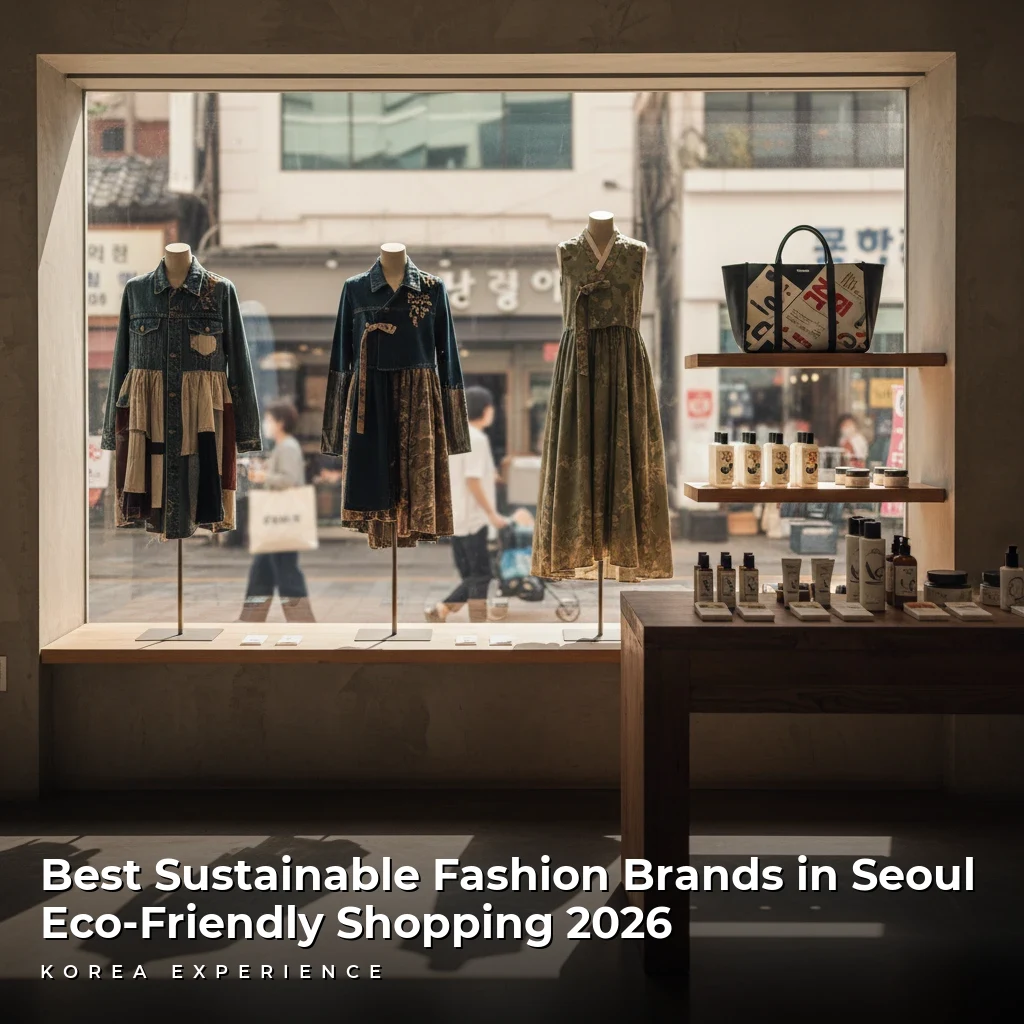
For eco-conscious travelers visiting Korea in 2026, the most pressing question is often where to find authentic sustainable fashion that goes beyond mere greenwashing. You can find the best sustainable fashion in Seoul concentrated in the Seongsu-dong and Hannam-dong districts, where brands like RE;CODE, PLEATS MAMA, and Marhen.J have established flagship stores dedicated to upcycling, zero-waste knitting, and vegan materials.
The short answer: Seoul's sustainable fashion scene in 2026 is anchored by RE;CODE (upcycled luxury) and PLEATS MAMA (recycled polyester), with the highest density of eco-shops located within a 1.5km radius of Seongsu Station.
Key Takeaways
- 1Seongsu-dong is the epicenter of eco-fashion with 15+ sustainable brand showrooms
- 2RE;CODE and PLEATS MAMA are the two must-visit local pioneers in 2026
- 3Expect to pay 20-30% more for certified eco-friendly items compared to fast fashion
- 4Most stores offer immediate tax refunds for purchases over ₩30,000
The Evolution of Eco-Fashion in Seoul (2026 Update)
Korea’s fashion industry has historically been known for its lightning-fast turnover, epitomized by the dongdaemun wholesale market system which can produce a garment from sketch to rack in under 48 hours. However, by 2026, a significant paradigm shift has occurred. Driven by the "Green New Deal" initiatives and a highly conscious MZ Generation (Millennials and Gen Z), the market for sustainable fashion in South Korea has grown by approximately 35% since 2023.
Currently, Seoul generates over 300 tons of textile waste daily. In response, local designers are not just "going green" for marketing points; they are integrating radical technologies like chemically recycled polyester (rPET) derived from Jeju Island’s waste bottles and developing plant-based leathers made from Hanji (traditional Korean paper) and apple pomace.
For the international traveler, this means shopping in Seoul is no longer just about buying cheap, trendy items; it is about discovering high-quality, narrative-driven pieces that combine Korean design aesthetics with global environmental standards.
📊 Seoul Sustainable Market 2026
Top Sustainable Brand: RE;CODE (The Upcycling Pioneer)
If you only visit one sustainable store in Seoul, it must be RE;CODE. Launched by Kolon Industries, RE;CODE is widely considered the grandfather of Korean sustainable fashion. Instead of producing new fabrics, they disassemble incinerator-bound inventory from major brands and military surplus materials to create avant-garde, structural pieces.
Every item comes with a specific "genealogy" tag explaining exactly what materials were used and how much carbon footprint was saved. In 2026, their designs have moved toward a gender-neutral, deconstructed aesthetic that rivals high-end Japanese labels like Sacai or Comme des Garçons.
The Shopping Experience
Their flagship store is more of an exhibition space than a retail shop. Located in Hannam-dong (and a newer pop-up in Seongsu), the atmosphere is quiet, industrial, and premium.
RE;CODE Hannam Series Corner(래코드 한남)
Pricing: This is luxury sustainability. Expect T-shirts to start around ₩90,000 ($68 USD) and outerwear to range from ₩450,000 to ₩1,500,000 ($340-$1,130 USD).
Pro Tip: The Box Atelier
At their node in the Myeongdong Cathedral complex, RE;CODE offers a "Box Atelier" service where you can bring your own old clothes, and their master tailors will upcycle them into a new design for a fee (starting at ₩60,000). It requires a reservation at least 2 weeks in advance.
PLEATS MAMA: The Zero-Waste Knit Leader
While RE;CODE handles the luxury upcycling sector, PLEATS MAMA dominates the casual, daily-use market. Their claim to fame is the signature pleated tote bag, which you will likely see stylish Seoulites carrying on the subway.
PLEATS MAMA utilizes a proprietary yarn called "Regen Jeju," made 100% from transparent PET bottles collected from Jeju Island. What makes them truly sustainable in 2026 is their manufacturing method: they use 3D knitting technology (Wholegarment) which knits the bag or garment in one piece. This means there is zero offcut fabric waste—a massive improvement over traditional cut-and-sew manufacturing which typically wastes 15-20% of fabric.
Best Items to Buy
- Nano Bag: A tiny, expandable tote perfect for phone and wallet. (Approx. ₩39,000)
- Shoulder Bag: The classic pleated design. (Approx. ₩59,000 - ₩79,000)
- Knit Apparel: In 2026, they expanded into cardigans and dresses that are wrinkle-free and machine washable.
💵 PLEATS MAMA Price Guide
Made from 16 recycled bottles
Zero-waste 3D knitting
You can find their flagship store in the Samcheong-dong area, a beautiful neighborhood that blends traditional Hanok architecture with modern art galleries. This makes for a perfect afternoon itinerary.
Marhen.J: The Vegan Handbag Giant
Marhen.J is arguably the most commercially successful eco-brand globally, with a massive following in Southeast Asia and Japan. By 2026, they have completely solidified their position as the leader in "Apple Leather" products in Korea.
Their bags are structured, minimalist, and incredibly lightweight. The "Apple Leather" is derived from the pomace (skin and core waste) of apples used in the juice industry. It mimics the texture of animal leather but is water-resistant and cruelty-free.
The Seongsu Flagship
Their flagship in Seongsu is a massive, Instagram-friendly space. It often features conveyor belt displays and large art installations. It is extremely crowded on weekends (Saturdays 14:00-17:00), so aim for a weekday morning visit.
📋 Marhen.J Shopping Stats
If you are interested in exploring the neighborhood where Marhen.J is located, check out our guide to 24 hours in Seongsu-dong for a full itinerary.
Project 1907: Saving the Oceans
Project 1907 is a brand with a singular mission: protecting the marine ecosystem. The year 1907 refers to the dawn of the plastic era, and their goal is to reverse the damage done since then. They specialize in heavy-duty backpacks, wallets, and outdoor gear made from "Platex," a fabric derived entirely from recycled plastic waste.
Unlike the delicate knits of PLEATS MAMA, Project 1907's gear is rugged. It’s popular among hikers and travelers who need durability.
- Location: They have a prominent showroom near Seoul Station, making it an easy stop before you head to the airport.
- Price: Backpacks run between ₩90,000 and ₩140,000.
- Durability: Their fabric is tested to be water-repellent and scratch-resistant, comparable to Cordura nylon.
Vintage and Thrift Shopping: The Ultimate Sustainability
While buying new sustainable goods is great, buying used is better. Seoul has two distinct "used" markets: Vintage (curated, expensive, branded) and Thrift (digging, cheap, uncurated).
1. Market Revayu (The Upcycling Hub)
Located in the Mapo-gu area, Market Revayu is more than a thrift store; it is a cultural complex for upcycling. They collect denim and clothes that cannot be resold, sanitize them, and resell them or use them as material for workshops.
- Why visit: You can buy "blind books" wrapped in recycled fabric or attend a 2-hour class on how to repair your own jeans.
2. Vin Prime (The Accessible Thrift)
Vin Prime is a chain of thrift stores found near major subway stations (Express Bus Terminal, Sadang, Gangnam).
- The Vibe: Clean, organized by color and item type.
- Prices: Coats for ₩15,000, shirts for ₩5,000-₩9,000.
- Caution: You need to check for stains carefully, as returns are generally not accepted.
Vintage vs. Thrift in Seoul
| Feature | Vintage Shops (Hongdae) | Thrift Chains (Vin Prime) |
|---|---|---|
| Curation | High (Brand focused) | Low (Volume focused) |
| Price Range | ₩40,000 - ₩200,000 | ₩5,000 - ₩25,000 |
| Condition | Like New / Dry Cleaned | As Is / Used |
| Fitting Room | Always Available | Limited Availability |
For those interested in exploring the areas where these vintage shops cluster, our guide to budget travel in Korea covers many of these economical shopping routes.
Vegan Beauty & Lifestyle Cross-Over
Sustainable fashion in Korea often overlaps with the "Clean Beauty" movement. Many concept stores in 2026 carry both eco-clothing and vegan skincare.
Aromatica Zero Station in Sinsa-dong is a prime example. While primarily a beauty brand, their flagship store is a zero-waste haven where you can refill products. They often collaborate with fashion brands for sustainable pop-ups. If you are shopping for eco-fashion, you will likely want to explore under-the-radar K-beauty brands that share these values.
Neighborhood Guide: Where to Walk
If you want to plan a walking route dedicated to sustainable shopping, stick to these two main areas.
Route A: Seongsu-dong (The Green Industrial Hub)
Start at Seongsu Station Exit 3.
- Walk 300m to visit the Marhen.J flagship.
- Walk 200m east to find Project 1907 (pop-up locations vary, check Instagram).
- Explore the LCDC Seoul complex, which houses various independent brands focusing on craftsmanship.
- Finish at Seoul Forest, where you can see the actual green space these brands are trying to protect.
Route B: Hannam-dong (The Luxury Eco)
Start at Hangangjin Station Exit 3.
- Visit RE;CODE at the Series Corner.
- Walk down the "Cafe Street" to find Millimeter, a shop carrying upcycled accessories.
- Visit Freitag (Swiss brand, but their Seoul store is iconic and anchors the eco-community here).
- Stop by Anthracite Coffee, which uses a repurposed industrial space, fitting the theme.
Half-Day Eco Shopping Itinerary
Start at Seongsu Station
Grab a coffee at a zero-waste cafe
Marhen.J Flagship
Browse apple leather bags
Lunch at Local Vegan Spot
Try temple food or fusion vegan
Vintage Shopping
Head to the vintage alley near Exit 4
Practical Tips for the Eco-Shopper in Seoul
Shopping in Seoul in 2026 comes with its own set of rules and conveniences. Here is how to navigate the logistics of sustainable shopping.
1. Tax Refunds are Immediate
Most major sustainable brands (RE;CODE, Marhen.J, PLEATS MAMA) offer "Immediate Tax Refund" at the register.
- Requirement: You must show your physical passport.
- Benefit: The tax (approx. 6-7%) is deducted instantly from your total bill if the purchase is between ₩30,000 and ₩500,000.
- Note: If you forget your passport, you can still get a refund receipt to claim at the airport (kiosks are available at Incheon T1 and T2).
2. The Shopping Bag Ban
South Korea has strict regulations on single-use plastics. Department stores and large shops are banned from giving out free plastic bags.
- Paper Bags: Usually cost ₩100 - ₩200.
- Reusable Bags: Most eco-shops will encourage you to buy a reusable tote or bring your own.
- Advice: Carry a foldable tote in your day pack to avoid accumulating paper bags.
3. Sizing Can Be Tricky
Korean "Free Size" usually fits a US 2-6 (Women) or US S-M (Men). However, sustainable brands like RE;CODE tend to have more relaxed, oversized fits (gender-neutral sizing), which accommodates a wider range of body types (up to US 10-12 or Men's L/XL).
"Many travelers assume Korean sizes are always tiny. While true for fast fashion, eco-brands in 2026 are embracing 'genderless' silhouettes. Don't be afraid to try on items labeled 'Men's' or 'Unisex'—the oversized look is very trendy here and offers more comfort."
4. Authenticating "Green" Claims
Greenwashing exists in Korea just as it does elsewhere. Look for these certifications on hangtags:
- GR Mark (Good Recycled): A government-backed certification for high-quality recycled products.
- GOTS (Global Organic Textile Standard): Common for organic cotton items.
- Jeju Volcanic Seawater / Regen Jeju: Specific to Korea, indicating materials sourced from Jeju's recycling programs.
Beyond Clothing: Sustainable Lifestyle Souvenirs
If you aren't in the market for clothes, Seoul offers incredible sustainable lifestyle goods that make perfect souvenirs.
Bojagi (Traditional Wrapping)
Instead of wrapping paper, Korea uses Bojagi (reusable fabric wraps). Many eco-stores sell modern Bojagi made from recycled scraps. It is the ultimate sustainable gift wrap that becomes part of the gift itself.
Hanji Leather
Hanji is traditional Korean paper made from mulberry bark. Innovations in 2026 have turned this into a durable, leather-like material used for wallets and passport holders. It is naturally antibacterial, lightweight, and biodegradable. Buying Hanji products supports traditional artisans while embracing modern sustainability.
You can learn more about traditional arts that intersect with sustainability in our guide to calligraphy classes in Seoul.
📖 How to Spot a Greenwashed Product
Step 1: Check the Composition Label
Look for specific percentages (e.g., '60% Recycled Polyester'). Vague terms like 'Eco-friendly fabric' are red flags.
Step 2: Look for Certification
Search for the GR Mark or OEKO-TEX logos on the tag.
Step 3: Assess Packaging
True eco-brands in Seoul use minimal packaging, corn-starch bags, or paper tape. Excessive plastic wrapping usually indicates greenwashing.
Pros and Cons of Eco-Shopping in Seoul
Sustainable Shopping in Seoul
- ✓High-tech fabrics (Regen Jeju, Apple Leather)
- ✓Immediate tax refunds available
- ✓Unique designs not found in the West
- ✓Strong culture of upcycling
- ✗Prices are significantly higher than fast fashion
- ✗Sizing can still be limited for larger bodies
- ✗Limited locations (mostly Seongsu/Hannam)
- ✗Some staff may have limited English proficiency
Conclusion: A Conscious Journey
Shopping for sustainable fashion in Seoul in 2026 is an experience that connects you with the city's future and its past. Whether it is a bag made from Jeju's discarded bottles or a jacket upcycled from vintage military gear, these items carry stories.
By choosing brands like RE;CODE, PLEATS MAMA, or Marhen.J, you are voting with your wallet for a cleaner Korea. The industry here is proving that style does not have to be sacrificed for sustainability. The designs are sharp, the technology is advanced, and the shopping experience is uniquely Korean.
Before you head out to these shops, make sure you are prepared with the right payment methods by reading our guide on credit cards in Korea.
❓ Frequently Asked Questions
Have more questions?Contact us →
About the Author
Korea Experience Team
Written by the Korea Experience editorial team - experts in Korean medical tourism, travel, and culture with years of research and firsthand experience.
Explore more in Shopping & K-Beauty
From Olive Young hauls to Myeongdong shopping tips — discover the best K-Beauty products, fashion trends, and shopping destinations in Korea.
Browse All Shopping & K-Beauty ArticlesContinue Reading
Explore more articles you might find interesting
Discover Seoul's underground malls where trendy fashion costs just 10,000 KRW. Our 2026 guide covers 5 top locations, shopping hacks, and essential locker tips.
Discover Korea's best underground shopping streets. Save up to 70% on fashion in Goto Mall, Gangnam, and Busan with our 2026 guide to prices and locations.

Discover the top 10 vegan K-beauty brands for 2026. From Klairs to Melixir, find cruelty-free skincare in Seoul with prices starting at $15 USD.
Discover Seoul's top 7 shopping districts for 2026. Compare Myeongdong beauty prices, Gangnam luxury, and Hongdae vintage fashion with tax refund tips.
Explore The Hyundai Seoul in Yeouido, featuring 600+ brands and a 1,000sqm indoor garden. Your 2026 guide to K-fashion, Tasty Seoul dining, and tax refunds.
Explore the best of Myeongdong in 2026. Discover top K-beauty flagship stores, trendy fashion boutiques, and street food prices starting at ₩4,000.