The 2026 Ultimate Guide to South Korea's Medical Tourism Visa...
The 2026 regulatory framework for South Korea's C-3-3 Medical Tourism Visa mandates a digital-first approach.
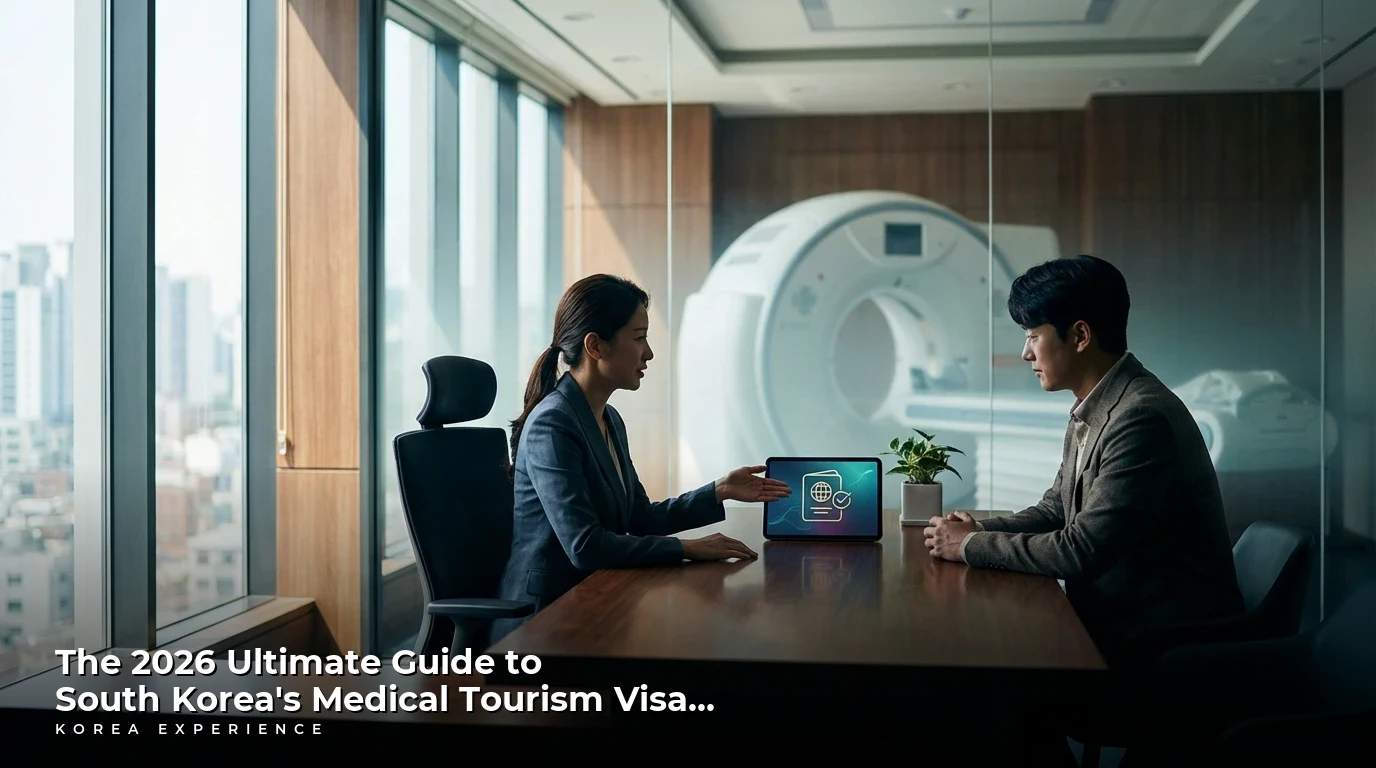
You've spent months researching the perfect clinic, saved up for that life-changing procedure, and now you're staring at a bewildering array of visa options. The short answer is that the C-3-3 Medical Tourism Visa remains your primary legal pathway for medical procedures lasting up to 90 days, but as of January 1, 2026, it must be paired with a mandatory e-Arrival Card submitted at least 72 hours before departure. This guide cuts through the bureaucratic maze to give you a clear roadmap for your 2026 medical journey to Korea.
Key Takeaways
- 1The C-3-3 visa remains the primary legal pathway for medical procedures lasting up to 90 days, but as of January 1, 2026, it must be paired with a mandatory e-Arrival Card submitted at least 72 hours before departure
- 2South Korea reached a historic milestone in late 2025 with international patient spending surging to 2.08 trillion KRW, a 65.3% increase from 2024, driven heavily by 'souvenir-ization' trends in medical skincare
- 3Patients planning cosmetic or aesthetic procedures in 2026 should adjust their budgets to account for the full 10% VAT, as the long-standing tax refund program for these specific services officially expired on December 31, 2025
The New Era of Korean Medical Tourism in 2026
The global landscape of healthcare travel has undergone a seismic shift, and as of 2026, South Korea has firmly established itself as the world's most advanced medical tourism hub. The primary mechanism for this influx is the C-3-3 Medical Tourism Visa, a specialized short-term entry permit designed for individuals seeking treatment, surgery, or recuperation at registered Korean medical institutions.
This matters profoundly to the modern traveler because the 2026 requirements have moved toward a fully digitalized, high-transparency model. Statistics from the Korea Health Industry Development Institute (KHIDI) reveal that the country welcomed a record-breaking 1.17 million international patients in 2024, a figure that nearly doubled from the previous year. Furthermore, by the end of 2025, international patient spending reached a historic peak of 2.08 trillion KRW, signaling that the market has moved beyond pandemic recovery into a phase of unprecedented expansion.
Plan your recovery too. Read about medical tourism recovery hotels and aftercare.
For the 2026 traveler, the C-3-3 visa is not merely a piece of paper but a comprehensive legal safeguard. It ensures that the patient is receiving care from one of the hundreds of hospitals and clinics that are strictly regulated under the Medical Service Act. These institutions are required to carry medical malpractice insurance and provide multilingual support, which is critical in an era where patient expectations for safety and communication have never been higher.
Once your visa is approved, browse our list of best plastic surgery clinics for foreigners.
The average medical tourism patient spent approximately 6.41 million KRW (~$4,600 USD) in 2024, reflecting the shift toward high-value procedures, including oncology, organ transplantation, and complex reconstructive surgeries. However, a significant majority of patients—nearly 57%—now visit for dermatological and aesthetic "wellness" procedures, which has led to the recent "souvenir-ization" of Korean medicine, where medical-grade skincare and pharmaceutical products are as sought after as the procedures themselves.
📋 Korea Medical Tourism at a Glance
Historical Context and the Legislative Pivot
South Korea's journey to becoming a medical powerhouse began in earnest in 2009. Prior to this, the medical law for foreigners was restrictive, but a landmark amendment allowed hospitals to actively market to and attract international patients. Between 2009 and 2019, the market grew by over 60% annually, reaching nearly 500,000 patients just before the global disruptions of 2020. The government established the "Medical Korea" brand under the slogan "Smart Care," focusing on integrating cutting-edge medical technology with an efficient, outcome-driven patient experience.
The timeline of medical tourism in Korea is marked by strategic governmental interventions. In 2016, the government introduced a temporary VAT refund for cosmetic procedures, which was extended multiple times to maintain a competitive edge against burgeoning markets in Thailand and Turkey.
However, 2026 marks a major turning point: the sunset of this specific tax incentive. As of January 1, 2026, Bill No. 2212306, which amended the Special Tax Measures Act, officially allowed the cosmetic VAT refund program to expire. This legislative move indicates a shift in national strategy, as Korea now relies on its reputation for clinical excellence and technological superiority rather than price-based incentives.
Furthermore, the 2025 introduction of the Mobile Alien Registration Card (ARC) has paved the way for a more digitalized society, where identity verification is increasingly handled through smartphones—a trend that is now a central requirement for any medical tourist staying for an extended period.
Evolution of Korean Medical Tourism
Early Adoption
Approximately 60,000 foreign visitors entered Korea for preliminary medical purposes
Legislative Foundation
The Medical Service Act was amended to permit the official attraction of foreign patients and created the C-3-M/G-1-M visas
VAT Refund Launch
The government introduced a 10% VAT refund for cosmetic procedures to bolster competitiveness in aesthetic medicine
Milestone Growth
South Korea surpassed the 1 million patient mark, recording 1.17 million foreign visitors from 202 countries
Digital Transformation
The Mobile Alien Registration Card (ARC) was launched on March 21, allowing digital verification for banking and mobile services
Mandatory e-Arrival
Effective January 1, the e-Arrival Card became the only method for entry declaration, replacing all paper-based forms
Understanding Your 2026 Entry Options
When planning a trip to Korea for medical purposes in 2026, patients must choose between three primary entry routes, each tailored to different types of procedures and stay durations. An examination of the current visa landscape reveals that the most common mistake is applying for a visa that does not match the actual complexity of the medical plan.
Medical Entry Routes Comparison (2026)
| Feature | K-ETA (Visa-Free) | C-3-3 Medical Visa | G-1-10 Treatment Visa |
|---|---|---|---|
| Cost | ~10,000 KRW | $30 - $130 USD | $50 - $200 USD |
| Maximum Stay | 30 - 90 Days | 90 Days | 1 Year (Extendable) |
| Caregiver Coverage | Not Applicable | Immediate Family Only | Full Caregivers/Family |
| Invitation Needed | No | Required from Clinic | Required from Clinic |
| Best For | Lasers, Botox, Check-ups | Plastic Surgery, Dental | Oncology, Rehab, IVF |
| 2026 Requirement | e-Arrival Card | e-Arrival + Visa | e-Arrival + Visa |
| Refund Eligibility | No Cosmetic VAT Refund | No Cosmetic VAT Refund | Not Applicable |
The C-3-3 visa is specifically for patients who require an invitation from a registered institution. In 2026, these institutions often utilize the "HUNET" system, an online portal where the hospital submits the patient's data directly to Korean immigration. Once the system generates a "Confirmation of Visa Issuance" number, the patient can finalize their visa at a local consulate with minimal paperwork.
This route is essential for patients bringing family members, as the C-3-3 caregiver provision is the only reliable way to ensure a spouse or parent can stay for the duration of a surgery and recovery. For those entering on a K-ETA for minor procedures, the process is entirely digital but lacks the dedicated medical support and caregiver coverage of the C-3-3.
C-3-3 Medical Visa Analysis
- ✓Legal Security and Transparency: Applicants are guaranteed treatment at medical institutions officially registered and vetted by the Ministry of Health and Welfare
- ✓Caregiver Provisions: The visa explicitly allows immediate family members, such as spouses and parents, to enter as guardians under the same medical umbrella
- ✓Double and Multiple Entry Options: For patients requiring tiered surgeries or long-term monitoring, the C-3-3 offers multi-entry paths that standard tourist entries lack
- ✗Upfront Administrative Burden: Requires a formal invitation code (HU-NET) and proof of financial solvency, which can take weeks to secure
- ✗Cost Increases in 2026: The expiration of the cosmetic VAT refund means that aesthetic patients must now pay the full 10% tax without reimbursement
- ✗Inflexible Stay Limits: Stays are strictly capped at 90 days; extending a stay for recovery complications requires a complex status change to a G-1-10 visa
The 2026 Step-by-Step Application Process
The 2026 application process is defined by its digitalization. Prospective patients must no longer rely on physical mailing of sensitive documents to hospitals; instead, a secure digital workflow has been established.
For a streamlined application walkthrough, see our step-by-step Korea medical tourism visa application guide.
📖 Navigating the 2026 Medical Entry Process
Step 1: Hospital Consultation and Registration
Patients must first select a certified Korean medical institution and complete a virtual consultation to receive a preliminary treatment plan and cost estimate.
Step 2: Secure the Visa Issuance Number
Once the treatment is confirmed and a deposit is often paid, the hospital will apply for a 'Confirmation of Visa Issuance' via the online HUNET system.
Step 3: Complete the Mandatory e-Arrival Card
At least 72 hours before boarding your flight, you must submit your travel details, passport information, and Korean address to the e-Arrival Card portal.
Step 4: Consulate Visit and Arrival
Visit the nearest South Korean Embassy with your issuance number, passport, and proof of funds to receive your visa sticker or electronic printout.
Phase-by-Phase Breakdown
Phase 1: Verification and Virtual Consultation The journey begins with the selection of a clinic. In 2026, it is mandatory to verify that your chosen clinic is registered with the Ministry of Health and Welfare to treat foreign patients. Once verified, a virtual consultation—often involving the submission of medical history and photos—leads to a formal treatment plan and a cost estimate.
Phase 2: The HU-NET Invitation After confirming the appointment and, in many cases, paying a deposit, the clinic applies for a visa issuance number. This electronic code is sent to the patient and serves as the primary document for the consulate application. For those seeking major surgery, the clinic may also provide a "Medical Service Sales Certificate" which, prior to 2026, was used for VAT refunds. While the refund is no longer active for cosmetics, this certificate still serves as proof of a legitimate medical purpose for immigration officials.
Phase 3: Digital Entry Declaration The most critical change for 2026 is the mandatory e-Arrival Card. All foreign visitors, regardless of visa status, must complete this form online at e-arrivalcard.go.kr within 72 hours of their arrival.
The system requires specific details:
- Personal Information: Extracted automatically via passport OCR
- Travel Details: Flight number and arrival/departure dates
- Accommodation Address: A valid Korean address (hotel or hospital) where the patient will be staying
Phase 4: Consolidation and Arrival Upon receiving the C-3-3 visa (either as a sticker in the passport or an electronic printout), the patient travels to Korea. At the gate, immigration officers may verify the e-Arrival Card digitally, but carrying a PDF copy is highly recommended. For those arriving for high-risk surgeries, officers may also request to see a physical copy of the hospital invitation and proof of financial solvency.
In 2026, the success of your medical journey depends on your digital preparation. I strongly advise patients to secure their Korean eSIM before landing. Without a working data connection to access your e-Arrival confirmation and use local navigation apps, navigating the sophisticated but complex Seoul hospital system becomes unnecessarily stressful.
Regional Specialization and Insider Logistics
As the medical tourism market matures in 2026, the industry is seeing a nationwide expansion beyond the traditional "beauty belt" of Seoul's Gangnam district. The government has designated six "Medical-Wellness Tourism Convergence Clusters" that provide specialized care combined with regional tourism.
- Seoul & Incheon: Still the capital for high-end aesthetics, dermatology, and major general hospitals (like Severance or Samsung Medical Center)
- Busan: Emerging as a hub for dental tourism and "ocean-healing" wellness packages, leveraging its health hot springs and beach-front recovery resorts
- Daegu: Known for its "Medi-City" brand, specializing in hair transplantation and oriental medicine integration
- Jeju Island: Focused on premium wellness retreats, anti-aging therapies, and stem cell research
Pro Tip: K-ETA for Minor Treatments
If you are coming for minor skin treatments or a basic health check-up, verify if your country qualifies for the K-ETA. Entering visa-free is faster and cheaper than the C-3-3 for non-surgical procedures.
VAT Refund Has Ended
The 10% VAT refund for cosmetic surgery officially ended on January 1, 2026. Be wary of any agency or clinic websites that still advertise 'tax-free' cosmetic surgery, as these may be outdated.
No Korean Phone/ARC? Here's What To Do
For short-term 2026 visitors, the most effective solution is a prepaid eSIM (like Chingu Mobile or Korea SIM Gold) purchased online before arrival. These plans do not require an ARC and provide the essential data connection needed for map apps, translation, and taxis.
Practical Banking Solutions
For any medical tourist in 2026, the "No-ARC" solution is the most vital piece of logistics. Upon arrival, most tourists lack a Korean phone number, which prevents them from using Baemin (food delivery) or KakaoTaxi effectively. The solution is to purchase a prepaid eSIM before arrival.
Unlike postpaid contracts, these do not require an ARC and can be activated with just a passport. Furthermore, while the Mobile ARC launched in 2025 has revolutionized banking for long-term residents, short-term C-3-3 holders can still open "limited" bank accounts at branches with dedicated foreigner desks, such as Hana Bank in Itaewon, using only their passport and a local phone number.
Frequently Asked Questions
❓ Frequently Asked Questions
Have more questions?Contact us →
Muslim travelers can find specialized support. See our guide to halal medical tourism and Muslim-friendly clinics in Korea.
Conclusion
Navigating South Korea's medical tourism landscape in 2026 requires a blend of clinical foresight and digital savvy. The C-3-3 visa remains the gold standard for patients seeking the protection of the Medical Service Act, but the environment has become more expensive due to the cessation of the cosmetic VAT refund and more rigorous due to the mandatory e-Arrival Card system.
The analysis indicates that the most successful medical journeys are those where patients finalize their digital footprint—securing an eSIM and an electronic arrival declaration—well before they set foot in a clinic. For those seeking world-class care, whether it be a $340 health check-up or a $15,000 surgical makeover, Korea continues to offer a mature, safe, and highly efficient ecosystem.
The recommendation for 2026 is clear: embrace the digital transition early, verify every institutional credential, and budget for the 10% VAT as part of a premium medical experience.
Sources
- VisitKorea Official Portal - Details on visa types and K-ETA exemptions
- HiKorea (Government for Foreigners) - Official guidelines for C-3-3 and G-1-10 visa requirements
- Medical Korea (KHIDI) - Registration of medical institutions and international patient statistics
- e-Arrival Card Portal - Mandatory entry declaration system requirements for 2026
- Jivaka Medical Guide - 2026 changes to VAT refunds and medical tourism cost analysis
About the Author
Korea Experience Team
Written by the Korea Experience editorial team - experts in Korean medical tourism, travel, and culture with years of research and firsthand experience.
⚠️ Medical Disclaimer
The information provided on this website is for general informational purposes only and does not constitute medical advice. Always consult with qualified healthcare professionals before making any medical decisions.
Explore more in Medical Tourism
World-class medical procedures at competitive prices. From plastic surgery and dermatology to dental care and health checkups — your complete guide to medical tourism in Korea.
Browse All Medical Tourism ArticlesContinue Reading
Explore more articles you might find interesting
Discover why 57% of 2025 medical tourists chose dermatology and how recovering in a luxury Hanok for $250 a night is the ultimate 2026 healing hack.
Complete guide to obtaining a C-3-3 or G-1-10 medical visa for Korea. Includes 2026 financial requirements, agency lists, and processing times.

Unlock your dream of living and working remotely in South Korea with the F-1-D Digital Nomad Visa 2026. This guide covers eligibility, application, and life in Korea.

A complete guide to securing remote work and navigating the digital nomad lifestyle in South Korea under the 2026 visa regulations.

Find official starting points for medical-tourism questions and learn the basic Korean medical-dispute application process.

Use these questions to clarify the treating clinician, interpreter, written estimate, consent, and follow-up before arranging care in Korea.