Busan night markets guide 2026: Best food and shopping spots
Discover the best Busan night markets in 2026. From Bupyeong Kkangtong's street food to Haeundae's seafood, find prices, hours, and transport tips.
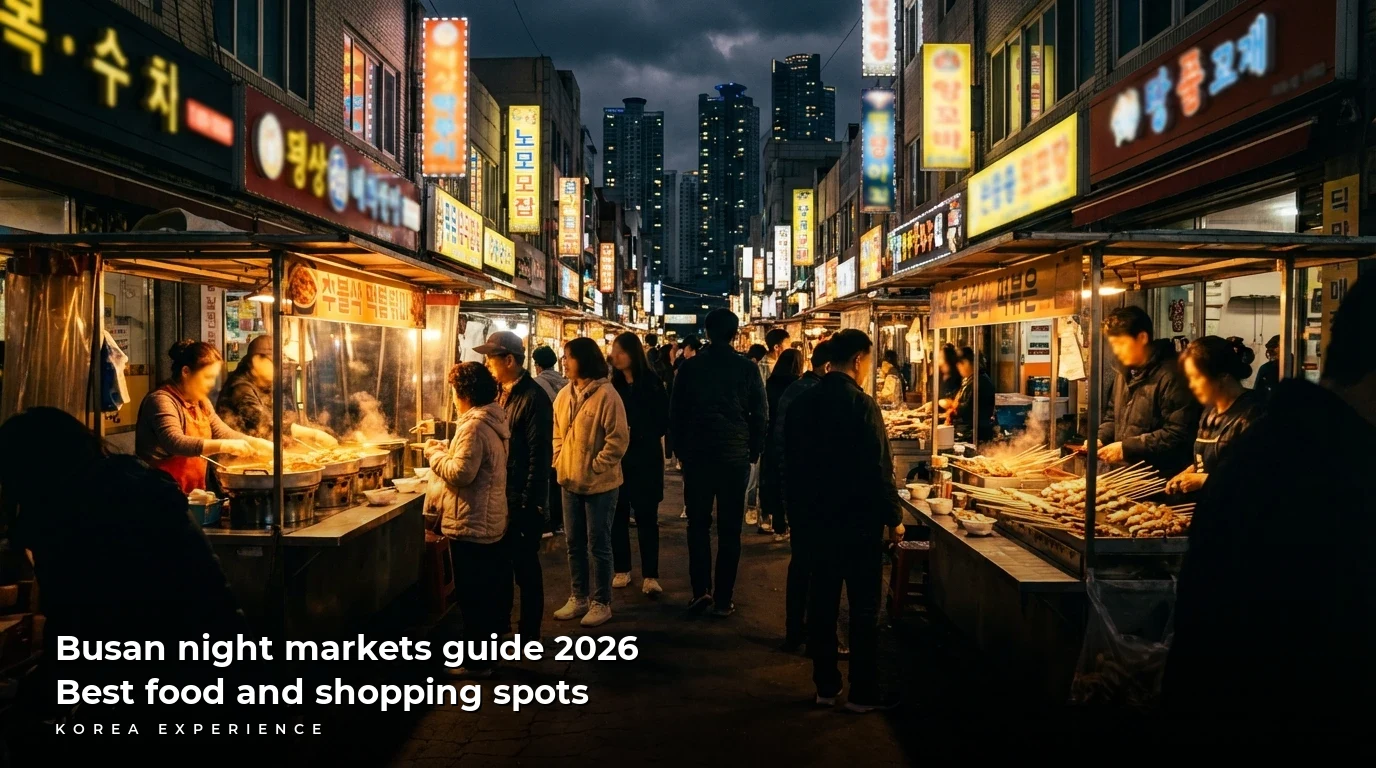
If you are looking for the absolute best night market experience in Busan for 2026, the clear winner is the Bupyeong Kkangtong Night Market. While the city offers several evening hotspots, Kkangtong provides the most concentrated variety of international and Korean street foods, operating daily from 19:30 to 23:30 with over 30 dedicated food stalls packed into a 110-meter alleyway.
The short answer: Bupyeong Kkangtong Night Market is the premier destination for street food lovers in 2026, offering 30+ varied stalls with prices ranging from ₩3,000 to ₩6,000 ($2.25-$4.50 USD). For seafood, head to Jagalchi; for movie-themed snacks, visit BIFF Square.
Key Takeaways
- 1Bupyeong Kkangtong is the only permanent night market open daily from 7:30 PM
- 2Bring cash (₩) as many small stalls do not accept foreign credit cards
- 3Most street food items cost between 3,000 and ₩6,000 in 2026
Introduction to Busan's Night Culture
Busan, South Korea's second-largest city, transforms when the sun goes down. Unlike the polished, high-tech vibe of Seoul's Gangnam, Busan offers a raw, energetic, and deeply authentic maritime atmosphere. In 2026, the city's night markets remain the beating heart of this culture. These aren't just tourist traps; they are where locals finish their workdays with soju and sizzling snacks.
The night market scene in Busan is distinct from Seoul. It is generally 10-15% cheaper, the portions are often more generous, and the atmosphere is louder and friendlier. Navigating these markets can be overwhelming for first-time visitors due to the sheer density of crowds and smells. This guide covers everything from the famous "Big Three" markets in the Nampo-dong area to beachside spots in Haeundae, ensuring you know exactly where to go, what to eat, and how much to pay.
📊 Busan Night Market Stats 2026
The "Big Three" in Nampo-dong
The Nampo-dong district is the undisputed capital of Busan's street food scene. Here, three major market areas converge within a 15-minute walking radius: Bupyeong Kkangtong, Gukje Market, and BIFF Square. You can easily visit all three in a single evening if you pace yourself.
1. Bupyeong Kkangtong Night Market
This is the crown jewel. "Kkangtong" means "tin can," a name derived from the Korean War era when US military canned goods were traded here. Today, it is Korea's first permanent night market.
When the clock hits 19:30, the central aisle of the covered arcade is cleared, and mobile food carts are wheeled in. The transformation takes less than 15 minutes, turning a standard grocery market into a bustling food corridor.
Bupyeong Kkangtong Night Market(Bupyeong Kkangtong Yasijang)
What to Eat Here: The variety here is staggering. In 2026, the trend has shifted slightly towards fusion cuisine.
- Beef Sushi: Torch-seared beef slices on rice. Expect to pay around ₩5,000 for 5 pieces.
- Scotch Eggs: A hard-boiled egg wrapped in spicy pork and bacon, drizzled with barbecue sauce. Price: ₩4,000.
- Fried Milk: A Taiwanese-inspired dessert that has become a staple. Cubes of solidified milk batter, deep-fried to a crisp. Price: ₩3,000 for a skewer.
Navigation Tip: The market is crowded. The rule of thumb is to keep moving. If you stop to eat, tuck yourself between the stalls to avoid blocking the flow of traffic. There are trash bins located at the ends of the arcade—do not leave trash on the vendors' counters.
Cash is King
While some larger stalls in 2026 accept WOWPASS or credit cards, nearly 70% of the mobile carts at Kkangtong still prefer or require cash. Always carry at least ₩50,000 in small denominations (1,000 and 5,000 bills) per person.
2. BIFF Square (Busan International Film Festival Square)
Located just across the street from the Jagalchi market entrance, BIFF Square is not a traditional enclosed market but a bustling street food zone. It is famous for its "Star Street" featuring handprints of famous directors and actors, but the real draw is the Ssiat Hotteok.
The Ssiat Hotteok Experience: Unlike the standard sweet pancakes found in Seoul (which are usually filled with just brown sugar and cinnamon), the Busan version is cut open after frying and stuffed with a massive spoonful of sunflower seeds, pumpkin seeds, and nuts. It is crunchy, salty, and sweet all at once.
- Average Wait Time: 15-20 minutes on weekends.
- Price: ₩2,000 - ₩2,500 per piece.
- Best Stall: Look for the stall with the longest line near the olive Young store; it is usually the one featured on popular Korean variety shows.
📋 BIFF Square Essentials
3. Gukje Market
Gukje Market sits adjacent to Kkangtong. While Kkangtong is about food, Gukje is about "things." It is a labyrinth of vintage clothing, socks, household goods, and K-pop merchandise.
Why Visit at Night? While many interior shops close by 20:00, the "Lighting Street" and the exterior stalls remain active. It is the perfect place to walk off the calories from Kkangtong.
Shopping Highlights:
- Socks: Korea makes excellent socks. You can find high-quality designs for ₩1,500 a pair or 10 pairs for ₩10,000.
- Vintage Clothes: The "Guje" (vintage) alleyway offers imported second-hand clothes. You can find branded windbreakers and denim jackets for as low as ₩10,000 ($7.50 USD).
If you are planning to do extensive shopping here, check out our accommodation near traditional markets guide to find a hotel where you can easily drop off your bags.
Jagalchi Market: The Late-Night Seafood Experience
While technically a fish market, the exterior of Jagalchi transforms at night. The main building closes its wet market operations around 20:00, but the outdoor street stalls (pojangmacha) and the 2nd-floor restaurants stay open late.
This is where you go for a sit-down meal rather than walking snacks. The atmosphere is gritty and authentic. You will sit on plastic stools, smell the salt air, and hear the dialect of the "Jagalchi Ajumma" (the famous tough ladies who run the stalls).
📖 How to Order at Jagalchi Night Stalls
Step 1: Choose Your Stall
Walk along the outdoor strip. Look for tanks with lively eels and fish.
Step 2: Negotiate/Order
Ask for 'Gome-jangeo' (Hagfish) or 'Saengseon-gui' (Grilled Fish).
Step 3: The Sides
Once seated, you will get free side dishes (banchan) and mussel soup.
For a deeper dive into what seafood to order, read our comprehensive Busan seafood guide.
Haeundae Traditional Market: Beachside Bites
If you are staying in the Haeundae beach area, you don't need to trek all the way to Nampo-dong for a market experience. The Haeundae Traditional Market offers a linear street packed with restaurants and snack shops, located just 5 minutes from the beach.
The Vibe: It is more tourist-oriented than Kkangtong, meaning more English menus and slightly higher prices (about 10-15% more). However, the convenience is unbeatable.
Must-Try Dish: Grilled Eel (Jangeo-gui) Haeundae market is famous for its blind eel restaurants. You will see the eels being skinned and prepped in the windows (warning: not for the squeamish). The eels are grilled over briquettes and slathered in spicy red pepper sauce.
- Cost: Approx. ₩40,000 - ₩60,000 for a 2-person serving.
Haeundae Night Out: Street vs. Seat
The Dualism Concept: Experience the best of both worlds — premium luxury moments paired with authentic budget-friendly experiences in one route.
Luxury Seat
Grilled Eel & Soju set at a market restaurant
Budget Walk
Tteokbokki & Tempura from street window
If traveling with a group, go for the eel dinner. Solo travelers should stick to the standing snack bars.
Best Food to Try: A 2026 Price Guide
Budgeting for a night market trip can be tricky. In 2026, inflation has pushed prices up slightly, but street food remains one of the most affordable ways to dine in Korea. Below is a comparative price guide to help you plan your cash withdrawals.
💵 Busan Street Food Prices 2026
High-quality beef with veggies
Half tail grilled with mozzarella
Per skewer, includes free broth
Standard cup serving
The Holy Trinity of Busan Snacks
-
Mul-tteok (Water Rice Cake): This is unique to Busan. It is a long cylinder of rice cake skewered and soaked in fish cake broth. Unlike spicy tteokbokki, it is savory, soft, and chewy.
- Price: ₩1,000 per skewer.
- Where: Any Eomuk stall.
-
Bibim Dangmyeon (Spicy Glass Noodles): A specialty of Gukje Market. Boiled glass noodles mixed with spicy sauce, fish cake slices, spinach, and pickled radish. It is often eaten while sitting on low stools in the alley.
- Price: ₩5,000 per bowl.
-
Busan Eomuk (Fish Cake): Busan is a port city, and its fish cakes contain a much higher percentage of actual fish meat (often over 70%) compared to Seoul versions.
- Price: ₩1,000 - ₩3,000 depending on the shape and filling (some have cheese or sausage inside).
For travelers exploring alone, these markets are fantastic because you can sample small portions without committing to a large meal. Check our guide on best spots for solo dining for more ideas.
Practical Tips for Night Market Survival
Visiting a Korean night market is an intense sensory experience. To navigate like a pro in 2026, you need to know the unwritten rules of the road.
Payment Methods
While Korea is becoming increasingly cashless, street food stalls are the final frontier of cash.
- Cash: Essential. 80% of transactions under ₩5,000 are cash.
- Bank Transfers: Locals often pay by wiring money instantly to the vendor's bank account displayed on a sign. As a tourist, you likely cannot do this.
- Cards: Accepted at established shops inside the market, but rarely at the mobile carts in the center aisle.
Trash Etiquette
Finding trash cans in Korea is notoriously difficult. In night markets, vendors are responsible for their own trash. If you buy a skewer from Stall A, return the stick and cup to Stall A when you are finished. Do not try to give Stall A's trash to Stall B.
Best Time to Visit
- Weekdays (Mon-Thu): Best for shorter lines. You can get your food in 5 minutes.
- Weekends (Fri-Sun): The atmosphere is electric, but you might wait 20-30 minutes for popular items like the beef sushi.
- Weather: Markets are generally open rain or shine (Kkangtong has a roof), but heavy rain can dampen the mood at open-air spots like BIFF Square.
For general advice on when to plan your trip, refer to our best time to visit Korea guide.
Accommodation: Where to Stay
To make the most of the night markets, location is key. The subway system closes around midnight, so staying within walking distance is a huge advantage.
- Nampo-dong / Jung-gu: Stay here if your main goal is food. You are steps away from Kkangtong and Jagalchi.
- Haeundae: Stay here if you want luxury hotels and beaches, and don't mind a 50-minute subway ride to the main Nampo markets (or just stick to Haeundae Market).
- Seomyeon: The geographic center of Busan. It has its own food alley and is halfway between Nampo and Haeundae.
Night Market Base Camps
| Feature | Nampo-dong | Haeundae | Seomyeon |
|---|---|---|---|
| Proximity to Kkangtong | Walkable | 50 min Transit | 25 min Transit |
| Nightlife (Clubs) | Low | Medium | High |
| Avg Hotel Cost | $$ | $$$ | $$ |
Off the Beaten Path: Lesser-Known Night Spots
If you have already done the main markets and want something more local, Busan has hidden gems.
1. Millak Waterside Park (near Gwangalli)
Note: As of late 2025, alcohol consumption regulations here have tightened, but it remains a top food spot. Grab sashimi (hoe) from the nearby Millak Raw Fish Town center (ground floor), buy some snacks, and sit on the concrete steps facing the Gwangalli Bridge. At night, the bridge lights up, creating a stunning backdrop for your picnic.
2. Choryang Ibagu Night Market
Located near Busan Station, this market is smaller and focuses on multicultural foods due to the nearby Chinatown and Texas Street. It offers a mix of Korean, Filipino, and Russian snacks.
- Distance: 10 minutes walk from Busan Station.
- Vibe: Very local, fewer tourists.
"Many tourists skip Seomyeon's food alley, but it's where the local youth actually go. Behind the Lotte Department Store, there is a street of 'Pojangmacha' (tent wagons) that serve amazing spicy udon and stir-fried pork. It's much more authentic than the tourist-heavy zones."
Transport Guide: Getting There and Back
Busan's subway system is efficient and bilingual.
- To Nampo/Kkangtong: Take Line 1 (Orange Line) to Jagalchi Station. Use Exit 7 for BIFF Square or Exit 3 for Kkangtong Market.
- To Haeundae: Take Line 2 (Green Line) to Haeundae Station, Exit 3.
- Last Train: Usually around 23:40 or 00:00. If you miss it, taxis are plentiful.
- Taxi: A taxi from Haeundae to Nampo at night will cost roughly ₩20,000 - ₩25,000 and take 30 minutes via the bridge.
The Perfect Night Market Route
Sunset at Jagalchi
Watch the sunset from the Jagalchi roof observatory (free).
BIFF Square Snack
Grab a Ssiat Hotteok as an appetizer.
Kkangtong Main Event
Hit the main night market for dinner.
Gwangbok-ro Walk
Walk off the food through the fashion street.
Shopping Beyond Food
While food is the main attraction, the night markets are excellent for souvenir shopping. Unlike the high-end department stores like Shinsegae Centum City, the markets offer character goods, socks, and phone accessories at wholesale prices.
Bargaining:
- Can you bargain? Generally, no, not for food. For clothes in Gukje Market, if you buy multiple items (e.g., 3+ shirts), you can politely ask, "Discount jom hae-juseyo?" (Please give me a discount).
- Success rate: You might get ₩1,000 or ₩2,000 off, or a free pair of socks. Don't push too hard; margins are thin.
If you are interested in broader shopping tips and payment options, check out our article on credit cards in Korea to avoid transaction failures.
Conclusion
Busan's night markets in 2026 offer a sensory explosion that perfectly encapsulates the city's character: spicy, loud, generous, and by the sea. Whether you are munching on a seed-filled pancake in BIFF Square or navigating the narrow, steam-filled aisles of Bupyeong Kkangtong, you are participating in a living cultural tradition.
Remember to bring cash, wear comfortable shoes, and arrive with an empty stomach. The energy of Busan at night is contagious, and the flavors you discover here will likely be the highlight of your Korean culinary journey.
❓ Frequently Asked Questions
Have more questions?Contact us →
Busan Night Market Summary
- ✓Incredible variety of food
- ✓Significantl cheaper than restaurants
- ✓Vibrant local atmosphere
- ✓Open late (until 11:30 PM or later)
- ✗Can be extremely crowded
- ✗Very few places to sit
- ✗Mostly cash-only
- ✗Limited vegetarian options
About the Author
Korea Experience Team
Written by the Korea Experience editorial team - experts in Korean medical tourism, travel, and culture with years of research and firsthand experience.
Explore more in Travel & Tourism
From Seoul's neon-lit streets to Jeju's volcanic landscapes — discover the best of Korea with insider travel tips, itineraries, and seasonal guides.
Browse All Travel & Tourism ArticlesContinue Reading
Explore more articles you might find interesting
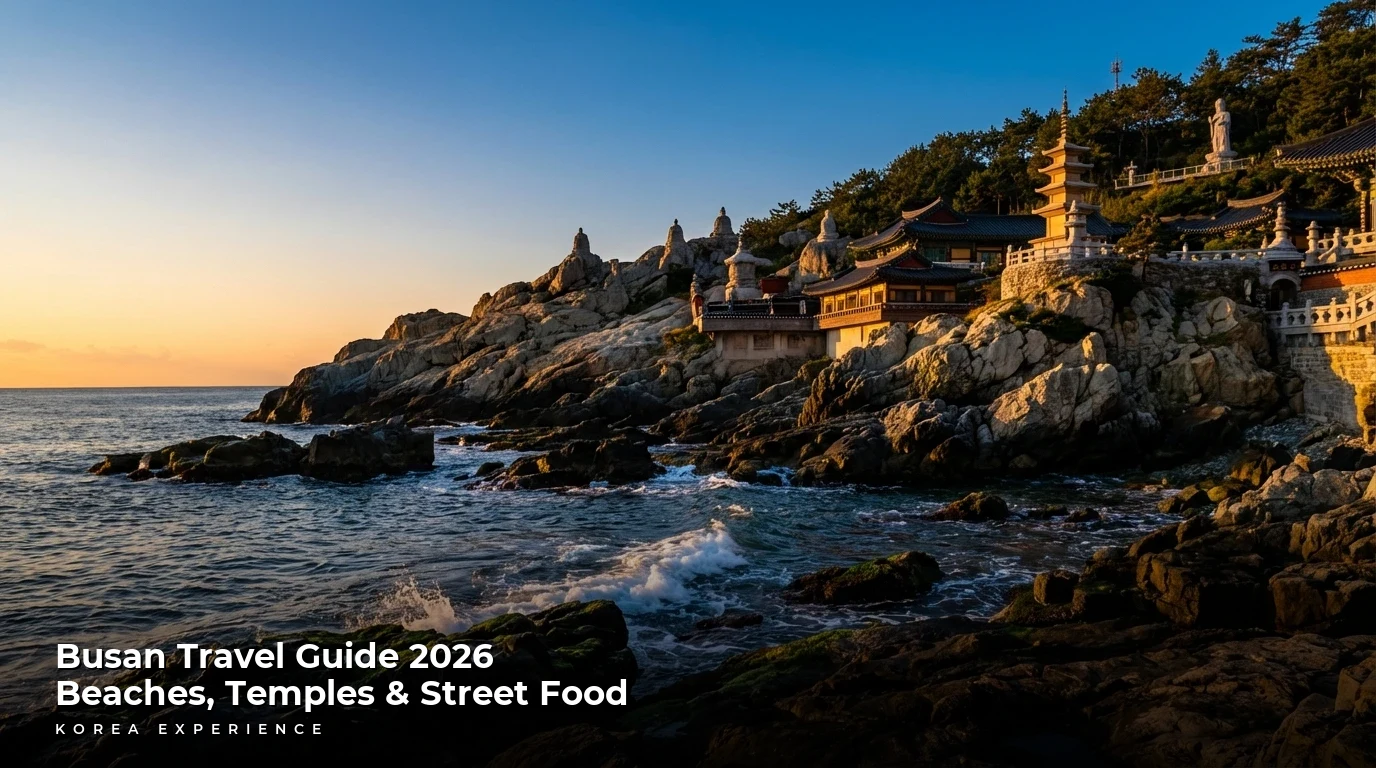
Discover the best of Busan in 2026. From Haeundae Beach to Haedong Yonggungsa Temple, explore top spots, costs, and itineraries for your trip.
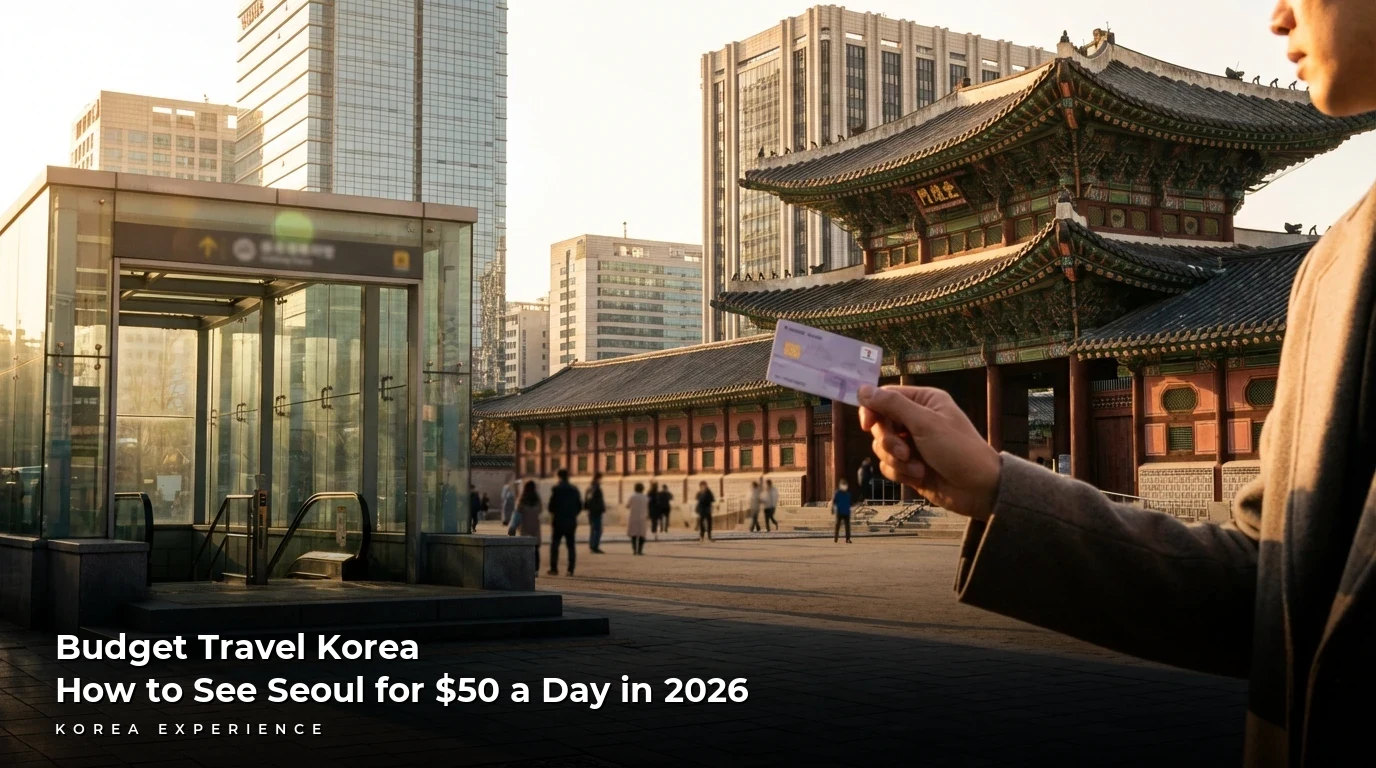
Learn to explore Seoul on a $50 daily budget in 2026. Includes cost breakdowns for hostels, the Climate Card transit pass, and cheap eats under ₩7000.
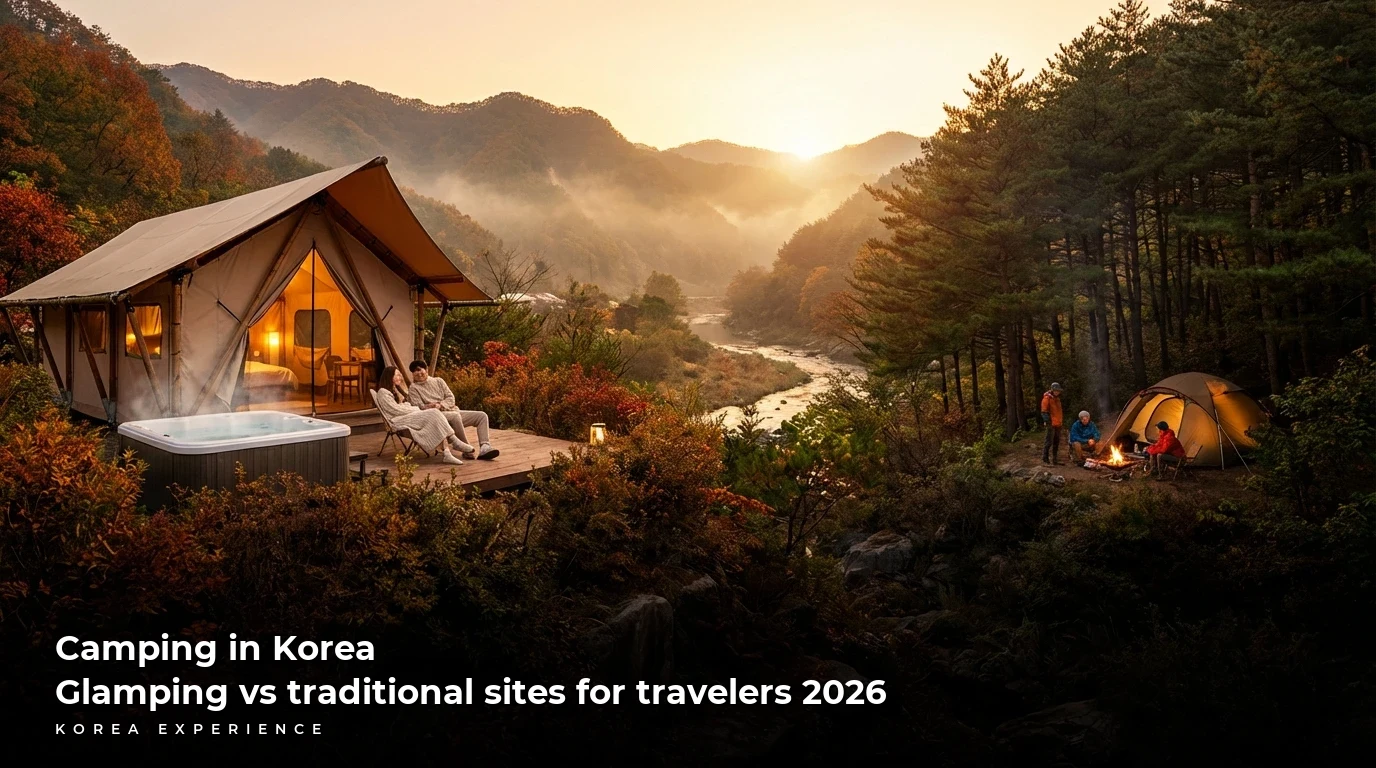
Compare Korean glamping ($150+) vs traditional camping ($30) in 2026. Discover booking tips, best seasons, and amenities for the perfect outdoor stay.
Discover how to backpack Korea on $45/day in 2026. Complete guide to best hostels, cheap street eats like tteokbokki under $3, and free palace entry hacks.
Planning a trip for Korea's 2026 cherry blossoms? Here is the full forecast, from Jeju's March 22nd bloom to Seoul's April 4th peak, plus top viewing spots.
Complete guide to Korea's bike rentals. Master Seoul's Ttareungi (₩1,000), ride Busan's coast, and cycle Jeju's 234km path with our 2026 expert tips.