Anti aging treatments in Korea Botox fillers and more 2026
Your 2026 guide to anti-aging in Korea. Discover prices for Botox, fillers, and skin boosters like Rejuran, plus clinic tips and recovery advice.
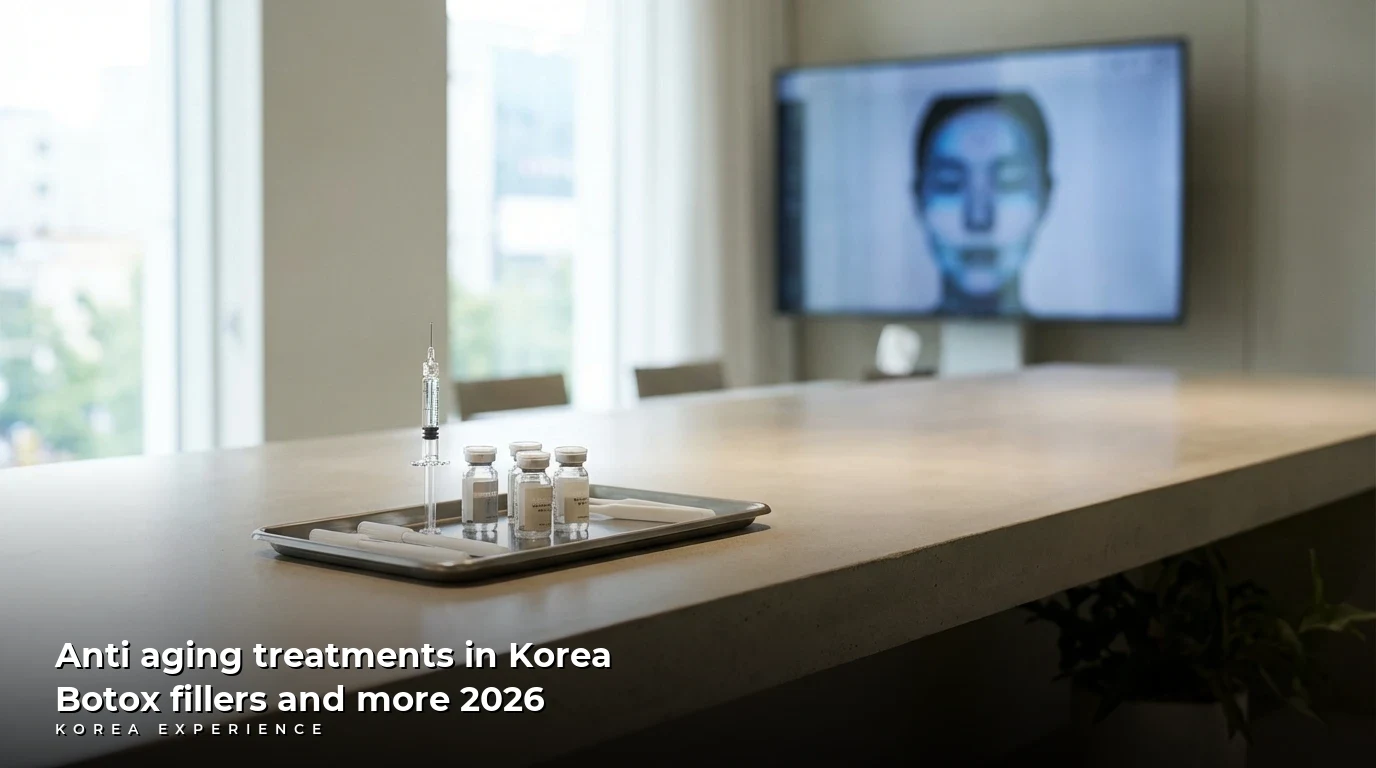
South Korea remains the undisputed global capital of aesthetic medicine as we enter 2026. For international travelers, the allure isn't just about K-pop stars with porcelain skin; it is about accessing cutting-edge technology at a fraction of Western prices. The anti-aging landscape in Seoul has evolved rapidly, moving beyond simple wrinkle correction to holistic "slow aging" and skin quality enhancement. Whether you are looking to smooth out fine lines with neurotoxins or achieve that coveted "glass skin" glow with the latest skin boosters, understanding the local market is crucial for a safe and successful trip.
You might also enjoy our article about Fat Grafting vs Fillers.
Key Takeaways
- 1Korean treatments cost 40-60% less than in the US or Europe
- 2Non-invasive lifting and skin boosters are the top trends for 2026
- 3Tax refunds of roughly 7-8% are available for procedures over ₩30,000
Medical Disclaimer
The content provided here is for informational purposes only and does not constitute medical advice. Always consult with a board-certified dermatologist or plastic surgeon before undergoing any procedure. In case of a medical emergency in Korea, dial 119. For medical travel assistance, call 1339.
Why Korea Dominates the Anti-Aging Market in 2026
The primary driver for medical tourism in Korea is the exceptional value-for-money ratio. In 2026, the density of clinics in Seoul is staggering, particularly in the Gangnam district, which houses over 500 aesthetic clinics within a 10-square-kilometer radius. This fierce competition drives prices down while forcing technology standards up.
Unlike many Western countries where aesthetic treatments are considered a luxury reserved for the wealthy, in Korea, they are viewed as routine self-care. This cultural acceptance has led to high-volume expertise; the average Korean dermatologist performs 3 to 4 times more injectable procedures daily than their Western counterparts.
📊 Market Efficiency
Furthermore, the technology cycle is incredibly fast. While the FDA in the US may take years to approve a new device, the KFDA (Korea Food & Drug Administration) often approves safe, innovative lifting lasers and boosters much faster, meaning you get access to 2026-level technology that might not reach Europe until 2028.
Botox and Neurotoxins: The Gateway Treatment
Botox (botulinum toxin) remains the most requested procedure for travelers due to its zero downtime and immediate return on investment. In Korea, you will encounter a unique market structure: the "Domestic vs. Imported" choice.
Korean Brands vs. Imported Brands
Korea manufactures its own high-quality toxins. Brands like Botulax, Nabota, and Liztox are FDA-approved equivalents that dominate the local market. They are significantly cheaper than the imported original, Allergan (US) or Xeomin (Germany).
In 2026, a standard treatment for one area (e.g., forehead or crow's feet) using a Korean brand typically costs between 20,000 to ₩40,000 ($15 - $30 USD). In contrast, imported Allergan Botox for the same area will cost 120,000 to ₩160,000 ($90 - $120 USD). The procedure time is incredibly fast, often taking less than 5 to 10 minutes from consultation to completion in "factory-style" clinics.
💵 Neurotoxin Price Comparison (Per Area)
Global standard, precise diffusion
Excellent value, identical efficacy
Many travelers insist on Allergan because they know the name. However, Korean toxins like Nabota are now exported to the US under the name Jeuveau. The efficacy is identical for 99% of patients. Save your budget for skin boosters instead.
Body Botox
Beyond the face, "Body Botox" is huge in Korea. This involves injecting toxins into large muscles to slim the silhouette.
- Trapezius (Shoulder) Botox: Reduces neck tension and creates a longer neck appearance. Cost: 80,000 - ₩150,000.
- Calf Botox: Smooths out bulky muscle calves. Cost: 100,000 - ₩200,000.
- Duration: These procedures take about 15 minutes and results last 4 to 6 months.
Dermal Fillers: Restoring Volume
While Botox relaxes muscles, fillers replace lost volume. The trend in 2026 has shifted away from the "over-filled" look to subtle micro-adjustments. Korean doctors are masters of the "chok-chok" (moist and plump) aesthetic.
Types and Pricing
Most clinics offer Hyaluronic Acid (HA) fillers. Like Botox, there is a price tier between domestic and imported fillers.
- Korean Fillers (Neuramis, Atiere): 80,000 - ₩120,000 ($60-$90 USD) per 1cc syringe.
- Imported Fillers (Juvederm, Restylane): 300,000 - ₩450,000 ($220-$330 USD) per 1cc syringe.
The average full-face volume restoration usually requires 3 to 5cc, meaning a total session might last 45 to 60 minutes.
Safety Warning
Avoid "permanent" fillers at all costs. While rare in reputable clinics, some uncertified places may offer PMMA or silicone. Stick to dissolvable Hyaluronic Acid fillers. If a complication like vascular occlusion occurs (extreme pain or skin whitening), you must return to the clinic immediately for Hyaluronidase to dissolve it.
Popular Areas
- Lips: The "Cherry Lip" trend remains popular, focusing on volume in the center for a youthful pout.
- Chin: Adding projection to balance the profile.
- Forehead: A round forehead is a sign of youth in Korea; however, this often requires 3-5cc of product.
Skin Boosters: The Secret to Glass Skin
If there is one category where Korea is lightyears ahead of the rest of the world in 2026, it is Skin Boosters. These are not fillers; they are injectable nutrients that improve skin texture, hydration, and elasticity from within.
Rejuran Healer (The Salmon Injection)
Rejuran remains the gold standard. Derived from salmon DNA (PN - Polynucleotide), it repairs damaged skin barriers and increases collagen.
- Best for: Acne scars, fine lines, thin skin.
- Cost: 250,000 - ₩350,000 ($180 - $260 USD) for 2cc.
- Pain Level: High. It is notorious for the "sting."
- Downtime: Your face will look bumpy (like embossed paper) for 24 to 48 hours.
Juvelook
A hybrid of PDLLA and Hyaluronic Acid. It stimulates collagen over the long term.
- Best for: Pores and general volume loss.
- Cost: 300,000 - ₩400,000 ($220 - $300 USD) per vial.
- Note: Requires 3 sessions spaced 4 weeks apart for best results.
Exosomes
The buzzword of 2026. These are stem-cell-derived vesicles that signal cells to regenerate.
- Best for: Anti-inflammatory, extreme glow, sensitive skin.
- Cost: 200,000 - ₩400,000 ($150 - $300 USD).
- Method: Often applied via microneedling (MTS) rather than deep injection to bypass legal restrictions on injecting stem cells directly.
Skin Booster Comparison
| Feature | Rejuran Healer | Juvelook | Exosomes |
|---|---|---|---|
| Primary Benefit | Repair/Thickness | Pores/Collagen | Glow/Calming |
| Pain Level | High (8/10) | Medium (5/10) | Low (3/10) |
| Recovery | 2-3 Days bumps | 1-2 Days swelling | 24 Hours redness |
Energy-Based Lifting: Facelifts Without Surgery
For those aged 35 and above, energy-based devices (HIFU and RF) are the cornerstone of Korean anti-aging. These treatments lift and tighten without needles or scalpels.
Shurink Universe (The Korean Ulthera)
Shurink is a High-Intensity Focused Ultrasound (HIFU) device. It is essentially the domestic version of Ultherapy.
- Why it's popular: It is incredibly cheap compared to Western prices.
- Cost: Approximately 100,000 - ₩150,000 ($75 - $110 USD) for 300 shots.
- Time: 20 minutes.
- Frequency: Recommended every 3 to 4 months.
Ultherapy
The original American device. It penetrates deeper and allows the doctor to see the muscle layers via ultrasound imaging.
- Cost: 800,000 - ₩1,200,000 ($600 - $900 USD) for 300 shots.
- Pain: Significantly higher than Shurink. Sleep anesthesia (sedation) is often available for an extra ₩100,000.
Thermage FLX / Oligio
Radiofrequency (RF) treatments that tighten loose skin rather than lifting muscle. Oligio is the "Korean Thermage" and costs about 1/3 of the price.
- Thermage FLX Cost: ~₩2,000,000 ($1,500 USD) for 600 shots.
- Oligio Cost: ~₩600,000 ($450 USD) for 600 shots.
HIFU Devices: Shurink vs. Ultherapy
- ✓Shurink is 1/10th the price of Ultherapy abroad
- ✓Ultherapy lasts longer (1 year vs 3 months)
- ✓Shurink has less pain and swelling
- ✗Shurink requires more frequent visits
- ✗Ultherapy is very painful without sedation
- ✗Results take 1 month to fully appear for both
The Process: Booking and Logistics
Navigating the Korean medical system can be daunting if you don't speak the language, but in 2026, the infrastructure for foreigners is robust.
Your Treatment Journey
Research & Book
Use apps like Gangnam Unni (if you have ARC) or contact clinics via WhatsApp/KakaoTalk.
Consultation
Face scanner analysis. Be prepared for blunt honesty about your skin.
Numbing & Treatment
Numbing cream applied for 30 mins. Procedure takes 20-60 mins.
Tax Refund
Pay by card. Request the Tax Refund receipt for airport claim (7-8%).
Language Barriers
Most major clinics in Gangnam ("Factory Clinics" like Muse, Toxnfill, PPEUM) have English, Chinese, and Japanese interpreters on staff. However, the actual doctor may speak limited English. The consultant does the talking; the doctor does the injecting.
Tax Refunds
Foreign tourists staying less than 6 months are eligible for a VAT refund on cosmetic procedures. The refund rate is roughly 7% to 8% of the total cost. You must present your passport at the clinic to get the refund slip, which you then scan at a kiosk at Incheon Airport (Terminal 1 or 2) before departure.
📋 Logistics Checklist
Clinic Locations: Where to Go
Seoul is massive, but aesthetic medicine is concentrated. 90% of the clinics relevant to tourists are in two specific neighborhoods south of the Han River.
Gangnam Station Area(강남역)
Apgujeong & Sinsa (Dosan-daero): This area is more upscale. While Gangnam Station is famous for "factory clinics" with low prices and high volume, Apgujeong hosts high-end private practices and plastic surgery hospitals. Expect to pay 20-30% more here, but with more personalized service and privacy. It is roughly 15 minutes by taxi from Gangnam Station.
Aftercare and Recovery Tips
Post-procedure care is vital, especially when traveling. The dry air in airplanes can ruin fresh skin treatments.
📖 How to Manage Recovery While Traveling
Step 1: Immediate Aftercare
Do not touch the injection sites for 4 hours. Avoid lying down for 4 hours after Botox.
Step 2: The Next 24 Hours
Avoid alcohol, saunas (jjimjilbangs), and heavy exercise. These increase blood flow and can cause bruising.
Step 3: Skincare
Use gentle cleansers. Apply sunscreen diligently, especially after lasers. Avoid active ingredients like Retinol or Vitamin C for 3 days.
Step 4: Flying Home
If you had fillers, most doctors recommend waiting 24-48 hours before flying due to pressure changes, though serious issues are rare.
Pharmacy Hack
Visit a Korean pharmacy (Yakguk) and buy "Bruise Cream" (Mong-cream) if you have marks from needles. Also, buy "Easydew" or similar EGF creams, which are medical-grade moisturizers sold cheaply in Korea to speed up healing.
Final Thoughts: Is It Worth It?
In 2026, traveling to Korea for anti-aging treatments is not just about saving money; it is about accessing a tier of skin maintenance that is simply unavailable or unaffordable in many other parts of the world. From a $30 Botox injection to a comprehensive $500 package including lasers and boosters, the barrier to entry is low.
However, manage your expectations. A "factory clinic" will not give you an hour of the doctor's time to chat about your feelings. It is a medical transaction designed for efficiency. If you want luxury pampering, head to Apgujeong and pay the premium. If you want results at an unbeatable price, brave the crowds at Gangnam Station.
❓ Frequently Asked Questions
Have more questions?Contact us →
About the Author
Korea Experience Team
Written by the Korea Experience editorial team - experts in Korean medical tourism, travel, and culture with years of research and firsthand experience.
⚠️ Medical Disclaimer
The information provided on this website is for general informational purposes only and does not constitute medical advice. Always consult with qualified healthcare professionals before making any medical decisions.
Explore more in Medical Tourism
World-class medical procedures at competitive prices. From plastic surgery and dermatology to dental care and health checkups — your complete guide to medical tourism in Korea.
Browse All Medical Tourism ArticlesContinue Reading
Explore more articles you might find interesting
Comprehensive guide to laser skin treatments in Seoul including costs for Fraxel, Pico, and Shurink, plus 2026 clinic recommendations.
Discover the top Korean skin care treatments for 2026, from Rejuran Healer to InMode lifting. Detailed costs, pain levels, and clinic guides included.
Discover the top 5 Korean express facials for 2026. Get glowing skin in under 60 mins with prices from ₩50,000. Perfect for busy travelers in Seoul.
Discover the top Korean acne treatments, including pimple patches and serums, with prices from ₩6,000 and expert tips for clear skin in 2026.
Discover Korea's 2026 stem cell medical tourism boom. Learn how new laws unlock anti-aging and joint treatments at 50% lower costs than the US, from $8,000.
A complete guide to acne scar treatment in Korea for 2026. Discover prices, top clinics, and advanced therapies like Potenza and JuveLook.