Fat grafting vs fillers for face volume in Korea
Compare costs, recovery timelines, and longevity of fat grafting vs fillers in Seoul. Find out which facial volume treatment fits your needs and budget.
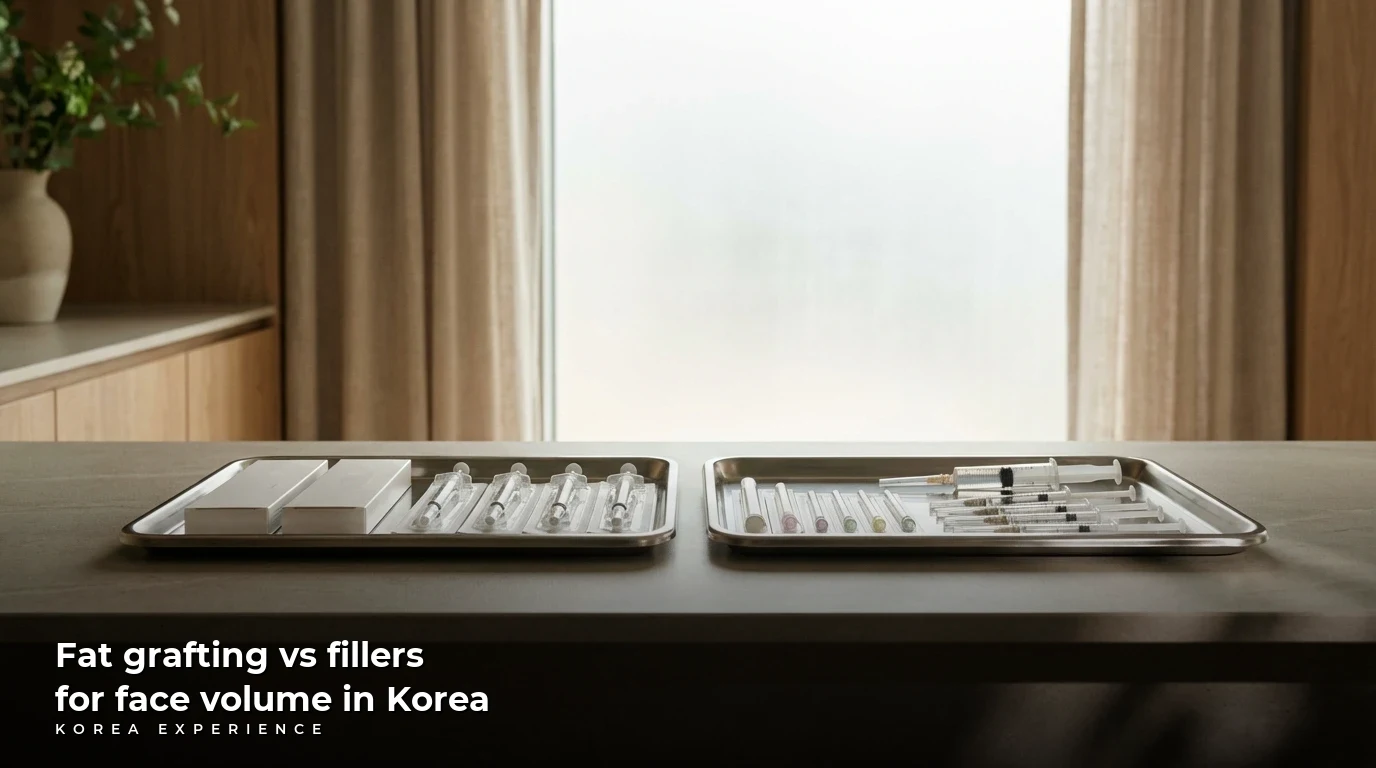
Deciding between fat grafting and dermal fillers for facial volume is one of the most common dilemmas for medical tourists visiting Korea. While both treatments aim to restore youthful contours and plumpness to the face, they are fundamentally different procedures with distinct timelines, costs, and results.
The short answer: Dermal fillers are best for specific, localized enhancements (like lips or nose bridges) with zero downtime and lower upfront costs (starting at ₩150,000 per cc). Fat grafting is superior for full-face rejuvenation, offering semi-permanent results and a more natural texture, but requires minor surgery, 5-7 days of downtime, and a higher initial investment (averaging ₩2,500,000 for full face).
Key Takeaways
- 1Fillers offer immediate results with no downtime but require maintenance every 6-12 months.
- 2Fat grafting uses your own tissue, providing permanent results for about 50-70% of the injected volume.
- 3Korean fillers (Neuramis, Yvoire) cost roughly 50% less than imported brands like Juvederm.
- 4Full-face fat grafting in Korea typically includes a free second touch-up within 3 months.
The Korean Standard: "Baby Face" Volume
In South Korea, facial volume is not just about filling wrinkles; it is about achieving the "Baby Face" (dongan) look. This aesthetic prioritizes a smooth, rounded forehead, plump cheeks, and a dimensional profile that creates a youthful, heart-shaped appearance. Whether you choose fillers or fat grafting, Korean plastic surgeons will likely approach the procedure with this holistic architectural goal in mind, rather than just filling a single line.
For international visitors, understanding the nuances of these procedures in the context of Seoul's advanced medical infrastructure is crucial. The decision often comes down to three factors: the volume of restoration needed, the time available for recovery, and the desire for permanence.
Medical Disclaimer
The content in this article is for informational purposes only and does not constitute medical advice. Always consult with a board-certified plastic surgeon or dermatologist. For medical emergencies in Korea, dial 119. For medical consultations and interpretation services, dial 1339.
Quick Comparison: At a Glance
Before diving deep into the specifics, here is how the two procedures stack up against each other in the Korean medical market.
Fat Grafting vs. Dermal Fillers
| Feature | Fat Grafting | Dermal Fillers |
|---|---|---|
| Substance | Autologous Fat (Your own body) | Hyaluronic Acid (Synthetic gel) |
| Anesthesia | Sleep Anesthesia (Sedation) | Numbing Cream / Local |
| Procedure Time | 60-90 Minutes | 15-30 Minutes |
| Recovery (Social) | 5-7 Days (Swelling/Bruising) | Immediate / < 24 Hours |
| Longevity | Semi-permanent (Surviving fat stays) | Temporary (6-18 Months) |
| Best For | Full Face / Large Volume | Specific Areas / Fine Tuning |
Dermal Fillers in Korea: The "Petit" Procedure
In Korea, non-surgical injectables are often referred to as "Petit Seonghyeong" (Petit Plastic Surgery). It is incredibly popular due to its speed ("lunchtime procedure") and accessibility.
How It Works
Dermal fillers are gel-like substances injected beneath the skin. The most common type used in Korea is Hyaluronic Acid (HA), which is naturally found in the body. It attracts water to the area, creating volume and hydration.
Types of Fillers Available
Korea is a manufacturing powerhouse for HA fillers. While you can find Western brands, local brands dominate the market due to their high quality and competitive pricing.
- Imported Brands: Juvederm (USA), Restylane (Sweden), Belotero (Germany). These tend to be smoother and last slightly longer but come at a premium price.
- Korean Brands: Neuramis, Yvoire, Atiere, The Chaeum. These are K-FDA approved and exported globally. They are significantly cheaper in Korea than anywhere else.
Cost Breakdown
The price gap is substantial. If you are doing a large area, the cost of imported fillers can quickly exceed the cost of surgery.
- Korean Filler: ₩100,000 – ₩200,000 per cc (approx. $75–$150 USD).
- Imported Filler: ₩300,000 – ₩450,000 per cc (approx. $225–$340 USD).
📋 Filler Facts in Seoul
Pros and Cons of Fillers
Dermal Fillers Analysis
- ✓Zero downtime; you can sightsee immediately.
- ✓Reversible (HA fillers can be dissolved with Hyaluronidase).
- ✓Precise control for small areas like lips or nose tip.
- ✓Lower upfront cost for small volumes.
- ✗Temporary results requiring annual maintenance.
- ✗Cost becomes prohibitive for full-face volume.
- ✗Risk of Tyndall effect (bluish tint) if injected too superficially.
- ✗Rare risk of vascular occlusion.
If you are looking for quick enhancements to your nose, chin, or lips while on a short trip, check out our guide on anti-aging treatments in Korea.
Facial Fat Grafting: The Structural Reset
Facial fat grafting (autologous fat transfer) is considered a surgery, albeit a minor one. It involves harvesting fat from areas where you have excess (thighs, abdomen), processing it, and injecting it into the face.
The Process: Harvest to Injection
- Harvesting: Under sleep anesthesia (sedation), a small incision is made in the donor site (usually the inner thigh or abdomen).
- Processing: The fat is centrifuged to separate pure fat cells from blood, oil, and tumescent fluid. In 2026, many top clinics use "Nano Fat" or "PRP-enriched Fat" techniques to improve survival rates.
- Injection: The purified fat is injected into the forehead, temples, cheeks, and chin using micro-cannulas.
Fat Survival Rate
This is the most critical metric. When fat is transferred, it must establish a new blood supply to survive. Typically, 50% to 70% of the transferred fat survives. The fat that does not survive is naturally absorbed by the body within 3 months. The fat that does survive acts like normal fat cells—it stays there permanently, though it will expand or shrink if you gain or lose significant weight.
📊 Fat Grafting Success Metrics
The "Second Touch-up" Culture
Because some fat is absorbed, almost all respectable clinics in Korea include a "2nd Touch-up" in their full-face fat grafting packages. They freeze the excess fat harvested during the first surgery and reinject it 2-3 months later to perfect the volume.
- Pro Tip: If you are a medical tourist, you must plan a return trip within 3-6 months to utilize this free touch-up, or negotiate a lower price if you cannot return.
Cost Analysis
While expensive upfront, fat grafting is often more economical in the long run if you need significant volume.
- Full Face Fat Grafting: ₩2,000,000 – ₩4,500,000 (approx. $1,500 – $3,400 USD).
- Includes: Anesthesia, harvesting, processing, injection, and usually the 2nd touch-up.
💵 Volume Restoration Costs (2026 Estimates)
Permanent, includes 2nd touch-up, 1 week downtime.
Using Korean fillers. Temporary (1 year), no downtime.
Which Areas Are Best Treated?
The anatomical area you want to treat is a major deciding factor.
Forehead & Temples
- Winner: Fat Grafting.
- The forehead requires a large volume of material (often 10cc+) to create the smooth, round curve popular in Korea. Using 10cc of high-quality filler is expensive and can feel "doughy" or heavy. Fat creates a smoother, continuous contour.
Under Eyes (Tear Troughs)
- Winner: Tie (Case dependent).
- Nano-fat grafting is excellent for reducing dark circles (the stem cells improve skin quality) and hollowness. However, if the fat is placed incorrectly, it can look lumpy. Soft HA fillers are often safer for minor hollows but can cause the Tyndall effect (blue cast).
Lips
- Winner: Fillers.
- Fat grafting in lips often results in excessive swelling and has a low survival rate due to the high mobility of the mouth. Fillers offer precise shaping (Cupid's bow definition) that fat cannot achieve.
Nasolabial Folds (Smile Lines)
- Winner: Fillers (usually).
- Deep folds often need the structural support of a firm filler. However, fat is used here as part of a full-face balancing procedure.
The Recovery Timeline Comparison
For travelers, recovery time equals lost vacation time. Here is what to expect.
Recovery Journey
The Procedure
Fat Grafting: Sleep anesthesia. Groggy. Bandage on head. Fillers: 30 mins, walk out immediately.
Peak Swelling
Fat Grafting: 'Chipmunk' phase. Significant swelling. Bruising at donor site. Fillers: Minor swelling, rarely bruising.
Socially Acceptable
Fat Grafting: Swelling subsides enough for makeup and sightseeing (still puffy). Stitches removed from donor site. Fillers: Fully settled.
Settling Phase
Fat Grafting: Fat stabilizes. Final shape emerges. Time for 2nd touch-up decision.
"If you choose fat grafting, don't hide in your hotel! Walking helps reduce swelling. Visit the Han River parks or walk around COEX mall. Also, drink pumpkin juice (hobak-jeup)—you can buy it at any pharmacy or convenience store. It's the Korean secret for rapid de-swelling."
Safety and Risks: What You Need to Know
Korea has high medical standards, but risks exist.
Filler Risks:
- Vascular Occlusion: The most serious risk where filler blocks a blood vessel. Korean clinics carry Hyaluronidase to dissolve filler immediately if this happens.
- Migration: Over time, filler can move, leading to "pillow face."
Fat Grafting Risks:
- Calcification: If too much fat is injected into one spot, the center may die and harden (oil cyst).
- Asymmetry: One side might retain more fat than the other.
- Donor Site Issues: Bruising or unevenness where the fat was taken (thighs/belly).
Choosing the Right Clinic in Seoul
Seoul has over 500 plastic surgery clinics, mostly concentrated in Gangnam-gu (specifically Apgujeong and Sinsa stations).
How to Select a Clinic
- Look for "Plastic Surgery Specialists": Ensure the doctor is board-certified. In Korea, look for the logo of the "Korean Society of Plastic and Reconstructive Surgeons" (KSPRS).
- Specialization: Some doctors specialize in eyes, others in contouring. Choose a clinic known for "Anti-aging" or "Face Contouring."
- Communication: Does the clinic have in-house English translators? Relying on Google Translate for surgery is dangerous.
For a broader look at top-tier facilities, consult our guide on best plastic surgery clinics for foreigners in Seoul.
📖 Booking Your Procedure
Step 1: Online Consultation
Send photos via WhatsApp/KakaoTalk to 3-4 clinics. Ask for 'Full Face Fat Grafting' quotes.
Step 2: Deposit & Scheduling
Secure your date. For surgery, book at least 1 month in advance. Fillers can often be booked 1 week out.
Step 3: Pre-op Clearance
Stop supplements (Vitamin E, Omega-3), aspirin, and alcohol 1 week before surgery to reduce bleeding.
Step 4: The Procedure
Arrive fasting (for sedation). The surgery takes 1-2 hours. You recover in a private room for 1 hour before discharge.
Combining Treatments: The "Hybrid" Approach
In 2026, the trend in Korea is rarely just one procedure. Doctors often recommend a hybrid approach for the best results.
- Fat Grafting + PRP (Platelet Rich Plasma): Your blood is spun to extract growth factors, which are mixed with the fat. This purportedly increases fat survival rates and improves skin texture.
- Fat Grafting + Botox: Fat adds volume, while Botox stops the muscles from creating new wrinkles.
- Fat Grafting + Thread Lifts: Fat provides the volume, while dissolving threads (PDO) pull up sagging skin for a defined jawline.
If you are interested in skin quality specifically, consider reading about best Korean skin clinics in Gangnam.
Practical Travel Tips for Surgery Patients
If you decide on fat grafting, your travel itinerary needs to adjust.
- Accommodation: Stay near your clinic (Gangnam, Sinsa, Nonhyeon) for the first few days. It makes follow-up visits for dressing changes and stitch removal easier.
- Transportation: Avoid the subway during rush hour (8-9 AM, 6-7 PM) immediately after surgery. Taxis (Kakao T) are affordable and safer to avoid being bumped.
- Diet: Korean food can be salty (sodium causes swelling). Stick to lighter meals like Juk (Korean rice porridge) for the first 2 days.
- Air Travel: You can fly after fillers immediately (though pressure changes might cause minor discomfort). For fat grafting, wait at least 7 days until stitches are removed and major swelling subsides.
Gangnam District (Medical Belt)(강남구)
Conclusion: Which is Right for You?
The choice between fat grafting and fillers ultimately depends on your goals and your lifestyle.
Choose Fillers If:
- You want to fix a specific flaw (hollow under-eyes, thin lips, nose bump).
- You cannot afford 5-7 days of social downtime.
- You want to "test drive" a new look before committing permanently.
- You are on a tighter initial budget.
Choose Fat Grafting If:
- You want comprehensive, full-face rejuvenation (forehead, temples, cheeks).
- You prefer natural materials over synthetic chemicals.
- You want long-term results and are willing to undergo a minor surgery.
- You can plan a return trip to Korea for the touch-up, or are staying for 3+ months.
Both procedures are performed at a world-class standard in Korea. By understanding the data, costs, and recovery times outlined above, you can make an informed decision that ensures your medical tourism trip is a success.
Frequently Asked Questions
❓ Common Questions About Facial Volume
Have more questions?Contact us →
To learn more about preparing for your medical trip, check out our guide on booking medical consultations in Korea.
About the Author
Korea Experience Team
Written by the Korea Experience editorial team - experts in Korean medical tourism, travel, and culture with years of research and firsthand experience.
⚠️ Medical Disclaimer
The information provided on this website is for general informational purposes only and does not constitute medical advice. Always consult with qualified healthcare professionals before making any medical decisions.
Explore more in Medical Tourism
World-class medical procedures at competitive prices. From plastic surgery and dermatology to dental care and health checkups — your complete guide to medical tourism in Korea.
Browse All Medical Tourism ArticlesContinue Reading
Explore more articles you might find interesting

Compare Ultherapy, Thermage, and Shurink costs and results. Discover why Seoul offers treatments at 30-50% less than global rates with our 2026 guide.
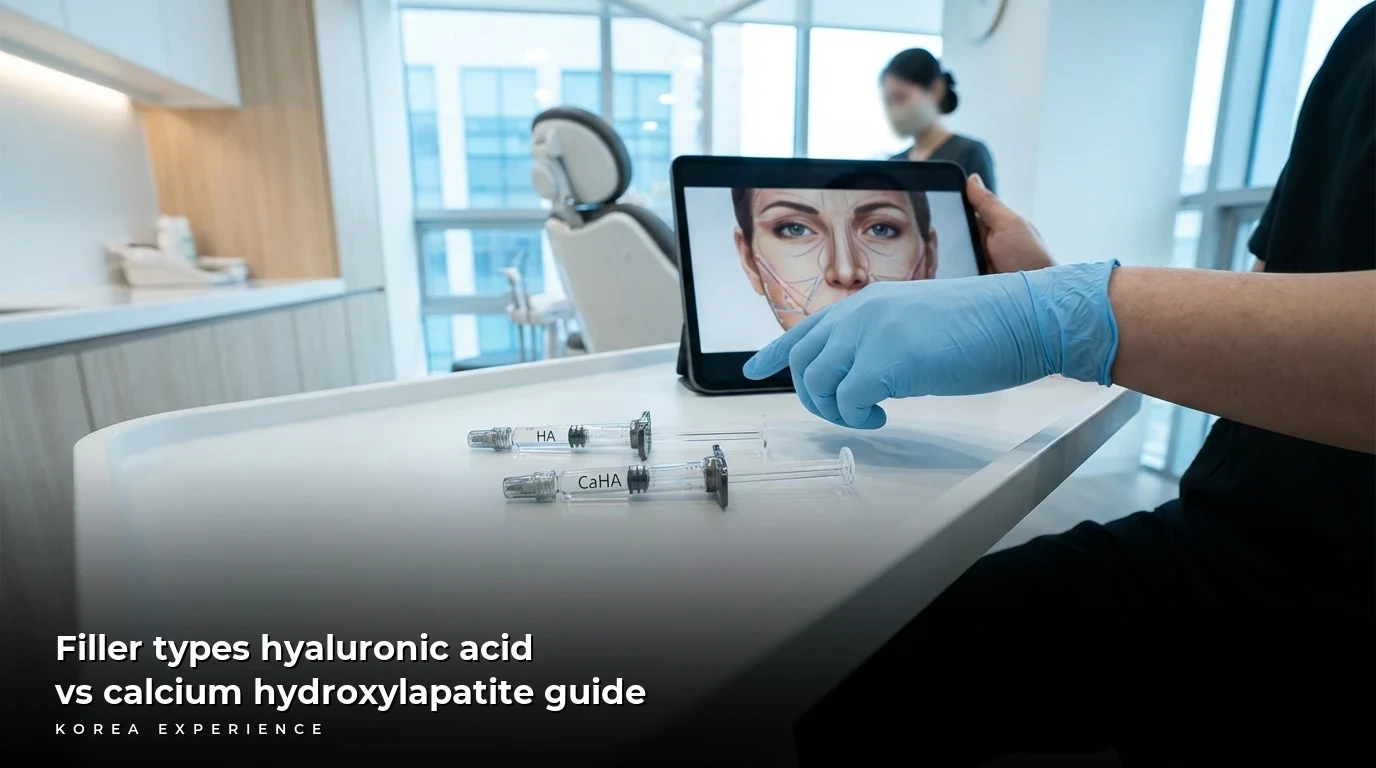
Compare HA and CaHA fillers for your medical tourism trip to Korea. Discover costs, longevity, and expert advice for procedures in Seoul.
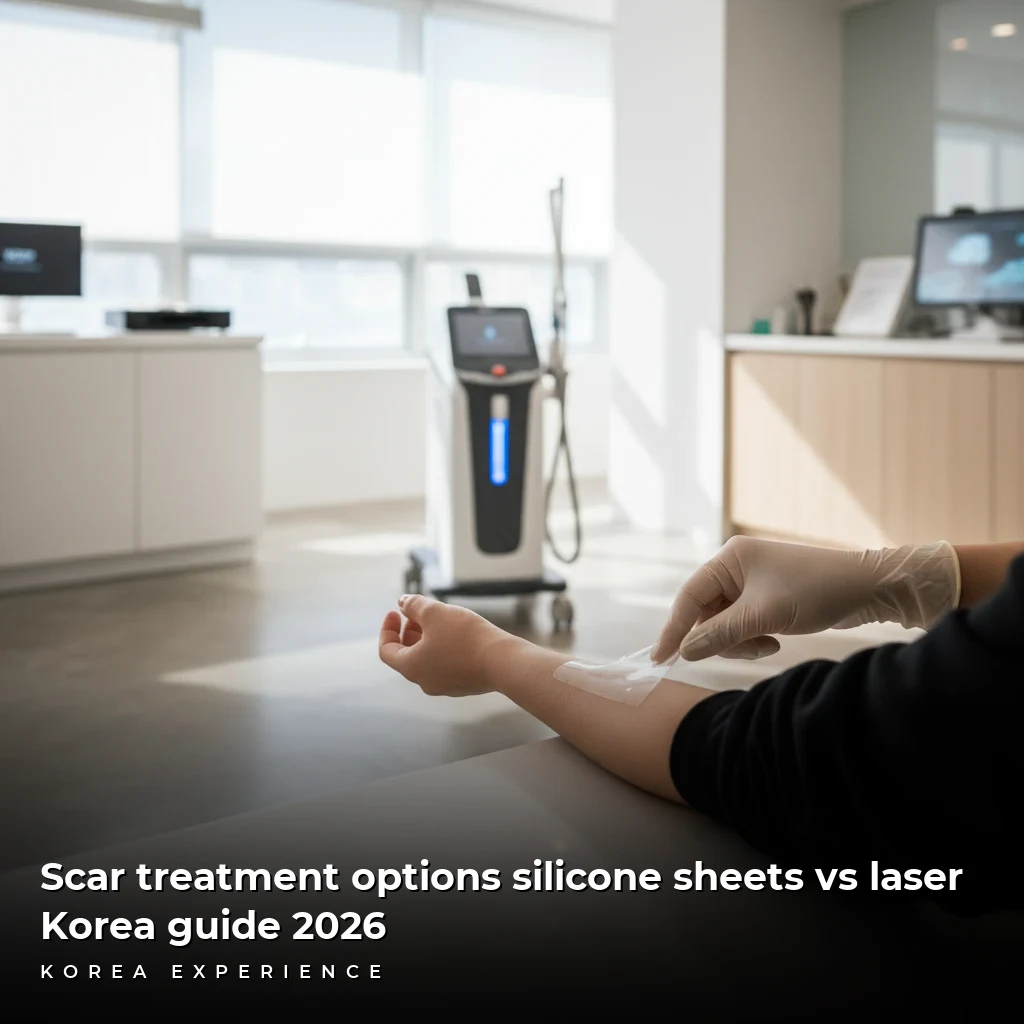
Compare scar treatment options silicone sheets vs laser in Korea. We analyze costs, efficacy, and why Seoul is the global capital for skin repair in 2026.
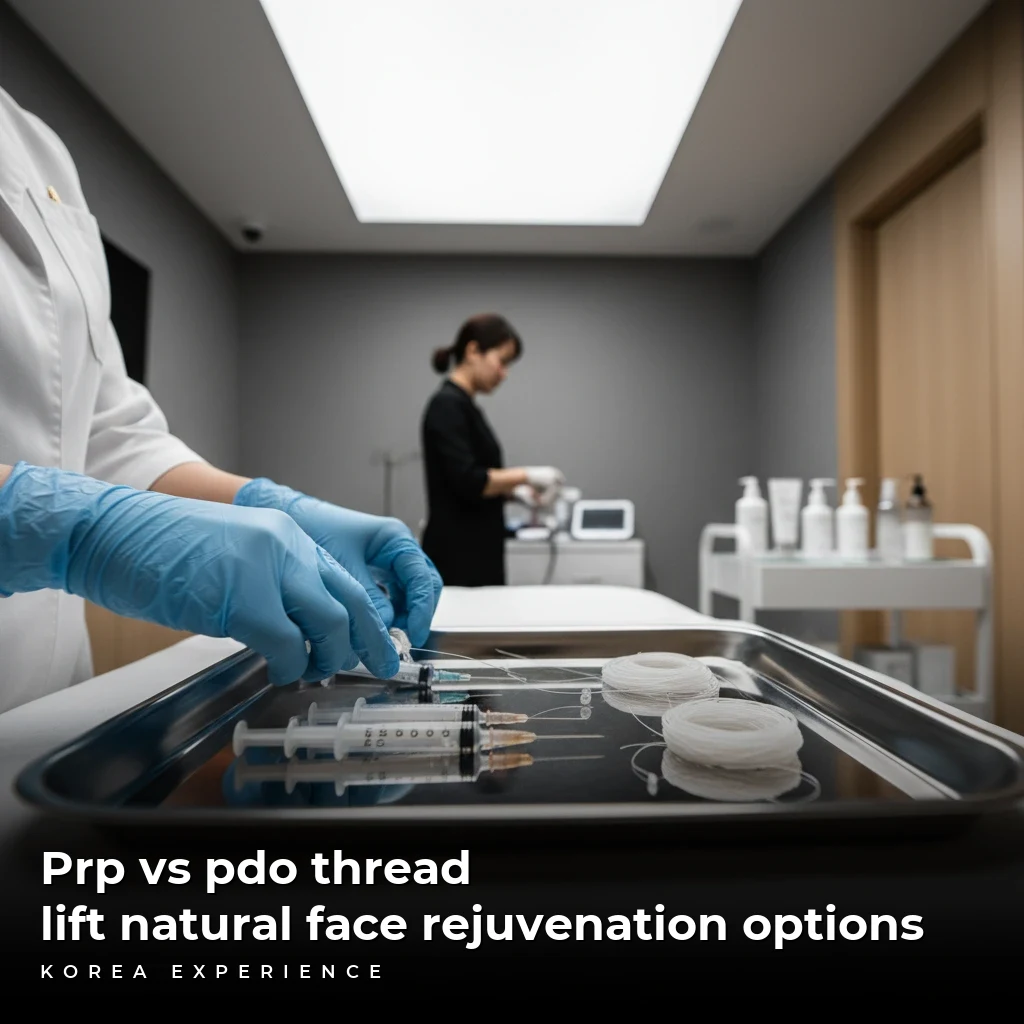
Compare PRP and PDO thread lifts in Korea with costs, recovery times, and results. A detailed guide for medical tourists seeking natural rejuvenation.
A complete guide to revision nose surgery in Seoul including 2026 costs, recovery timelines, rib cartilage techniques.
Complete 2026 guide to recovery hotels in Seoul. Compare prices (₩100k-500k/night), find nursing services, and book the perfect aftercare stay.