Best Korean healing foods for surgery recovery
Discover the top Korean recovery foods for medical tourists. From pumpkin porridge for deswelling to abalone for stamina, including prices and locations.
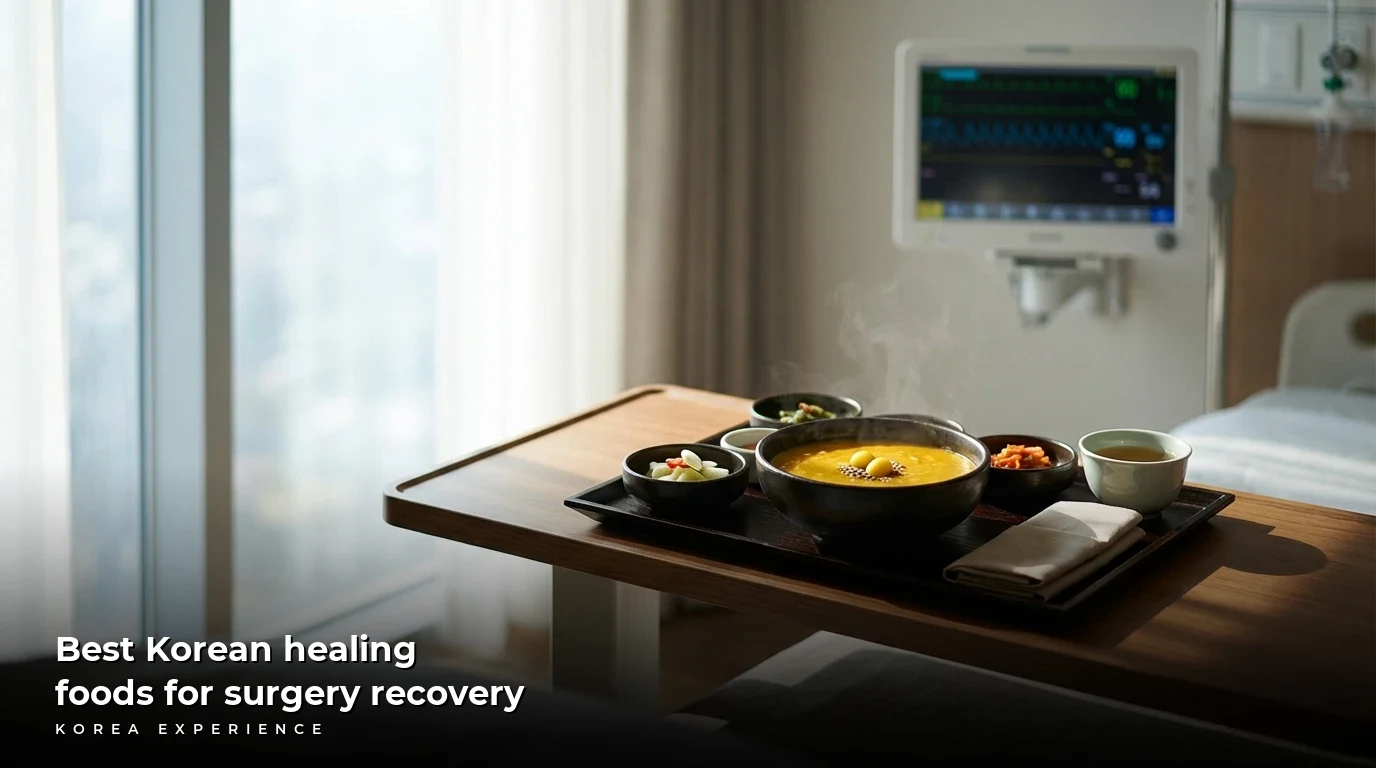
If you are recovering from surgery in South Korea, the absolute best healing foods to consume are Hobak-juk (Sweet Pumpkin Porridge) for reducing swelling and Jeonbok-juk (Abalone Porridge) for restoring vitality and tissue repair. These traditional dishes are soft, easy to digest, and rich in essential nutrients like Vitamin A and protein, making them the standard dietary prescription for patients in Korean medical culture.
The short answer: Hobak-juk (pumpkin porridge) is the #1 recommendation by Korean plastic surgeons for reducing post-operative swelling due to its diuretic properties, while Jeonbok-juk (abalone porridge) is preferred for stamina recovery. Most specialized porridges cost between ₩10,000 and ₩20,000 ($7.50–$15.00 USD) per serving.
Key Takeaways
- 1Hobak-juk (Pumpkin Porridge) is critical for reducing facial swelling after plastic surgery
- 2Avoid spicy Kimchi and salty broths for the first 7-14 days to prevent inflammation
- 3Convenience store pouches offer budget-friendly recovery meals at ₩4,500 ($3.50)
- 4Bonjuk is the most reliable nationwide chain for high-quality medical recovery porridge
- 5Miyeok-guk (Seaweed Soup) provides essential iodine and calcium for wound healing
The Philosophy of Korean Recovery Food: Yak-sik-dong-won
In Korea, food is not merely fuel; it is medicine. This concept is encapsulated in the four-character idiom Yak-sik-dong-won (약식동원), which translates to "Medicine and food have the same origin." For the estimated 500,000 medical tourists visiting Korea annually in 2026, understanding this philosophy is key to a faster, more comfortable recovery.
When you undergo surgery—whether it’s a cosmetic procedure in Gangnam or a major medical treatment at a university hospital—your diet plays a pivotal role in how quickly your body repairs itself. Korean recovery cuisine specifically targets common post-surgical issues: inflammation, fluid retention (swelling), and loss of stamina.
Unlike Western recovery diets that might focus broadly on caloric intake, Korean recovery protocols are highly specific. For instance, after rhinoplasty or jaw surgery (orthognathic surgery), chewing is difficult or impossible. Korean cuisine offers a vast array of "Juk" (porridge) and "Tang" (soup) that require zero mastication but deliver high-density nutrition.
Medical Disclaimer
This guide discusses traditional Korean foods used for nutritional support during recovery. It is not a substitute for professional medical advice. Always follow the specific dietary instructions provided by your surgeon, especially regarding texture (liquid vs. soft food) and salt intake.
Hobak-juk: The Holy Grail for Deswelling
If you walk into any recovery center or plastic surgery clinic in Seoul, you will likely see patients sipping on a bright yellow, smooth substance. This is Hobak-juk (Sweet Pumpkin Porridge), and it is arguably the most important food for cosmetic surgery patients.
Why it works
Korean sweet pumpkin (Dan-hobak) is rich in Vitamin A (providing over 245% of the daily recommended value per cup) and potassium. Its primary medical benefit in the context of surgery is its strong diuretic effect. Post-operative swelling (edema) is the number one concern for patients, particularly after facial contouring or double eyelid surgery. Hobak-juk helps flush out excess water and toxins from the body, significantly speeding up the "deswelling" process.
Nutritional Profile and Cost
A standard 300g serving of Hobak-juk typically contains:
- Calories: ~180-220 kcal
- Sodium: ~350mg (check for low-sodium versions)
- Texture: Extremely smooth, requiring no chewing.
💵 Hobak-juk Price Comparison (2026)
Freshly made, adjustable consistency/salt
Pre-made, microwavable, higher sodium
How to Order
When ordering at a restaurant like Bonjuk (the largest porridge chain in Korea with over 1,500 locations), you can customize your order. If you are sensitive to salt, which can increase swelling, you must specifically ask for "Sing-geop-ge" (bland/less salt).
After facial surgery, swallowing can be hard. Ask the restaurant to grind the rice completely ('Gal-a-juseyo'). This turns the porridge into a smooth, drinkable liquid rather than a grainy meal, making it much easier to consume through a syringe or straw if allowed.
Jeonbok-juk: The Stamina Builder
While pumpkin is for swelling, Jeonbok-juk (Abalone Porridge) is for strength. Abalone is known as the "ginseng of the sea" in Korea. It is historically a food served to kings and is high in protein, taurine, and arginine, which are crucial for tissue regeneration and wound healing.
Why it works
Surgery places the body in a catabolic state, where it breaks down tissue. To reverse this, you need high-quality protein. Abalone provides this without the heavy fats found in red meat. It supports the immune system, helping to prevent post-surgical infections.
📋 Abalone Porridge Facts
Varieties and Pricing
You will typically see two or three versions of Jeonbok-juk on a menu:
- Standard: ~₩13,000 - ₩16,000. Contains minced abalone pieces.
- Special/Premium (Teuk): ~₩20,000 - ₩24,000. Contains 2x or 3x the amount of abalone.
- Viscera (Naejang): Often green in color. This includes the internal organs of the abalone. While highly nutritious and savory, the strong taste might be overwhelming for someone with post-anesthesia nausea.
For more insights on where to find budget-friendly food options if you aren't eating premium porridge every day, check out our guide on best Korean convenience store food.
Miyeok-guk: The Essence of Regeneration
Miyeok-guk (Seaweed Soup) is famously known as "birthday soup" in Korea, but its origins are deeply rooted in medical recovery, specifically postpartum care (Sanhujori). However, its benefits extend to general surgery recovery as well.
Why it works
Seaweed is a powerhouse of iodine, calcium, and fiber. Iodine is essential for thyroid function, which regulates metabolism and repair processes. The soluble fiber in seaweed also helps prevent constipation, a very common and uncomfortable side effect of opioid pain medications prescribed after major surgeries.
- Calcium Content: A bowl can provide over 15% of your daily calcium needs.
- Blood Purification: In Traditional Korean Medicine (Hanbang), seaweed is believed to purify the blood and improve circulation, ensuring oxygen reaches healing tissues.
📖 How to Eat Miyeok-guk Post-Surgery
Step 1: Check the Broth
Traditional Miyeok-guk is often made with beef or clam broth. Ensure it isn't too oily.
Step 2: Mind the Sodium
Soups can be salty. Dilute with hot water if it tastes too strong.
Step 3: Soft Texture
The seaweed is usually very soft, but if you have jaw limitations, use kitchen scissors to cut the seaweed into tiny, swallowable pieces.
Seolleongtang and Gomtang: Collagen for Wound Healing
Once you are cleared to move from a liquid/pureed diet to soft solids, Seolleongtang (Ox Bone Soup) and Gomtang (Beef Bone Soup) are excellent choices. These milky-white broths are simmered for hours (often 12 to 24 hours), extracting collagen, amino acids, and minerals from the bones.
The Collagen Connection
Collagen is the structural protein that repairs skin and incision sites. The gelatinous nature of these broths coats the stomach lining, which can be soothing if you have been taking harsh antibiotics or painkillers.
- Restaurant Highlight: Sinseon Seolleongtang is a famous chain open 24 hours.
- Cost: Approximately ₩11,000 - ₩14,000 per bowl.
- Accessibility: Available almost everywhere in Seoul, usually within a 5-10 minute walk of major stations.
Sinseon Seolleongtang (Myeongdong Branch)(신선설렁탕 명동점)
Recovery Drinks: Beyond Water
Hydration is critical, but plain water can get boring. Korea offers specific teas that aid recovery.
1. Pumpkin Juice (Hobak-jeup)
Often sold in pouches at pharmacies (Yag-guk) or brought in bulk by patients. It is a concentrated form of pumpkin extract.
- Cost: ~₩30,000 for a box of 30 pouches.
- Usage: Drink 2-3 pouches a day to accelerate deswelling.
2. Corn Silk Tea (Oksusu-suyeom-cha)
Widely available in every convenience store (look for the V-line shaped bottle).
- Benefit: Known for reducing facial swelling and acting as a gentle diuretic.
- Price: ₩1,500 per bottle.
Foods to Avoid During Recovery in Korea
While exploring Korean cuisine is exciting, certain staples are detrimental to healing.
Dietary Choices Post-Surgery
- ✓Juk (Porridge)
- ✓Steamed Egg (Gyeran-jjim)
- ✓Tofu stews (mild)
- ✓Grilled fish (soft)
- ✗Spicy Kimchi (irritating)
- ✗Ramyeon (high sodium)
- ✗Soju/Alcohol (blood thinner)
- ✗Chewy rice cakes (Tteokbokki)
Warning on Sodium: A single pack of Shin Ramyun contains nearly 1,800mg of sodium. High sodium causes water retention, which will make post-surgical swelling significantly worse and last longer. Avoid instant noodles for at least 3 weeks.
Where to Buy Healing Foods: A Logistics Guide
Recovering patients often don't have the energy to travel far. Here is where you can source these foods.
1. The "Bonjuk" Chain (본죽)
This is the gold standard for medical tourists. With menus in English at major locations (Gangnam, Apgujeong, Sinsa), it is accessible and reliable.
- Ordering Tip: You can split one order into two or three small containers (Sopo-jang). A single serving is often 800g, which is too much for one meal. Ask for "So-bun-hae-juseyo" (Please split it). This allows you to eat one portion and keep the others in your hotel fridge for later.
2. Department Store Food Courts
The basements of Shinsegae, Lotte, and Hyundai department stores offer high-end deli sections. The quality of ingredients here is superior to street food.
- Prices: slightly higher (₩15,000+ for soups).
- Locations: Usually connected directly to subway stations, minimizing walking.
3. Delivery Apps
If you are bedbound, you must master Korean delivery. The apps Coupang Eats and Shuttle Delivery offer English interfaces. Baedal Minjok has the most options but is in Korean.
- Delivery Fee: usually ₩3,000 - ₩5,000.
- Time: Very fast, usually 20-40 minutes.
For a detailed breakdown on using these apps, read our guide on best food apps for english speakers.
📊 Delivery Market Stats 2026
A 3-Day Sample Recovery Meal Plan
This plan is designed for a patient who has undergone facial surgery (rhinoplasty or simple contouring) and requires soft foods but not a strictly liquid diet.
Day 1: Maximum Deswelling
- Breakfast: Warm Hobak-juk (Pumpkin Porridge). Half portion.
- Lunch: Steamed egg (Gyeran-jjim) – soft, protein-rich, easy to swallow.
- Dinner: Tofu soup (Sundubu) – White version (Baek-sundubu), not the red spicy one.
- Snack: Corn Silk Tea and a pouch of Pumpkin Juice.
Day 2: Introduction of Protein
- Breakfast: Red Bean Porridge (Pat-juk). Red beans also help with swelling.
- Lunch: Jeonbok-juk (Abalone Porridge) for stamina.
- Dinner: Beef bone broth (Gomtang) with rice soaked in the soup until very soft.
- Snack: Soy milk (Du-yu) – widely available in Korea, high protein.
Day 3: Nutrient Density
- Breakfast: Vegetable Porridge (Yachae-juk).
- Lunch: Grilled fish (Galchi or Mackerel) – only the soft inside flesh, no skin or bones. Served with rice.
- Dinner: Miyeok-guk (Seaweed Soup) with soft beef.
- Snack: Fresh fruit juice (Strawberry or Banana) from a local cafe like Juice Juicy.
Understanding the "Well-Being" Trend in Korea
The availability of these foods is tied to Korea's "Well-Being" trend, which prioritizes health-conscious dining. This makes finding recovery food easier than in many Western countries where "fast food" dominates convenience options. In Korea, "fast food" can include a hot, nutritious bowl of porridge ready in 5 minutes.
If you are staying in areas like Gangnam or Sinsa-dong (the plastic surgery belt), you will find that local cafes and restaurants are very accustomed to seeing patients with bandages. Do not feel self-conscious dining out or picking up takeout. It is a daily sight in these neighborhoods.
For those interested in the broader context of aesthetic treatments, you might find our article on real patient reviews of plastic surgery helpful to understand what to expect during the healing phase.
Recovery Food Sources
| Feature | Bonjuk (Restaurant) | Convenience Store (GS25/CU) | Department Store |
|---|---|---|---|
| Price | $$ | $ | $$$ |
| Customization | High | None | Low |
| Sodium Control | Yes | No | Limited |
| Taste Quality | Excellent | Average | High |
Practical Tips for the Solo Medical Tourist
Many travelers come to Korea alone for surgery. This presents logistical challenges.
- Stock Up Before Surgery: On the day before your procedure, buy 3-4 pouches of porridge and 2-3 large bottles of water (2 Liters). You will not want to leave your hotel room for the first 48 hours.
- Straws and Spoons: If you have jaw surgery, you cannot open your mouth wide. Korean convenience stores give small spoons, but you should buy a pack of flexible straws and perhaps a small baby spoon (plastic) from Daiso (Korea's dollar store).
- Protein Shakes: Korean convenience stores sell excellent ready-to-drink protein shakes (brands like "The Protein" or "Selecto"). These are great for breakfast when you are in pain/tired.
If you are looking for things to do once you are recovered enough to walk around but not ready for strenuous activity, consider visiting a dermatology clinic for skin treatments that require no downtime. Check out our guide to best dermatology clinics in Seoul.
Cost of Living Considerations
Medical tourism budgets often focus on the surgery cost, neglecting the daily living costs. Food in Seoul can range drastically. While a recovery meal at a restaurant is around ₩12,000, you can survive on ₩20,000 per day comfortably if you mix restaurant meals with convenience store options. However, if you rely solely on room service or hotel food, budget closer to ₩60,000 per day.
For a deeper dive into budgeting, read our comparison of cost of living in Seoul vs Busan, which includes detailed food pricing.
Final Thoughts
Recovering from surgery in a foreign country can be daunting, but Korea is uniquely equipped to support you. The abundance of Juk restaurants, high-quality convenience store options, and a culture that values Yak-sik-dong-won means you have access to some of the best recovery nutrition in the world.
Focus on the Hobak-juk for the swelling, the Jeonbok-juk for the energy, and give your body the time it needs to heal. By choosing the right foods, you aren't just eating; you are actively participating in your own recovery process.
❓ Frequently Asked Questions
Have more questions?Contact us →
About the Author
Korea Experience Team
Written by the Korea Experience editorial team - experts in Korean medical tourism, travel, and culture with years of research and firsthand experience.
⚠️ Medical Disclaimer
The information provided on this website is for general informational purposes only and does not constitute medical advice. Always consult with qualified healthcare professionals before making any medical decisions.
Explore more in Medical Tourism
World-class medical procedures at competitive prices. From plastic surgery and dermatology to dental care and health checkups — your complete guide to medical tourism in Korea.
Browse All Medical Tourism ArticlesContinue Reading
Explore more articles you might find interesting

Discover the best delivery apps and healing foods for post-surgery recovery in Seoul. From pumpkin juice to premium porridge, here is your 2026 guide.
Discover why 57% of 2025 medical tourists chose dermatology and how recovering in a luxury Hanok for $250 a night is the ultimate 2026 healing hack.
Find the best medical compression garments in Seoul for post-surgery recovery. Detailed guide on locations, prices, and sizing in Gangnam and beyond.
Compare Airbnb and recovery hotels for medical tourism in Korea. Discover costs, safety features, and amenities for your post-surgery stay.
Discover the safest recovery hotels in Gangnam for post-surgery care, featuring adjustable beds, 24/7 concierge, and clinic proximity for 2026 travelers.
Comprehensive guide to mental health resources for medical tourists in Korea. Find English-speaking counselors, recovery centers, and costs in 2026.