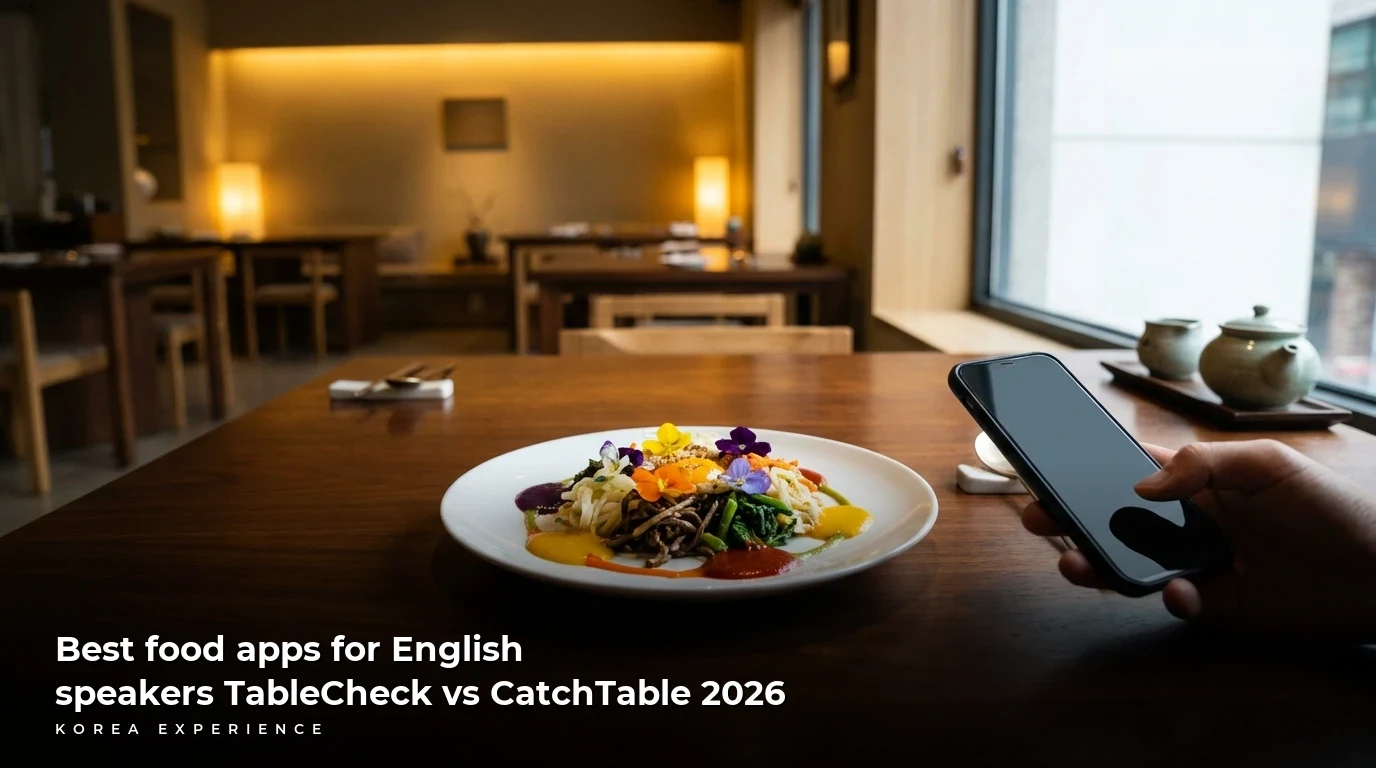
TableCheck vs CatchTable 2026: Korea Food Apps English Speakers
Navigating Korea's vibrant food scene is easier with the right app. Discover if TableCheck or CatchTable is your best dining companion for 2026.
Korea's culinary landscape is a captivating symphony of flavors, from sizzling Korean barbecue (gogi-jip) to exquisite fine dining experiences and the comforting embrace of traditional street food. For international travelers and expats, the sheer variety is exhilarating, but accessing these gastronomic delights, especially the most popular or exclusive ones, can sometimes feel like navigating a maze without a map. This is where food apps become indispensable. In 2026, two titans stand out for English speakers: TableCheck and CatchTable.
Gone are the days of relying solely on hotel concierges or struggling with Korean phone calls. These innovative platforms are revolutionizing how international visitors discover, reserve, and enjoy Korea's food scene. But which one is truly the best fit for your needs? This comprehensive guide will deep dive into TableCheck vs CatchTable 2026, comparing their features, strengths, and ideal use cases to help you make an informed decision and enhance your Korean dining adventure. You'll learn which app excels for fine dining, which is better for popular local spots, and how to maximize your experience with both.
Understanding the Korean Dining Landscape in 2026
The year 2026 sees Korea at the forefront of digital integration, and its dining scene is no exception. Restaurants, from Michelin-starred establishments in Gangnam to trendy cafes in Seongsu, are increasingly leveraging technology for efficiency and customer engagement.
The Rise of Digital Reservations
Walk-ins are becoming less feasible, especially for popular eateries (often called mat-jip – popular delicious restaurants) in bustling areas like Myeongdong, Hongdae, and Itaewon. Digital reservation systems are now the norm, allowing establishments to manage capacity, reduce wait times, and even predict demand. This shift significantly benefits international visitors, as these platforms often provide English interfaces where direct communication might be a barrier.
Diverse Culinary Experiences and Accessibility
Korea offers a spectrum of dining experiences. You might seek out a sophisticated omakase experience, a lively barbecue restaurant, a cozy traditional Korean restaurant (hansik-jip), or even a casual spot for chimaek (fried chicken and beer). While many tourist-centric areas offer English menus, accessing reservations or even understanding the offerings of a truly local gem requires a different approach. Food apps bridge this gap by centralizing information and facilitating bookings.
Unique Dining Etiquette and Expectations
Korean dining culture has its nuances. Group dining is common, and many restaurants prefer bookings for a minimum number of people, especially for popular dishes. No-show policies are strict, reflecting the high demand for popular spots. Understanding and adhering to these customs, often facilitated by the app's terms and conditions, is crucial for a smooth dining experience. For instance, always be mindful of cancellation deadlines, typically 24-48 hours before your reservation, to avoid charges.
TableCheck Korea: A Deep Dive for International Diners
TableCheck has firmly established itself as a premier reservation platform, particularly renowned for its focus on upscale and fine dining establishments across Asia. In Korea, it serves as a crucial bridge for international diners looking to experience the country's high-end culinary scene.
Core Features and Strengths
TableCheck's primary strength lies in its curated selection of restaurants. You'll find a significant number of Michelin-starred restaurants, luxury hotel dining rooms, and exclusive establishments that cater to a discerning clientele.
- Premium Restaurant Selection: It boasts an impressive roster of top-tier restaurants in Seoul and other major cities. This includes famous spots in Cheongdam-dong, Apgujeong, and upscale hotel dining at places like The Shilla, Signiel Seoul, and Four Seasons Hotel.
- Robust English Support: The app and website are fully optimized for English speakers, offering clear navigation, detailed restaurant descriptions, and menu information in English. This significantly reduces language barriers, allowing users to understand specific dishes, set menus, and special requirements.
- Seamless Reservation Process: Booking is generally straightforward. Users can filter by cuisine type, location, price range, and special features like private rooms or chef's tables. Many reservations are instant confirmations, while some exclusive spots might require a request-based system, often with swift responses.
- Special Deals and Offers: TableCheck frequently features exclusive deals, special tasting menus, or discounts for users, especially during off-peak seasons or for early bookings.
- Concierge Services Integration: For higher-tier bookings, TableCheck often integrates with concierge services, providing an extra layer of support for specific requests or dietary needs.
User Experience and Interface
The TableCheck interface is sleek, professional, and intuitive. It emphasizes high-quality visuals, often showcasing professional photography of the restaurants and their signature dishes.
- Clean Design: The user interface is clutter-free, making it easy to browse and search.
- Detailed Restaurant Profiles: Each restaurant listing provides extensive details, including opening hours, address (with map integration), contact information, dress codes, available menus (often with pricing), and high-resolution photos.
- Payment Integration: For restaurants requiring a deposit or full prepayment (common for omakase or tasting menus), TableCheck offers secure in-app payment processing, usually supporting international credit cards.
Where TableCheck Shines
TableCheck is the undisputed champion for:
- Fine Dining and Michelin-Starred Experiences: If you're planning a special occasion or want to explore Korea's haute cuisine, TableCheck is your go-to. Think venues like Mingles, Gaon, La Yeon, or Jungsik.
- Luxury Hotel Restaurants: Booking sophisticated dining at major hotels is best done through TableCheck.
- Business Dinners: Its selection of private dining rooms and high-end establishments makes it ideal for corporate events.
- Early Planners: For popular spots, bookings can open weeks or months in advance, and TableCheck allows you to secure those coveted slots.
Potential Drawbacks and Limitations
While excellent for its niche, TableCheck does have certain limitations for a broader dining experience:
- Limited Casual Restaurant Coverage: You won't find many casual Korean barbecue joints, local noodle shops, or trendy cafes on TableCheck. Its focus is distinctly upscale.
- Fewer "Hidden Gems": The platform doesn't typically feature the smaller, often more authentic mat-jip that locals frequent and might not have sophisticated reservation systems.
- Higher Price Point: Naturally, the restaurants featured on TableCheck come with a higher average price tag, reflecting their premium nature.
CatchTable: Your Gateway to Local Korean Culinary Experiences
CatchTable, a major player in the Korean food tech scene, has rapidly grown to become a comprehensive platform for a vast array of restaurants, from trendy casual spots to established local favorites. While initially catering primarily to the Korean market, its increasing focus on international users makes it a strong contender for English speakers.
Core Features and Strengths
CatchTable's strength lies in its extensive coverage and its ability to connect users with popular local eateries that might not be on international platforms.
- Broad Restaurant Database: CatchTable boasts a significantly larger and more diverse database of restaurants compared to TableCheck, covering everything from popular casual dining to upscale options. You'll find trending cafes in Seongsu-dong, bustling Korean barbecue spots in Hongdae, and traditional establishments across Seoul.
- Waitlist Functionality: This is a killer feature for popular Korean restaurants that don't take reservations or have long queues. CatchTable allows users to digitally join a waitlist, receive notifications, and track their position, saving hours of physical waiting. This is particularly useful for famous mat-jip that attract massive crowds.
- Improving English Support: Over the past few years, CatchTable has made significant strides in providing English language support within its app. While not as universally comprehensive as TableCheck for all restaurant descriptions, the core navigation and reservation process are increasingly available in English.
- Real-Time Availability: The app excels at showing real-time availability for many restaurants, allowing for spontaneous bookings.
- User Reviews and Recommendations: CatchTable has a robust community of users who leave detailed reviews, often with photos, offering valuable insights into food quality, service, and ambiance. While reviews are primarily in Korean, the star ratings and photos are universally understandable.
- Search and Discovery: Powerful search filters allow users to find restaurants by cuisine, location, popularity, deals, and specific amenities.
User Experience and Interface
CatchTable's interface is vibrant and visually driven, reflecting its broad appeal and focus on discovery.
- Dynamic Design: The app features a modern design, with an emphasis on food photography and user-generated content.
- Map-Based Search: Excellent map integration allows users to easily find restaurants nearby or in specific neighborhoods.
- In-App Promotions: Frequent promotions, discounts, and partnership offers are prominently displayed, encouraging users to try new places.
- Queue Management: For restaurants with waitlists, the in-app queue management system is highly effective, sending push notifications when your table is almost ready.
Where CatchTable Excels
CatchTable is your best bet for:
- Trendy & Popular Local Spots: Discovering the latest trending cafes, unique fusion restaurants, and local favorite Korean barbecue or jjimdak (braised chicken) restaurants.
- Spontaneous Dining: If you decide to eat out last minute, CatchTable’s real-time availability and waitlist features are invaluable.
- Exploring Diverse Neighborhoods: It provides broader coverage across all of Seoul's districts and beyond, including lesser-known but vibrant food streets.
- Budget-Friendly Options: While it also lists upscale restaurants, its database includes a wider range of price points.
Potential Drawbacks and Limitations
Despite its strengths, CatchTable still presents some challenges for international users:
- Inconsistent English Translation: While the app's core functions are in English, some restaurant names, menu details, or specific review content might still be in Korean. This can be mitigated with in-app translation tools or a quick Google Translate.
- Reliance on Local Reviews: The wealth of user reviews, while helpful, is predominantly in Korean, requiring translation for deeper understanding.
- Less Focus on Ultra-Luxury: While it lists high-end places, its primary focus isn't exclusively on Michelin-starred or exclusive hotel dining in the same way TableCheck is.
TableCheck vs CatchTable 2026: A Head-to-Head Comparison
To help you decide, let's directly compare these two powerful food apps for English speakers in Korea.
Restaurant Coverage and Variety
- TableCheck: Dominates the premium segment, offering a curated list of Michelin-starred, fine dining, and luxury hotel restaurants. Its strength is depth within this niche.
- CatchTable: Offers a significantly broader range, encompassing casual dining, popular local eateries, trendy cafes, and also a good selection of upscale restaurants. Its strength is breadth across all dining categories.
Language Support and User Friendliness
- TableCheck: Provides consistent, high-quality English translation across its entire platform, from navigation to detailed restaurant and menu descriptions. Its interface is designed for global users.
- CatchTable: Has made substantial improvements in English support for core functions and many popular restaurant listings. However, some specific details or user-generated content may still be in Korean. Its interface is becoming more globally friendly but retains some local nuances.
Reservation Process and Features
- TableCheck: Primarily focuses on traditional reservation bookings, often with instant confirmation, especially for set menus or specific time slots. Deposit requirements are common for high-demand venues.
- CatchTable: Offers both traditional reservations and a robust digital waitlist system. Its real-time availability and immediate booking options make it excellent for more spontaneous plans or queue-heavy restaurants.
Additional Features
- TableCheck: Emphasizes exclusive deals, curated dining experiences, and direct access to high-demand tables. Less emphasis on user reviews, more on editorial content.
- CatchTable: Excels with its comprehensive user review system, map-based discovery, and frequent in-app promotions. It also integrates with delivery services for some establishments.
Table 1: Key Feature Comparison
| Feature | TableCheck (2026) | CatchTable (2026) |
|---|---|---|
| Target Restaurants | High-end, Fine Dining, Michelin-starred, Luxury Hotels | Broad: Trendy cafes, popular local, casual, also upscale |
| English Support | Excellent (near 100% comprehensive) | Good (improving, core functions and many listings in English, some local content remains Korean) |
| Reservation Type | Instant booking, Request-based, Prepayment common | Instant booking, Digital Waitlist, Prepayment less common (but increasing for popular spots) |
| Waitlist Functionality | Limited (not a primary feature) | Excellent (core strength for popular no-reservation restaurants) |
| User Reviews | Less focus on user-generated, more editorial | Extensive (robust community, mostly Korean, but useful visuals/ratings) |
| Discovery | Curated lists, fine-dining focus | Map-based, trending lists, wide category filters |
| Special Deals | Exclusive menus, seasonal promotions | Frequent in-app promotions, discounts, partnership offers |
Table 2: Ideal User Profile
| Criteria | TableCheck (2026) Ideal User | CatchTable (2026) Ideal User |
|---|---|---|
| Traveler Type | Business traveler, luxury tourist, special occasion planner | Adventurous eater, long-term expat, casual tourist, foodie |
| Dining Preference | Gourmet experiences, elegant ambiance, fixed menus | Trendy spots, authentic local cuisine, diverse food genres, spontaneous dining |
| Location Focus | Gangnam, Cheongdam, Luxury Hotel areas | Hongdae, Seongsu, Itaewon, Myeongdong, broader neighborhood coverage |
| Planning Style | Pre-planned, specific dates and times | Flexible, spontaneous, last-minute decisions, exploring options |
Practical Scenarios: When to Use Which App
Knowing the strengths of each app allows you to strategically choose the right tool for the job.
Fine Dining & Special Occasions
Use TableCheck. For that unforgettable Michelin-star dinner at Jungsik, a romantic anniversary meal at La Yeon, or an important business luncheon at a luxury hotel restaurant, TableCheck is your indispensable companion. Its clear English interface, detailed menu information, and focus on premium establishments ensure a smooth booking process for high-stakes dining. You'll likely encounter options for specific course menus and deposit requirements, which TableCheck handles seamlessly.
Example: Booking a 7:00 PM tasting menu at a Michelin-starred restaurant in Cheongdam-dong for your anniversary.
Trendy Local Eateries & Casual Spots
Use CatchTable. If you're hunting for the latest viral café in Seongsu-dong, a bustling Korean barbecue joint that locals swear by, or a specific regional dish at a popular restaurant in Ikseon-dong, CatchTable is your best bet. Its extensive database covers a wider range of establishments, including many that don't appear on TableCheck. This is where you'll find the authentic pulse of Korean dining.
Example: Finding a popular tteokbokki (spicy rice cake) place in Myeongdong or a trendy brunch spot in Hongdae with a digital waitlist.
Spontaneous Dining & Waitlists
Use CatchTable. Decided last minute to grab dinner? Or arrived at a restaurant only to find a long queue? CatchTable's real-time availability and robust digital waitlist system are game-changers. You can quickly check nearby restaurants with open tables or join a queue remotely, getting a notification when your table is ready. This is especially useful in high-traffic areas like Gangnam Station or Sinchon.
Example: Walking around Insadong and wanting to find a restaurant with immediate seating, or joining the waitlist for a famous samgyeopsal (pork belly) restaurant without physically standing in line.
Group Bookings & Specific Dietary Needs
Consider both, depending on the restaurant type. For upscale group bookings with specific dietary requests (e.g., allergies, vegetarian options), TableCheck's detailed restaurant profiles and direct communication channels (often through a concierge service) are superior. For casual group bookings, CatchTable's broader selection might offer more options, but you might need to use a translation app to communicate specific dietary needs directly with the restaurant after booking.
Example: For a large group dinner requiring a private room and several vegetarian options at a high-end Korean restaurant, TableCheck is preferred. For a casual group dinner at a popular chimaek spot, CatchTable works, but confirm details via phone or translation.
Maximizing Your Experience: Tips for Both Apps
To truly master your Korean dining experience with these apps, consider these insider tips:
Pre-Trip Planning and Account Setup
- Download and Explore Early: Download both apps before your trip. Familiarize yourself with their interfaces and search functions.
- Create Accounts: Set up accounts with your email and international phone number (if supported, otherwise use email). This saves time when booking.
- Set Language Preferences: Ensure English is selected as your preferred language in both apps.
- Explore Popular Districts: Use the map functions to scout restaurants in neighborhoods you plan to visit, like exploring the seafood in Noryangjin Fish Market area or the cafes in Garosu-gil.
Understanding No-Show Policies
Both apps, especially for popular restaurants, have strict no-show policies.
- Cancellation Deadlines: Always note the cancellation deadline (often 24-48 hours prior) to avoid charges.
- Deposit Requirements: Some restaurants, particularly on TableCheck, require a deposit which is forfeited upon no-show or late cancellation. Read the terms carefully.
- Communicate Changes: If you need to change or cancel, do so through the app as soon as possible. This is courteous and avoids potential penalties.
Utilizing In-App Filters and Reviews
- Advanced Filters: Use filters extensively – by cuisine type (e.g., Italian, Korean, Japanese), price range, amenities (e.g., private rooms, parking), and occasion (e.g., date night, family friendly).
- Read Reviews (and use translation): On CatchTable, even if reviews are in Korean, look at the star ratings and photos. For detailed text, use a translation app like Papago or Google Translate to get the gist. Look for recurring comments about specific dishes or service.
Backup Strategies
- Concierge Services: If you're staying at a hotel, don't hesitate to leverage their concierge service for difficult-to-book restaurants, especially if language is still a barrier or if the app doesn't cover a specific place.
- Direct Calls (with help): For very specific requests or if an app isn't working, you might need to call the restaurant directly. If you don't speak Korean, ask a local friend, hotel staff, or a language helpline for assistance.
- Offline Options: Always have the restaurant's address written down or saved on an offline map, along with the Korean name, in case you lose data connection.
Exploring Beyond Reservations
- Pickup and Delivery: Both apps may offer options for food pickup or delivery from some restaurants, which can be convenient for a casual night in. However, dedicated delivery apps like Baemin or Coupang Eats still dominate this segment for local options.
- Curated Content: Both apps (especially CatchTable with its "Discovery" section) often feature articles, recommendations, and curated lists of restaurants. These can be excellent resources for finding new and exciting places.
Future Trends and What to Expect
The food app landscape in Korea is dynamic, constantly evolving to meet user demands and technological advancements.
AI-Powered Recommendations
Expect more sophisticated AI algorithms that learn from your dining preferences, past bookings, and even browsing history to offer highly personalized restaurant recommendations. This means less scrolling and more tailored suggestions for your taste.
Enhanced Personalization
Beyond recommendations, apps will likely offer more personalized booking experiences, such as remembering your dietary restrictions, preferred seating, or even your favorite dishes, making future reservations even smoother.
Integration with Travel Platforms
We might see deeper integration of these food apps with broader travel platforms (e.g., flight booking sites, hotel booking apps), creating a more seamless "plan-my-trip-including-food" experience for international visitors. This could simplify everything from arrival to departure.
The Evolving Role of English Support
Given Korea's increasing global appeal, both TableCheck and CatchTable are expected to continue investing heavily in their English (and other foreign language) support. This includes not just app interfaces but also more translated menu items and even multi-lingual customer service. CatchTable, in particular, will likely close the gap further in comprehensive English localization.
FAQ Section
Here are some common questions English speakers have about using food apps in Korea:
Q1: Do I need a Korean phone number to use these apps? A1: Generally, no. Both TableCheck and CatchTable allow registration with an email address. While a Korean phone number can sometimes be used for verification or waitlist notifications (especially on CatchTable), your international phone number often works for basic notifications, or you can rely on in-app alerts and email.
Q2: Can I cancel or modify reservations easily? A2: Yes, typically. Both apps offer in-app options to cancel or modify reservations. However, it's crucial to adhere to the restaurant's specific cancellation policy and deadlines to avoid charges, especially for high-demand or prepaid bookings. Late cancellations or no-shows often result in penalties.
Q3: Are there any hidden fees for using the apps? A3: For basic reservations, there are usually no direct fees from the apps themselves. However, some restaurants, particularly on TableCheck for fine dining or special menus, may require a deposit or full prepayment at the time of booking. These charges are clearly displayed before confirmation. Any charges are usually related to the restaurant's policy, not the app's usage.
Q4: What if a restaurant doesn't appear on either app? A4: If a restaurant isn't on TableCheck or CatchTable, it likely means they either don't use a digital reservation system, only cater to walk-ins, or use a different local Korean app (like Naver Reservations, which has limited English support). In such cases, your best bet is to call directly (if you speak Korean or have local assistance) or visit in person.
Q5: Which app is better for vegetarian or vegan options? A5: For vegetarian or vegan options, TableCheck can be slightly more reliable for high-end restaurants as their detailed menus and communication options (often with pre-order requirements) allow for clearer dietary requests. However, CatchTable's broader coverage means you might find more diverse casual restaurants that offer plant-based dishes, though you might need to verify details with a translation app or in person. Always double-check restaurant menus and descriptions, and consider contacting the restaurant directly for critical dietary needs.
Conclusion
Navigating Korea's dynamic food scene as an English speaker has never been easier, thanks to the continuous advancements of platforms like TableCheck and CatchTable. In 2026, both apps offer robust solutions, but their strengths cater to different dining needs.
TableCheck is your indispensable companion for premium dining experiences, offering unparalleled access to Michelin-starred restaurants, luxury hotel eateries, and high-end venues with flawless English support. If your journey involves exquisite meals and special occasions, TableCheck should be your primary tool.
CatchTable, on the other hand, is your gateway to Korea's vibrant local culinary landscape, from trending cafes and casual popular mat-jip to authentic Korean barbecue spots. Its broad coverage, waitlist functionality, and improving English interface make it perfect for spontaneous dining, exploring diverse neighborhoods, and experiencing the true pulse of Korean food culture.
For the ultimate culinary adventure in Korea, the best strategy is often to download and utilize both apps. Leverage TableCheck for those pre-planned, upscale events, and rely on CatchTable for daily explorations, spontaneous meals, and discovering hidden gems. By combining their strengths, you'll unlock a world of flavors and ensure a smooth, enjoyable, and delicious journey through Korea's gastronomic wonders. Happy eating!
About the Author
Korea Experience Team
Written by the Korea Experience editorial team - experts in Korean medical tourism, travel, and culture with years of research and firsthand experience.
⚠️ Medical Disclaimer
The information provided on this website is for general informational purposes only and does not constitute medical advice. Always consult with qualified healthcare professionals before making any medical decisions.
Continue Reading
Explore more articles you might find interesting
Discover the best halal restaurants and supermarkets in Seoul for 2026. A comprehensive guide for Muslim travelers and expats seeking delicious certified options.
Dive into Busan's vibrant seafood scene with this guide to fresh fish markets, delicious restaurants, and insider tips for an authentic culinary adventure.
Unlock Korea's culinary secrets with this comprehensive anju pairing guide. Discover the best Korean drinking snacks for soju, makgeolli, and beer.